Feeds:
Posts
Comments

Posts Tagged ‘trees’

Deb forwarded this for us:
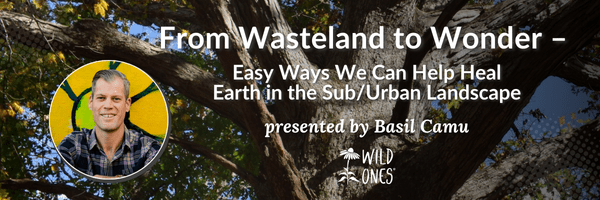


 Join Wild Ones for a free webinar, “From Wasteland to Wonder,” presented by Basil Camu. In this webinar, Basil shares a fresh perspective on caring for trees, soil, and land in suburban and urban settings.

From Wasteland to Wonder
Wednesday, February 18, 2026 | 6:00 p.m. CT / 7 ET / 5 MT / 4 PTLocation: YouTube Live. Link provided with registrationRegisterhttps://wildones.org/from-wasteland-to-wonder/
Much of the suburban and urban landscape is managed in ways that undermine soil health, water systems, biodiversity, and long-term resilience. Forests are cleared, grasslands become lawns, and chemicals are used to maintain systems that require constant effort with little return.
In this webinar, Basil Camu offers a hopeful, practical alternative, drawing on two decades of experience through Leaf & Limb to show how working with natural systems can heal land, reduce maintenance, and build healthier, more resilient landscapes.

Can’t make it live? Register anyway- we’ll send the recording link after the premiere.

REGISTER NOW About the Presenter:
Basil Camu is a master arborist, author of From Wasteland to Wonder, and co-founder of Leaf & Limb, a North Carolina–based regenerative tree and land care company. His work centers soil health, trees, and long-lived systems that work with natural processes in suburban and urban landscapes. He is also the founder of Project Pando, a nonprofit focused on reconnecting people with trees through native seed collection, growing, and free distribution for ecological restoration. His work has been featured in national outlets including The New York Times, and he regularly speaks to conservation groups, nonprofits, and municipalities across the country Photo Below


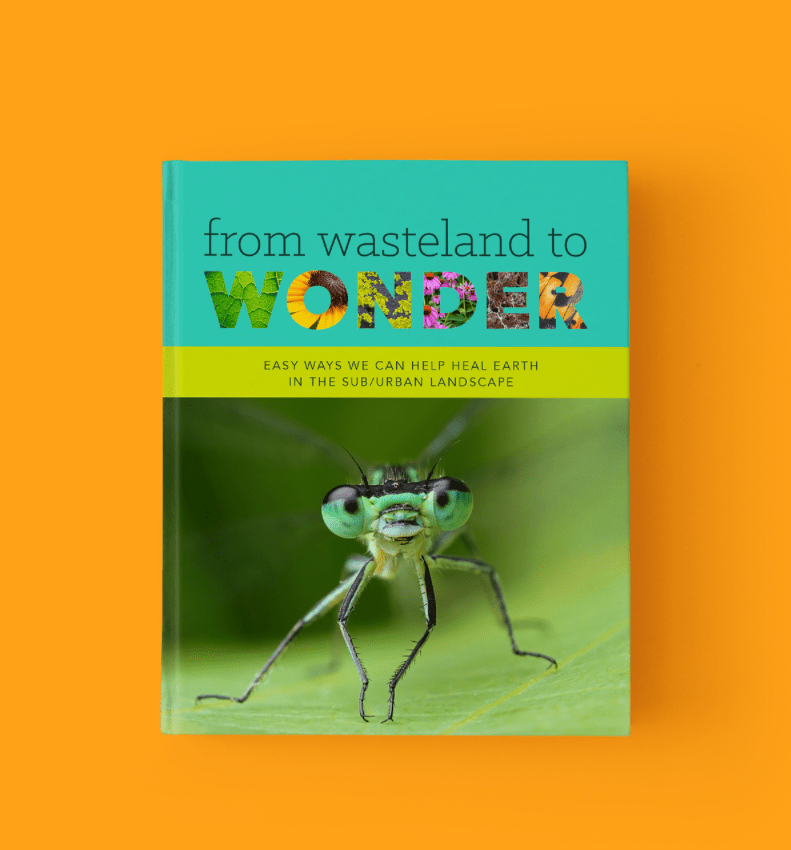
.Download Basil Camu’s Free E-Book (Photo below)Want to dive deeper right away? Basil Camu is offering his e-book, From Wasteland to Wonder, as a free download on his website. He shares the book as a personal act of gratitude—for the privilege of being alive and for the opportunity to care for the living world. Download the free e-book and start exploring his ideas before (or after) the webinar. “In all of my years of reading environmental literature, I have never encountered writing as compelling and comprehensive, yet clear, accessible, and uplifting as Basil Camu’s From Wasteland to Wonder. Basil’s logic will overwhelm any lingering doubts you may have about this approach to landscaping and provide that kick in the pants so many of us need to take action.”
— Doug Tallamy, Ecologist and Author of Nature’s Best Hope

Read Full Post »

Gail sent this in for posting

Popular golden oyster mushrooms now invading Michigan forests08/05/2025Share or view as webpage  |  Update preferencesNews ReleaseAug. 5, 2025
Contact: Joanne Foreman, 517-284-5814Popular golden oyster mushrooms now invading Michigan forests New study shows impacts to native mushroom species What started as a fun and tasty culinary trend – growing exotic mushrooms at home from a simple storebought or online kit – has become another threat to Michigan’s natural resources. A recent article published in The Conversation describes U.S. Forest Service researchers’ findings regarding the impact of golden oyster mushrooms (Pleurotus citrinopileatus) on Wisconsin forests.
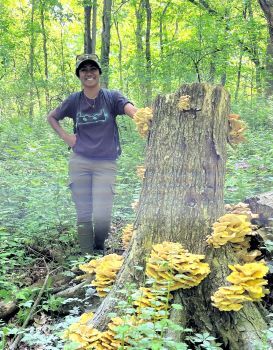
Native to Asian and Russian hardwood forests, these imported mushrooms are now growing in the wild in areas of the Midwest, including Michigan’s southern Lower Peninsula.Golden oyster mushrooms, known for their bright yellow caps and nutty flavor, are featured on restaurant menus and in cooking videos. The mushrooms became popular among DIY enthusiasts with the introduction of grow kits in the early 2000s. By 2010, they began appearing in U.S. forests.According to Aishwarya Veerabahu, a graduate student in the Department of Botany at the University of Wisconsin-Madison, “No one knows exactly how golden oyster mushrooms escaped into the wild, whether from a grow kit, a commercial mushroom farm or outdoor logs inoculated with golden oysters – a home-cultivation technique.”To assist with research efforts, Michiganders are encouraged to report any sightings of golden oyster mushrooms in the wild. Observations can be recorded at iNaturalist.org.Why be concerned? Veerabahu and colleagues sampled fungal communities in forests around Madison, Wisconsin, and determined that in logs colonized by golden oyster mushrooms, only half the expected diversity of native fungal species was present. “Fungi are sources of revolutionary medicines, including antibiotics like penicillin, cholesterol medication and organ transplant stabilizers,” said Veerabahu. “The value of undiscovered, potentially useful chemicals can be lost when invasive species push others out. “What can be done? Veerabahu recommends that people consider refraining from using golden oyster mushroom grow kits to prevent any new introductions. “For people who make a living selling these mushrooms, consider adding a note that this species is invasive and should be cultivated indoors and not composted,” she said. “If you enjoy growing mushrooms at home, try cultivating safe, native species that you have [lawfully] collected in your region. “New species are often introduced by people long before the species’ invasive qualities are known. To avoid introducing or spreading species that may be invasive, never release pets, aquarium plants or other species into the wild, choose native species for gardening, and keep exotic plants – and fungi – indoors. For more information on golden oyster mushrooms, read Veerabahu’s full article.Note to editors: Accompanying photos are available below for download. Caption information follows. Golden oyster: Fungal ecologist Aishwarya Veerabahu stands beside a patch of golden oyster mushrooms growing on a stump in a Wisconsin forest. Photo courtesy of Aishwarya Veerabahu.

Read Full Post »