Gail sent me the following information on two seminars / workshops for educational hours. I’ve loaded the documents for you to view. Just click on the links to view:
Flyer-March_2014_-_NeotropicalSongbird_Migration_and_Birdscaping_Your_Yard (1)
Gail sent me the following information on two seminars / workshops for educational hours. I’ve loaded the documents for you to view. Just click on the links to view:
Flyer-March_2014_-_NeotropicalSongbird_Migration_and_Birdscaping_Your_Yard (1)
Posted in Uncategorized | Leave a Comment »
Milan Garden Club is planning a trip to Tollgate Farms in Novi on Saturday, March 8 from 1 to 3 pm for a Maple Sugaring Program. Below is the description from Amanda Jacobs the Education Director at Tollgate:
For our Maple Sugaring Program we will go on a wagon ride to the forest, visit the Sugar Shack, tap a maple tree, engage in tools through time, and of course, enjoy a sample of maple syrup! The program runs for 2 hours and is $8/person. We love to mix science, history, and naturally, fun!
There are about 8 of our club members car pooling from Milan to Novi and if there are any interested master gardeners we would like to invite them to join us. Each wagon can hold 16 to 20 adults and two wagons are available and we would like to fill at least 1 wagon. I would need a firm commitment from anyone interested by February 1. They could join us leaving from Milan or drive directly to Novi meeting us there.
Thanks,
Naida Albin
Posted in Uncategorized | Leave a Comment »
Gale Keane sent this information to pass on.
Hello everyone, don’t we all wish spring was just around the corner. It’s hard to think about what trees we want to plant this spring when the temperature outside is below zero. Brrrr.
SPRING 2014 CONSERVATION PLANTS SALE
Monroe Conservation District Spring 2014 Conservation Plants Fundraiser Catalog is now available on our website http://www.MonroeCD.org.
There may be a few photos missing, so please bear with me as I try to gather everything together.
For those of you who preferred the form to be mailed I hope to have them in the mail by early next week.
If you are not on our mailing list and would like to receive a print copy of the tree order form, please reply to this e-mail with your name and mailing address, or call the Conservation District office, (734) 241.7755 Ext 3.
Last September we held a workshop; Gardening “What On Earth Am I Doing” which consisted of topics such as Creating fairy/miniature gardens, Butterflies- various stages of development, raising and related plants – host/nectar, Rain gardens design and installation, Native plant gardens design and a native plant sale. This year we plan on a similar event and would like input as to what you might like to learn about if you were to attend this year. It will be held in September again although the date and location have not been selected at this time.
Posted in Uncategorized | Leave a Comment »
Our Calendar is updated and problem has been solved. If you wish to have an event on our calendar, please contact Linda Welch so it maybe added. You may want to list your garden club meetings and events. Other events throughout the MMGA will also be listed. If you are aware of any event, please pass it on for posting.
Posted in Uncategorized | Leave a Comment »
Gail sent me the following information if you’d like to have some extra educational hours:
Community Gardening per Bob Bransky
Feb 10 6-8pm at Monroe City Hall
no charge but must RSVP by Feb 6 to City of Monroe Parks & Rec office
Posted in Uncategorized | Leave a Comment »
Michele Buberniak send me the following book reviews to post. She will have a couple more soon for our Newsletter as well. Enjoy
Now that the holidays are over and the new year has begun many of us begin to look to the future with hope and anticipation. These feelings may apply to goals for life in general as well as to our plans for our yards and gardens. The growing season is not far away, soon it will be March and we can start some of our spring yard work. For many of us, our memories are selective, we may forget the challenges we had with a project or particular plant and we are ready to get outside and try again.
Here are some new book titles that you may enjoy while counting off the days until Spring!
Seeing flowers : discover the hidden life of flowers photography by Robert Llewellyn ; text by Teri Dunn Chace 2013
Botanical drawings from the past are truly amazing, talented artists drew and painted flowers and other plants with incredible detail , their eyes and hands doing what cameras do for us today. Although there has been a renewed interest in botanical illustration in the past few decades, the majority of work is done with photos .In this book, photographer Robert Llewellyn has produced stunning images of some flowers in twenty- eight of the most common plant families using a variety of techniques. The photos have a white, backlit appearance reminiscent of botanical drawings and are quite striking .In many cases, this lighting makes the petals appear translucent, and it enhances the beauty of the blooms in a way we cannot visualize in a garden setting.
Teri Dunn Chase provided the text that accompanies the photos in each plant family section As a writer and editor, she has contributed to many publications such as Horticulture and North American Gardener , and books including How to Eradicate Invasive Plants and The Anxious Gardener’s Book of Answers to name a few.
Beautiful as well as informative, the inclusion of the plant family names will educate those that may have forgotten or not known the scientific categories of some of their favorite plants. The Buttercup Family (Ranunculaceae) section was especially intriguing and surprising. Take time to enjoy it all!
Garden rescue : first aid for plants and flowers by Jo Whittingham DK publishers American edition 2013.
As with all DK (Dorling Kindersley) publications, this book has great photos and clear large text that helps the reader or browser gather information at a glance. Written for those new to gardening and the problems that can come with it, this book may also serve as a refresher for experienced growers. The book is divided into sections that include vegetables and fruits as well as ornamental plants, with information on trees, shrubs, climbers, perennials bulbs and bedding plants as well as the lawn. The very first section is entitled “Know Your Garden”, and it explains how plants work , and the importance of the right site and soil. Especially helpful within this heading are the two page spreads that explain what is normal for the plant categories. The “Don’t Panic” pages will make you smile and may even teach you something you don’t already know. Although more academic diagnostic books have been published , this book is helpful with charts useful in identifying problems and info “bites”. You may want to recommend it to a beginner and supplement it with an MSU publication. The photos of the pests could have been larger for identification purposes but it is a start for further research. The author, Jo Whittingham is a garden writer with a postgraduate degree in horticulture, and was educated in the United Kingdom. She has also written two other books under this publisher for the Royal Horticultural Society. DK also publishes many gardening titles with the American Horticultural Society in the United States market.
Posted in Uncategorized | Leave a Comment »
Paul mentioned to me that I should check out MMGA’s Facebook page. There are many great articles on it. If you are a Facebook user and would like to “Like” their page to get the updated articles here is the link:
Posted in Uncategorized | Leave a Comment »
When your home bound by 12 to 18 inches of snow and below zero temperatures, you can still enjoy gardening. Indoor gardening has brought pleasure to people for thousands of years. Most are plants that typically we cannot grow in our zone area, such as unusual tropical plants. Here are a few facts to consider when selecting an indoor plant.
First and for foremost inspect the plant. Make sure that the foliage is free from disease and insects. If you are adding to a collection of plants you certainly do not want to bring problems into the collection. Don’t forget to check the underside of the foliage.
Next make sure the plant appears sturdy, clean and potted well. Stand back and take a good look at the shape. It should have good coverage with leaves. Avoid plants with any yellow or brown on them. 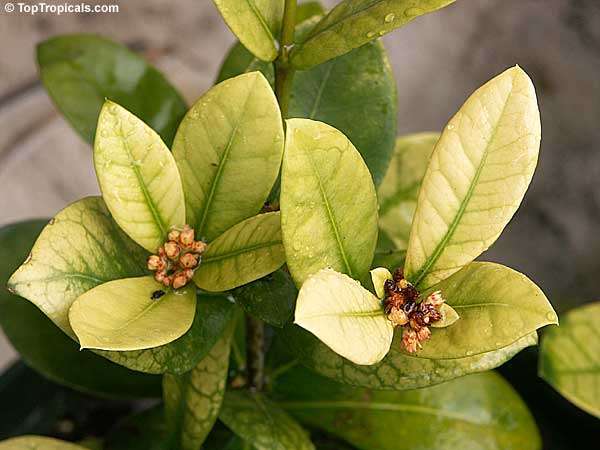 A
A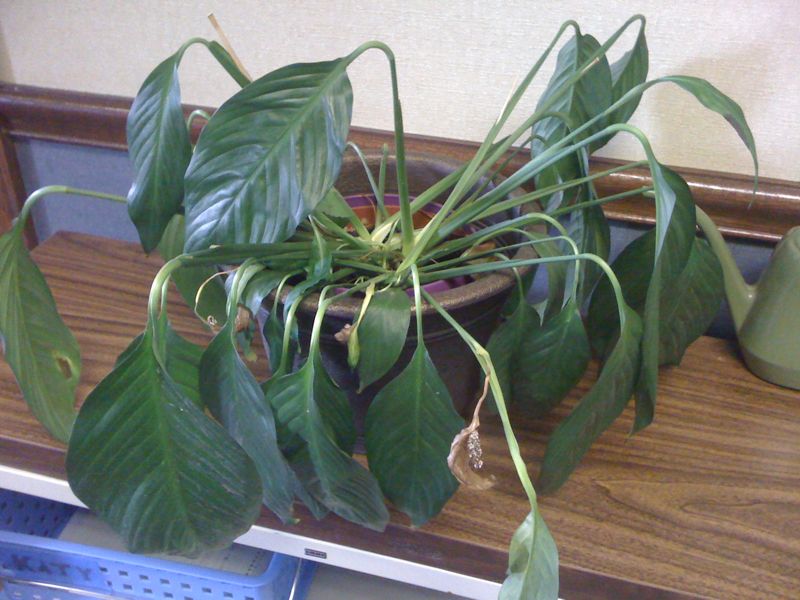 lso watch that the plant has not been over watered or wilted from the lack of water. Feel free to pull the plant from its container and inspect the roots.
They should be a healthy root system. The roots should appear fibrous with white root tips.
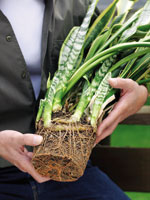
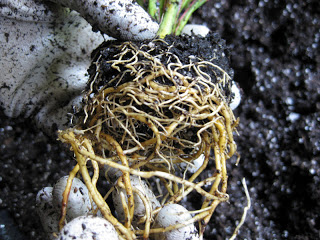 If a plant is pot bound you may choose to re-pot it in a larger container or root prune and repot in the same container. Roots that are circling the inside of the container are looking for air. In heavy extreme cases you may see the soil missing from the bound plant. When pruning the root leave enough root to sustain the plant. It may show some signs of shock for a few days after planting but the plant will perk back up in a few days.
If you already have houseplants and are adding to them, remember that plants do better together if they have the same environmental condition requirements. Make sure light requirements and humidity requirements are the same. Group them with like kind. Most homes have filtered light and the humidity fluctuates. Another consideration is drafts. You may not want to put a tender tropical plant near your entry door or drafty window. A plant that requires humidity might best be placed in the kitchen or bath, where the humidity of cooking or the shower will help. Plants such as succulents can be added to the drier zones of the home. Although succulents like bright light they do not require heavy watering. Soil should dry completely before watering.
Unglazed pots work best to drawn out the moisture after watering. 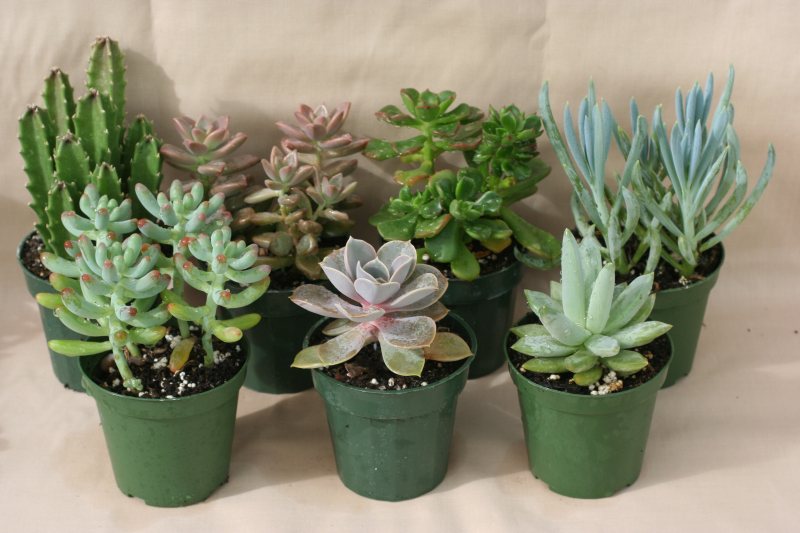
Make sure you protect the plant during transporting during these sub-zero temperatures. Make sure that the plant is bagged fully and no foliage is exposed to the harsh temperatures. Put the plant in the car, not in the trunk. Most trunks are too cold to store a plant for the time it will take you to bring it home.
Other considerations include:
Ventilation required
The media to use for the plant type
Type of container
Fertilizing,
Insect control
How often will it need re-potted.
There are great benefits from houseplants. Remember that they are filtering the air quality of your home. They add some humidity to an area of the house. Most of all, they are good for our mood. They give us the pleasure of a bloom now and then, along with that green we so miss this time of year. Enjoy your interior garden. Here is a list of some favorites: Aloe Vera, Croton, Jade plant, Parlor Palm, Maidenhair fern, Snake plant, Spider Plant, Norfolk Island pine, Rubber plant, Fig, Swedish Ivy and the ever popular Philodendron.
Posted in Uncategorized | Leave a Comment »
This time of year the seed & plant catalogs, as well as the garden magazines, contain some of the “New” plants for 2014. Many of them are from new 2013 trails and have shown to be successful. From all of those reviewed, I’ve picked my favorites. These include the following:
Sedum “Sunsparkler” Blue Pearl: This sedum has a blue hue along with deep maroon and purple. A rich addition to a garden if you rely on foliage plants for color.
Acalypha wilkesiana Jungle Cloak: A tropical plant with multi-colored vegetation. It can be overwintered indoors but the color will be a great asset to your containers
Clematis Sweet Summer paniculata: A new twist from our Sweet Autumn that so many of us enjoy. This one is very similar with the exception of color. It has a small petite flowers that are cranberry-violet in color.
Andropogon gerardii ‘Rain Dance’, an ornamental grass that has the red-tipped foliage like that of Japanese blood grass but is for zones 3-9. I’ve not been successful with the Japanese blood grass for overwintering (zones 5-9). I am hoping this will work better.
And for vegetables my pick is a grafted tomato: Indigo Sun. It’s a cherry size tomato that is yellow with deep purple at the top. Very colorful and by all I’ve read it bears an abundance of fruit.
If you have found an interesting 2014 pick, let us know about it. I urge members to check out these picks the web. You’ll find images and
Posted in Uncategorized | Leave a Comment »
What’s your favorite Christmas Tree? Well according to my research it just might be the Colorado Blue Spruce. I would much rather see these beauties outside with some lights and not cut down and in the house. The Colorado blue spruce is a native of the Rocky Mountains. It can grow up to 75 feet high, however grown as an ornamental tree it will probably only reach 49 feet in our yards. Did you know that it’s the state tree of both Colorado and Utah? Best if grown in Zones 2-7; this evergreen has slow to medium growth. Often when homeowners place them far too near the home. Remember, not only may it reach that 49 feet height but it will spread out 10 to 20 feet in diameter. So prepare ahead and give it plenty of space for future growth. It likes full sun and can grown in various soil types (acidic, drought tolerant, loamy, moist, rich, sandy, well drained, wet, wide range, and clay soils). Although there is no serious insect or disease problem, it is susceptible to needle cast, canker and rust. You should watch for aphids like the spruce gall aphids. You may also see scale, budworms and bagworms. Spider mites can be invasive and may cause significant problems with new growth and overall tree health. It’s truly a beautiful tree.
Posted in Uncategorized | Leave a Comment »
 Monroe County Master Gardener Association