
-just saying Merry Christmas & Happy New Year
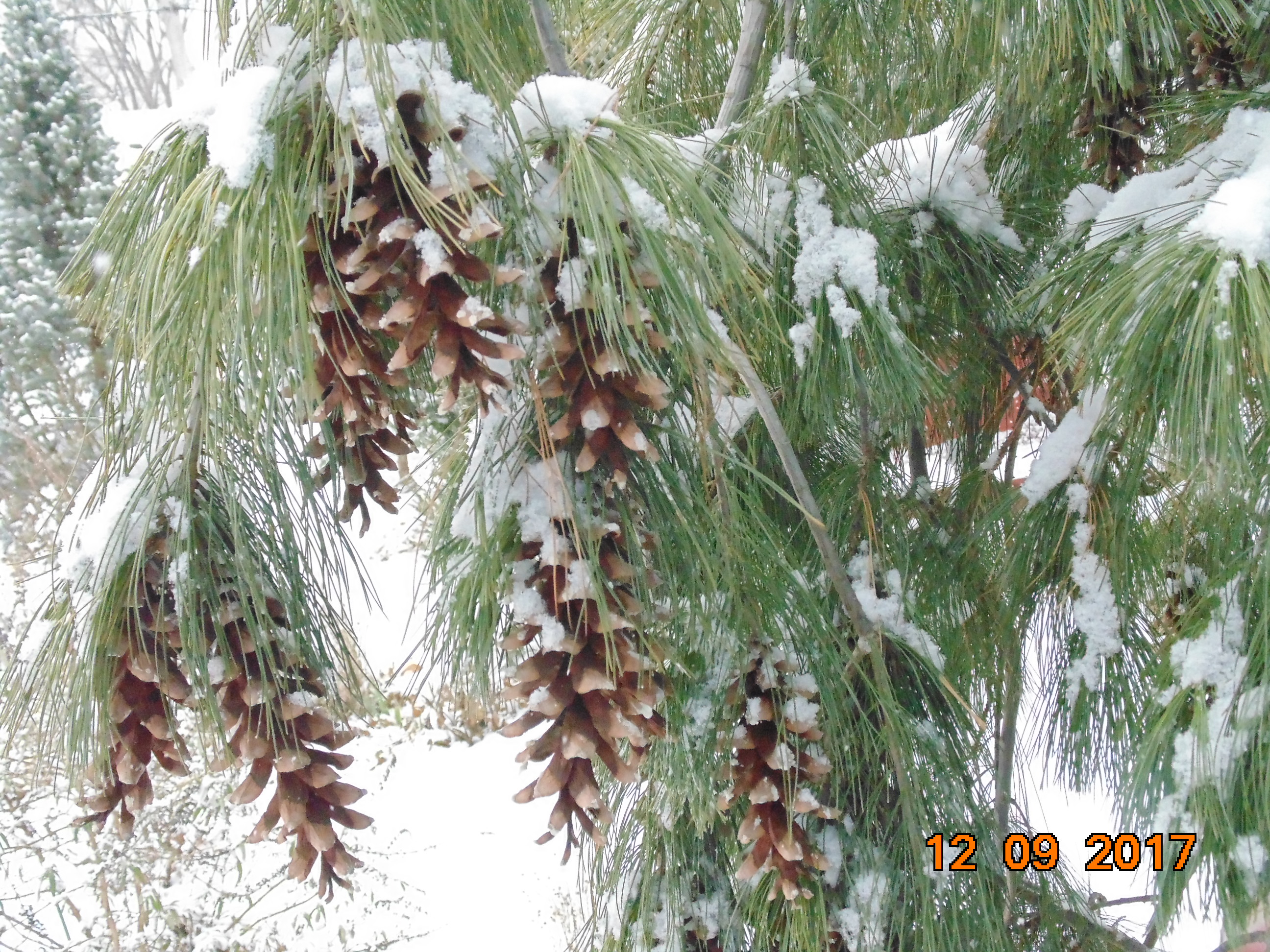
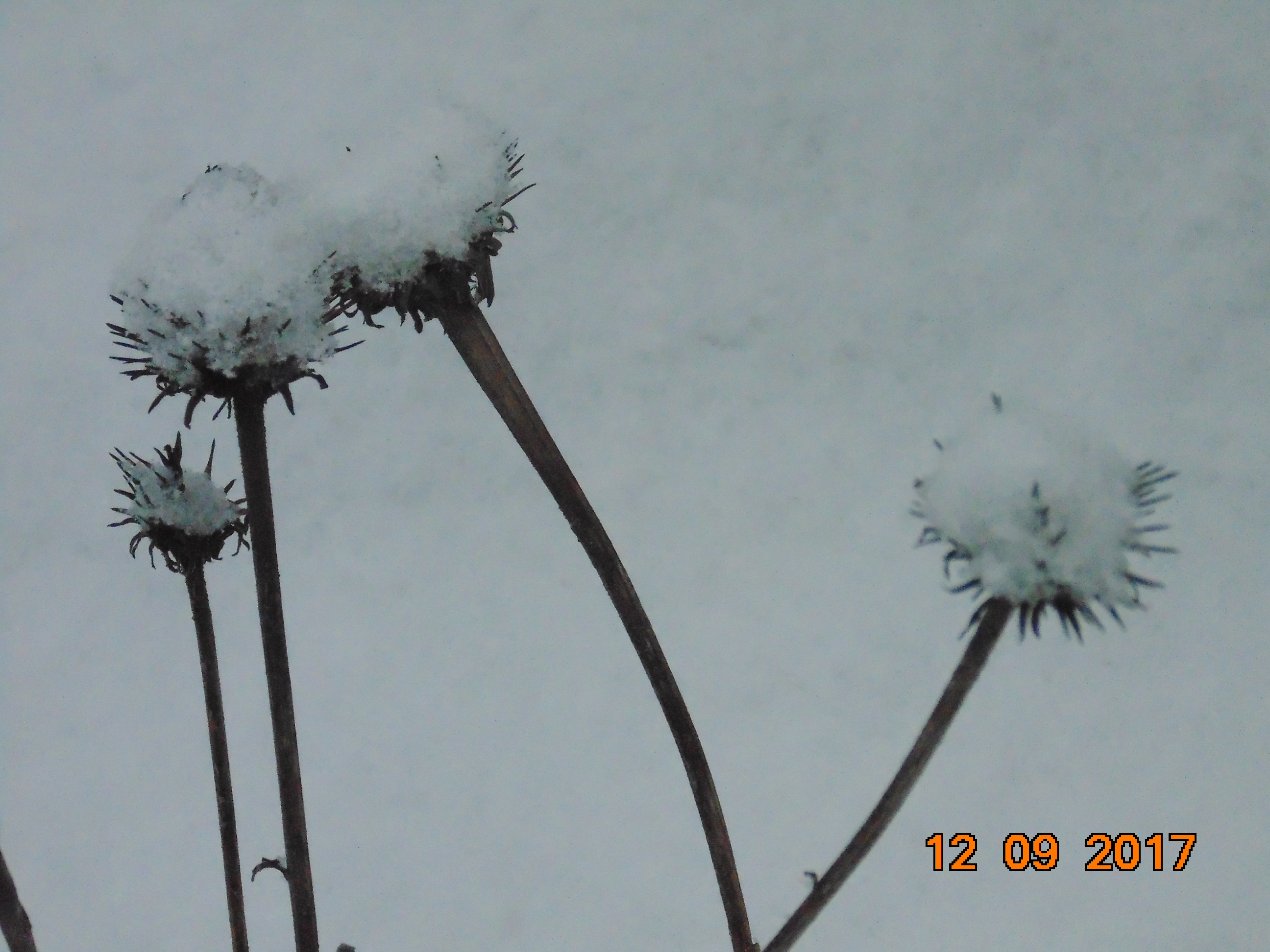
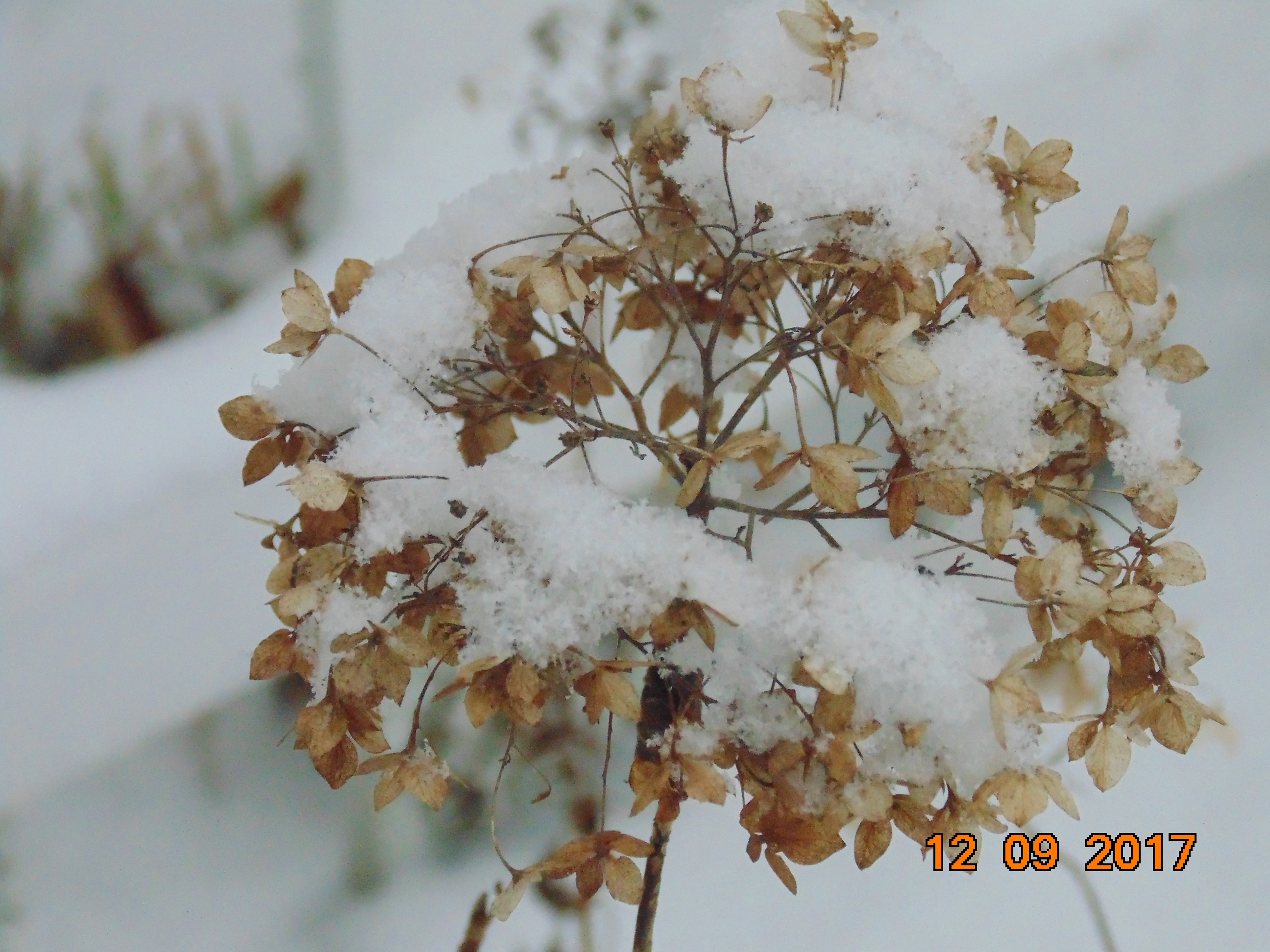
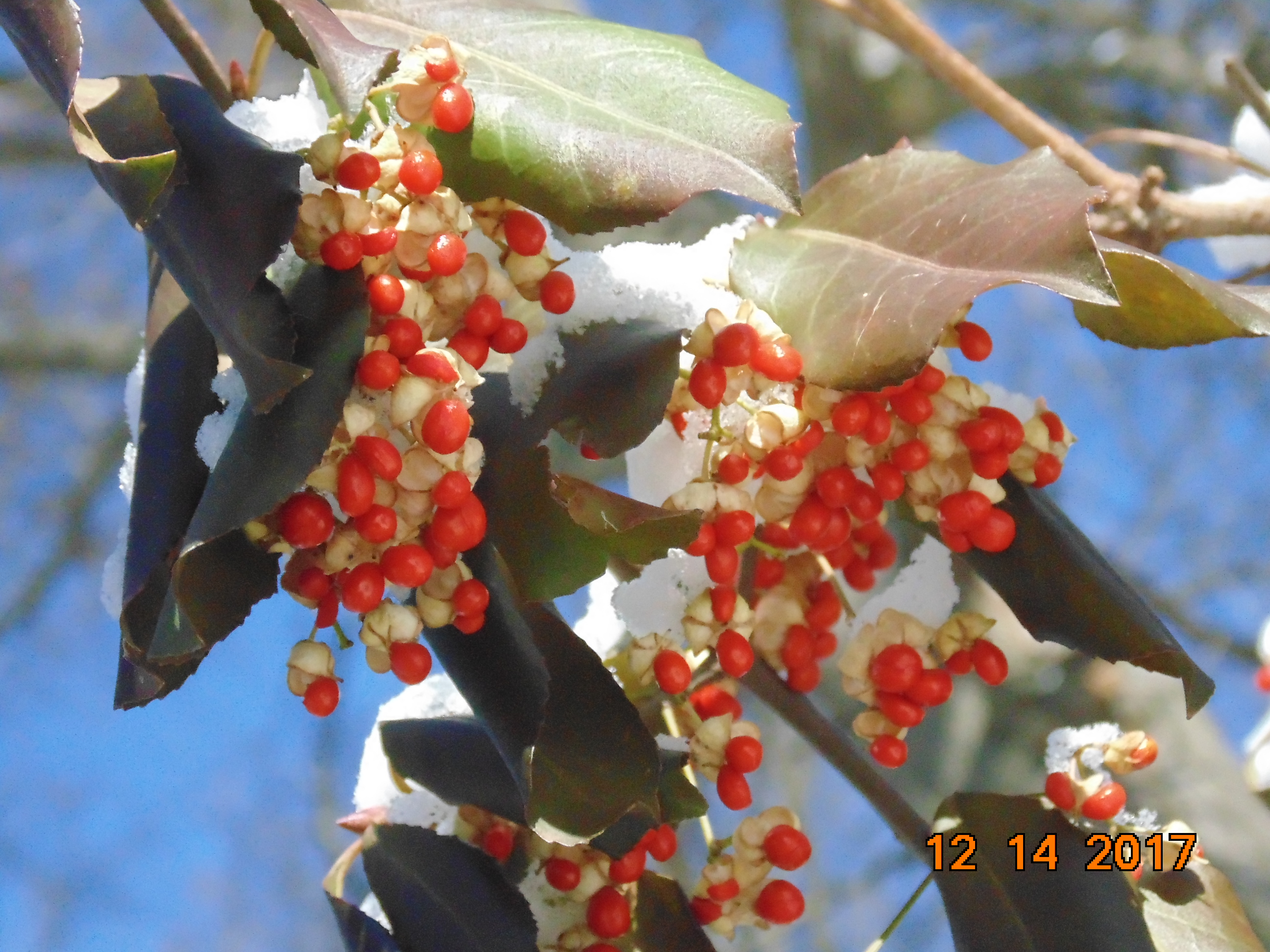
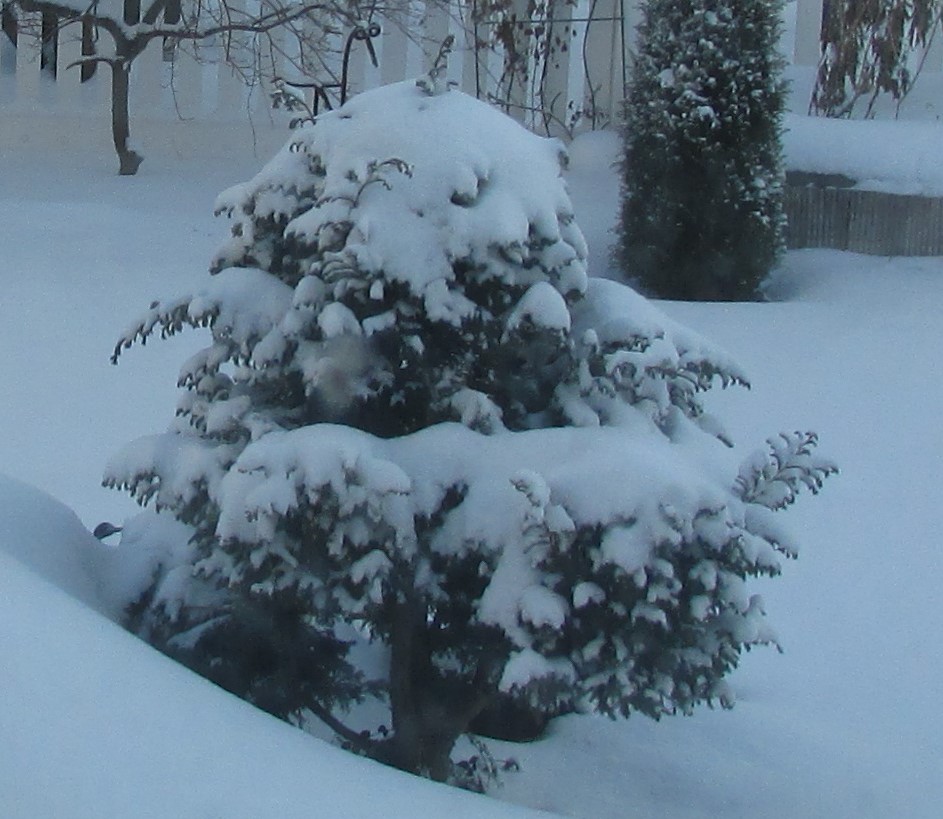
to all my fellow master gardeners–sharing snowy photos for those who have headed south. gk




Posted in Uncategorized | 1 Comment »

The other day I was watching the local news that was interviewing a lady (sorry, I didn’t catch the name) from Royal Oak. She was speaking to the need to not use poisons to control rodent population. Having had a rodent (Squirrel /chipmunk/ mouse) situation in my trailer in Irish Hills a few years ago, this caught my attention. How else do you get rid of them? This question and interview made me think of posting information to make others aware of what is happening out there when poisons are used. Mice are cute but certainly we really would rather not include them in our family home.
The extensive damage a rodent can do with those tiny teeth is no joke. But what are alternatives to keeping this from happening? I can tell you that I thought I tried everything when the issue occurred in my trailer. Results came only with a new trailer. But we also found a product to use as well. I’ll speak more about that shortly.
First, I wasn’t aware that a mouse or rat after eating a poison roamed around for three to four days before it dies. This gives plenty of time for this mouse to be a danger to mammals and birds. It’s rather ironic that so many of the predators, that can help us, are getting secondary poisoning from humans trying to eradicate the mouse. How can we stop the collateral damage? Raptors, our pets (cats and dogs), fox and other mammals can eat these poisoned rodents as they slowly die and become pray.
In my research, I read where one vet had 13 cases (12 dogs and one cat) with secondary poison in one years’ time. Now that is one vet….think of how many more vet clinics are out there. Now I begin to realize the impact. It also makes you realize that many cats may not be taken because they roam and die before coming home and aren’t part of this count. Wow!
Then there are raptors that are not counted. Owls, Eagle, hawks which see mice and rats as standard pray to snare. But do you realize there are also some non-raptor birds, such as the heron, crow and even a blue jay that also eat rodents when they find them? We need to take different measures to repel these critters rather than the usual first and second generation of poisons so commonly used. One more thought about these poisons, consider the possibility of small children also getting ahold of them. Yes, we try to protect our small children, but everything goes into the mouth when it looks like food.
I’ve researched some solutions. Oh, yes there are alternatives to getting a snake and keeping it around the house, or capturing mice to add in our menu to eat…Mice can be cooked in a variety of ways; This is common in certain parts of Vietnam, China, Korea and some other areas. Americans are a bit fussier about its menu. Besides, who wants a snake around the house or a meal of mice?
Enough said, here are some hints and solutions to saving our raptors, non-raptors, skunks, raccoons, pets, and other mammals.
OUTDOORS:
1. Clean up after your pets. Disgusting as mice are, they become even more so when you realize that pet waste can be a meal. So make sure dog feces is removed
2. Build homes for raptors. Encourage them to help control the population. But first talk to your neighbors. Make them aware of not using poisons. This works especially well on homes with a lot of land. It probably wouldn’t be the best for my small back yard…but I would love to watch an owl or hawk and their young. Remember, they are predators, if you have small pets, it could be the wrong choice.
3. Make sure your rubbish bins have a lid.
4. Turn your compost so that fresh scraps are buried and not easily obtainable.
5. If you have an issue, avoid feeding seeds to the birds. Birds throw seed and some drop to the ground. Easy meal for a rodent.
6. Use non-toxic repellants. Fox urine, and cayenne pepper sprays, work well but need to be applied regularly during the infestation. There are some safe repellants on the market. I used one around our trailer the past two years to keep the rodents at bay. It was called Repel, carried by most stores. Seemed to work well. Keep in mind though if you have a pet, they may come in contact also. However, they probably will begin to avoid the area quickly.
7. Tidy up. Keep areas around buildings and in the yard cleaned up. In other words, don’t give them a place to nest.
INDOORS:
1. Keep food and fruits inaccessible to them. This is what they are looking for…food. Keep grains, chips, breads, etc., in heavy plastic containers. It may be necessary to make an investment, but a small investment when it comes to our health. Rodents can carry disease. They urinate and excrete droppings everywhere.
2. Clean up: Make sure you don’t leave food overnight on counter for an invitation to a meal…..put it away. Sweep and vacuum regularly, and take out the trash often.
3. Eliminate unnecessary storing of boxes, paper and clothing. These are common places for rodents to take shelter. They will also gnaw on these items to make their nests. If undisturbed, they will breed.
4. Block out any potential holes…check those plumbing areas. Fill them with steel wool, or use aluminum foil wadded up in them. You can also just lay a sheet of foil around an area I don’t know why for sure, but they avoid it.
5. Block entry points in roofs and basements to keep them outdoors and not indoors.
6. Use non-poison solutions, such as
a. Dryer sheets (mice hate the smell…I use lavender scented). You may have to replace in about a month or so as the scent fades.
b. Essential oils such as peppermint or cloves on a cotton ball and lay in places where you notices they have come.
c. Traps: there are many humane traps out now.
d. Moth balls; although peppermint maybe more pleasing.
e. Sprays like habanero pepper, cayenne pepper and the like around areas. I would consider these where you don’t come in regular contact with them. Maybe under a sink or above the refrigerator. There are recipes online for you to try. Make sure you wear gloves and goggles when spraying.
f. Ultrasonic Pest Repeller: These are the things you plug into an outlet. I’ve had success in my garage with them…or maybe I’ve just been lucky.
g. Go to local shelter and get a furry friend.
If you can think of other methods please include them in the comments. My research included many on-line sites that I read and took notes. They all seem to have the same solutions when avoiding poison. Exclusion is a big part to a solution.
Posted in Uncategorized | 3 Comments »
Why is it we often do not winter garden outdoors? Is it we don’t understand what we need to plant or where to plant? A small garden containers may be popular in the summer, but often we worry they will break apart from the cold if we use them during the winter. Do you know what containers are great for winter? Well, here is some advice to make your garden pleasing to the eye during these cold months.
First let’s look to what we planted in the summer that will allow interest during the winter. Of course anything evergreen can be great focal points in the winter. Falling snow lies beautifully on the branches
.
How about the grasses you planted? Even if they are an annual, they will add texture and movement during the winter months
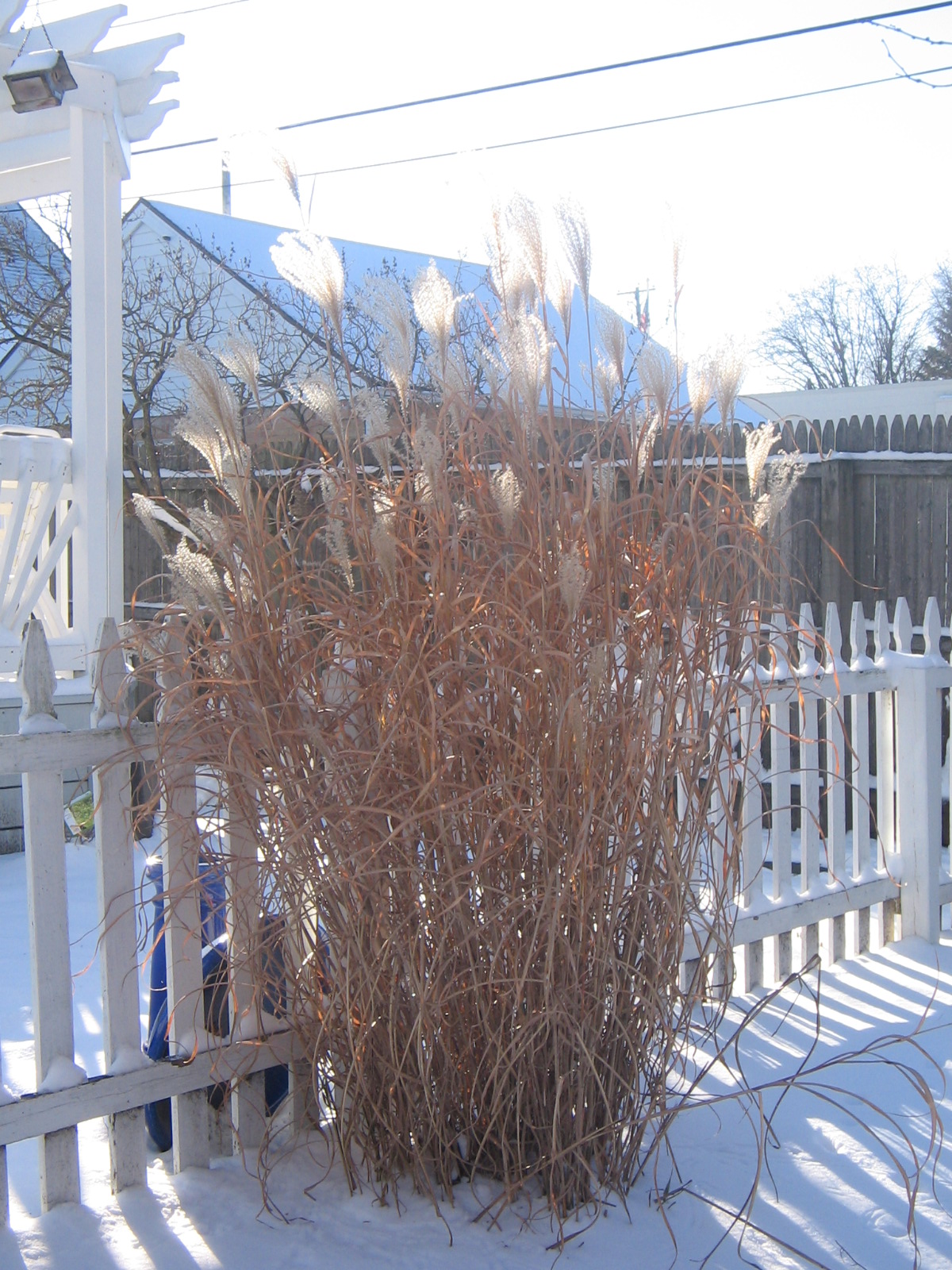
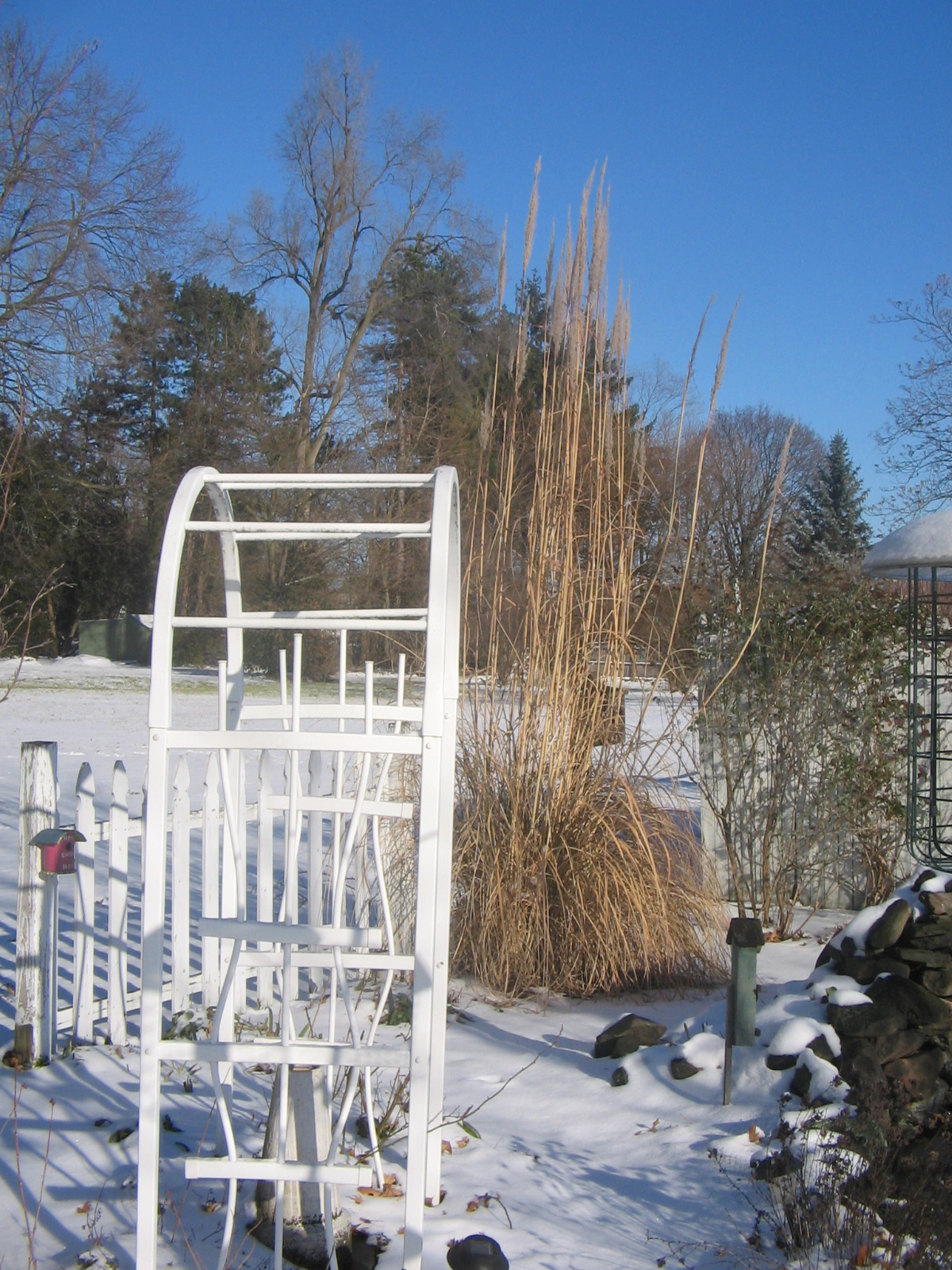
Thank you Gail for these lovely photos.
Heuchera, (coral bells) give great color and texture in their foliage in all seasons. With our winter being more mild then years ago, they see to keep shape and color better. Hellebores (Lenten rose) is another one I use in my garden that looks great all seasons. Although heavy snow can sometime crush the foliage. They are one of the many first bloomers. Here are a few more to consider that include winter interest: sedum, lambs ear, hens & chicks. 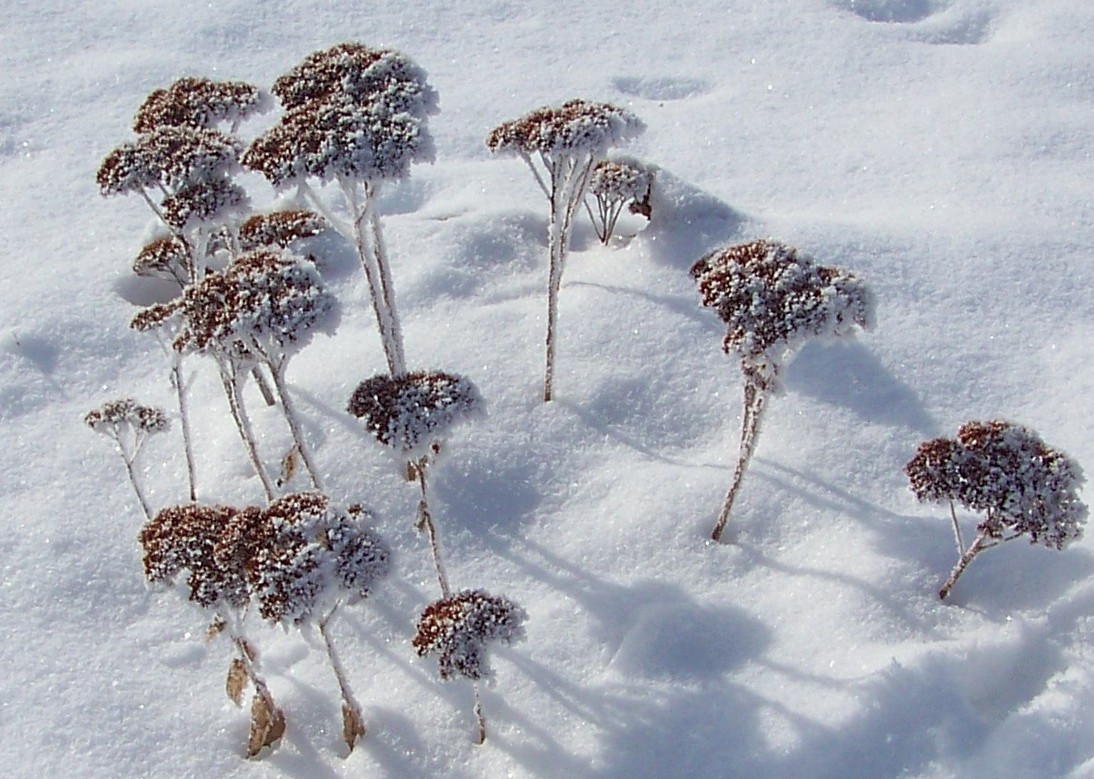
Don’t forget to include interesting structural plants. I’m talking about those woody plants that have bark interest or structure that looks interesting after the foliage has fallen. For example; Corylus aveillana “Contorta” (Harry Lauder’s walking stick) or an Acer palmatum (Japanese maple), both are very interesting structurally. 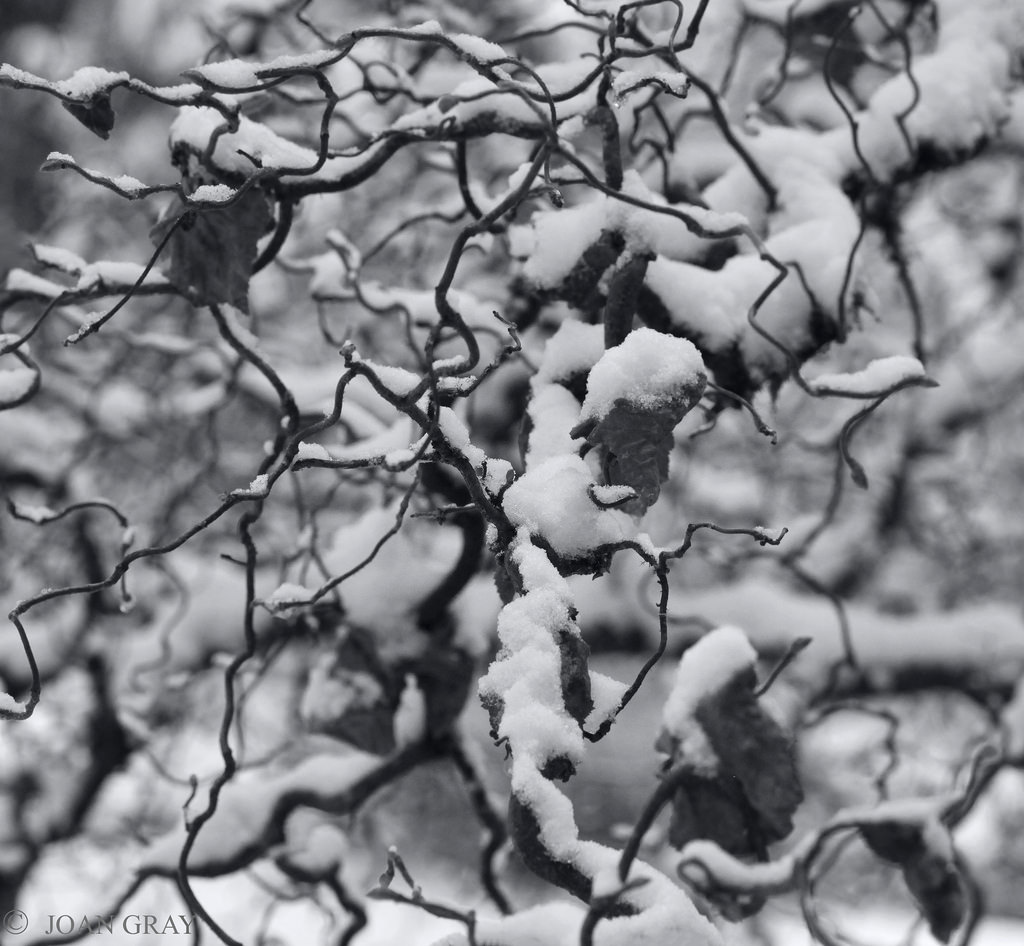

Now where should we locate these?
Unless you walk thru you garden often during the winter, I suggest you place these where they can be enjoyed from the interior thru your windows. Include the spots where you frequently sit and look out. Include containers on a deck, porch or patio, near the entrance of your home, or where you may sit on those unusually warm days.
Containers? Won’t they freeze? Some containers are very susceptible to freezing, such as clay, ceramic etc. But during the spring and summer, when you are purchasing a container, consider this. There are many containers that will hold up to the brutal winter weather.Fiberglass, metal, very thick plastic, and of course my favorite Woolly pockets for vertical gardens. These are just a few that will hold up to the frost, ice and snow. . Make some as well during the summer, such as stone, concrete, hollow log or a concrete block container like this:
 . This photo came from a Pinterest post, no credit was given on the post, but check Pinterest out for more interesting DIY pots.
A few additional tips: make sure the holes for drainage are not blocked, and use pot feet under them so that they won’t freeze to the ground, or surface they are sitting on. Ground frozen post often damage.
Lastly, don’t forget that texture, lighting and color. Texture is easy to obtain, color might be a bit more difficult. Color may be added thru birdhouses, feeders, containers, and structure items. Don’t forget those plant and trees with colorful berries, grasses like blue oak grass, and Japanese blood grass. It gets dark earlier so lighting should be added. Suggests are of course solar, but Christmas lights in a tree or bush adds interest.
In closing, I’m encouraging you to get up and get out there and garden.
Posted in Uncategorized | 4 Comments »
November 30th
10 a.m. – 1 p.m.
Oakwoods Metropark
2911 Willow Rd
Flat Rock, MI 48134
For additional information click link below:
https://content.govdelivery.com/accounts/MIDNR/bulletins/1c512b3?reqfrom=share
Posted in Uncategorized | Leave a Comment »
Let’s begin with an Oct. double rainbow—so clear we were able to see every color of the spectrum
Many of the photos I submitted to the blog this past season, have revolved around
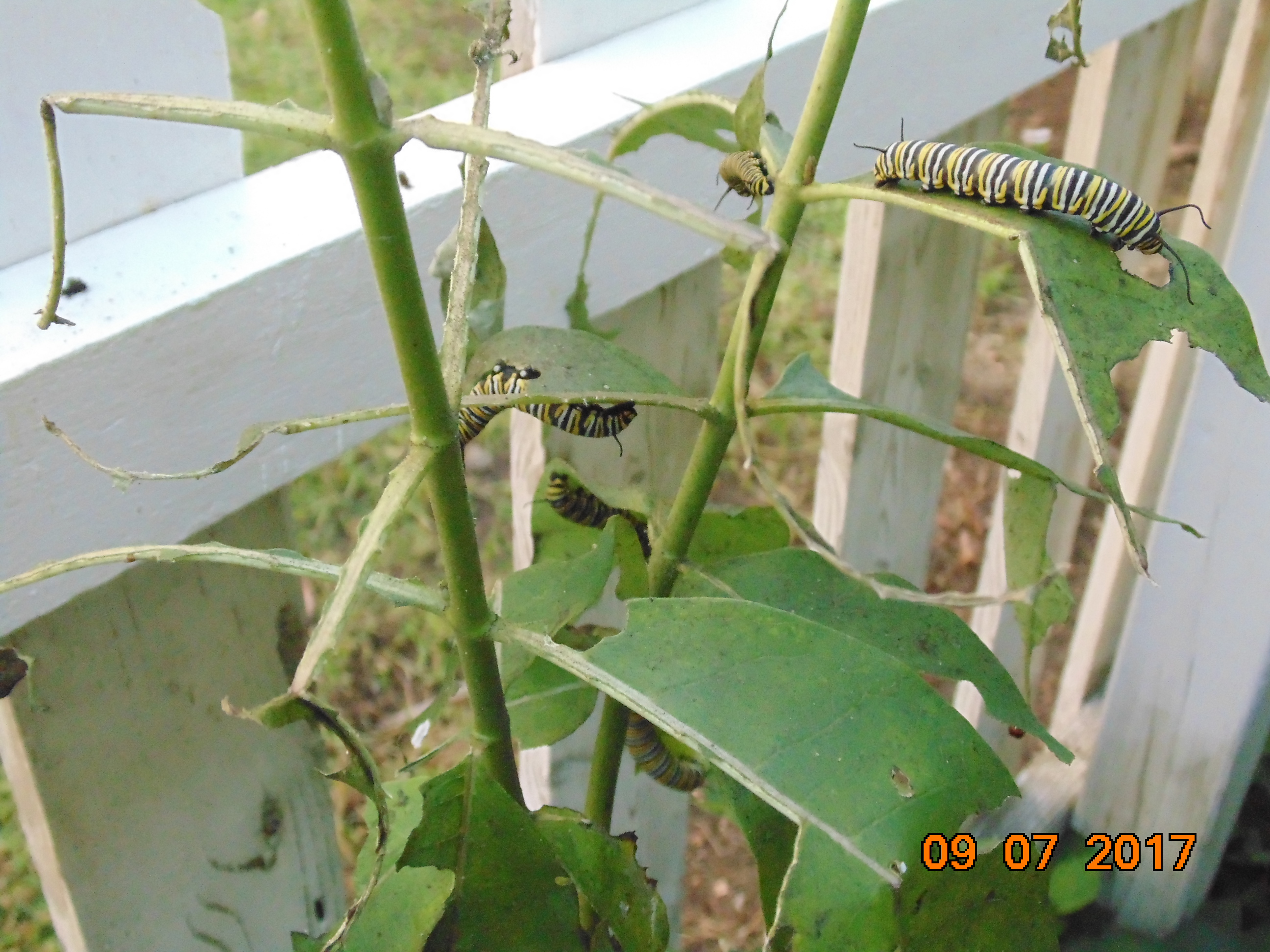
Monarchs. I was fortunate this summer to have a large number of milkweed plants play
host for the Monarchs. As things progressed, I became a surrogate whose task was to oversee
the nursery so to speak……
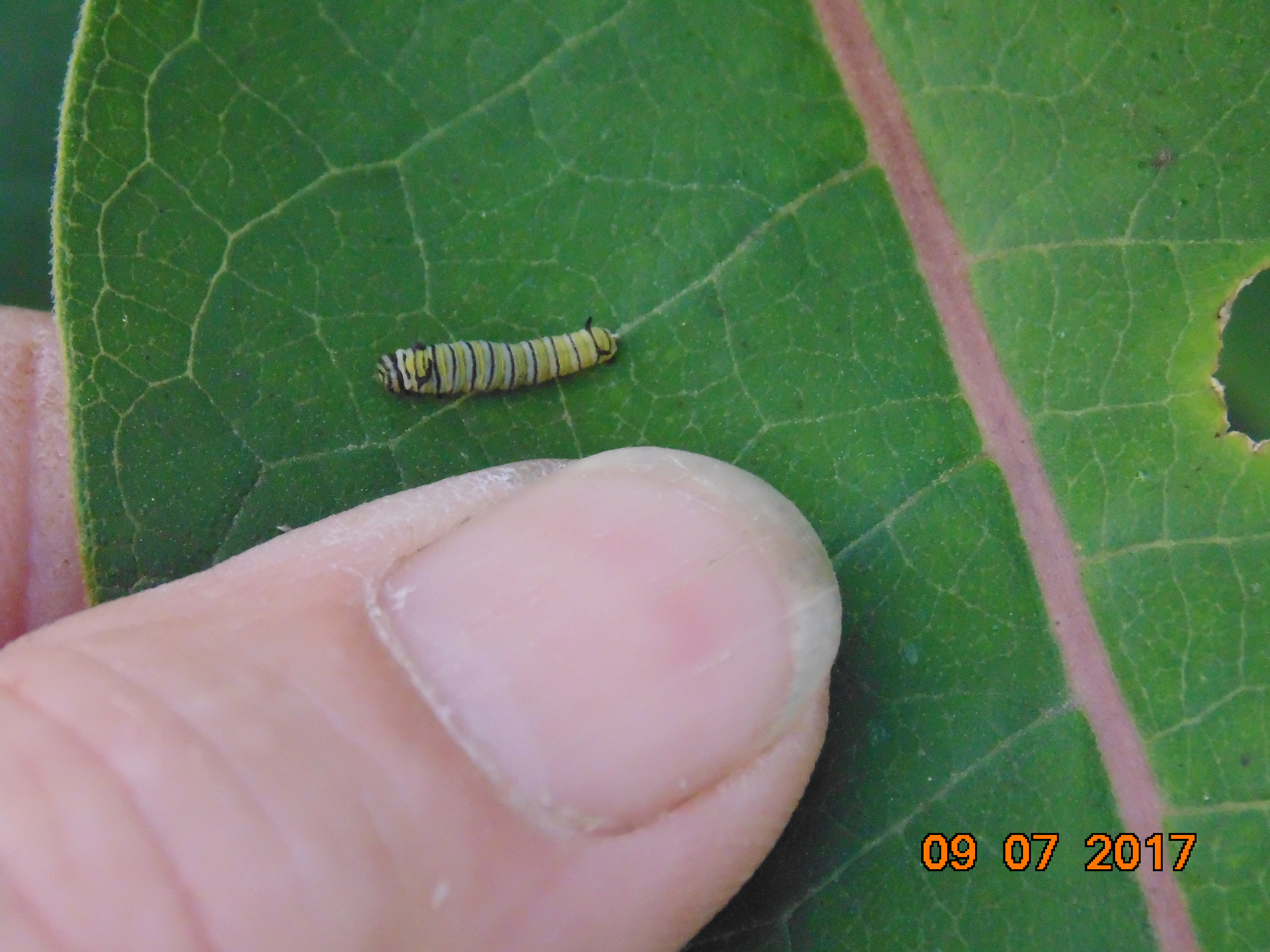
Posted in order are #1……..the earliest noted. no wonder they get missed
#2 is a full size caterpillar. #4 talk about appetites……….when they were all done and
had gone into chrysalis stage, all that was left was the main stems.
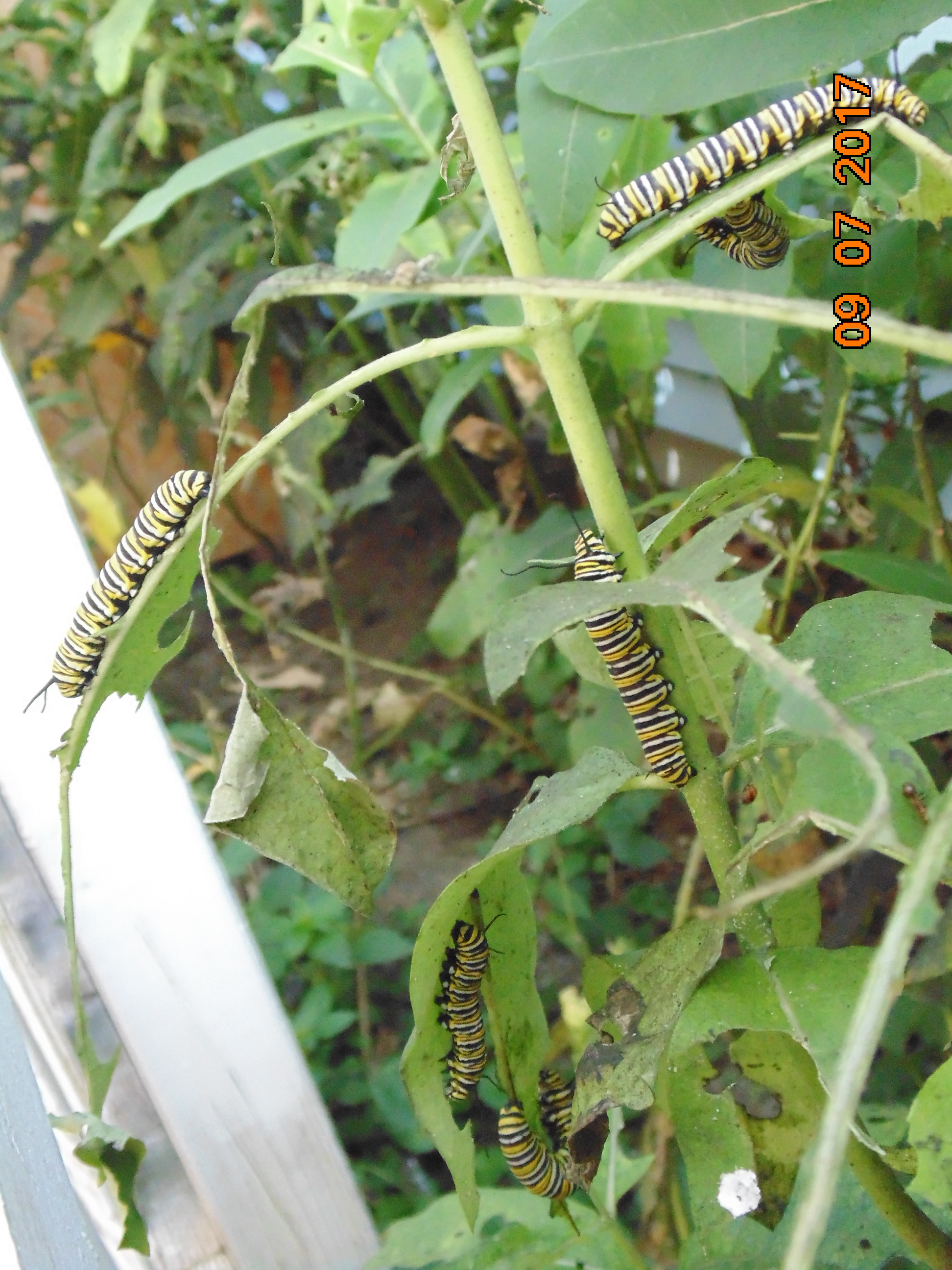
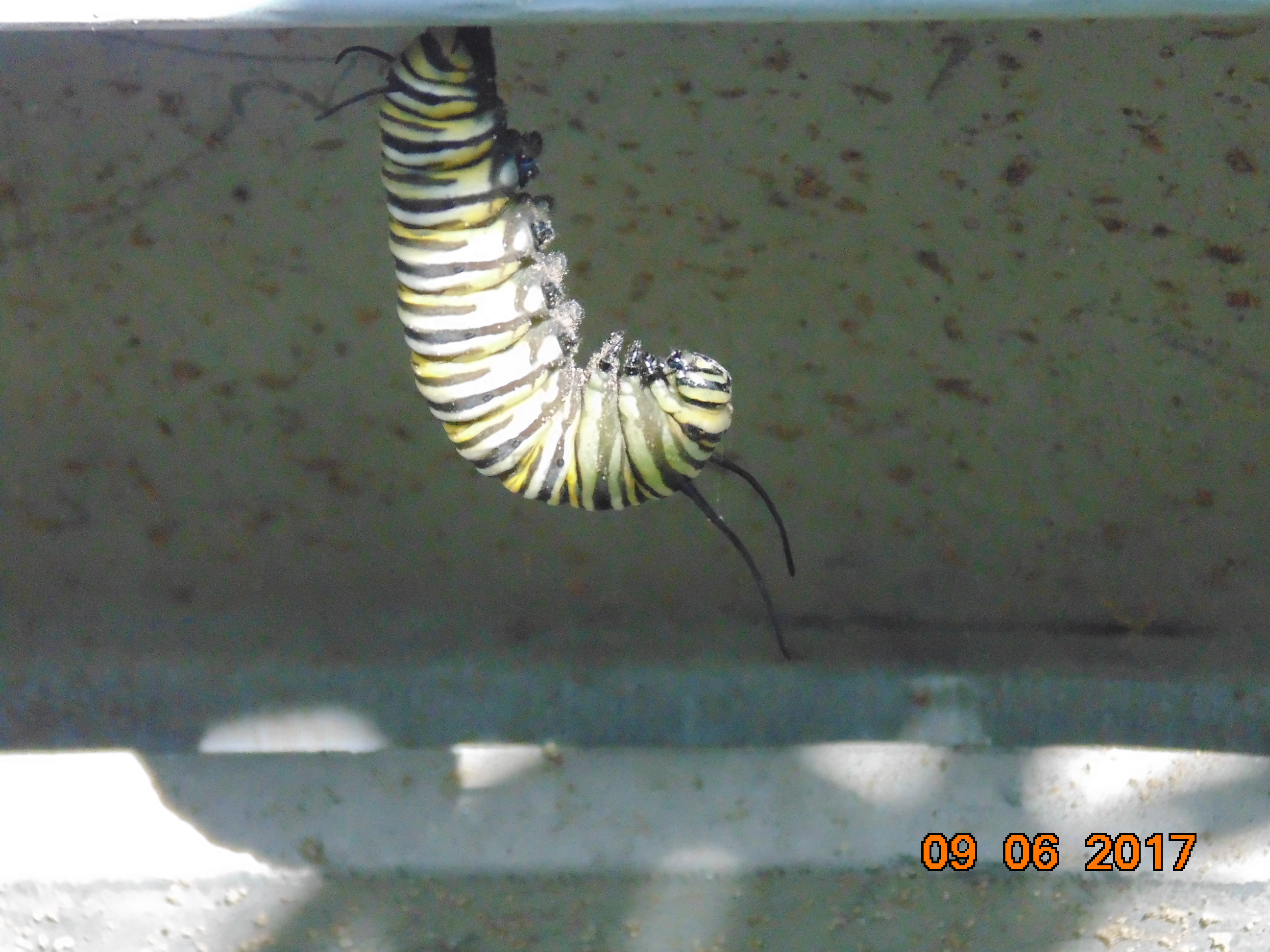
#5 once they are big enough, they seek out a place to make their chrysalis.
#6 the spot chosen, they will curl up to begin the change
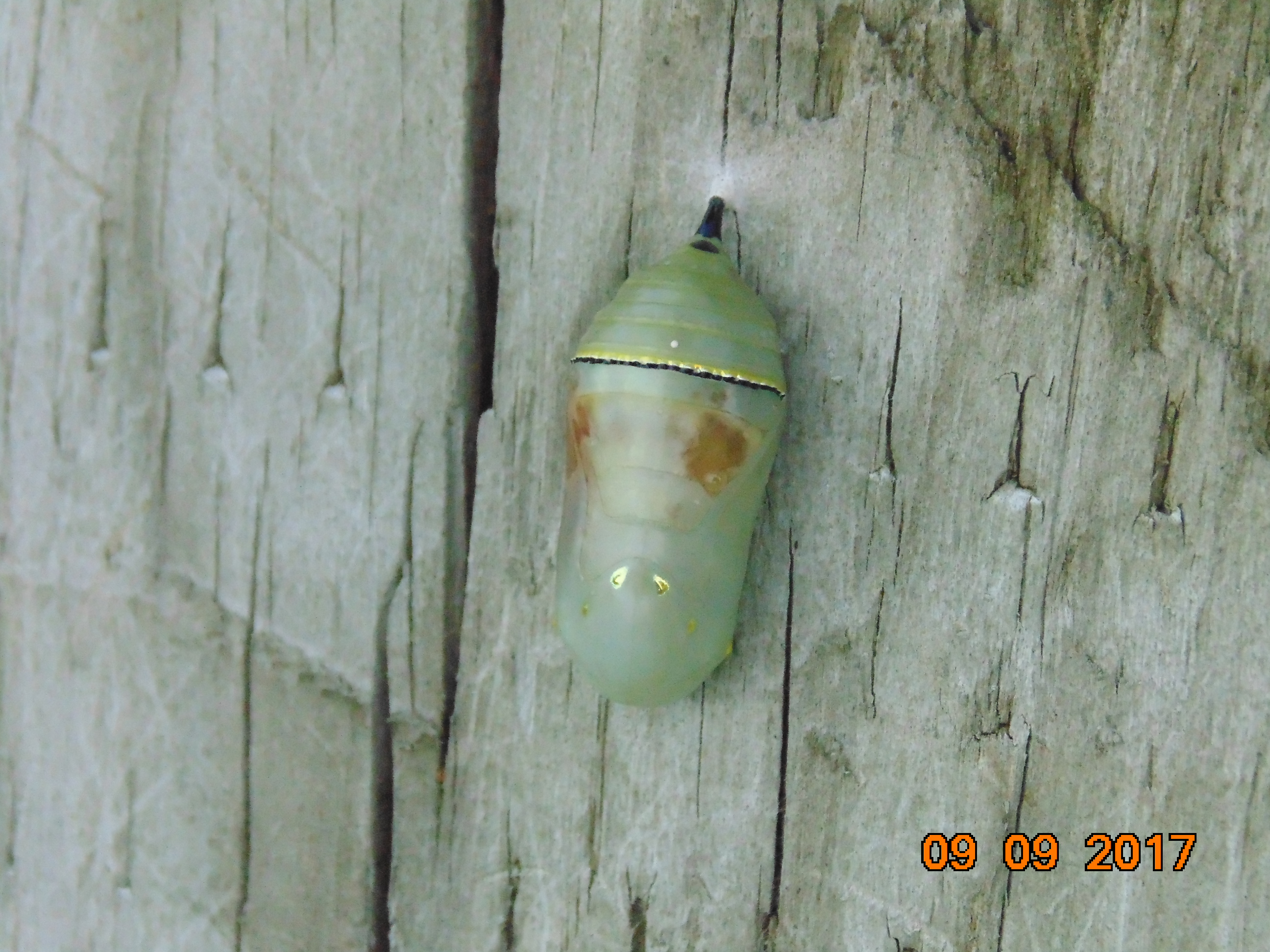
# 7 the end result. they stay in this state until they have transformed into a butterfly
#8 when ready they will emerge from the bottom of the chrysalis and hang there until

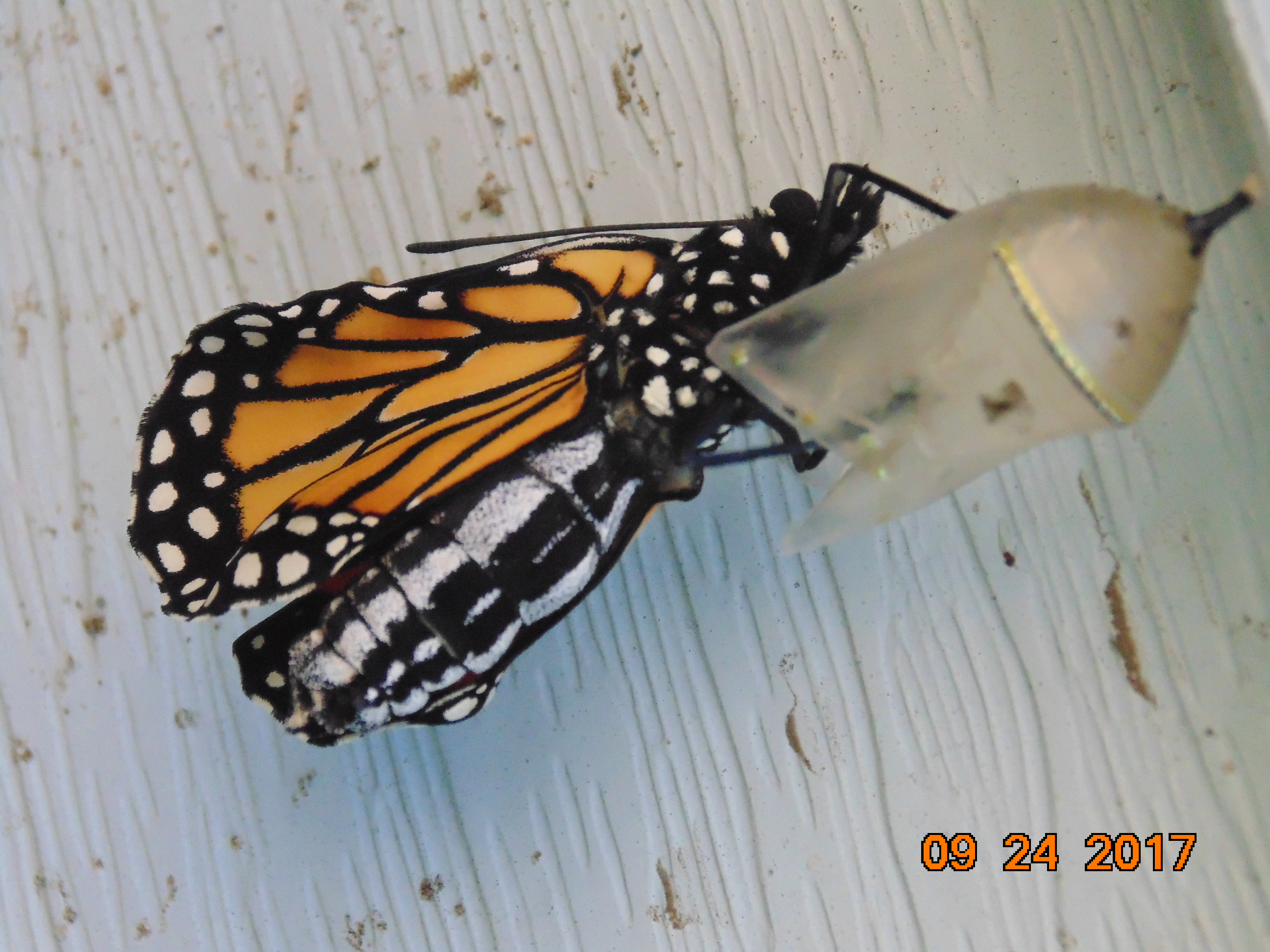
their wings have uncurled fully and partially dried.
#9 where did it go
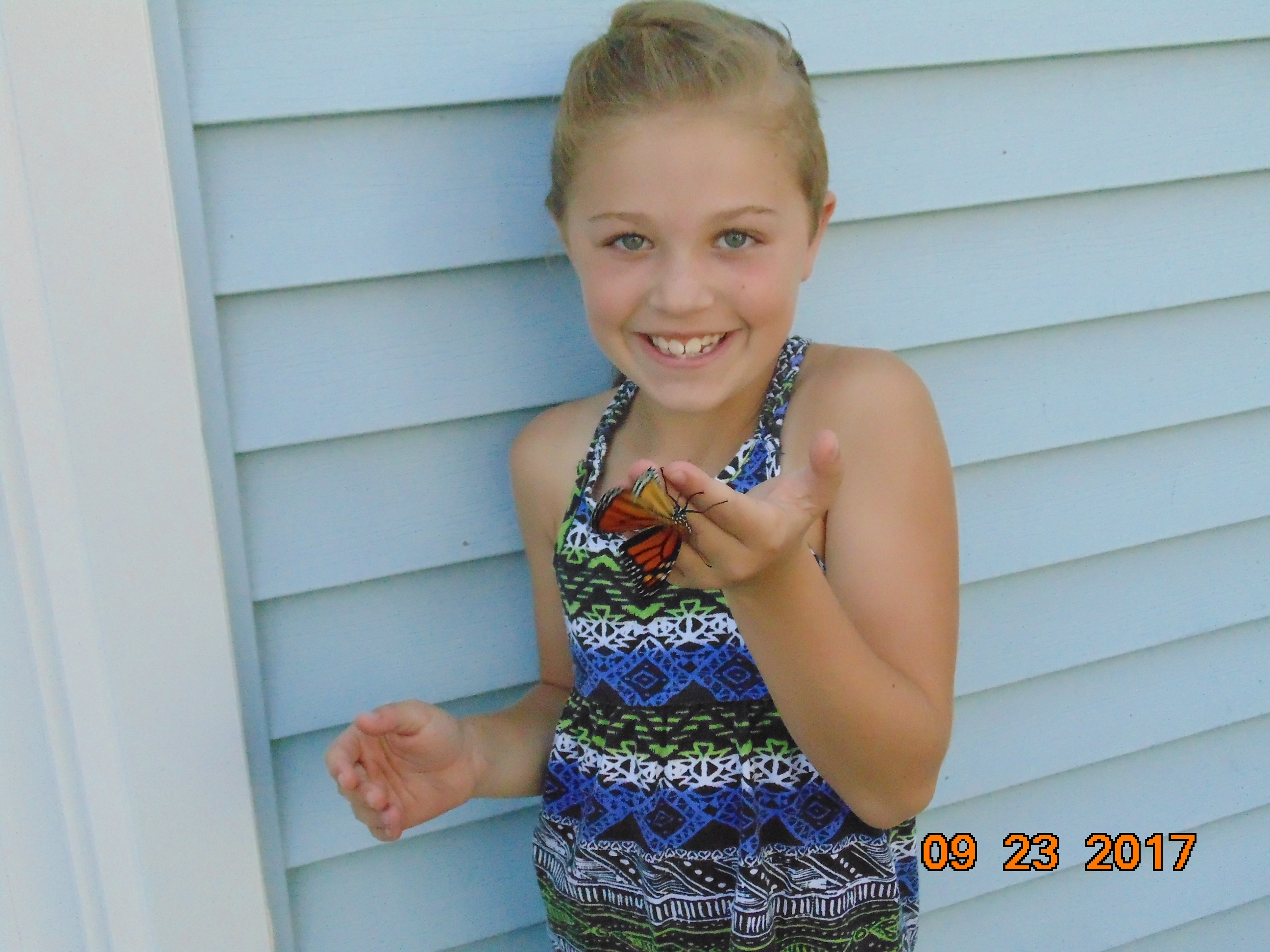
#10 & #11 fortunate to be able to teach my granddaughter the life cycle of the Monarch
#12 sitting in sun and fanning its wings
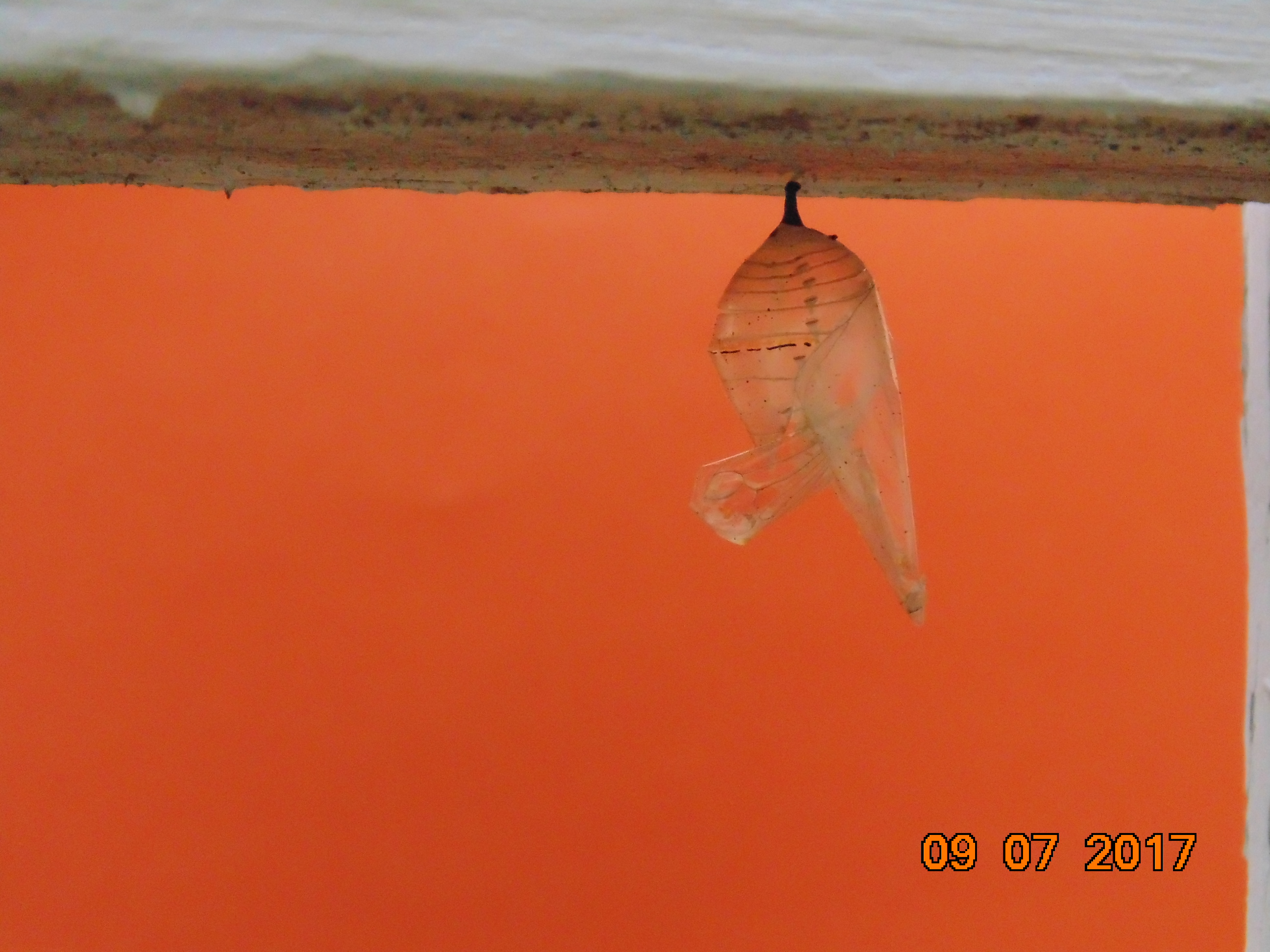
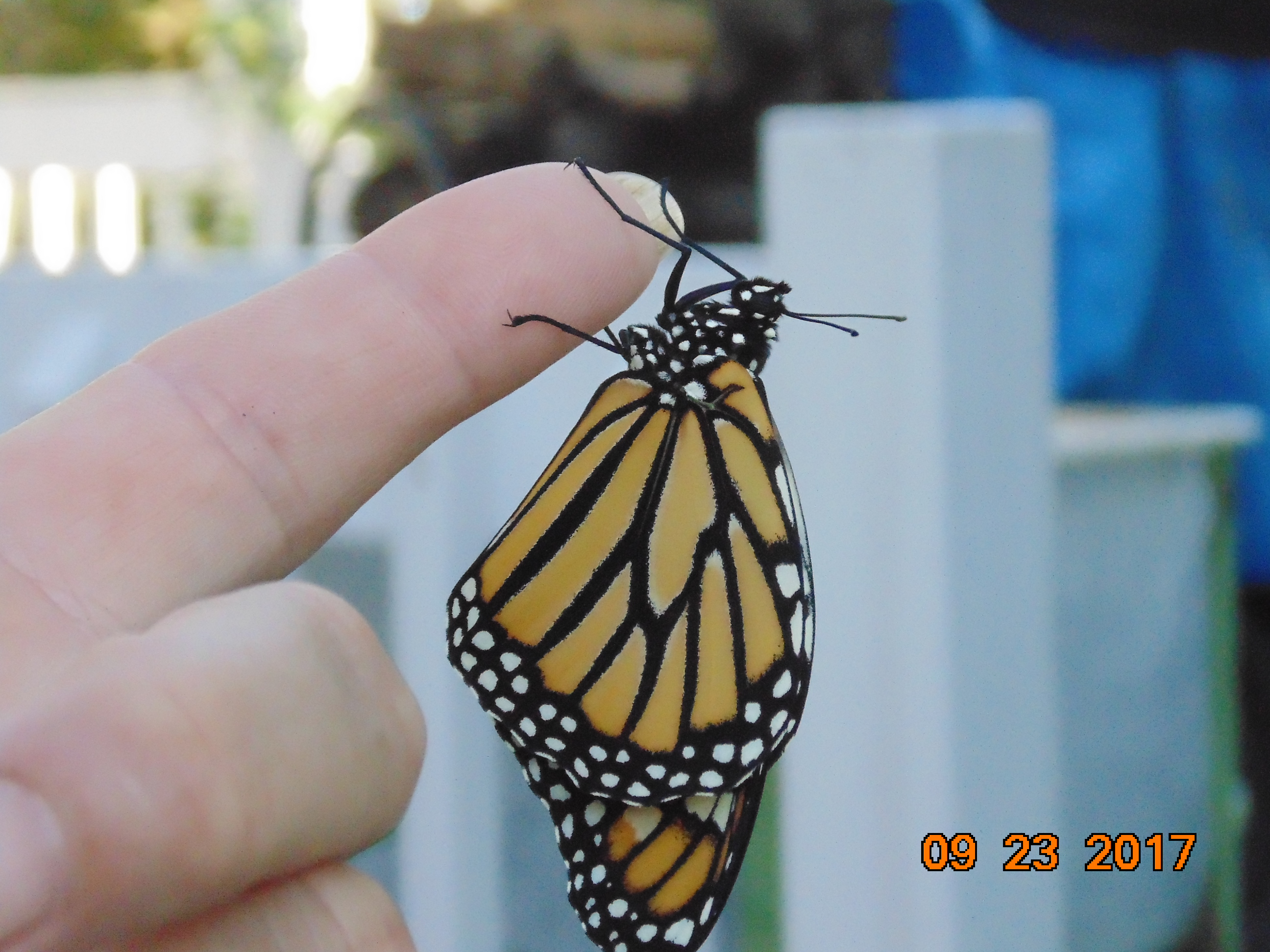

After hatching, their wings are stiff and wet and they must dry out.
They will fan their wings while hanging from the chrysalis or walk to
a spot where there is room to do this. Very vulnerable at this time.
We had one day where the bush right outside my kitchen window
held 4 of newly hatched Monarchs. As soon as they could fly
they headed for nectar plants.

I tried to keep tabs on the milkweed nursery but it wasn’t easy. I collected 18 empty chrysalis, which
would lead me to believe I had at least 18 eggs go full cycle. I collected 7 “damaged” chrysalis
cases………..and i saw at least 5 deformed caterpillars………….
WOW–a few things off my bucket list…………..hoping for a repeat next year.
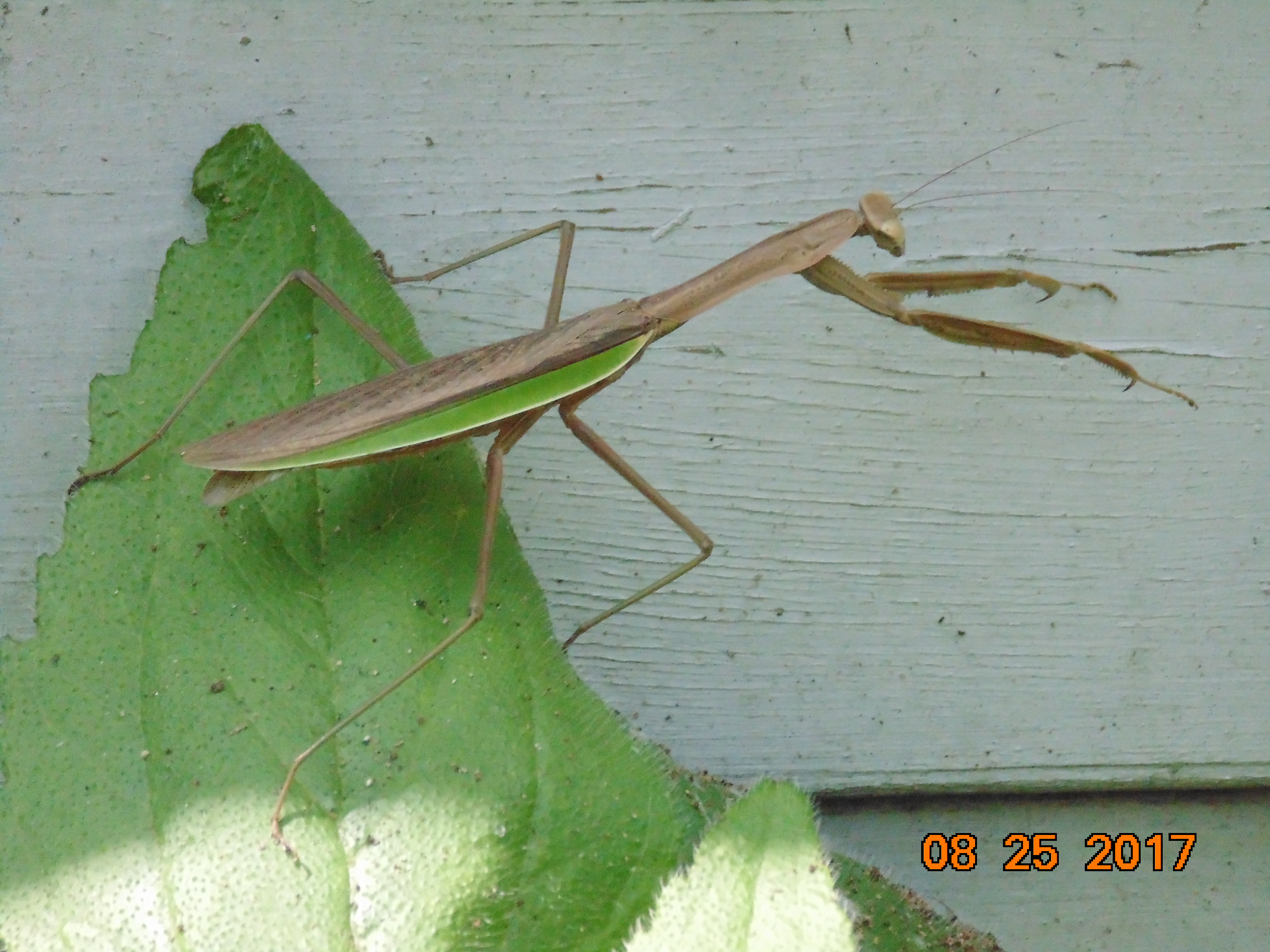
in closing….a fall sunset and a couple of other visitors I came across
Isn’t nature just grand………….gk
Posted in Uncategorized | 3 Comments »
Connie and Gail offered photos for today…Gail writes:
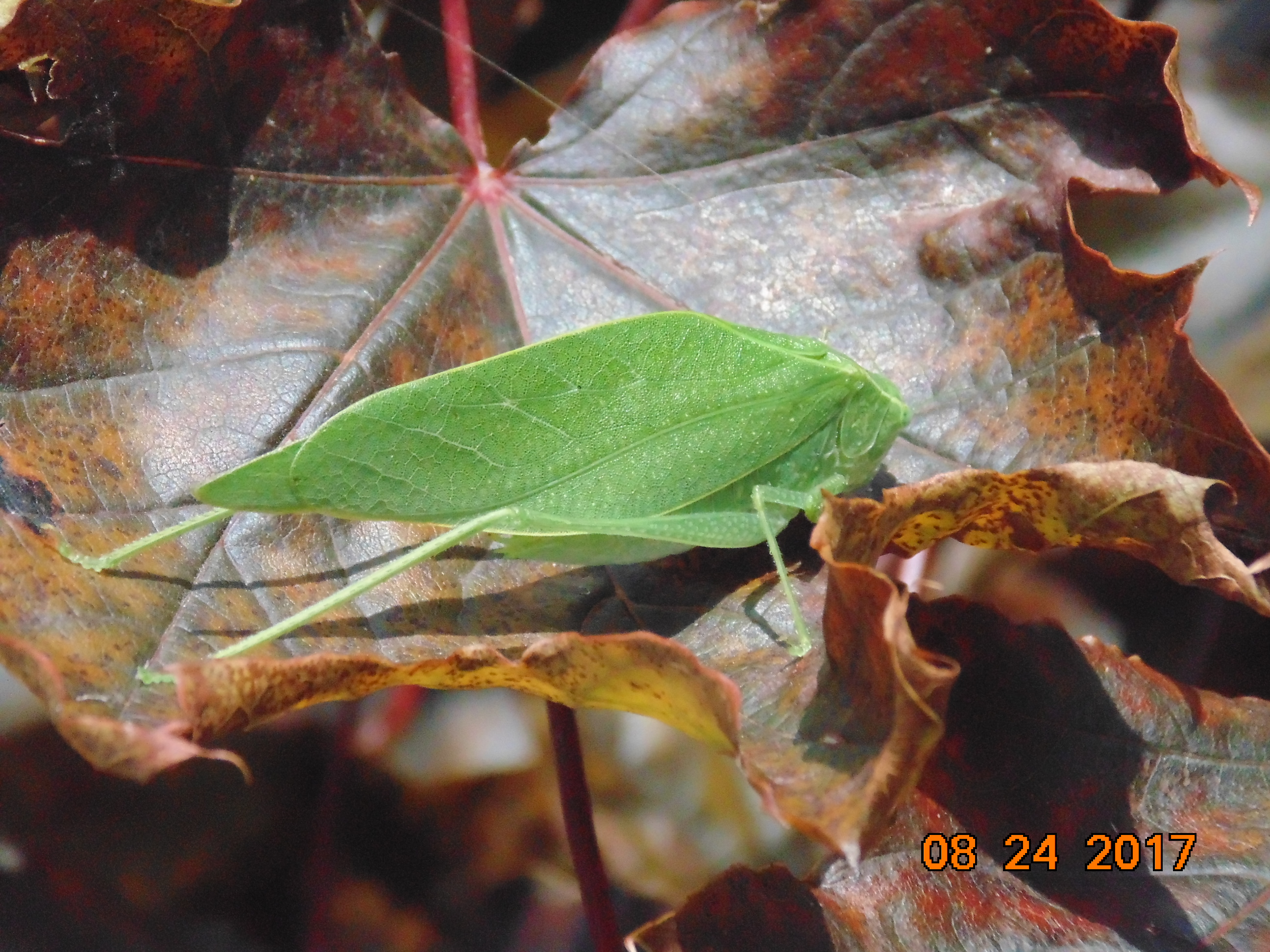
Connie and I both found some of our caterpillars looking dried up………
had not a clue but got on-line and learned that despite the
foul taste, there are predators…………..
you will see our native stink bug–you can see a
narrow tube from the bug to the caterpillar. The stink bug pierces the
soft caterpillar and literally sucks out all it juices, reducing it to a dried up
piece of tissue. The last pic shows another predator, the milkweed bug-
doing about the same but to a chrysalis………..
other predators of the Monarchs are ants, spiders, & wasps.


Posted in Uncategorized | Leave a Comment »
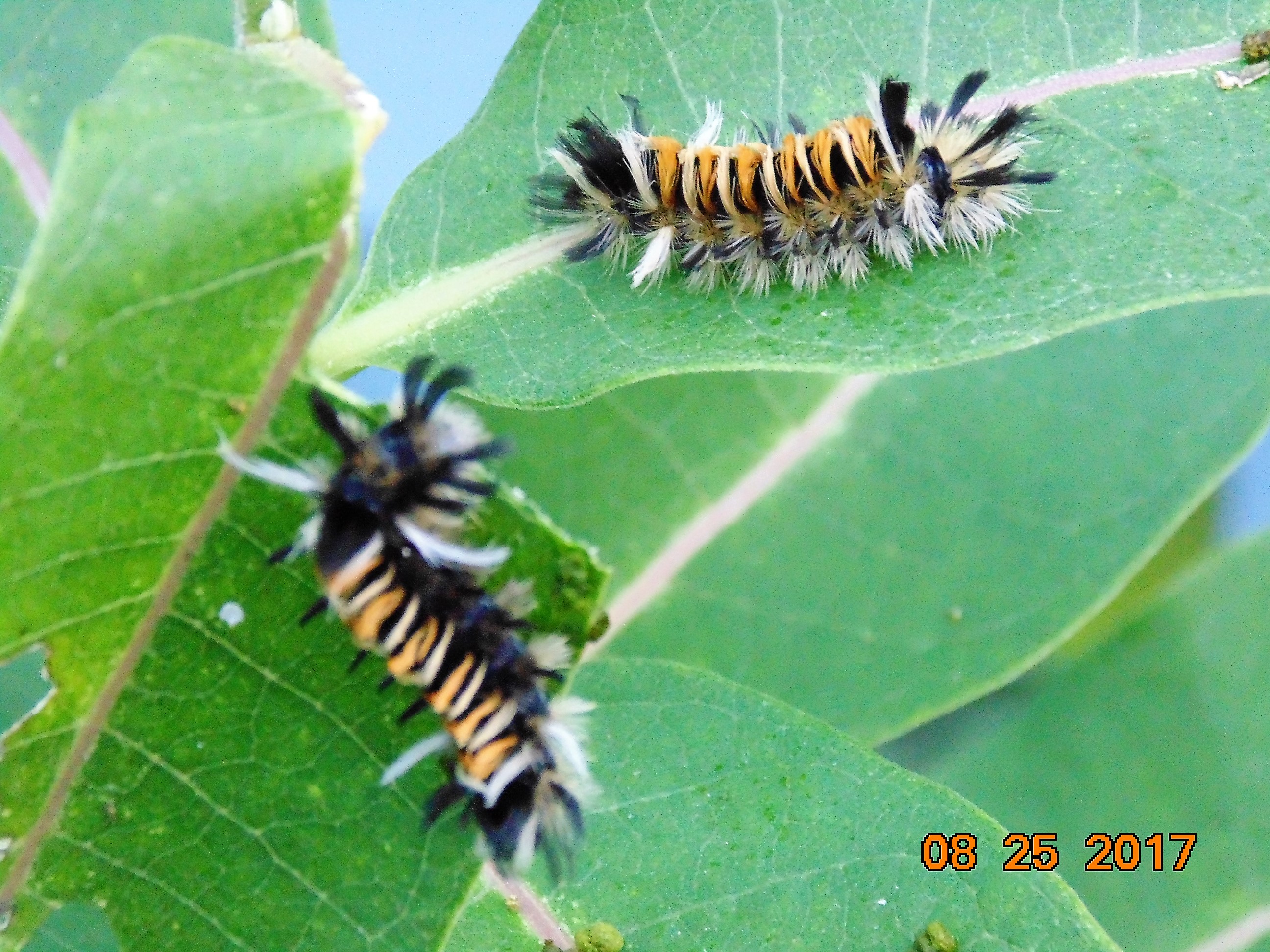
While monitoring milkweed plants for Monarch activity Gail came across this
caterpillar–chomping away on the leaves of her milkweed plants. Needless to say, due to
a large number of Monarch caterpillars, these were removed from the area.
Unsure if a light on at night in this area, attracted the source of these caterpillars, which
continued to show & she persisted in moving.
Can you name this caterpillar?
Posted in Uncategorized | 5 Comments »

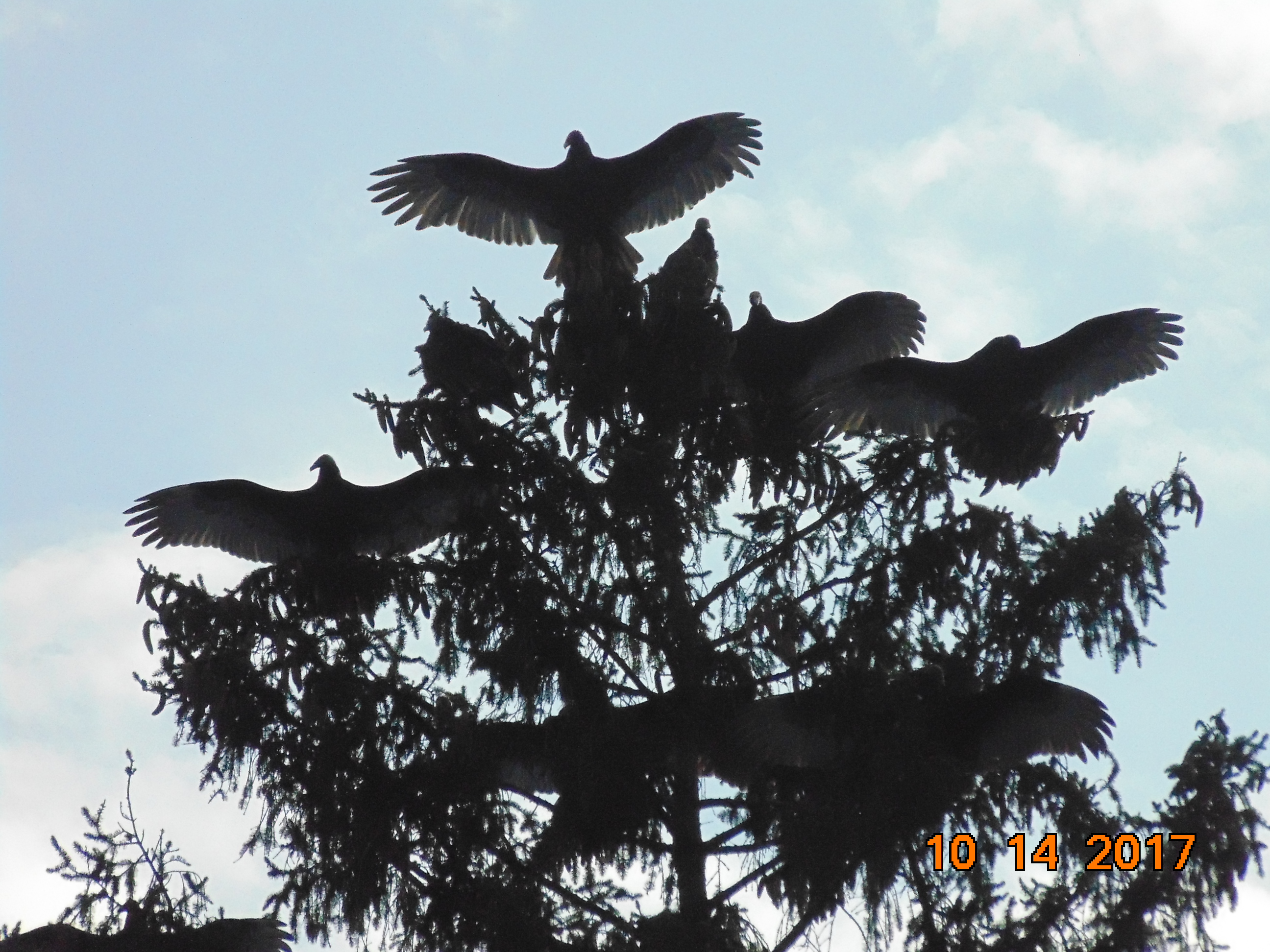
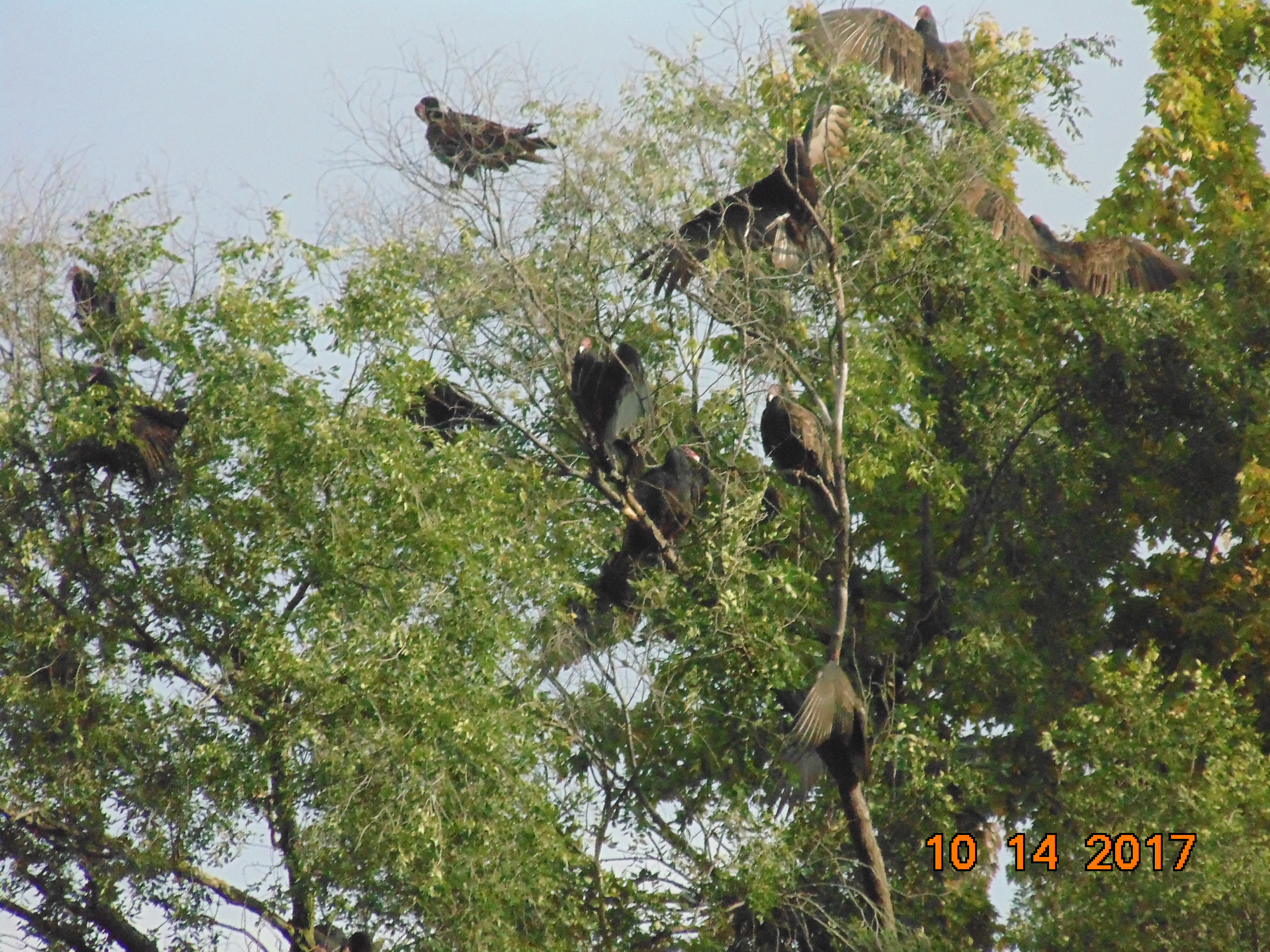
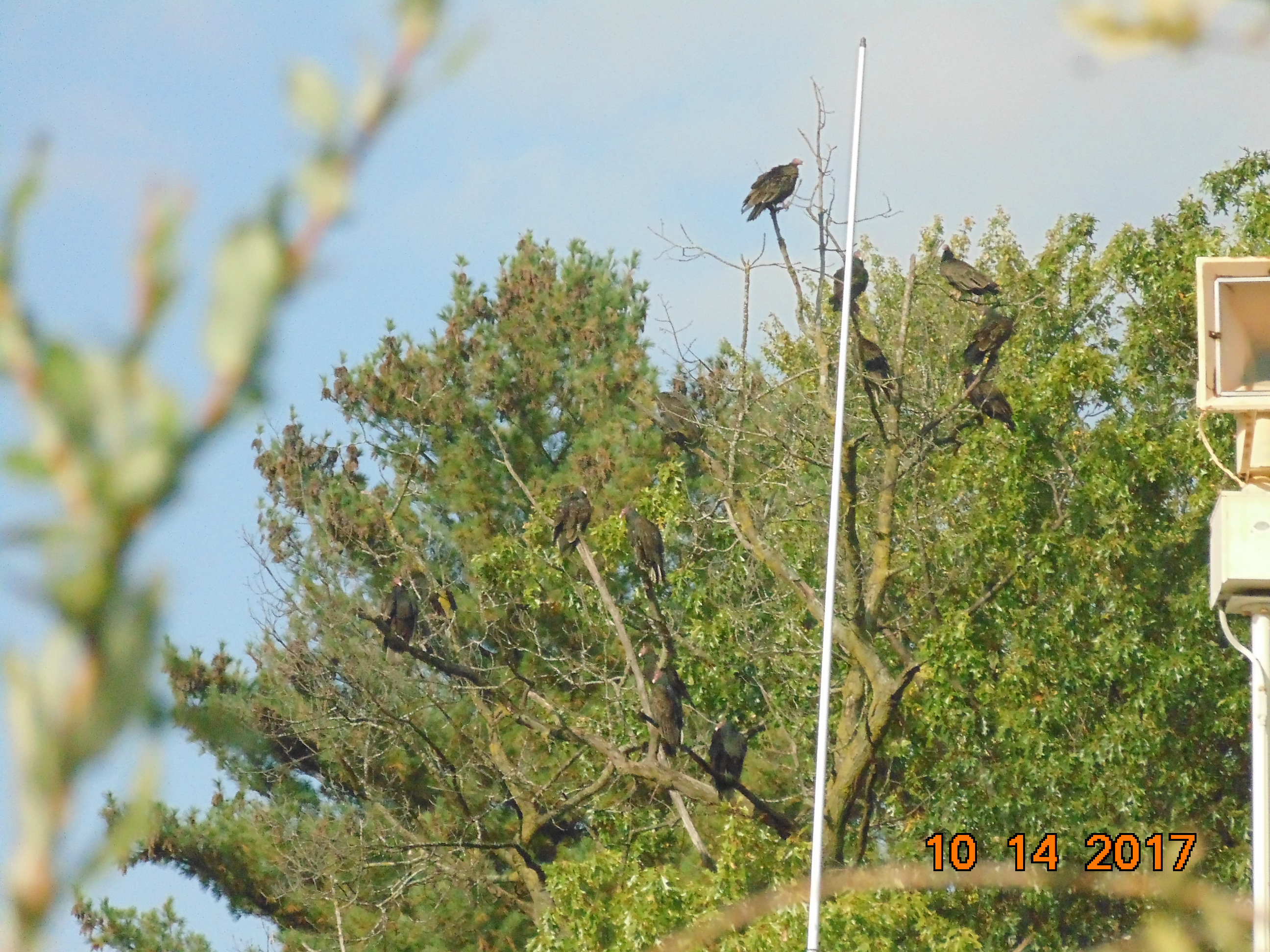
Gail writes: We had a large grouping of turkey vultures roost Friday night in various tress in yards that surround our home
yesterday morning, they sat drying their wings and then left…… did not come back to roost last night. WHEW!!!!
must be on their migratory path……hoping they don’t come back, at least to these trees, come spring…..
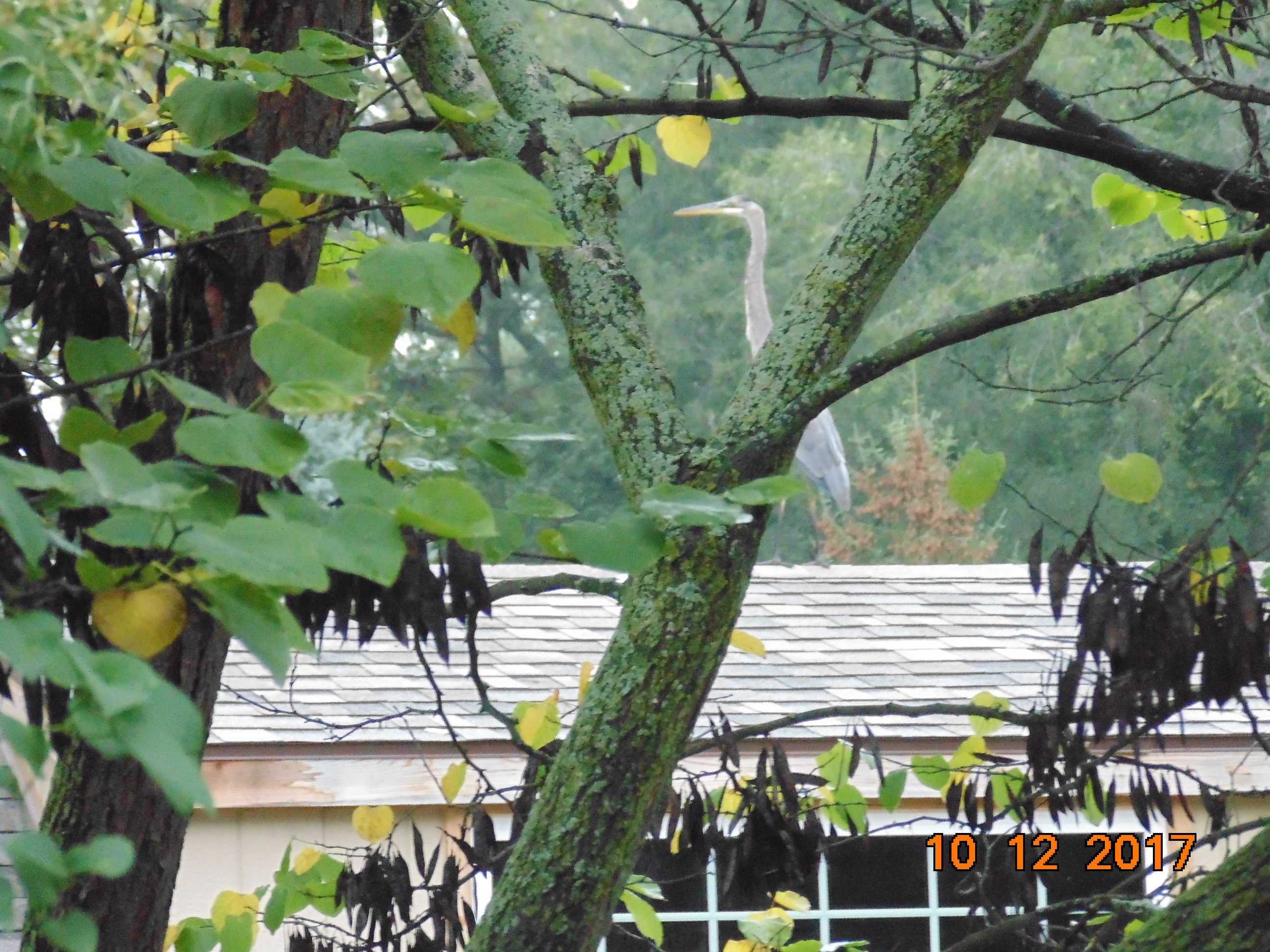
the last picture is a gray heron who visited and then rudely ate most of the goldfish in our pond………
Check out these interesting facts about rkey vultures here: http://www.kern.audubon.org/tvfacts.htm
Posted in Uncategorized | Leave a Comment »
 Monroe County Master Gardener Association