Feeds:
Posts
Comments

Photo Friday

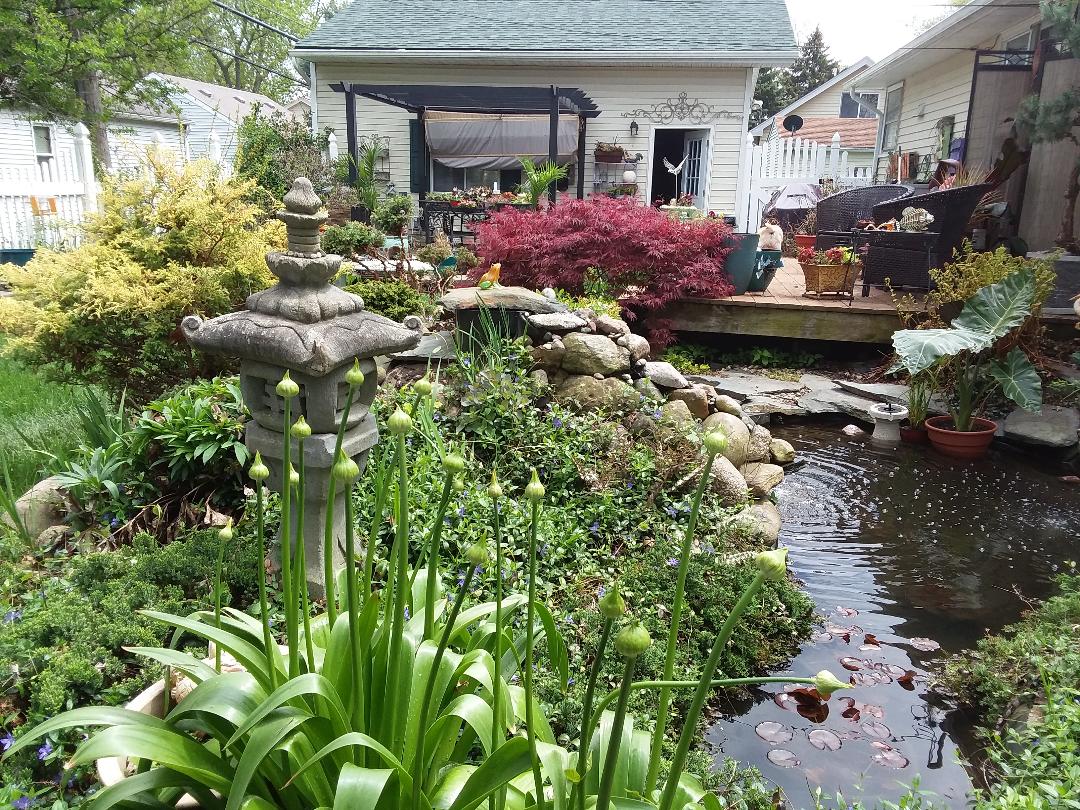
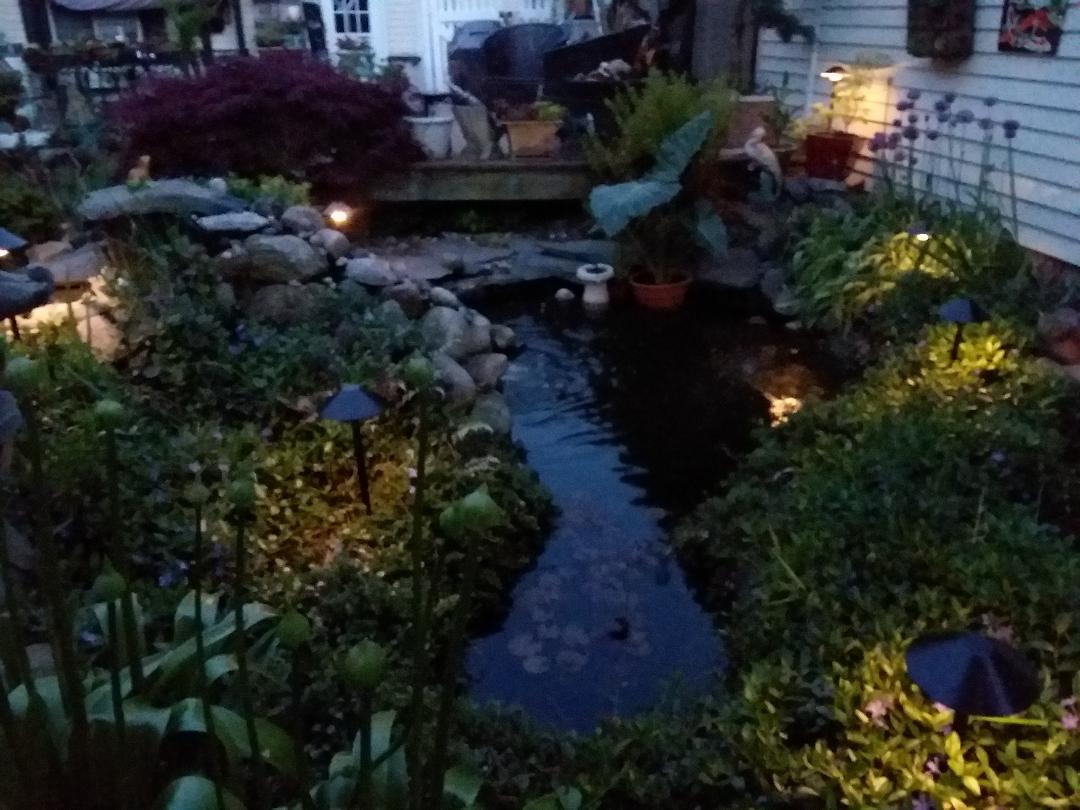
With no other photos to share, I thought I’d share what I’ve been up to in my garden. Sometimes life takes a turn and you just can’t do certain things, and you let them go. This was the case for my pond. This year I made it my goal. I’m pleased with the results:

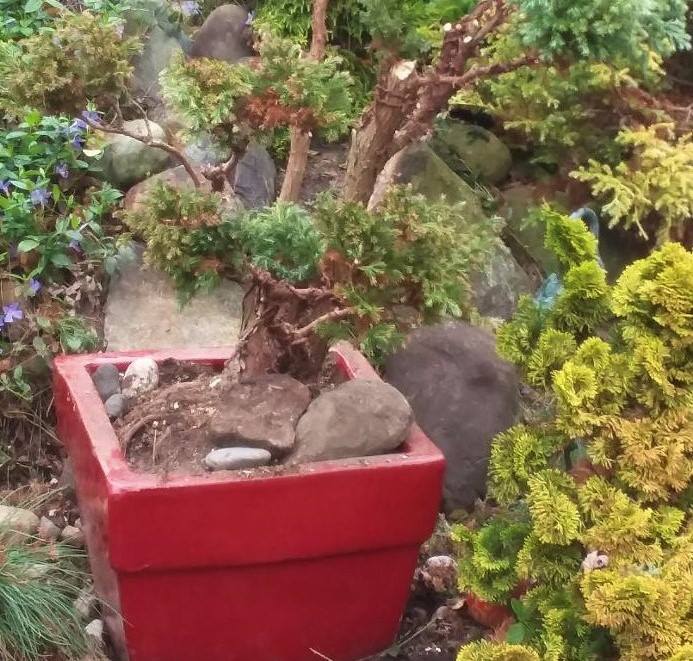
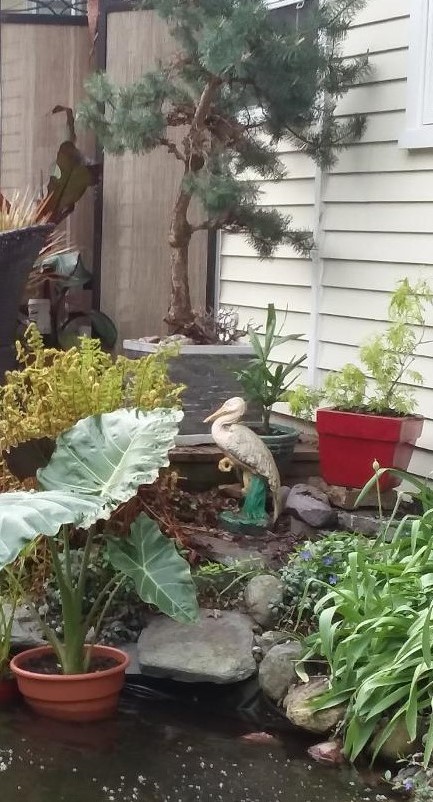
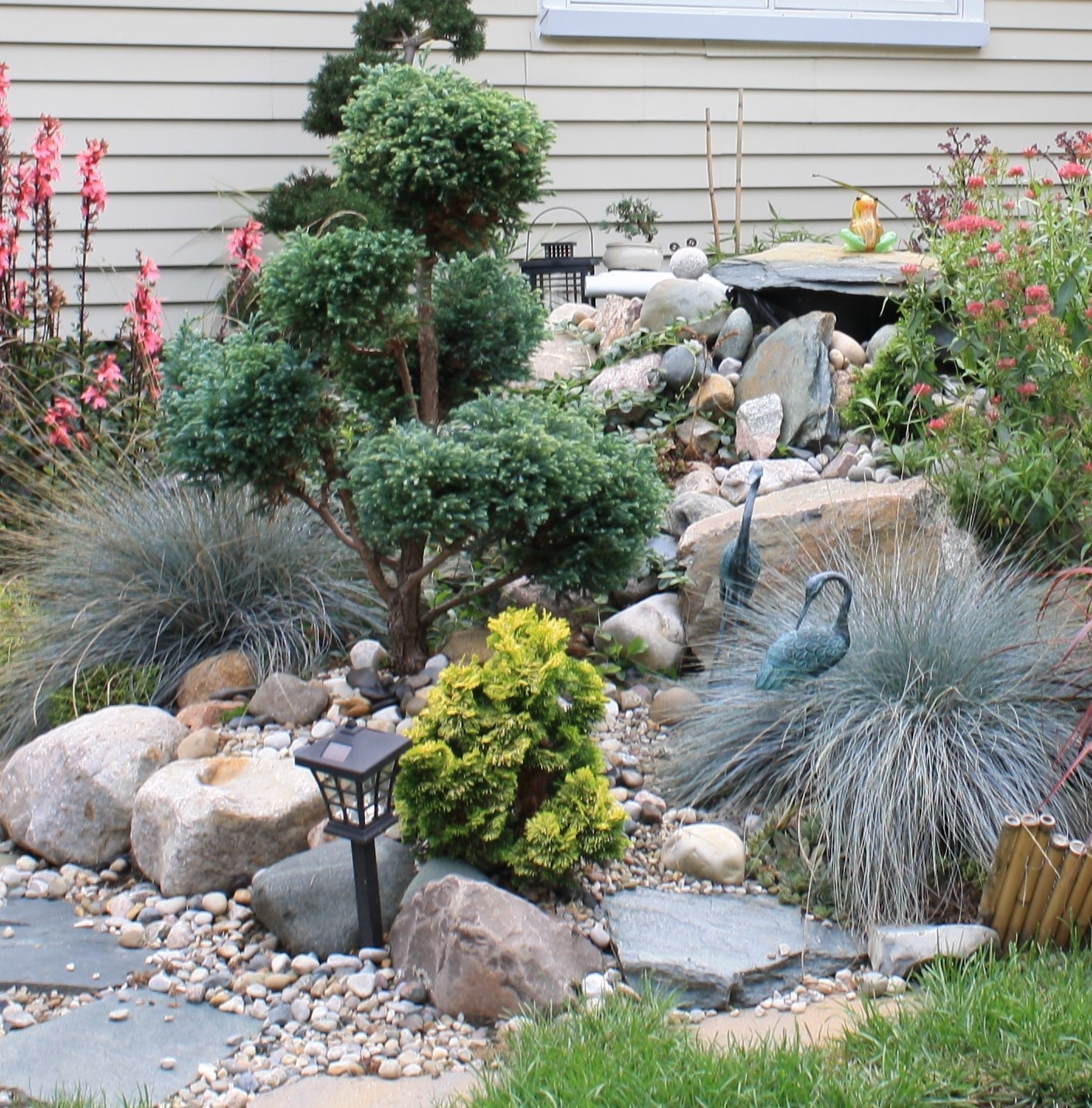
I started with digging up a couple of pines that were overgrown for the area. I potted them for my first attempts at bonsai. The first attempt ay need to grow out some….well, maybe a lot, so it looks better.

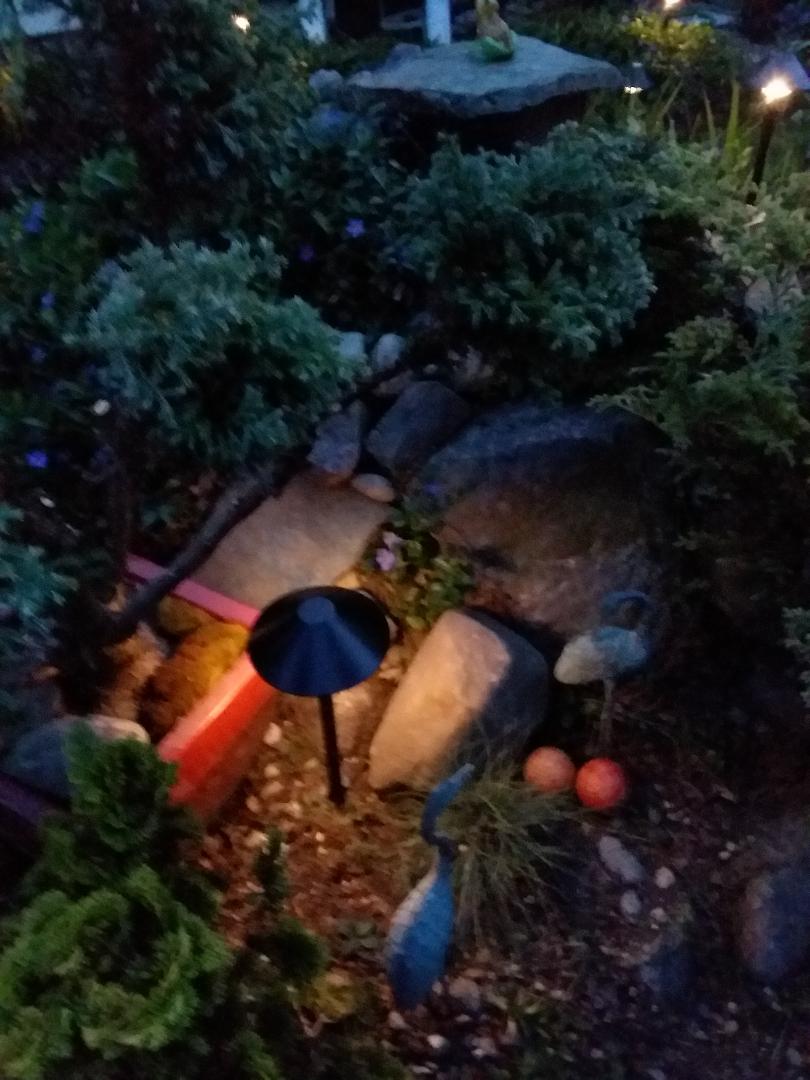
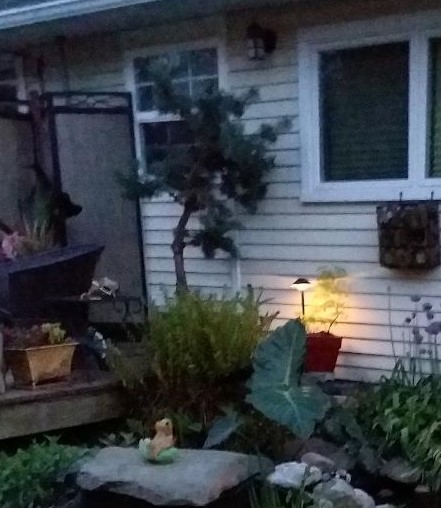
I added lights for evening interest under it.

So then, a second attempt. This one was so overgrown. Although there was an abundance of cutting to discard, it turned out much better.

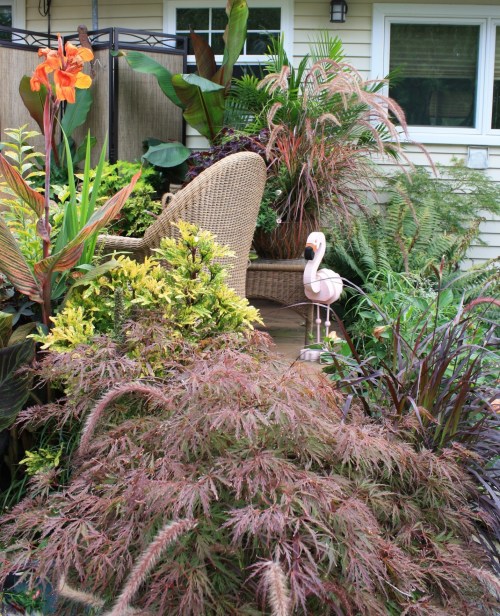
In this photo. you will also see an Alocasia, allium, an ostrich fern (just opening) a Lemony Lace Elderberry in the red pot, and a Windmill Palm. The Lemony Lace Elderberry has been potted for about 3 years. It certainly has help to control it’s growth, unlike the black lace I have in my front yard. It’s about 6 feet tall now…Lots of pruning to be done on it. Here’s the evening view:

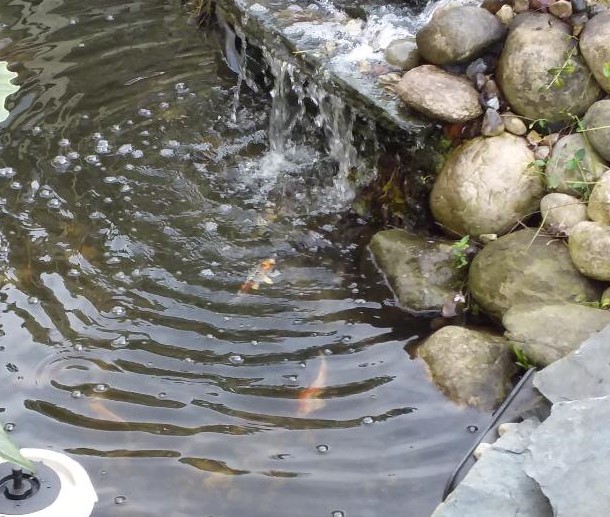
After two years of not working nor being cleaned, it wasn’t as difficult as I anticipated to get everything running again.

waterfall makes the fish happy


Overall I’m pleased with the results, although I’m thinking I need to thin out some allium.

What’s next to do: clean out some beds, plant some roses for my English garden, and eliminate my overgrown Wisteria. Hoping my arbor is not too contorted from that vine.

Photo Friday

Those BIG BOLD BEAUTIFUL BLOOMS that come in May:
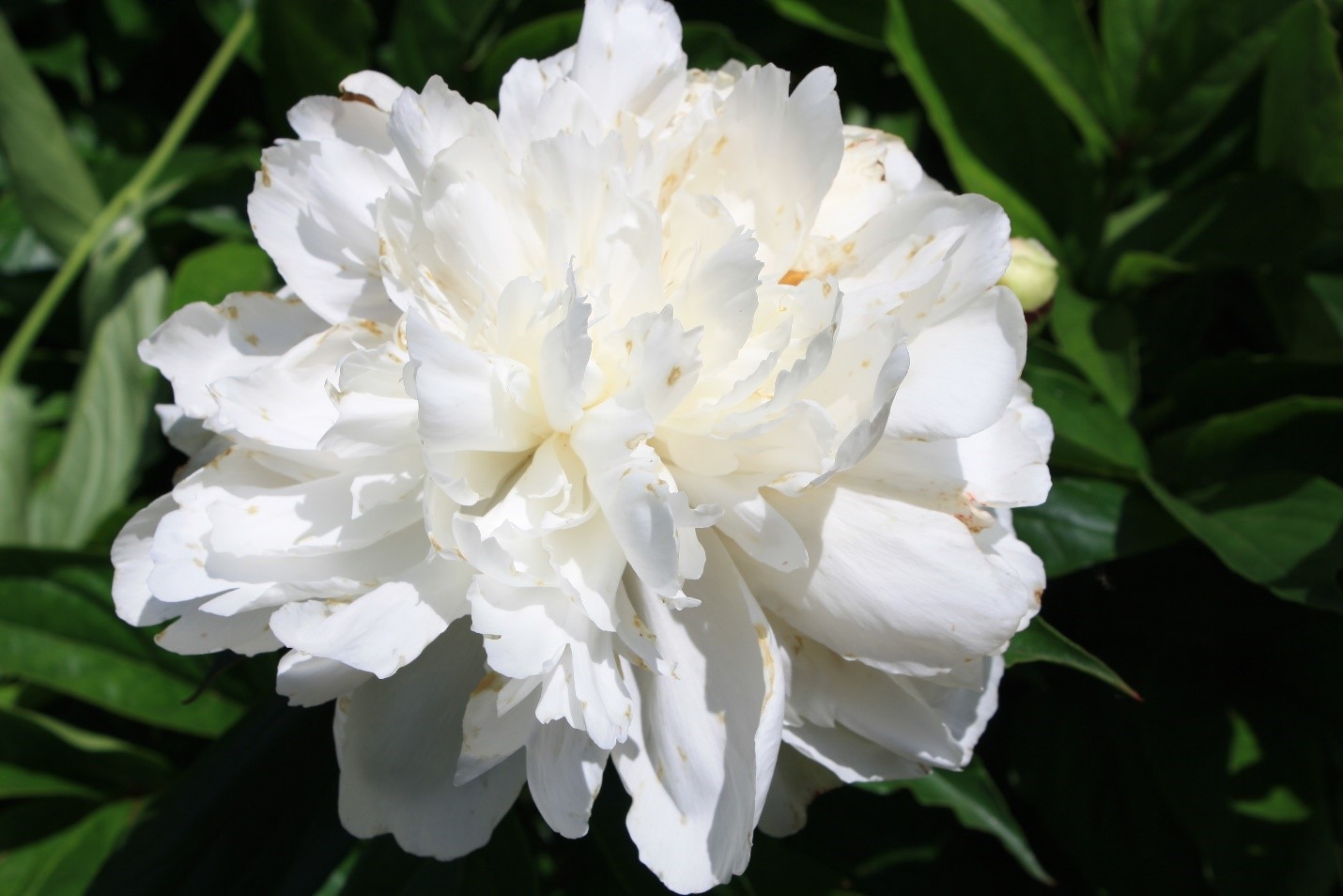
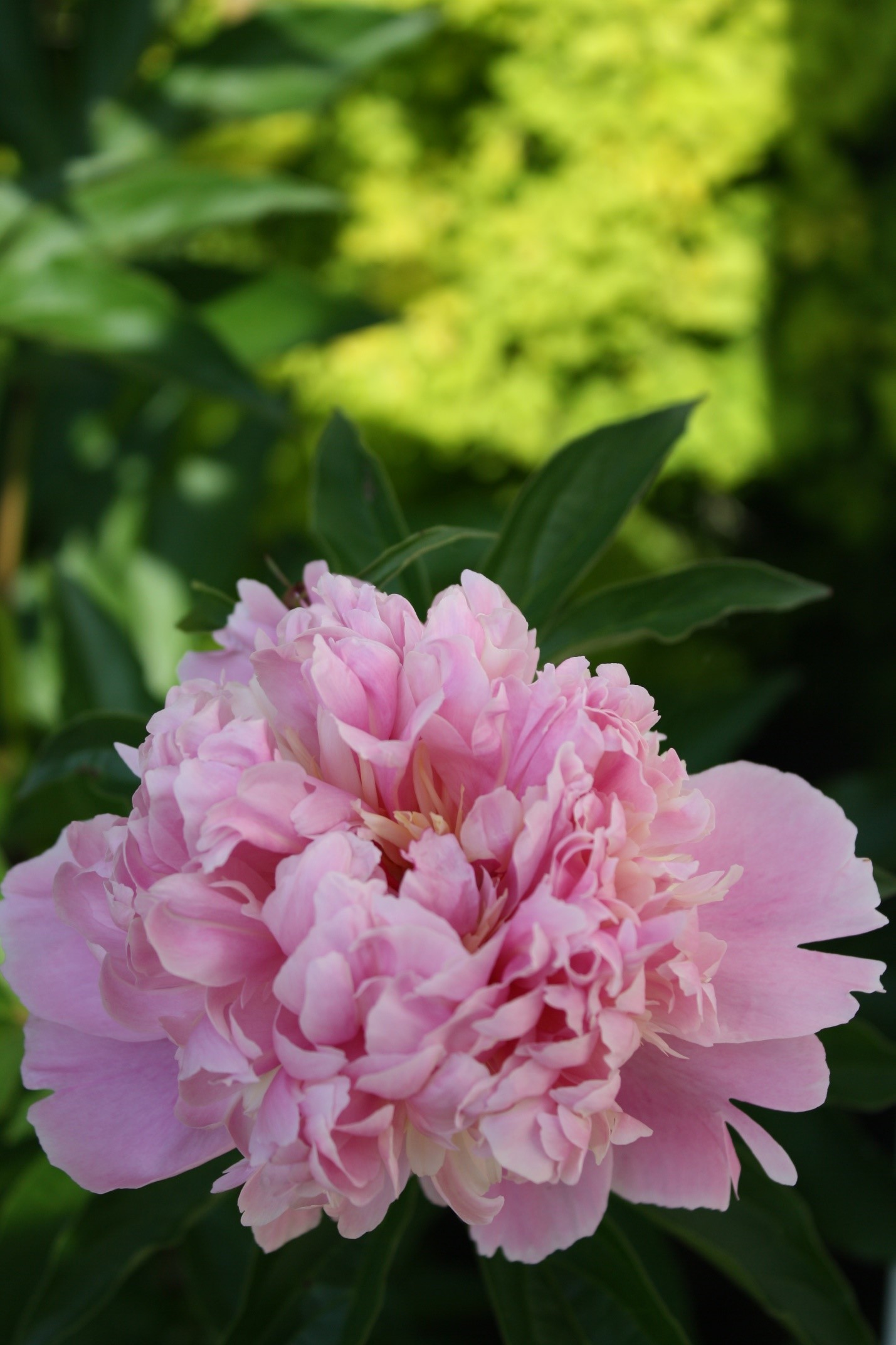
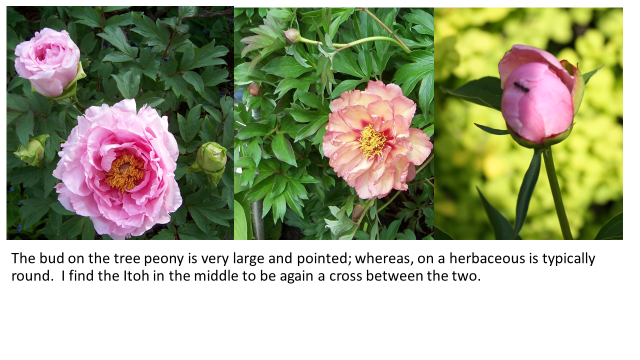
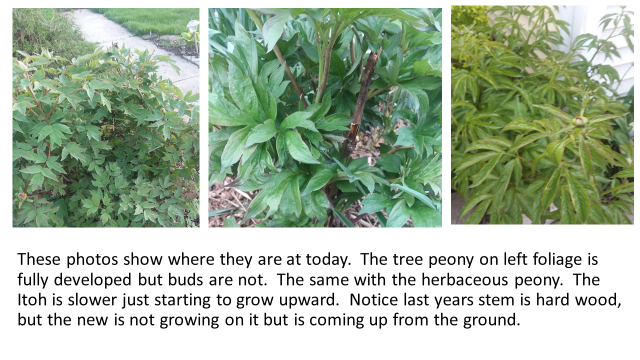
I wanted to share with a side by side comparison of the three types of peonies in my yard. These are some great blooms and I will share photos I have in my library as well. These will include the deciduous tree peony, the herbaceous peony that we are very familiar with, and the hybrid Itoh peony.


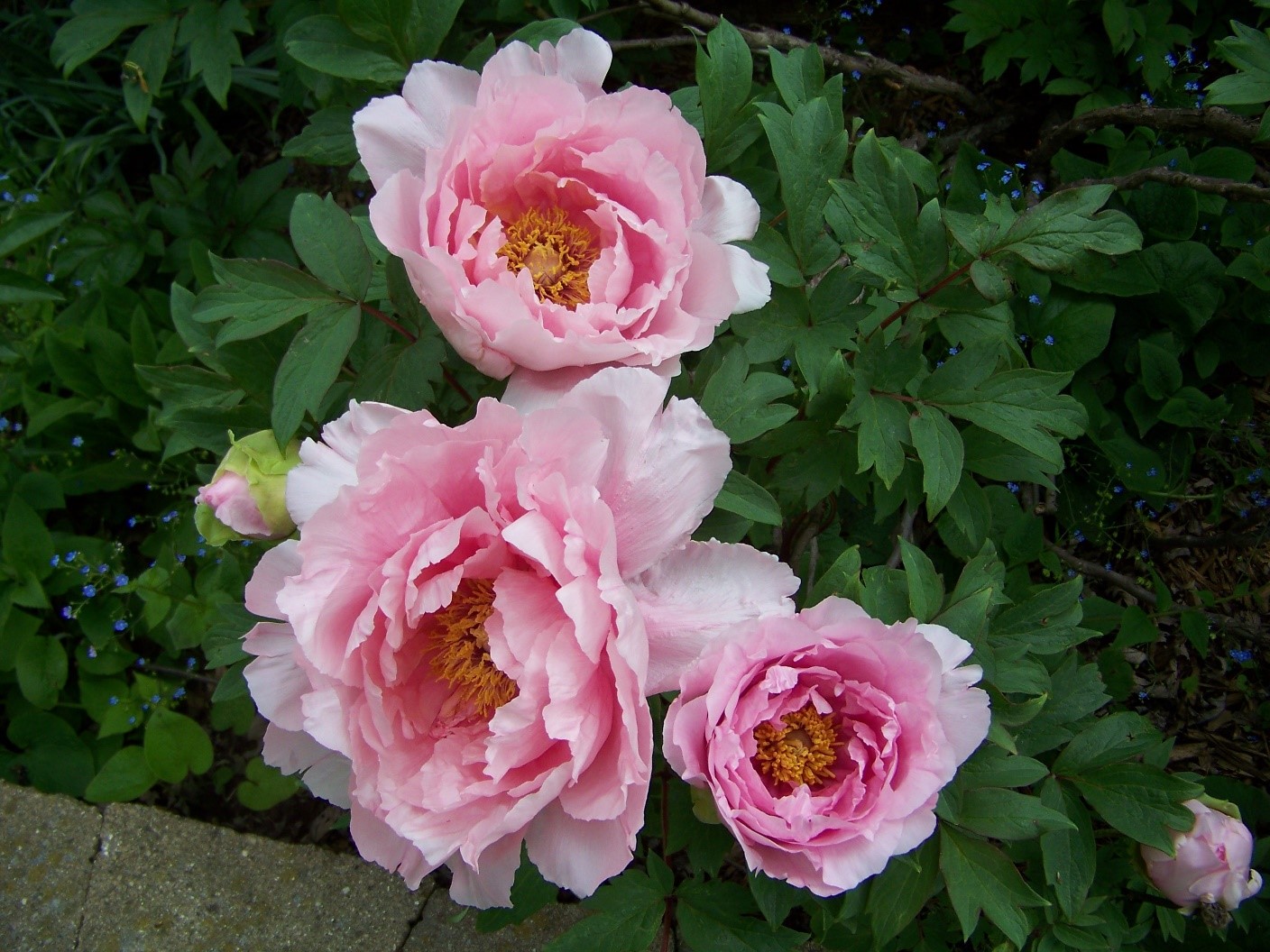
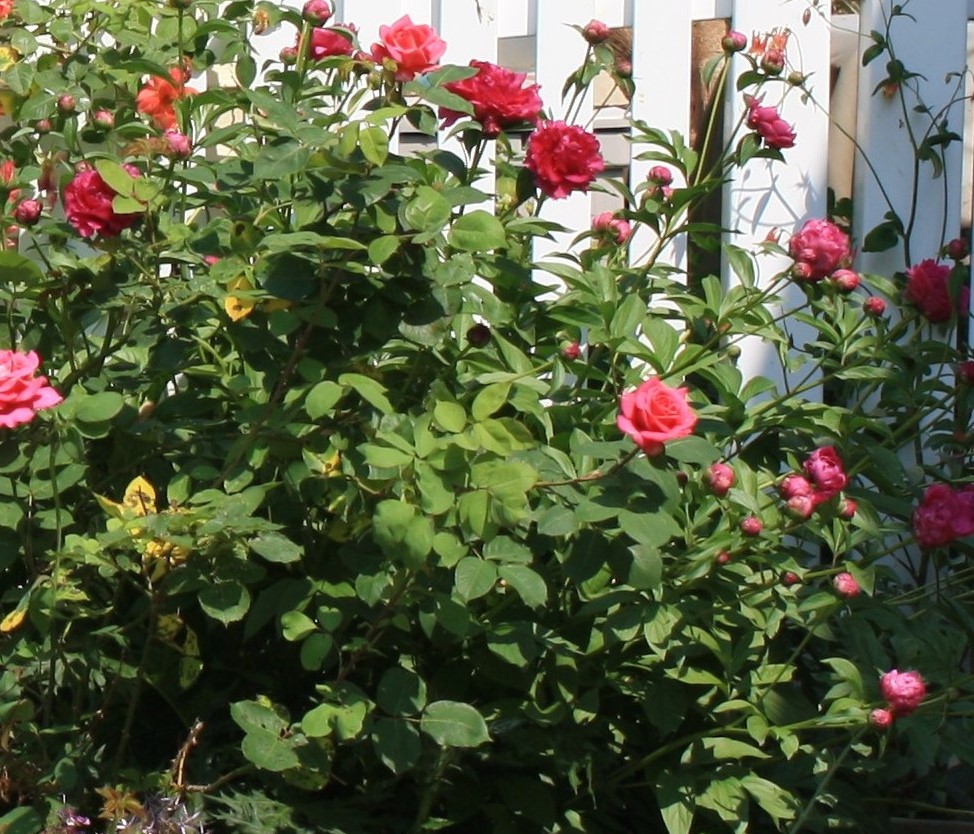
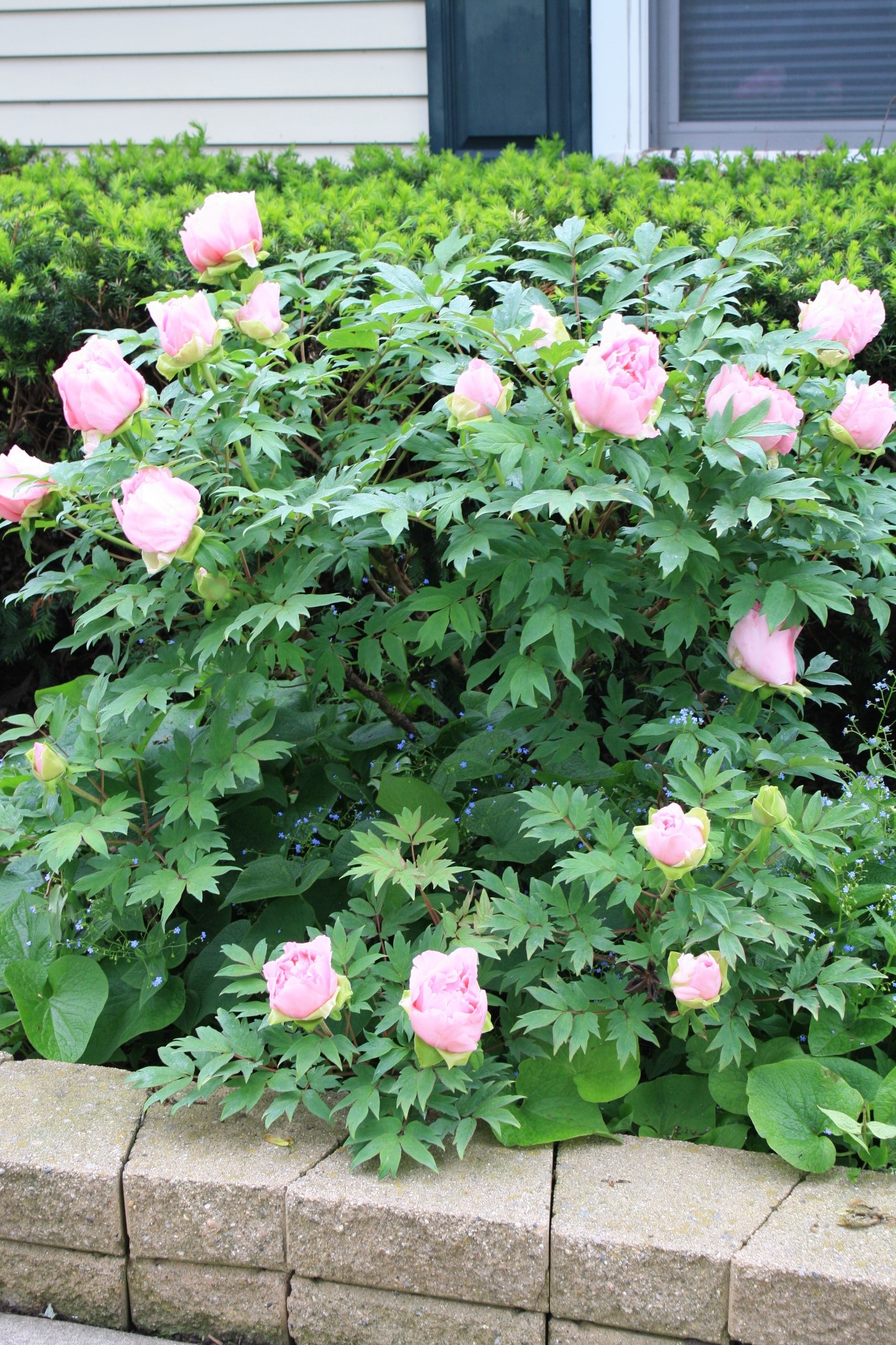
The shrub of tree peony fully bloomed in pink

Close-up of the bloom

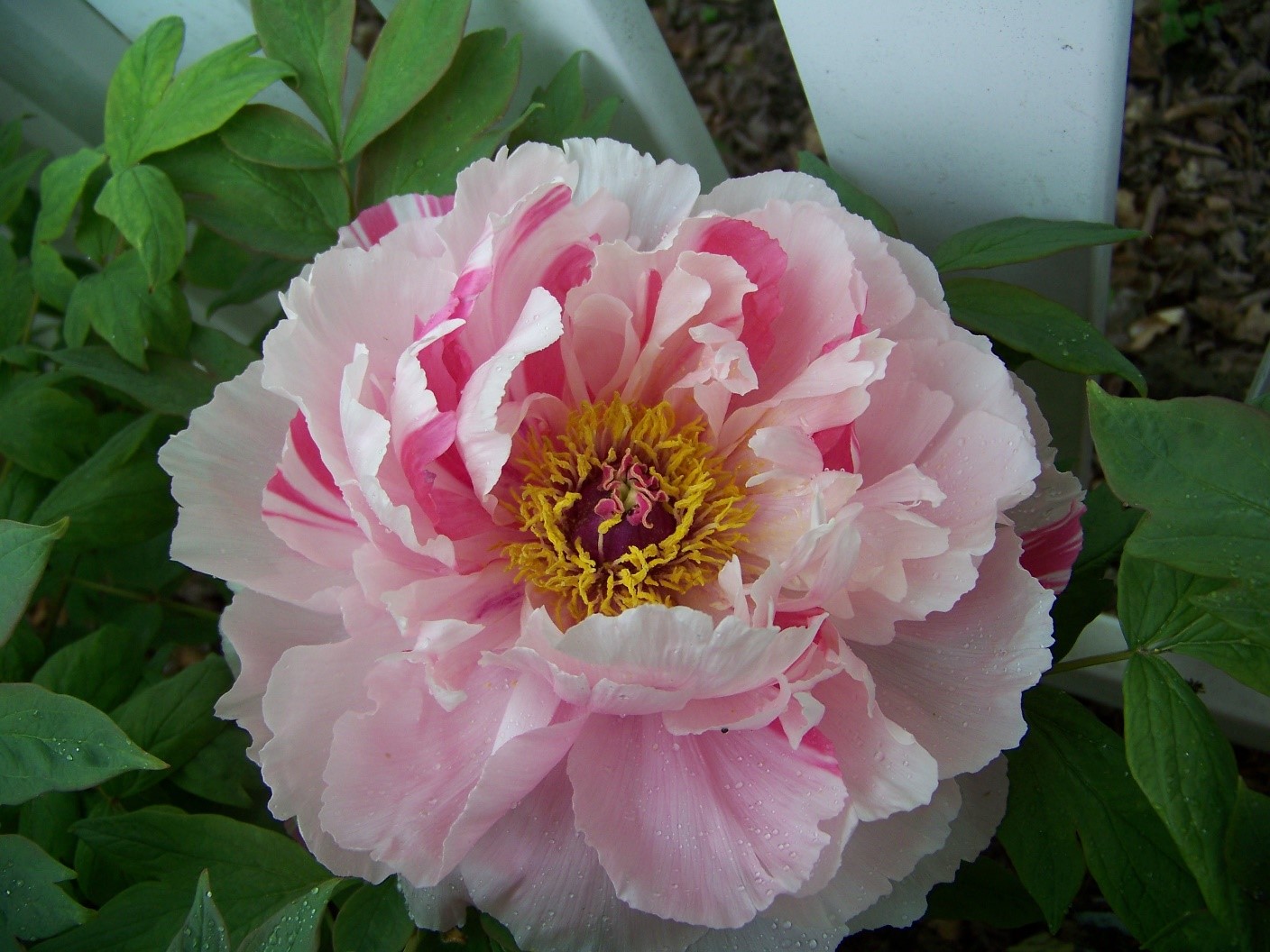
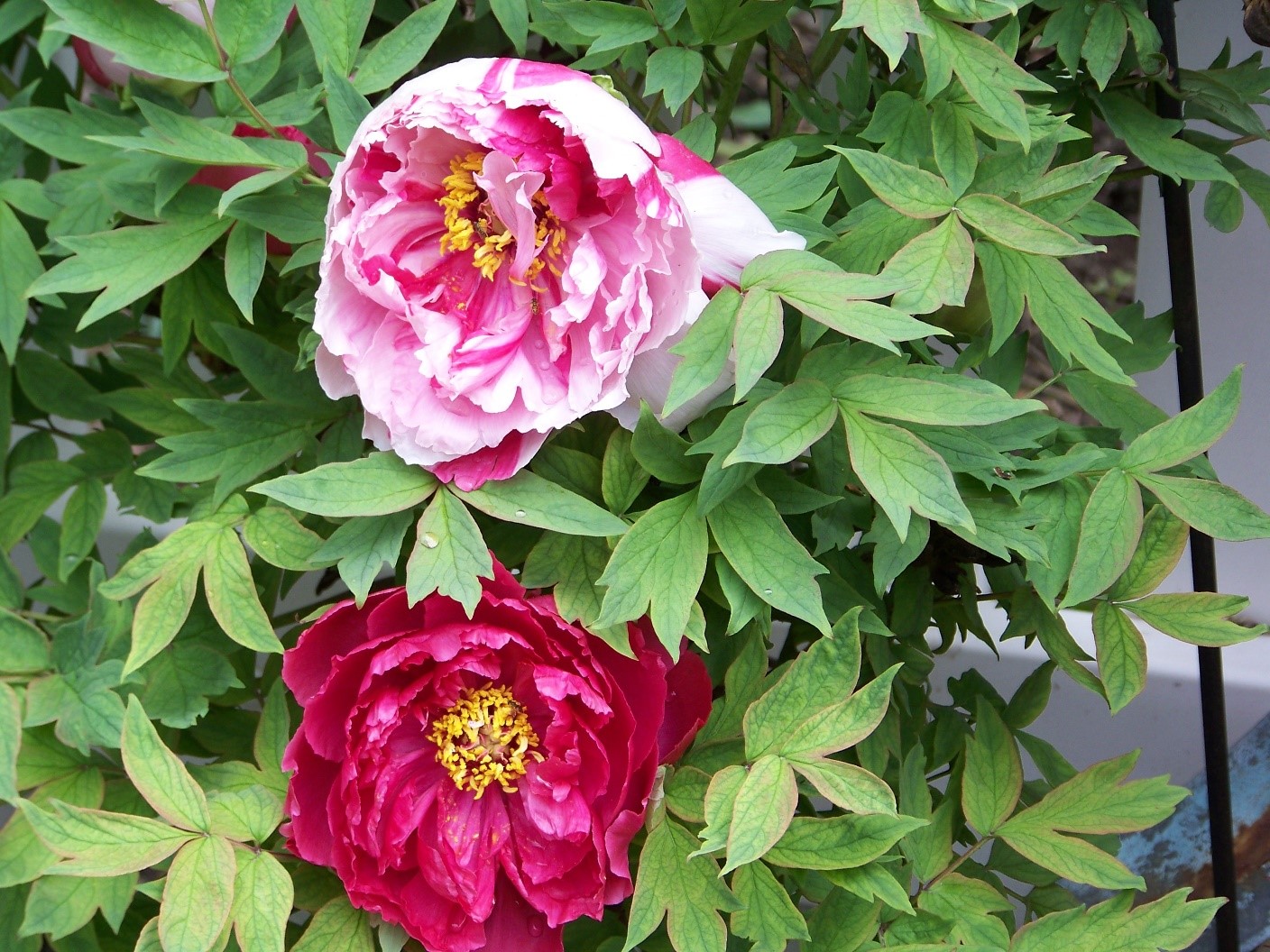
Unusual tree peony with bi-color and solid on same shrub

Close-up of bi-color

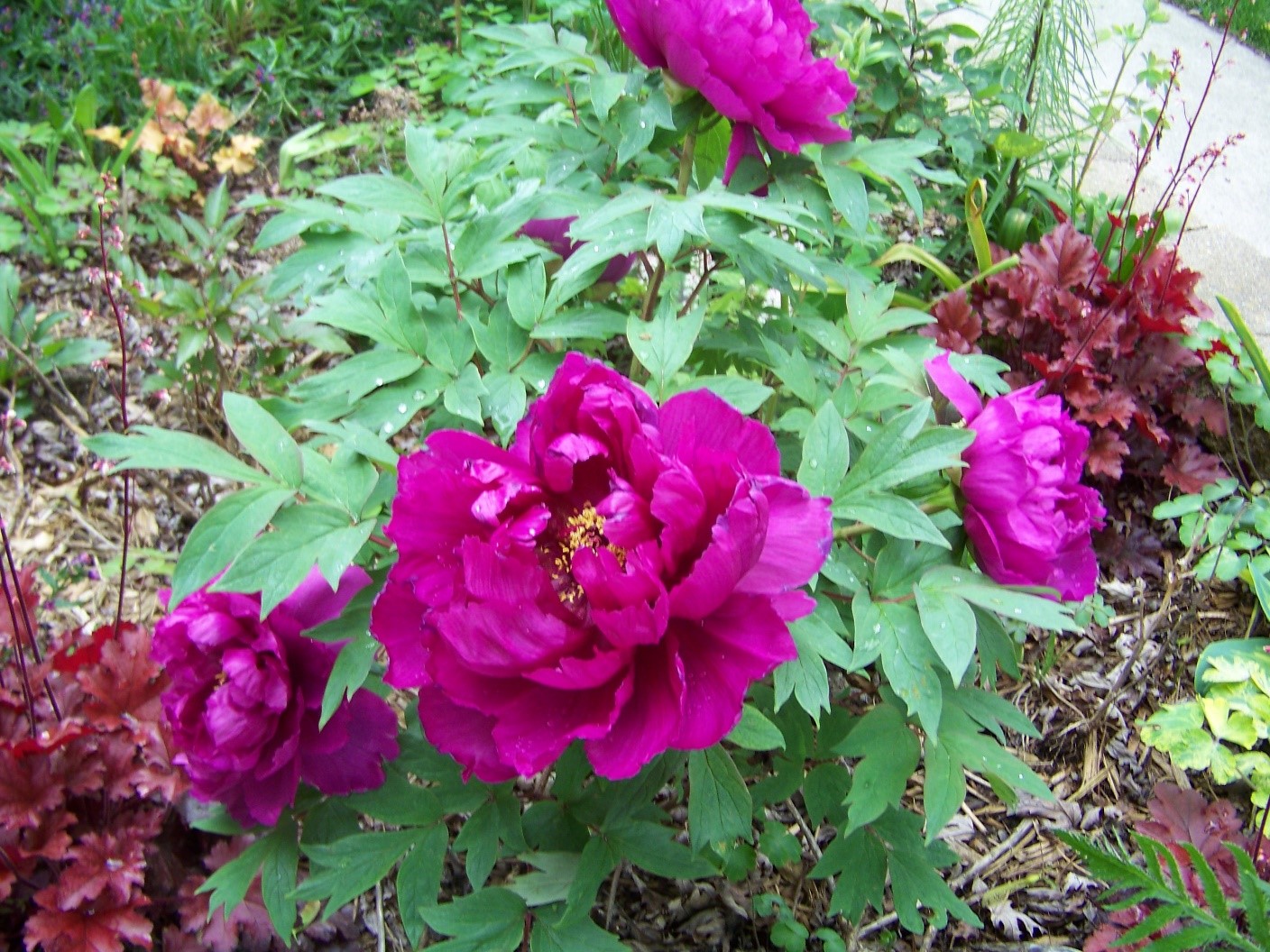
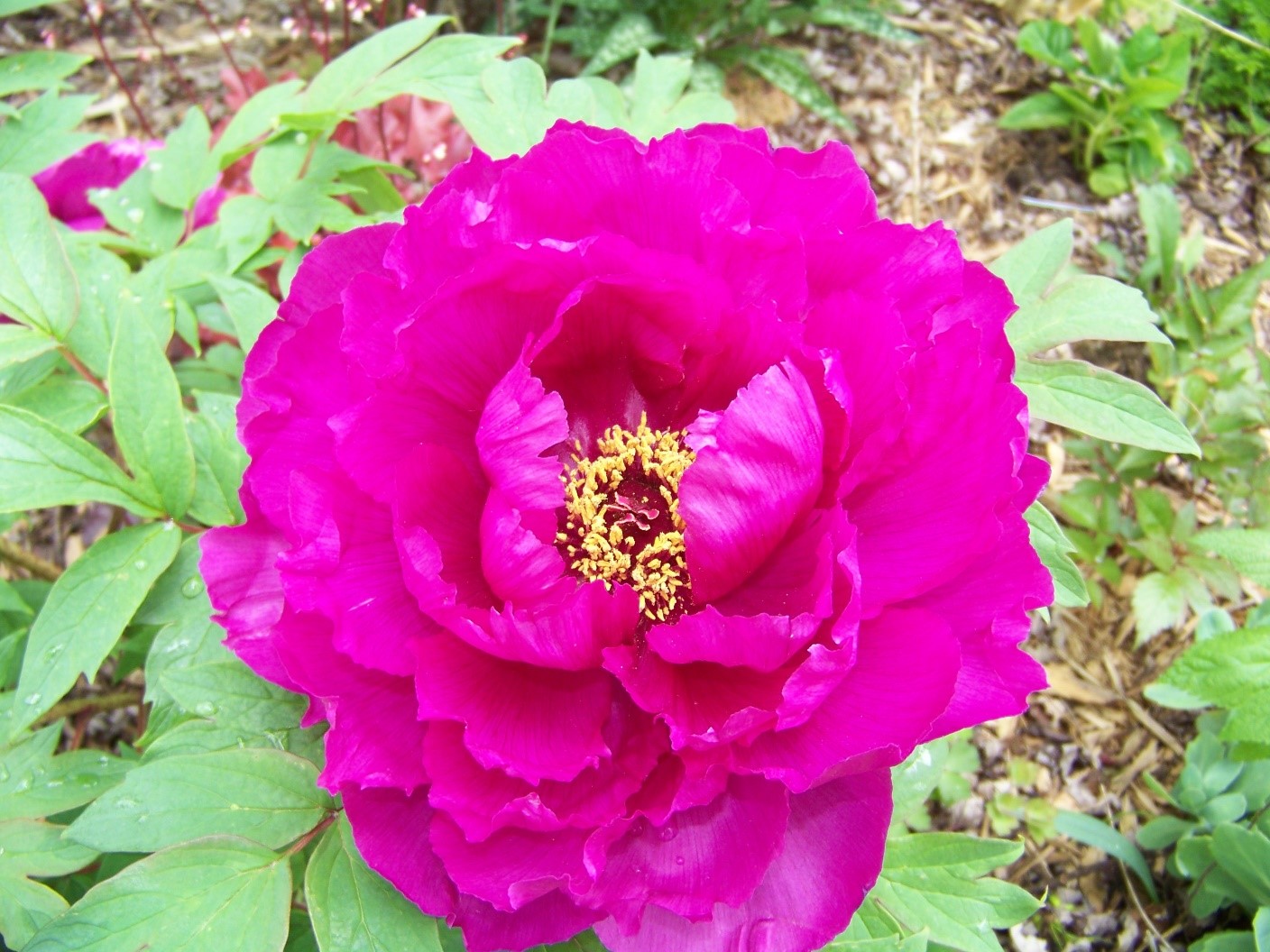
Deep rose tone tree peony

Close up of same

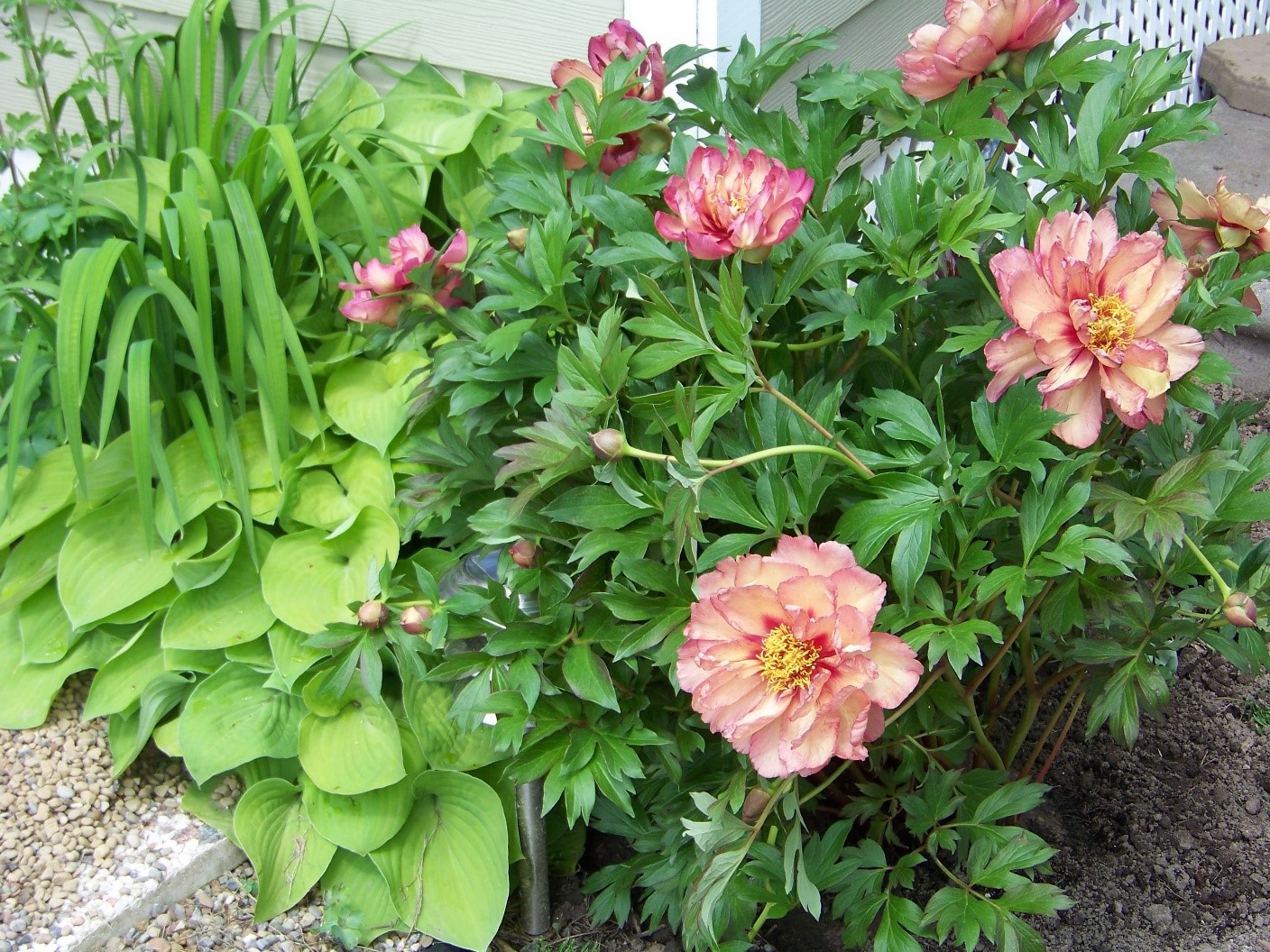
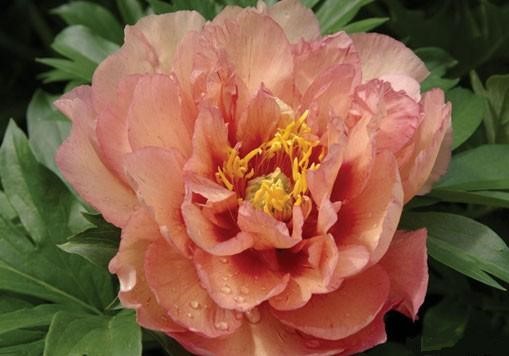
The Itoh peony in bloom. The name of this is “Kopper Kettle”.

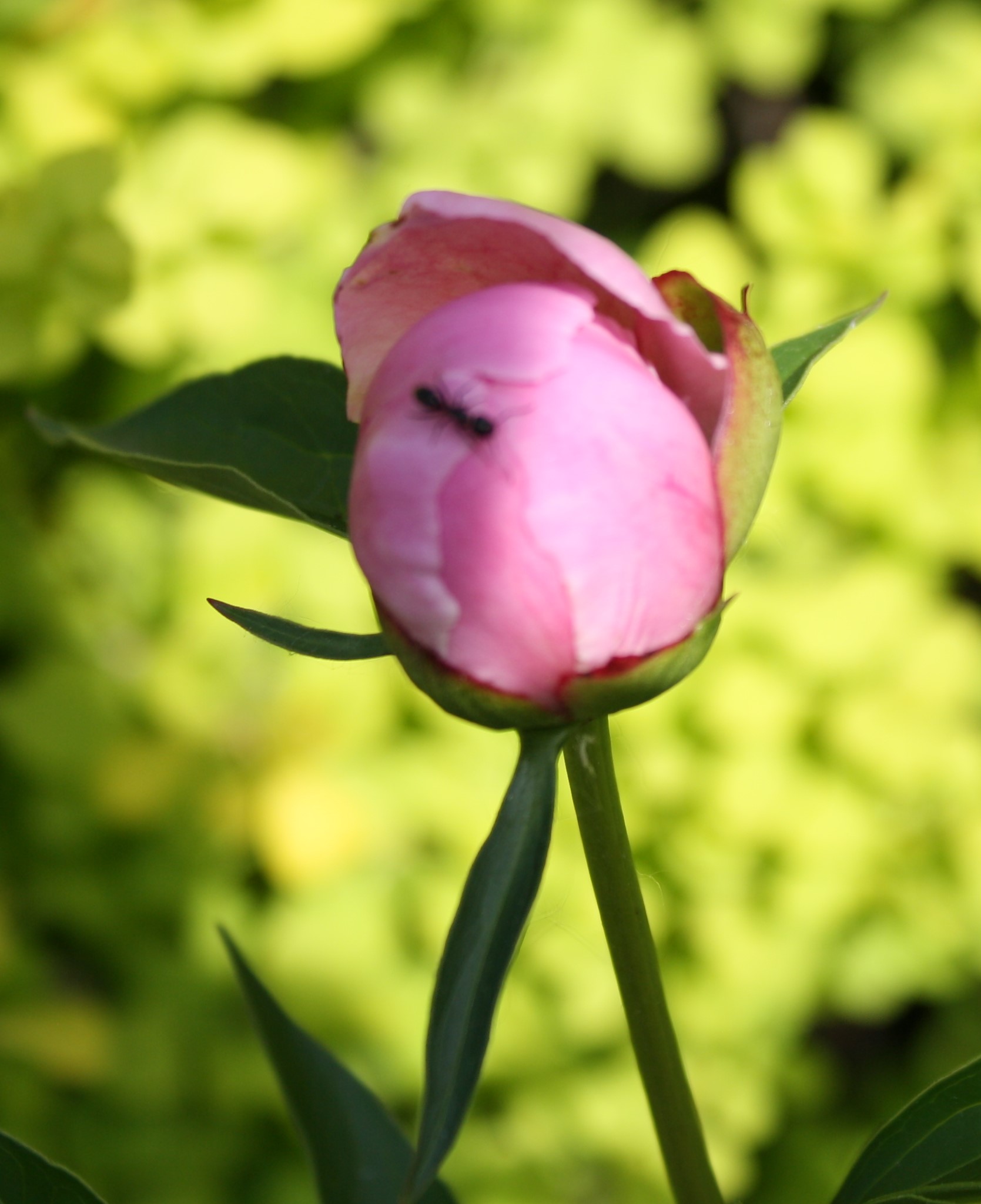
Itoh peony “Kopper Kettle”[caption id="attachment_7334" align="alignnone" width="500"] Those darn ants! This is an issue you don’t find on an Itoh or tree peony. The other advantage of the Itoh and tree is that when it rains the stems don’t droop. However sometimes if the bloom is aged the petals will fall.

This peony just showed up…it grew from seeds of a tree peony which was pink. Certainly it was a grafted tree peony.

A closer look

.[/caption]

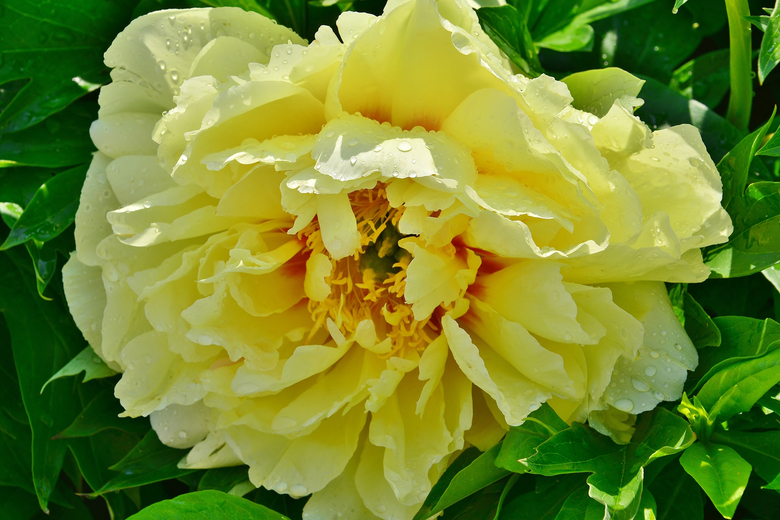
“Bartzella Yellow” Itoh Peony


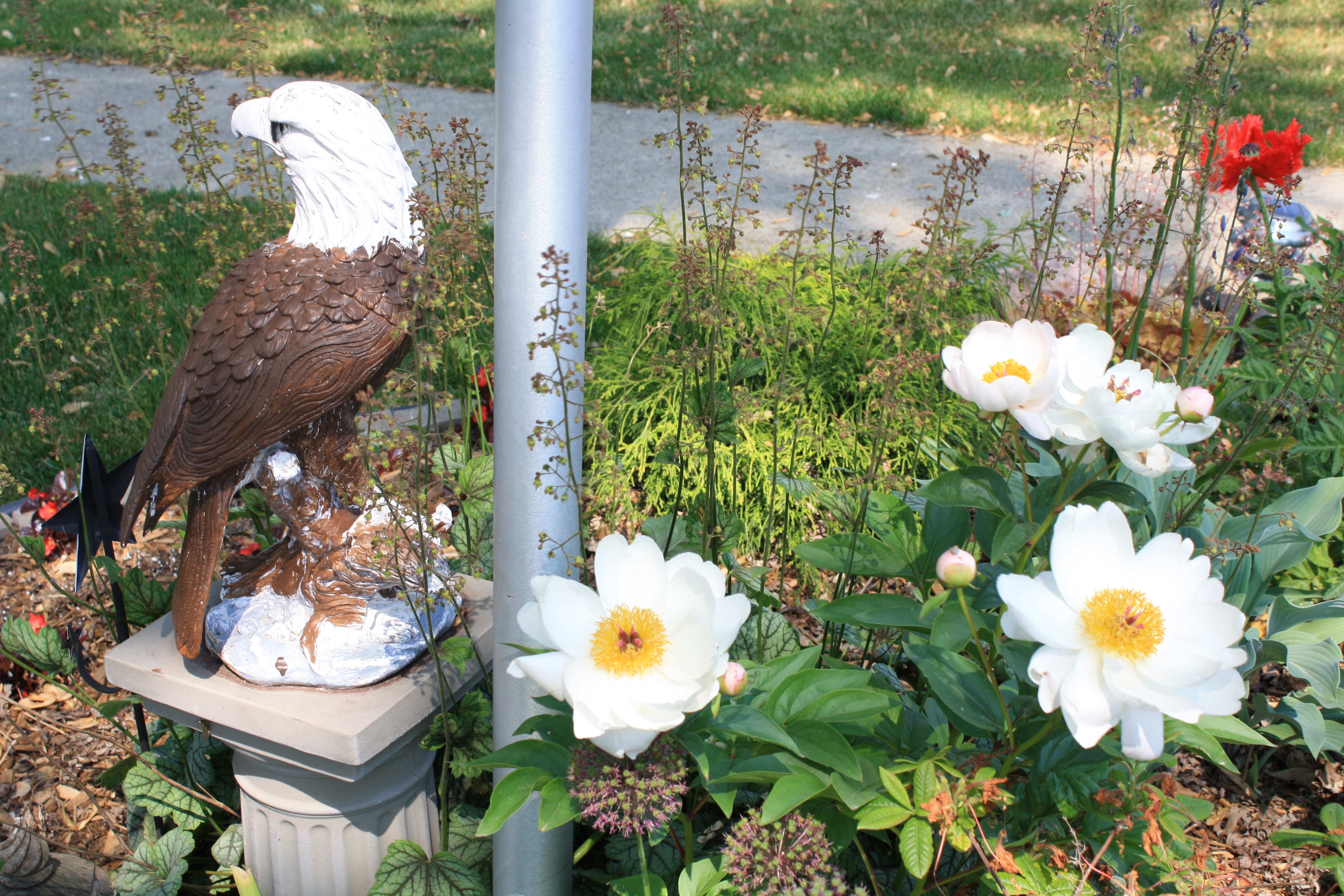
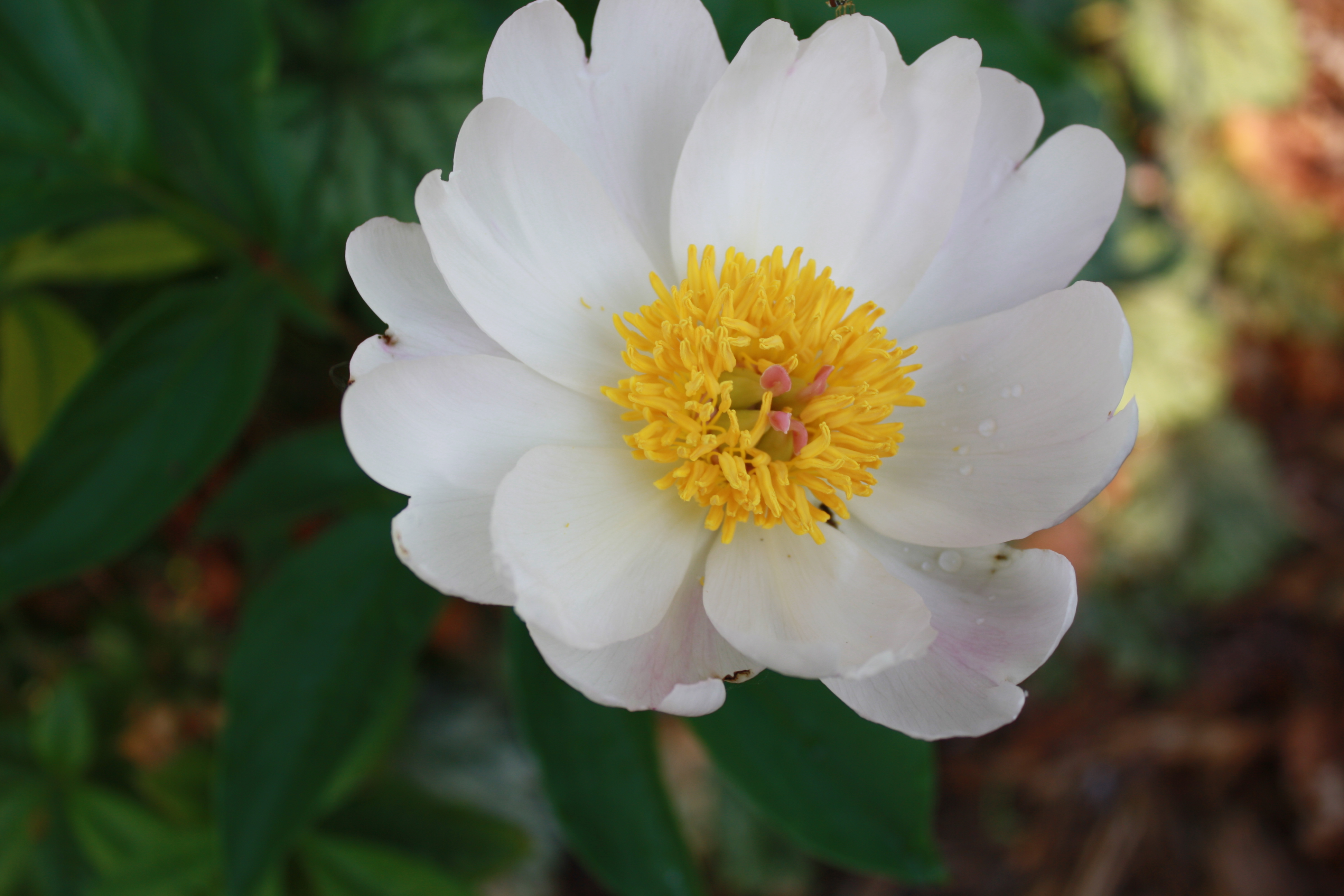
I also have a pink Itoh peony in my front yard but no photo. Here are some herbaceous peony photos:

This one is called “Peony Sorbet”

Next week I will share the other May blooming plants you can rely on. Hope you enjoyed these.
Linda

There are a large number of great foliage plants. Many have wide varieties. But I have only a few in my garden that I consider my favorites. Today I want to address the family of “other” plants to use for color, shape and textural interest. I decided to put them together since they are less widely used. But that doesn’t mean there isn’t an abundance of information available.

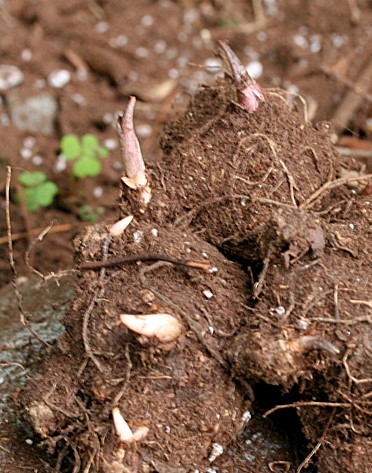
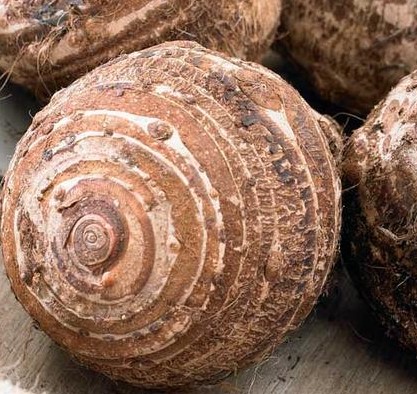
To begin, a family known as Araceae. They certainly can start a conversation with their foliage. Within this genera you will find plants such as: Alocasia, Arisaema, Caladium, Colocasia, Dieffenbachia and Philodendron. This family, often referred to as elephant ears, is full of large, colorful or textural foliage. The family is often rhizomes or tuberous. They generally will have a bloom that appears partially enclosed. It is actually a bract. The first, from this family, I want to write about is the genus known as Caladium. They grow from a tuber, which can be divided for additional plants. These tubers, also known as corms, should be dug up before the first frost and stored in a dry area. Below is a photo of the tuber and beginning sprouts. One important note is that this plant is poisonous. Do not consume any part of it. Caution should be taken when handling caladium. Some gardeners, with sensitive skin, may find it irritates the skin. It is best to wear gloves when handling.
It’s easy to see its relationship with Dieffenbachia, and shape foliage of the Philodendron; both widely known house plants. They too can be used outdoors during the summer in shaded areas.
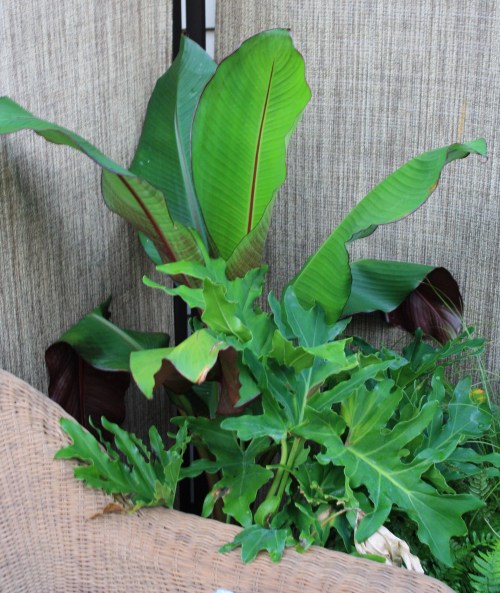
Split leaf philodendron to campare

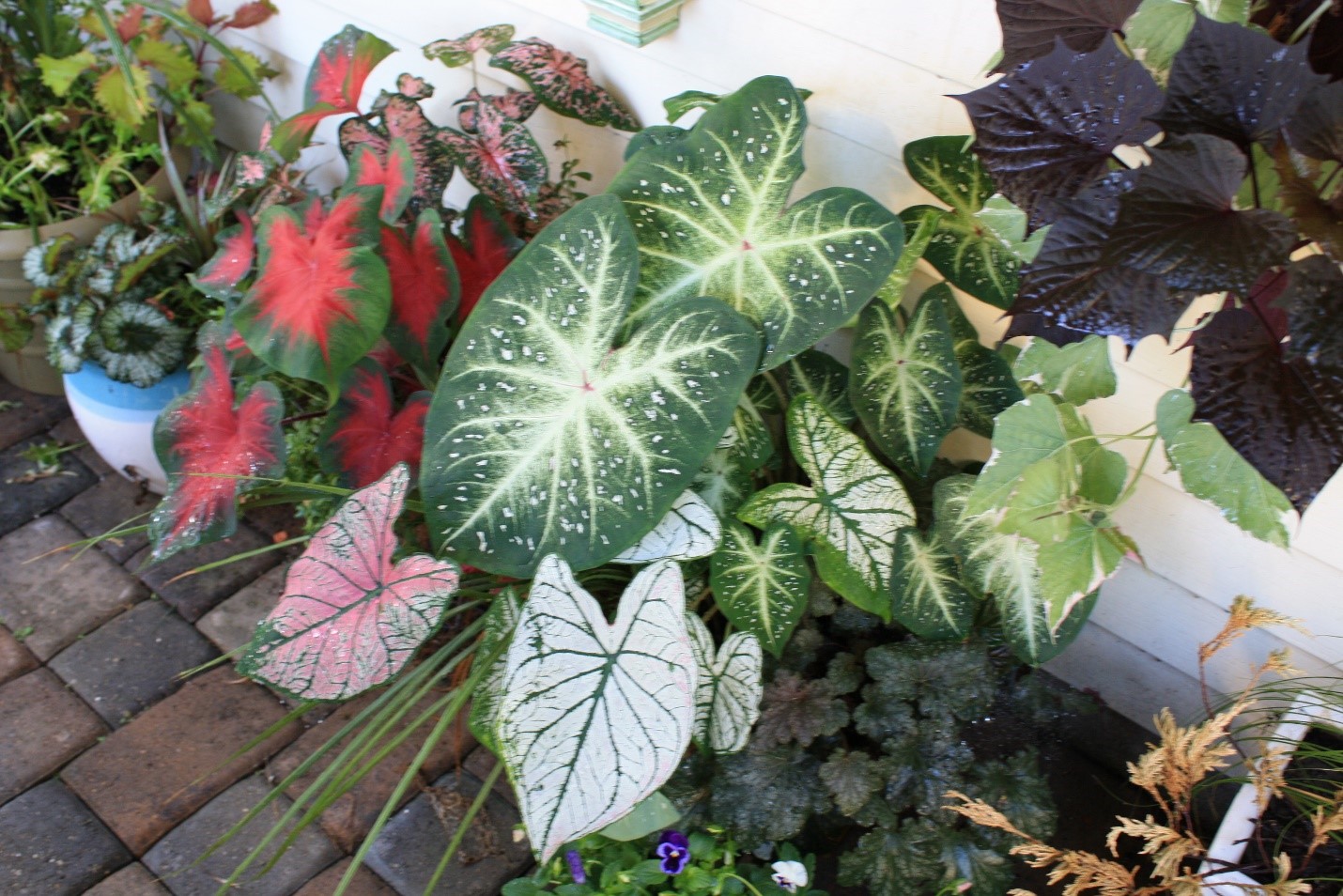
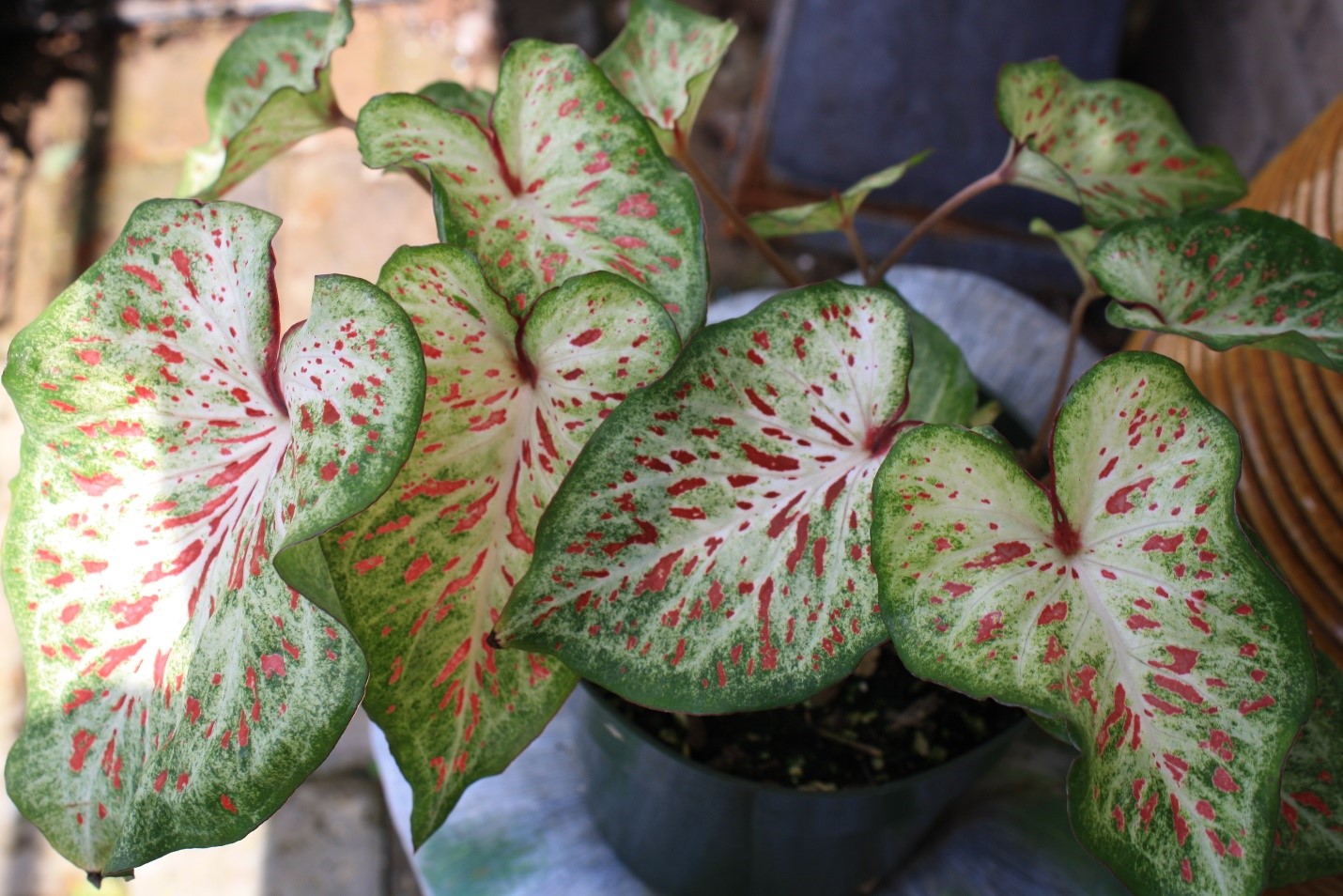
The Caladium has an arrow or heart shaped foliage that includes a great range of colors. I grow them in containers located on my paver patio or deck. They typically do very well in moist soil. In this photo are four varieties.
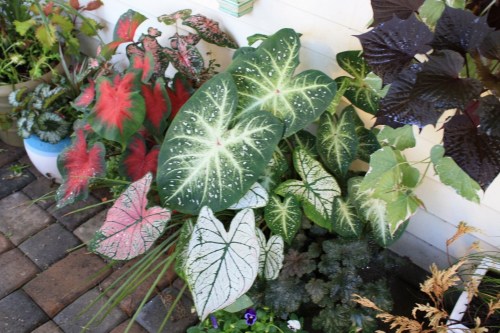
Caladium are often bi-color and in some cases tri-colored. The red and green is ‘Florida Sweetheart’. The white with green veining, in the foreground is ‘White Christmas’. The large green with white veins and dots of pink is known as ‘Hearts Desire’. The pink is called ‘Pink Splash’. Below is a photo of ‘Candyland’, showing white foliage with a green border and flecks of dark pink tones.
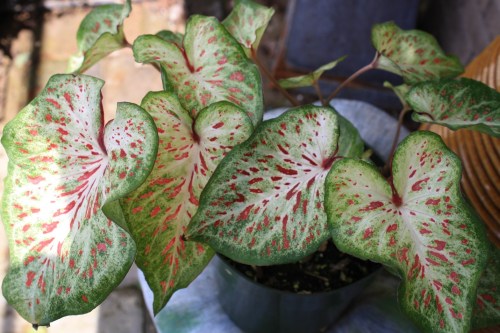
Just check out this site to see what a wide variety you can get in color.

https://www.google.com/search?tbm=isch&q=caladium+bulbs&backchip=online_chips:candidum+caladium&chips=q:caladium+bulbs,g_3:white,online_chips:leaves&sa=X&ved=0ahUKEwj-6azqn_jaAhUlwVkKHUgNC4gQ4VYIJygB&biw=1920&bih=949&dpr=1

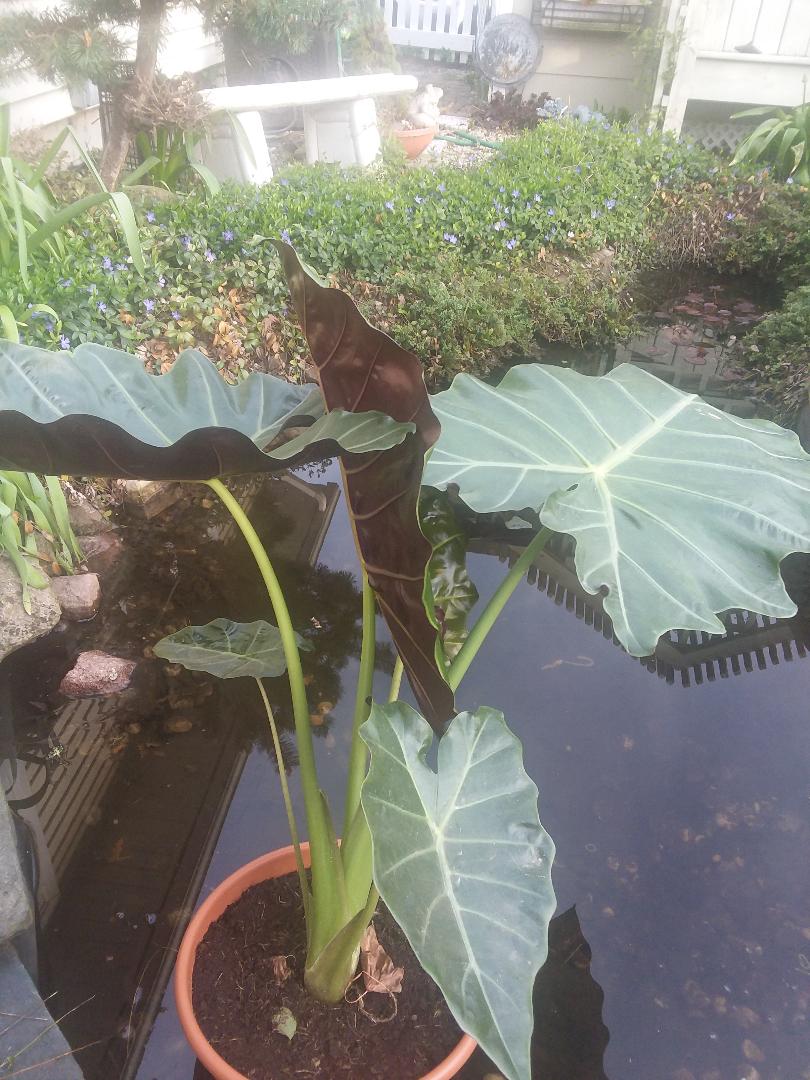
When we say elephant ear, we most likely think of the enormous foliage of the Alocasia or Colocasia. These are often planted just for that impact of the foliage. I usually have them located in my pond. They do so well there. I’m sure many of you have seen that large round blub in the nursery centers. They do make a statement that is hard to ignore.
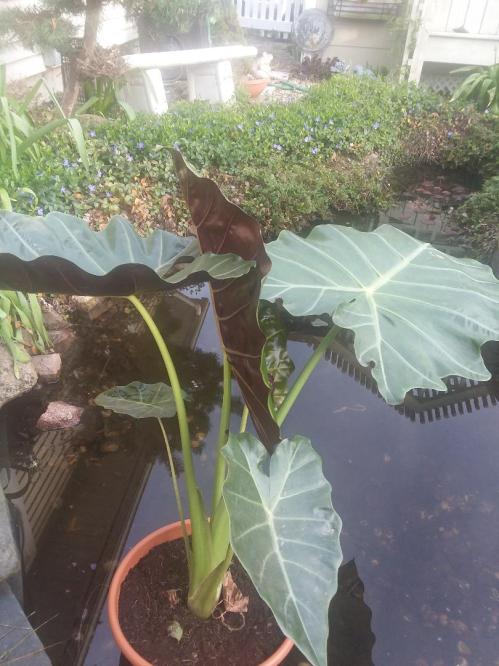
Here is a photo of the one I have for my pond this year. The name is Alocasia Masquerade ‘Mayan Mask’. Notice the bottom side of the foliage is dark red, while the top is green. The texture of this plant is also stunning with the thick light color veining and ruffled edges. The foliage is gigantic. The one leaf is 18” across and at least 24’ in length.
That’s a large impactful family of plants. They can add an exotic feel to your garden. Take some time and search on the internet for this plant. Make sure you check for ‘Mojito’ which has those spotted and flecked foliage in a deep purple with green base coloring. It’s a spectacular foliage plant.

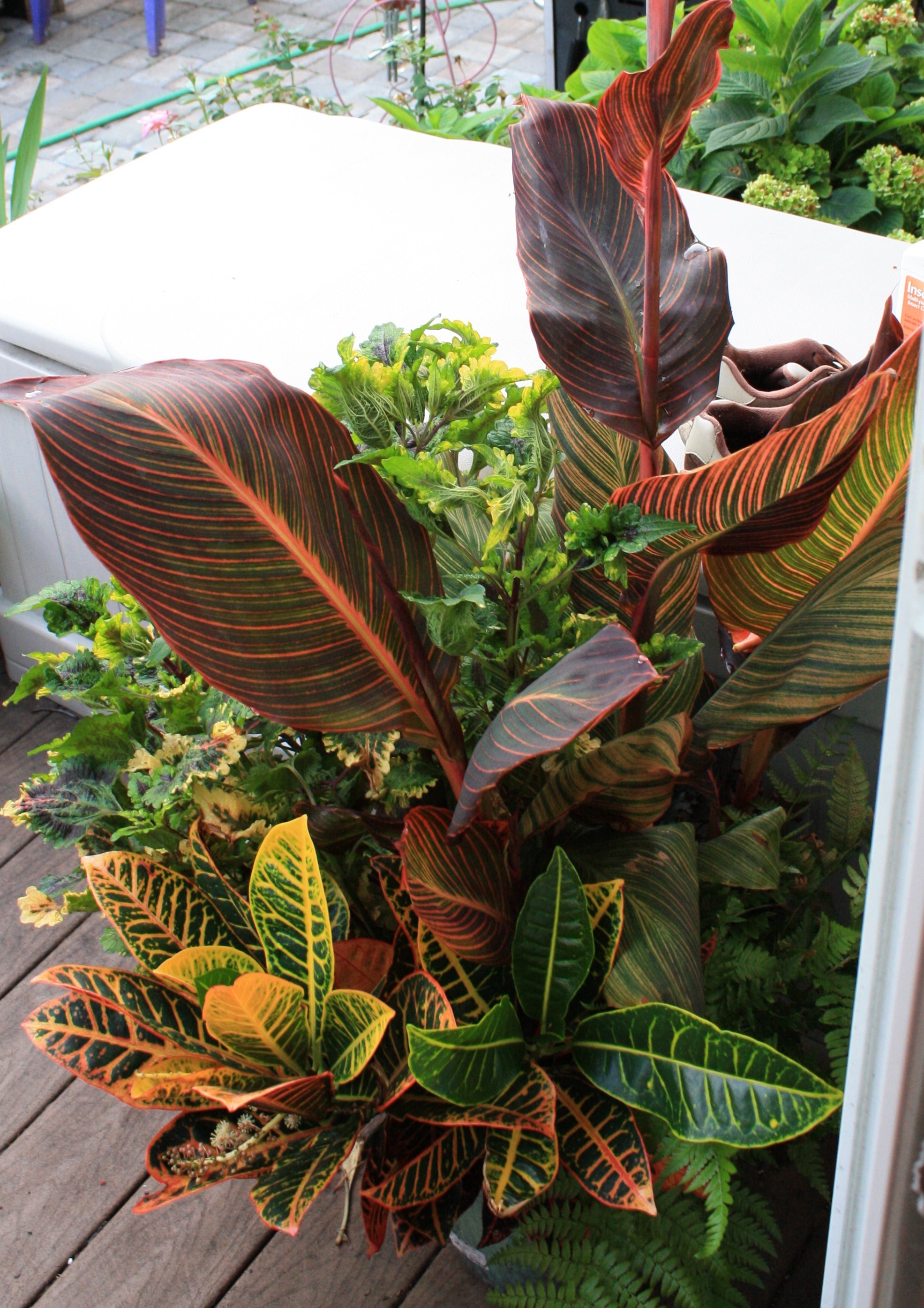
Another favorite colorful foliage plant is garden croton or also known as variegated croton. The stronger the sun the more brilliant the color. Colors of red, orange, yellow and greens all on
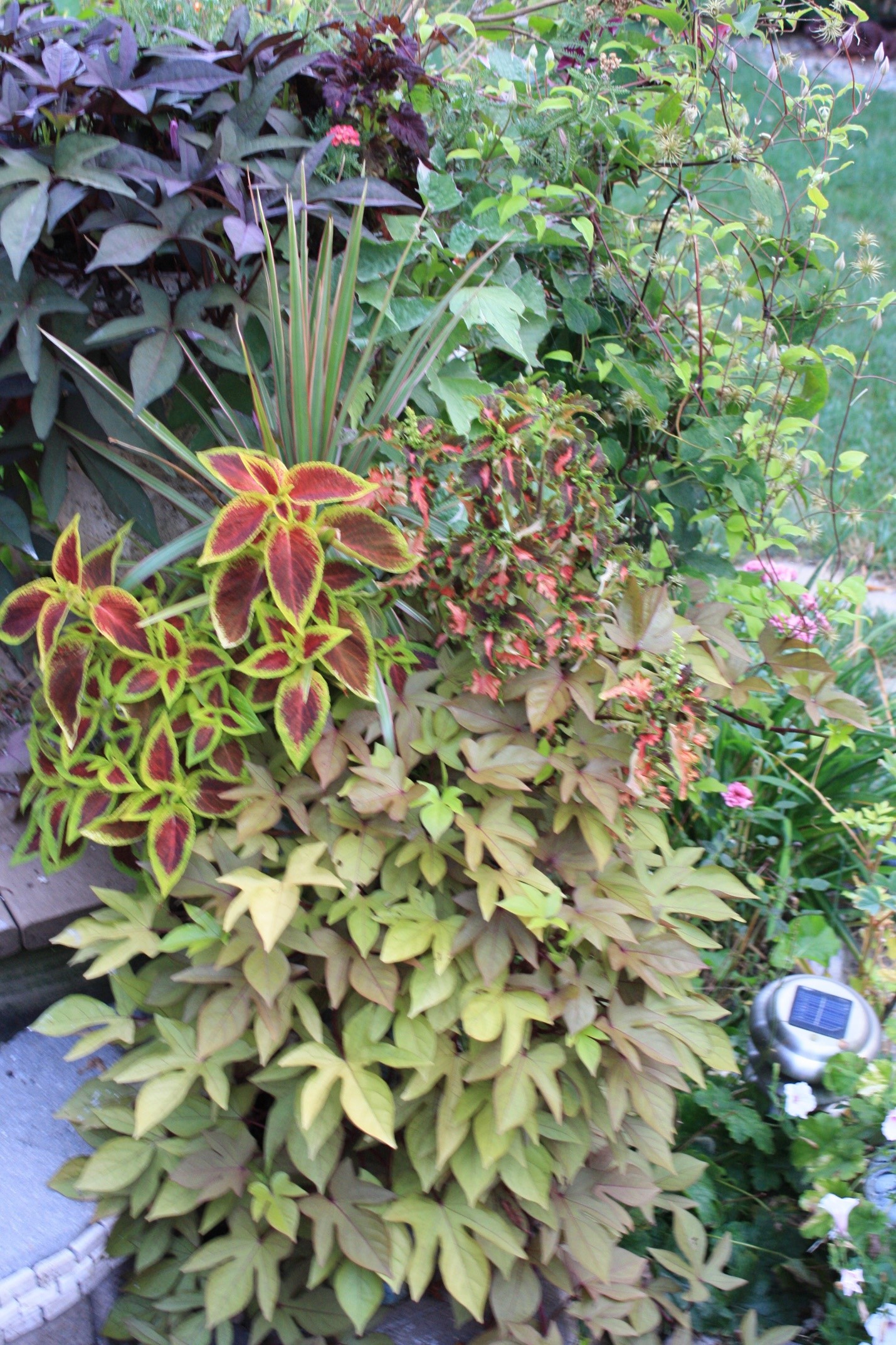
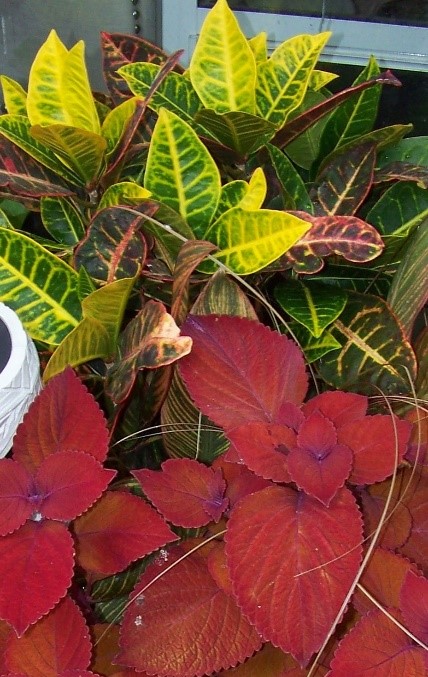
the same plant or varieties with just two tones are available. Codiaeum variegatum, is a tropical plant so it needs to be cleaned and taken into the home as the weather get cold. It is a great house plant and will brighten any area in the home. It can tolerate light shade or partial shade as well. Here it’s shown in the background along with a coleus.
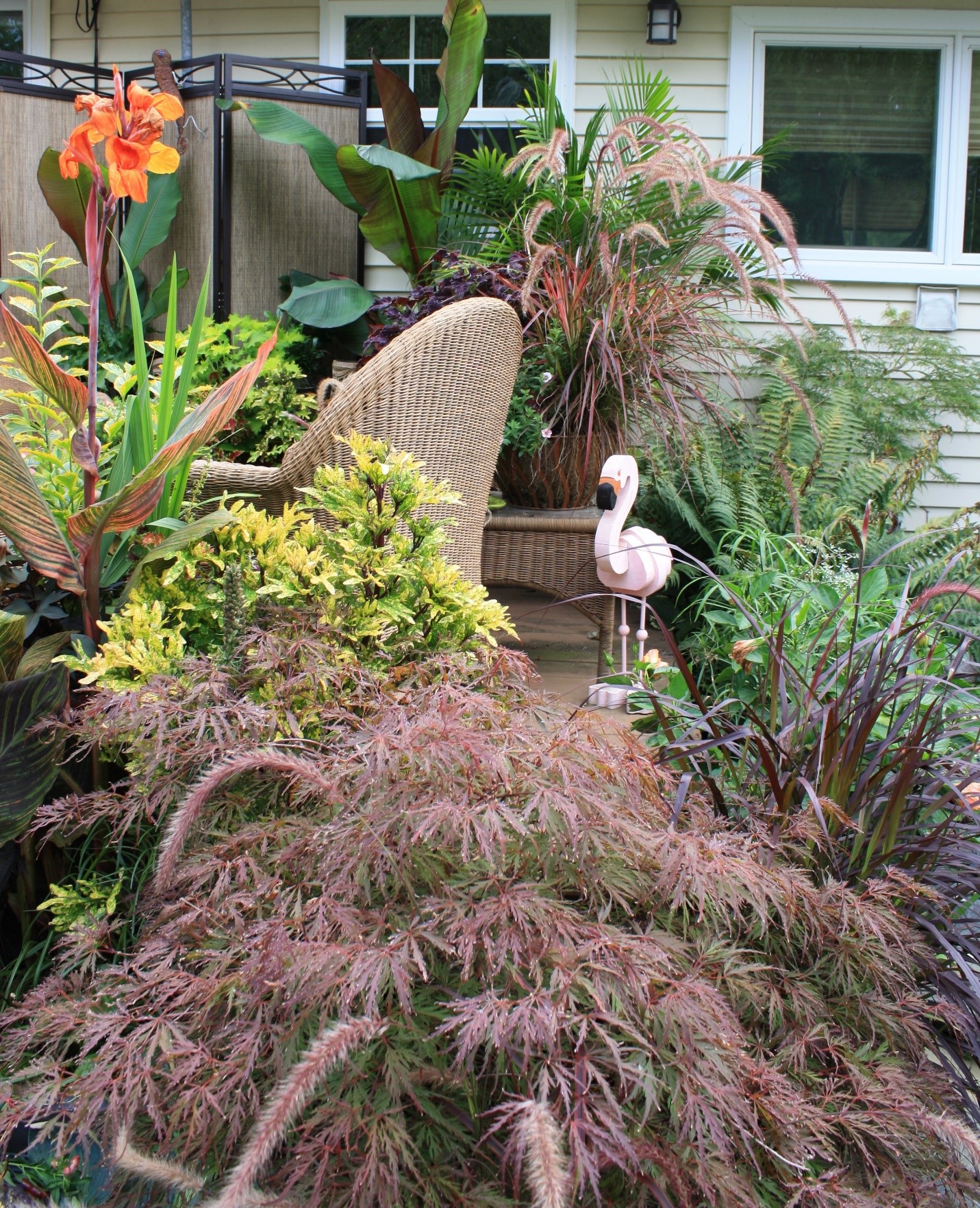
I also use it with Canna Tropicanna. The foliage coordinate so nicely with one another as shown in the photo below.

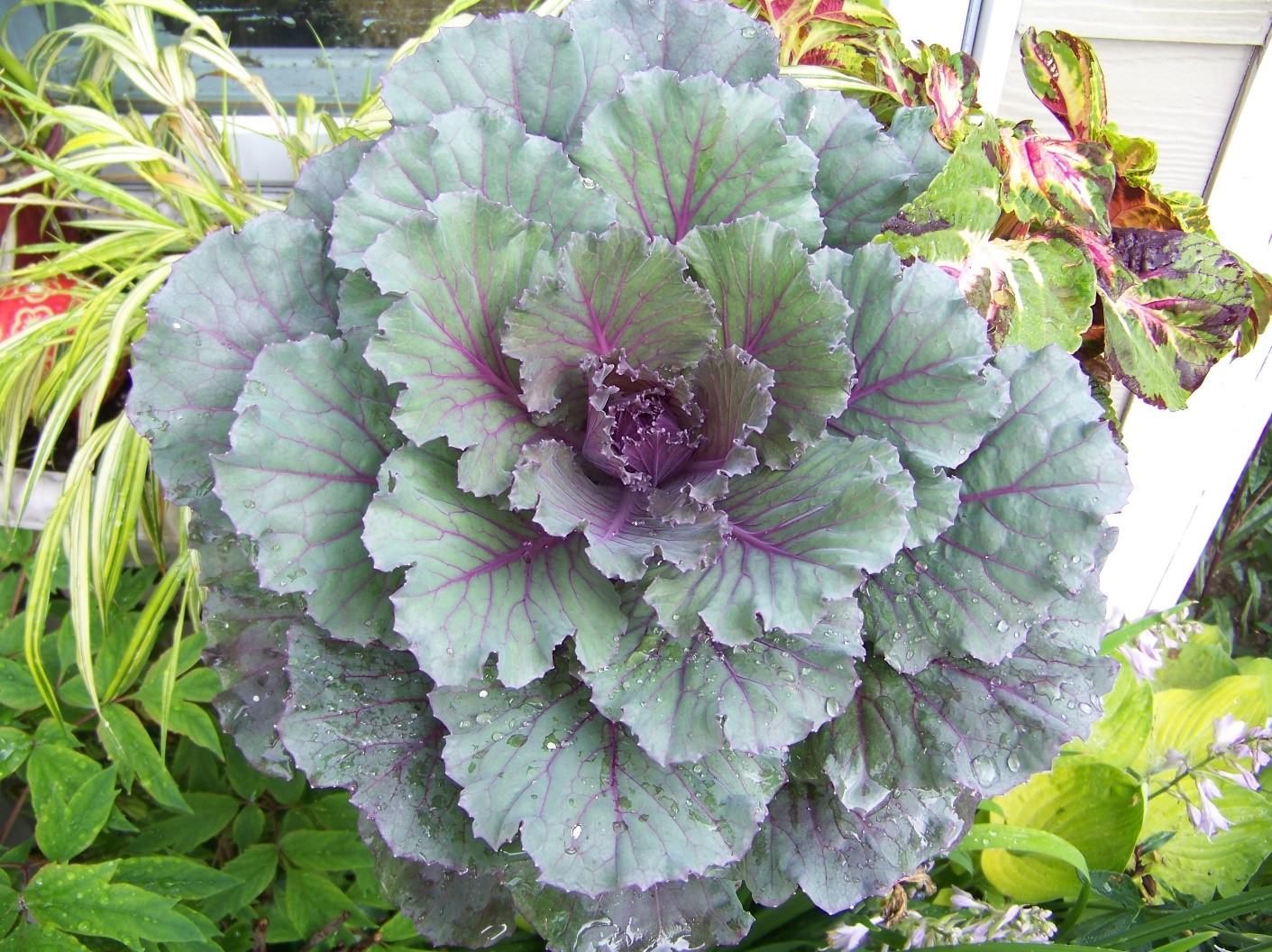
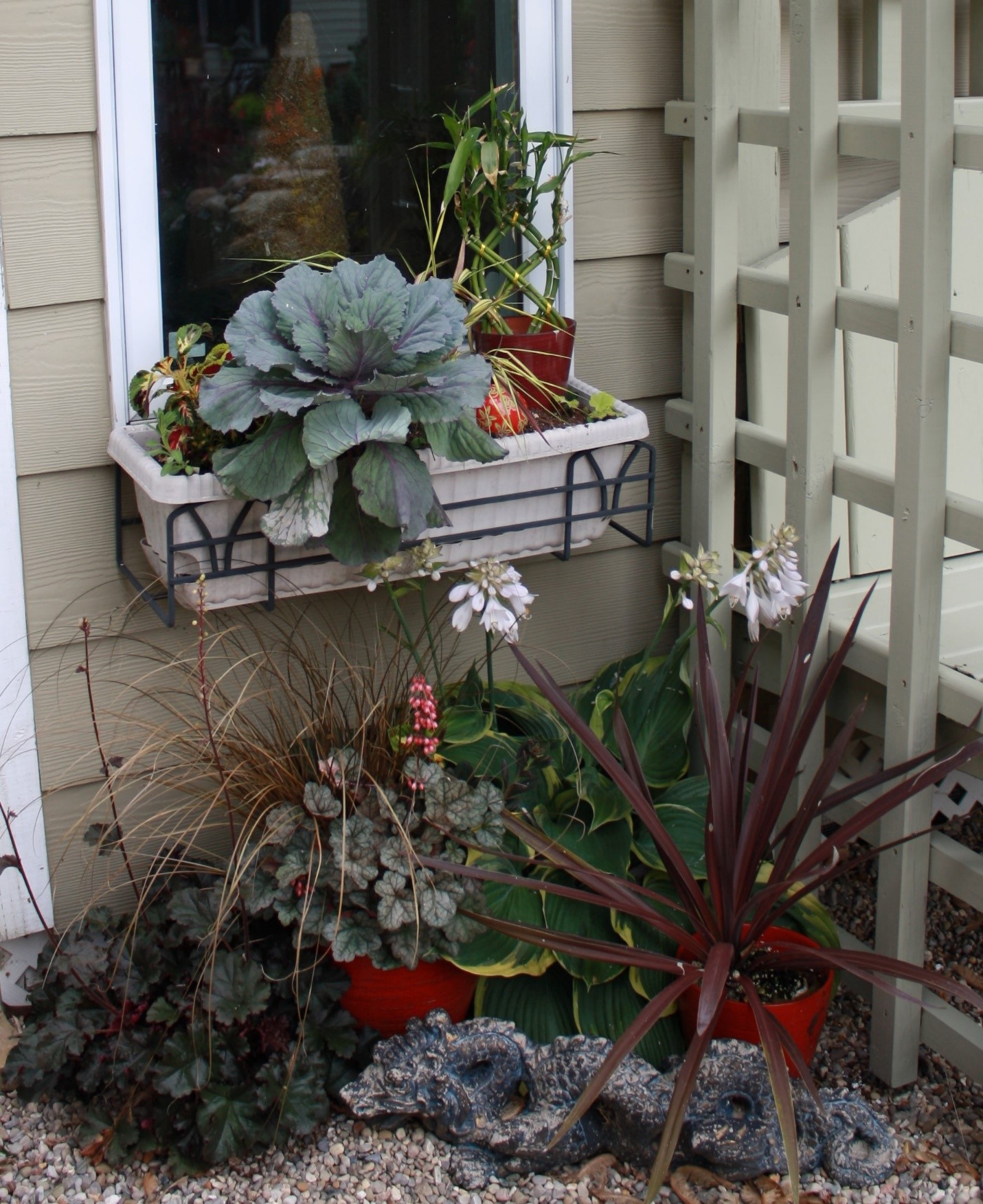
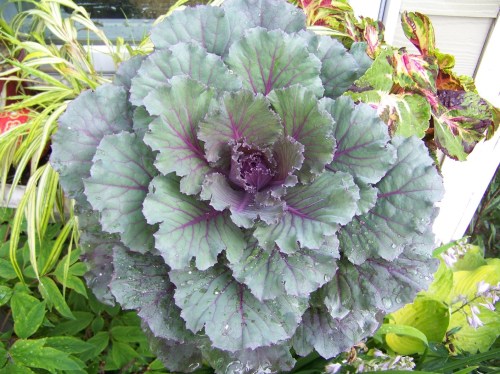
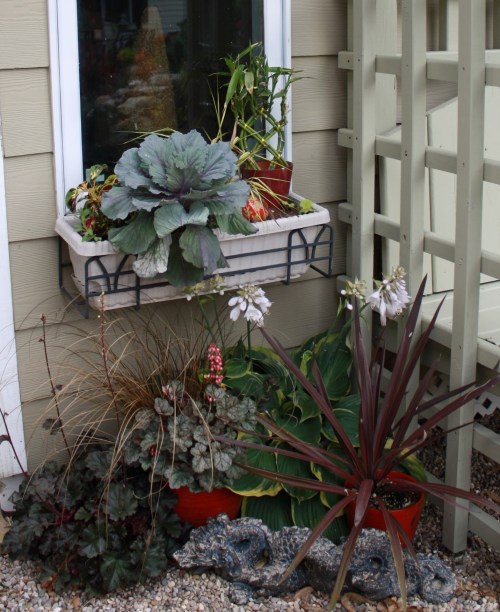
Flowering kale, also known as ornamental cabbage, is a great attraction in the garden. I use it in flower boxes. It can be planted into the ground as well. Watch out for those bunnies. They love the tender leaves. They are edible, however, they really are grown for the rosette shape foliage. There is a wide range of colors available. I tend to go to the blue and lavender tones. They also are available in all green and all purple tones. They make a great impact for fall interest as well. They don’t seen to mind that colder temperature and will often last through Michigan weather as low as 5 degrees. Frost seems to brighten it’s color…but a sudden cold snap may be fatal.
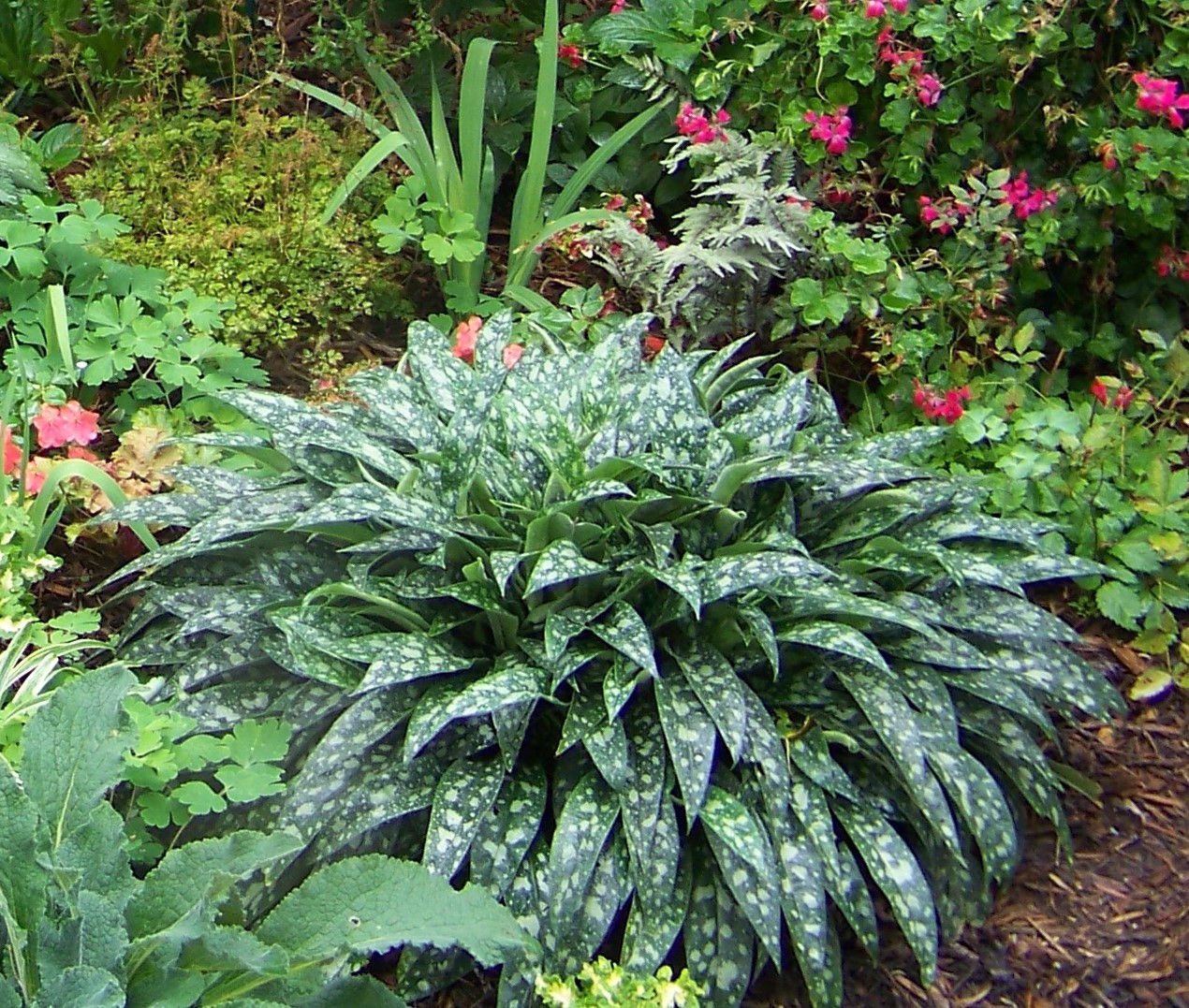
An early bloomer in the spring is Pulmonaria. It’s commonly known as Lungwort. Its bloom of blue, purple and pink clusters of small flowers come out in spring then fade away. However, the mound of freckled foliage last all summer.

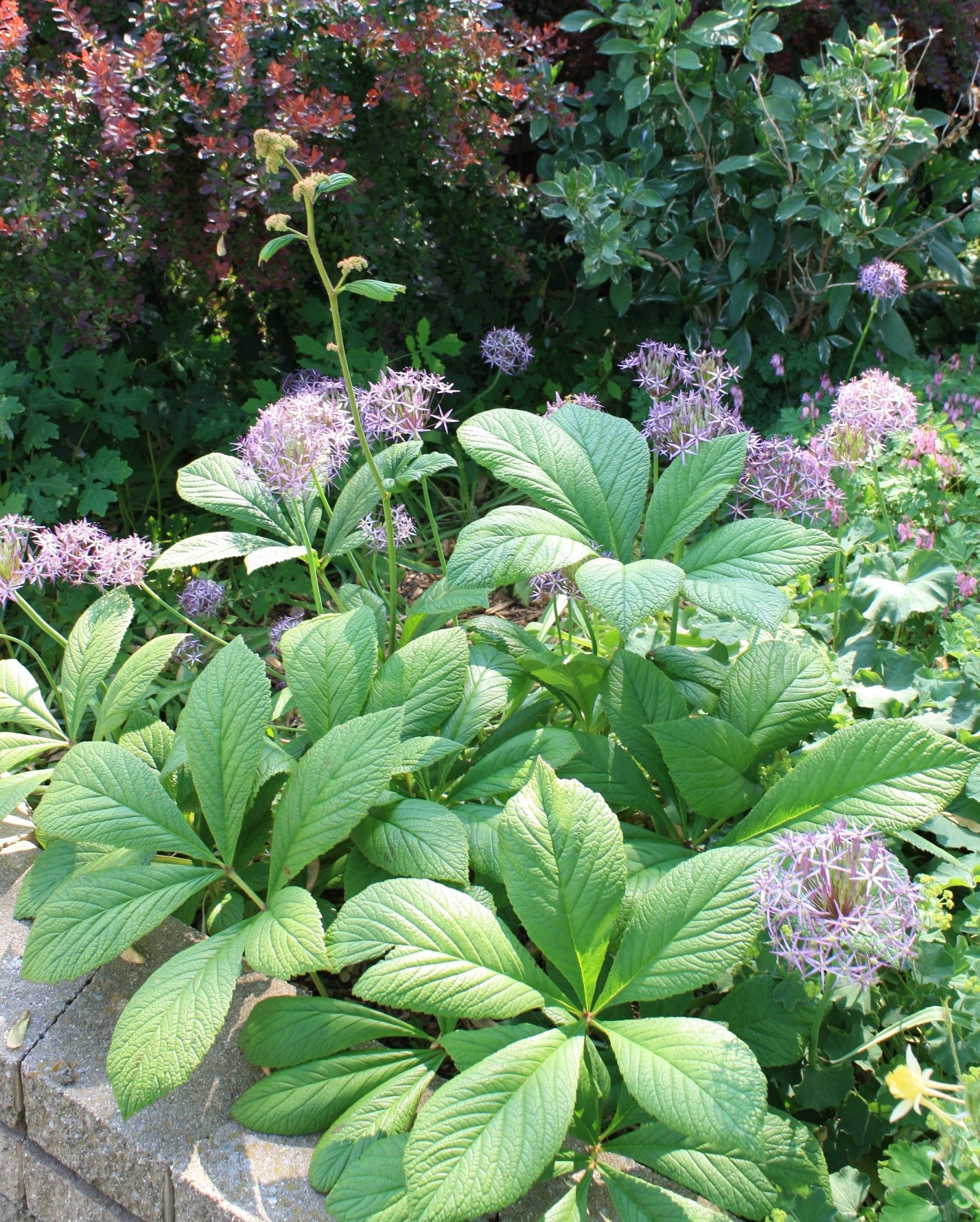
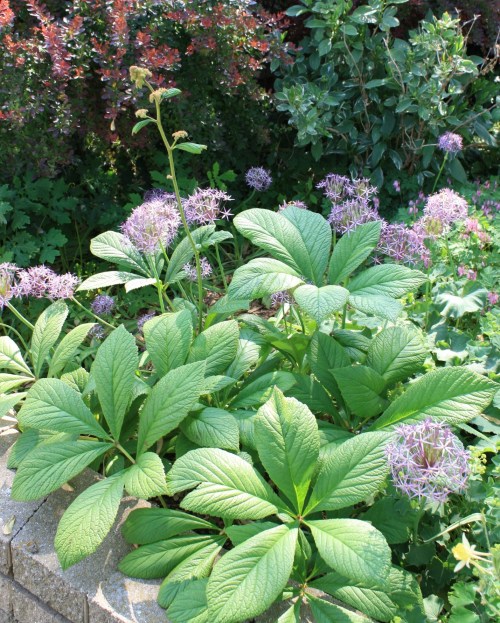
Ligularia likes wet soils in part shade to full shade. It like to be sheltered from the wind. The foliage is interesting and large. There are many genus with a variety of leaf shapes. This photo shows the one in my garden. It does get a rocket type flower in spring, but like most prennials the bloom fades but leaves the foliage for interest.
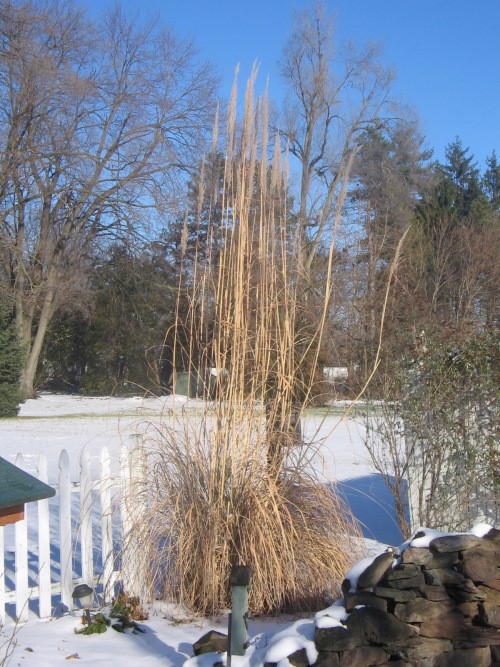
Next, let’s take a look at a few grasses (Fescue). Talk about winter interest…here are some photos Gail shared with me of the grasses she has during winter.
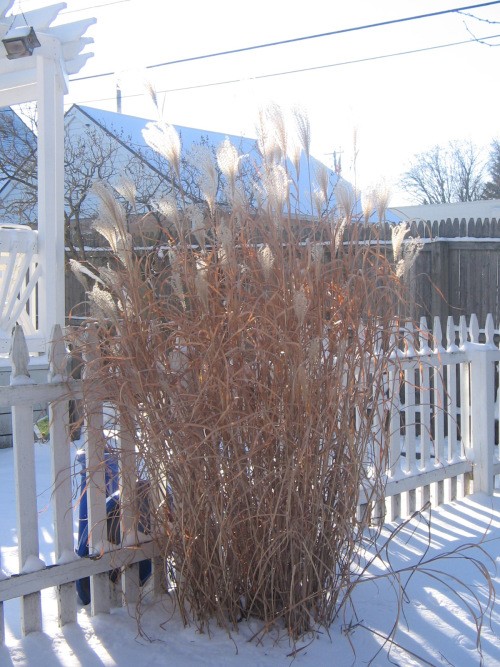
My best guess is the this is a pampas grass.

I am not sure what one is in the photo below, but maybe Gail and name it in a comment for us.
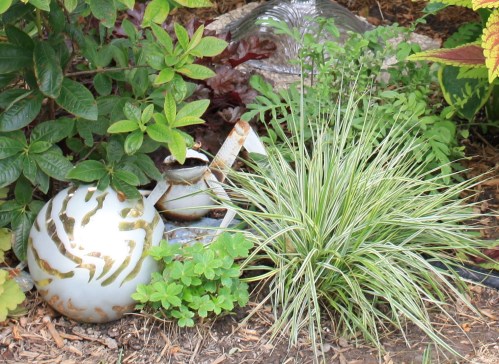
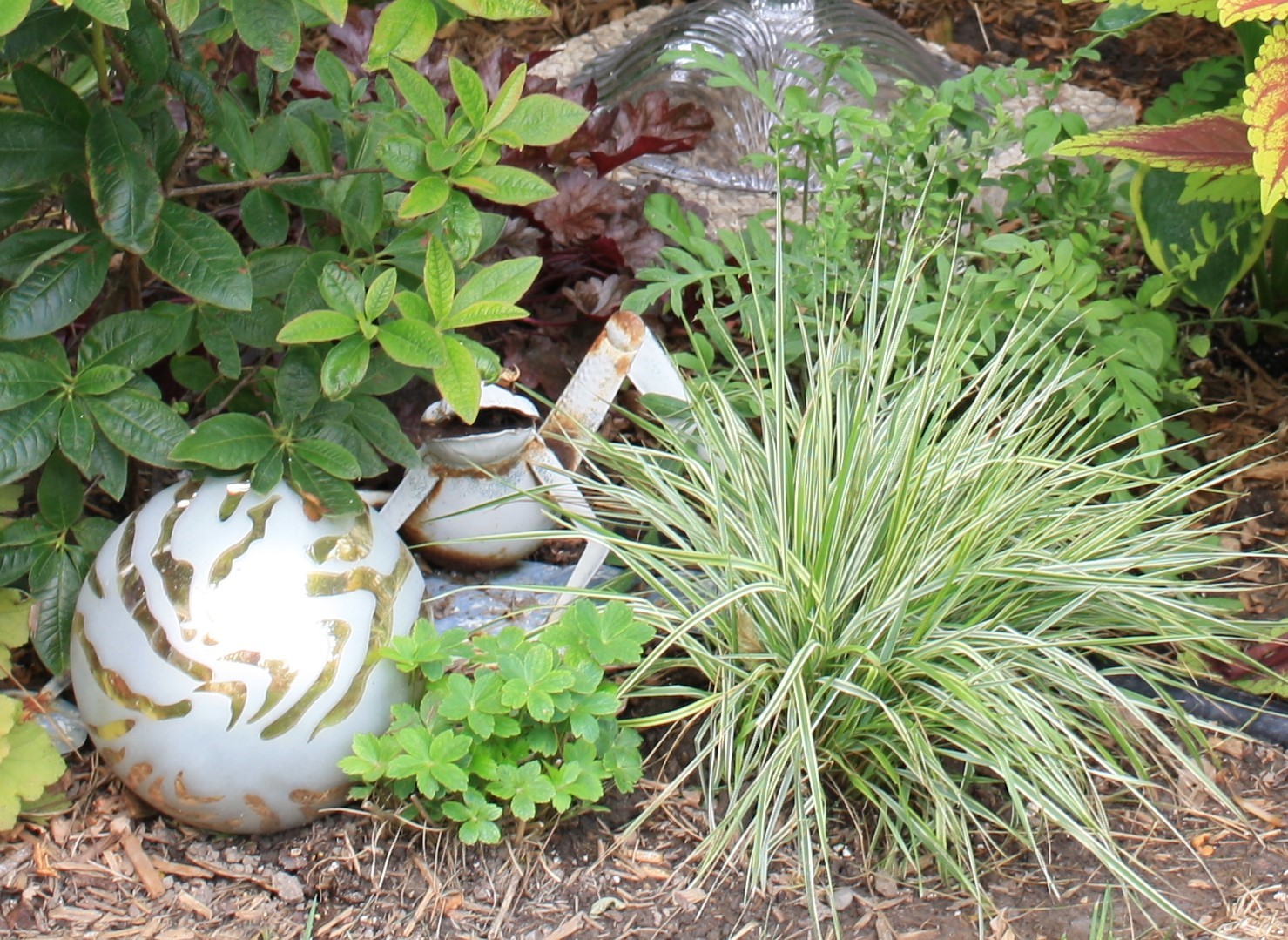
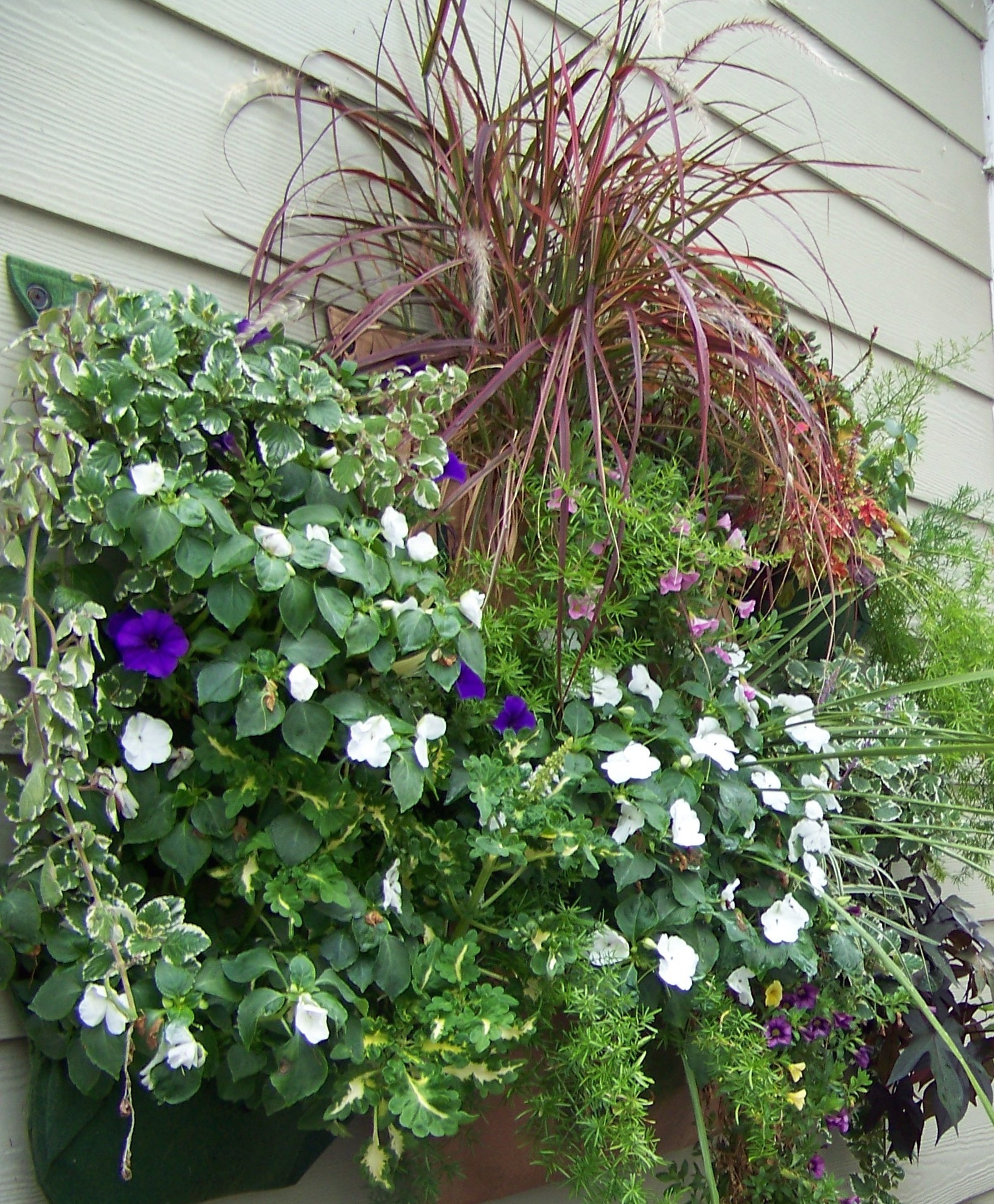
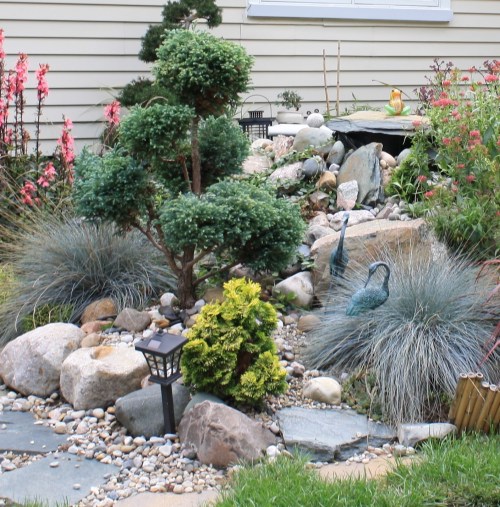
I use a wide variety throughout my garden. I’m sure you may recognize some of these, including blue festuca, Cherry Sparkler,and purple fountain grass. I enjoy both annual and prennial grasses. I use them often around my pond, in containers, and in vertical gardens. They add such great texture with their color and thin blades of foliage. Here are a few photos for ideas on how you can use them as well.
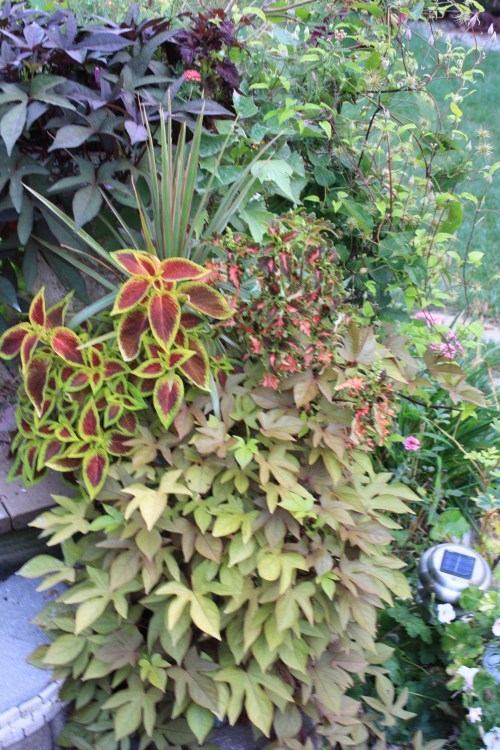
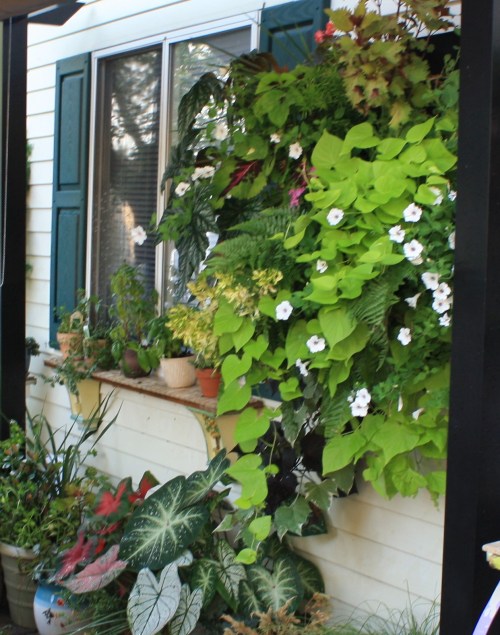
Another annual that you will find useful is sweet potato vine. I buy it in all the foliage colors and variety. Here are a few photo of them. In he photo below are two with same shape leaf but different color. But you will find a wide variety in shapes and colors on the market.
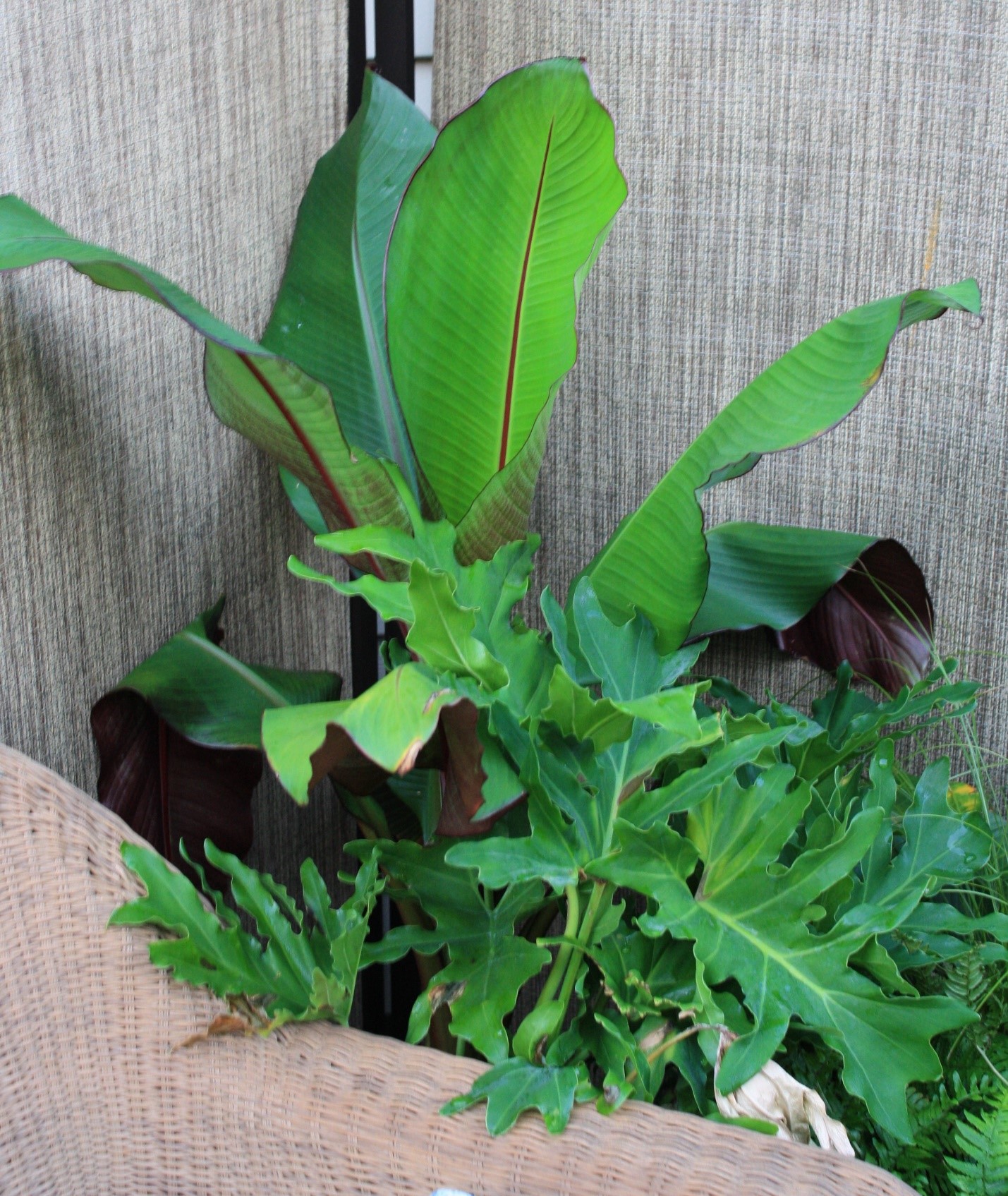
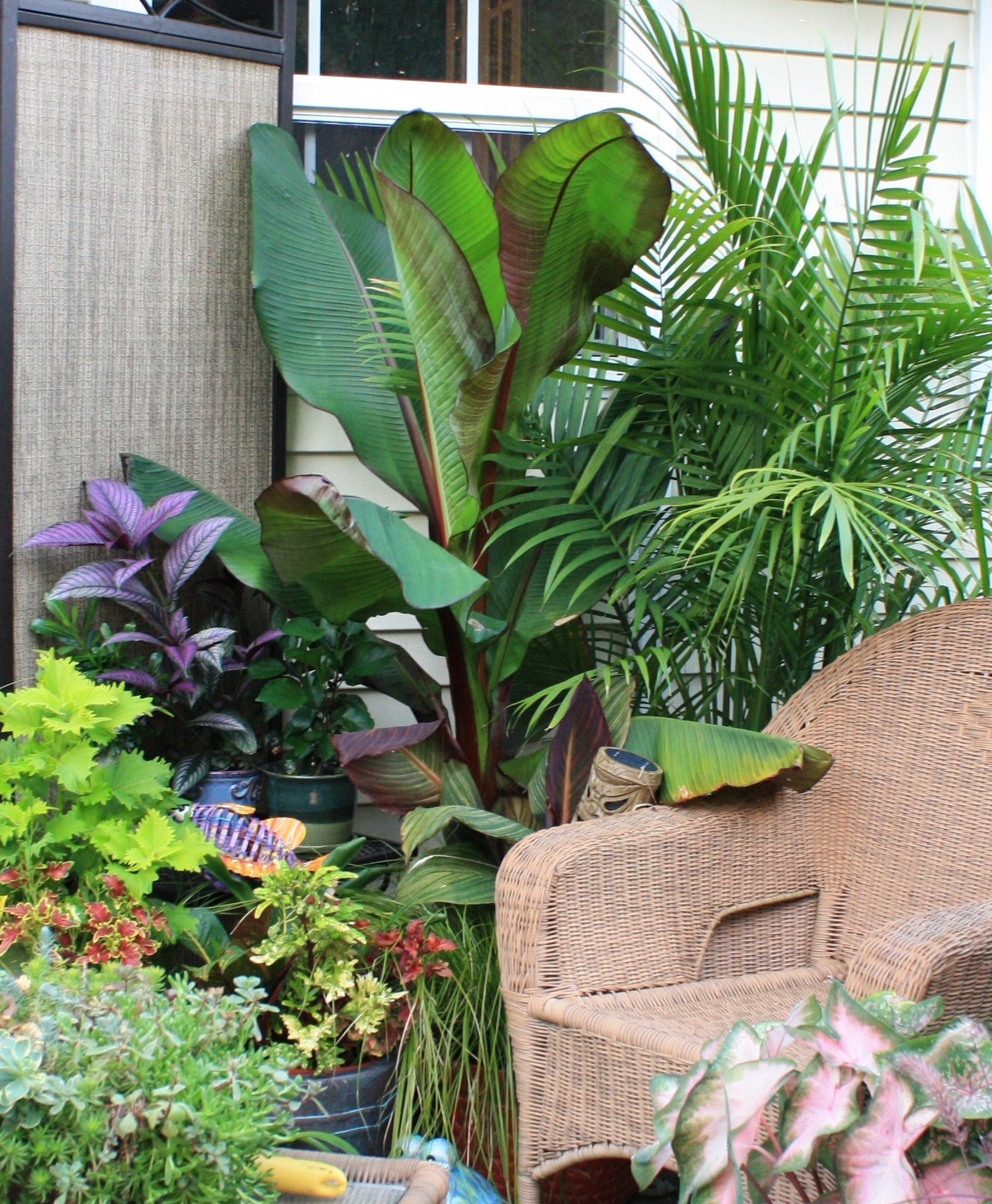
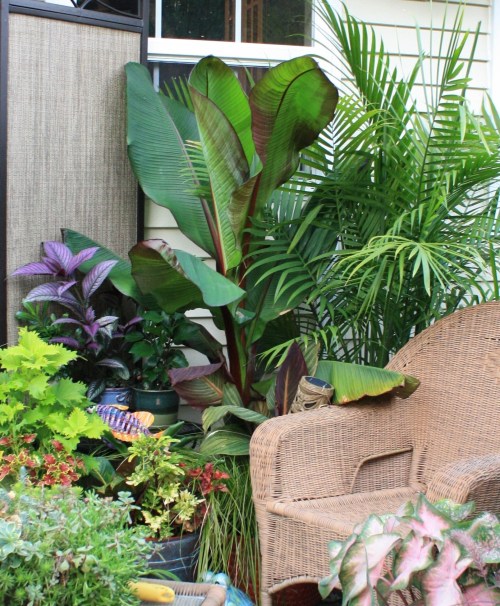
Try some tropical plants. Below is Dwarf Red Banana tree along with a cateracterum palm. That purple you see to the left of the banana is Persian shield. It gives a great pop of color.
There are so many great plants out there. Extend your variety. It’s easy to fall into the common annual flat trap…but try something new. Add a great houseplant, tropical, or perennial you haven’t seen before. You might be surprised at how much you enjoy the color and texture beyond the bloom. This is the final post for this series. It has been great to share some of my favorite plants that I use in the garden. I hope you enjoyed them.

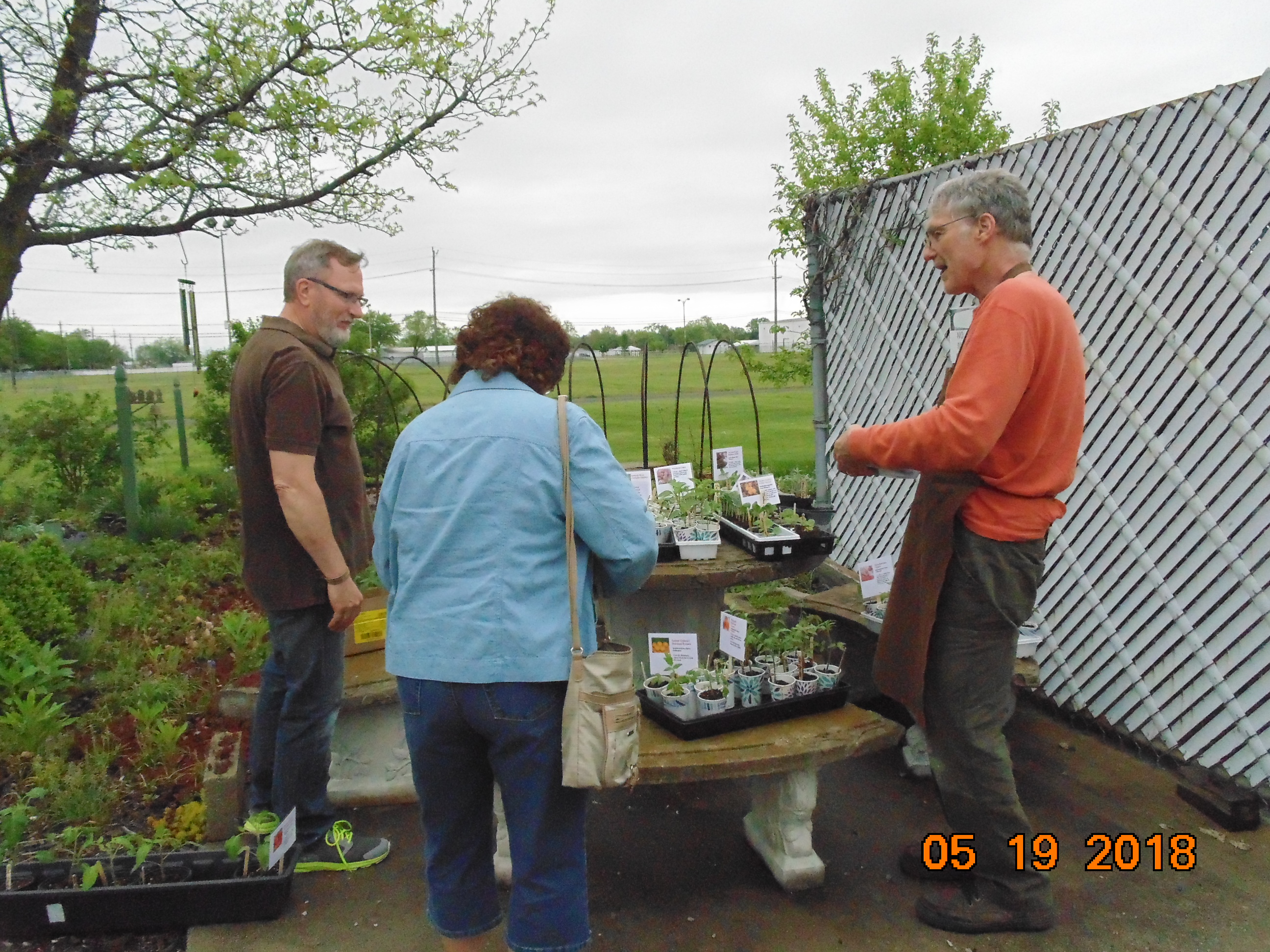
HLG PLANT SALE

View this link for additional information:

https://mailchi.mp/f21ab0a7f9b0/oak-openings-blue-week-2018?e=8f5512a66a

Photo Friday

Gail gives us more photos and who knew she was a poet:

Hear Ye Hear Ye
The sweet aromas of Mother earth fill the air,
as warming breezes blow our hair.
Spring has finally come — Work and Learn has begun.
Release those winter woes, come & see what the gardens have to share.
GK
Master Gardeners work to clean up the various areas of the gardens as the plants began to re-awaken.


Although they did not find any duck nest, they did find one very dedicated mother
who chose to nest under the flag pole at the front entrance to the parking
lot.


So hurry and come out to enjoy the gardens. meander around & see
what is in bloom now—for tomorrow it might be gone
until next year–


Did you see this plant when you came for our meeting???

Hello all, for those of you who haven’t had enough planting yet this spring or would like to fill in a few holes, here is your chance. GK:

Original order form is attached with details of how they are bunched. All pricing is 30-40% off from the original pricing.
2018 Tree Order Form

Contact Megan DeLeeuw, District Manager for pick up arrangements: 734-277-1968 or megan.deleeuw@macd.org.

Thanks!

Remaining Inventory:

Concolor Fir Transplants: 10
Blue Spruce Transplants: 40
White Spruce Transplants: 330
Shagbark Hickory: 50
Red Maple: 150
Hazelnut: 175
Riverbirch: 16
Wetland Packet: 6
Nut Packet: 30 (Includes 10 native nut trees in each packet)
Beauty Packet: 2
Spicebush: 75
Pin Oak: 17
Red Bud: 12
Sweetgum: 25
Tulip Tree: 50
Cranberry- 100
Serviceberry: 100
Button bush: 300
Red Oak: 150

The Hosta, known as plantain lily, is certainly a common workhorse in the garden. At one time it was just a simple green leaf plant. Not so today… they offer a wide range in color and texture. Hybridized and mutated, they are now green, blue green, yellow green, almost white, or in a form of variegated foliage. Although COLOR is its basic interest, there’s more offered from this plant. There are a wide variety of leaf shapes, textures and sizes.

Let’s start with size. The smallest I have in my garden is Mouse Ears. A compact mini Hosta. As you can see in the photo below, its foliage is not much larger than that of a common begonia. I incorporate them here and there, in an island berm located in the front yard. Since they are small, it’s best to give them some space so that they don’t get lost amidst other plants.

Now, here is the largest hosta in my garden. A blue green with a textural patterned leaf. This hosta known as ‘Elegans’ makes a huge impact in this corner by my patio. Although it’s a large hosta, there are some available even larger.

Hosta makes a great filler plant. It can add some beauty while it takes up necessary space in a bed. Easy to grow in most soils, it’s a great contrast against blooming plants or in a rock garden. This photo shows two variegated hosta. The one in the background was transplanted from another area. It offers a medium green color with wavy white margins. In comparing it with photos on the internet, it might be ‘Undulata Albomarginata’. The foreground shows ‘Gold Standard’ that I purchase locally. It has a heart shaped leaf that is a golden green with a blue green edge. This photo was taken in the first year of planting. It since has grown quite large and fills the area above the apron of the deck.

Although separate they are a great plant, placing them along other plants adds additional texture. Below are hosta and ostrich fern near my pond. The second photo is hosta and daylily foliage popping through.

Here is the same hosta named ‘Stained Glass’ grows well as you can see in this photo taken later in the season. Hosta are very winter-hardy and typically excels in a shady garden spot.
I enjoy using it in cut flower arrangements for accent. This foliage is such a great match for the tulip in this arrangement and a beautiful contrast with the purple allium and pink bleeding heart.

In the photo below is a hydrangea and ‘Stained Glass’ after a rain. A great interpretation of stained glass when wet.
Below is ‘Elegans’, again, after that rain. It’s interesting how differently the two take on water. What a contrast from the shine of glass to a beaded beauty.
Here’s another, when wet this forms a teardrop.
Yellow greens are always a favorite in my garden. This hosta helps make a striking background for my Itoh peony called ‘Kopper Kettle’.
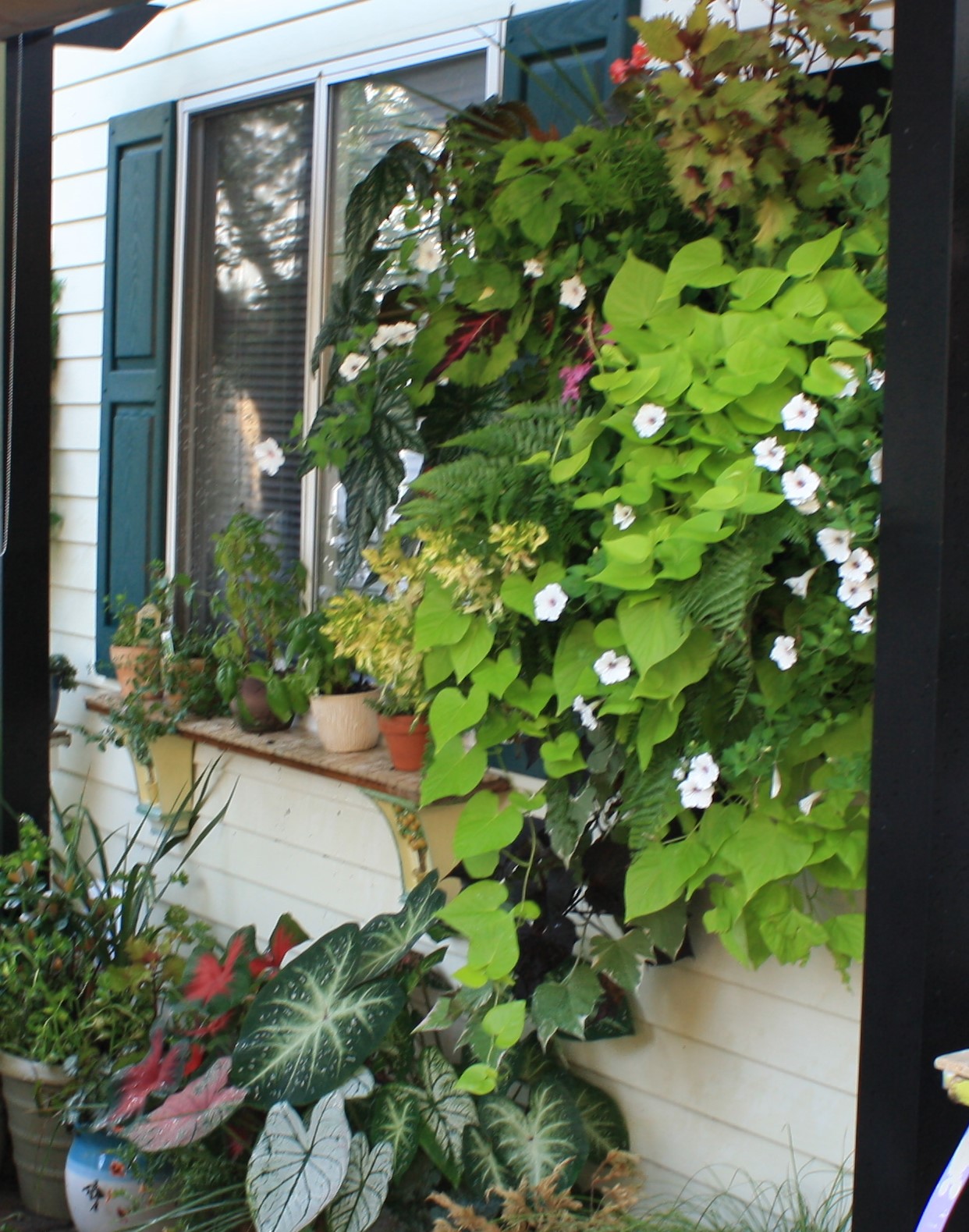
I often add hosta in vertical gardens. At the top you can see two. I’m sure the one you notice immediately, however in the upper left corner is a newer addition called ‘Curly Fries’ I have a few of these in the garden .

‘Curly Fries’ offers a blade shaped foliage with a ruffled edge. The color tends to very from green to yellow green.

Another wavy edged is ‘Chartreuse Wiggles’ which is currently on order. Sorry no photo yet, but check it out online.
Don’t hesitate to use them in containers. They are so winter-hardy. The Hosta is planted here along with a Heuchrea and Euphorbia .

Here are a few more photos to share with you. One thing to notice is that in most all of these, you will notice that either stone or much is used around them. This helps with the slugs that love to eat the foliage. Although an occational rabbit will damage them, or you may find a deer or two that eat a meal of fresh hosta leaves. While the suject of eating hosta is open…did you know that these are great grilled in their early spring form. Who knew? Thinking on trying this after hearing it from a presentation at Growing Great Gardens in Taylor, Mi.
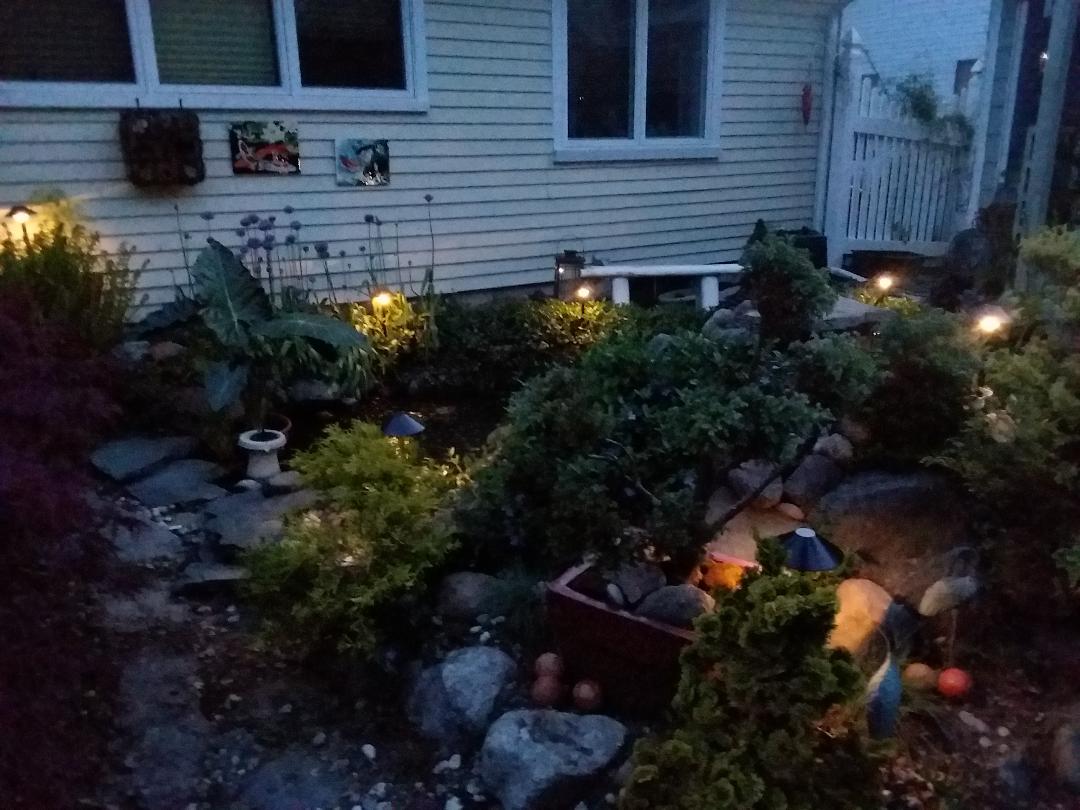
Photo Friday

Gail sends us some photos and notes from our last meeting:
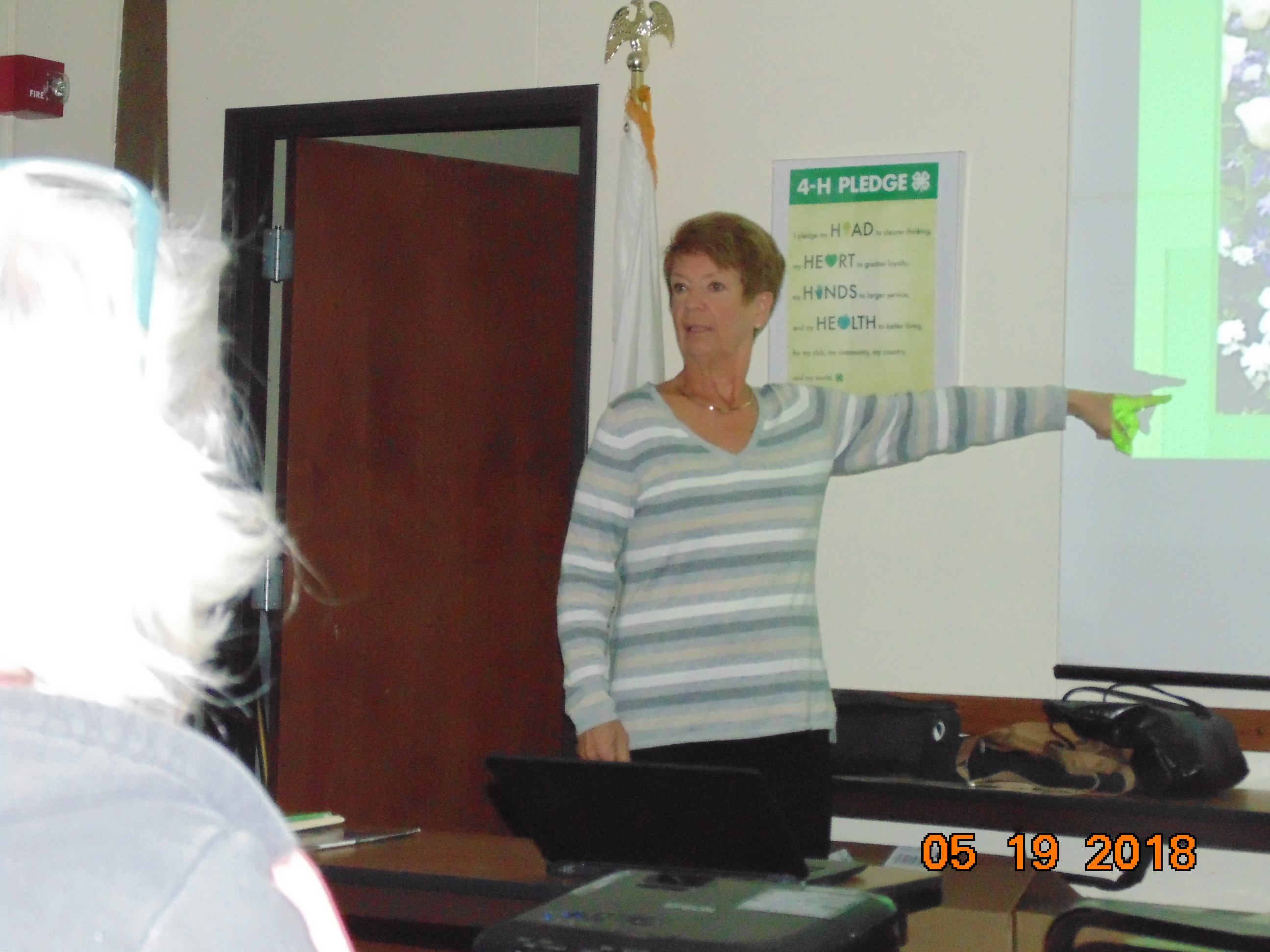
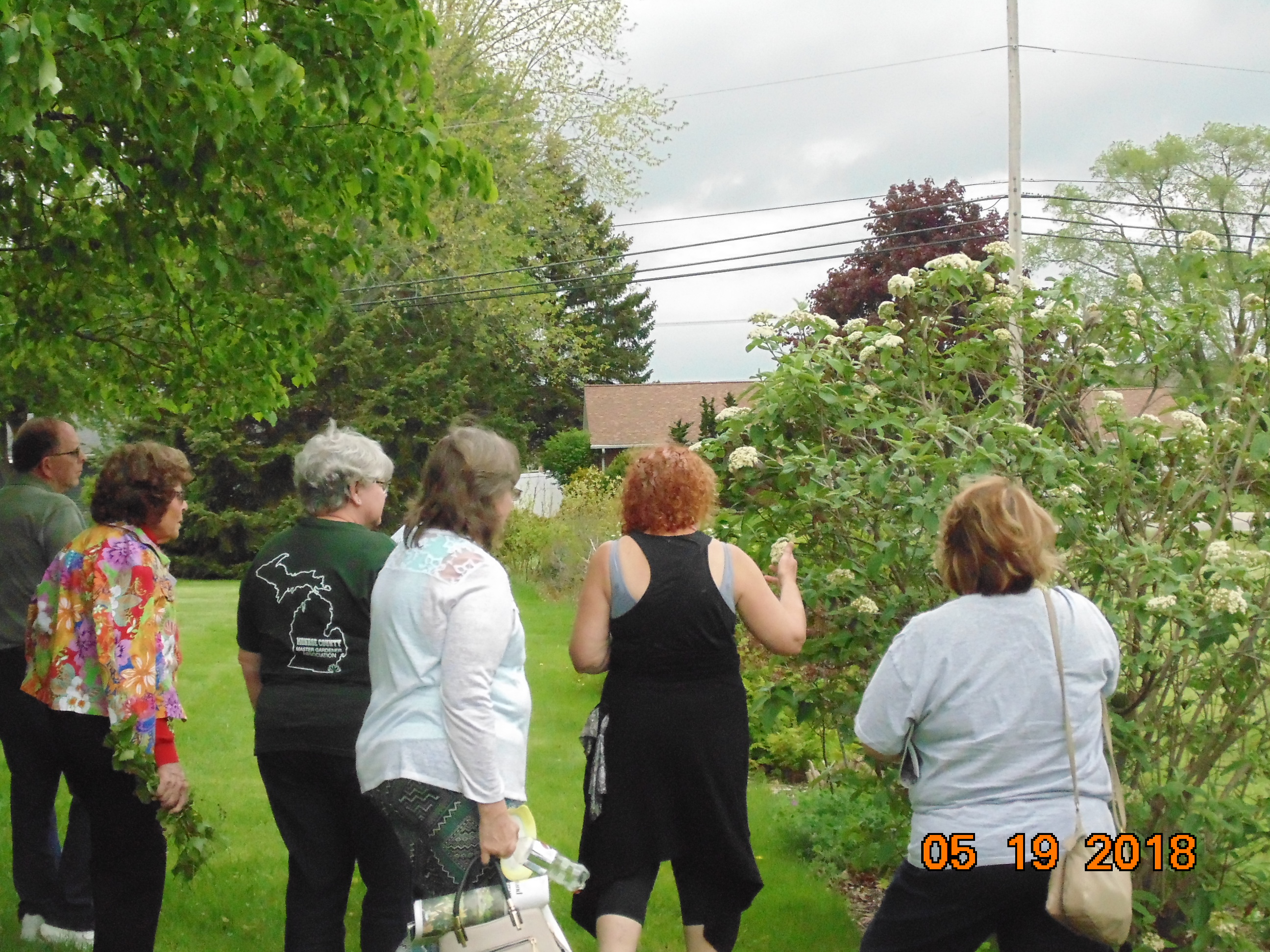
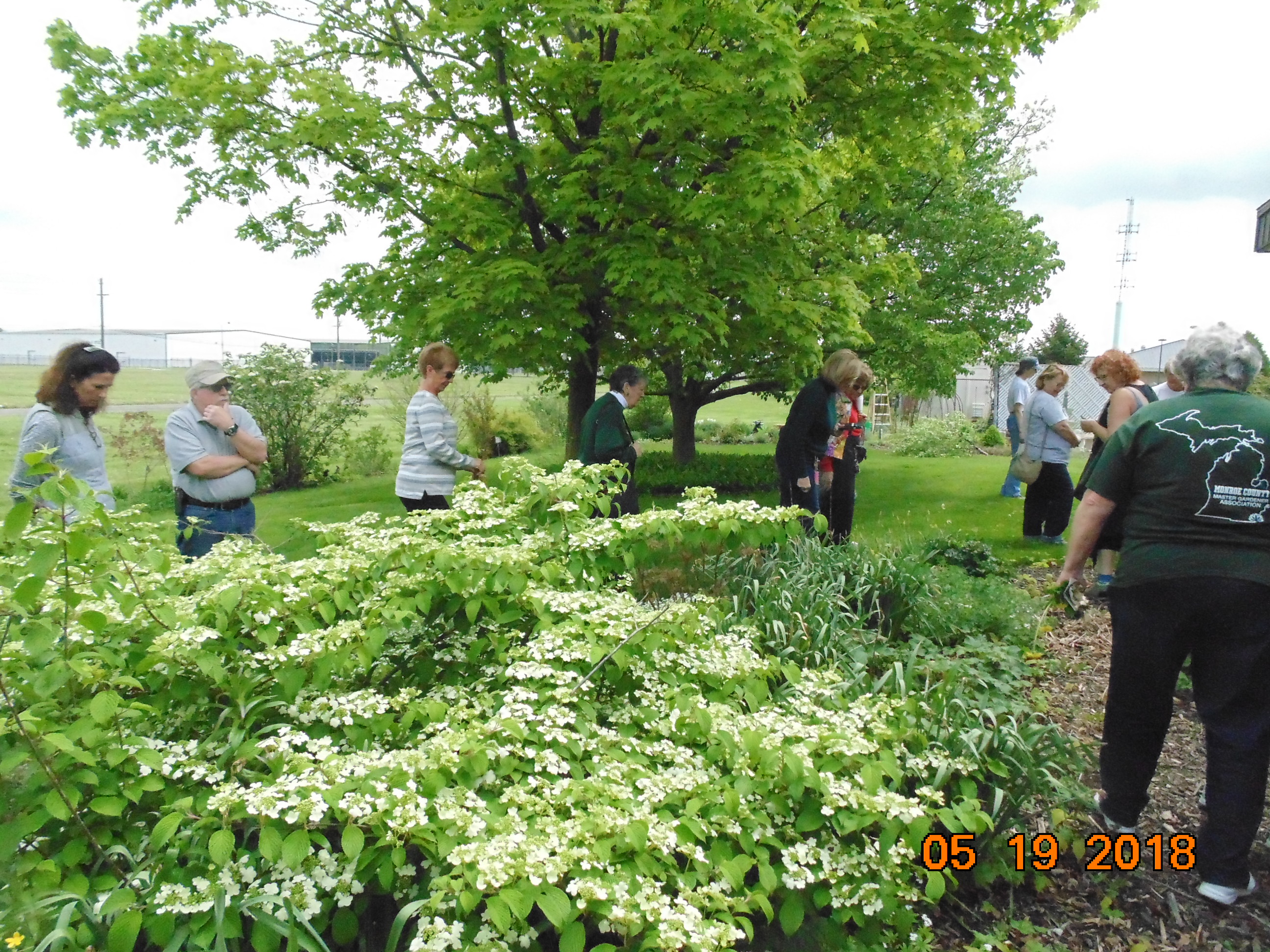
Our speaker at the last Monroe County Master Gardener & horticulture club mtg. was Gail Morrell-. The title of the program was Learning from the Past-28years. She spoke of monitoring and identifying problems we found with our plants. To assist us with this, each person was given a samples of boxwood to examine-when you found a deformity on the underside, we were to pick it open, which exposed a very lively worm, aka the boxwood leafminer. The next topic was the viburnum leaf beatle. Look for the scales on the wood and cut it off and destroy. Attached to her hand outs was a list of pesticides that are in routine use by today’s gardeners.

The members listened intently as she discussed the pros and cons of tree staking. Her handouts gave a list of popular pesticides used today. Did you know that it is not conducive to apply Preen every year?. It is becoming apparent that many pesticides being used build up over time and become clogged in the soil. This can cause damage to the plants and roots of any plant life that surrounds the
area treated. In more general terms she talked on birds and their need for bugs to eat-raising the caterpillars of the Monarch butterfly & the plants from the perennial of the year list from the perennial plant assoc..
She invited anyone with further questions to email her:
thegardener@comcast.net

Let’s discuss some drought tolerant, interesting and colorful foliage. Ranking on top for this gardener are succulents.

Succulents are easy to grow and propagate. They are often grown for their striking and unusual appearance. They are quite drought resistant. Their leaves and stems are usually thick and fleshy. This aids the plant in retaining water in dry climates. Many do have spectacular blooms and add additional interest beyond their foliage. Let’s take a look at the forms of these interesting plants. Many appear to be artwork and add an interesting architecture into the garden.

In our Michigan climate we are most familiar with the following:
Sedum ‘Autumn Joy’

Succulent spring foliage of Sedum ‘Autumn Joy’.


During the summer it gives you an interesting mound of green. Each stem has an open rosette shape making a nice cluster of green. As a bonus in the fall, you get a wonderful cluster of small florets that form a bloom.

It also has great winter interest. The dried blooms pop up through the snow and add an interesting element in the winter garden.

Another great one to grow is Sedum ‘Frosty Morn’. It can get a bit leggy and floppy, so it needs pinched back in early summer. In cooler areas like Michigan it gets a pink bloom. It will be white in hotter climates. It has great variegated foliage when not in bloom.
Enjoy the deep burgundy color of Sedum ‘Purple Emperor’. Although it does have a great blooming quality, I still want to include it for the great colorful wine color.

Sedum has a wide range in colors. The blue and yellow greens are a favorite.

Sempervivum (hens-and-chicks)
This group of succulents typically are found in a low growing rosette form. They carry a wide range of colors and are a great addition to a fairy garden or rock garden.


Below you see them scattered in this camping fair garden. The babies are great for the miniature gardens.


Or at the base of a grass near my pond:
Prickly pear cactus
Another that will grow in our area. I once had this in my garden, but have removed it due to the thorns it develops. It gave interesting form and some structure, but the benefits didn’t outweigh the thorns to me. In spring and summer is would develop a gorgeous yellow bloom however. Sorry, I just don’t have a photo of it any longer. It will spread fairly quickly.
I also use succulents that are not winter hardy. Although they can be costly, you can clean them off in early fall to overwinter in the house. Keep them near a sunny window if possible and don’t overwater. It sometimes can be tricky figuring out where to put them.

I enjoy using these succulents in some unusual ways. Experimenting is part of gardening. Here are some photos of unusual plantings with this succulents.

Yes, I planted them in a pillow. I made a small slit in the pillow to insert a small fabric pouch of soil. They don’t require much soil. I’ve even had success with just the pillow media. They sure added interest and a great conversation piece in the garden.

This is a shadow box frame with soil. Wire, landscape fabric and moss can be added to keep the soil from falling out. Floral pins were used to keep the moss in place. Remember when designing there will be growth. This means you may have to space them accordingly. After determining a pattern (or no pattern) plant them. Cut small openings where you wish to place them. A dowel rod or pencil will help you push the root into the soil below. Now you have some living art. Vertical gardens are one of my favorite things to do. Here is another one planted:
I use a spray bottle to water them. That keeps the frame from getting too wet and falling apart.
Succulents can be planted in some unusual containers. A decorative dress form was used here:

A low container with an added fairy give a nice decorative planting to a table. I included a blue fescue grass and a Heuchera as well. They seem to survive well with a moistened soil.

Here is a wooden container with a variety of succulents incorporated: As you can see I enjoy adding decorative garden items within my plantings.
Succulents can be combined with plants that need higher levels of water. Just add them into a second container. Give the outer section the abundance of water those plants need, while adding less water in the succulent container. You can see the smaller container within the large container separating the wet and drought tolerant plantings.

You may recall the following photo from my coleus posting. The agave thrived very well in this container.

A closer look


Here’s a closer look at the beautiful rosettes and spiked contrast of the agave. By the end of the season, the agave was so large (about 18”) the pot could no longer handle it. I repotted it into a larger, much heavier container and took it in for the winter. I lost it last year to a freeze. I just didn’t get it inside in time. They grow fast and I will again add it to my garden. Caution, they do have a sharp spine like needle at the end that can do some damage.
Yucca
Yucca is another good container plant. They seem to do well in the microclimate on the north east side of my house. This one has great variegated colors. Notice that the one is different than the other two. At first glance they all appear the same. The two in the foreground have green on the edge of its sword shaped leaves and yellow green centers…the large one in back is reversed in color. They have not bloomed in the containers, however when planted in ground, they often have a tower of bell shaped flowers on a stalk. They can be aggressive and will send out roots that form new plants. The root of the Yucca is edible. According to a few internet sites I visited, it helps with the immune system, cholesterol levels, heart rate, and diabetes. It’s great to hear the benefits of our plants.
There are also some non-winter hardy plants you can use outdoors then transfer indoors.
Bromeliads:

Bromeliads are another interesting drought tolerant plant. When watering you add the water in the base of the plant. It will store the water there until needed. A decorative fish brings out colors in the bromeliads and succulents on a table.
These interesting plants like to be watered in the center. It holds the water there until needed.
Vertical gardening is one of my favorite things to do. I use a product called a wally pocket. It’s made from recycled materials. Here you see them used in a commercial garden wall. The bromeliads are repeated in a pattern. This makes for a stunning art piece. Cost may be prohibitive in doing a project this large, however, a scaled down version can work on a garage or shed wall.
I have a large photo library from botanical gardens visited. There are so many more interesting drought tolerant plant that have great shapes.

Jade Plant


Jades can make great Bonsai plantings.


Agave at Hidden Lake Gardens in the Arid Dome.


Agave at Krones Conservatory, Cincinnati, Ohio.


Bromeliads at Krones


I hope you add one or more of these this year to your garden.