
Article and Photos by Gail K.:
This week I want to share just a few photos from my visit to the Biltmore House & Gardens
in Asheville, North Carolina. I planned to see fall colors but hurricanes along with global warming
have a way of changing “normal” time frames. I also made trip adjustments so I could visit the gardens
during the Chihuly display. Not sure that was smart; more people than plants but since we saw Chihuly
pieces on display during the Meijer garden tour I thought you might enjoy. So jump in the car and
head for the HiLLS!!!!
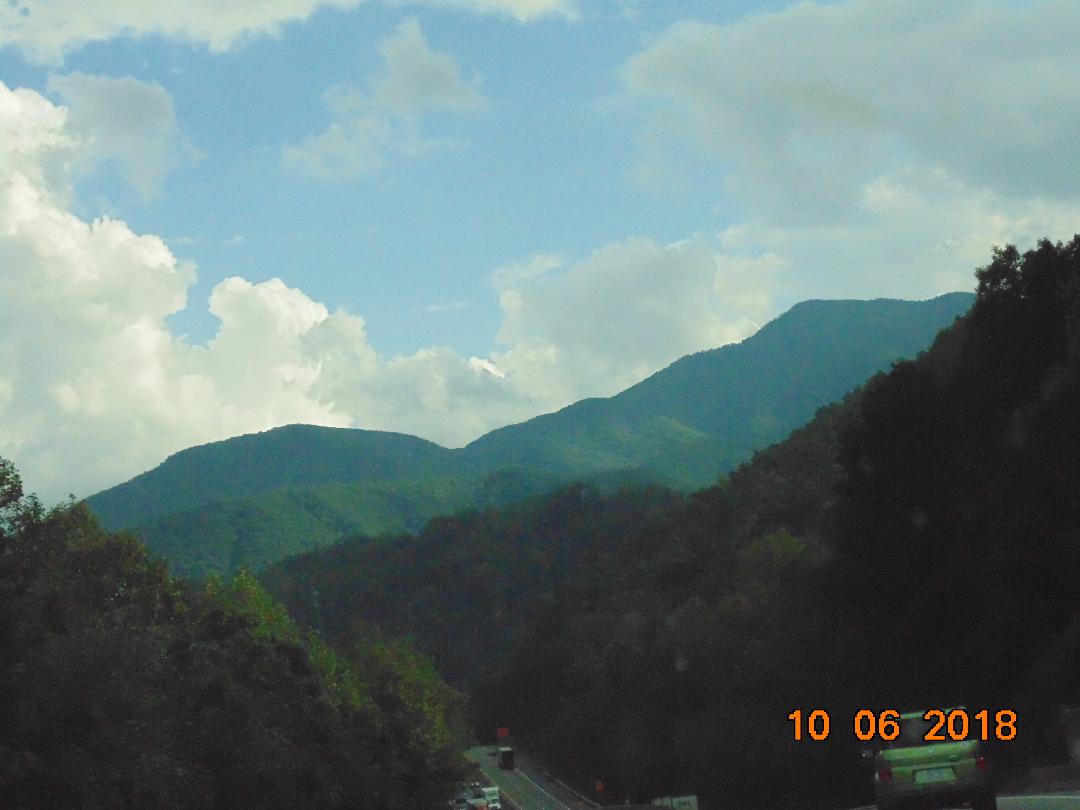
Once there, you travel down a long winding road to get to the information area.(We had to buy tickets)
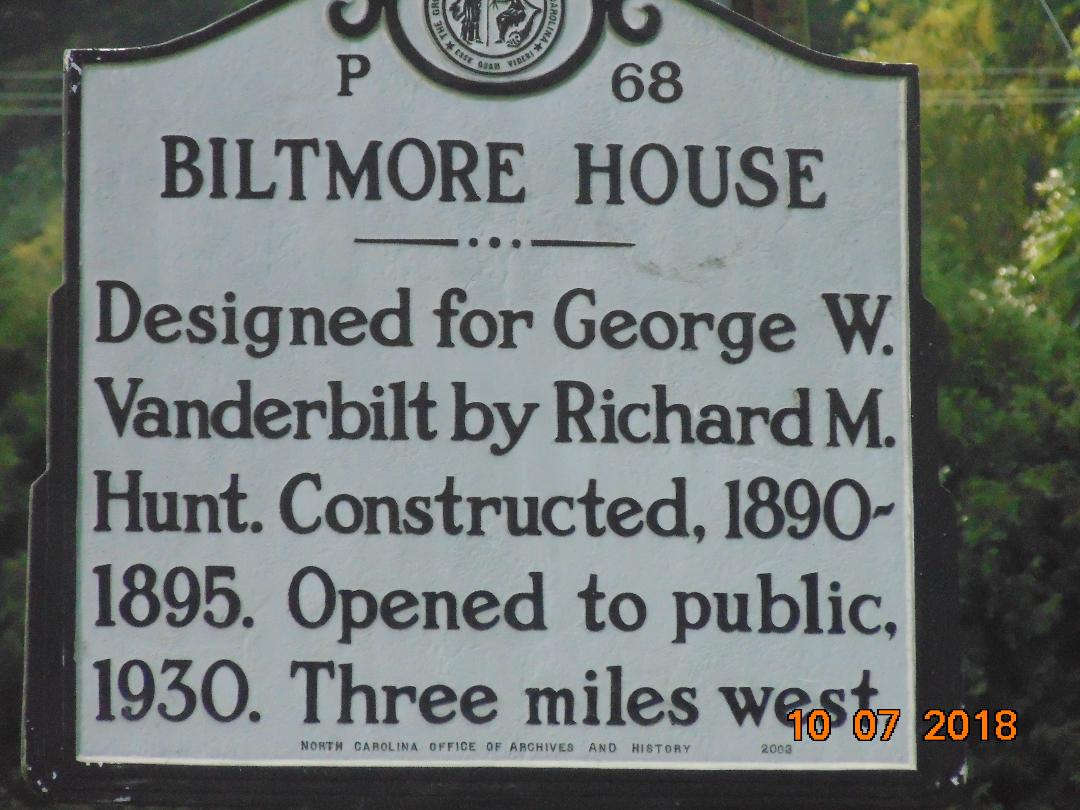
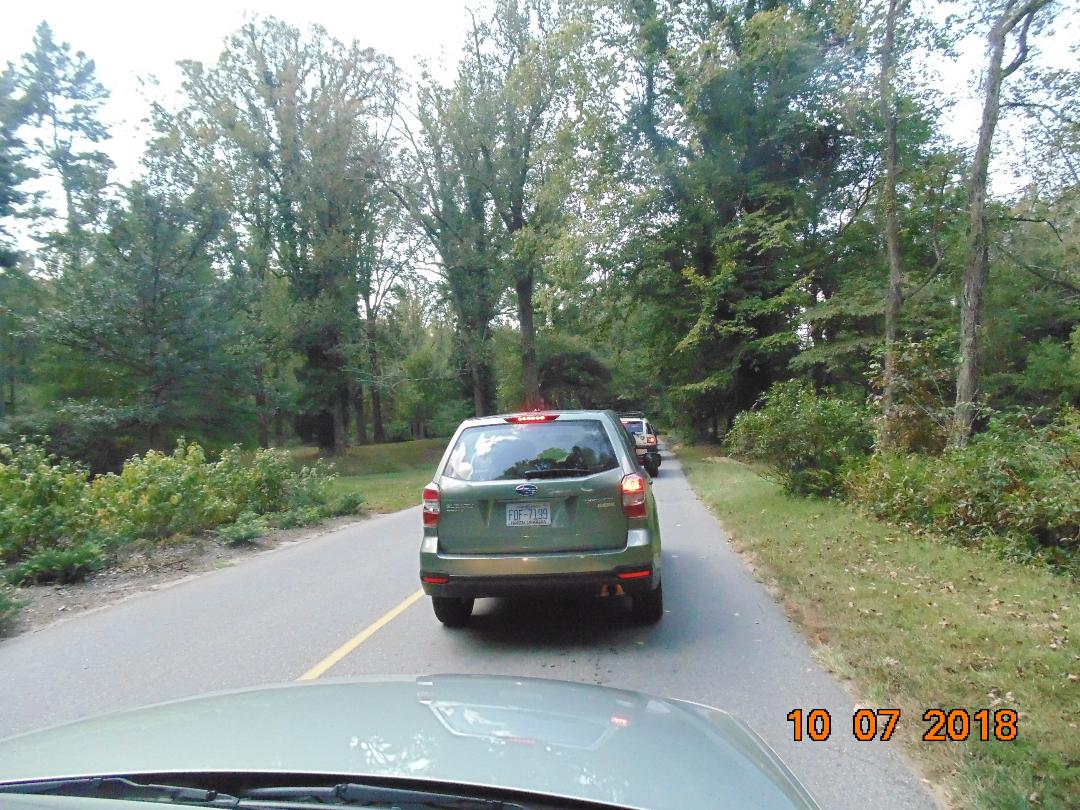
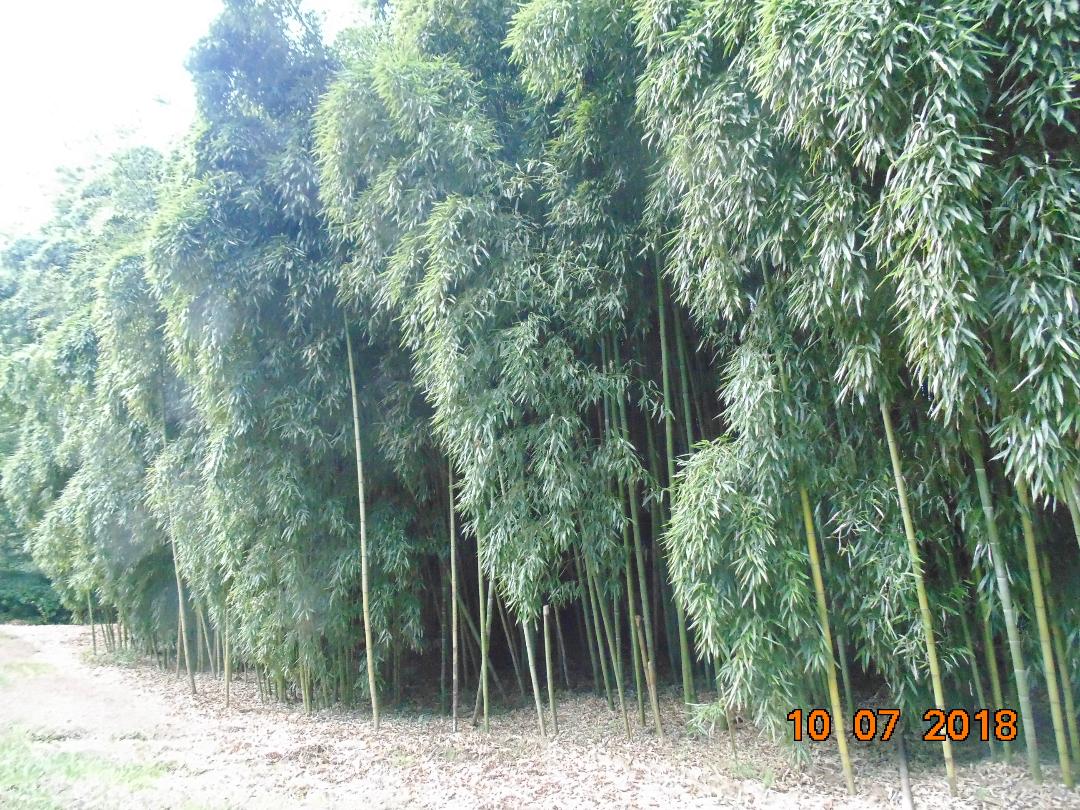
I was surprised to find so much Bamboo (a Koala’s dream) planted along the roadway.
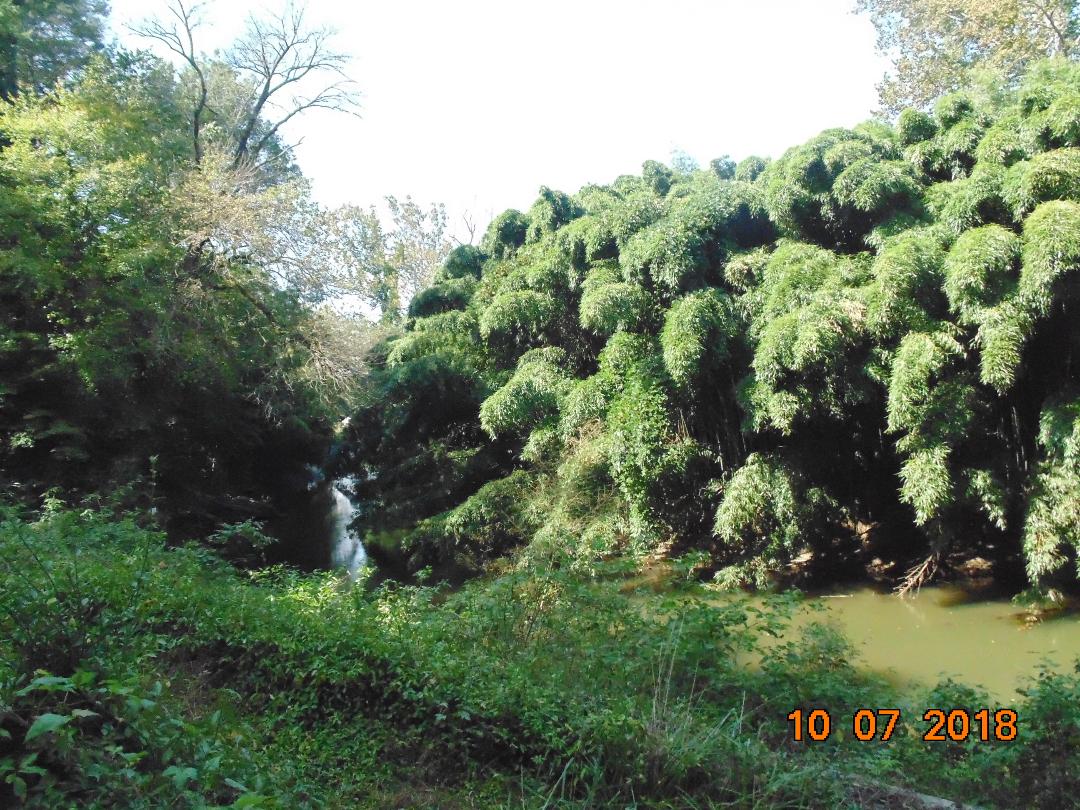
enroute to the ticket center the road opened and we got our
first view of the vast size of this estate……….8,000 acres.
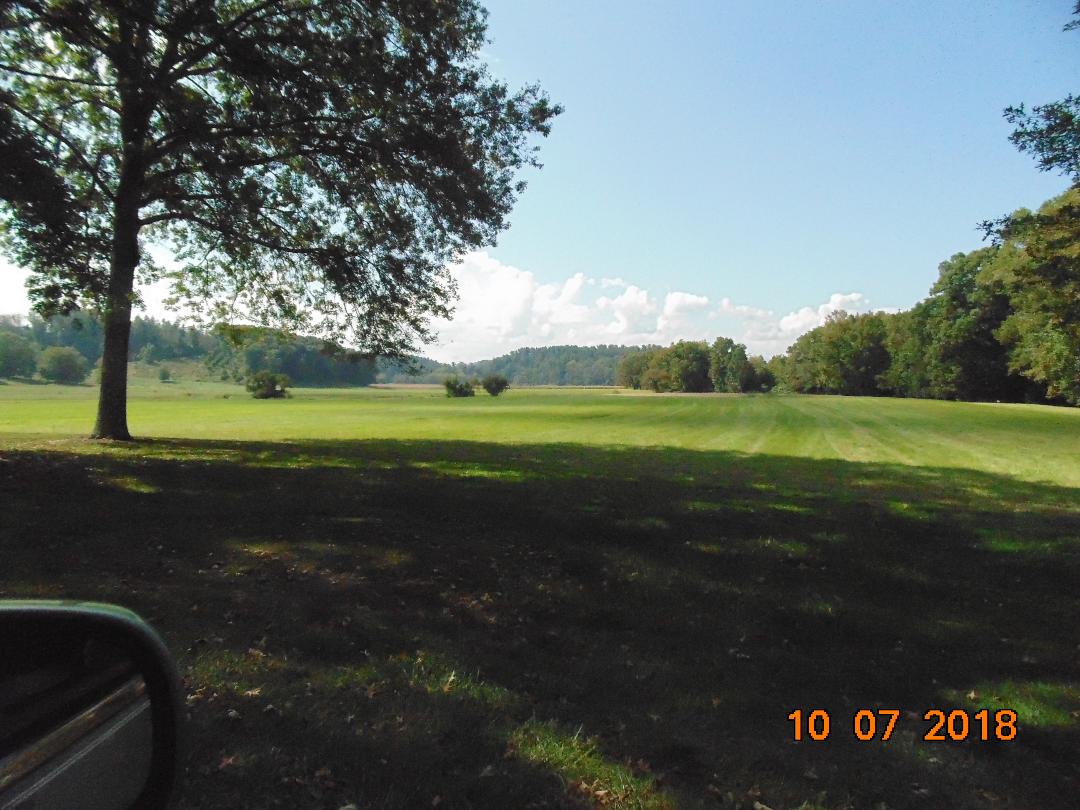
Once we acquired our tickets we set out by car to the parking
lots to catch a shuttle bus to the house.
We were fortunate they allowed open ticket sales for the last day of the Chihuly exhibit-I wonder if the crowds are as large for other major events they host throughout the year? A winding road through a vast wooded area, took us to the shuttle stop & then the house.
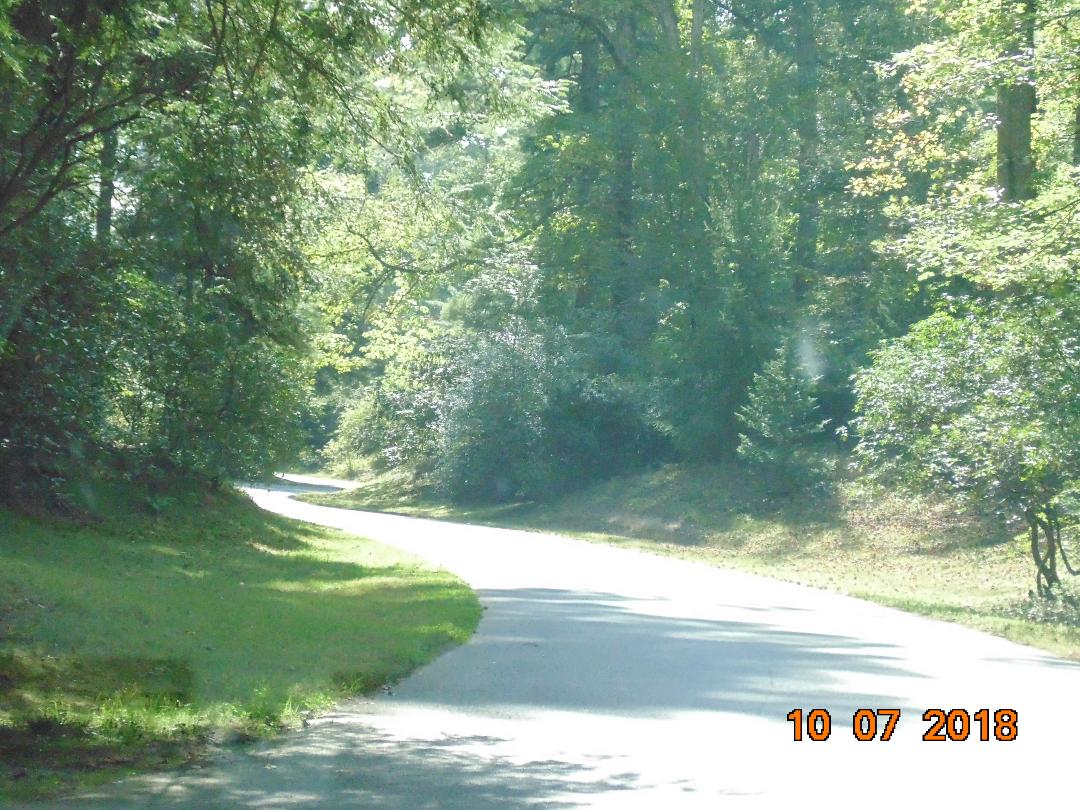
As we rounded a curve, we got our first glimpse of the house. The mid turret is the entry door.


Looking towards the “front yard” from the house, we could see the first
Chihuly exhibit ……………..
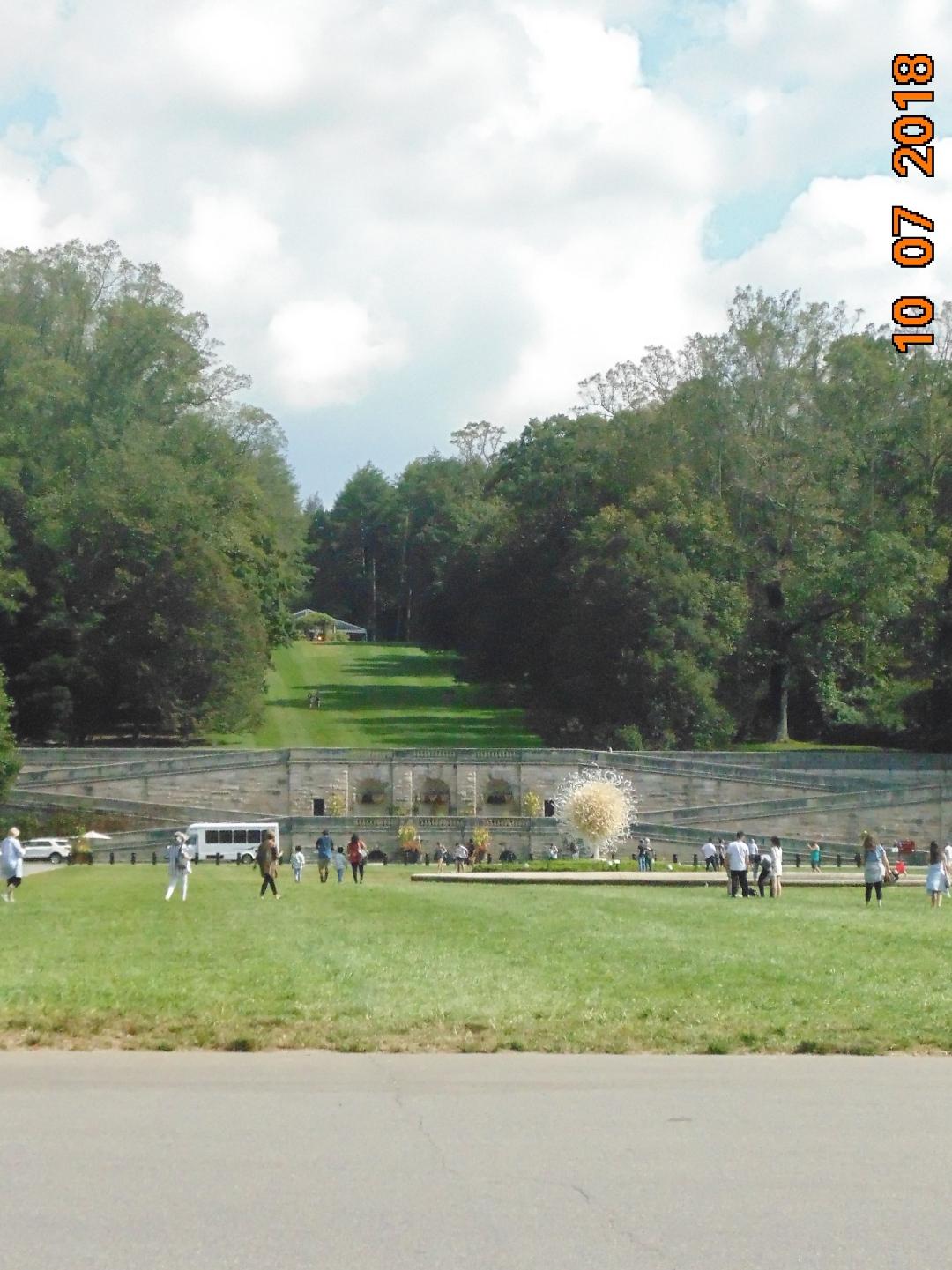
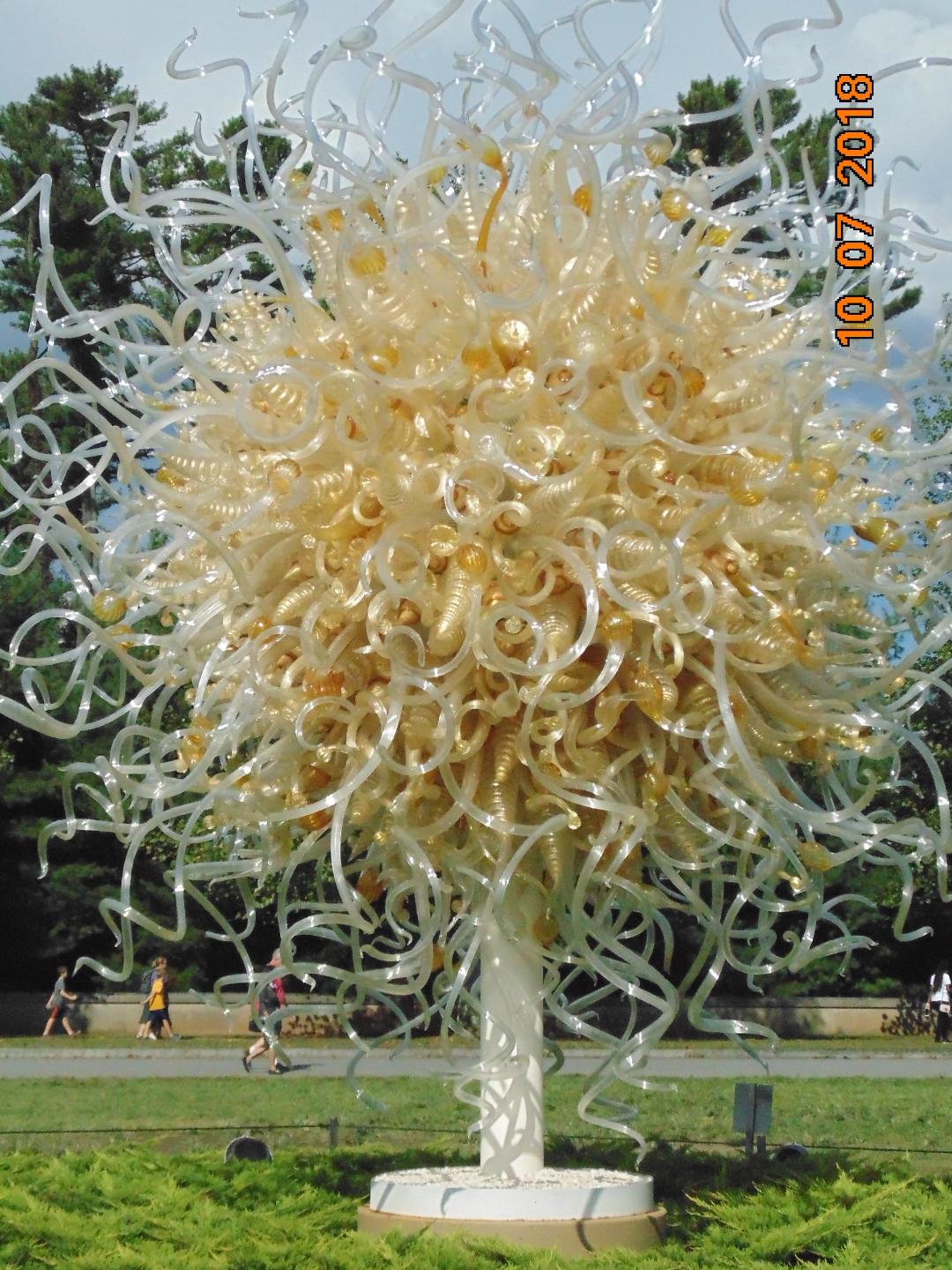
Per ticket time & after going thru security, we passed by #2 Chihuly display before entering the house……
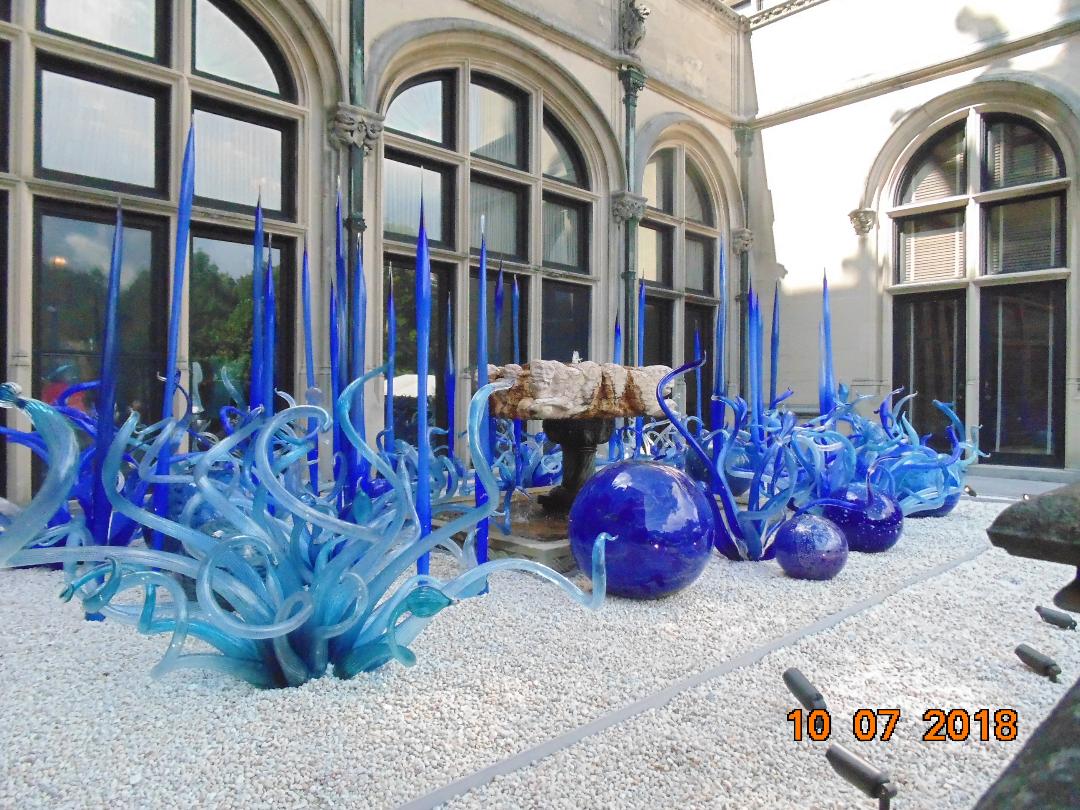
Once inside the foyer, the routes to other rooms was clearly visible. This was one of the most
impressive architectural areas to me-.

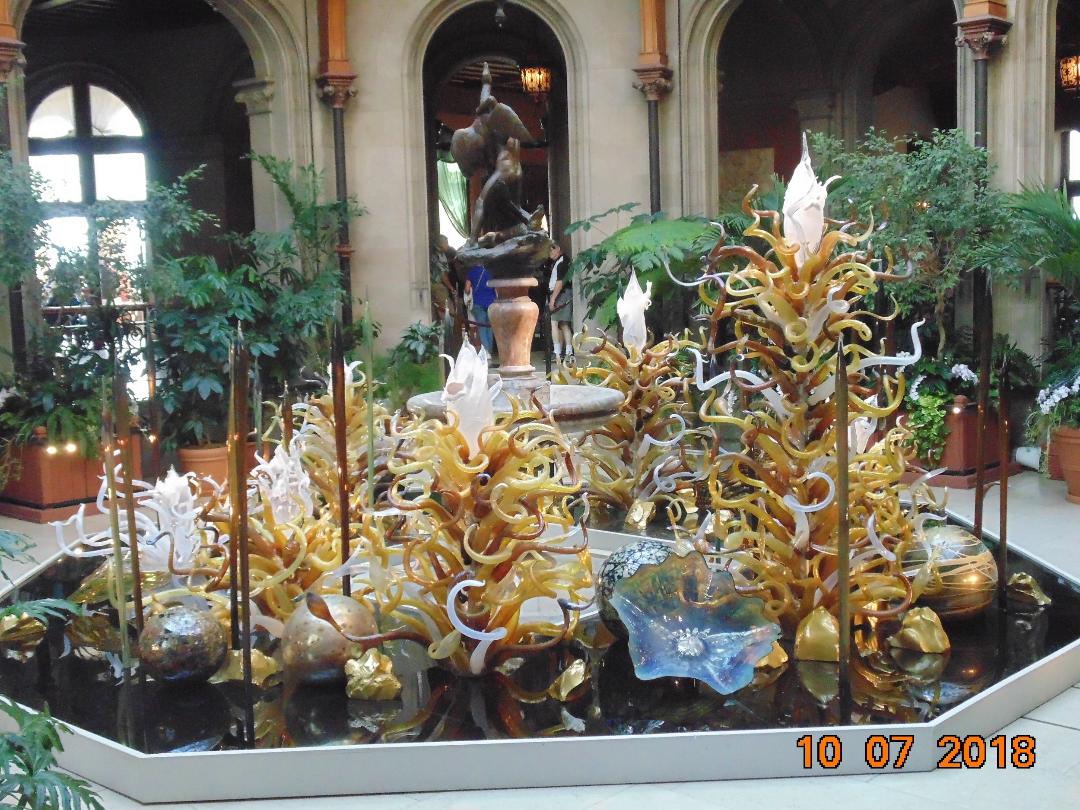
This area directly off the foyer showcased another Chihuly exhibit. We heard later
in the week, that by Monday–Chihuly exhibit was gone and the space was being transformed
into a center piece for the Christmas display………
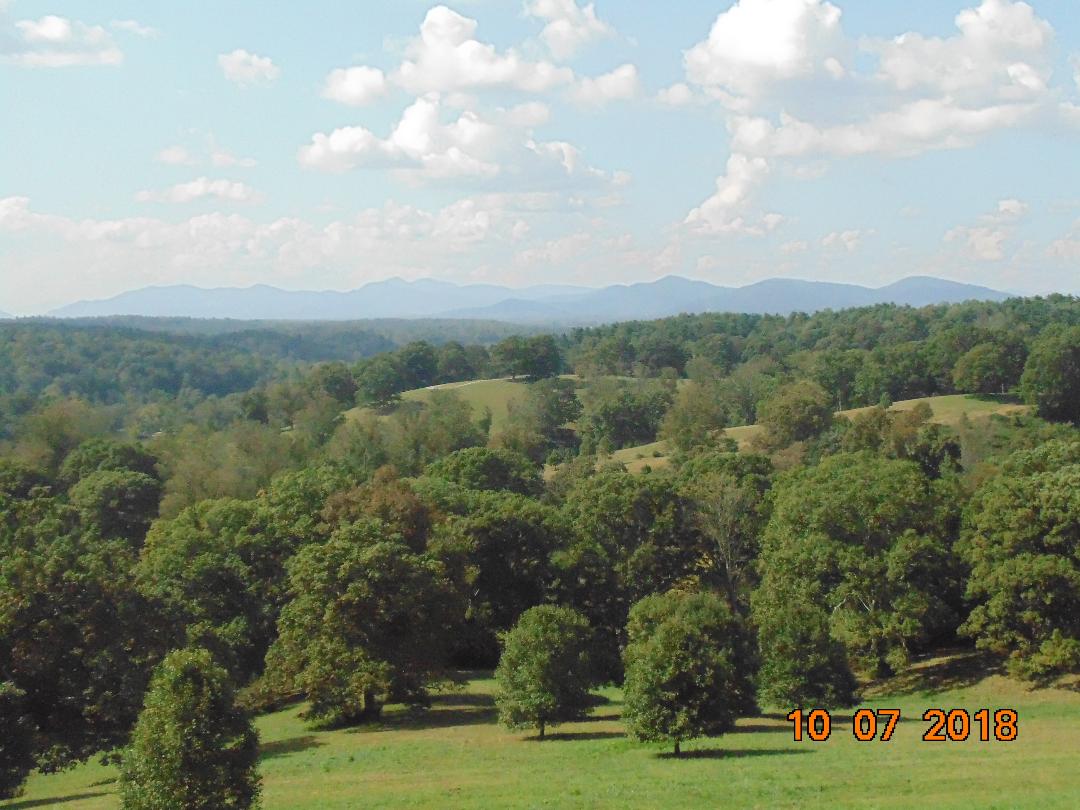
The view from the first floor rear- balcony area

Adjacent to the front lawn, on a lower level, were the “Italian Gardens”.
3 ponds, each with specific plants and a specific Chihuly exhibit.
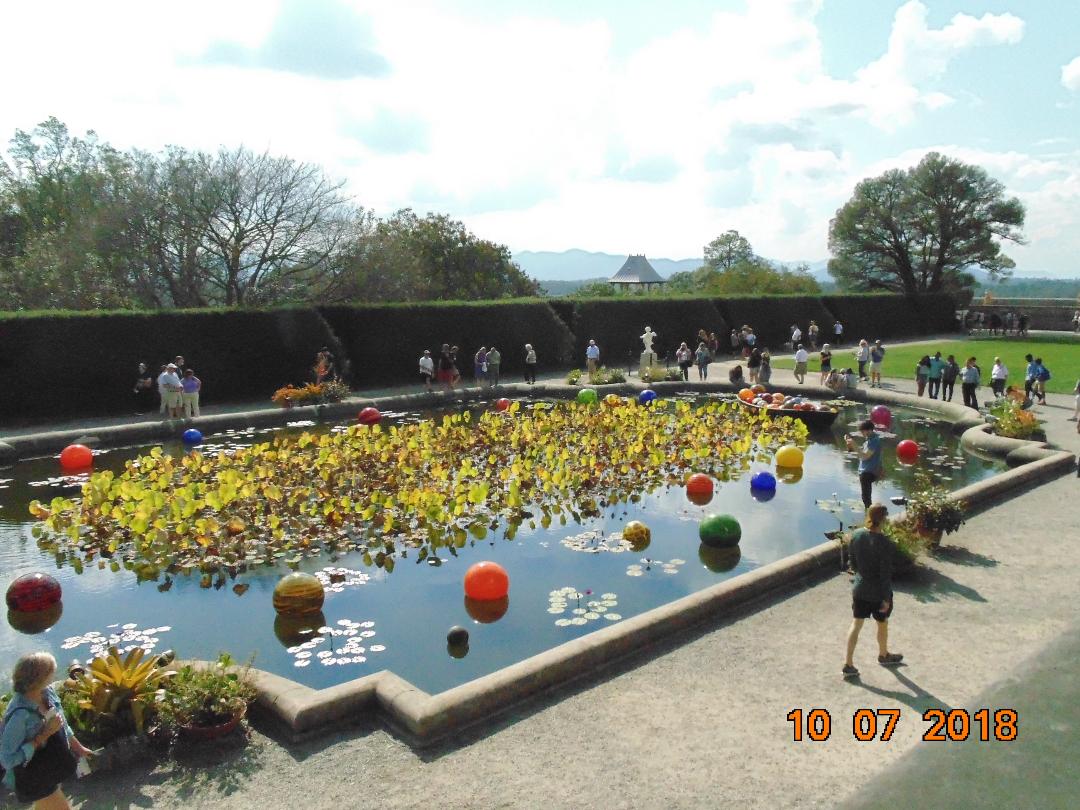
The 3 separate pond areas and their glass exhibits.
The first one-a boat full of glass balls with others spread around

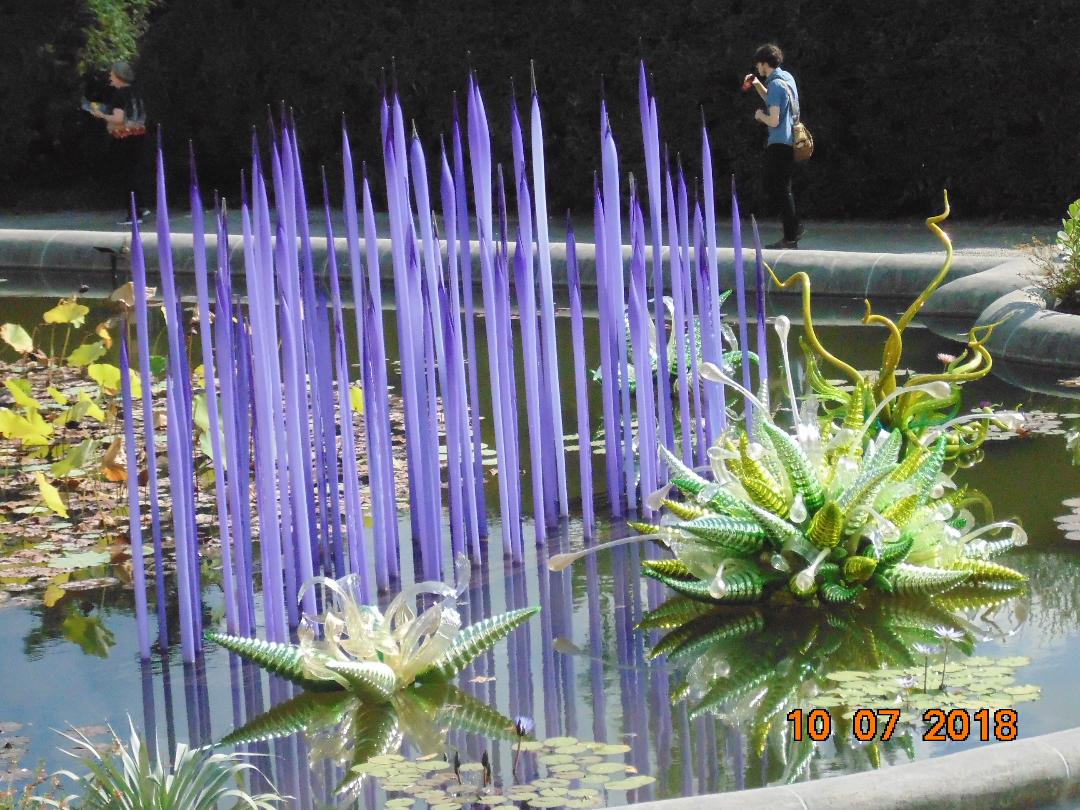
the last one-display to the front and one to the rear.
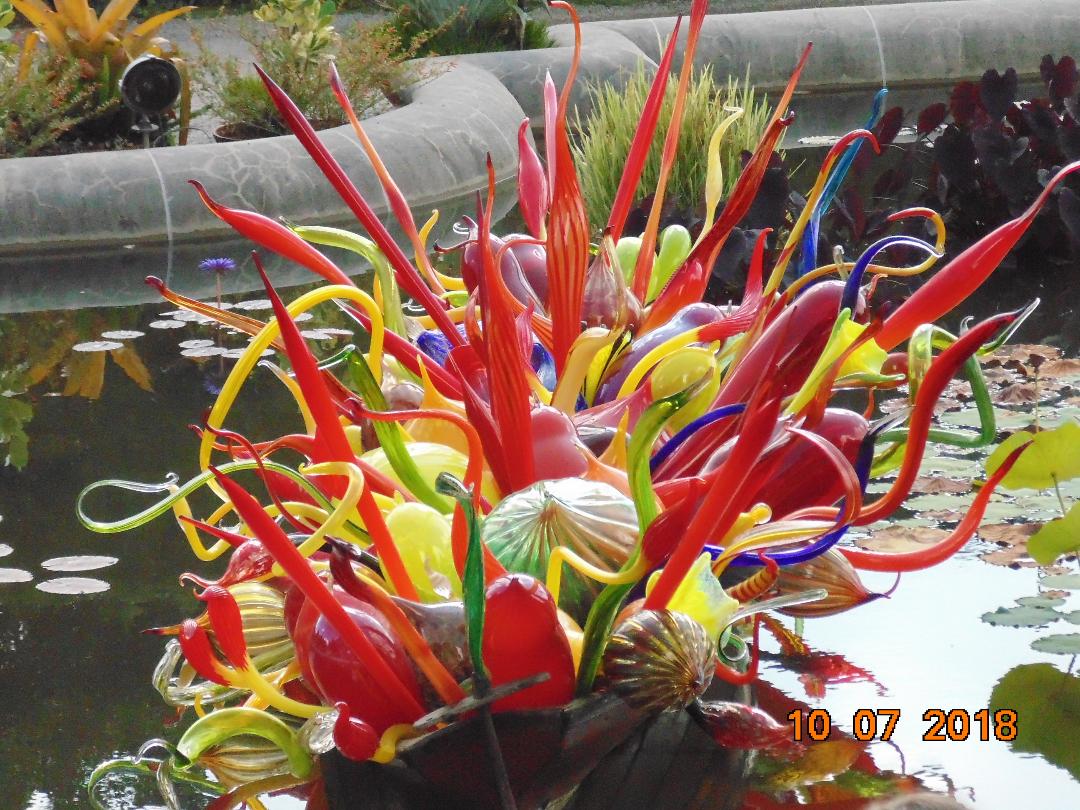
This area, obviously for entertaining. Lower from the side veranda-
higher than the gardens. Imagine if you will, attired in a sparkling ballgown-dancing
to the music of an orchestra while under the stars on a summer’s eve-the air heavy with the aroma of flowers. ## reality check:

I took this route to get to the next site, an arbor with
stone walls proved to be a great spot for several different Chihuly exhibits.
Here are 2 of my favorites from the walkway.


From the “shrub garden”–area packed full of trees,shrubs & plants. Defined by
meandering paths & occasionally a Chihuly would arise from out of the ground.
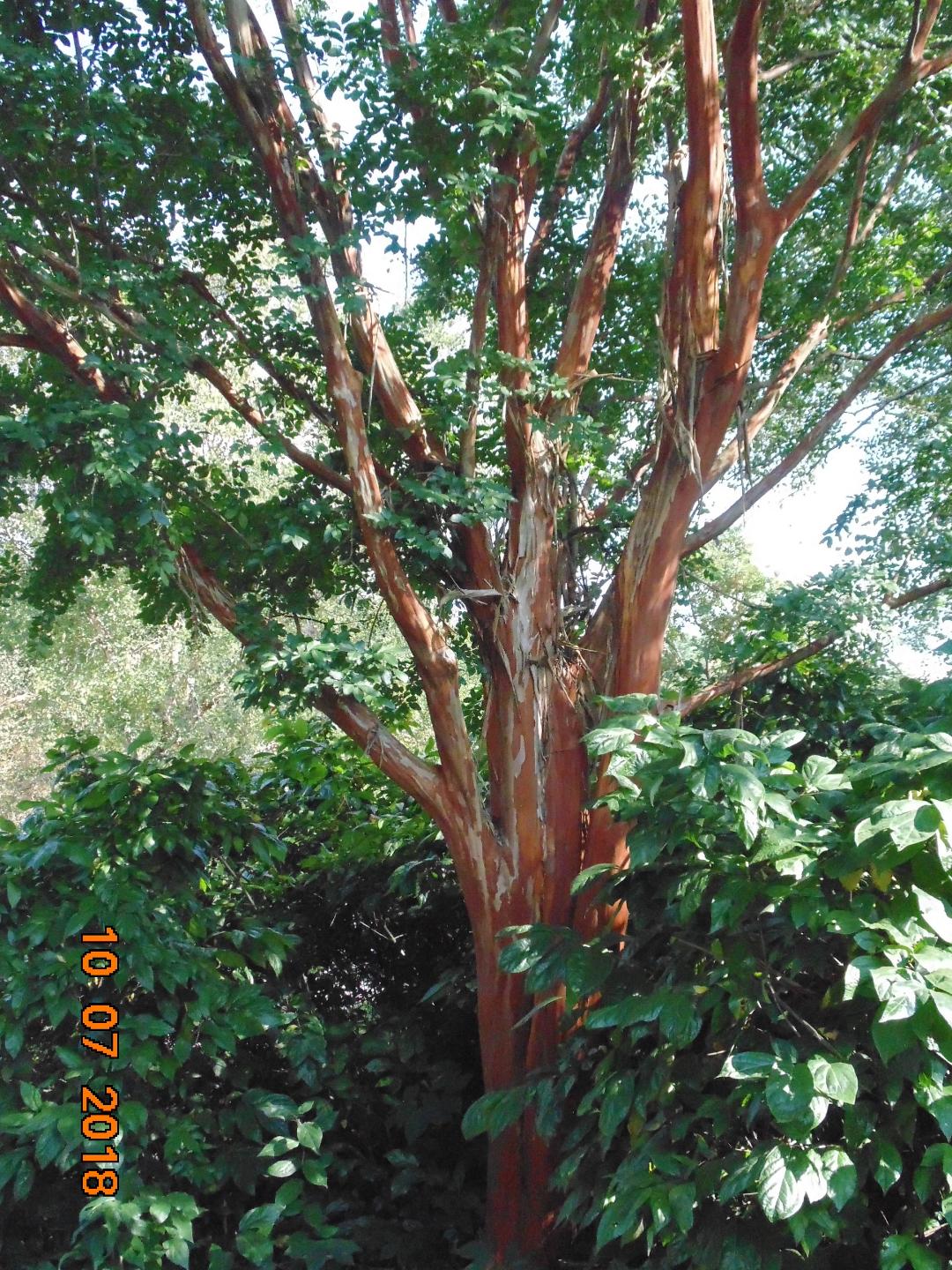
Crape Myrtle-Lagerstroemia ‘Natchez’ A Chihuly fits right in.

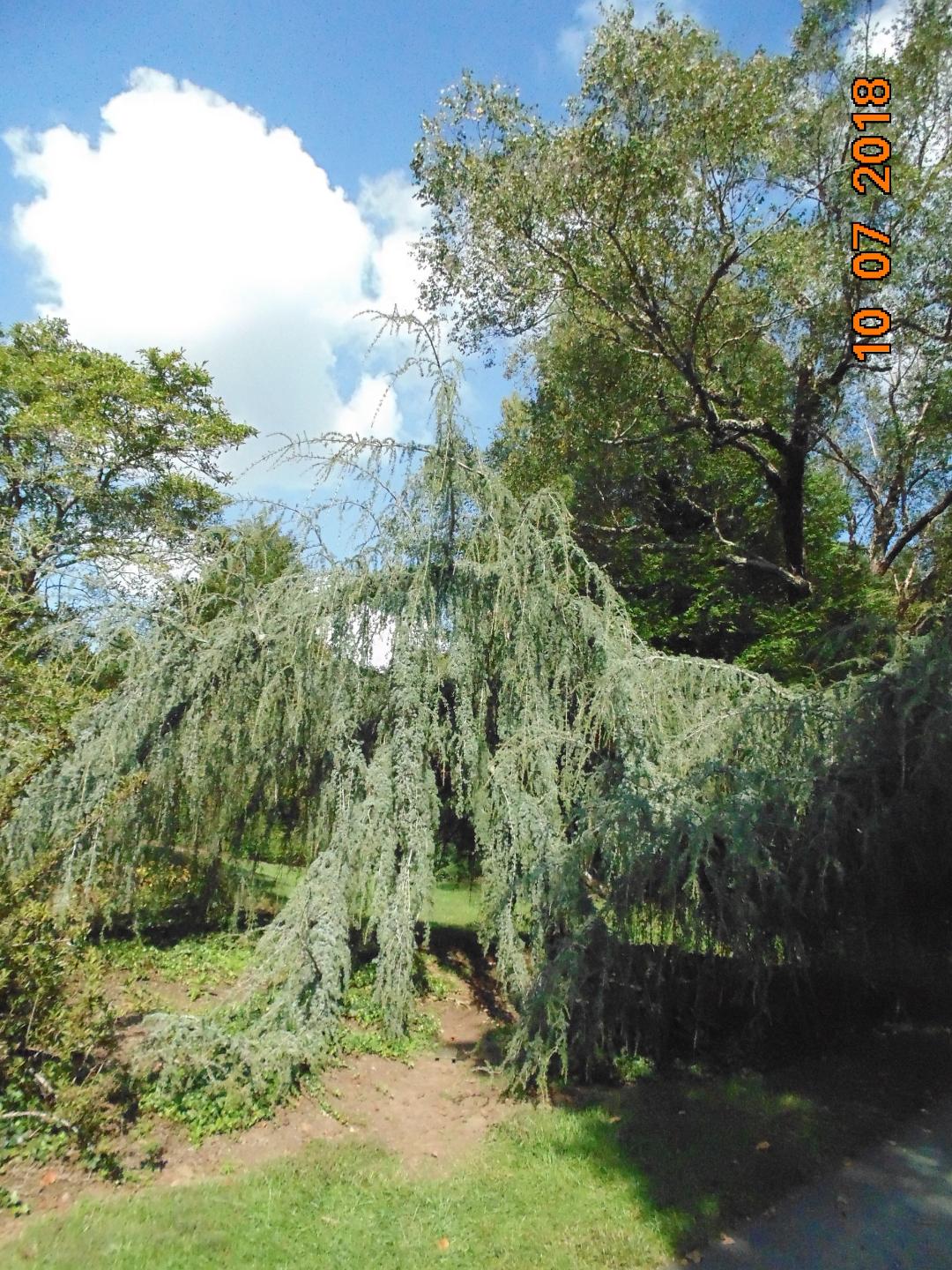
weeping blue atlas cedar-cedrus atlantica ‘glauca pendula’
narrow in the trunk but the branches were very long and draped over
the adjacent walkway………
Next level down: conservatory garden, very expansive area On the right side is an arbor covered with vines.

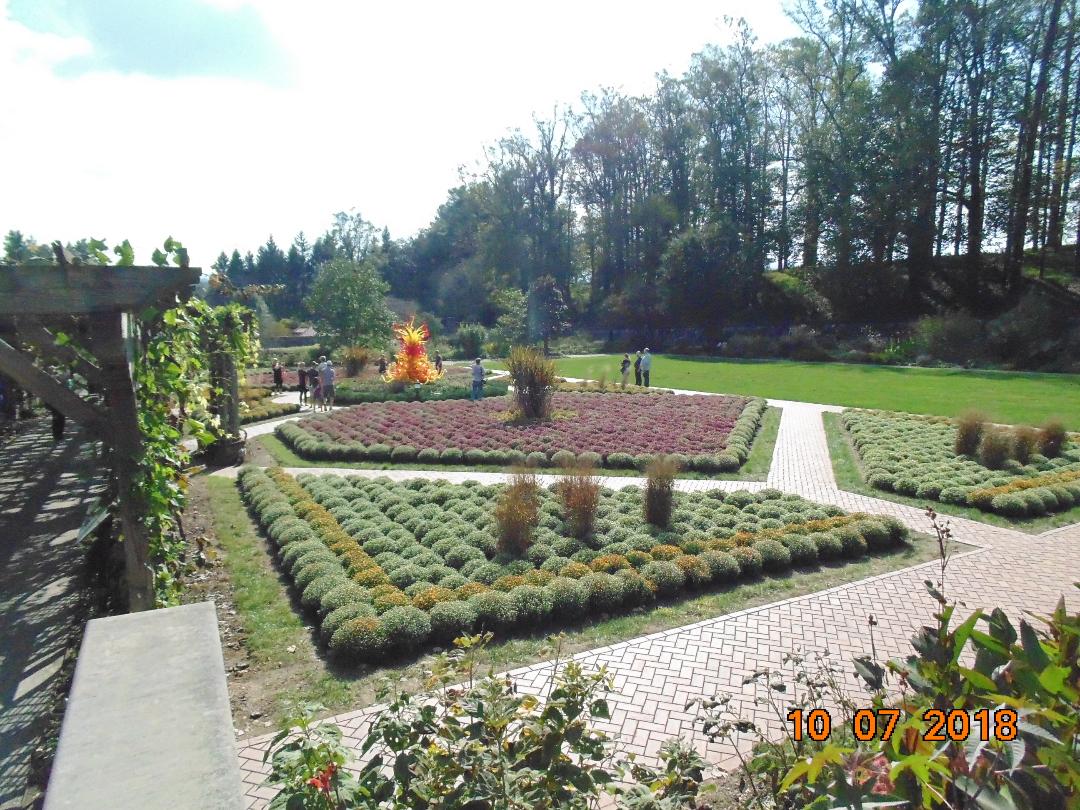
Mums the word.
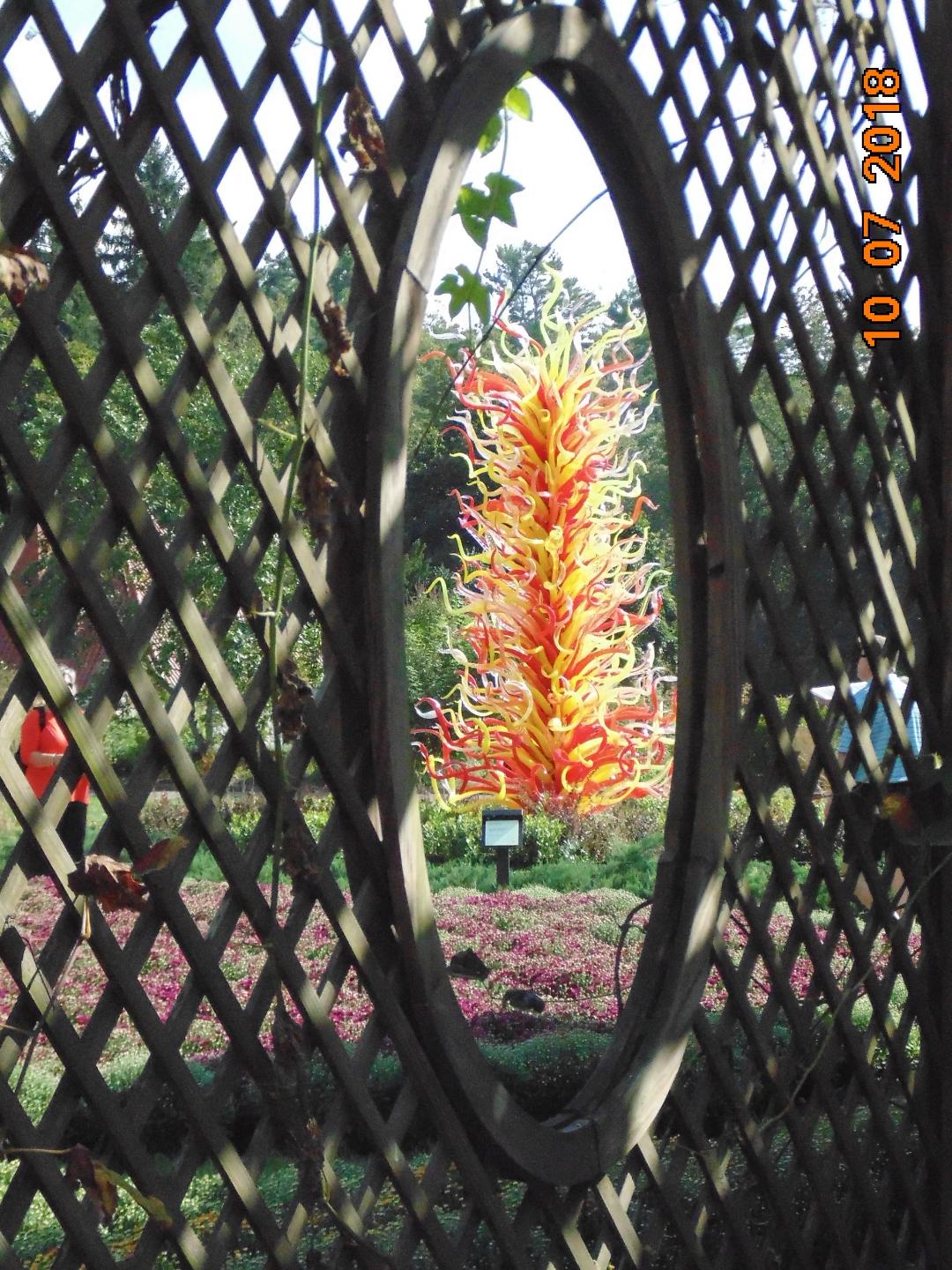
a view of the Chihuly from under the arbor
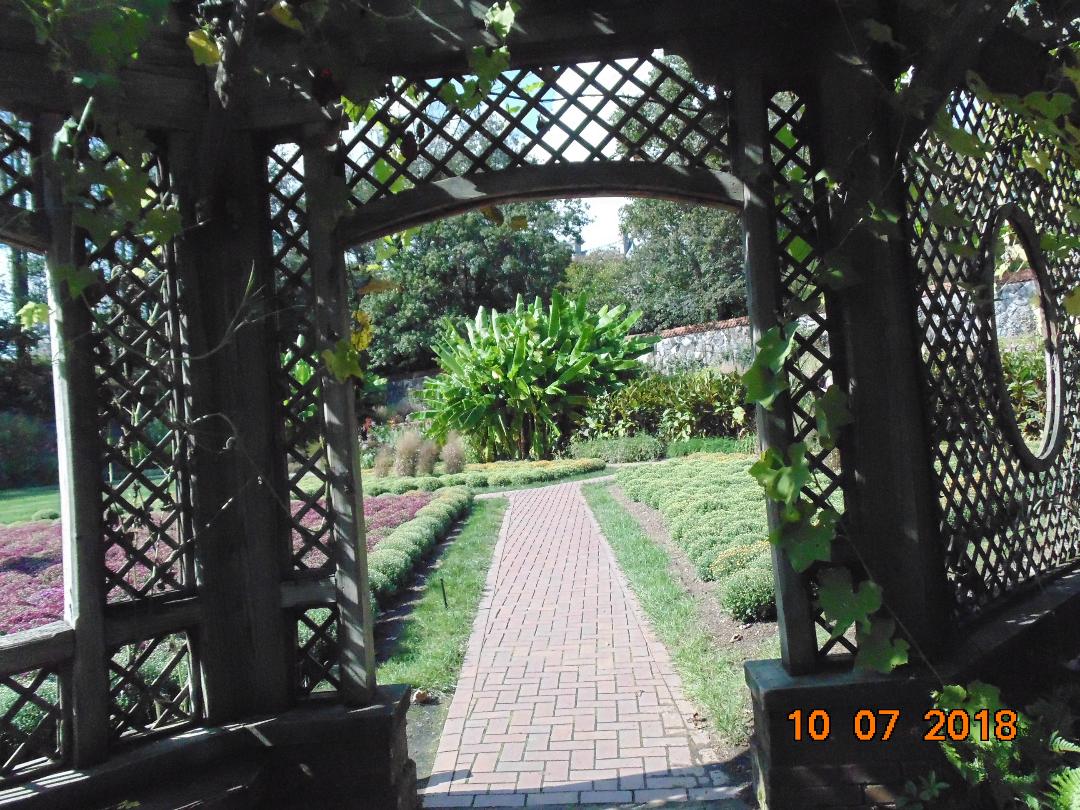

a couple plant pics from this area:
cleome
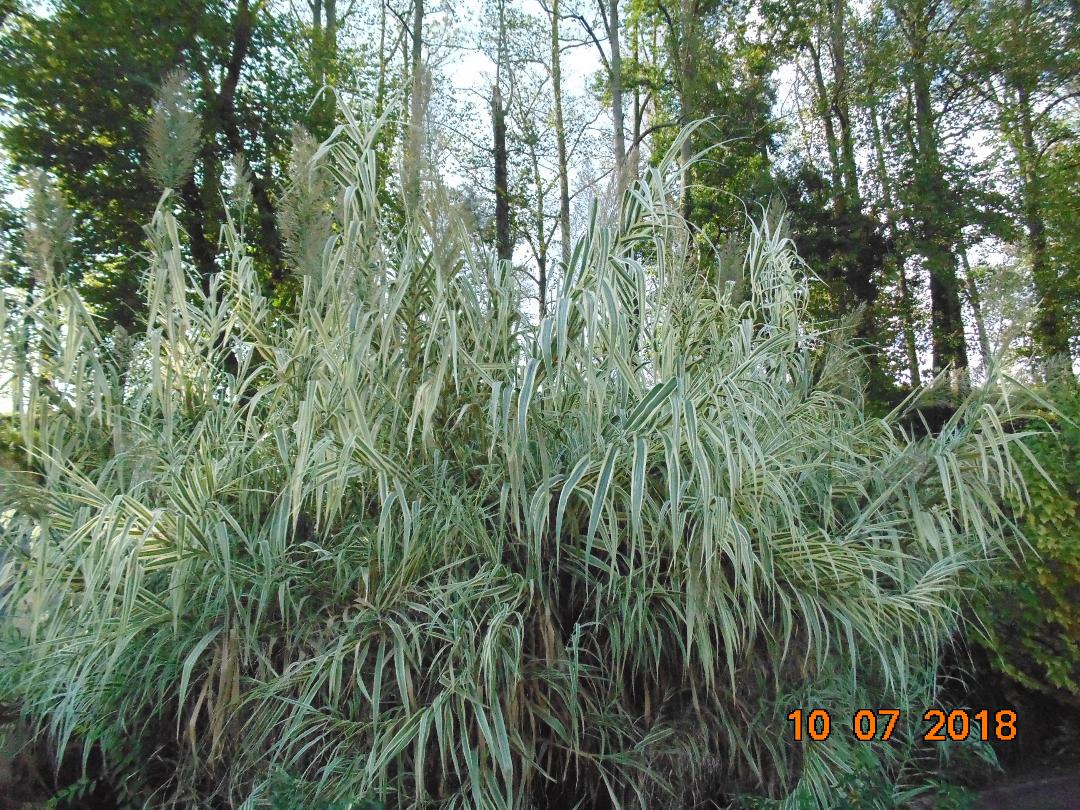
Japanese ribbon grass???
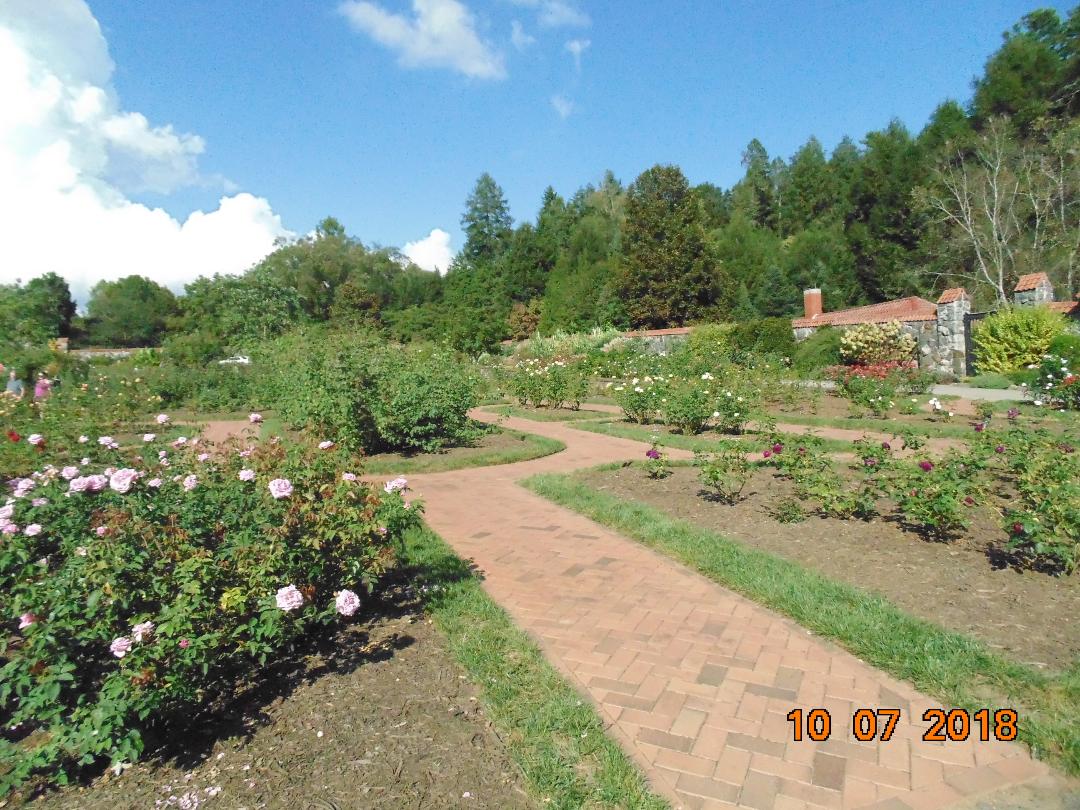
on to the rose garden
The roses were not all in full bloom but these were a couple of my favorites.
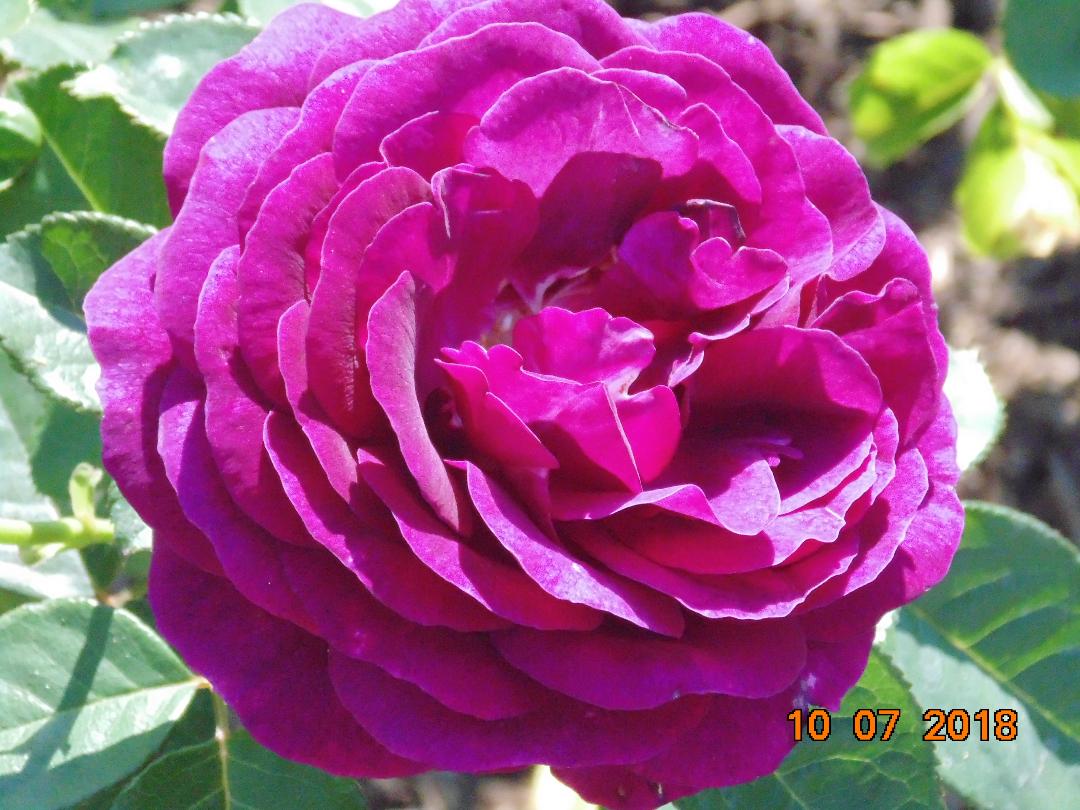

I only took a quick look into the conservatory and moved on but
I found the doorways to be intriguing.<a 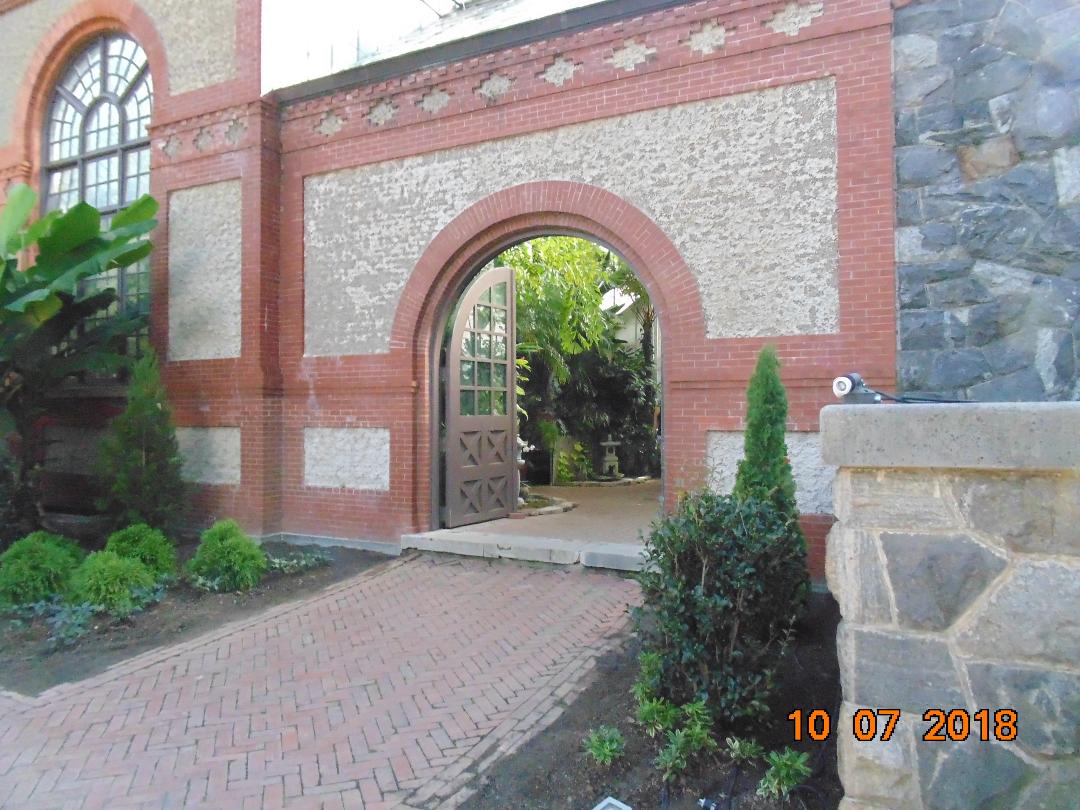

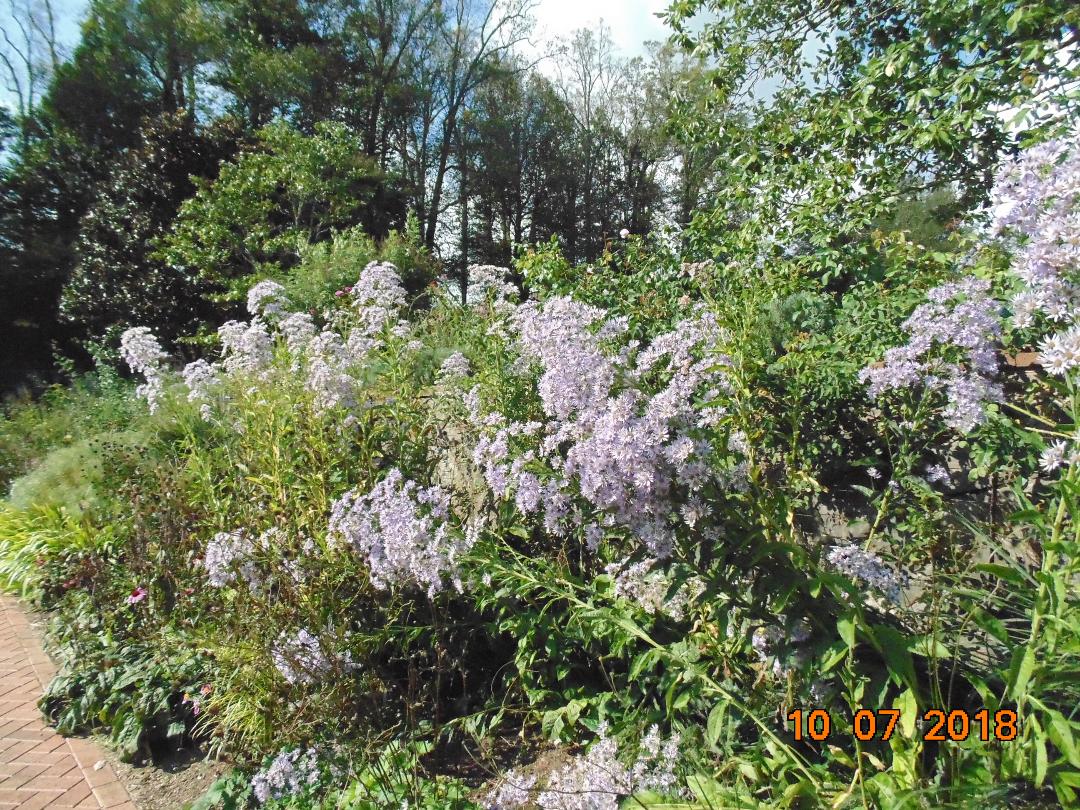
The outside edges of the Rose and Conservatory gardens had
mass plantings of perennials………
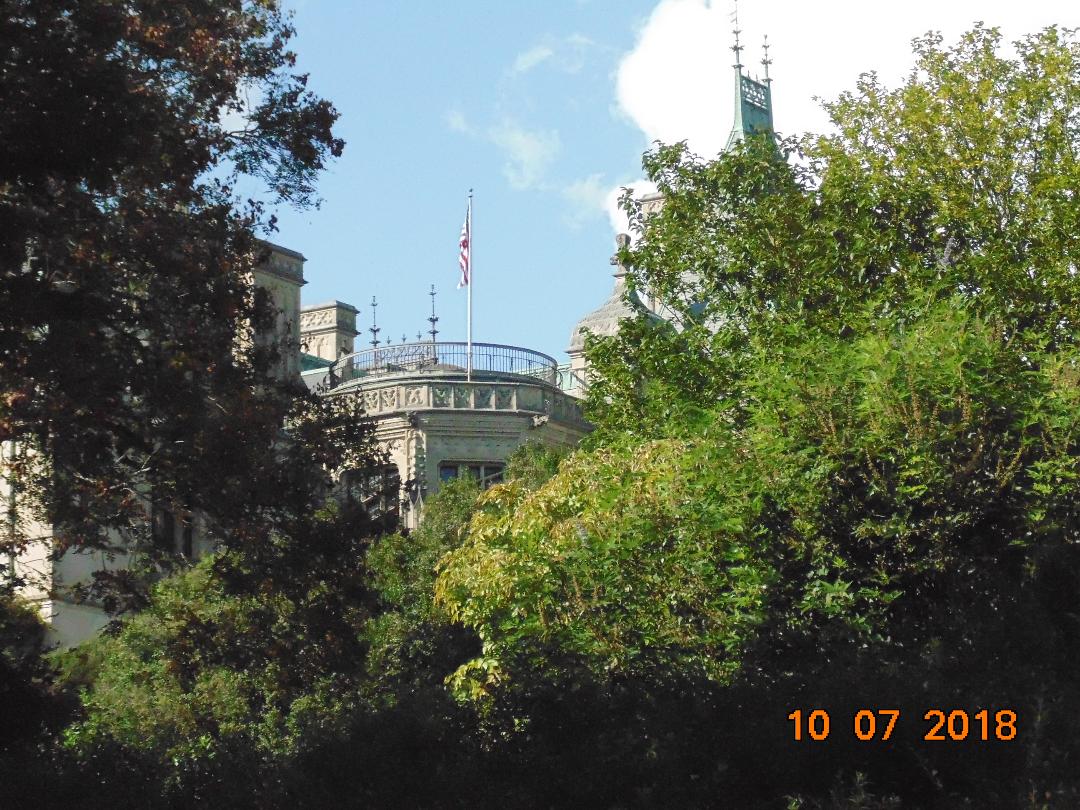
NOTE TO SELF: to meander downhill along a garden path–
eventually leads to climbing uphill to get back!!!
Goal, to get back to the house without passing out first. 🙂
I made it back:
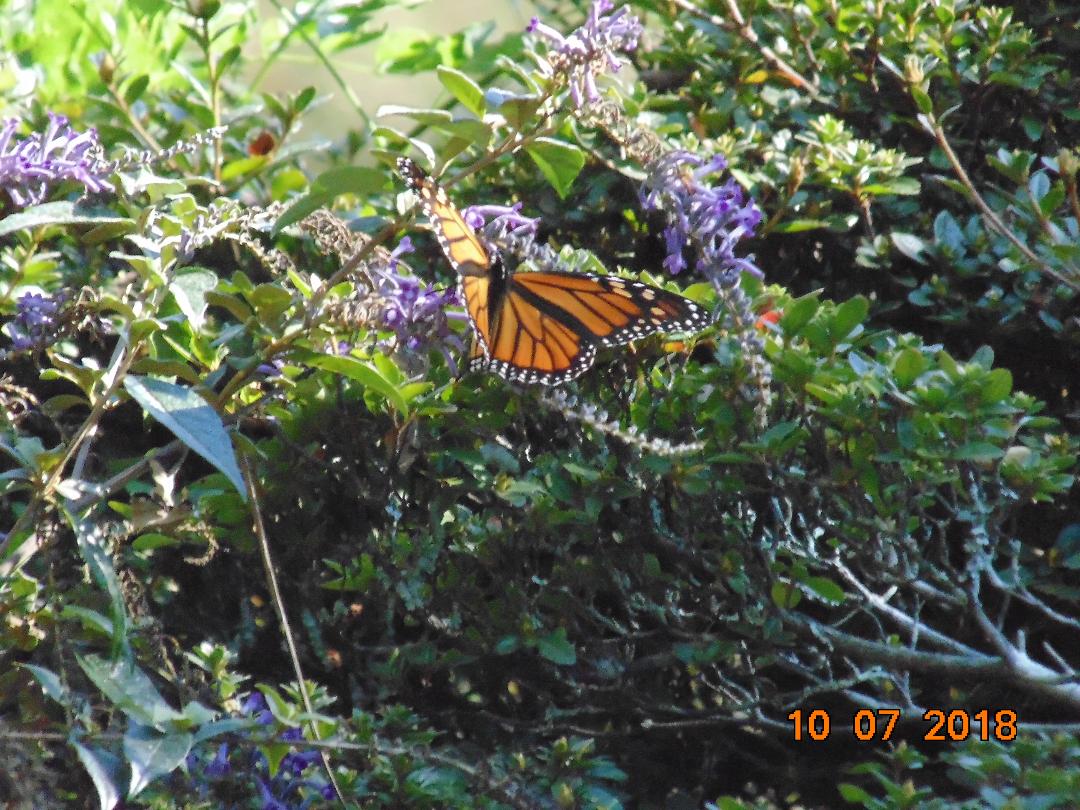
& en-route found a friend. ? maybe this one hatched
in my yard.
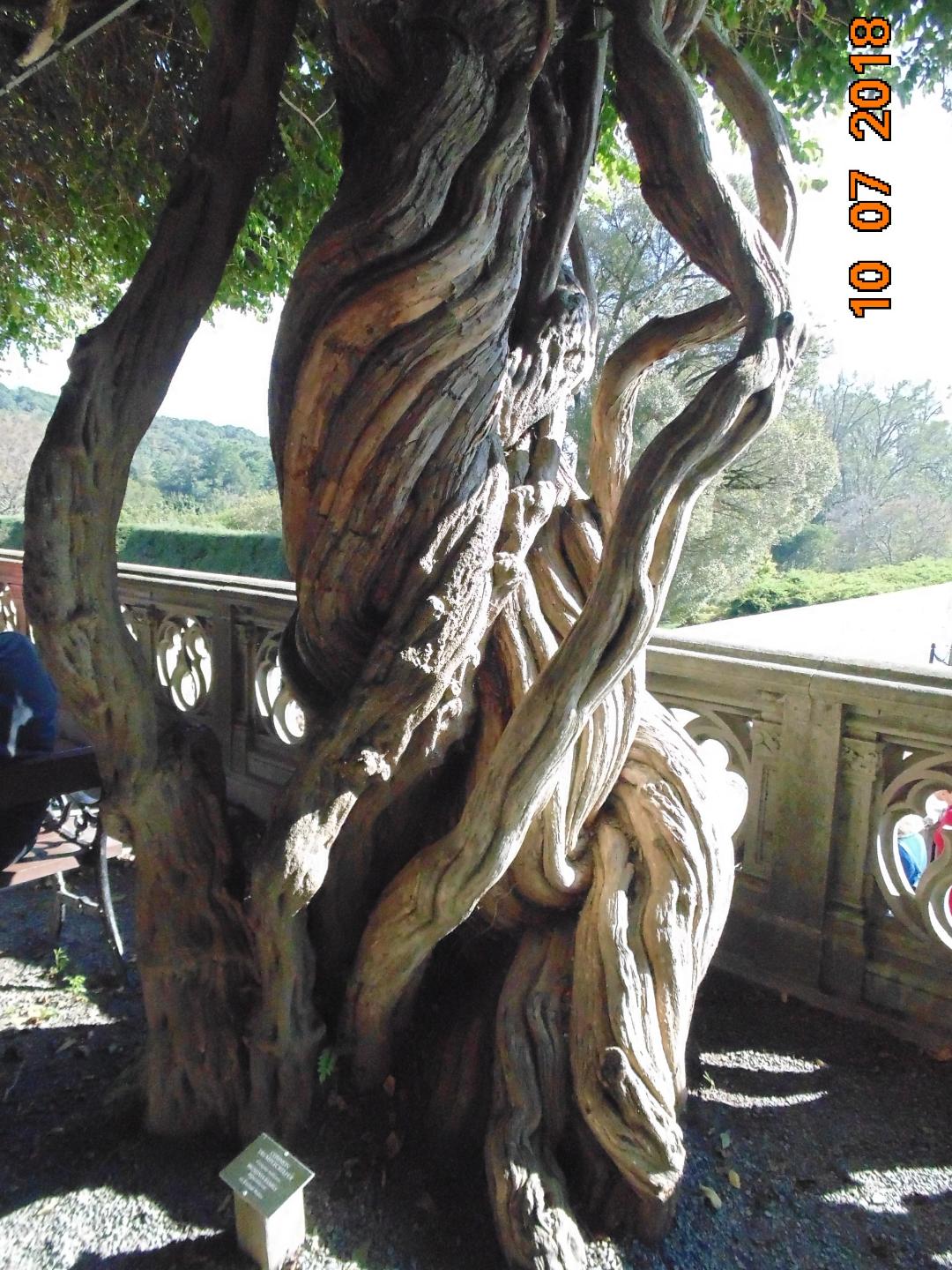
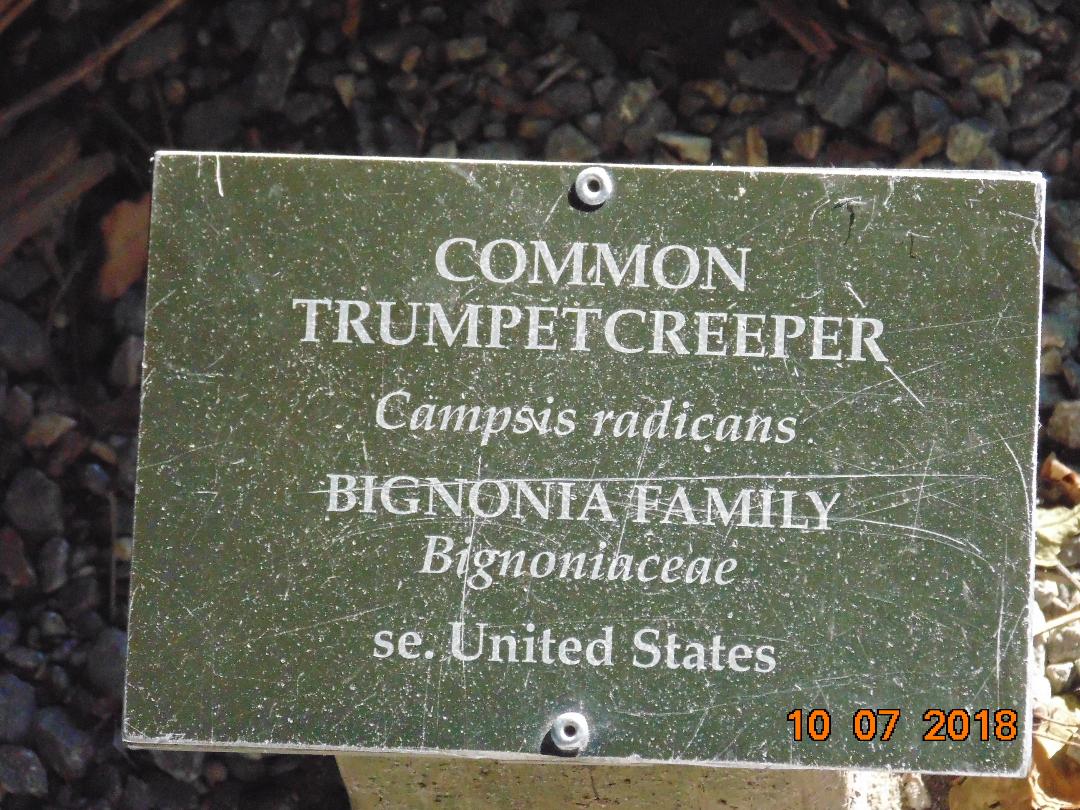
From a distance a trunk on the side veranda caught my eye.
I had to check it out-not a tree, a vine-the branches up on
the top of the arbor providing much needed shade for the weary.
Quick note; I normally try not to include people in pics-it was just not feasible this time. We spent about 3 hrs on site–I did not visit the spring,azalea or bass pond gardens. The gardens clearly offer year round interest & spring probably another prime time to visit. Wish fall colors had peaked-but still enjoyable. Massive estate, multiple gardens,multiple dwellings & multiple uses.
I suggest checking out the web site. http://www.Biltmore.com (satellite view) leaving this grand place,we must follow a one way road–leads around the outside edge of the estate–exposing views of the other areas.

Steers and crop farming noted.
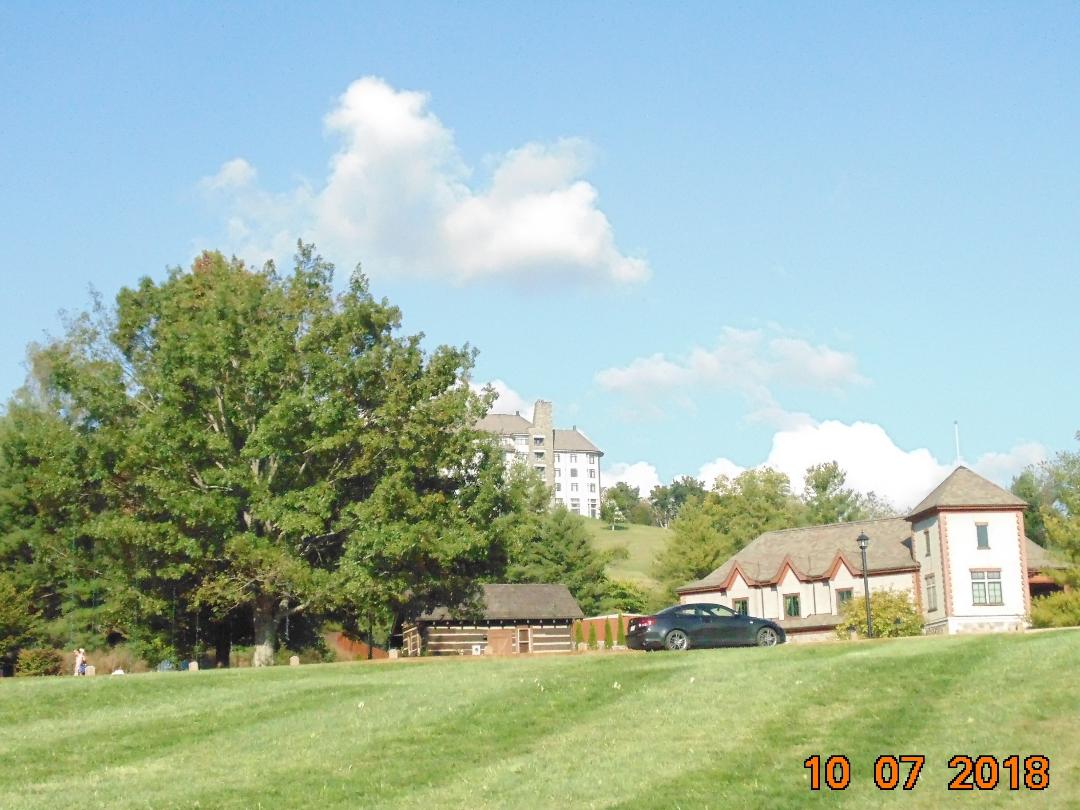
Inn, winery & stables–summer homes to rent..a whole village.
no matter what time of year, if ya get the chance-visit.
Posted in Uncategorized | 2 Comments »
By Gail K.
This week, I want to show you pictures from the afternoon portion of our tour:
the home of Edsel & Eleanor Ford on the shores of Lake St. Clair. For the last 90 yrs, the notable features which designated this home a National Historic Landmark are the lake shore and the designs used to create the various garden rooms. While we are lucky to have Linda to assist us with design questions, the Ford’s used Jens Jensen.
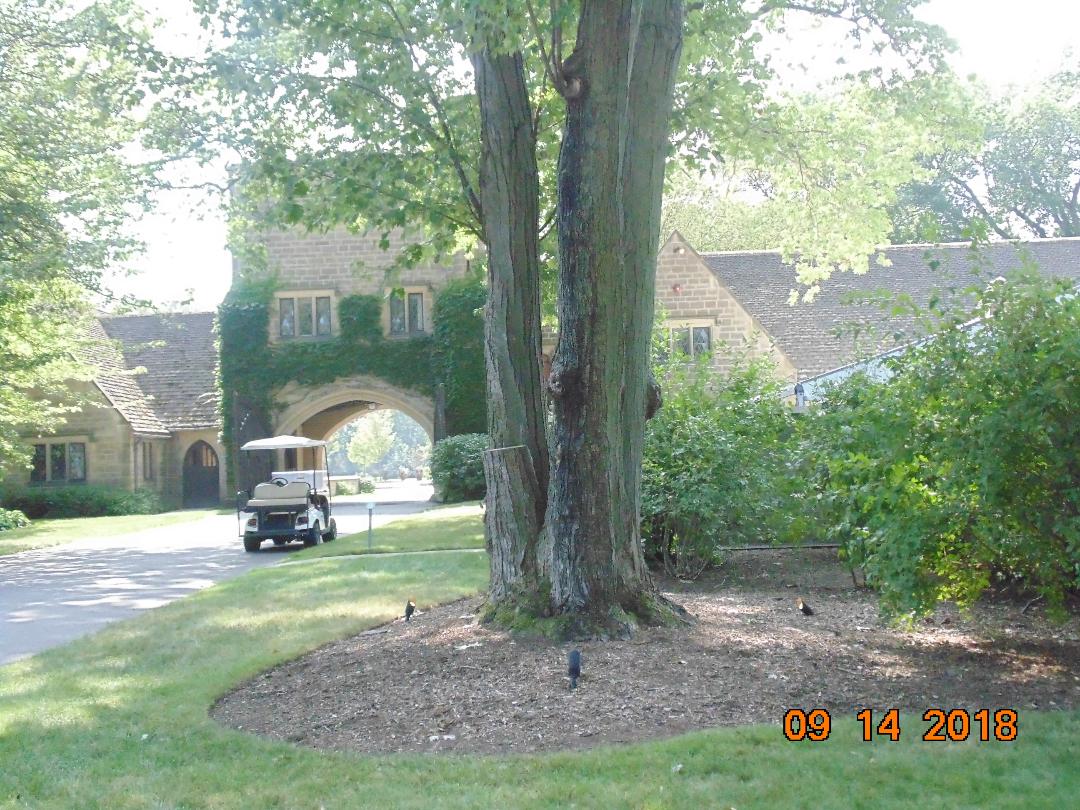
The entry is located up on the roadside (where the staff stayed) one of the features there is a butterfly house and pollinator garden.

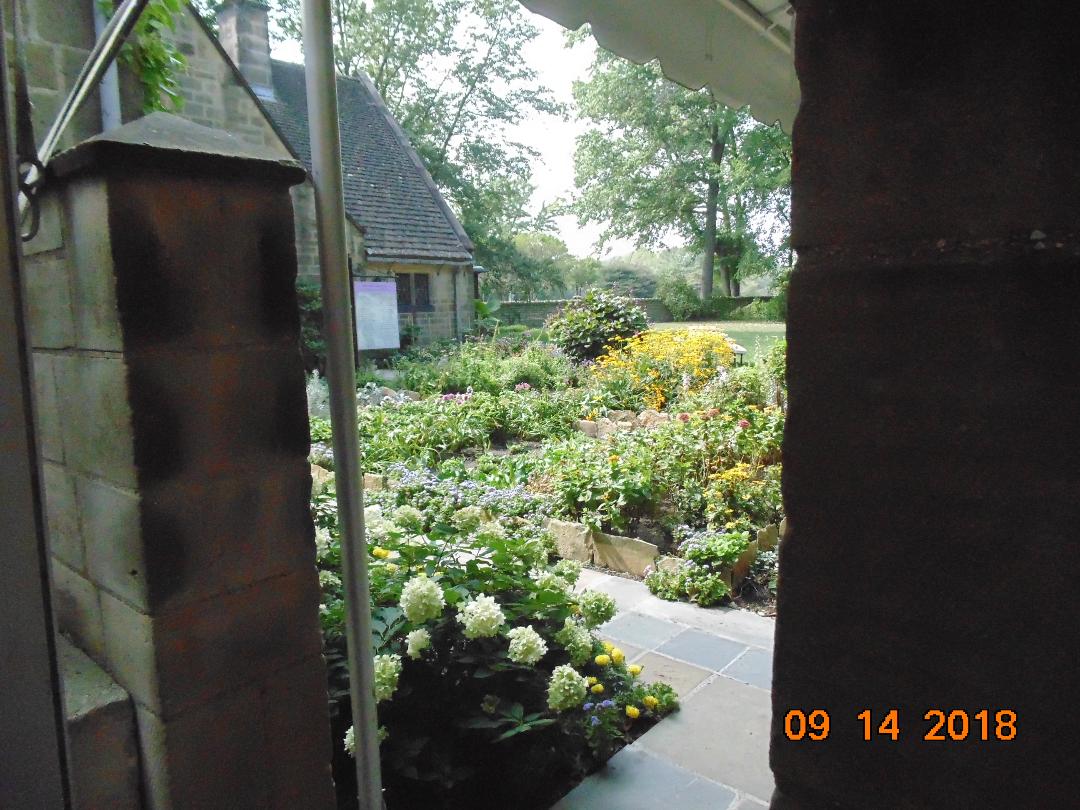
Our docent spoke to the major features of the estate. One major problem the gardeners are facing, is the aging landscape. All of the Elms on the property have been treated to prevent Dutch Elm disease. Mr. Jenson loved to create “rooms of trees”.

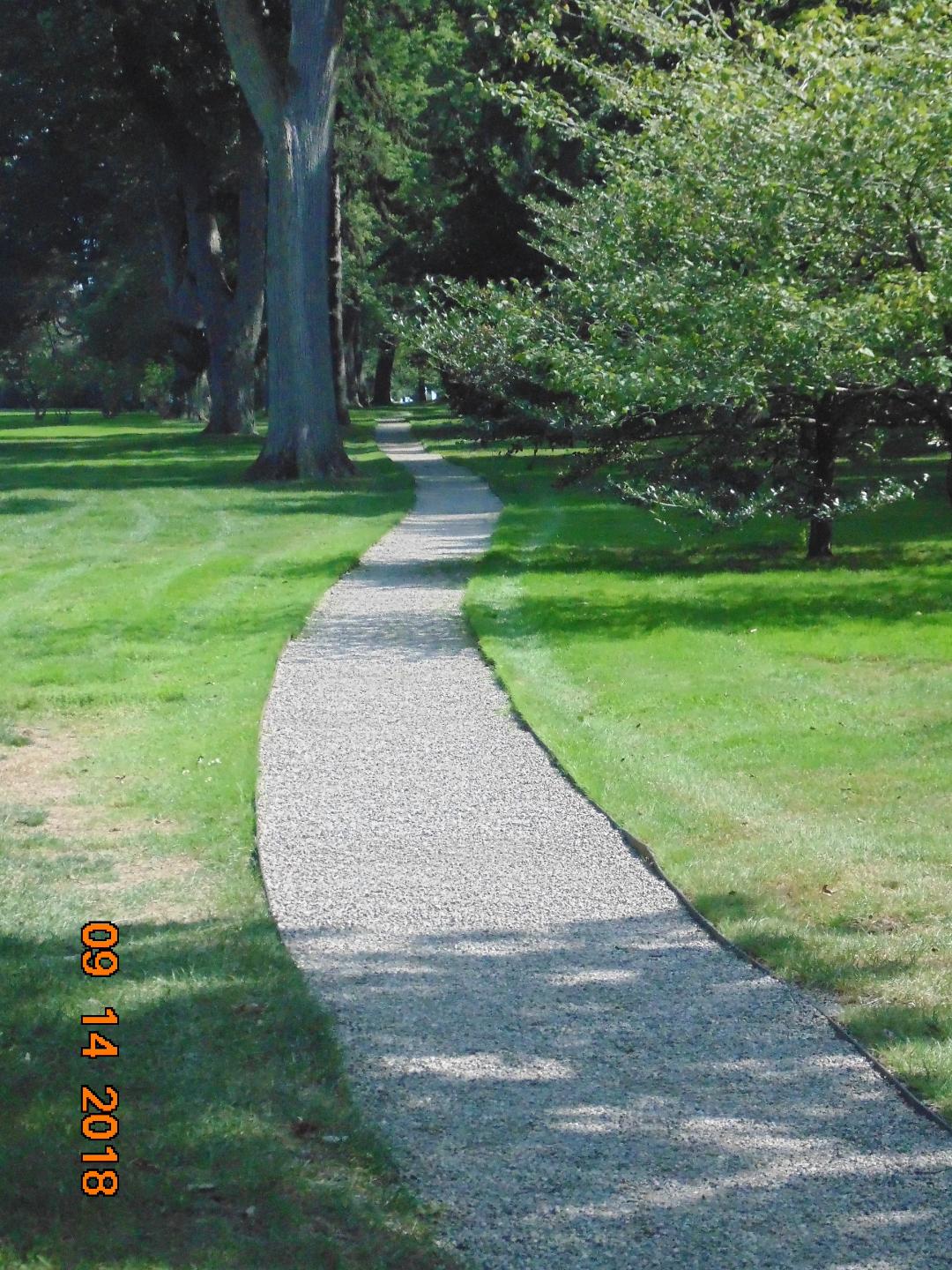
I don’t have the exact size of the estate but we started from the road and went to the shoreline–we could not see the water until we actually reached the shore. Here is a path to show just how vast the area is–
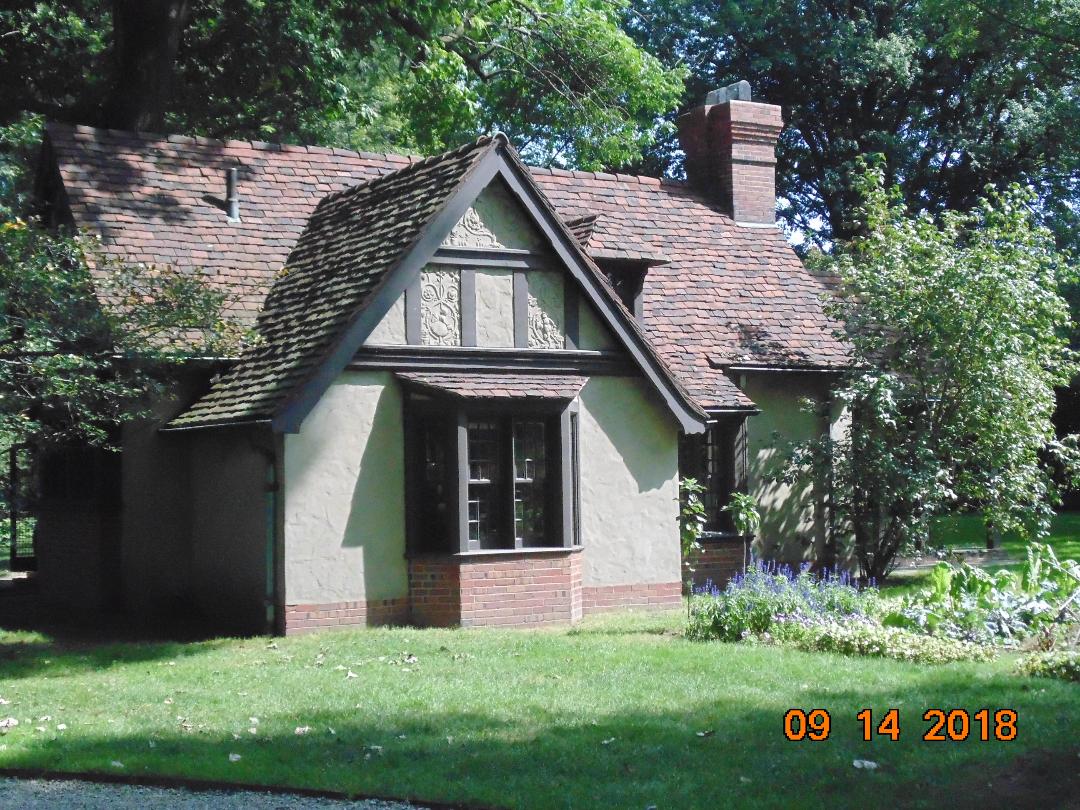
this is the “playhouse” for their daughter which was built to scale
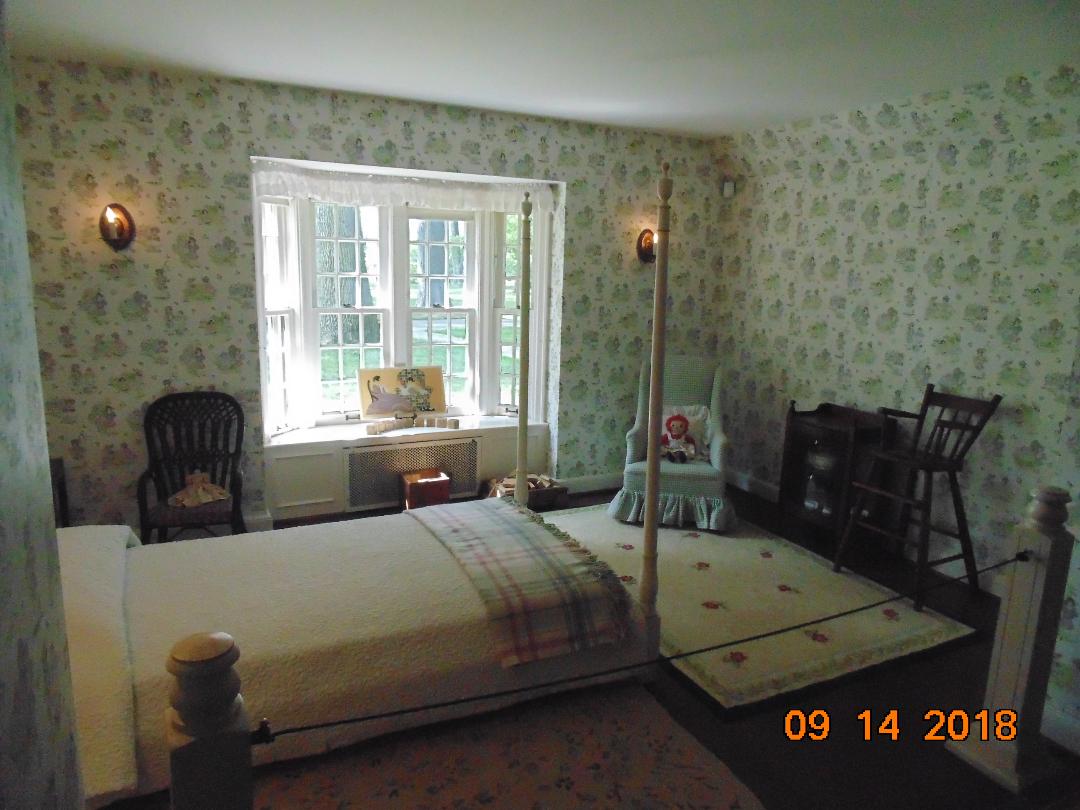
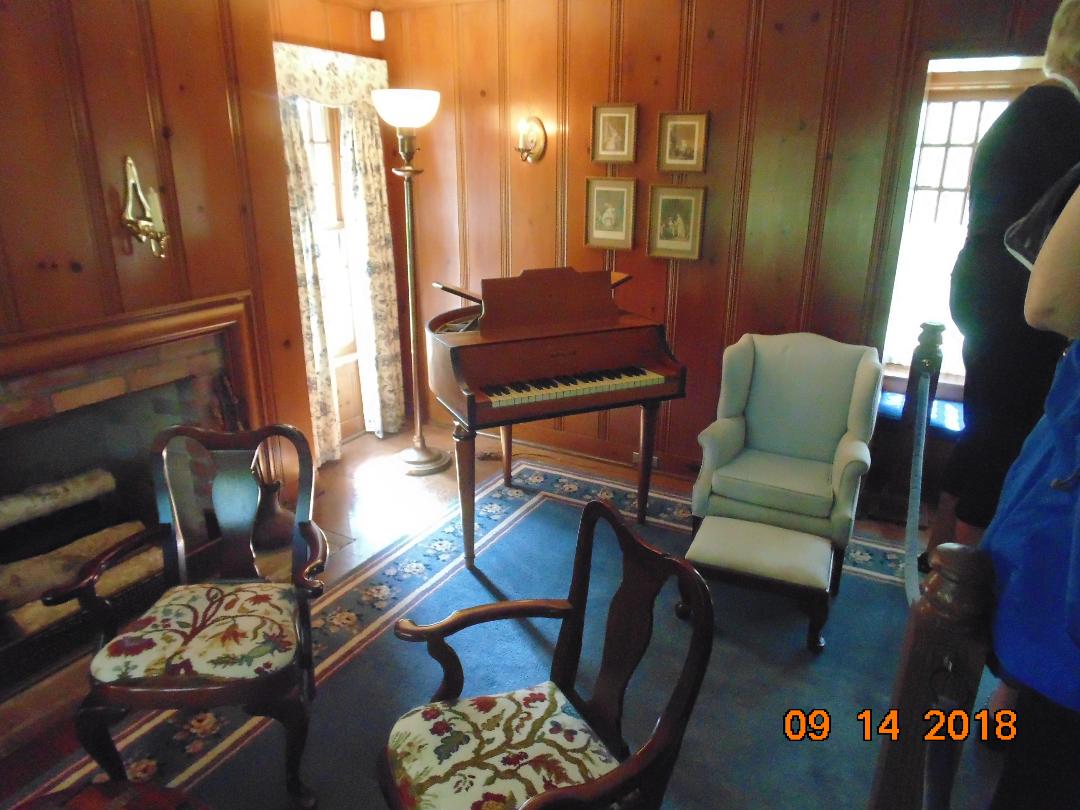
This shows a bit of size comparison with the adults on the right of the area. We all spoke to just how much fun
a child would have had on this estate. While you note the designs when you look at the following pictures,imagine playing a game of hide and seek.
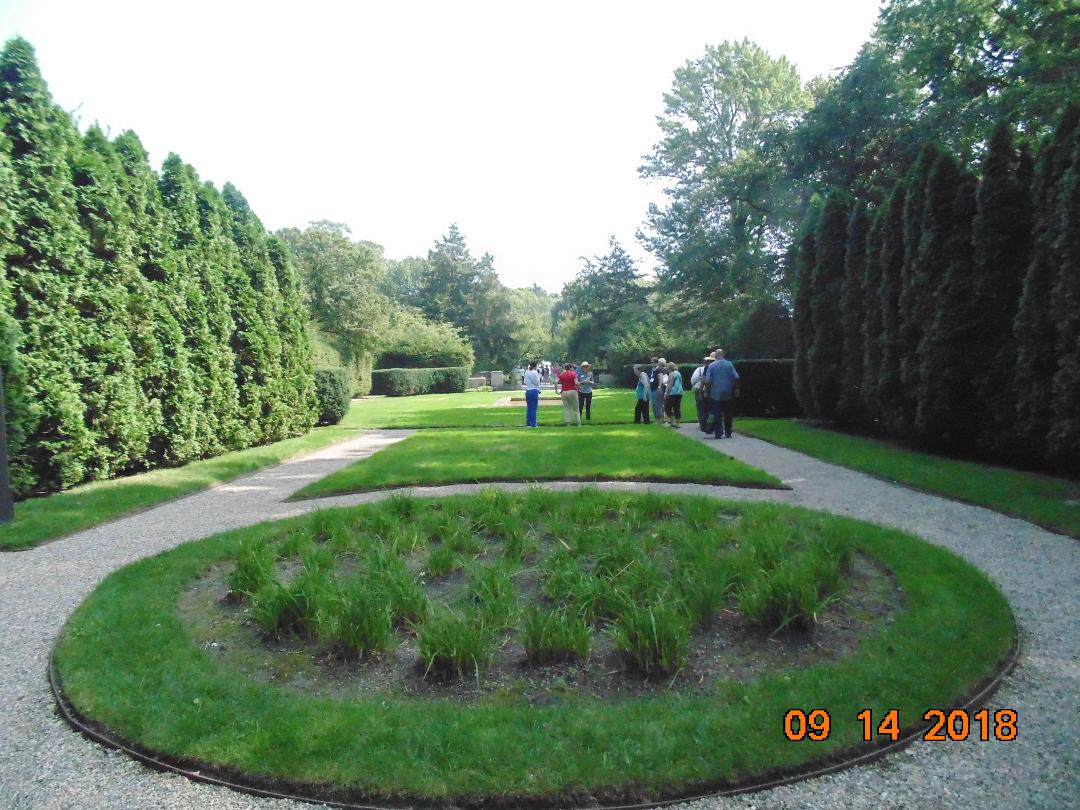
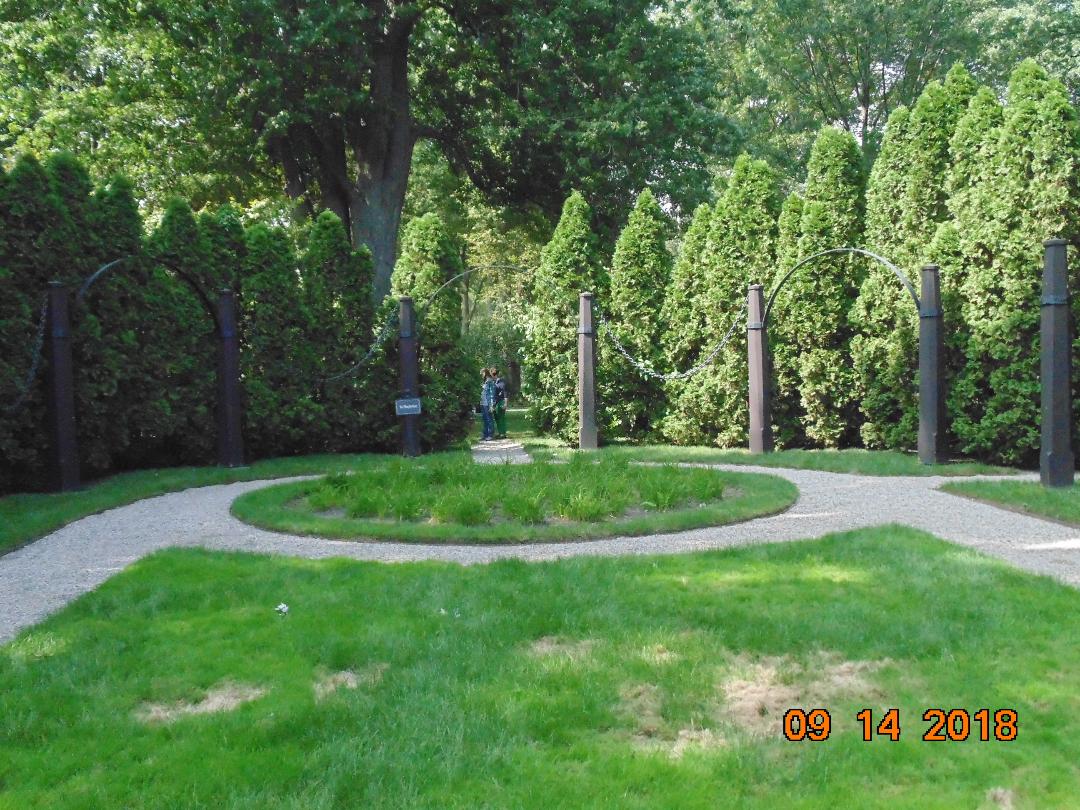
Some of the rooms were hidden by design but they all connected–again; we are walking in a fairly straight path heading towards the water. One of the major plants on this estate are the 700 roses.
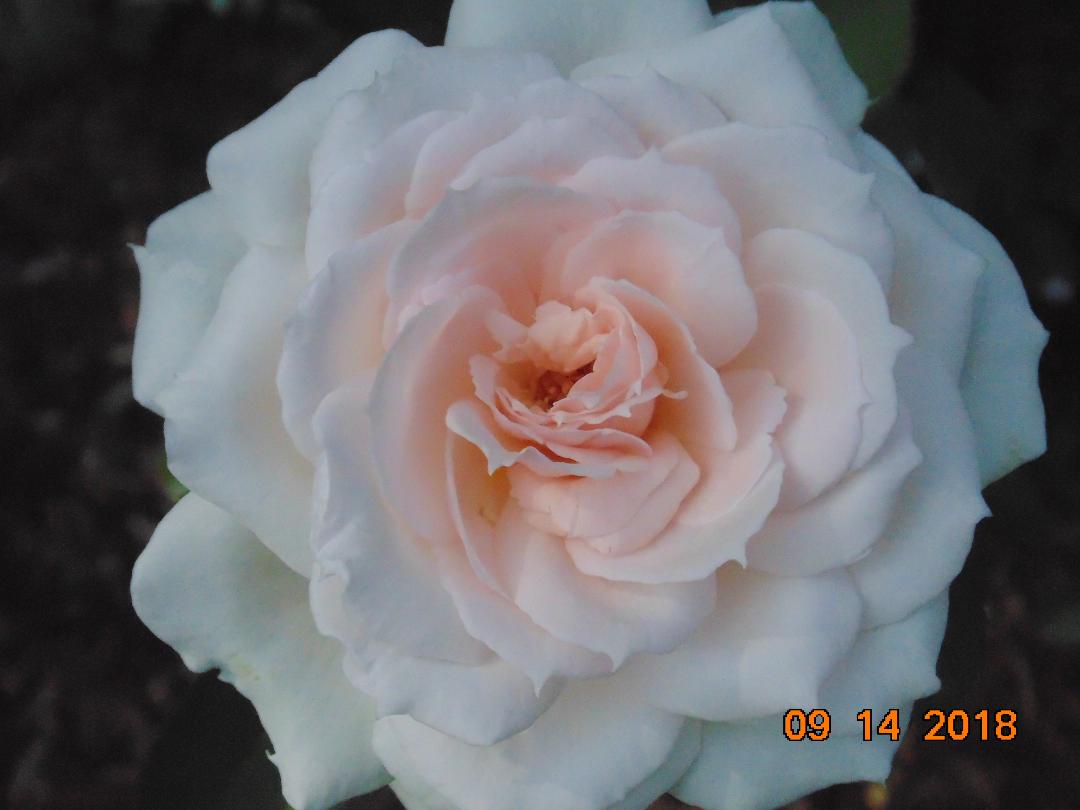

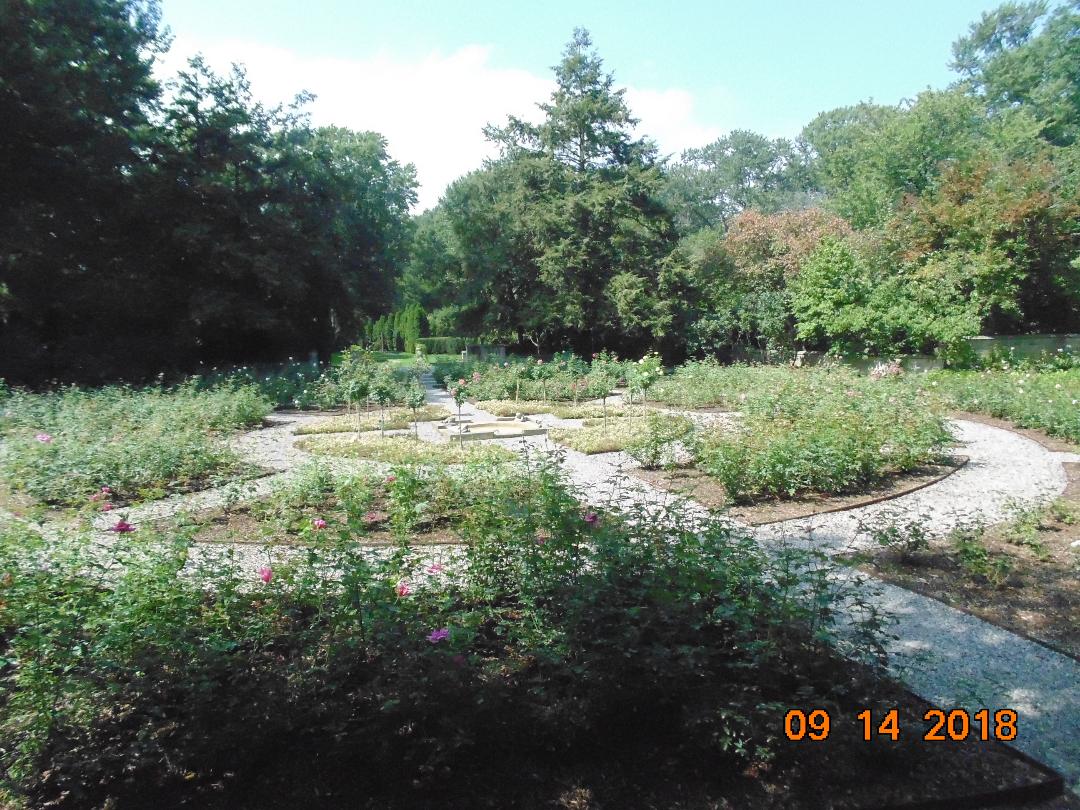
Note the design-dictates the type, color to be planted in each area.
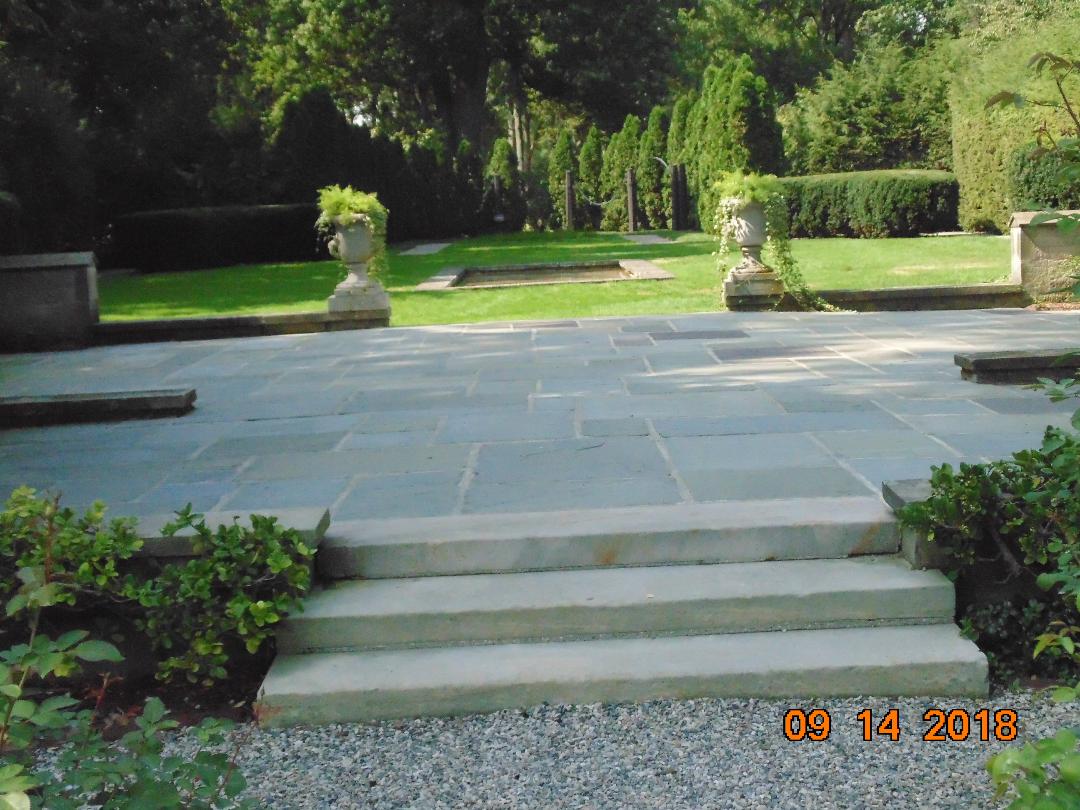
One of several areas where events are held within the garden areas.
The “pool house” is another. What is so unique with this feature, the water comes from the lake and is filtered back to the lake via a water fall feature.
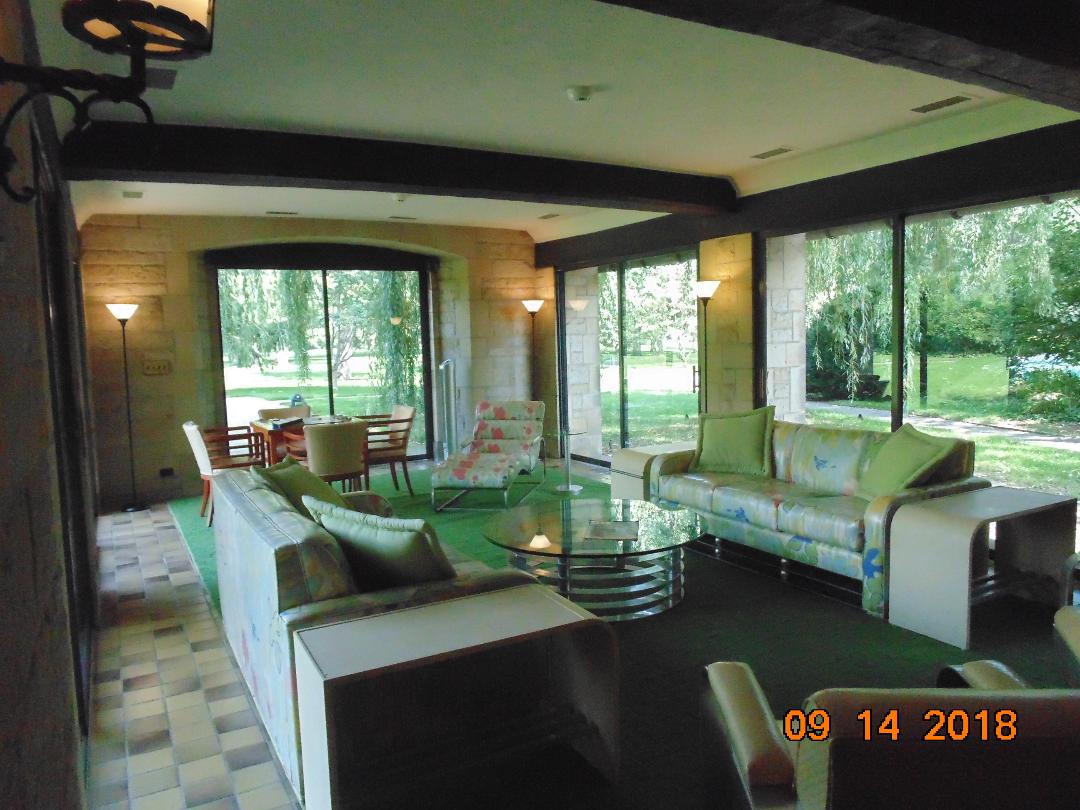
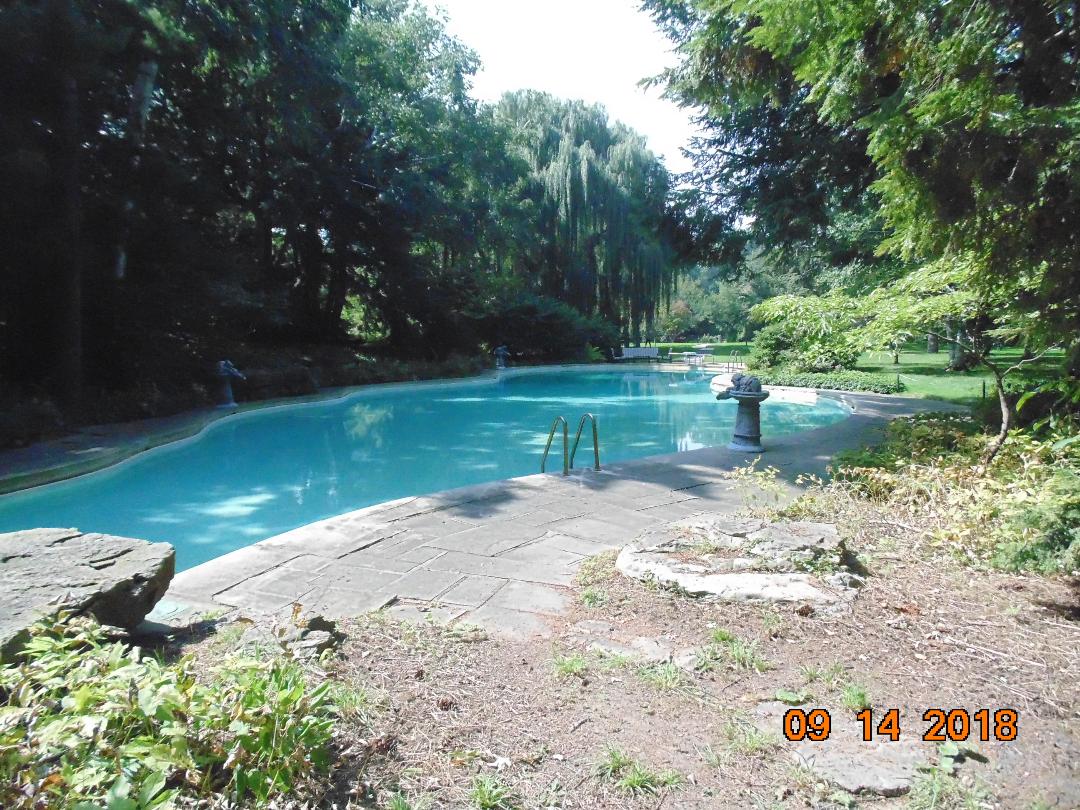
Again, I am going to remind you we are still not to the shore, “Darling, will you please bring me my towel”
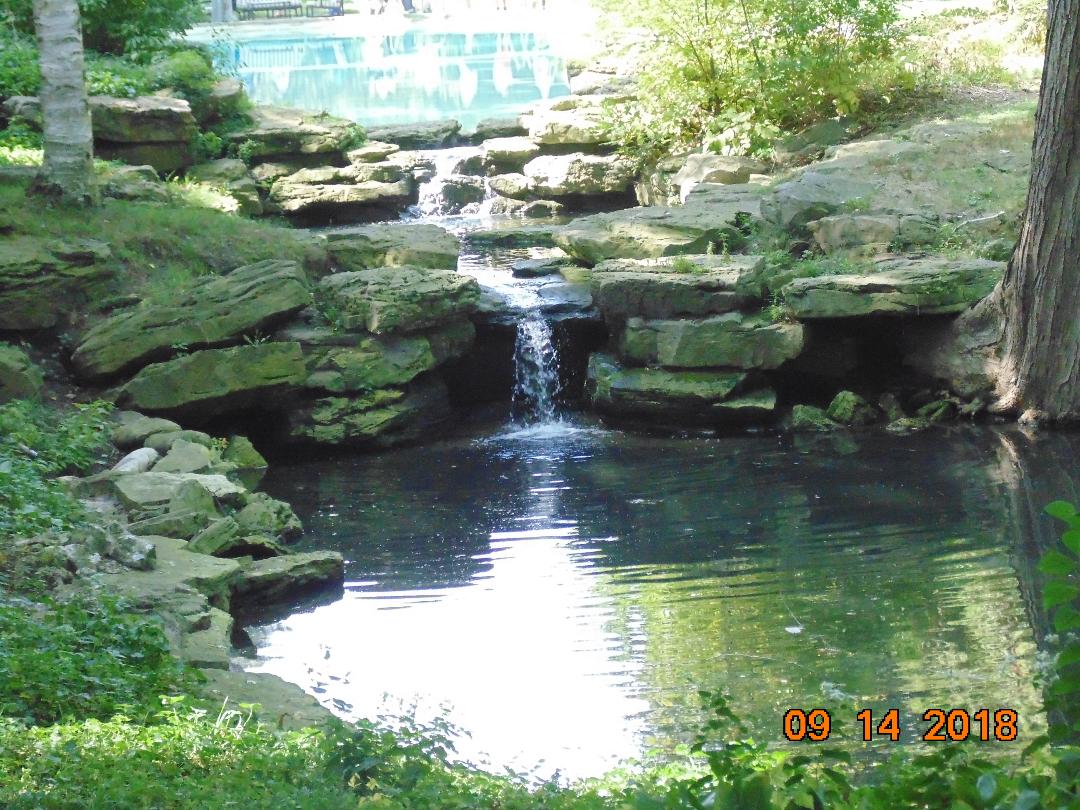
we have arrived …………do we have to leave?????

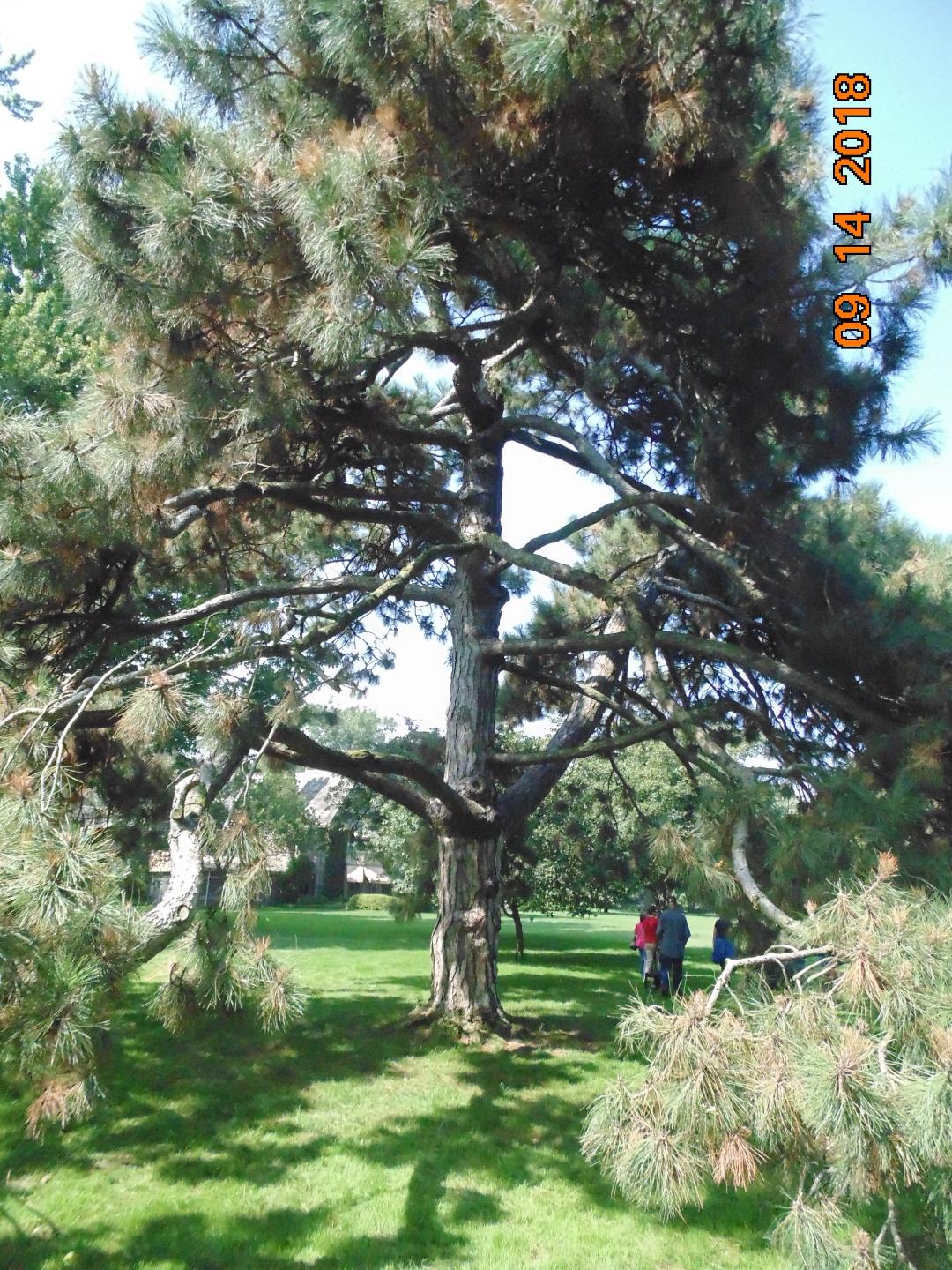
As we walked along the shoreline towards the HOUSE–
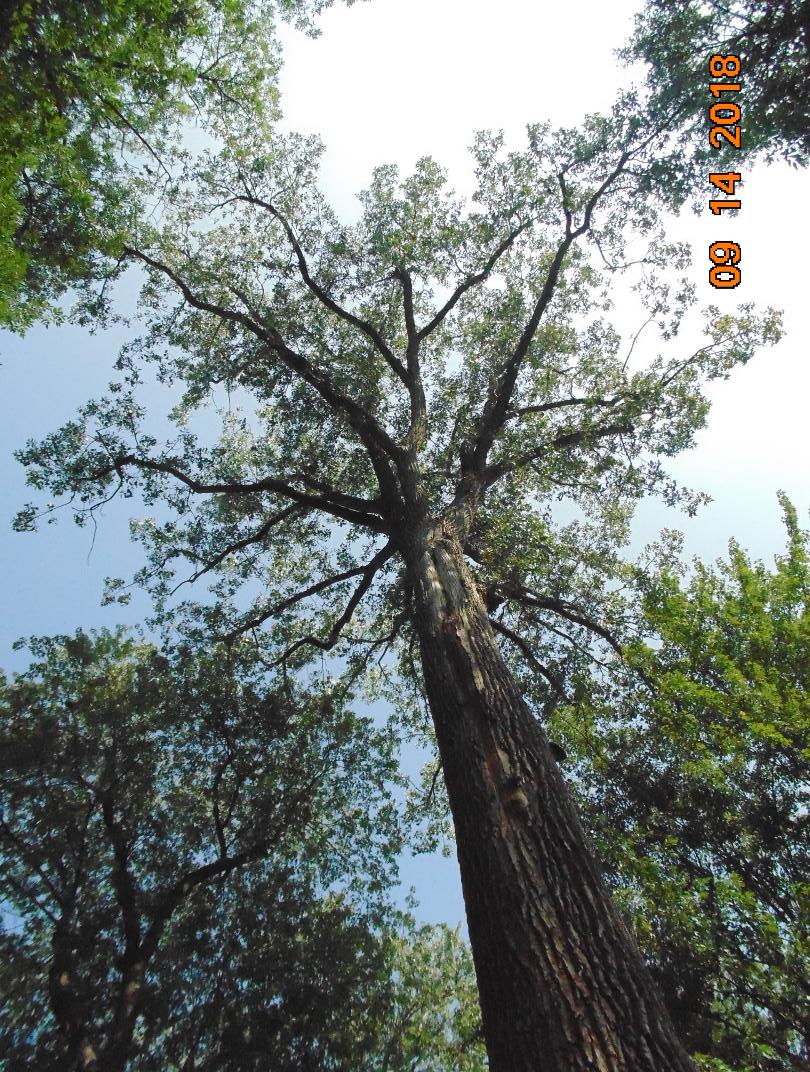
we came to this impressive tree-An Austrian Pine
As we ended the tour, it brought us to the house. Whew!!! Our docent tells that when the whole family was on site-they had 50 people to assist them while they were there.
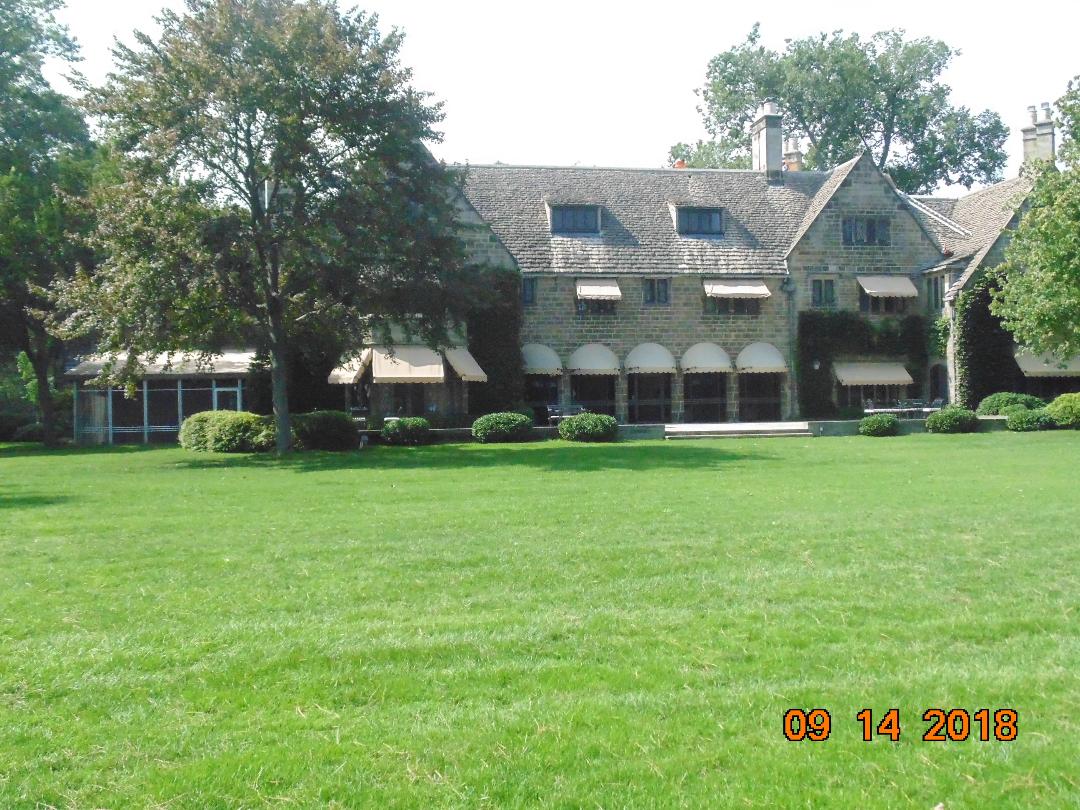
the rear-facing the water

courtyard between the rear and front portions of house
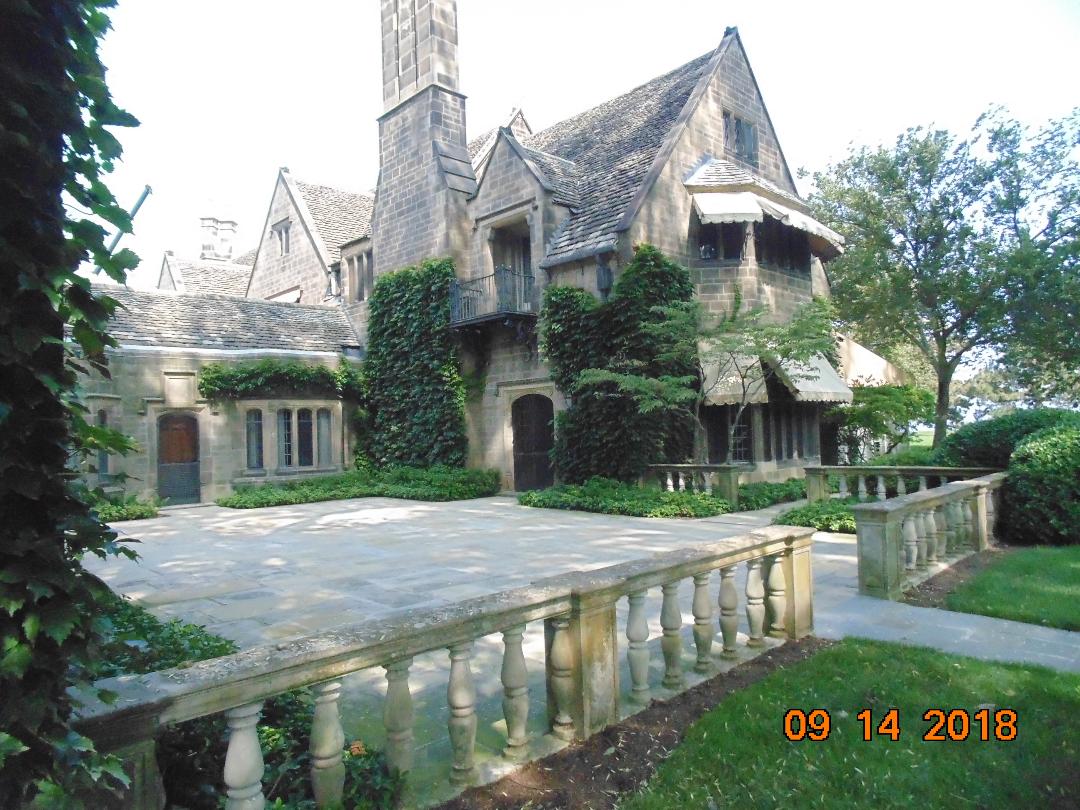
Here is a front view of the house.
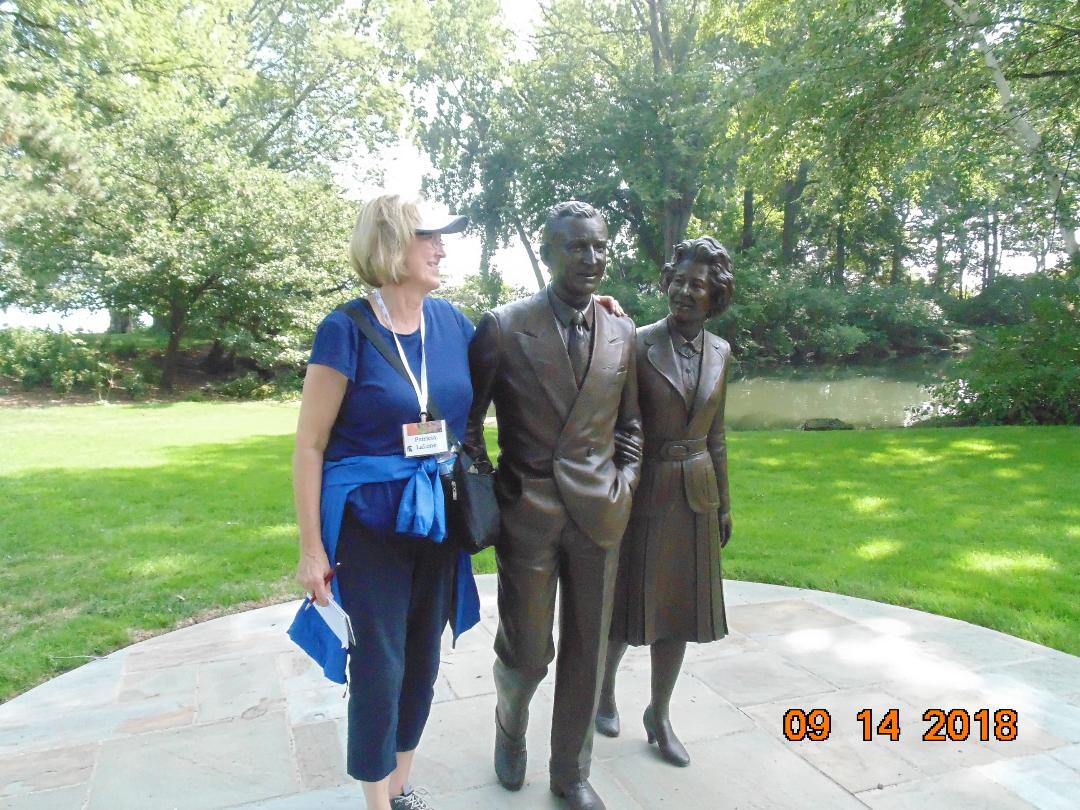
Edsel and Eleanor also have “life size” bronze statues on site
I had Pat pose so you could get a real perspective on the size.
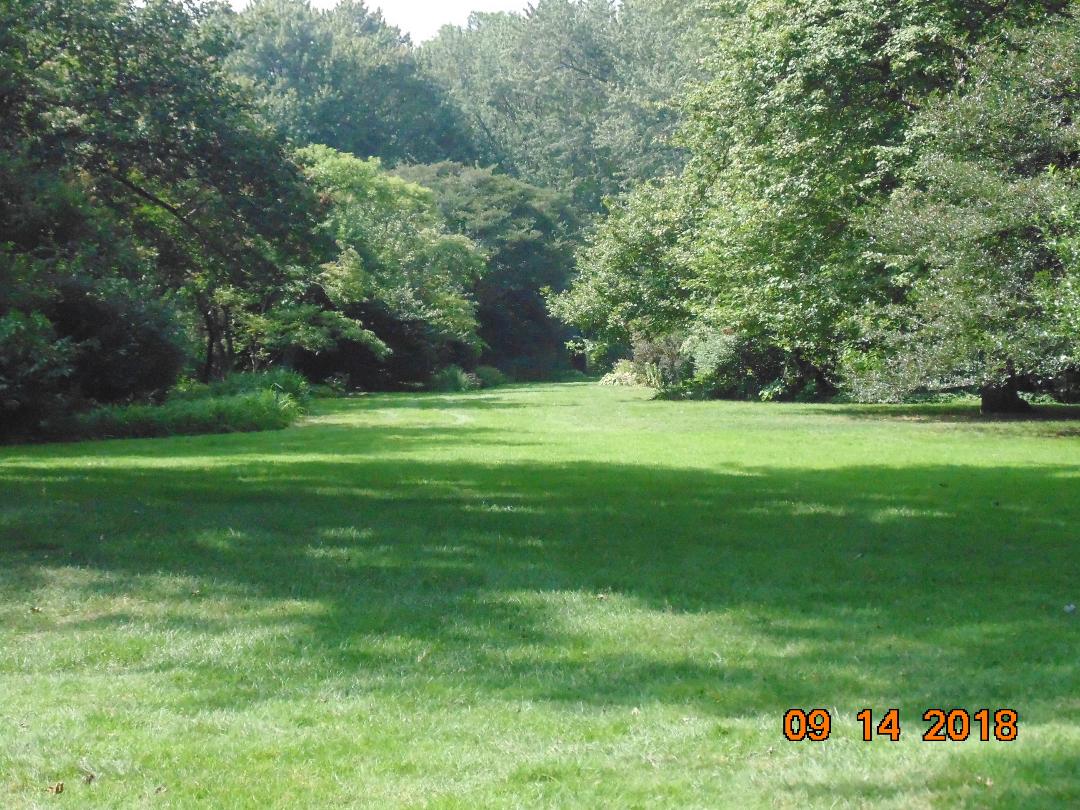
We did not get a handout pamphlet about the estate but were told if you have an iPhone…you can download a free tour app….”Edsel and Eleanor Ford House Tour.” As we leave, note yet another path to ????? Mr. Jensen was a real visionary.
Posted in Uncategorized | Leave a Comment »
by Gail K.:
For those of you who are unfamiliar (like me) the college usually covers 3 days.
the second day this year included 2 options. First-a choice from 5 full day
tours or an afternoon workshop. So this week’s blog topic will focus on the full day
tour I attended: Explore the Shore. The tour’s primary focus was the gardens of Fair Lane;
home of Clara & Henry Ford, and the Edsel & Eleanor Ford estate. Please, take a seat-enjoy
the trip.

Our docent, having worked on site for 30 yrs. was a wealth of knowledge. Here are some pictures with a few highlights. The gardens are currently under an “Interpretive”restoration. The gardens were designed by Jens Jensen who used the “natural environments.”

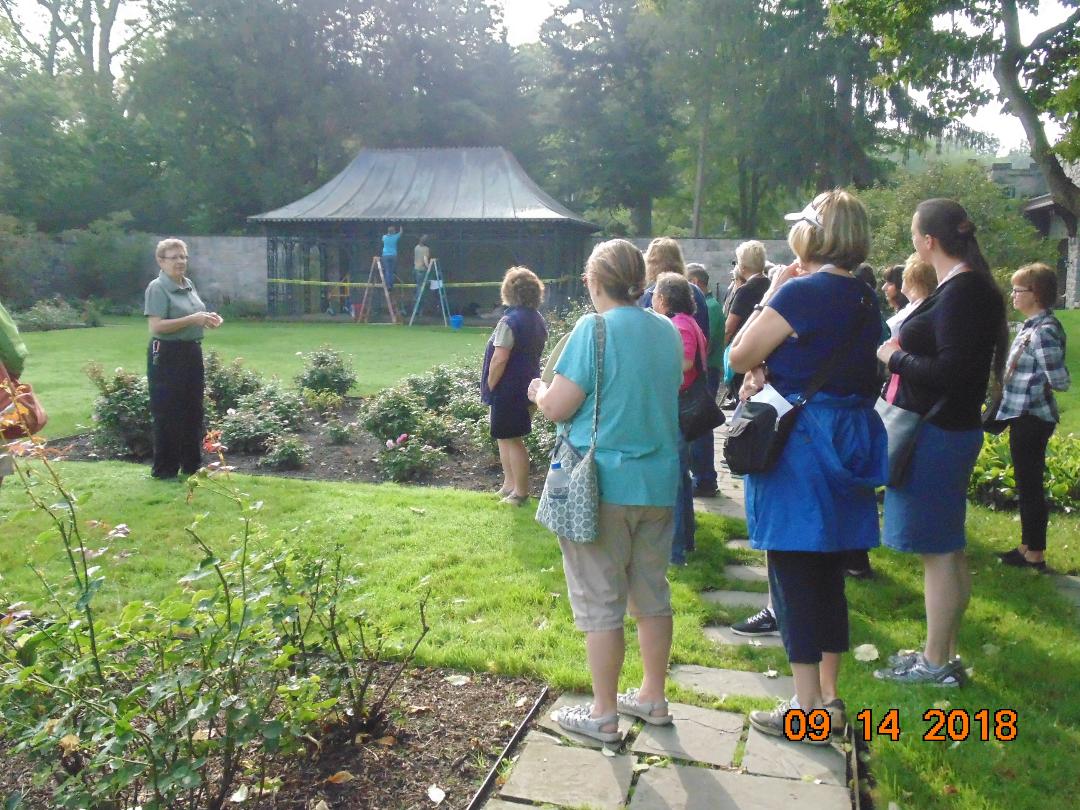
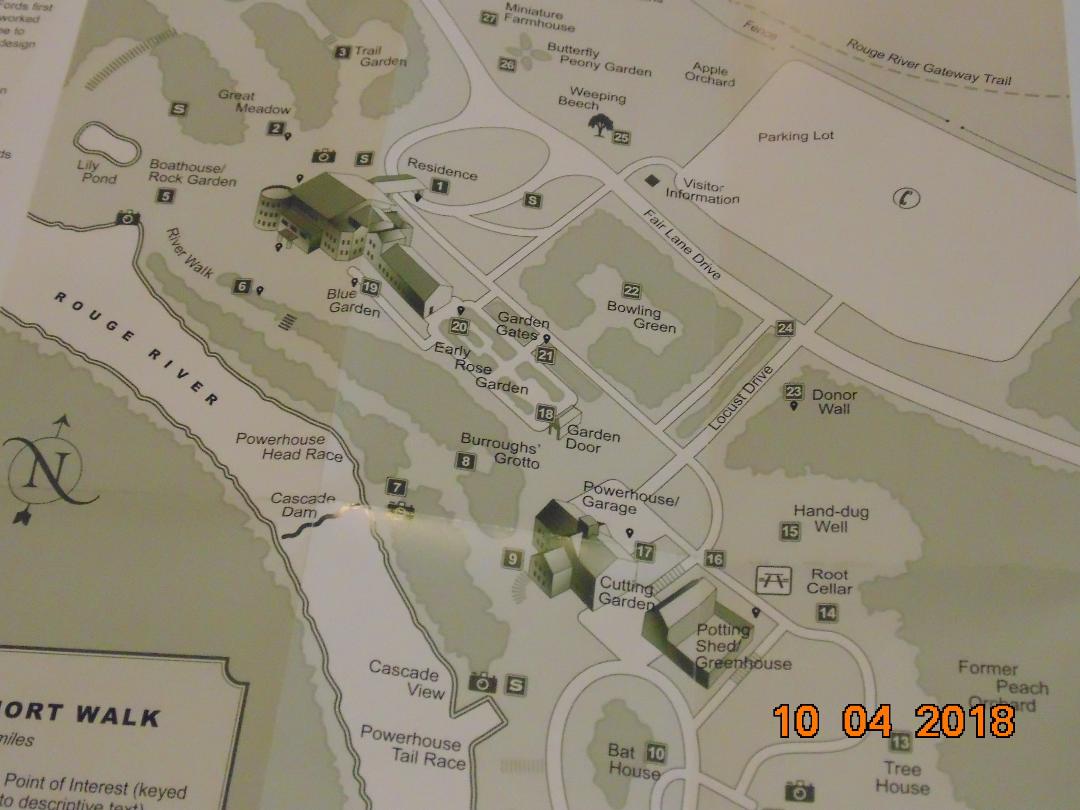
The tour of the grounds started with the new grand entry, the powerhouse/garage-cutting garden with the adjacent potting shed,& greenhouses. The property abuts the Rouge River-Jensen used the river to create a dam needed to produce hydro electric by the powerhouse. Today, the restoration includes creation of a stepping process beside the dam for fish to move up stream to spawn.

The garage, powerhouse and cutting garden
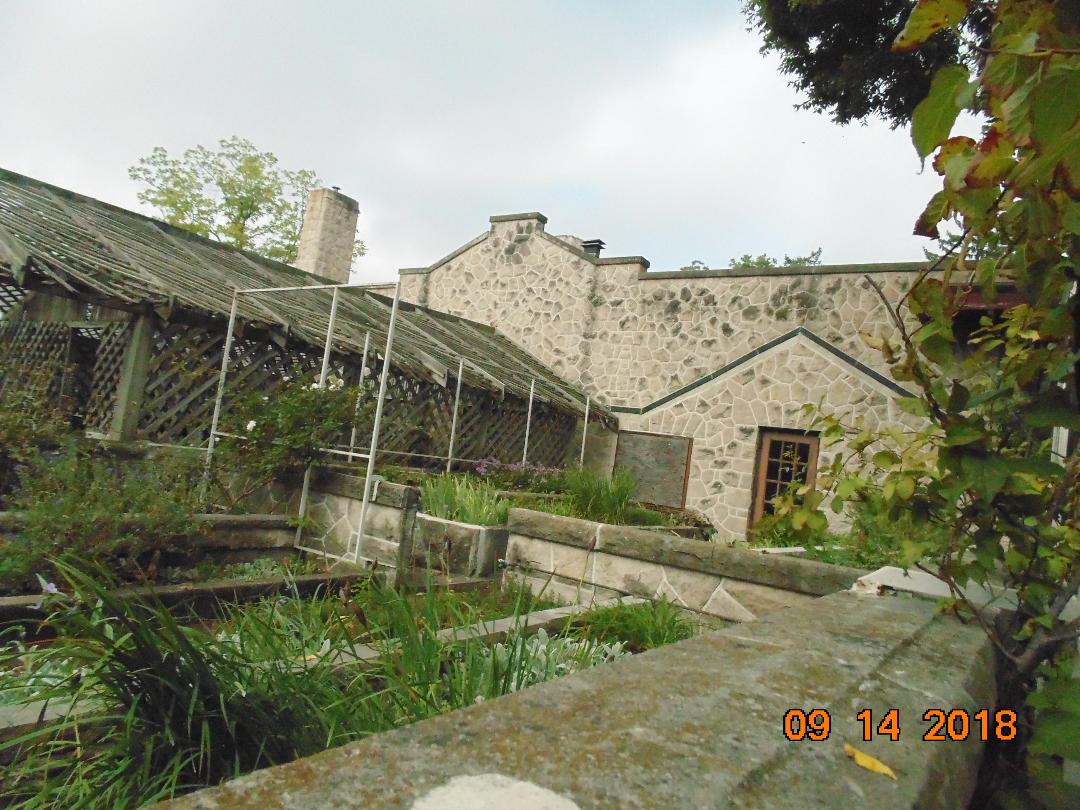
Greenhouse site, in the process of restoration
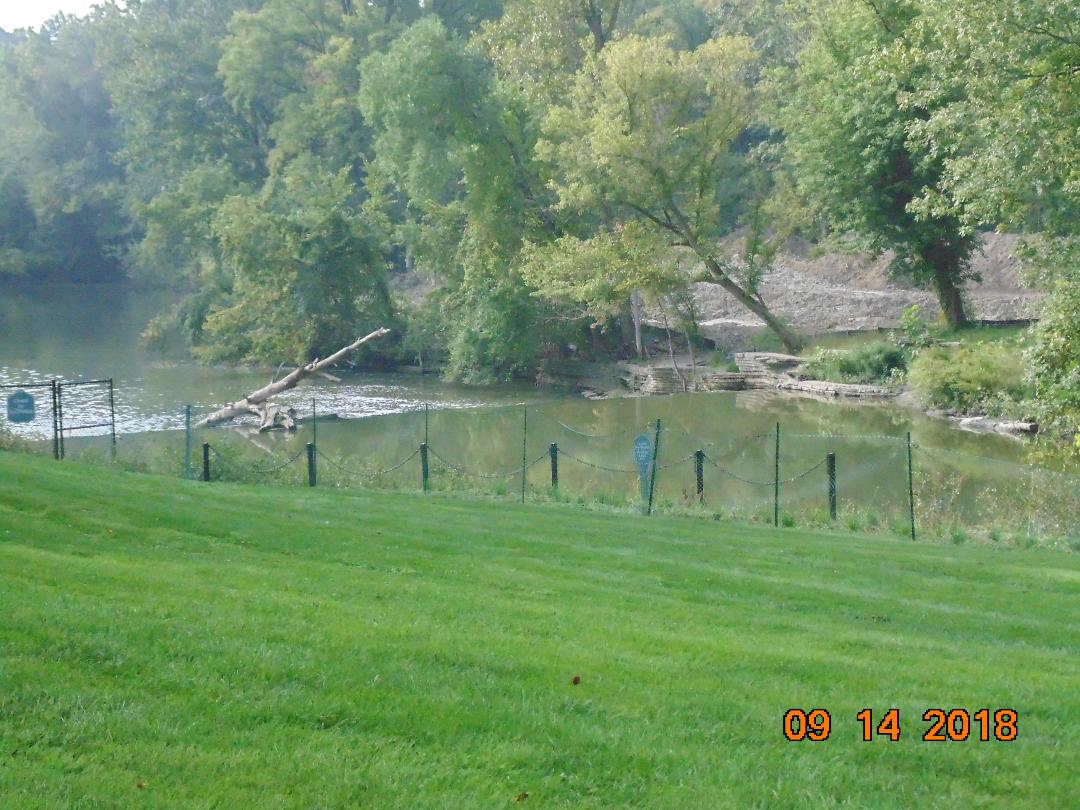
the dam area viewed from back of house-the fish track is on the far right (calm water)
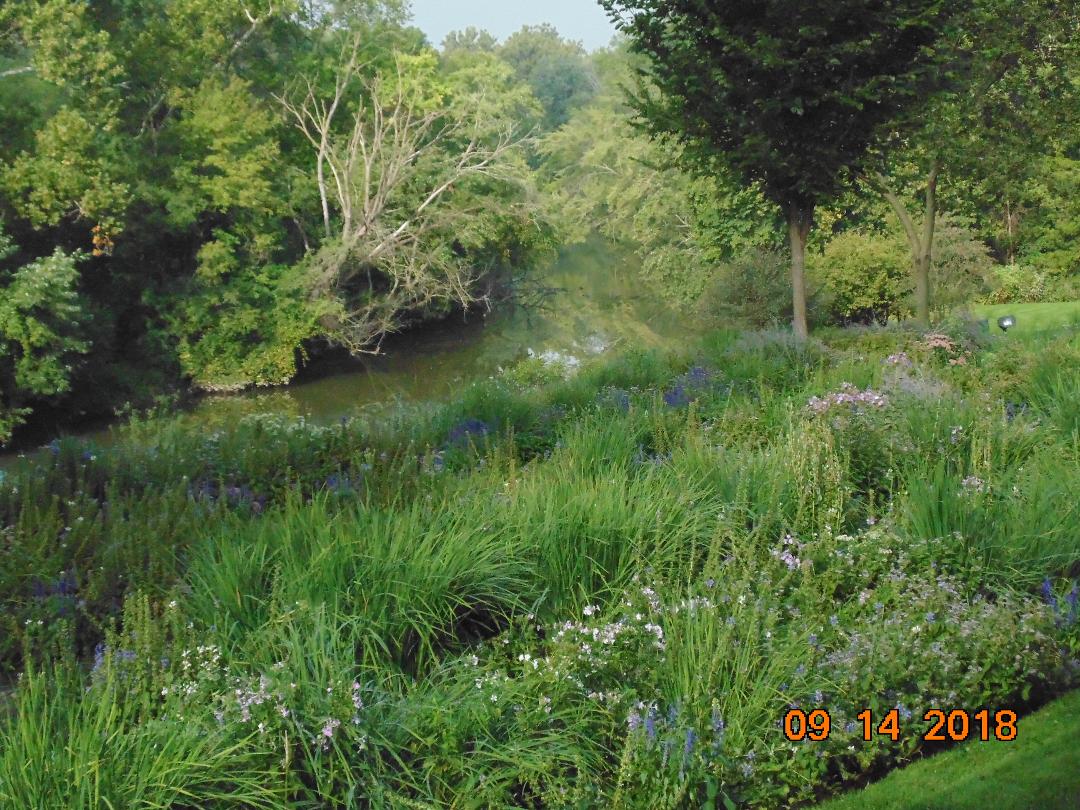
Hillside garden looking to the other end of the river
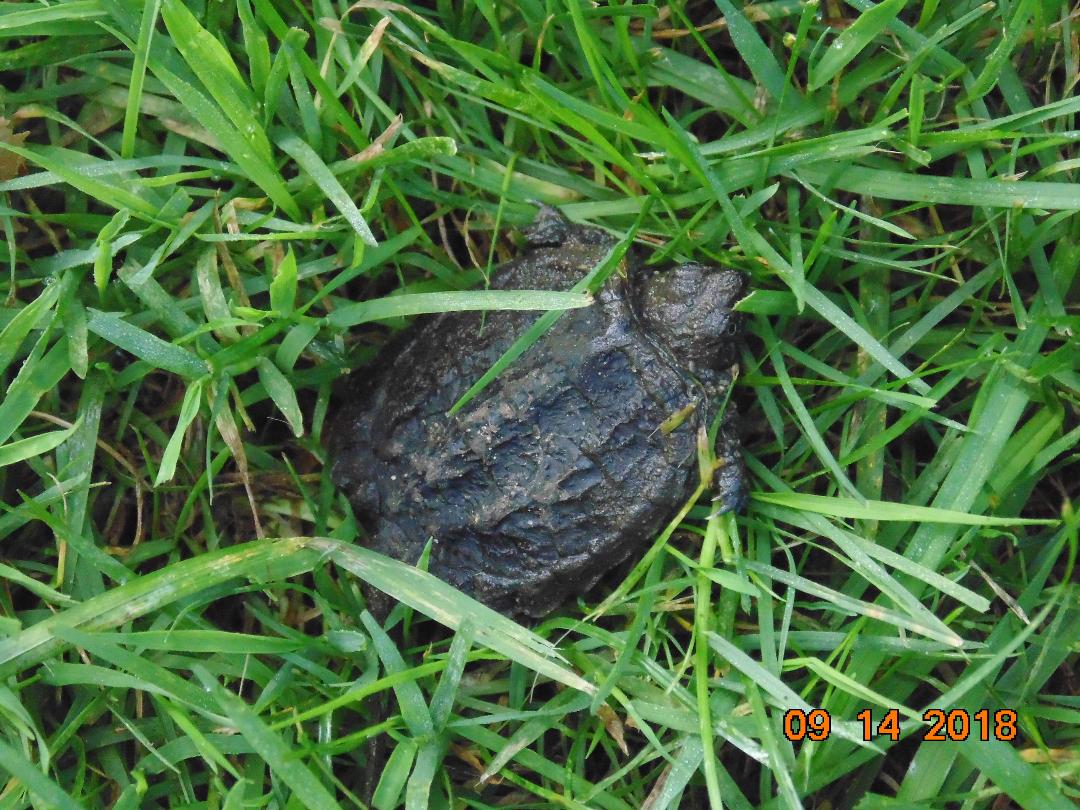
Below is a young snapping turtle who crossed our path as
we waled to the rose garden.
The estate has a large number of “rooms,” each with a different purpose & story..
I have a pamphlet with the 27 various aspects of the estate. We did not get to all of them.
Much of the lecture took place while we stood in the rose garden-at one time, Clara tended 10,000 roses
on 2.5 acres (now in ruins).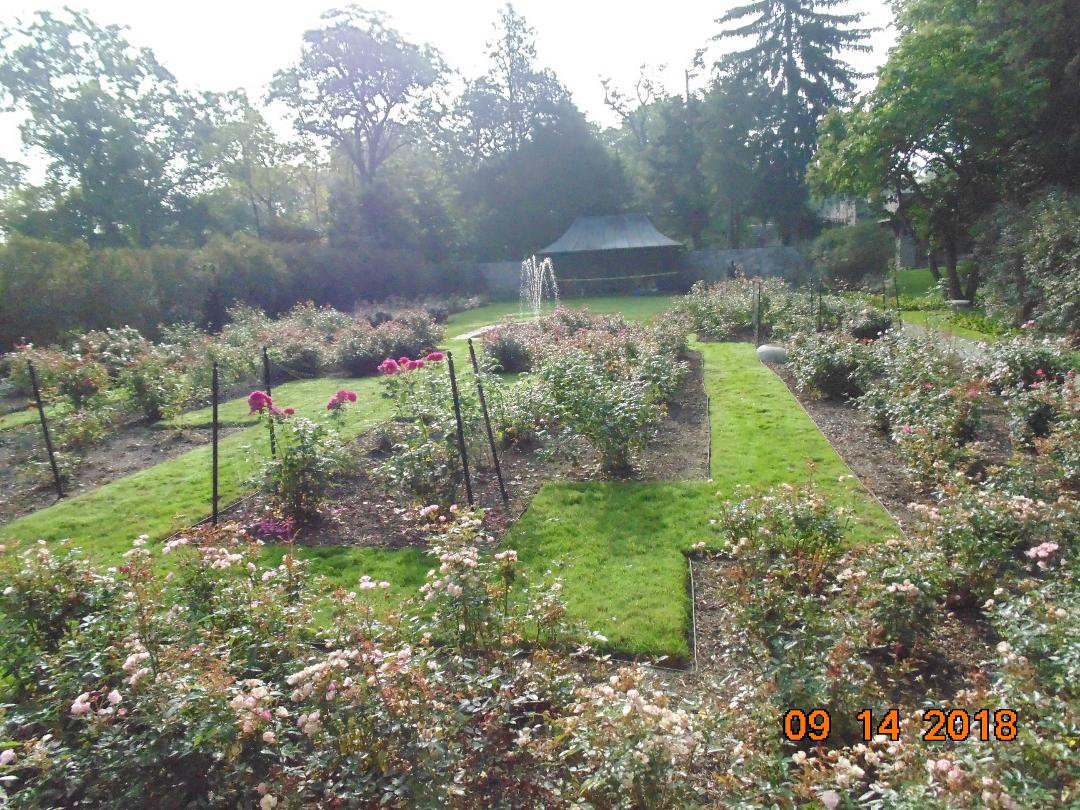
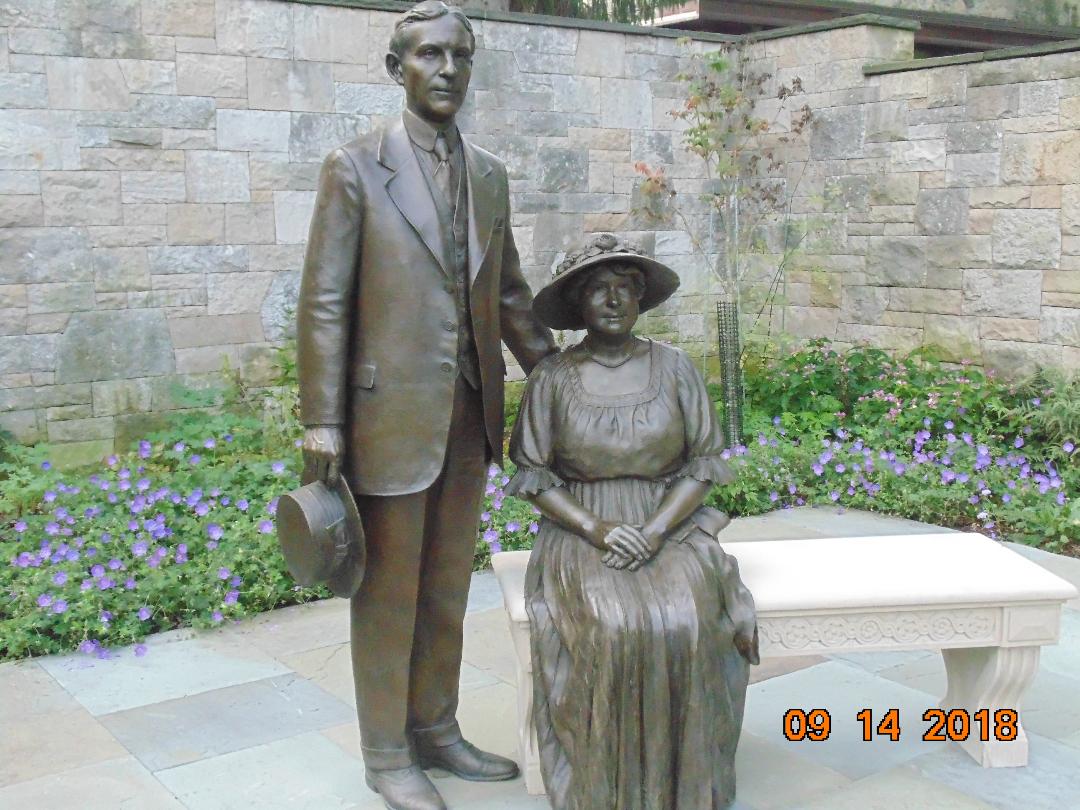
In the rose garden are life size bronze statues of Henry & Clara. Both were small in stature (under 6 ft)

note of interest-in the early 20’s, Mrs Ford along with Ellen Biddle
Shipman—transformed the early rose garden into an English garden.
Today’s features date to that time; tea house, pond, garden gate etc.
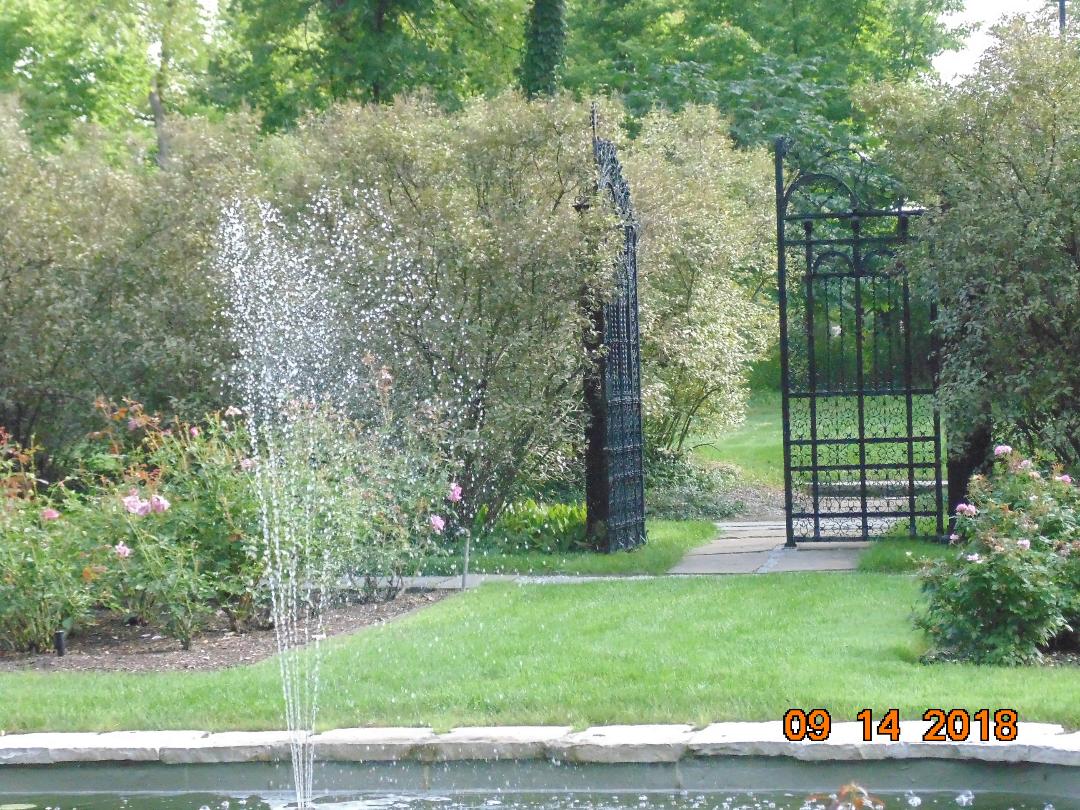
We continued our trek across the back of the house which faces the river. In an earlier photo, you saw the “blue garden” The house is also under renovation, this is a view of the rear and the side of the house.
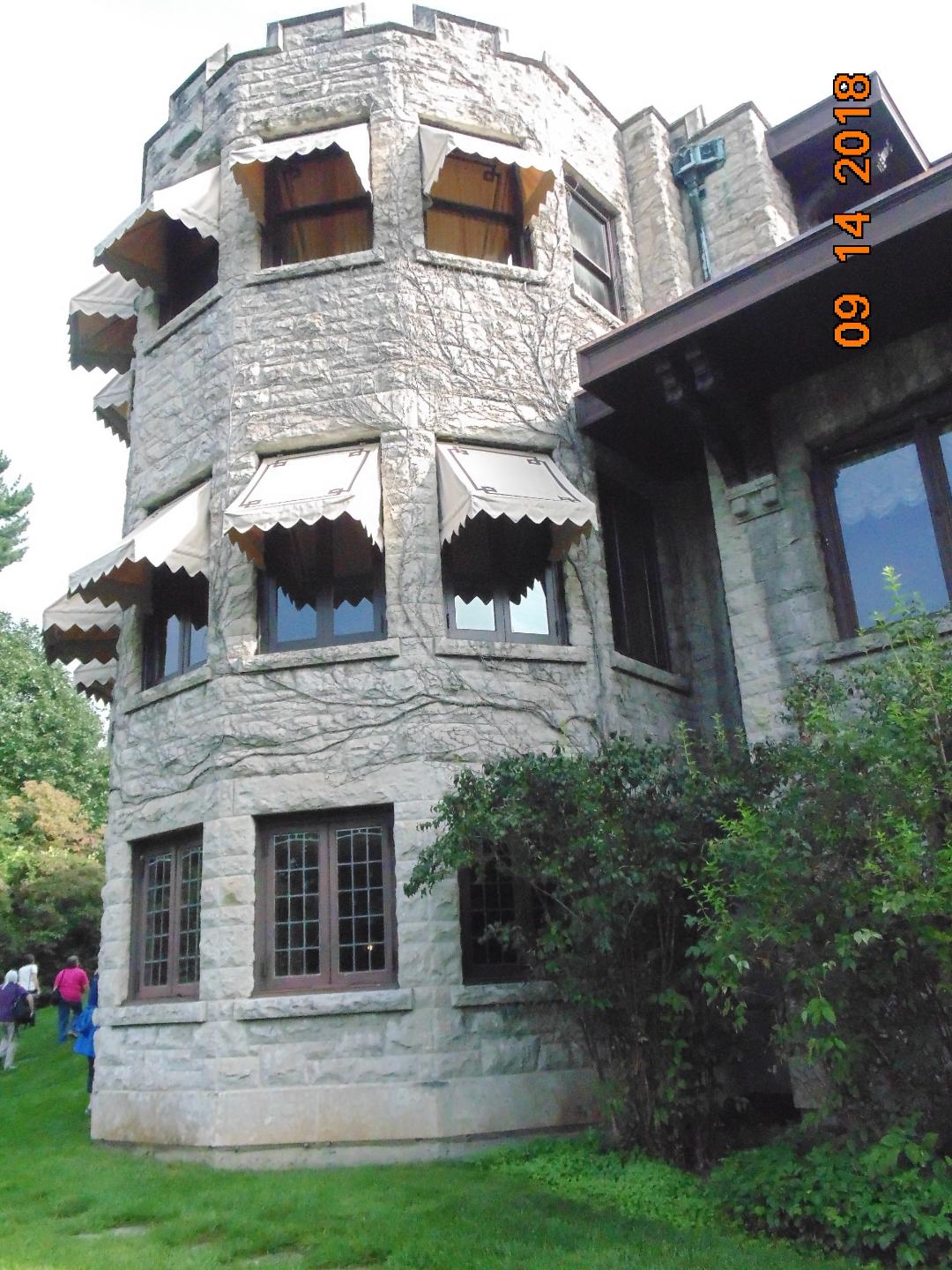

From the side of the house you can view the “great meadow” The Ford’s were very progressive-
loved nature & natural features, organic gardening practices and ecological preservationists.
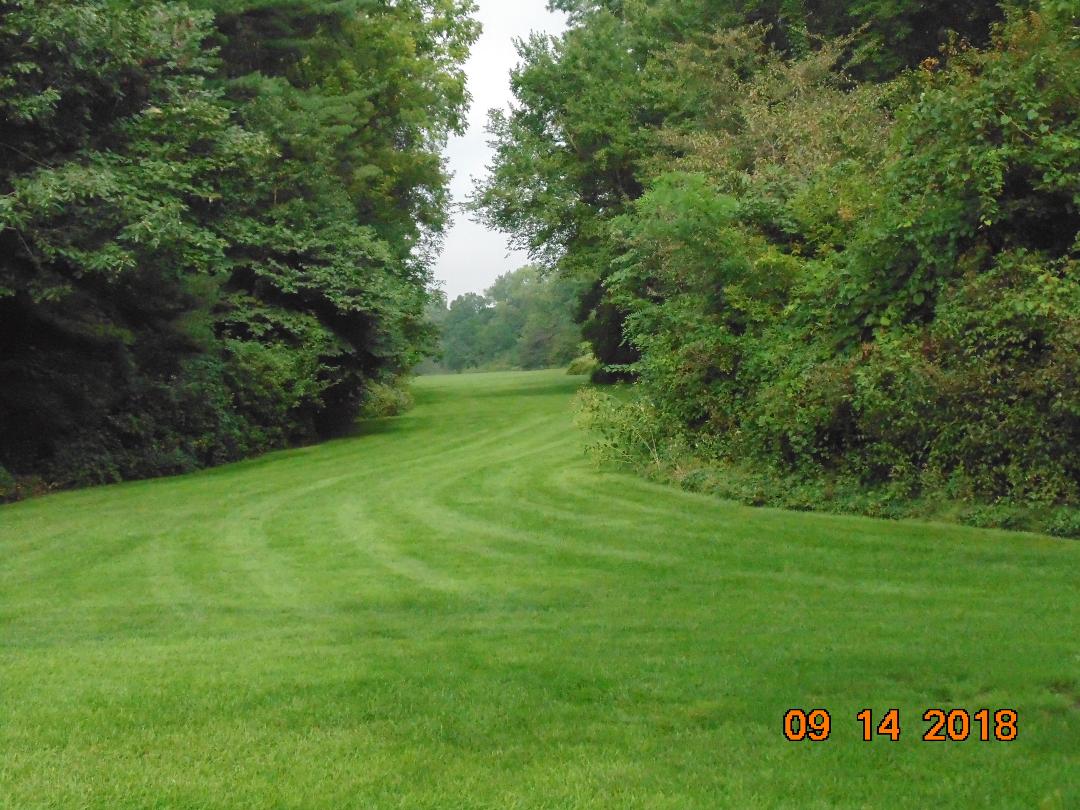
The great meadow. As you can see from this next picture-front view, even the architecture of the buildings is
intriguing.

To think that at one time all of this was destined to be torn down because
no one cared enough to save it……….luckily that did not happen. Today, this project is a National Historic Landmark.

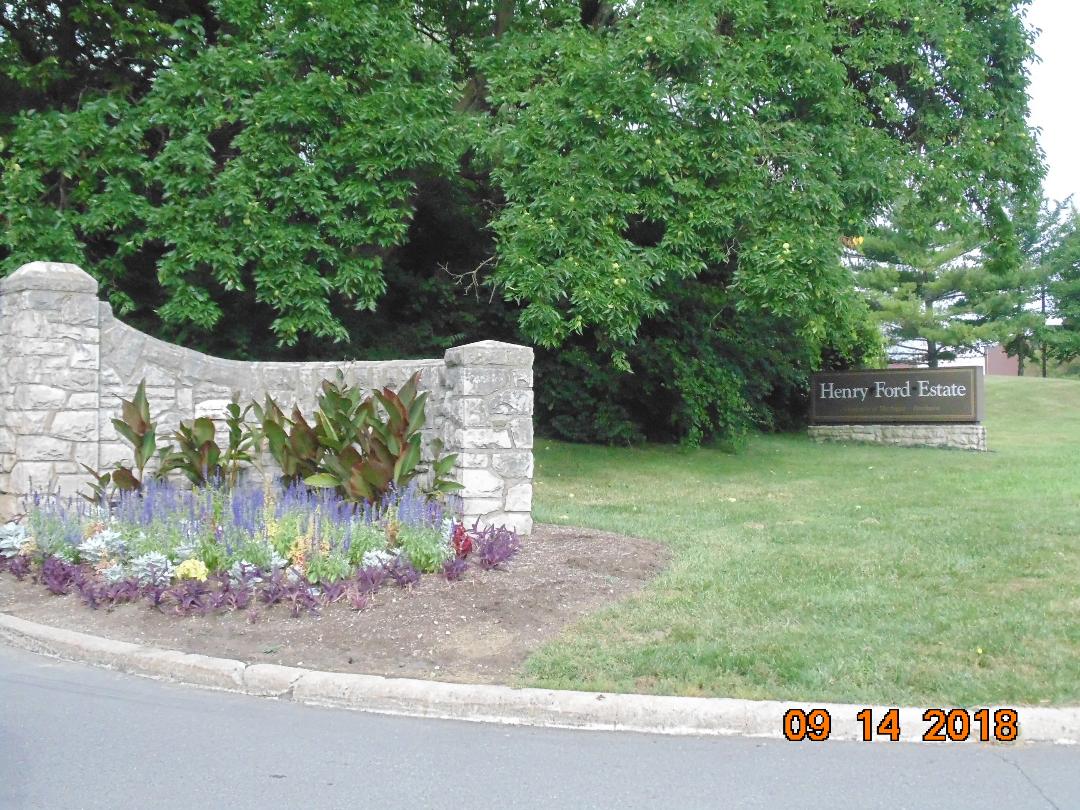
As Master Gardeners, we can volunteer in a variety of ways on this project, go to http://www.henryfordfairlane.org for more information.
Posted in Uncategorized | Leave a Comment »
Story and photos by Gail K:
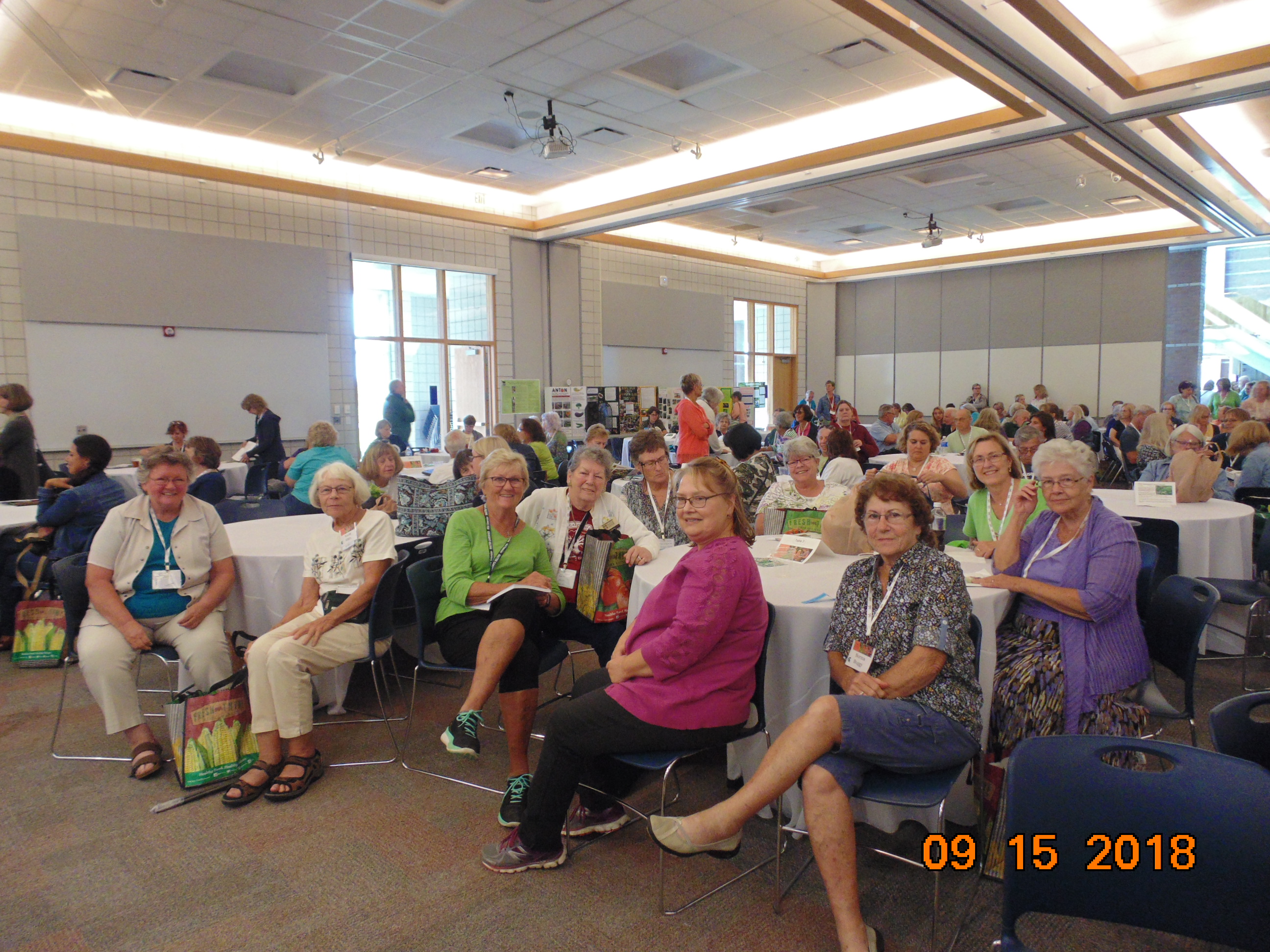
I would like to feature the Master Gardener College which took place on Sept 14 and 15th. The event was held @ Wayne County Comm. College; being so close to home, it allowed for a bit more affordability & flexibility for those who wished to attend any portion of the 3 day event. We had many members of our MCMG assoc. present, it was my first time to attend this event.
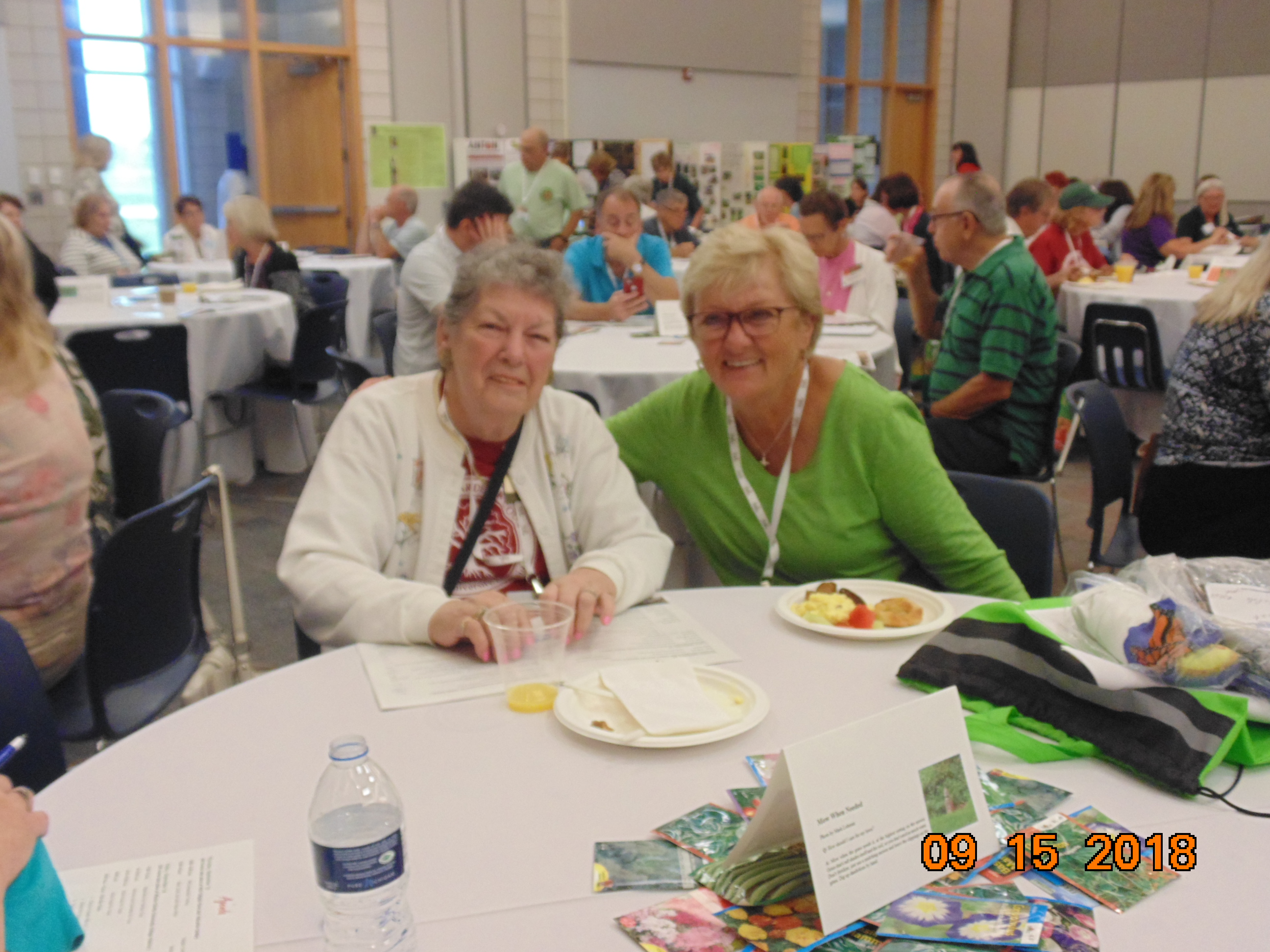
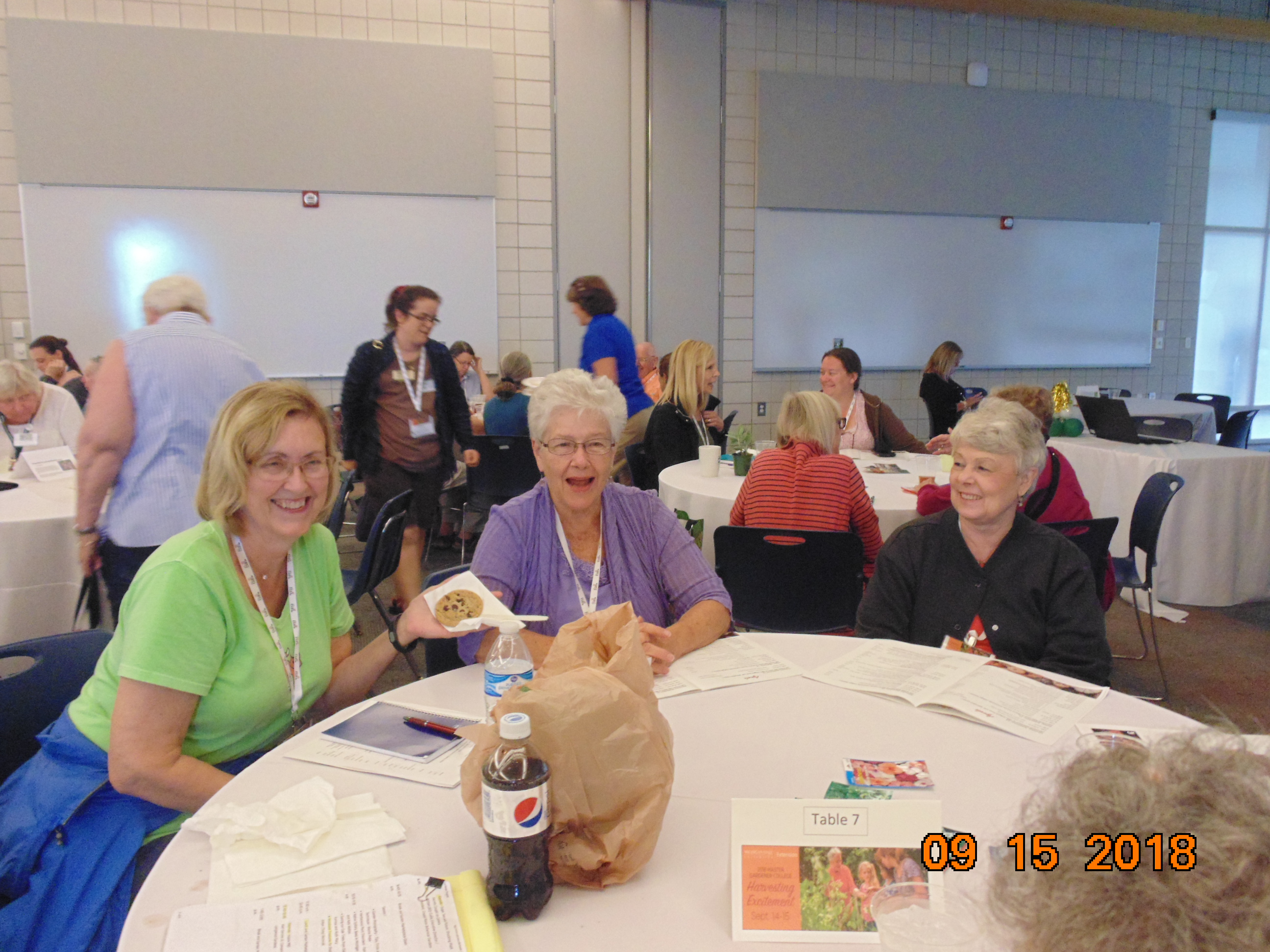
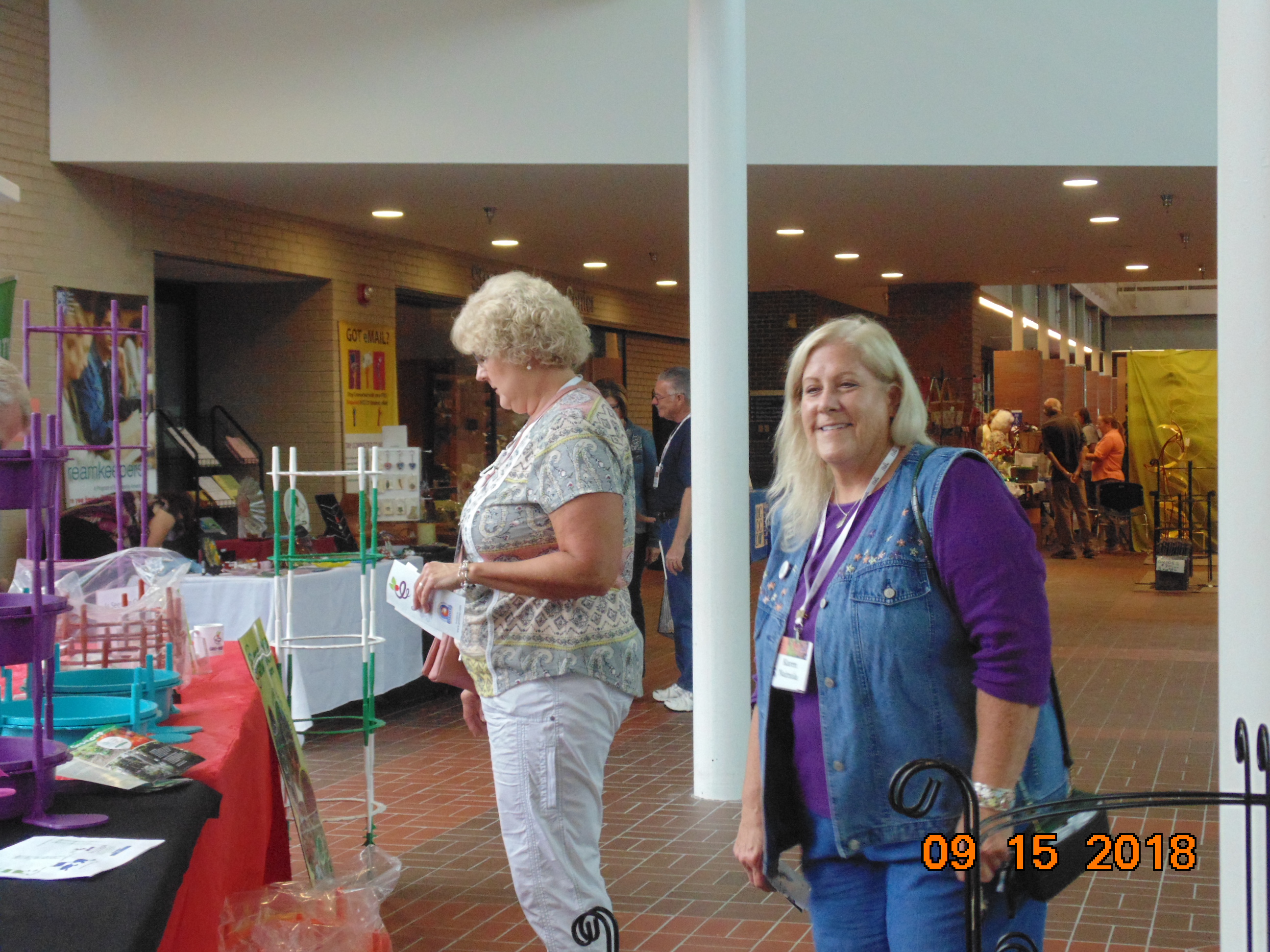
This week will focus on the last day; 8 hrs. featuring 2 keynote speakers; 3 break out sessions each participant chose the topic of their focus;opportunities to shop @ various vendors (and we did shop) and of course–FOOD & fellowship with so many others who enjoy gardening & many of us (not all, sorry Pat) won door prizes.

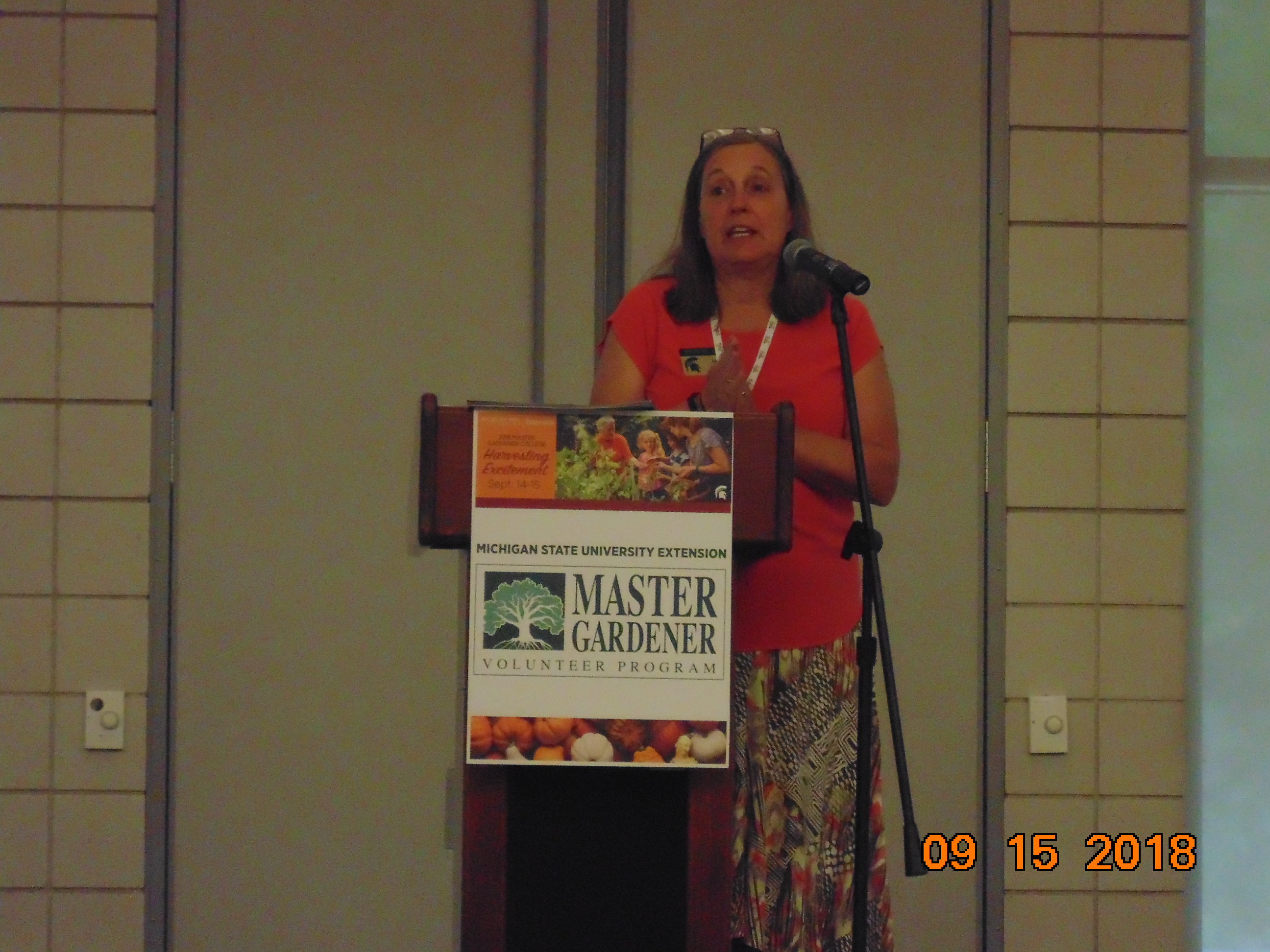
Following breakfast-Mary Wilson MSU MG program coordinator gave the opening statement and introduced the first keynote speaker Bill Culina Director & President of Coastal Maine Botanical Gardens.
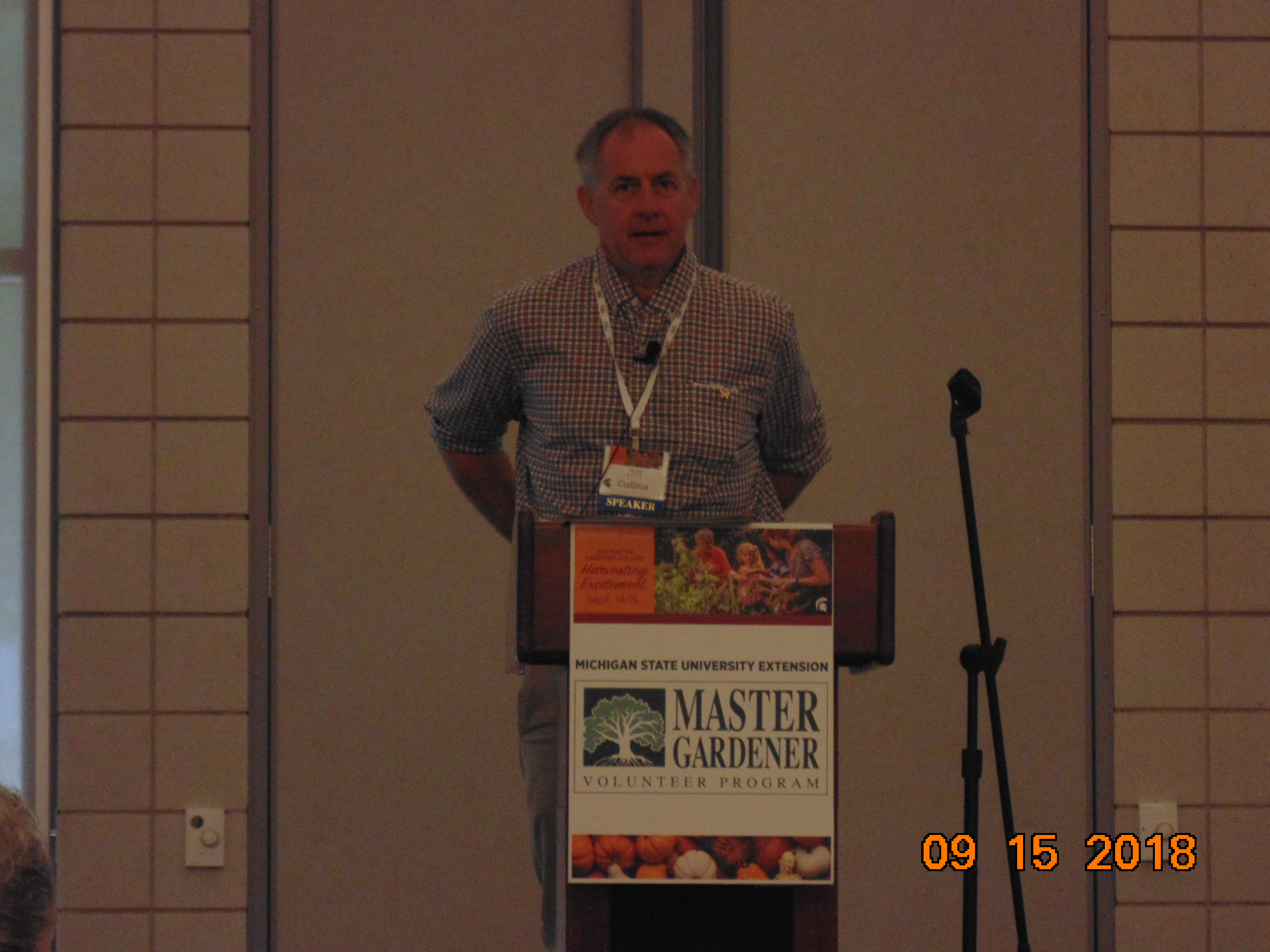
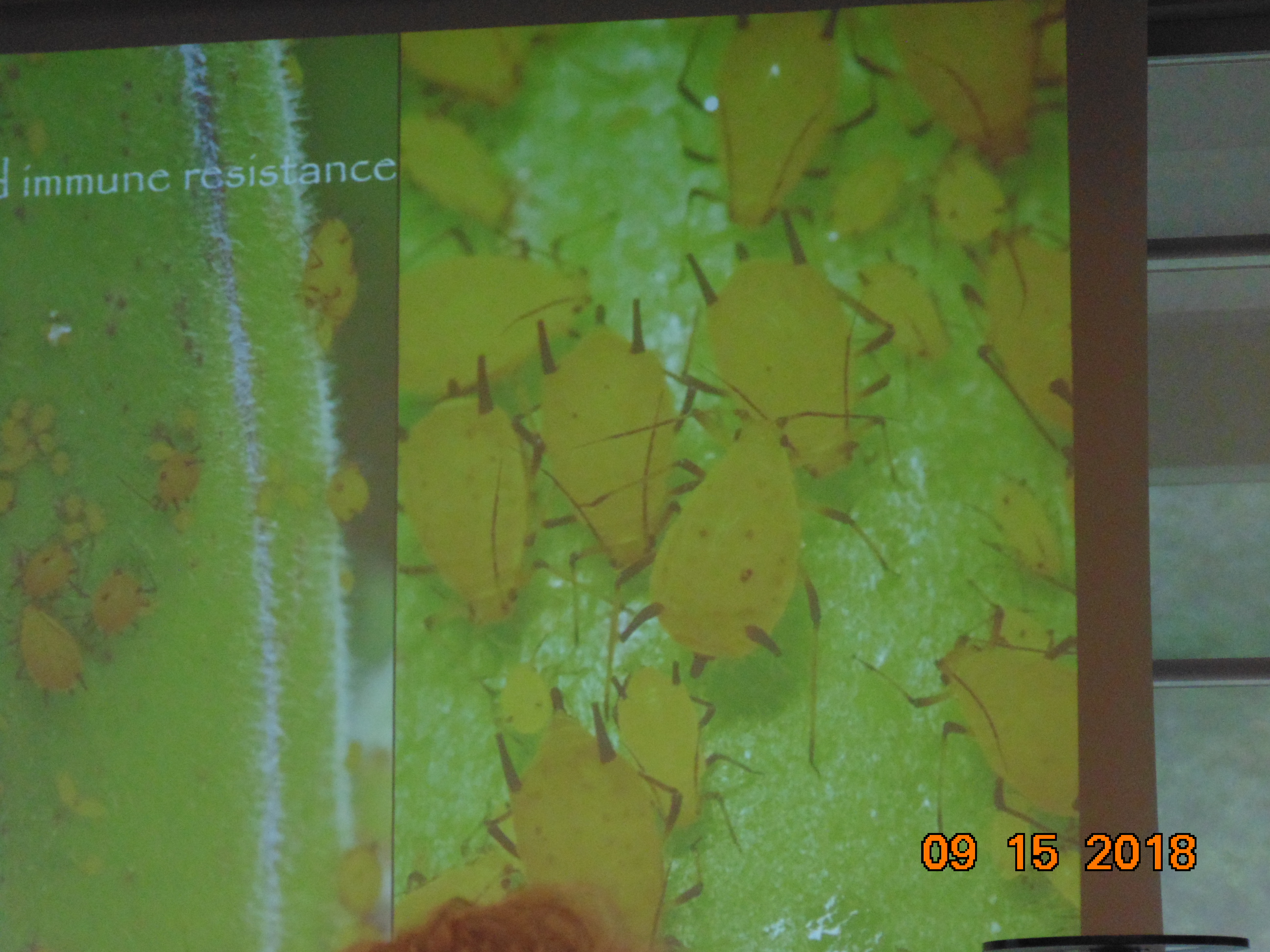
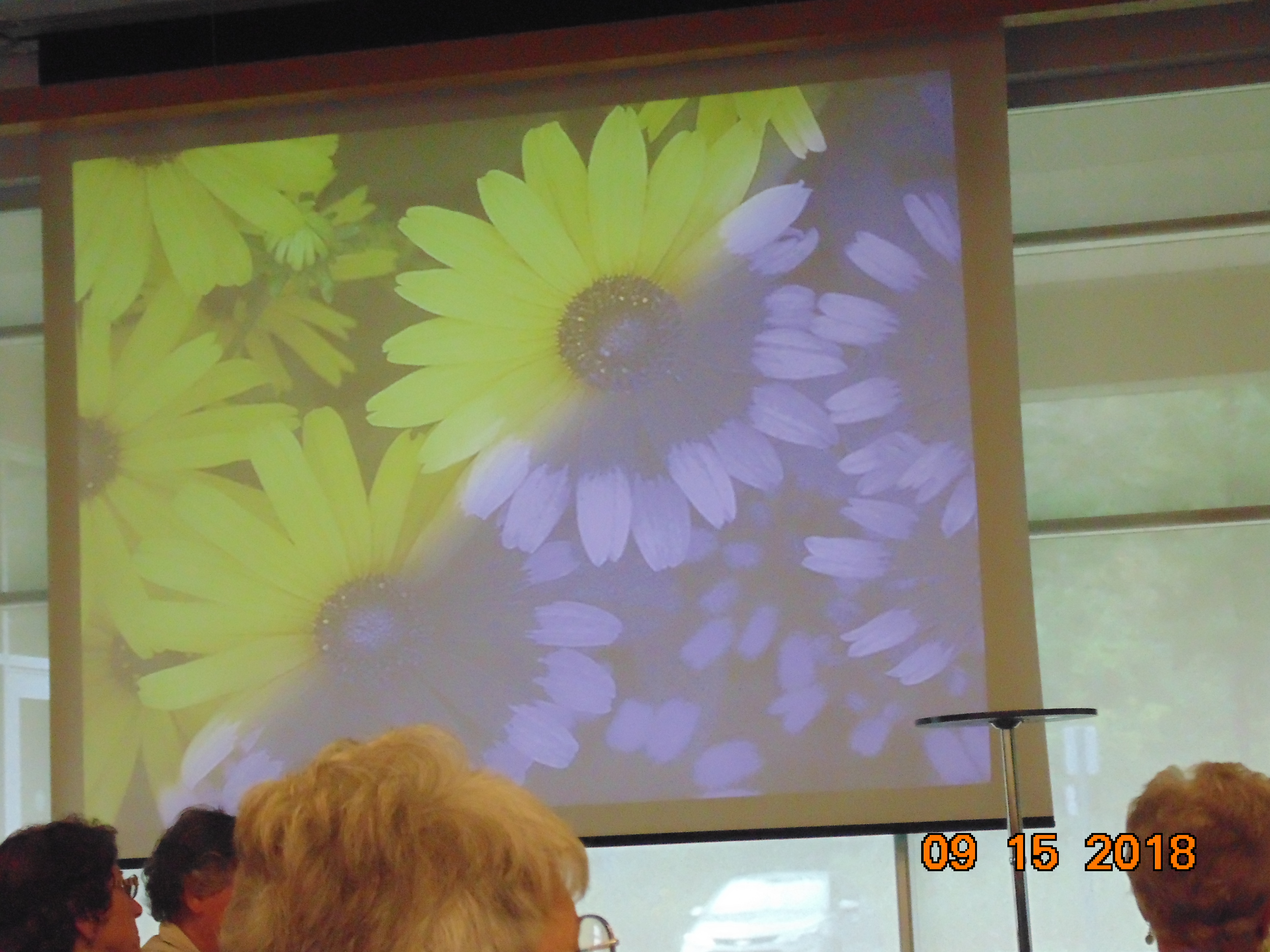
Mr. Cullina spoke on various aspects of plants, & insects. Plants are photosynthesis factories and the gardener is the manager of those factories. A notable fact: in response to a stimuli, a plant is cable of producing airborne smells-a chemical messaging system- detected by other plants alerting them to produce a defense mechanism. He shared a recipe for a preventative protein spray: 1 regular aspirin-ground up along with 1 tsp of mild dish soap mixed into 1 gal of water Spray on plants every 3 weeks prior to a known issue. The spray will cause the plant to increase its chemical response– helps ward off disease such as powdery mildew. He also spoke to the use of ultraviolet light vs daylight and how insects see @ night. Very good speaker, covering a lot of material.

Did I mention shopping???
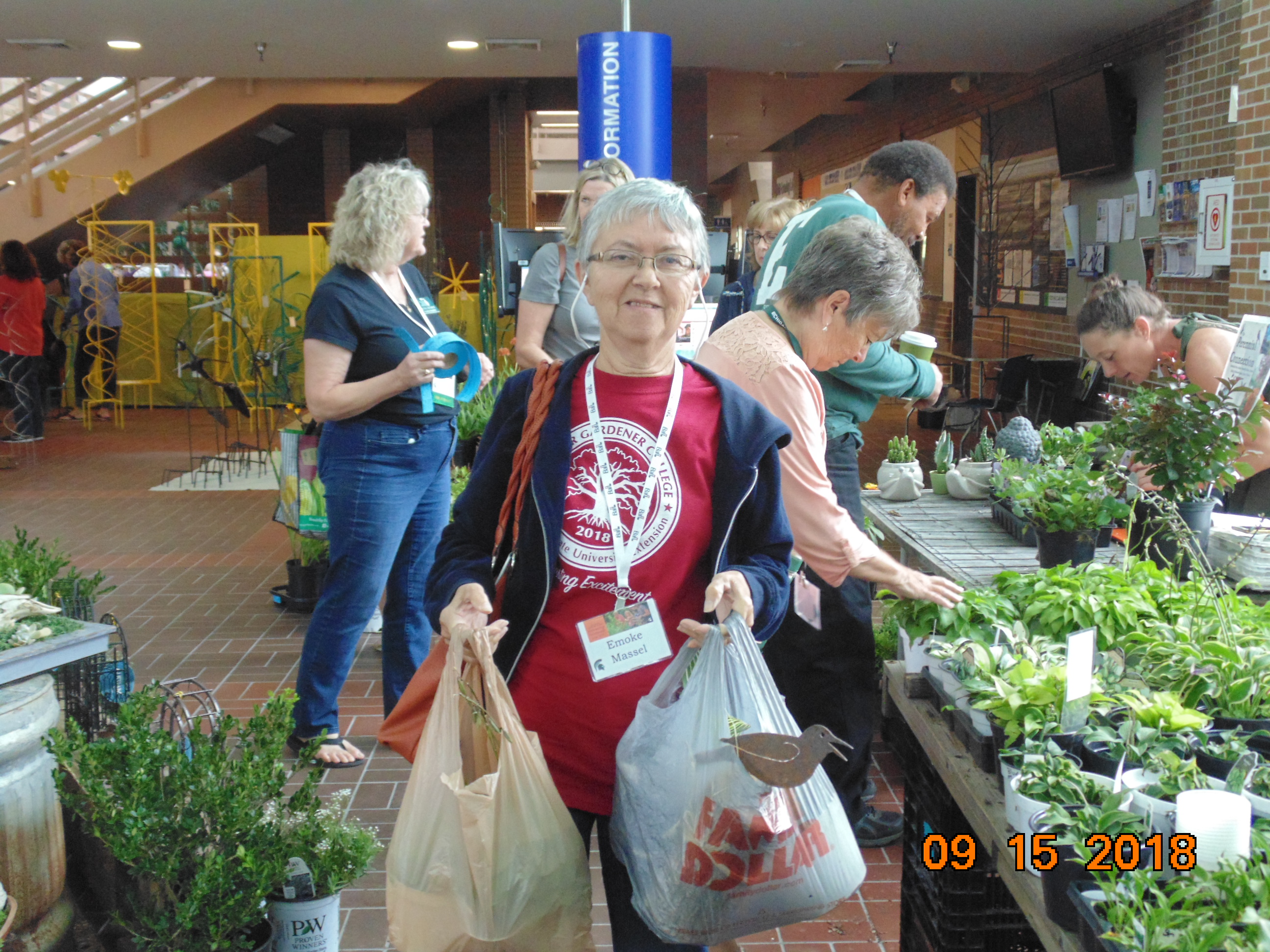
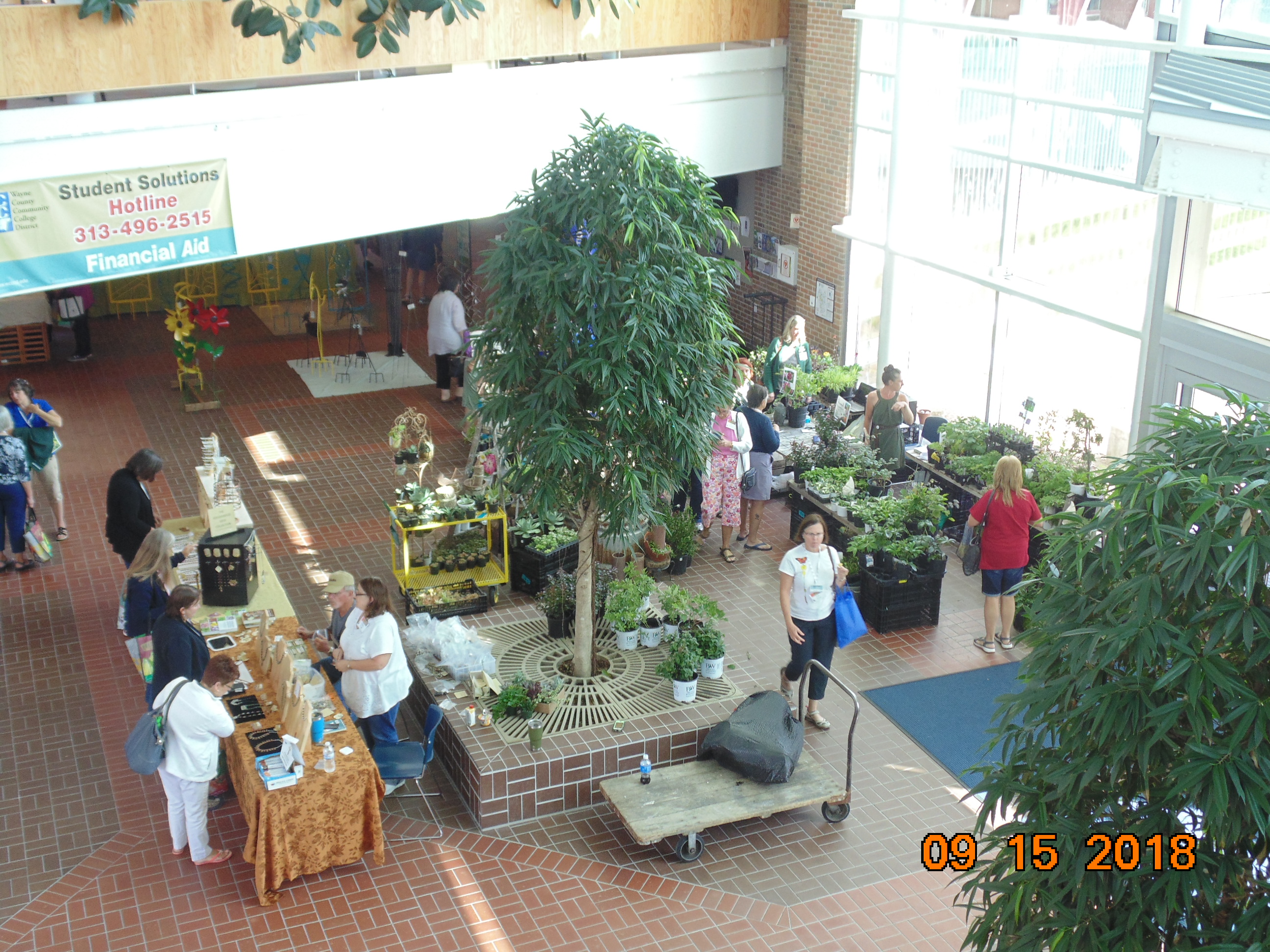
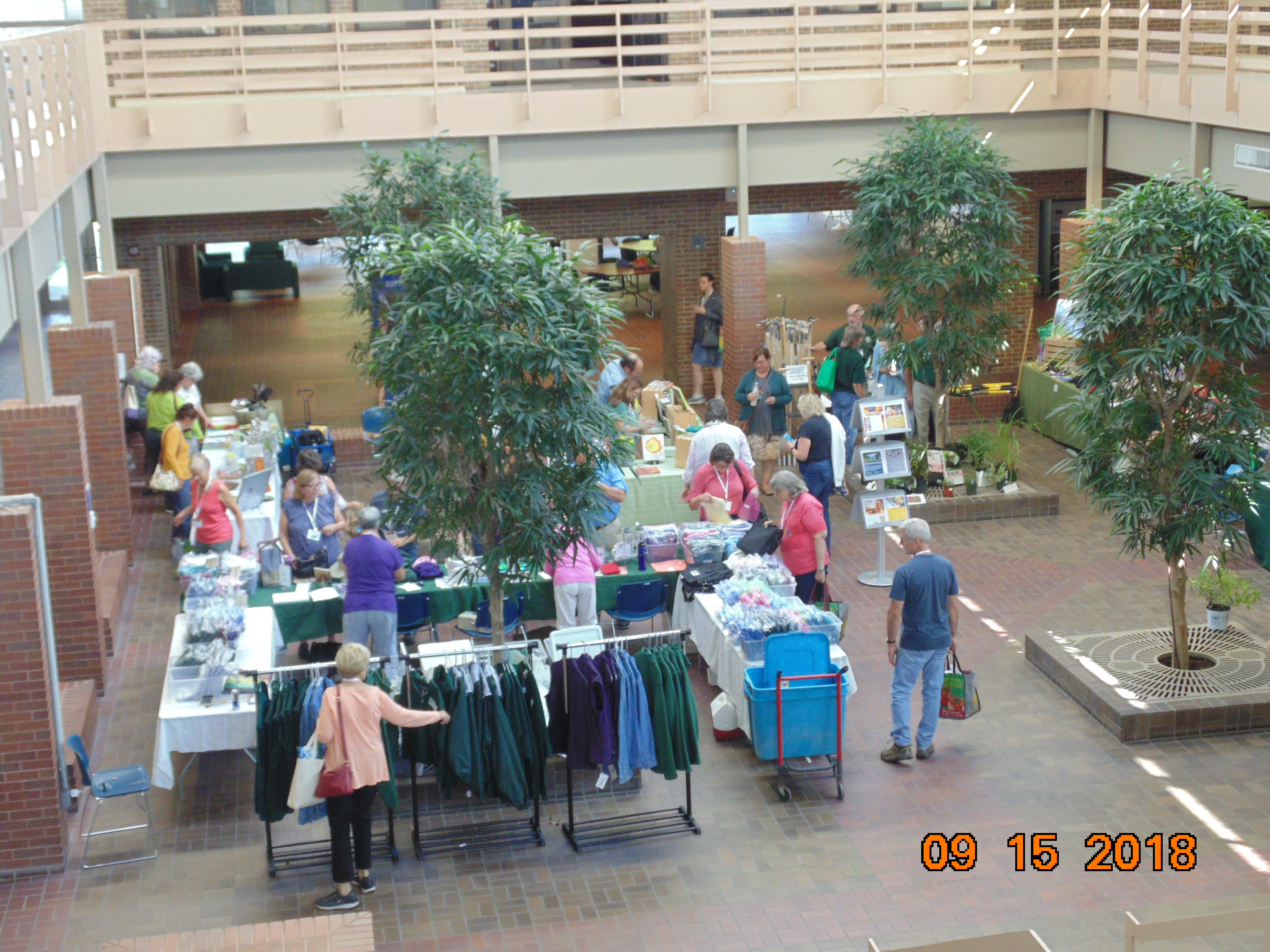
The second keynote speaker for the day was Karl Gercens lll-Conservatory Horticulturist for Longwood Gardens in Pennsylvania. Mr. Gercens spoke to the design aspects he uses in the Conservatory. He has 800 volunteers and things change with each season & rarely repeat year after year. He spoke to the various plants they use & how they adapt them for their use…. Learned that Coral Bells grow better in potting soil, a wreath made of succulents.
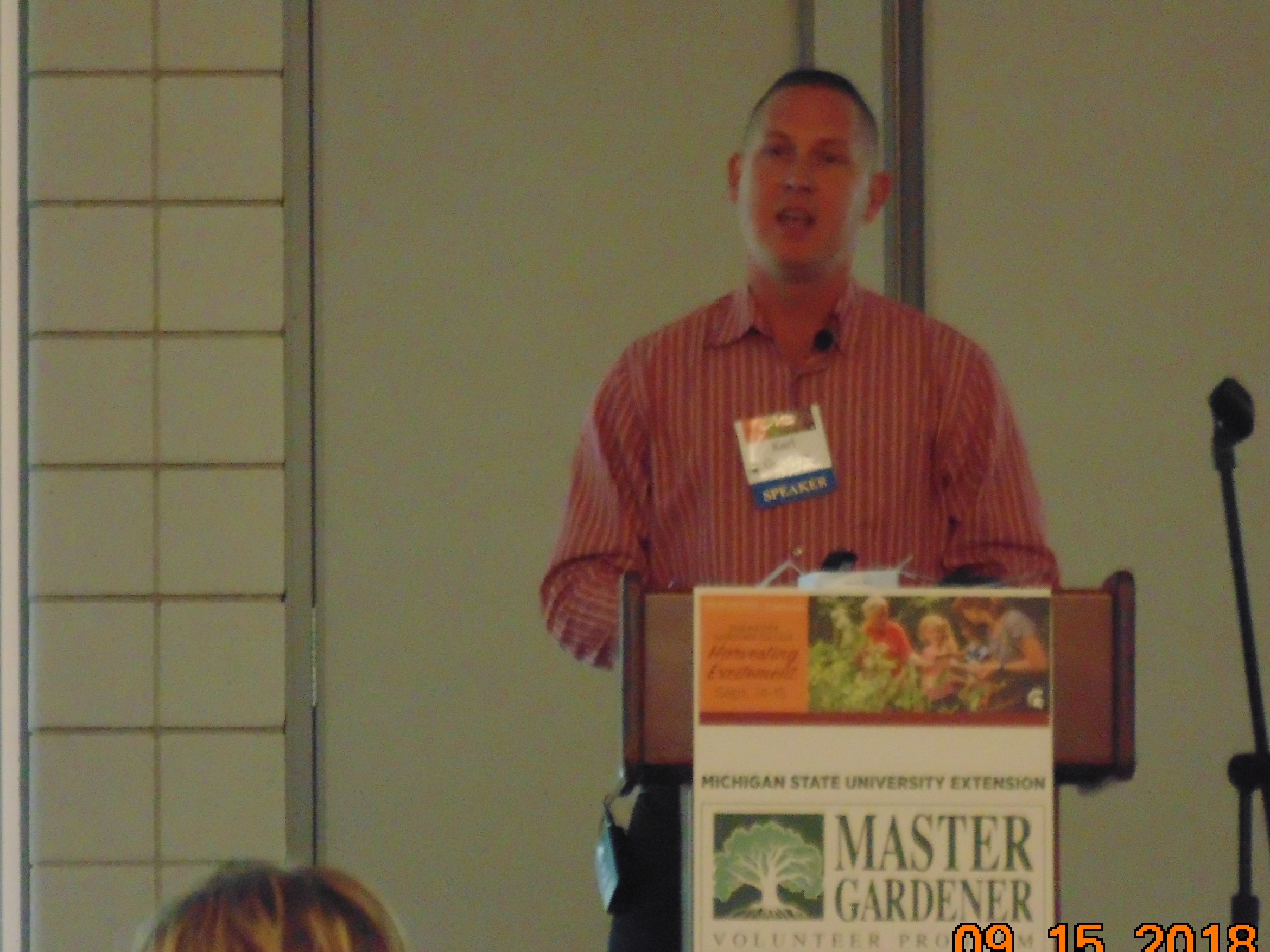
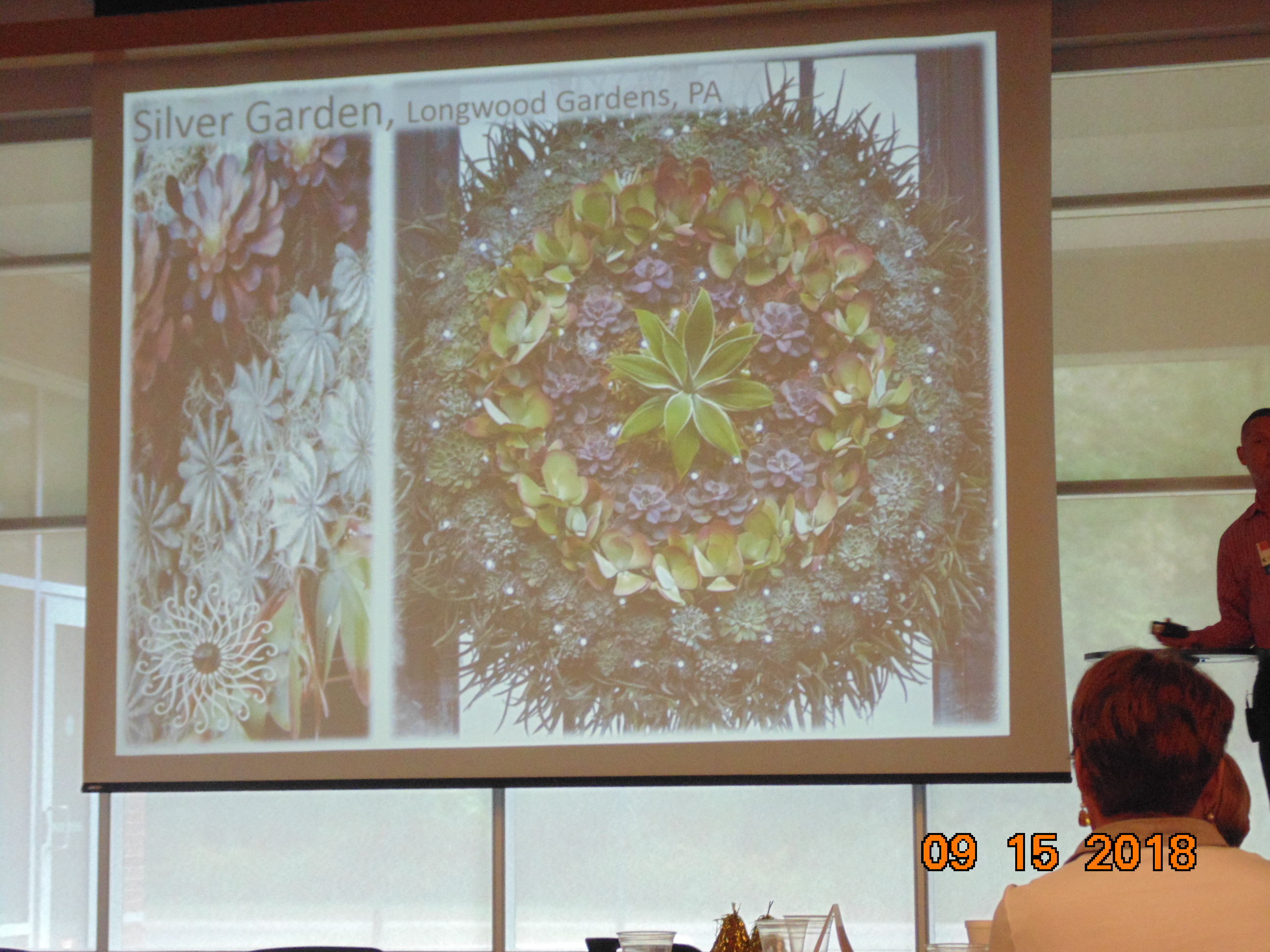
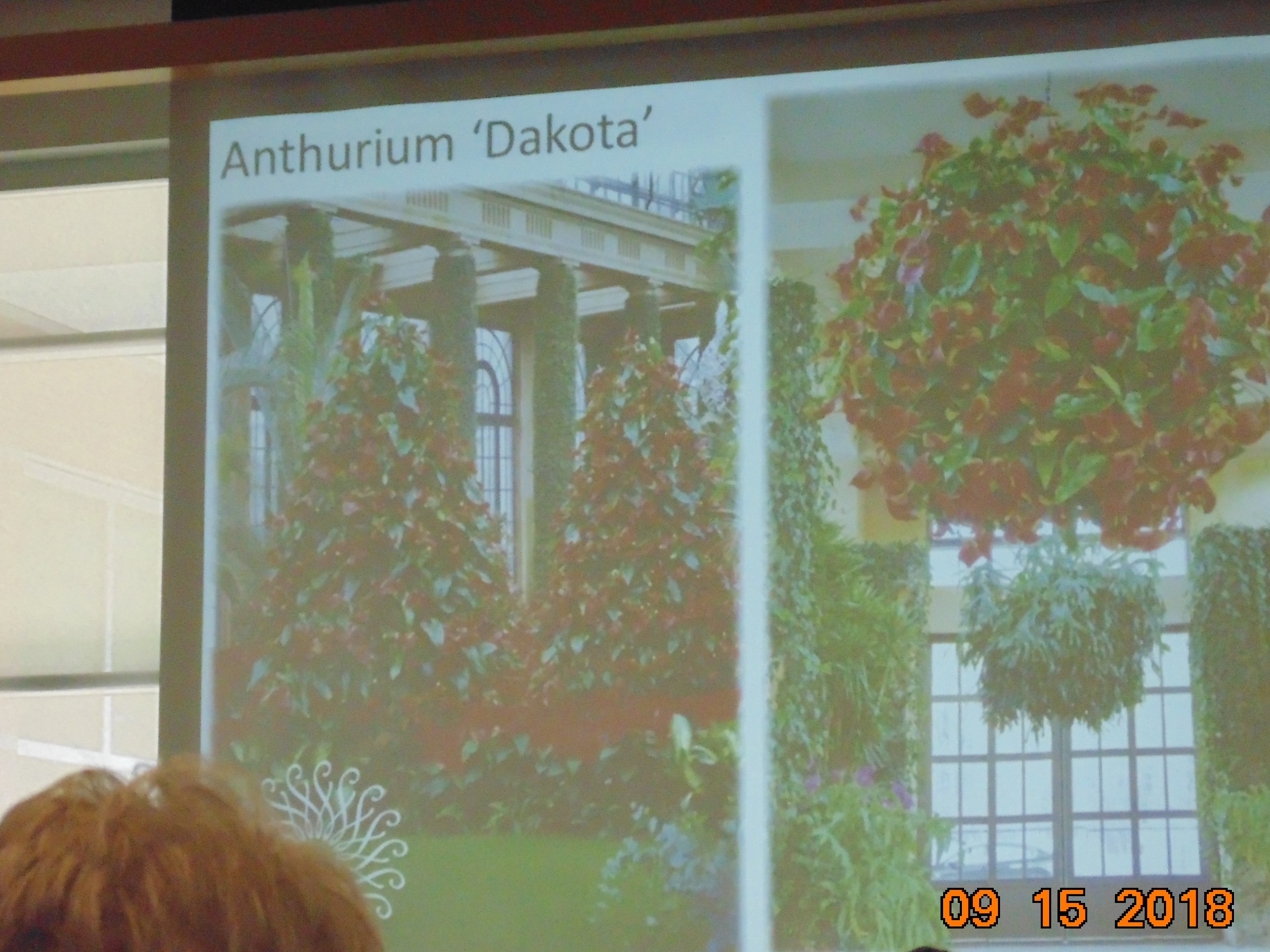
References seedyourfuture.org and http://www.KarlGercens.com
Following his talk I added the Longwood Gardens to the list of places I want to visit ……..
DID I MENTION SHOPPING????
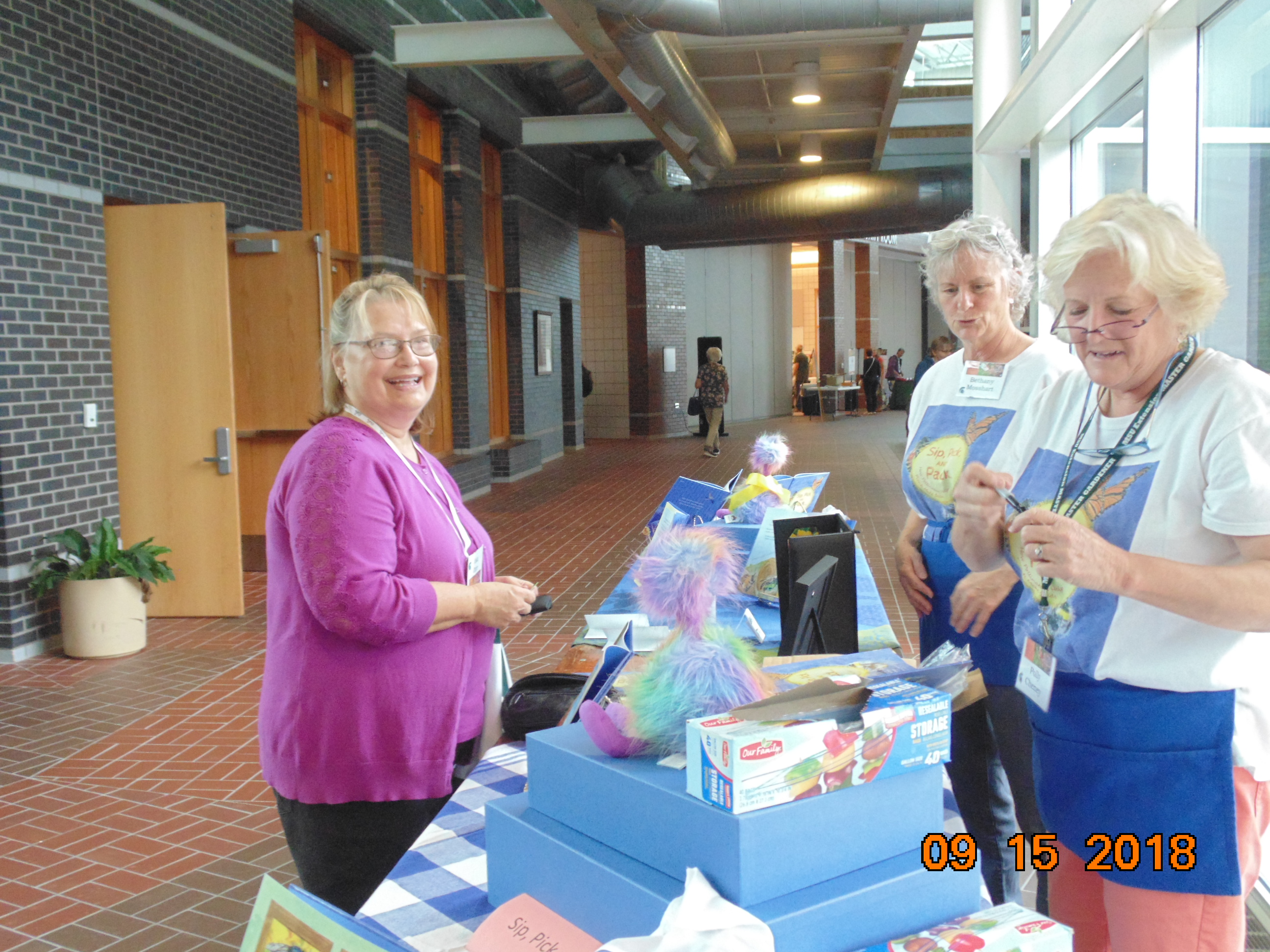
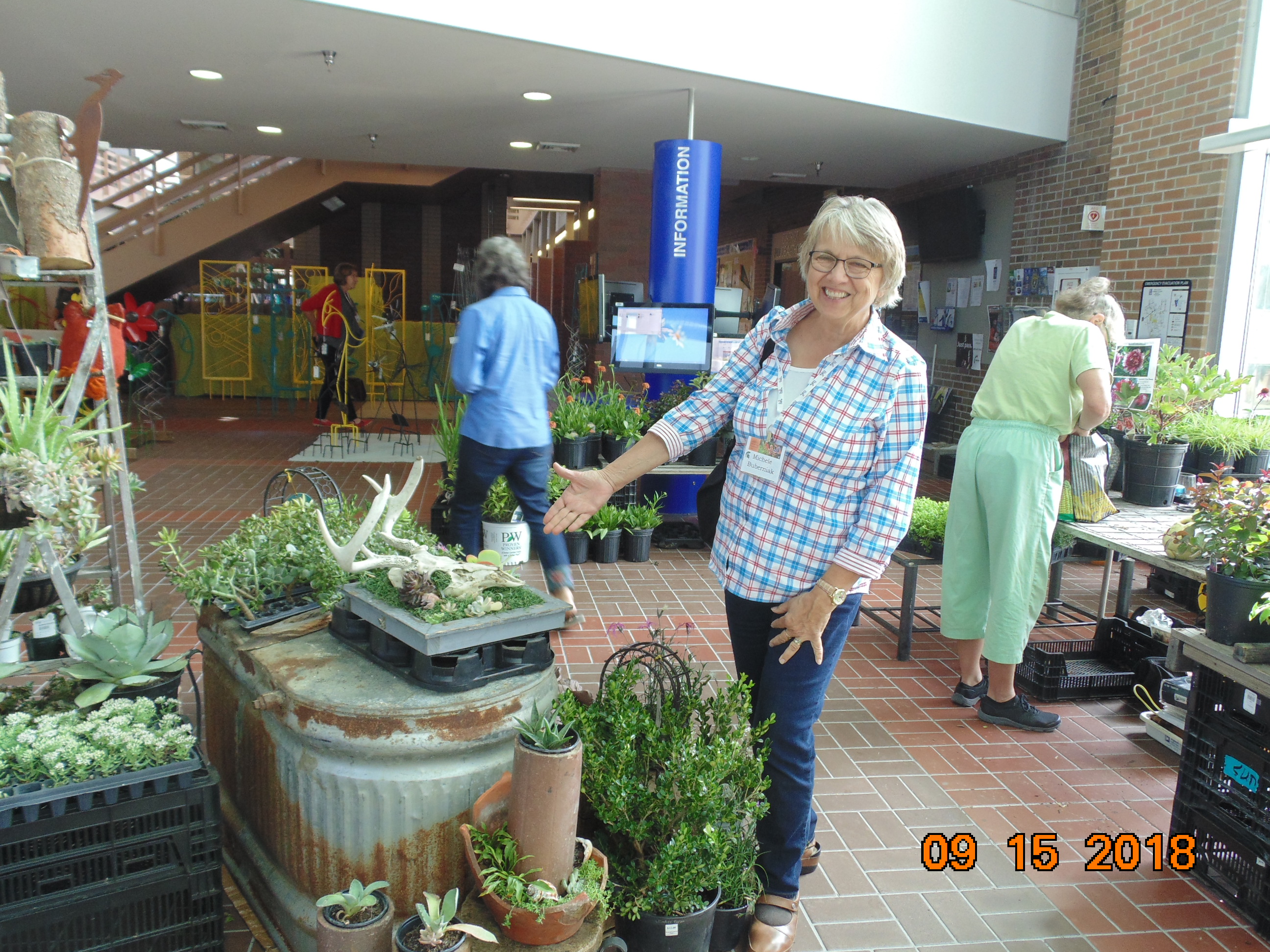
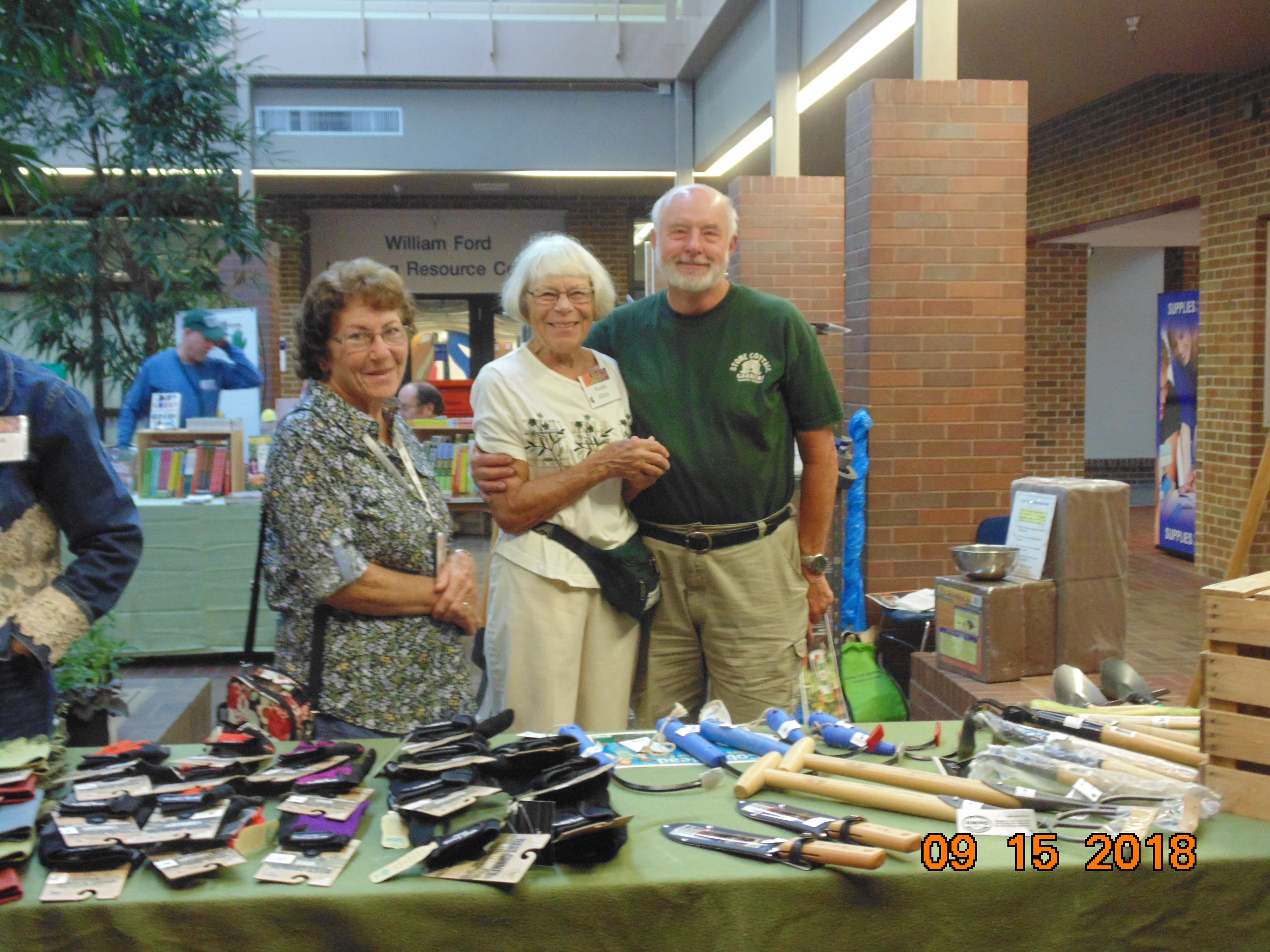
I SOMEHOW MISSED THE SILENT AUCTION DISPLAY BUT WINNIE FOUND IT
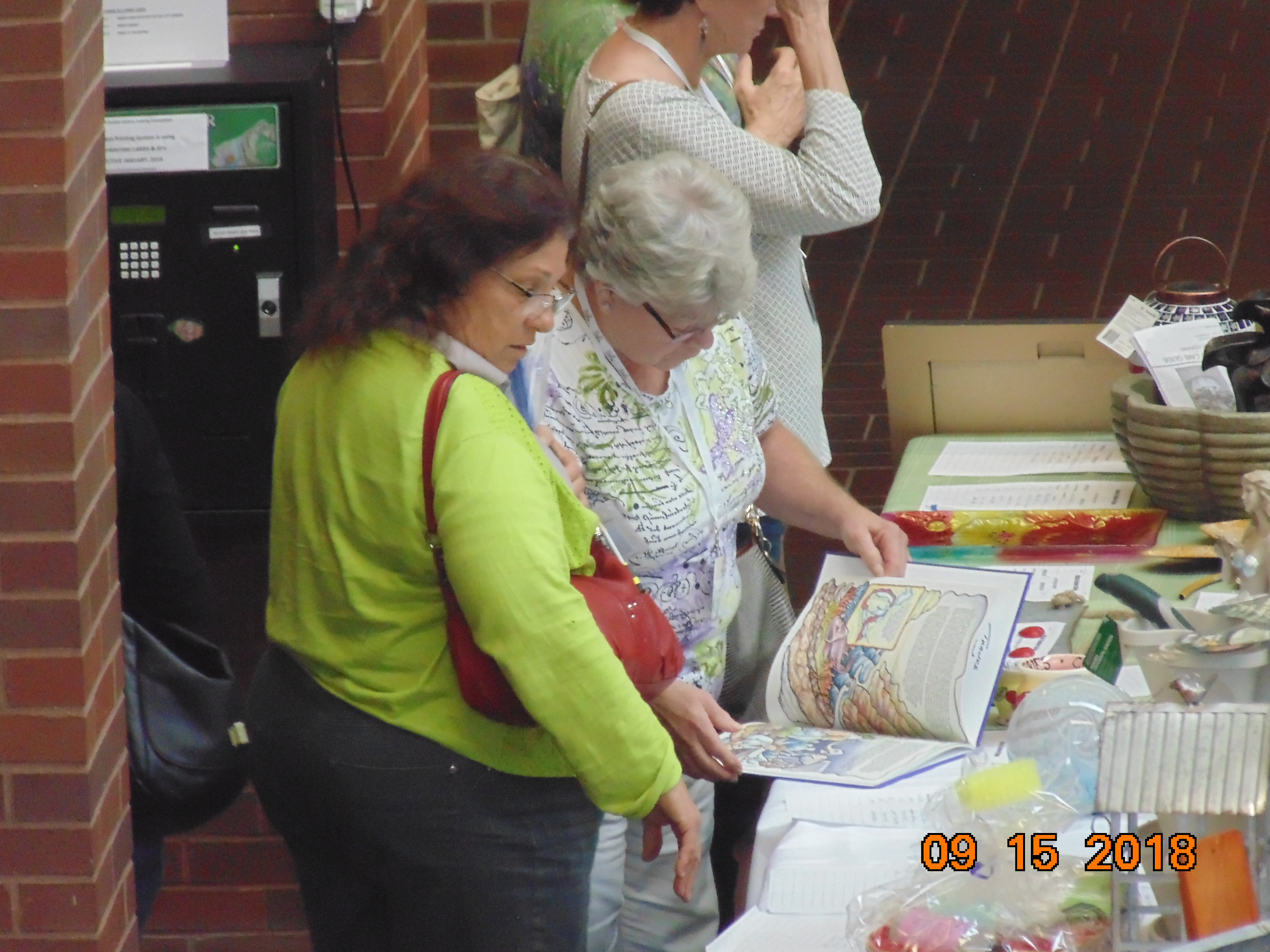
Many of our members won a prize throughout the 3 days—
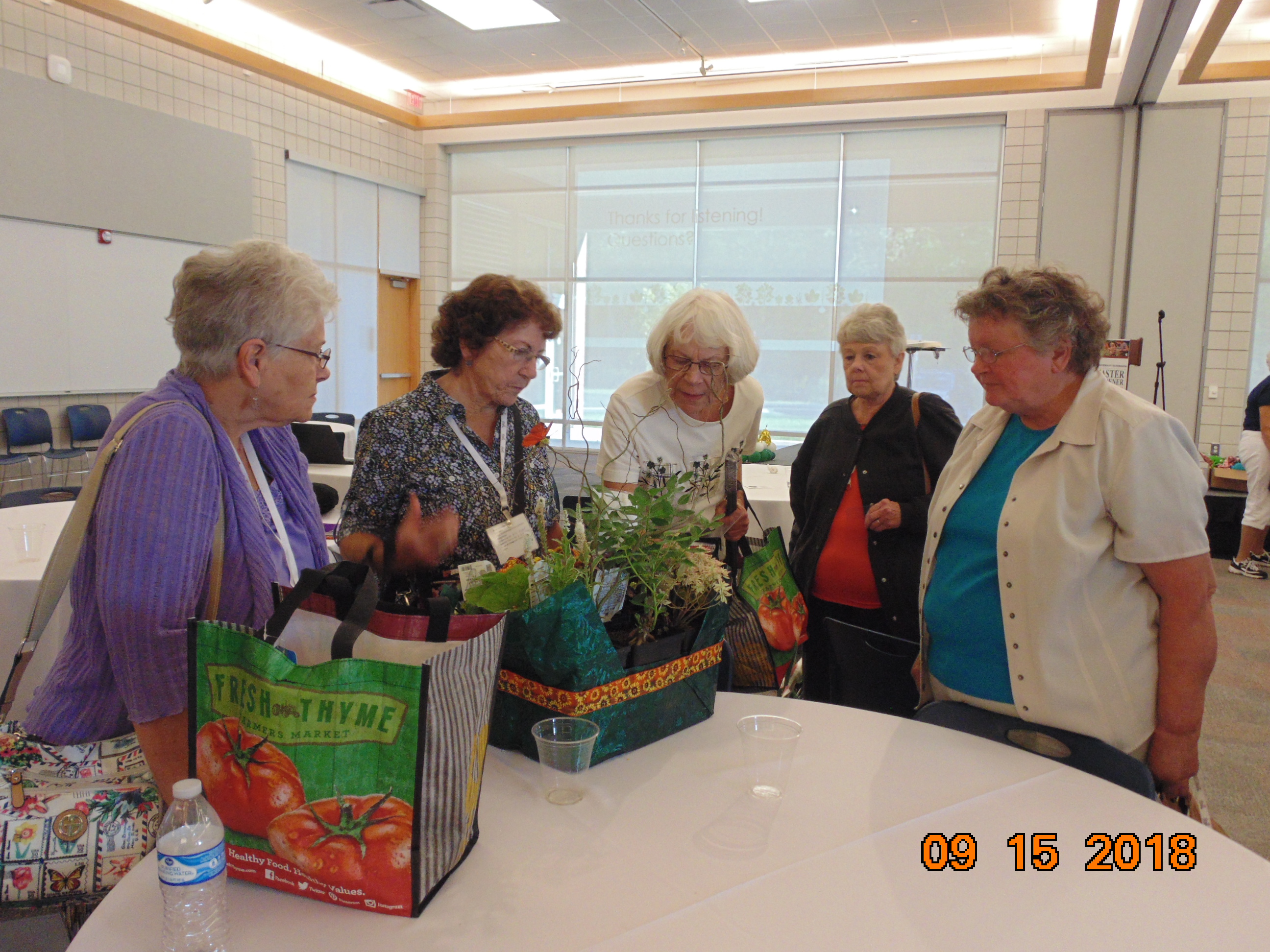
BIG PRIZE WINNER!!!! Norma Buggy
The day was long- constant hustling and bustling as we tried to shop & eat; eat and shop and still get to our classes on time. I think everyone who attended enjoyed the day. I know that I did and give it a thumbs up. We all left with a wealth of knowledge to take out into the real world to share and put into practice in our daily gardening.
For all attendees we received 2 tote bags full of goodies for just attending. At the closing event, we learned that next JUNE in Pennsylvania there will be an INTERNATIONAL MASTER GARDENER CONFERENCE!!! Stay tuned…………information to come.
Posted in Uncategorized | Leave a Comment »
I’m not the best writer but here’s a short post with some photos:
I’ve made major changes to my garden this year. Much hard work has gone into it. But I used some advice I gave on a presentation to help me manage all the work. Now that I’m 70, it’s harder to do a full day.
First off what do I benefit from gardening as a senior? It’s low impact exercise and I’m not sitting idle around the house. All that digging and moving things improves my strength and dexterity. I get the benefit of all that fresh air and sunshine. It takes some focusing and keeps the mind sharp. It also requires you to increase your attention span on one area at a time. Although, I often find myself jumping from project to pulling weeds. Gardening has always help me with stress. It lowers the level of stress that I have. Mainly because it gets my mind focused on something else rather than what may be stressing me out.
I’m sure all this exercise reduces the risk of heart attack and stroke. However, don’t stay in the heat too long.
Now to begin with a few stretching exercises. Bending, lunging, stretching out my side will all help avoid injury during my digging. Next, I get out the tools. They include my favorite shovel and a wagon (or wheel barrel). I use these every time I plan to do a project. The wagon carries the heavy plants, soil and fertilizer. It saves trips back and forth into the garage as well. 
I’ve also prepared the garden for low maintenance. I’ve replaced many of my jumbled up beds full of various plants into massed plantings of single varieties. I take a morning walk through the garden and “pull as I go” the weeds that pop up overnight. After that, I begin any changes needed. Early morning is best to do a large project. The sun is not out yet, there’s shade, and it’s cool. I’ve been planting shrubs, such as hydrangeas and roses. They seem to requires less maintenance.
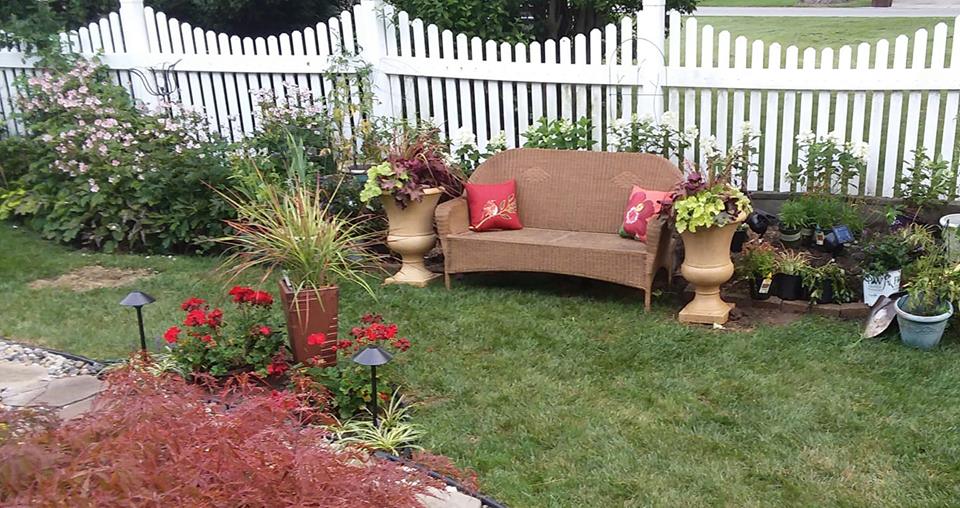
I’ve adjusted my type of gardening as well. I vertical garden, making it easier to reach, water, and there are few weeds. Raised beds also help with the bending. As so many of you have visited my garden, you will remember the multiple seating areas I’ve placed around the yard. It sure helps for a quick break. 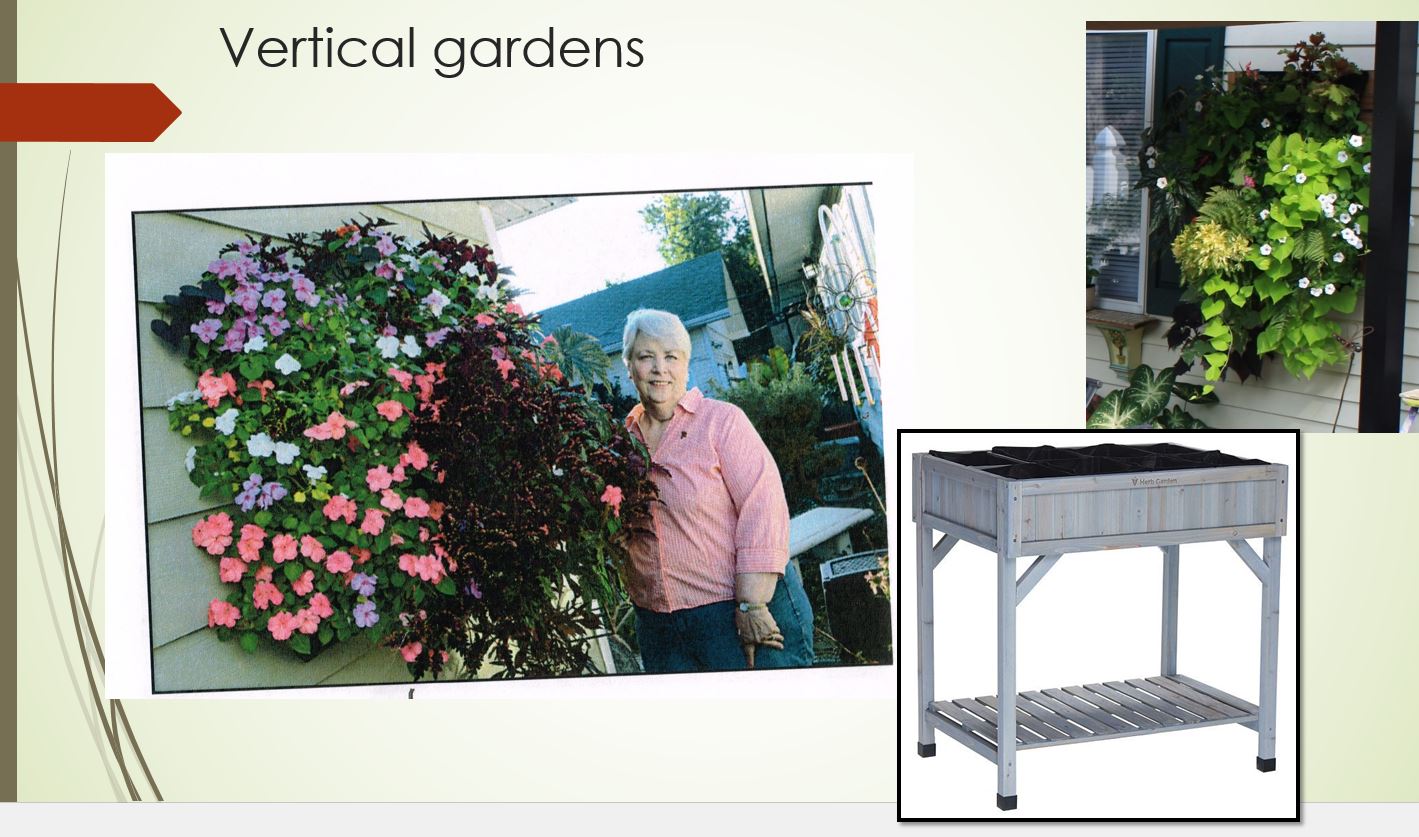
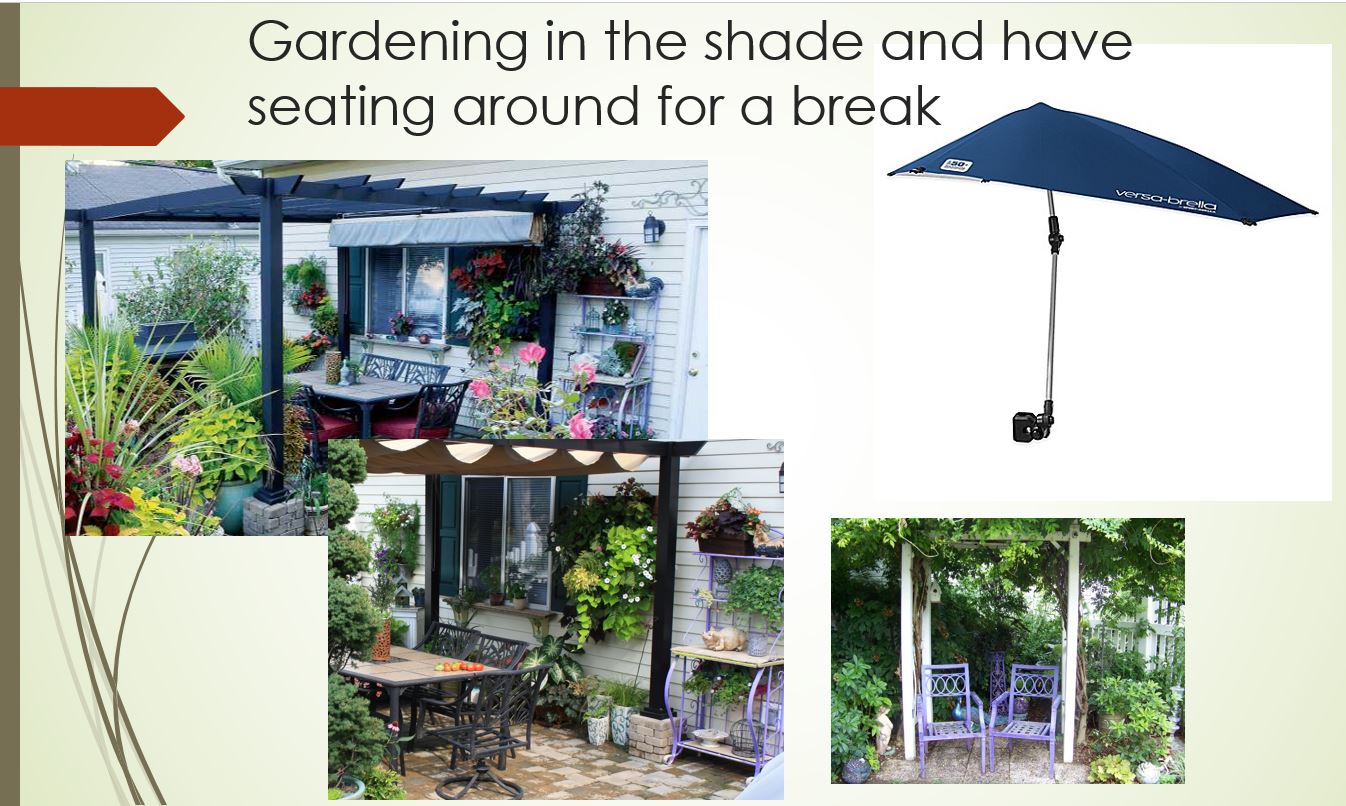
I have 3 watering areas right now, but hope to do some drip irrigation next year. Each of the hoses are non kinking, and are on an automatic hose reel. It runs with the water pressure. I’m not cranking that hose; which saves my back. I try to keep plants within my reach for watering. Self watering containers also help.

Adding walkways to move along also help. You should try and avoid tripping hazards. However, my walkways don’t follow that tip. My problem is I love aesthetics, it’s the designer in me, So you can see there are a few tripping hazards in my pathways.
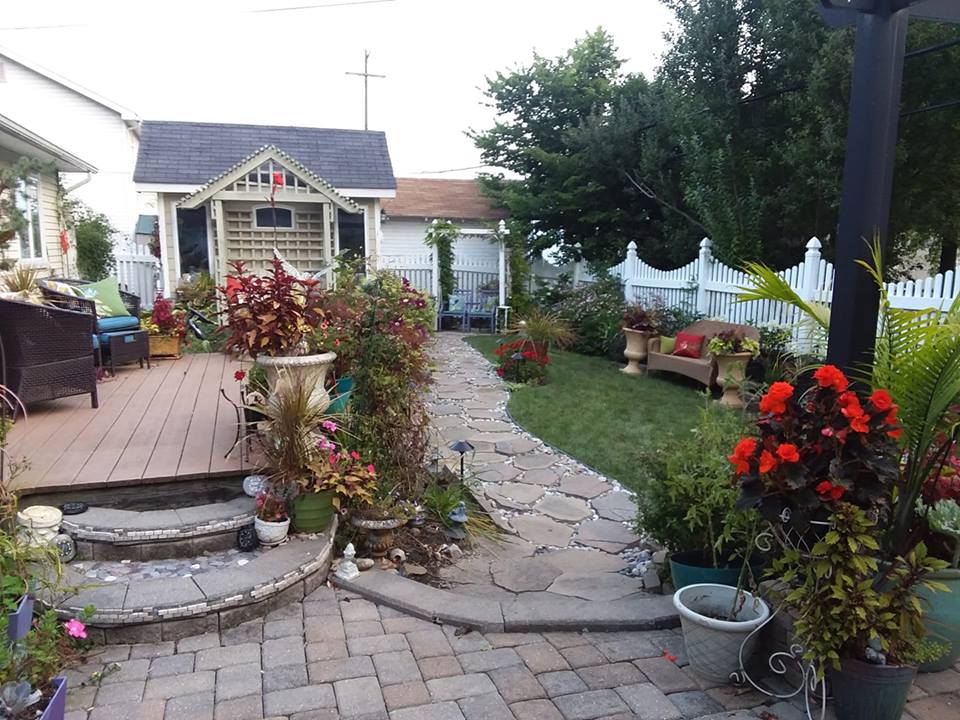
That’s not the only advice I don’t follow. Gloves should be worn. Although often, I like to just get my hands in that soil. I’m more concerned with a good shoe to wear. They should be comfortable and protective.
After all this, take a great break and enjoy the fruits of your labor.
Posted in Uncategorized | 3 Comments »
Photos and Story by Gail K.
Hello- Let’s go back to Paul’s native garden and take a closer look at the plants he has in the garden.
As always, Paul has information available for people to take for referencing to start their own native garden…………
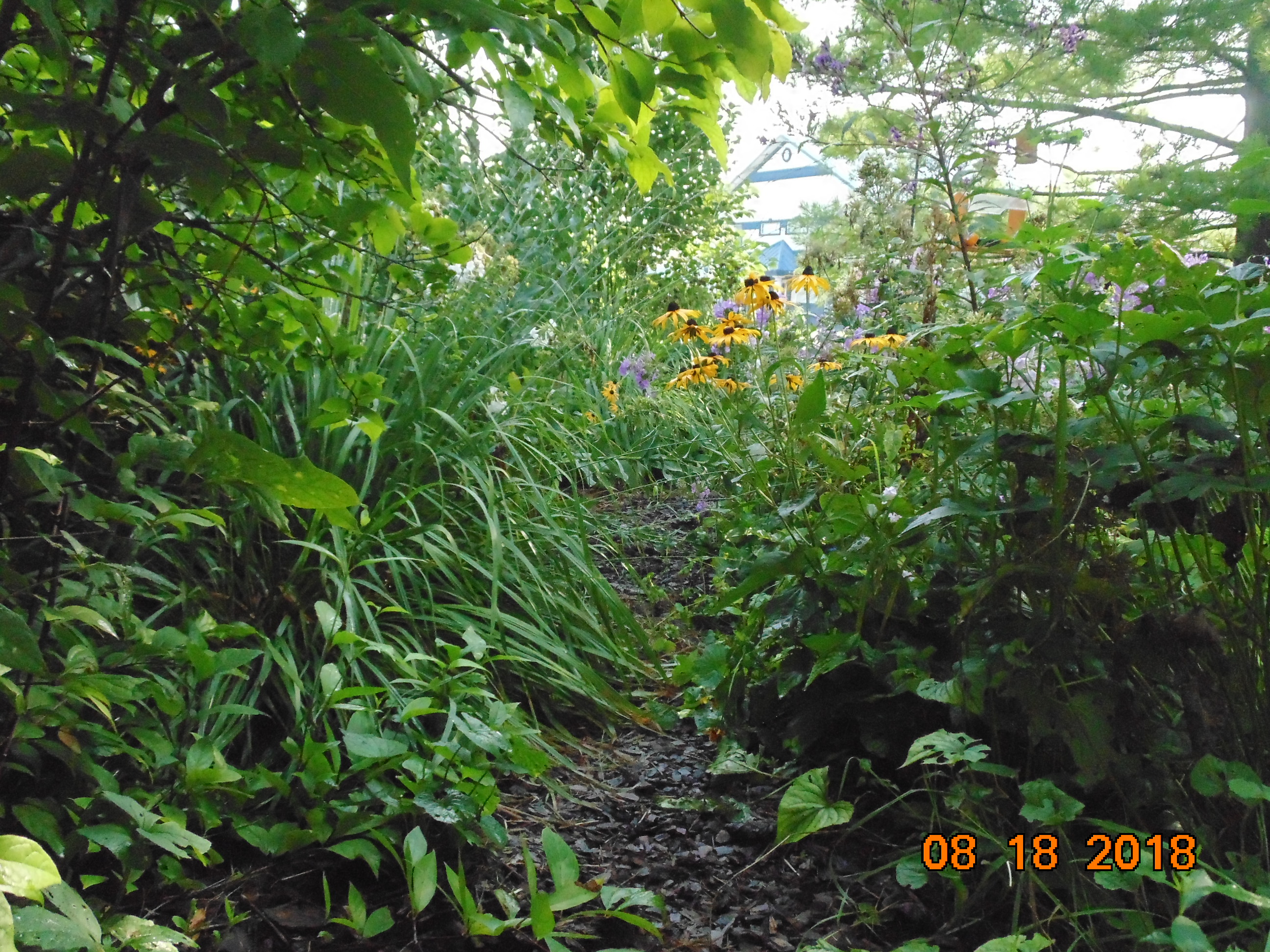
Ready?? follow me—–Paul’s garden offers many pathways- let’s travel down this one
and see where it takes us.
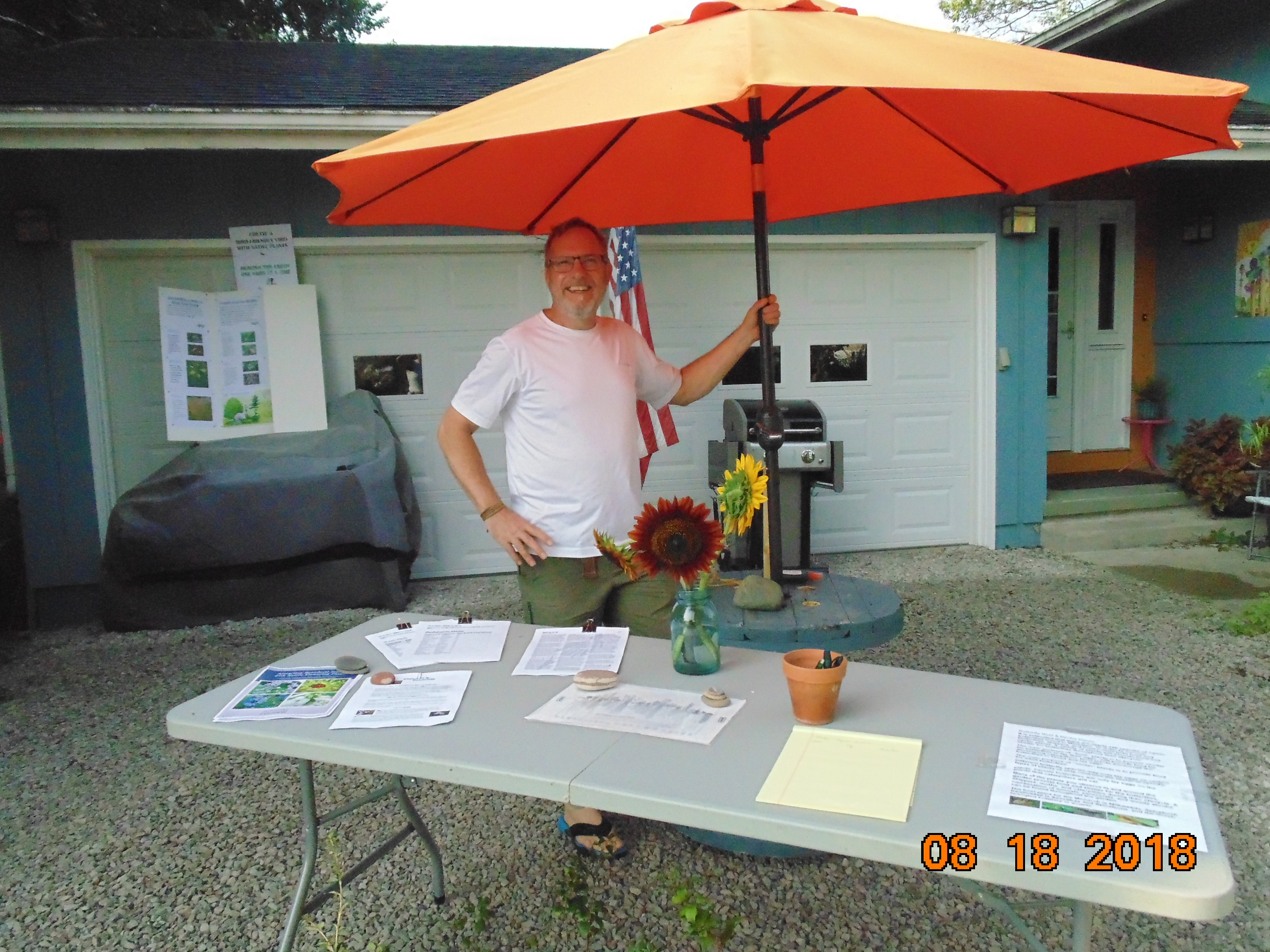
Paul Welcomes Gardners
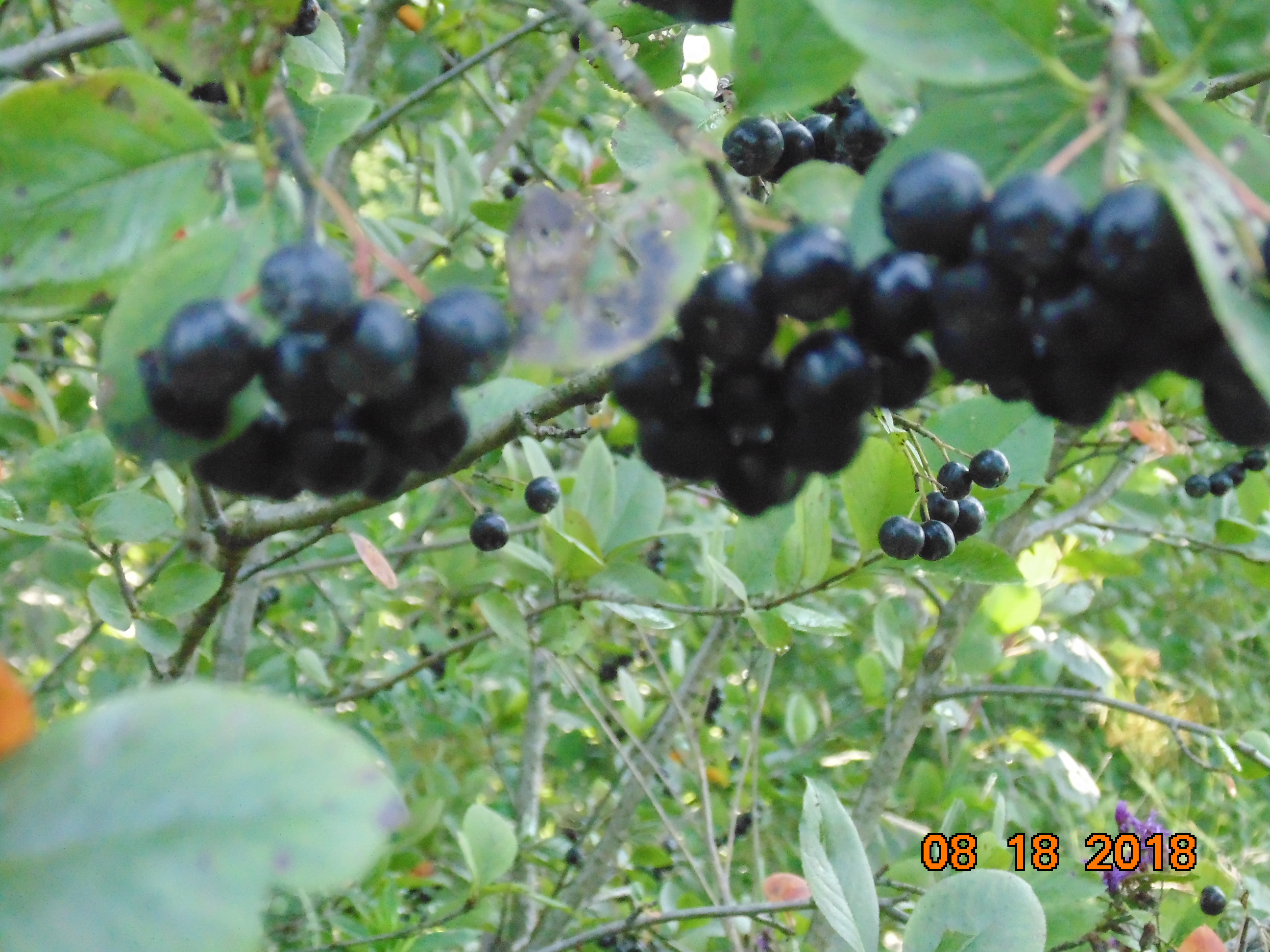
Chokeberry
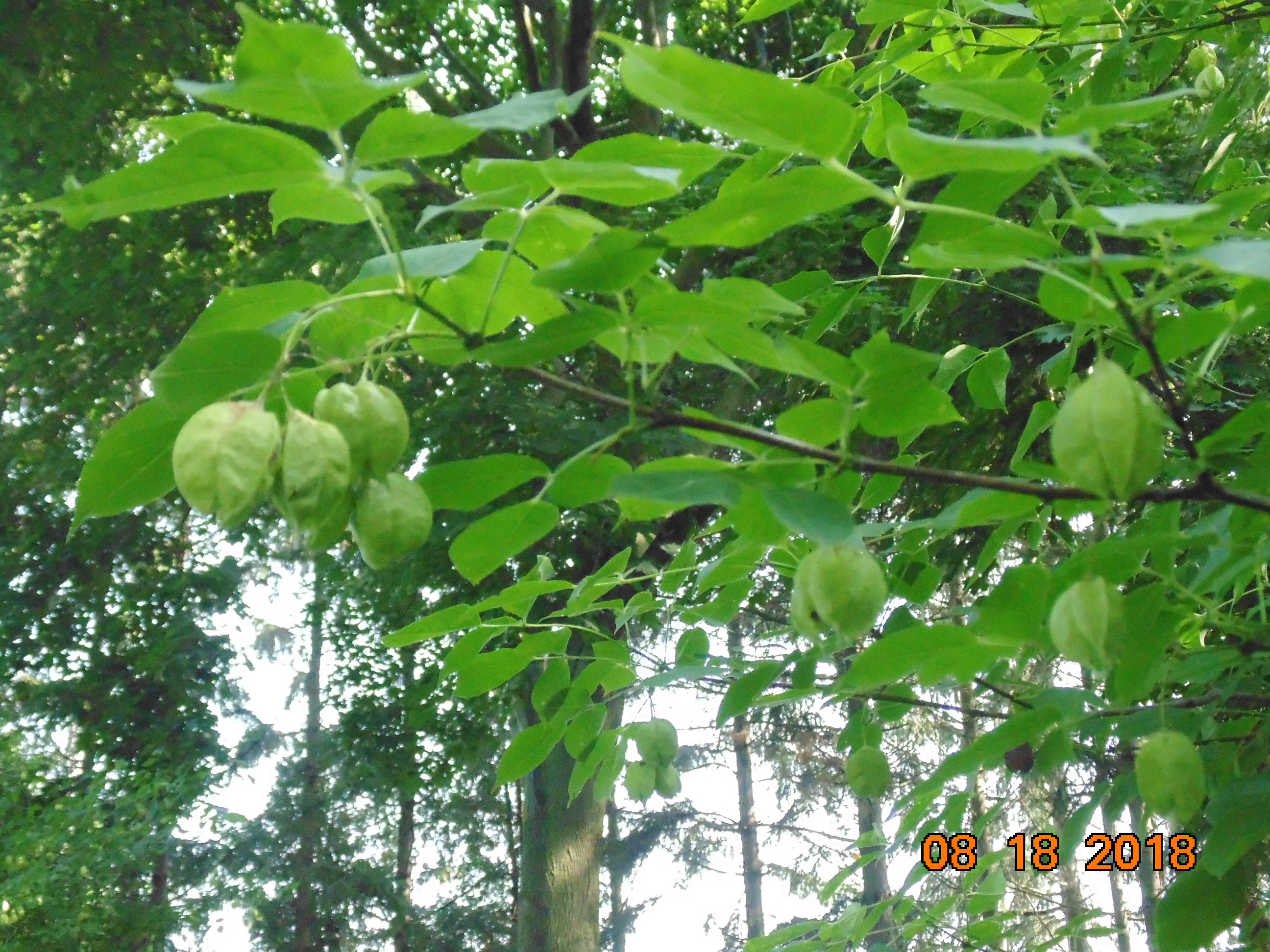
Seed pods of the Bladder nut tree. The pods make a rattling noise in the wind.
A mass planting of Ergrostis spectabilil – Purple love grass. Paul uses many native grasses in his landscape. He does use non native plants as well. Diversity is a key to design in a Garden.
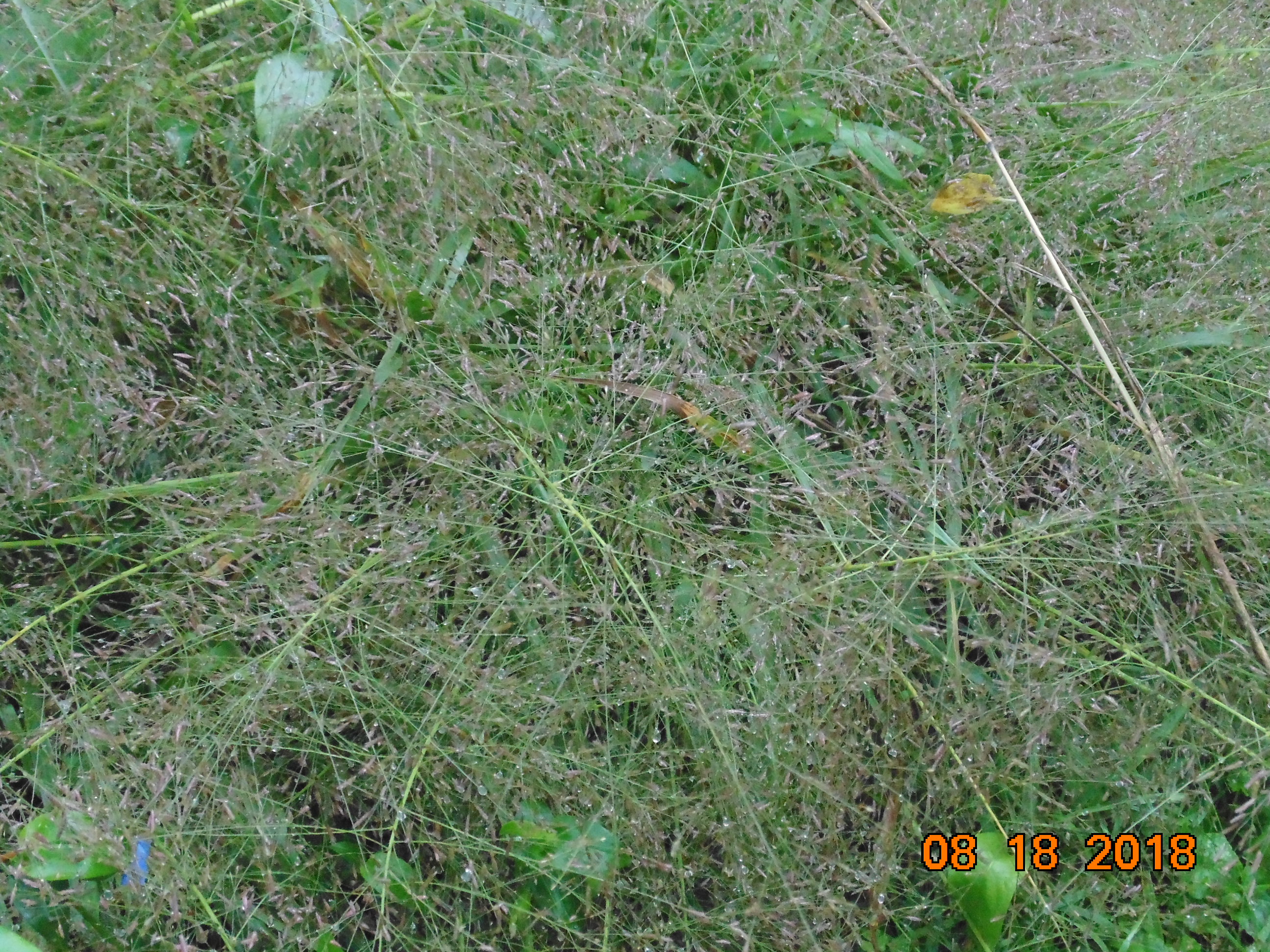
Ergrostis spectabilis – Purple love grass
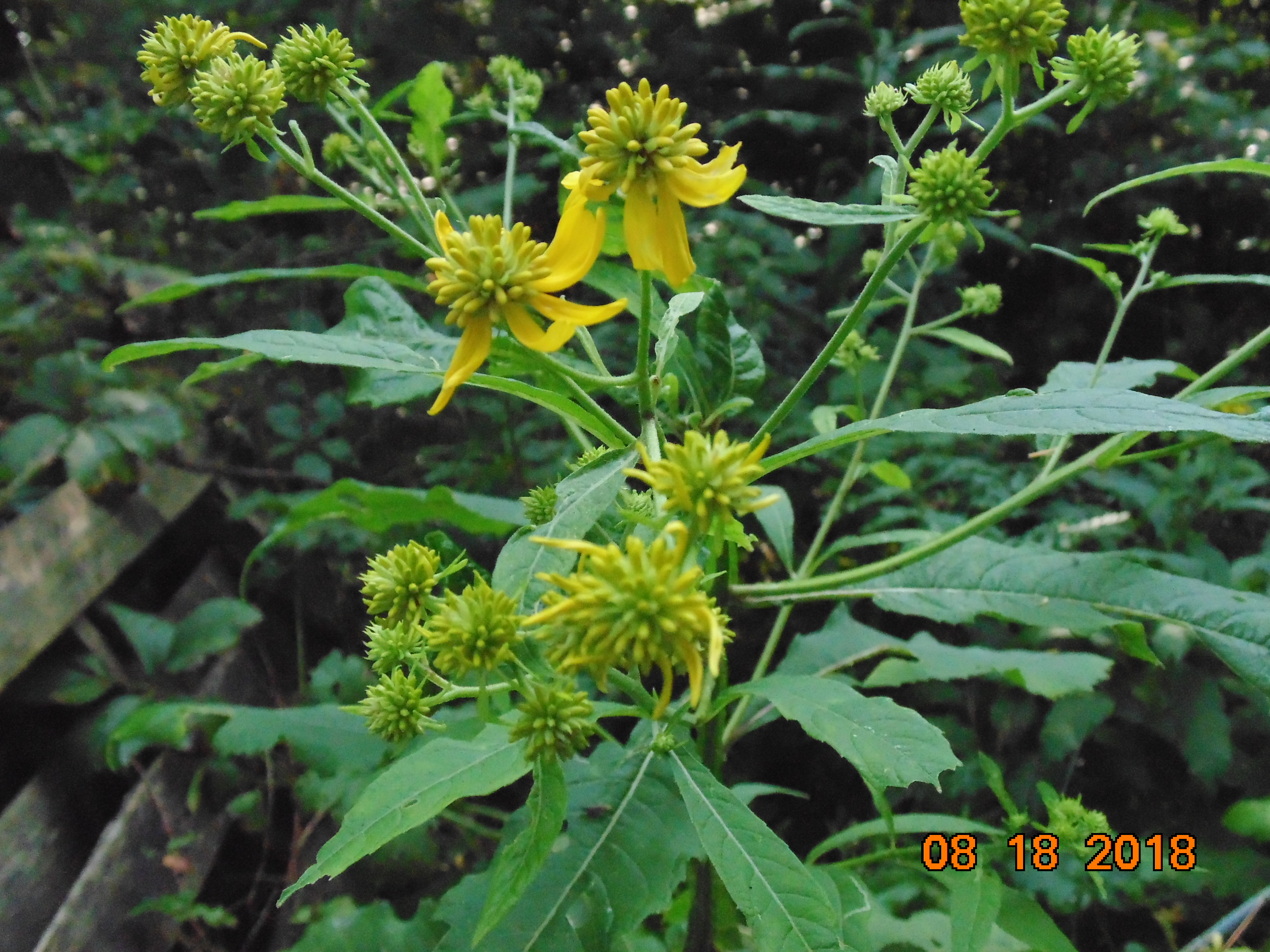
Verbesina alterifolia-WINGSTEM
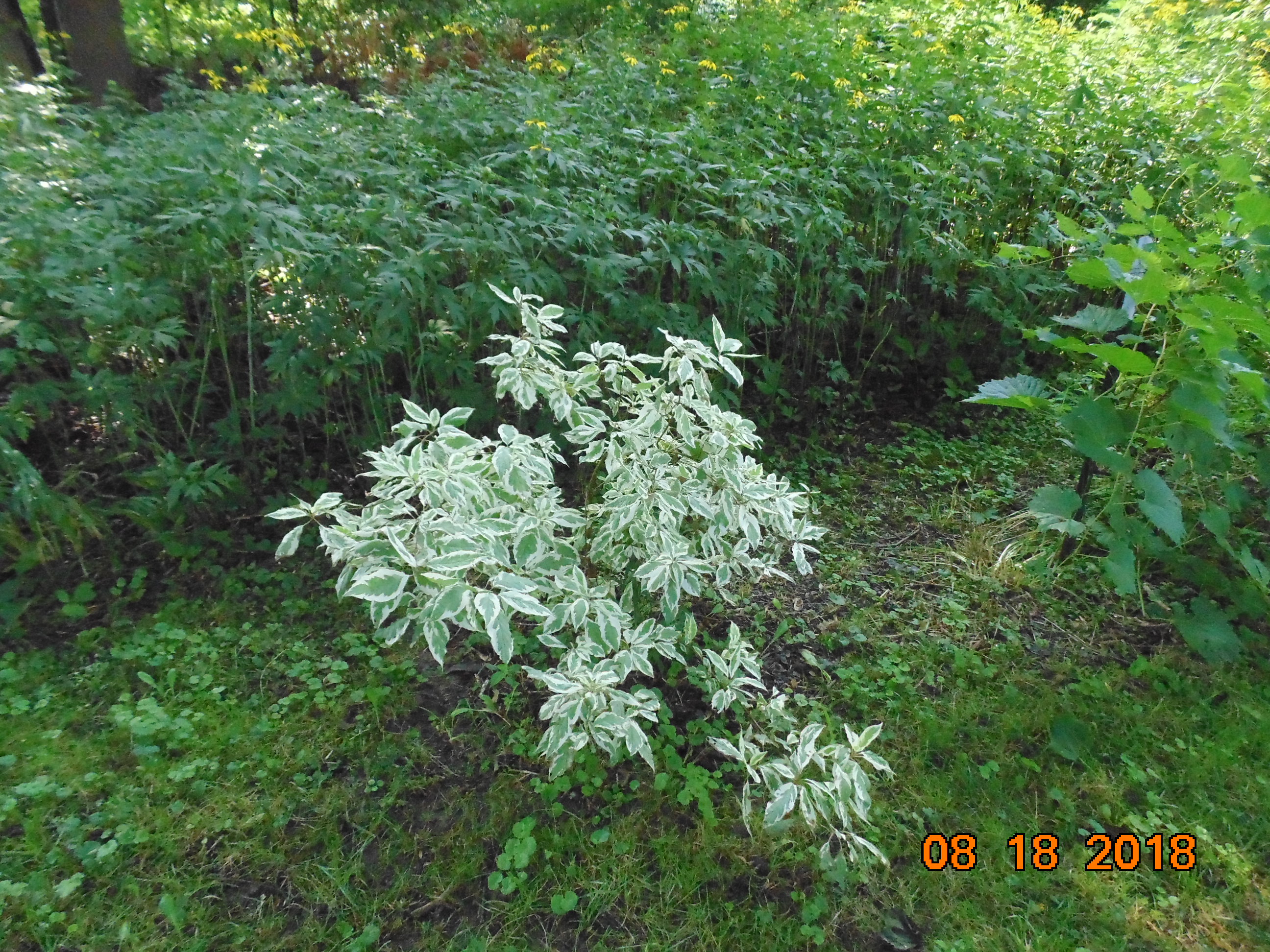
Paul wasn’t sure-this may be a Wolfeye Dogwood. Remember when we toured the Taylor Gardens I think this was a plant we saw there. It is stunning especially
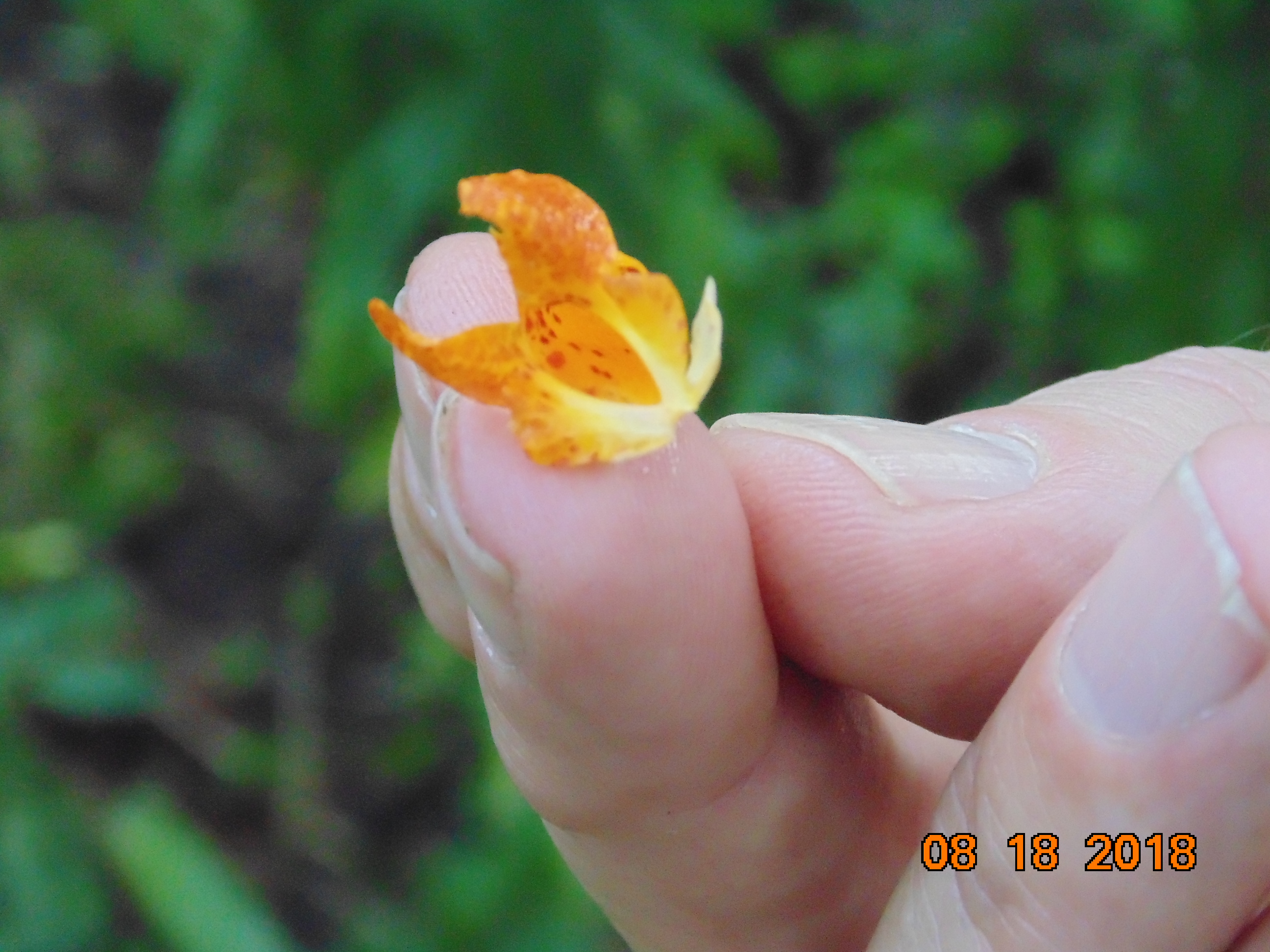
This is Capensis-jewelweed a native impatiens, and is used to help rid the skin of a poison ivy rash.
Throughout the garden are artistic accents which add structure:
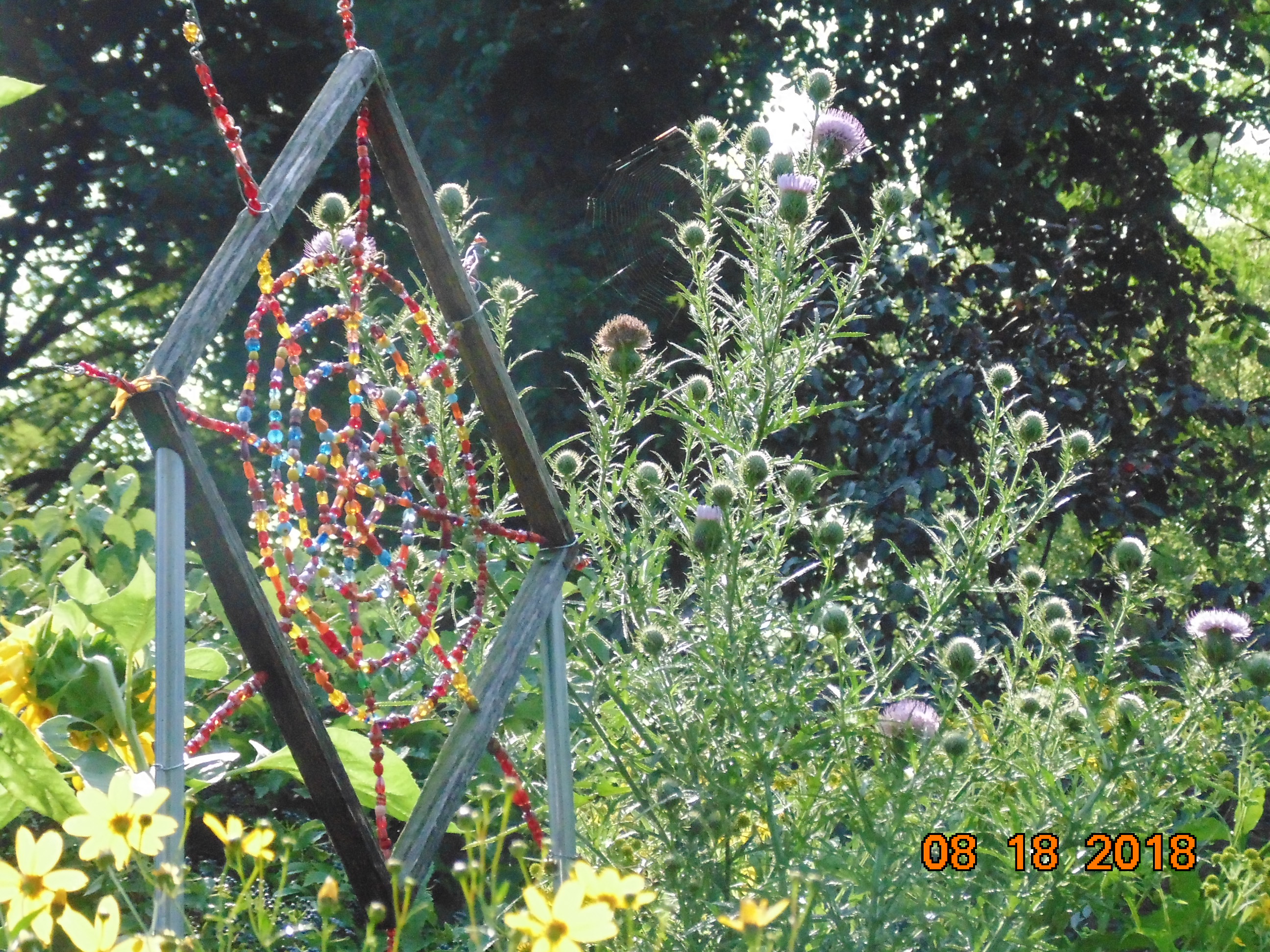
As we move on, did you note the thistle that is growing next to the
spider web?? Paul says the finches love that plant. Not what we typically
plant in our gardens……….
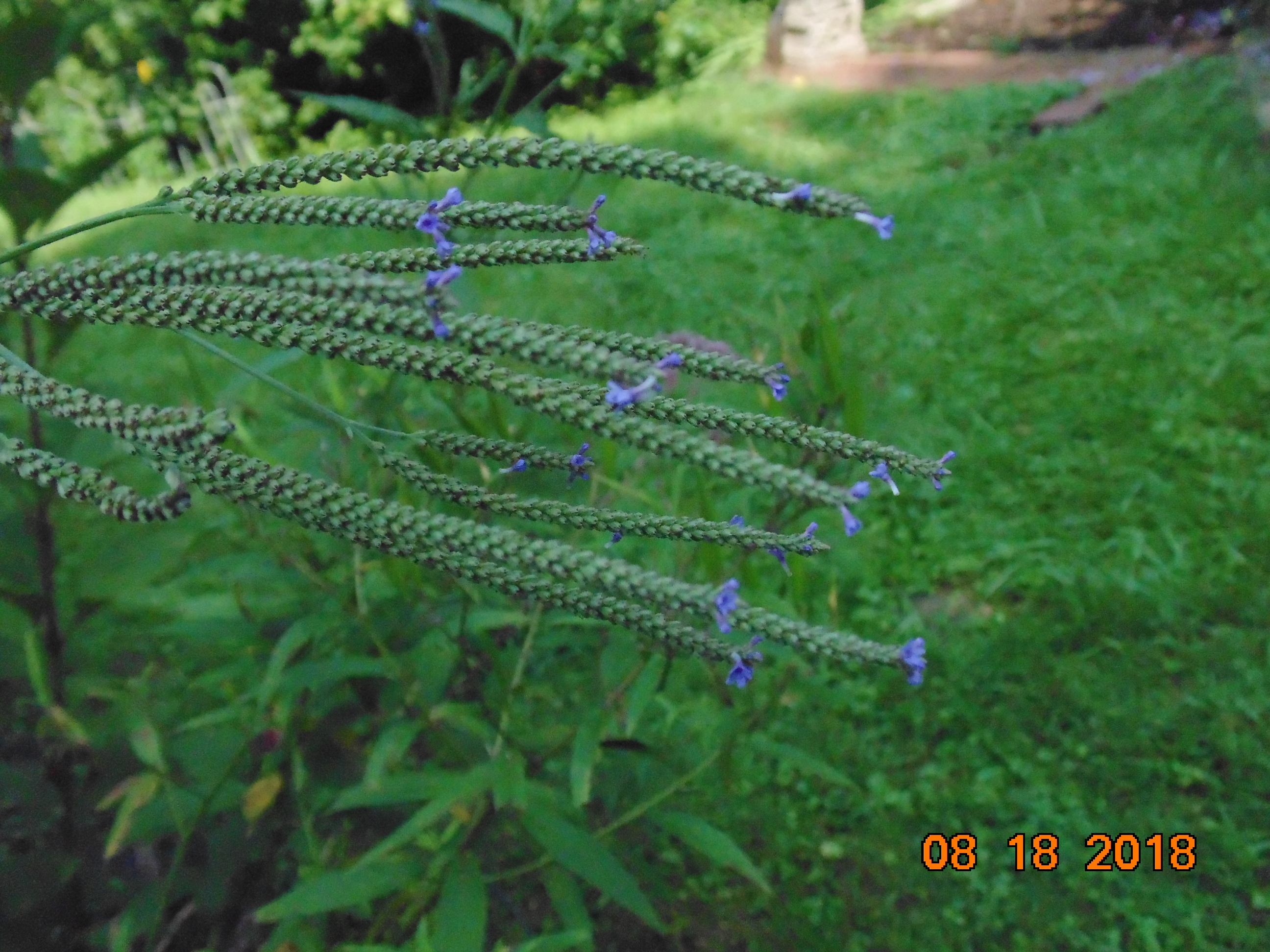
blue vervain
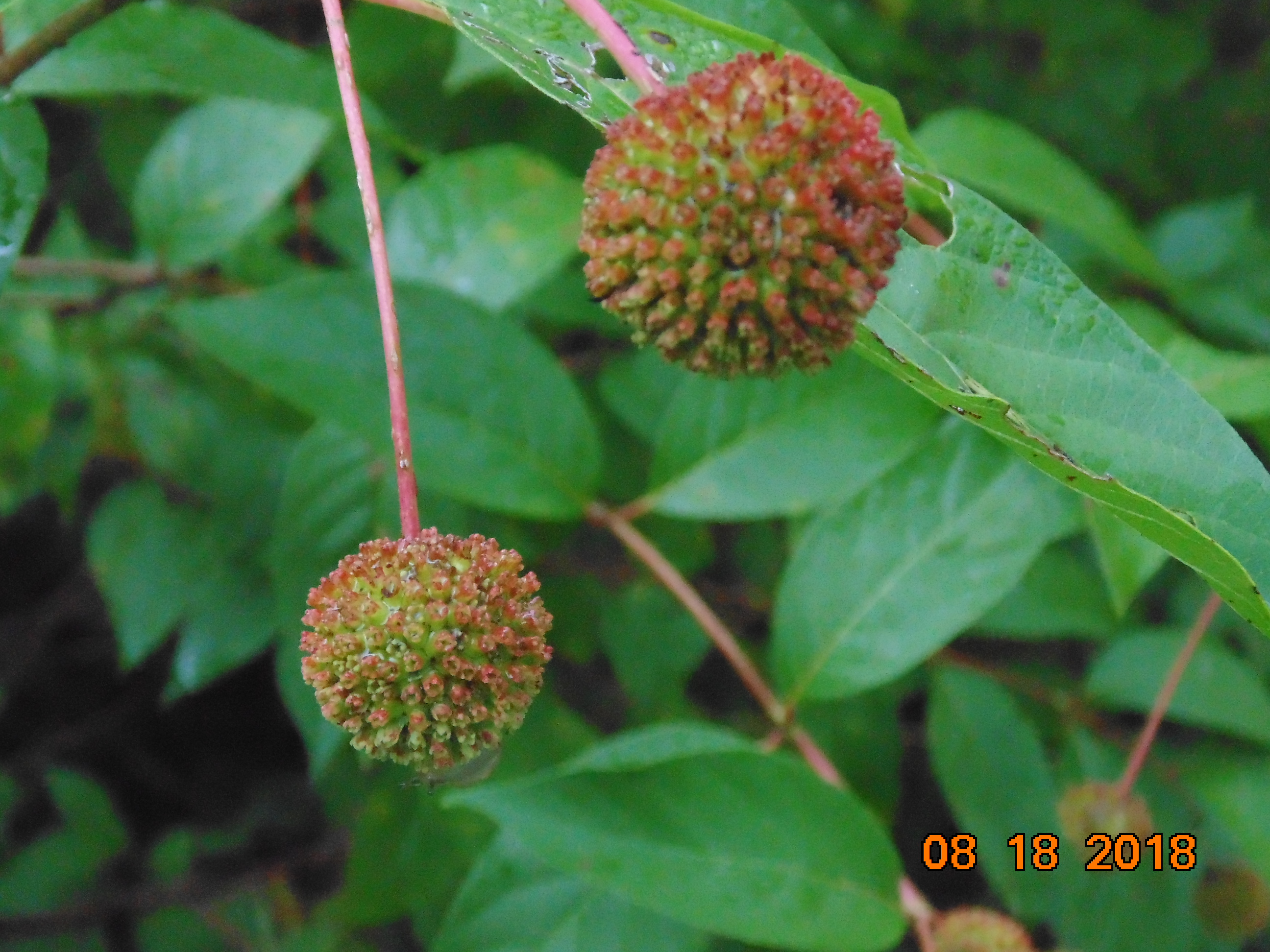
pods from cephalanthus occidentalis (Buttonbush)
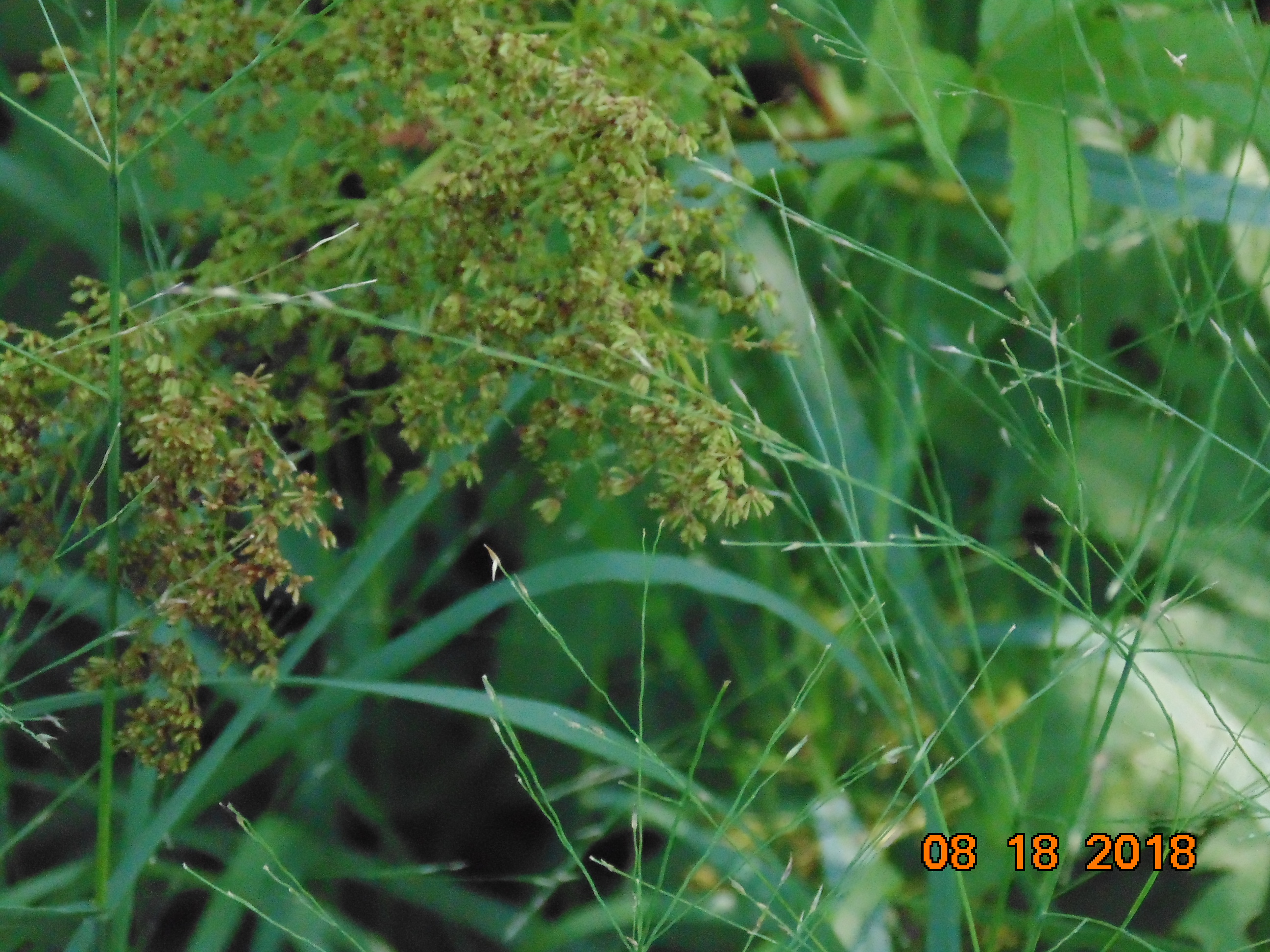
tall meadow rue with pancium virgatum (switch grass)
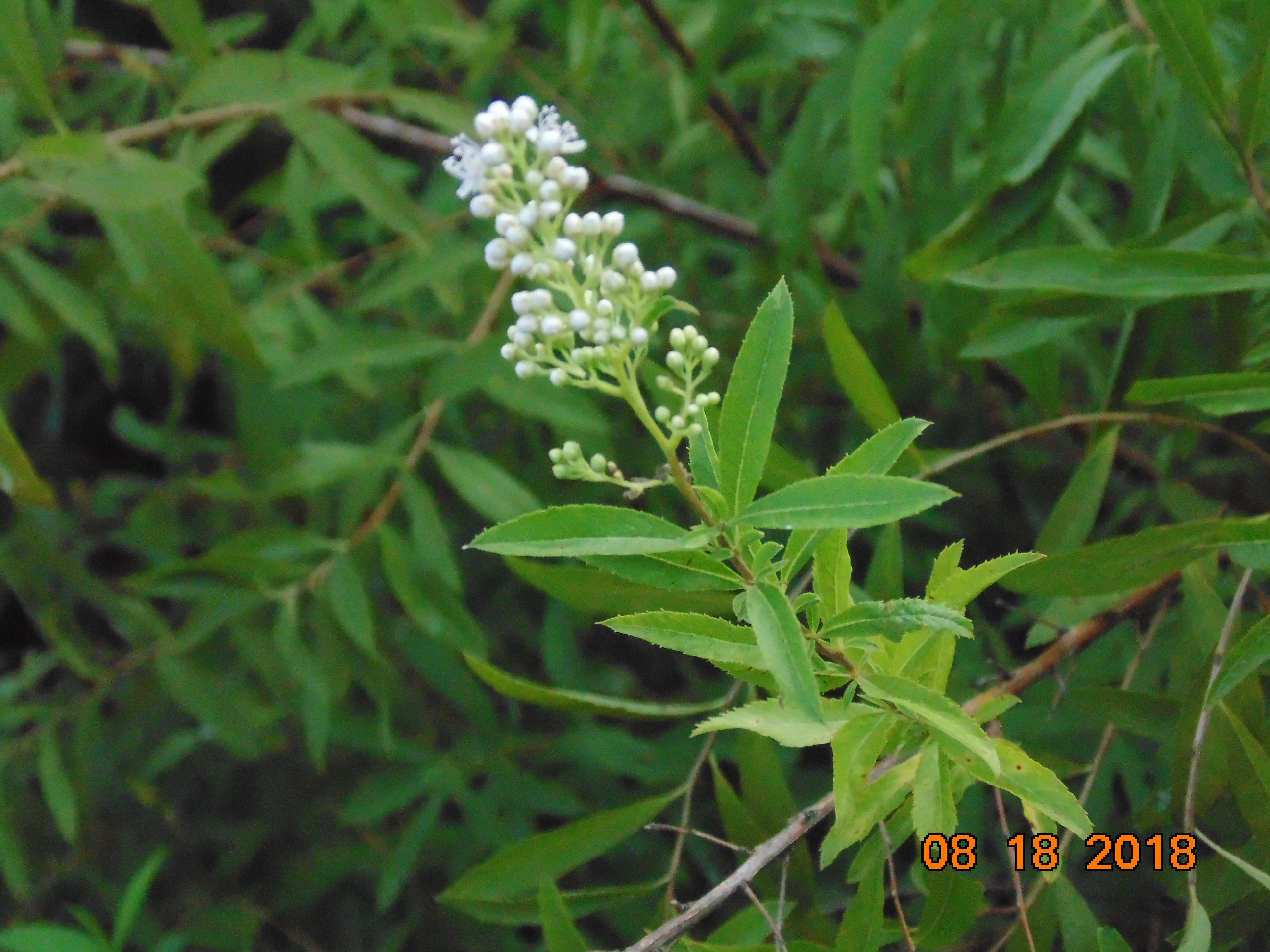
white meadow rue
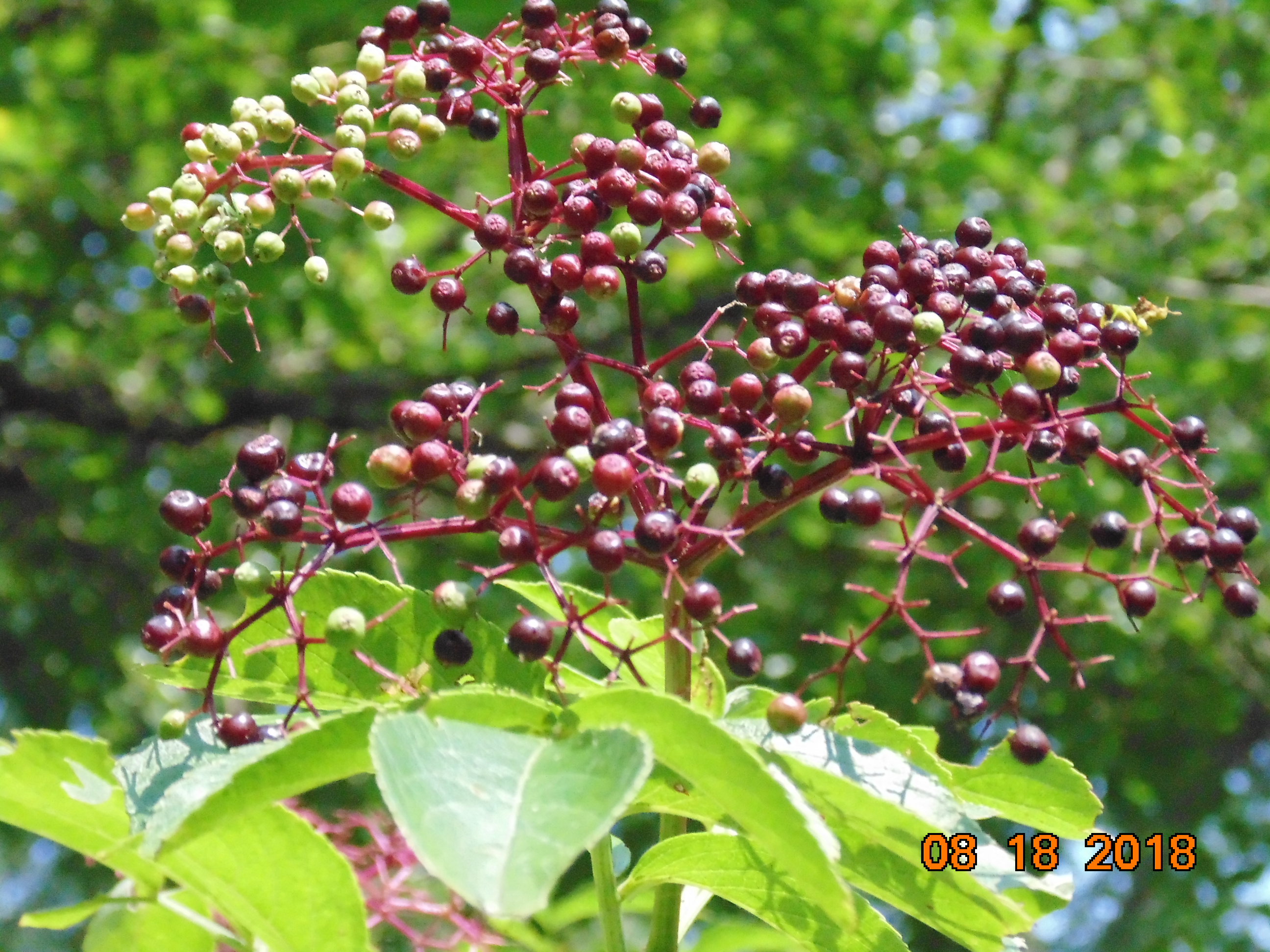
elderberry

clematis virginiana Virgin’s Bower
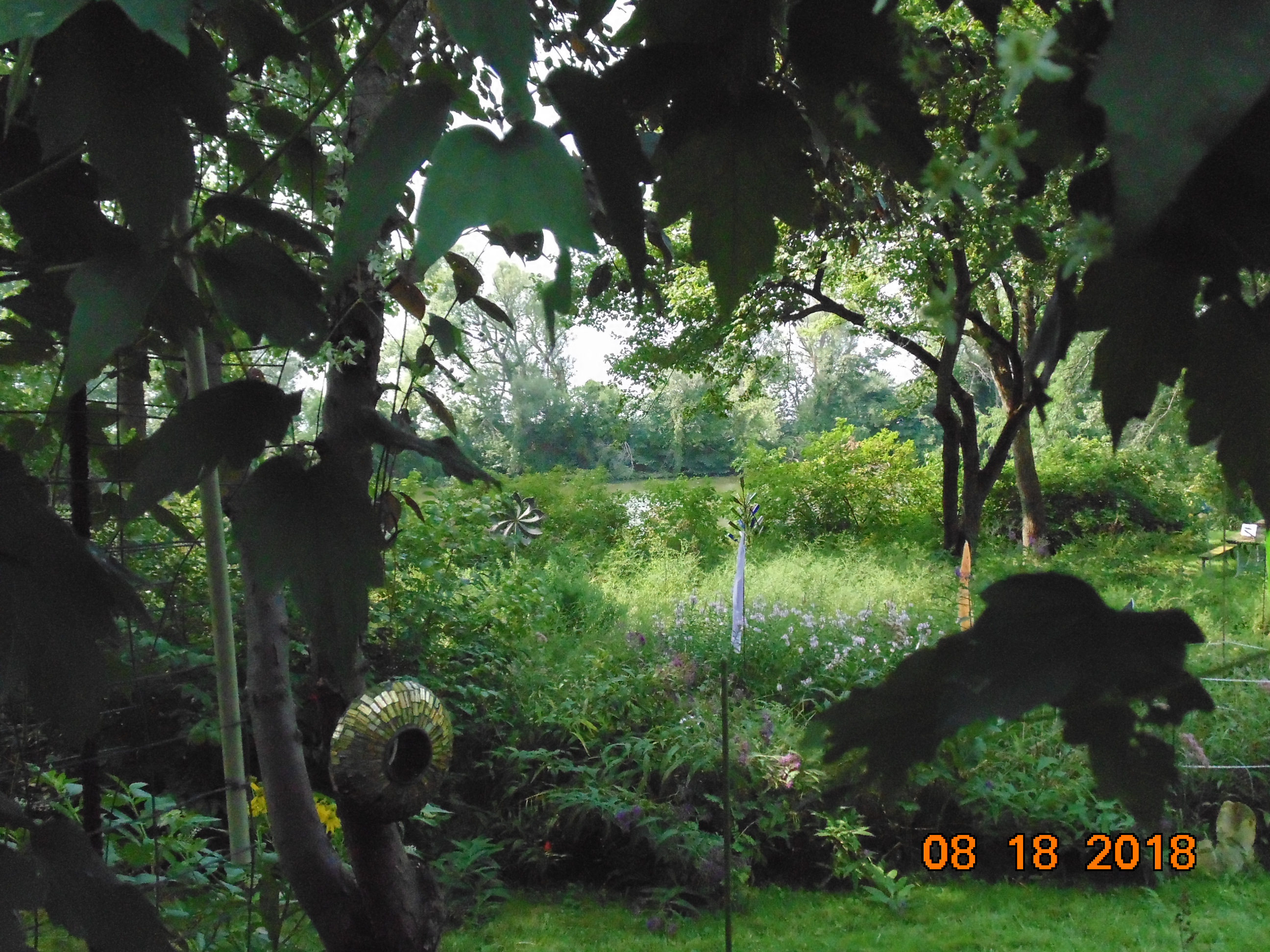
What do you see—-It changes as you change from where you are viewing–
another attribute of an interesting garden…………
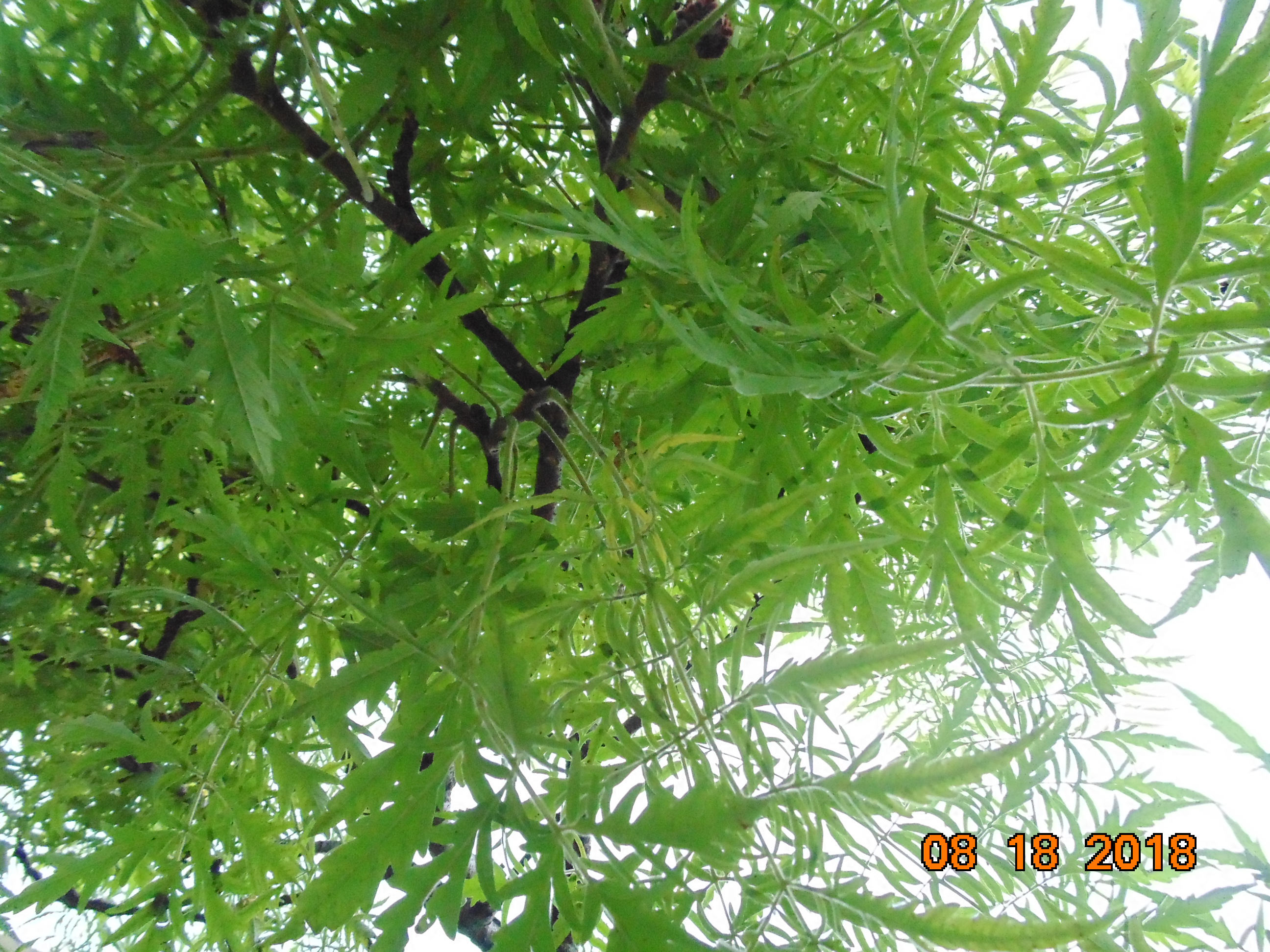
tiger eye Sumac

culvers root……….white or purple
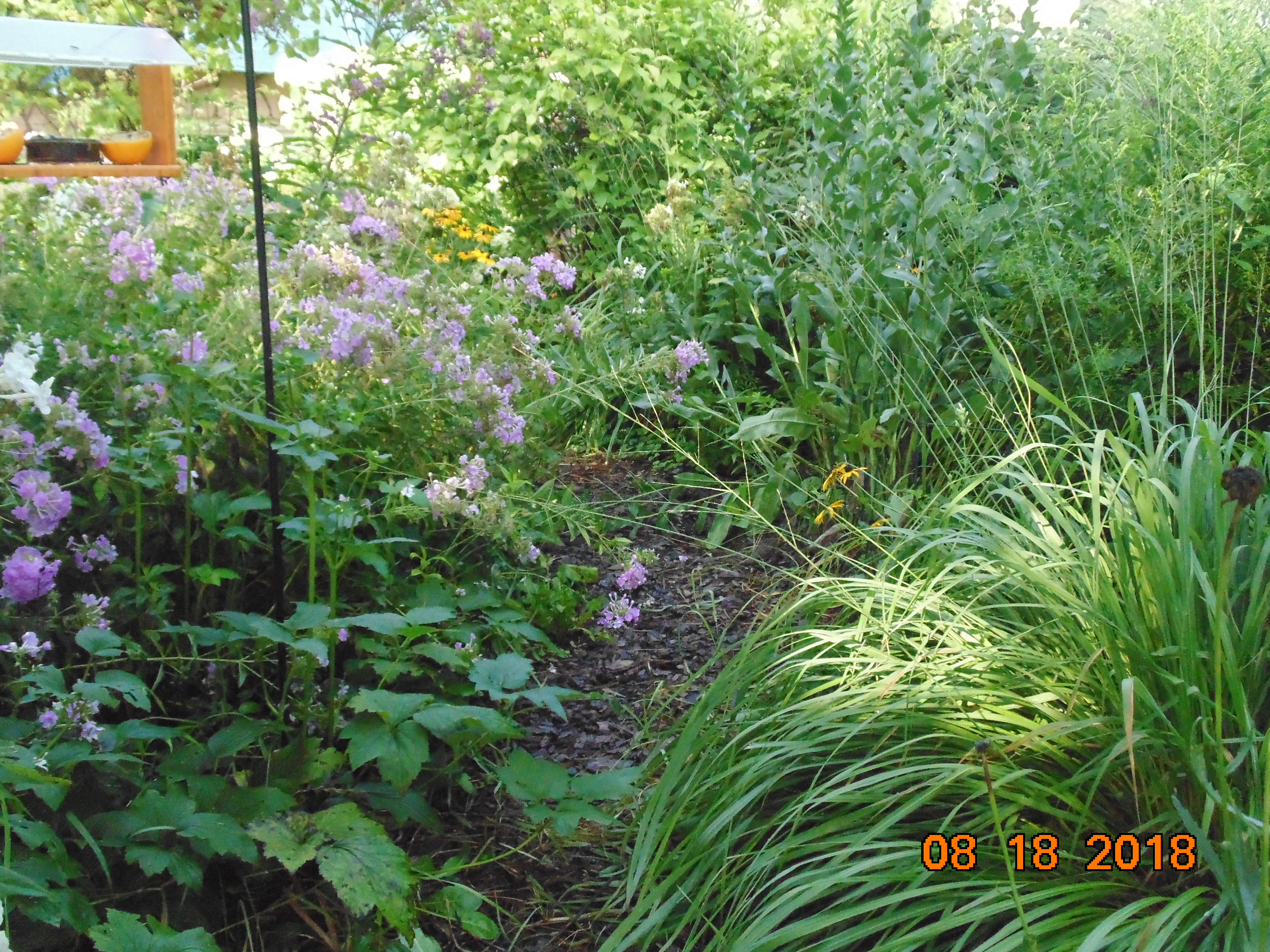
Desmodium canadense-show Tick Trefoil

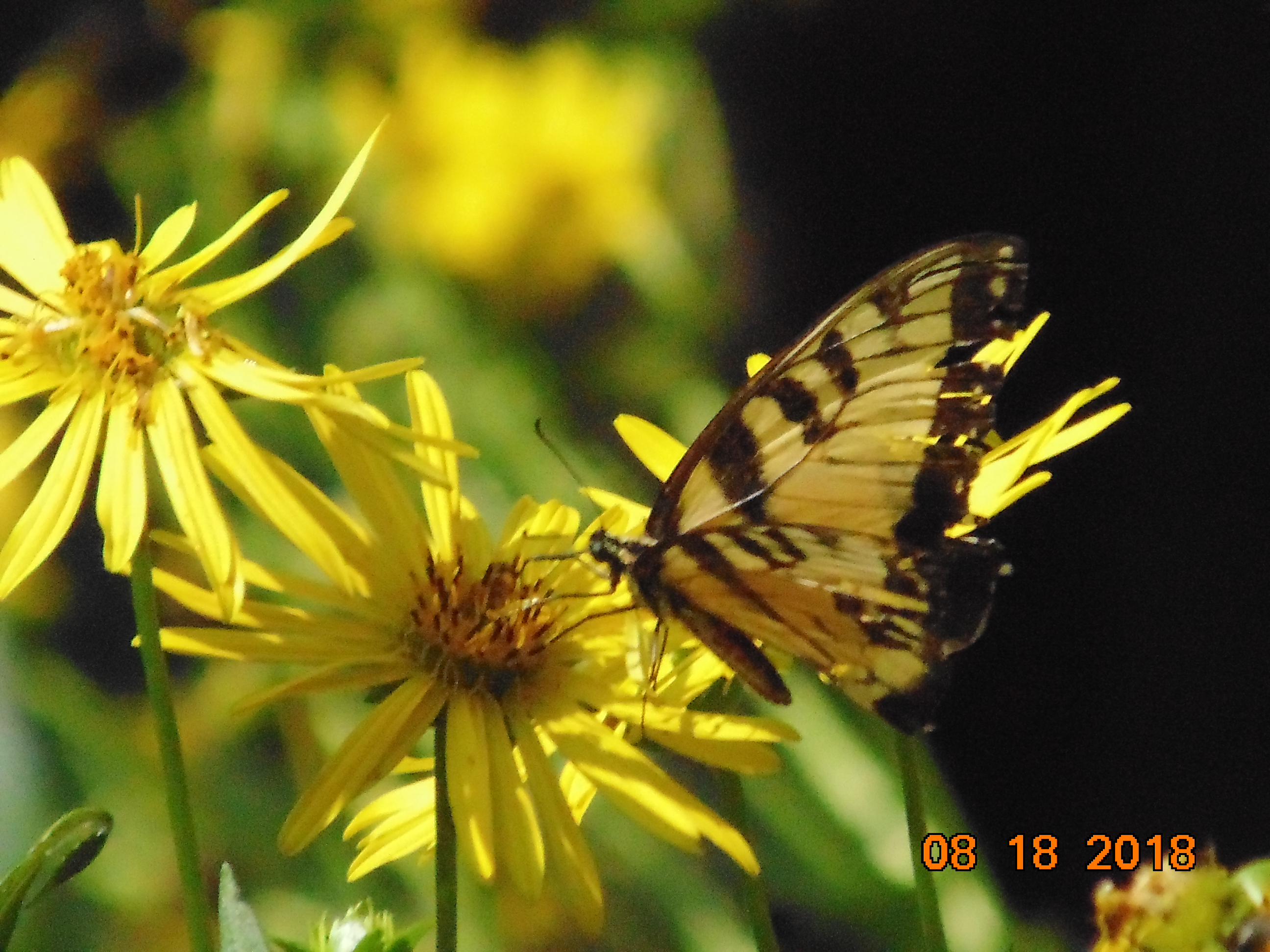
Yellow Swallowtail on Prairie Dock
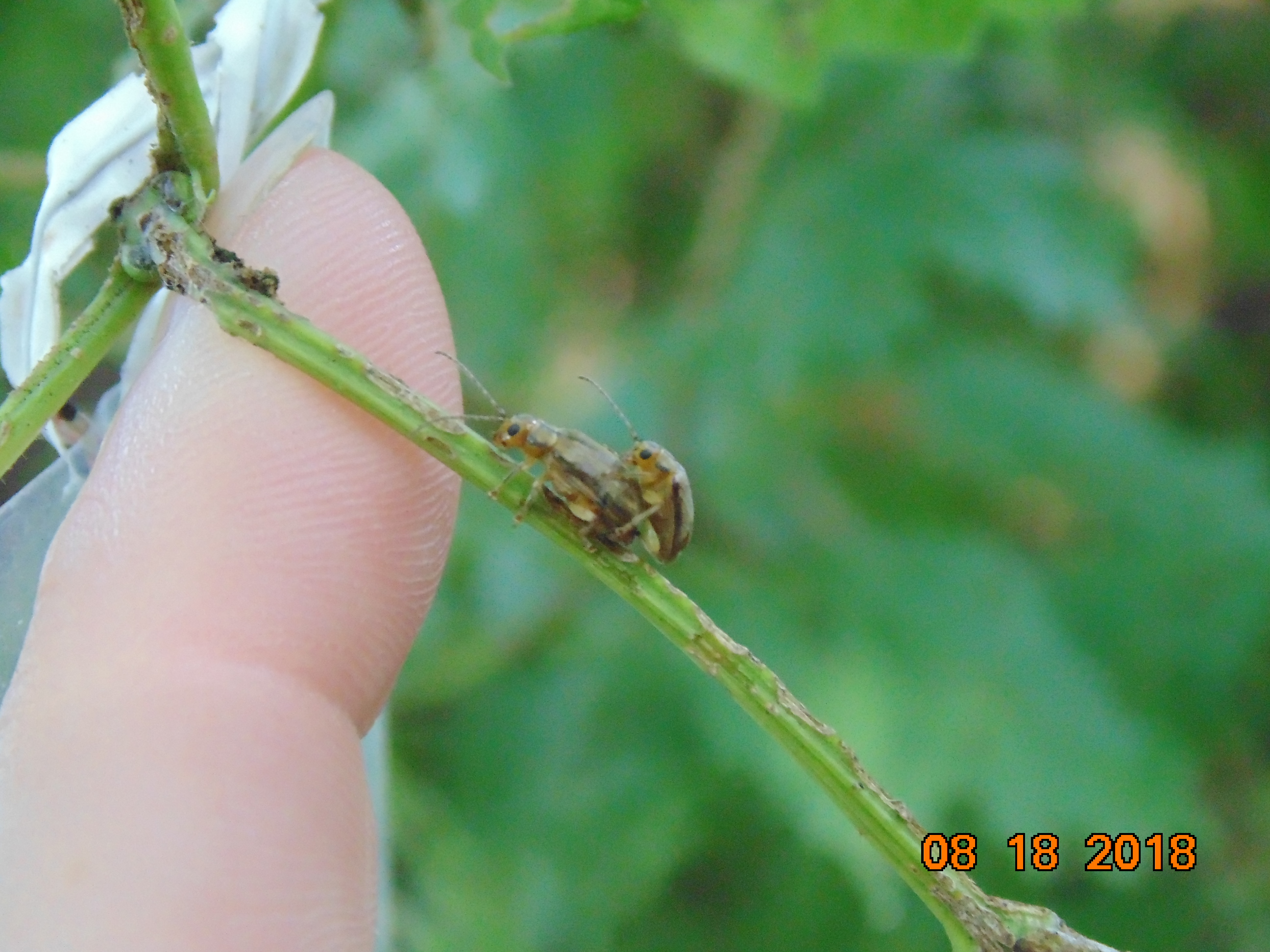
Ya just never know what is going on in the garden around you. Those are viburnum leaf beetles-invasive pests that cause a lot of damage. Look at the leaves of this maple leaf viburnum.
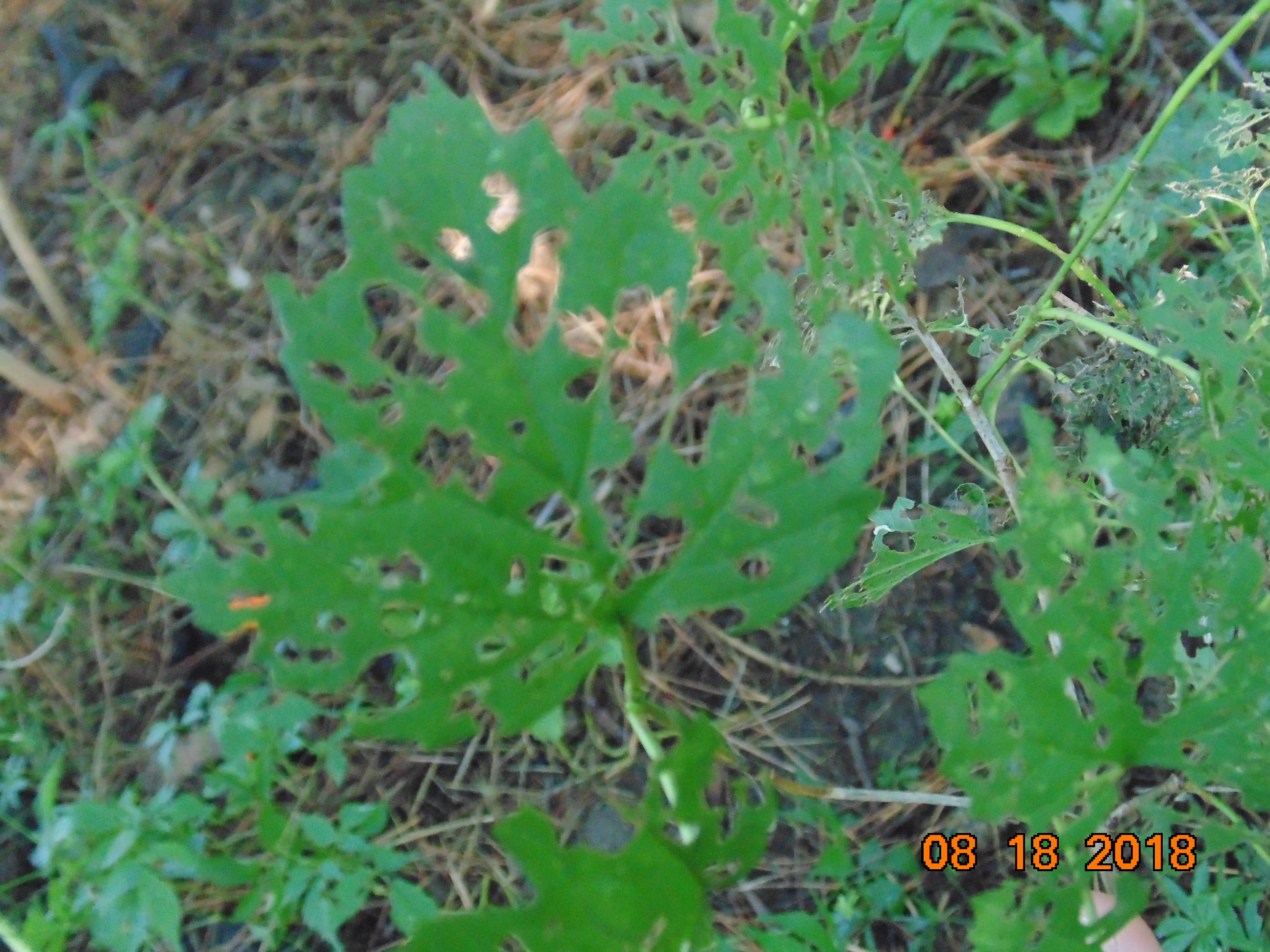
Example of the damage
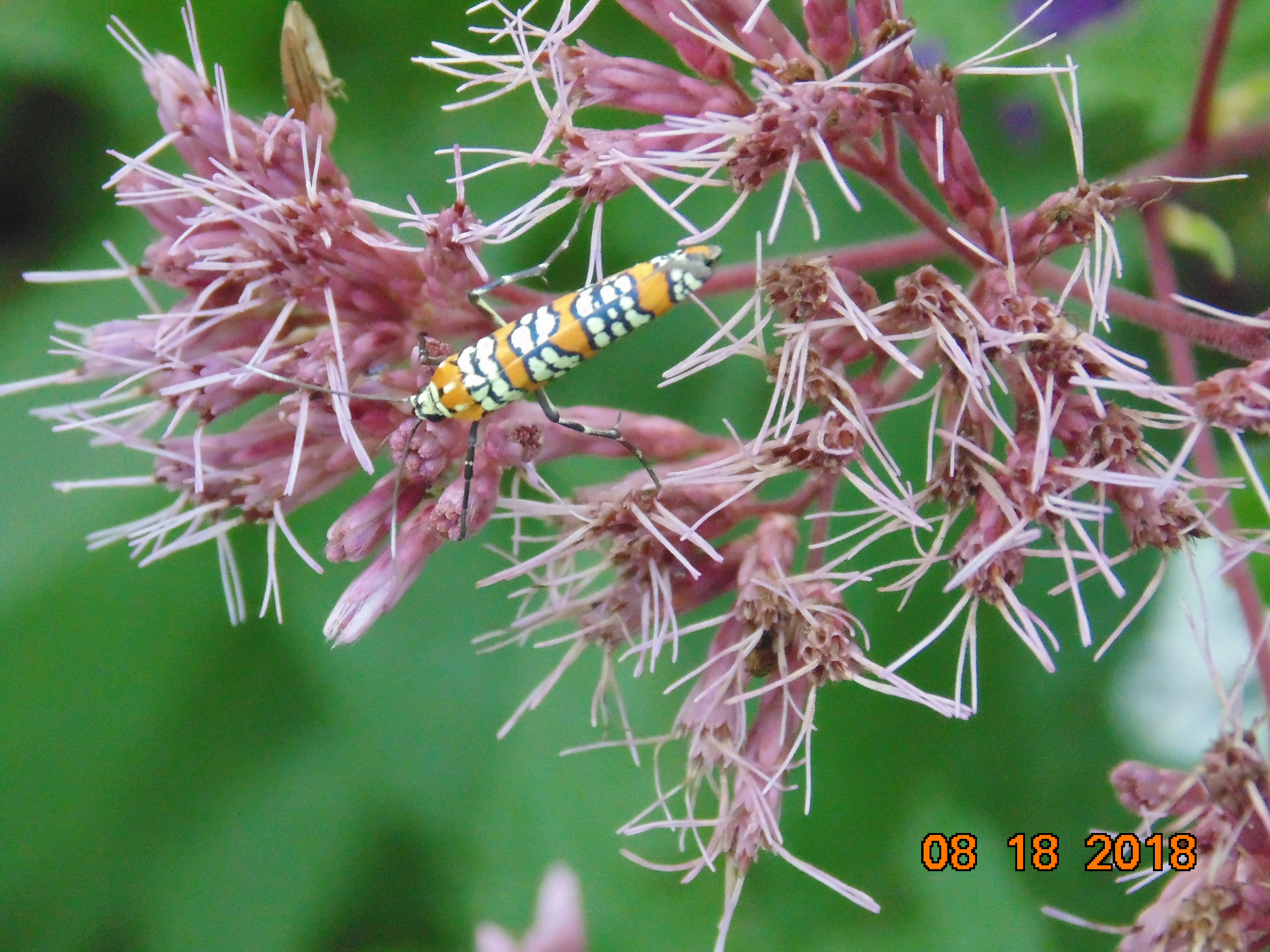
Has anyone figured out what this is? Seems we all have them in our yards
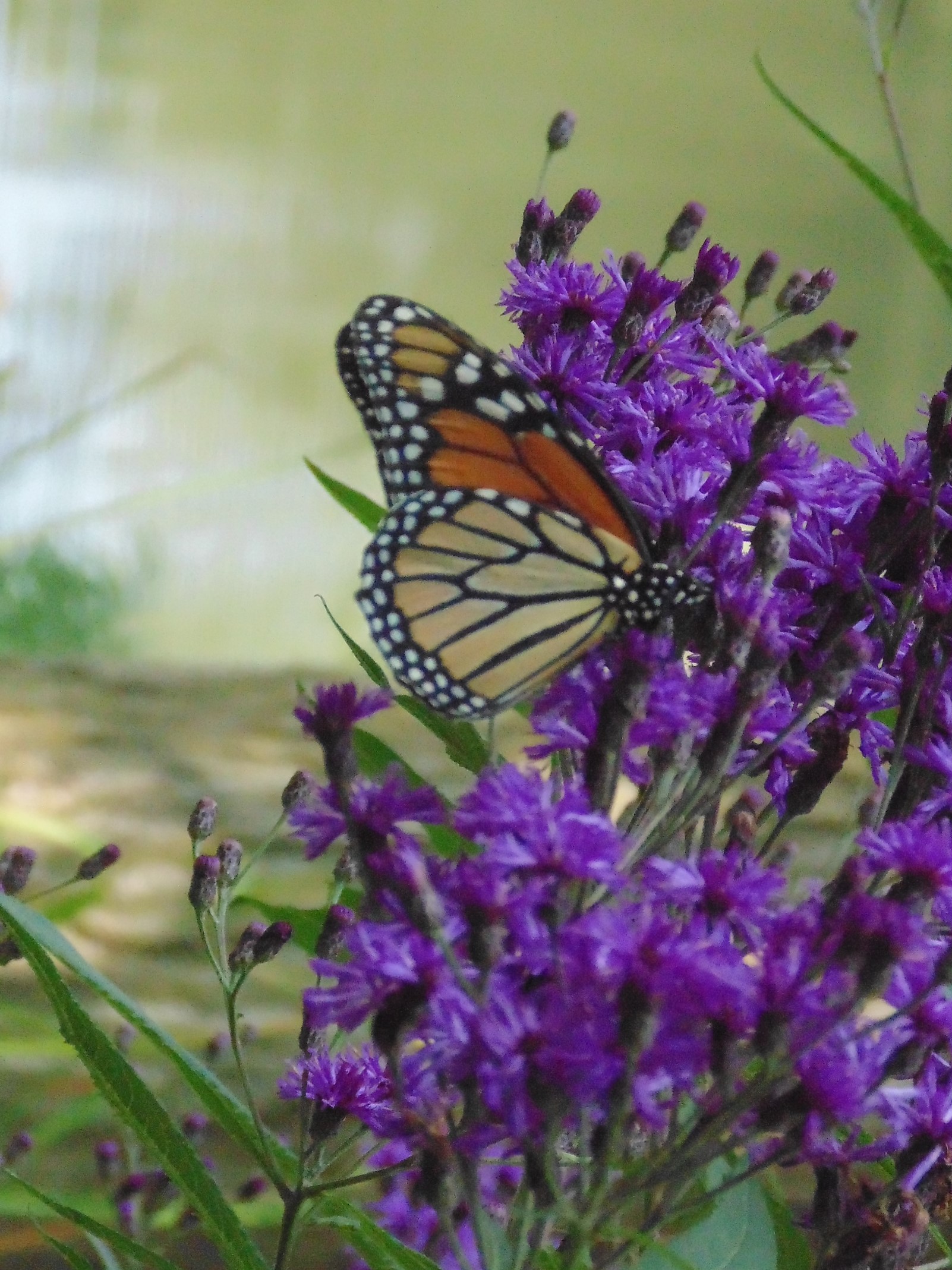
Monarch on Veronicastrum Missurica – Ironweed
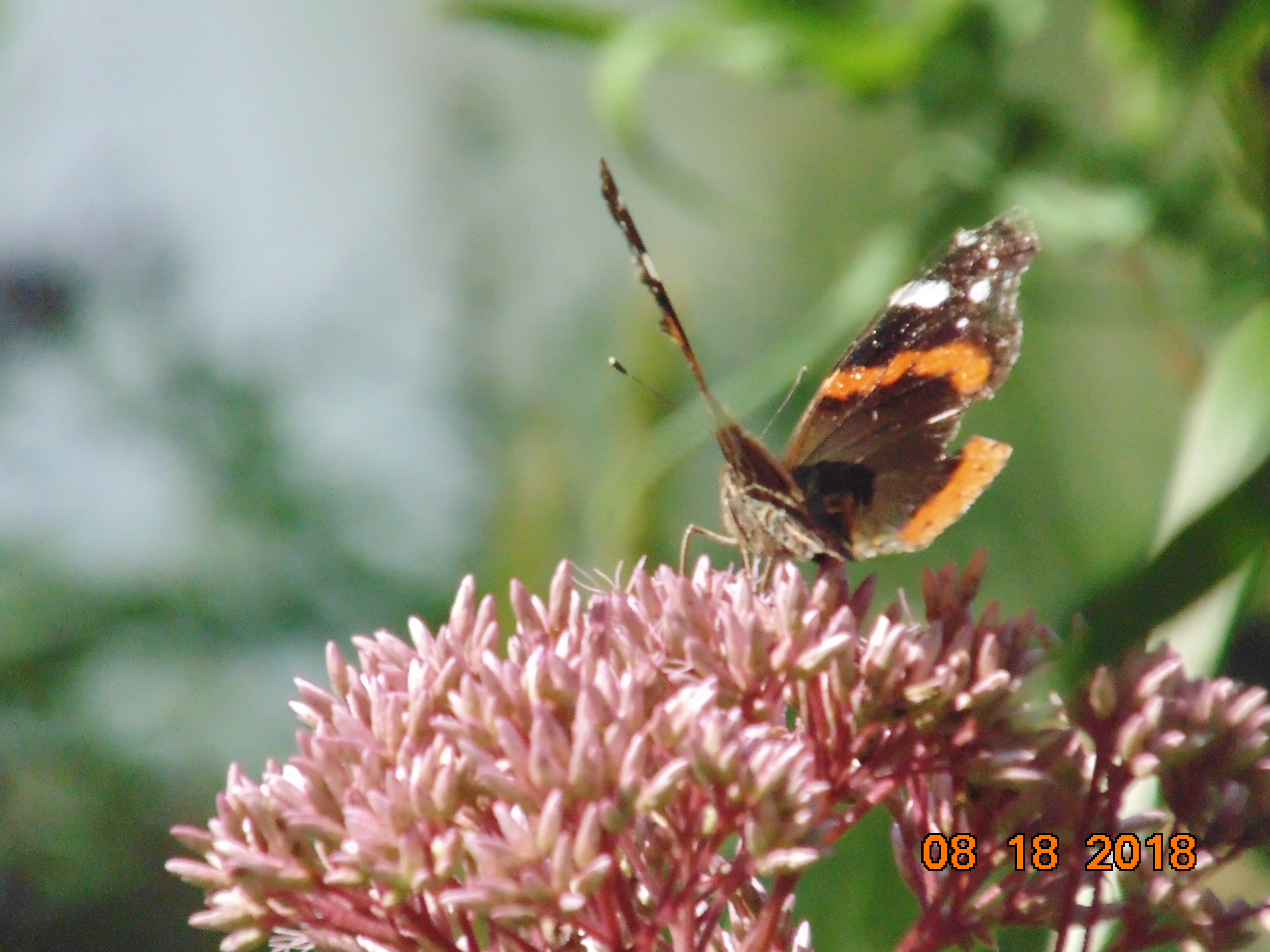
Eupatorium purpureum—-Joe Pye with a Red Admiral

Turn Turn Turn
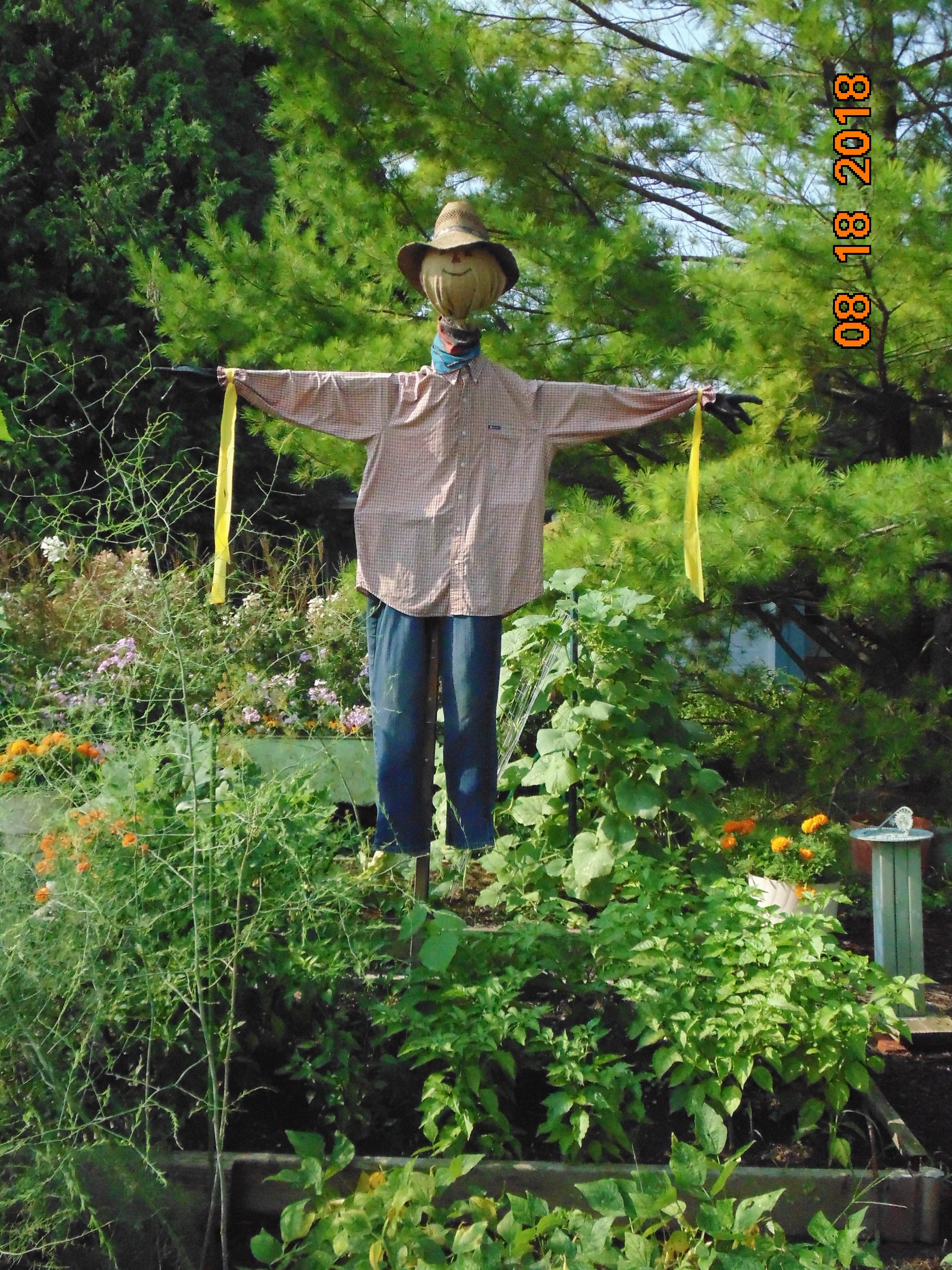
With a wave good bye Stanley sends us on our way.
NOTE:
For those who might be interested. I found pictures from another tour at Paul’s
the difference is unreal……………our Blog dated July 28 2014. If you click on July 2014 you will see that tour.
Posted in Uncategorized | 3 Comments »
Photo & story by Gail K.
Paul’s & Gerard’s river garden tour 8-18-18
It was a beautiful August day with a gentle breeze and sunny skies. I went about an hour before the tour to offer help; by doing so I also hoped to beat the rising heat, humidity

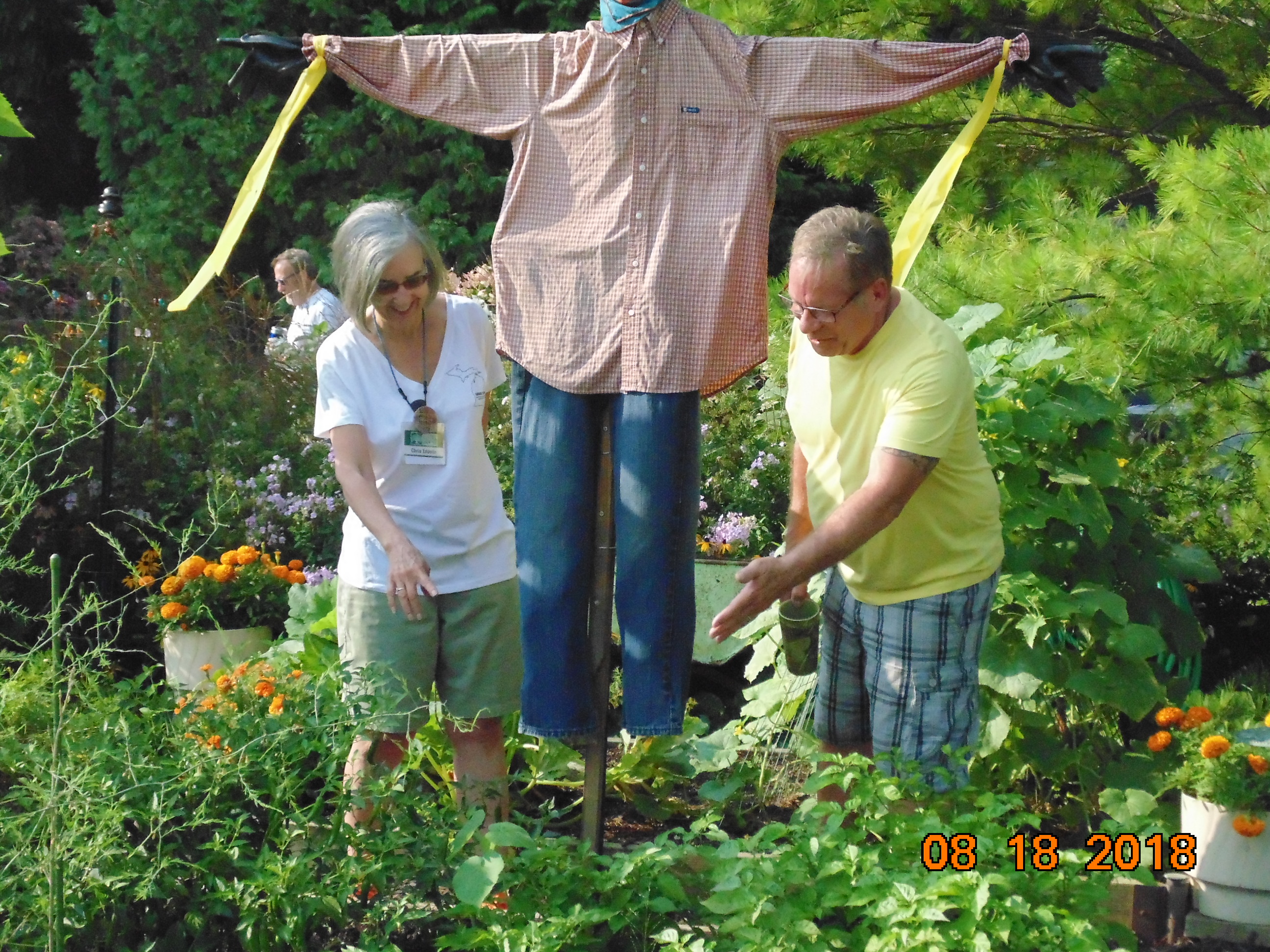
Stanley greeted me as I entered the vegetable garden.
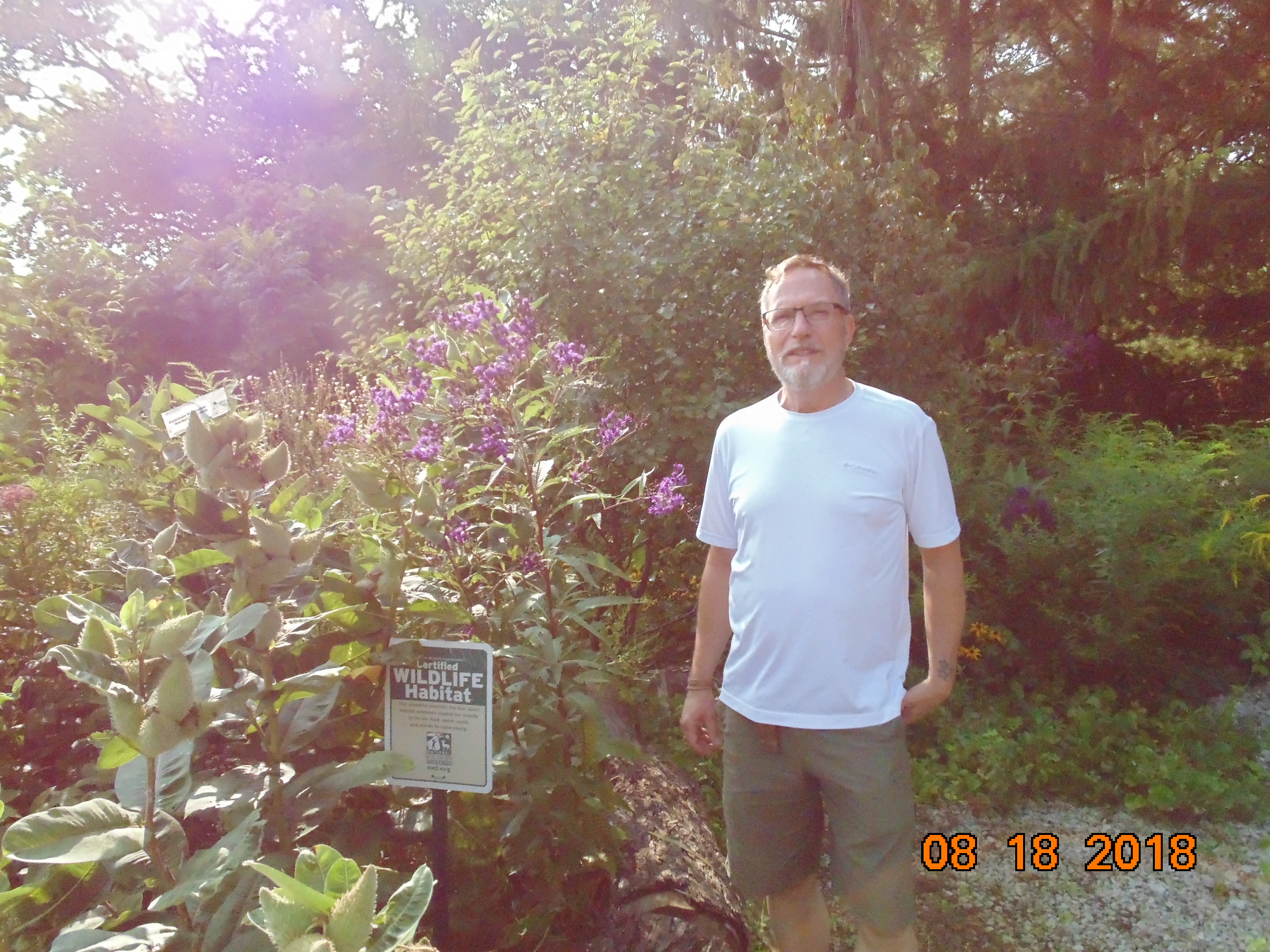
Paul soon joined me. Paul has certified his yard as wildlife habitat. He is also seeking
certification from the Wild Ones assoc.

native bed in the front entry which included some native grasses, dock and
native bittersweet……………..
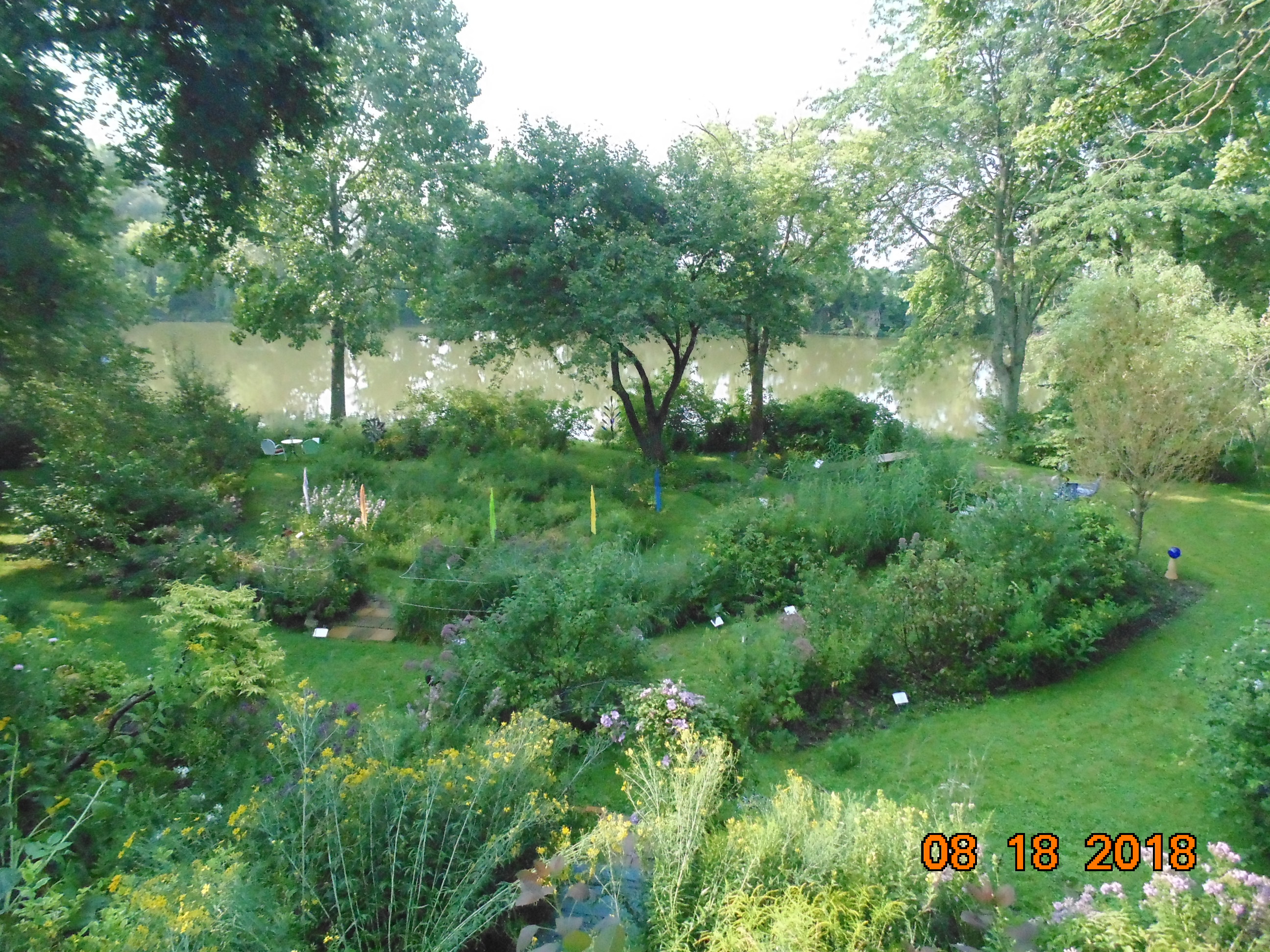
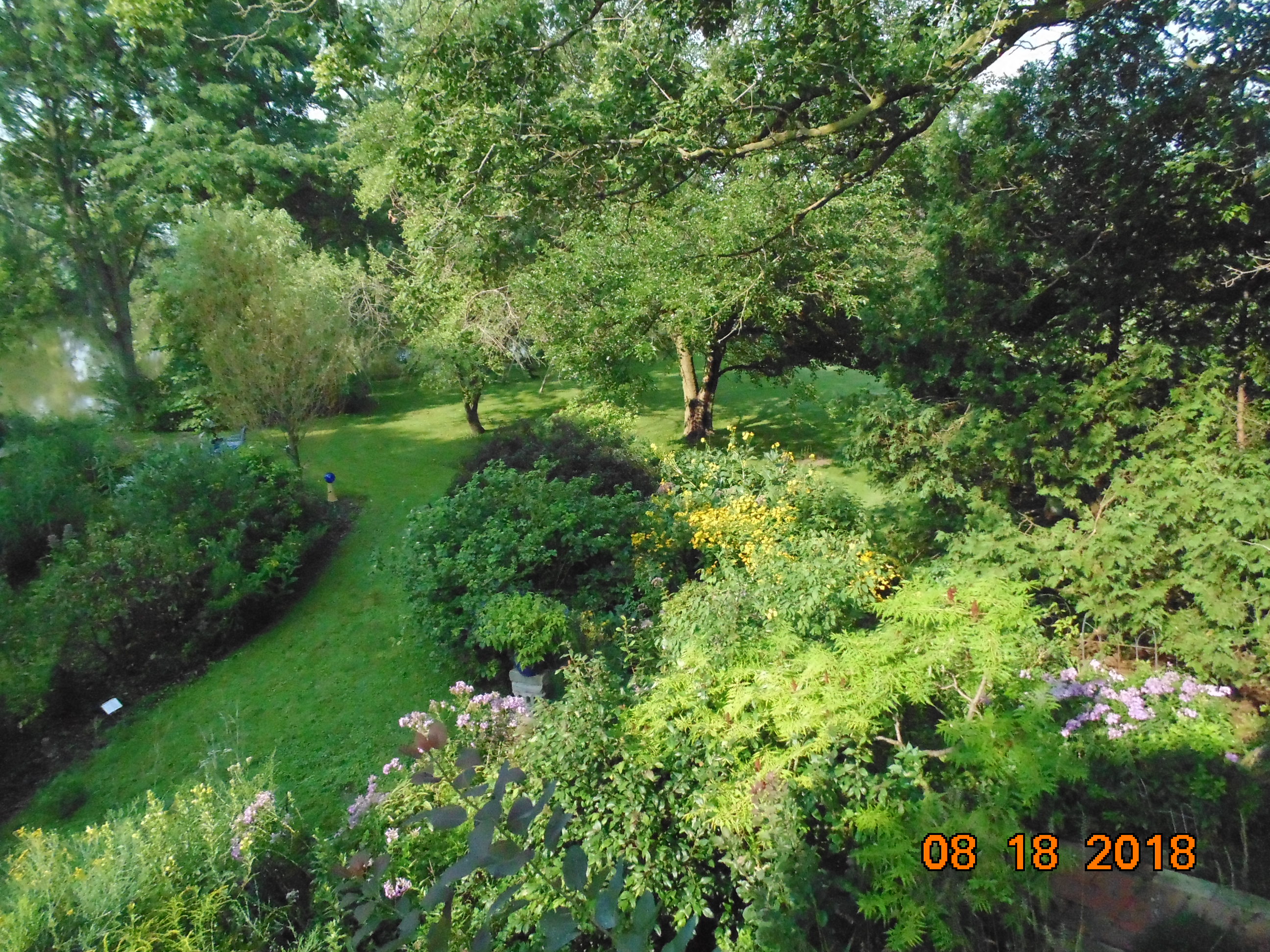
Since I was early, Paul & Gerard treated me to an elevated view of the vista!!! Ok
I’m impressed, as if I already wasn’t. From the 2nd story porch, I enjoyed a panoramic view-
clearly seeing the structure of the garden beds & paths.

As Paul readied for the tour, I trekked off for the short time I had left. Now in the backyard along the river, I was greeted by this squirrel who just sat there
posing for me.

Here are some views of the river from the backyard………so relaxing
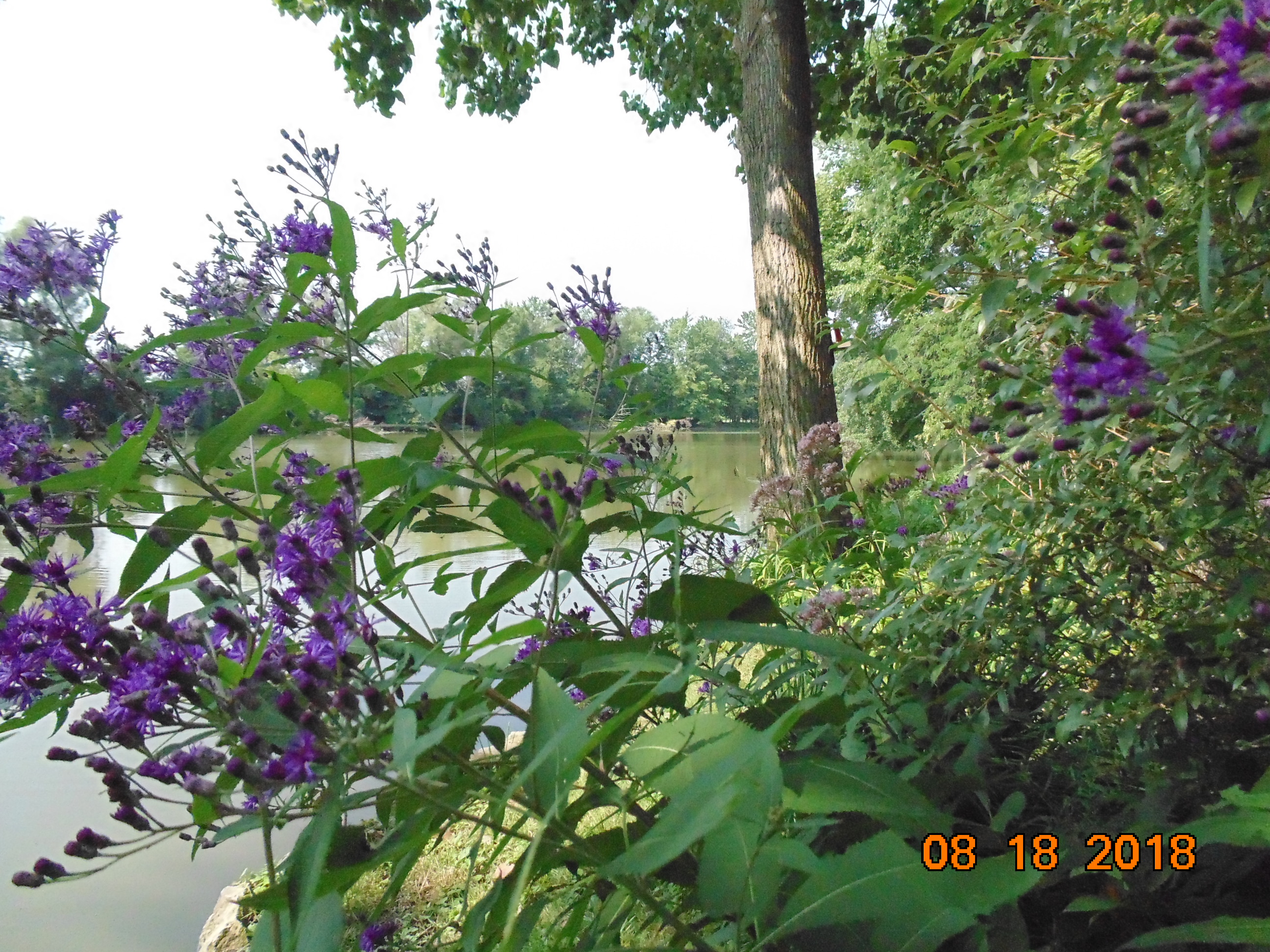
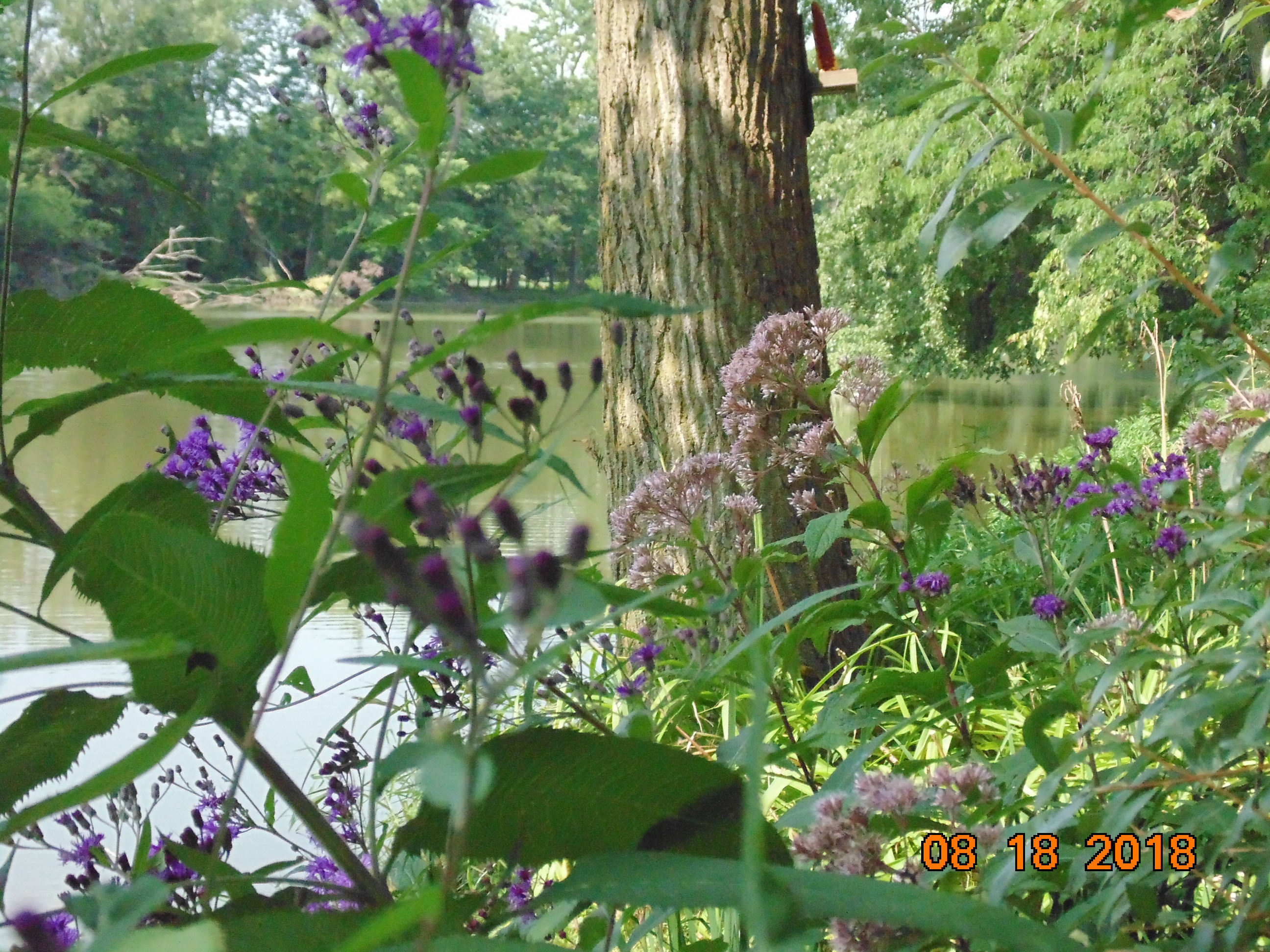
Hearing car doors I return to the front entry-I find Chris and Gerard deep in
discussion on vegetable gardening.
OK–ready??? Let’s start the tour:
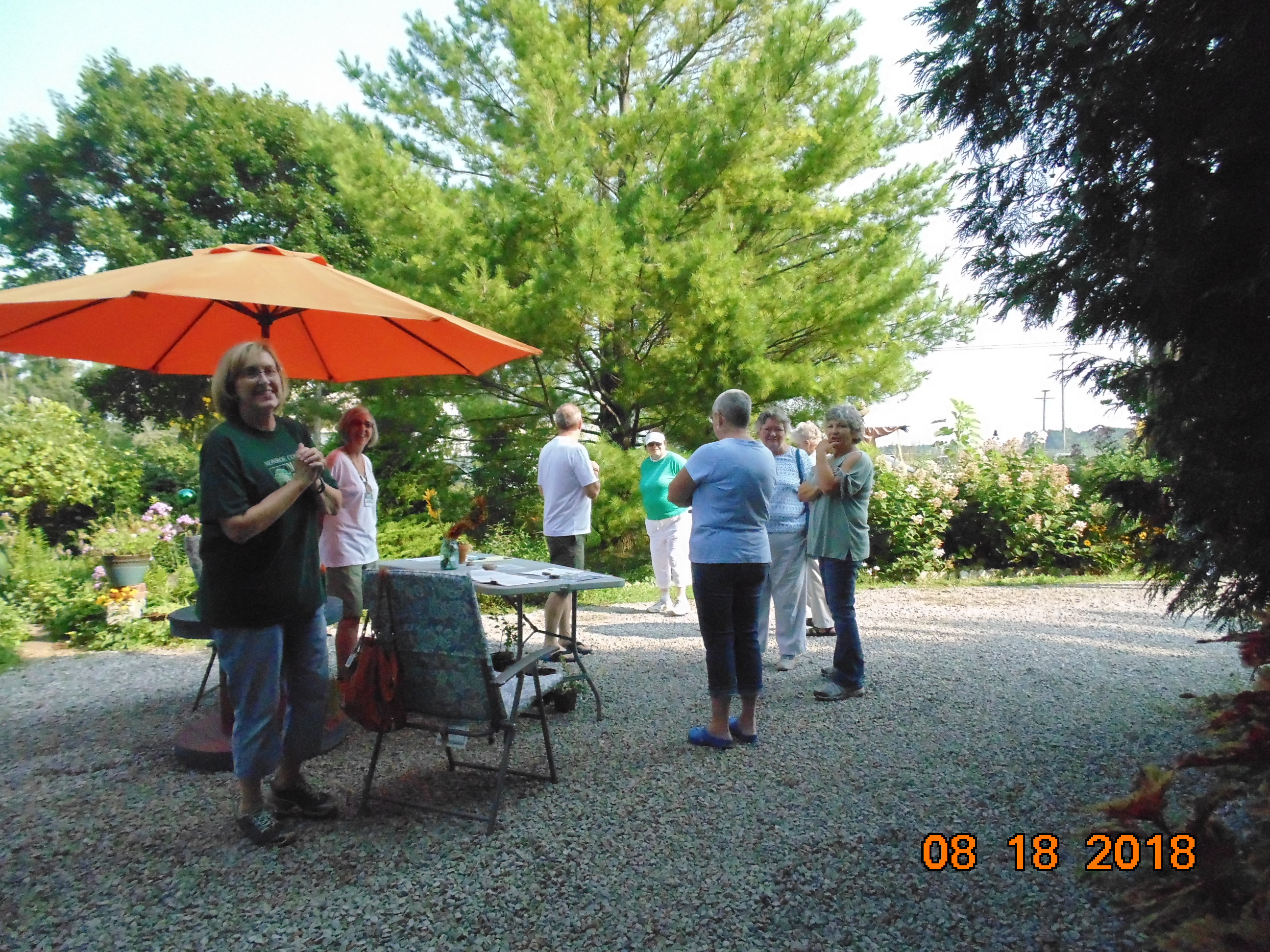
the group listened as Paul spoke to the importance of using native plants.
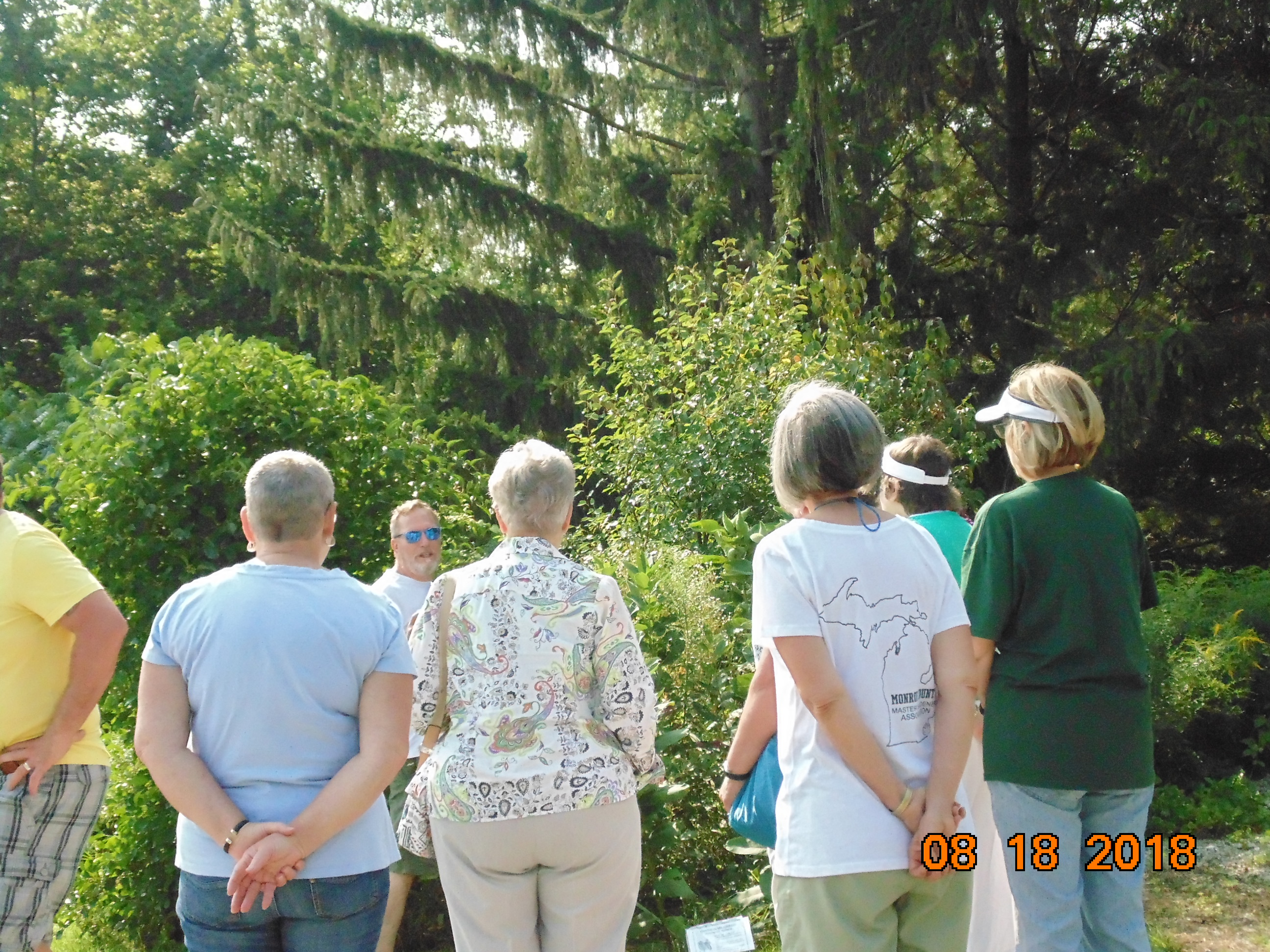
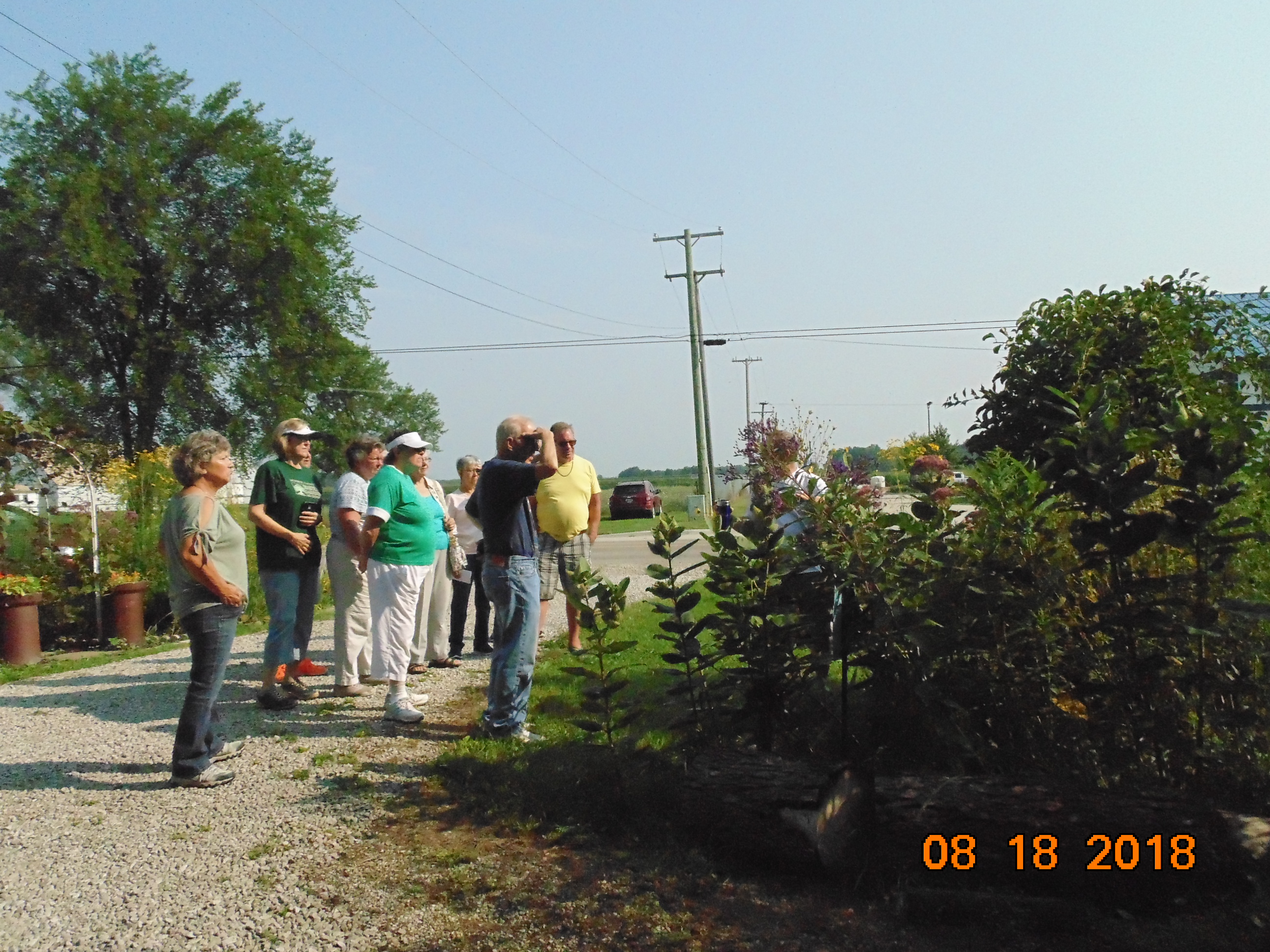
Entering the rear of the property, Paul & Gerard discussed the various plants;
as we intently followed winding paths in and out; from shady to sunny; from lower to higher levels in the garden.
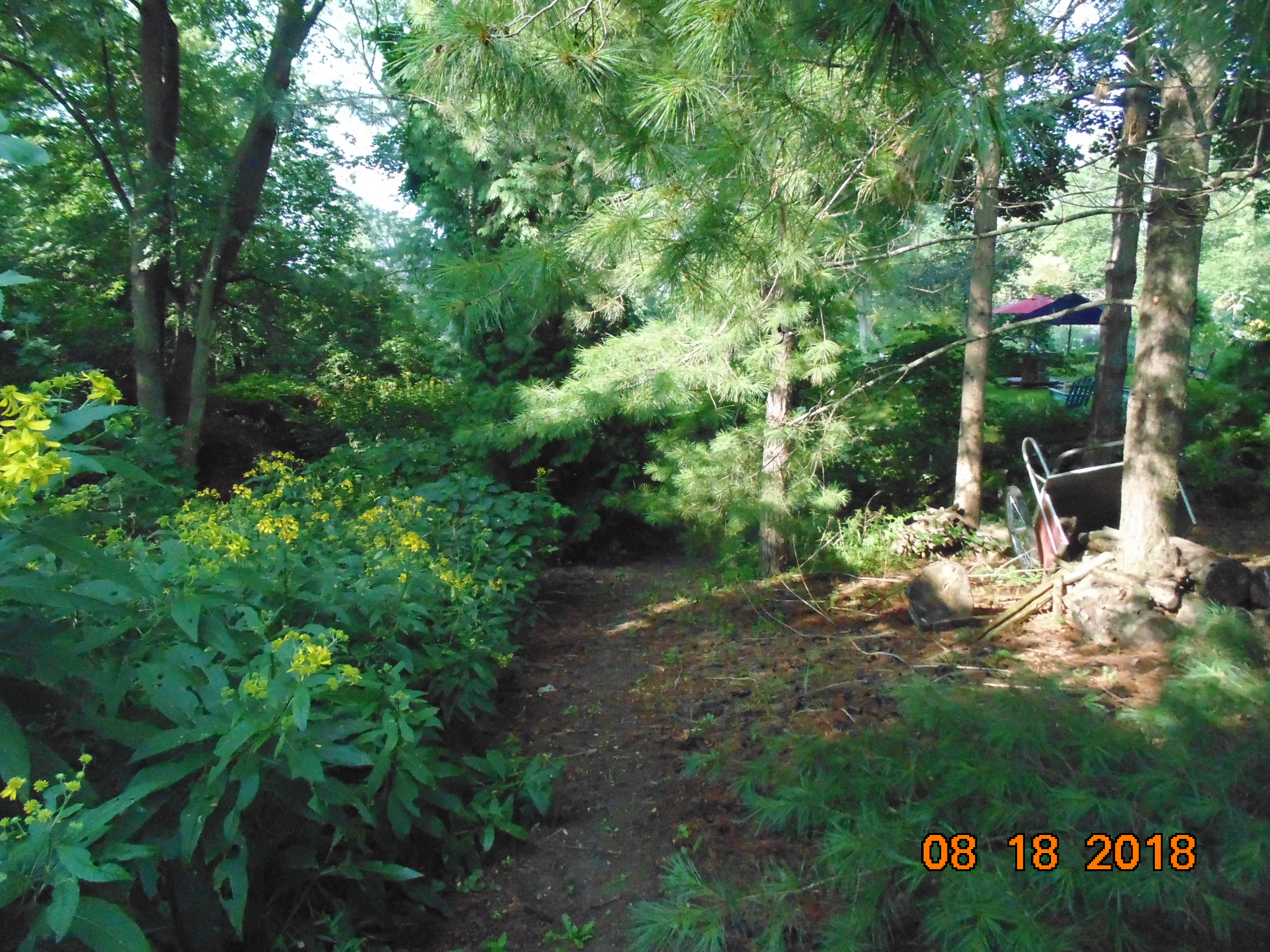
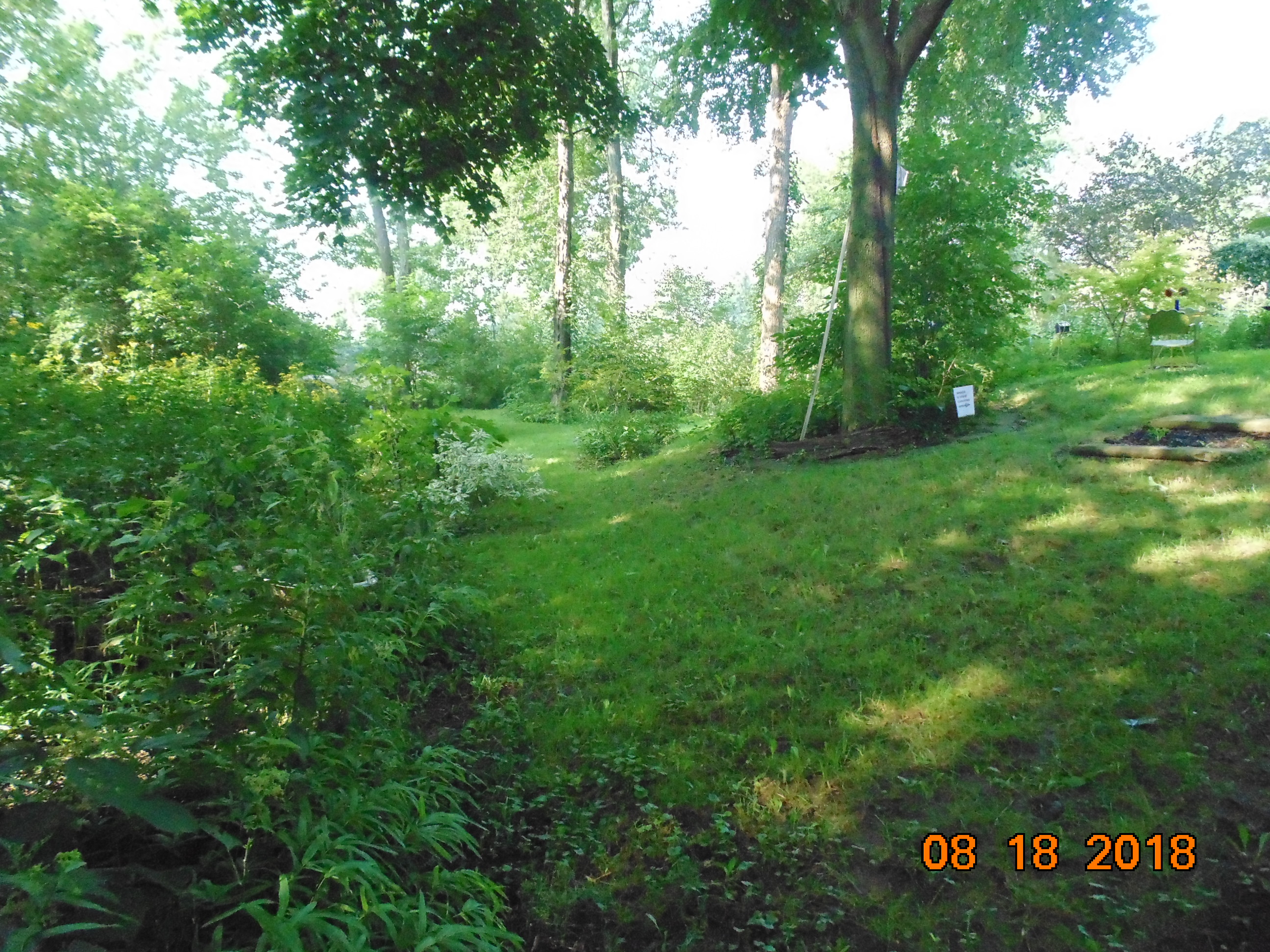
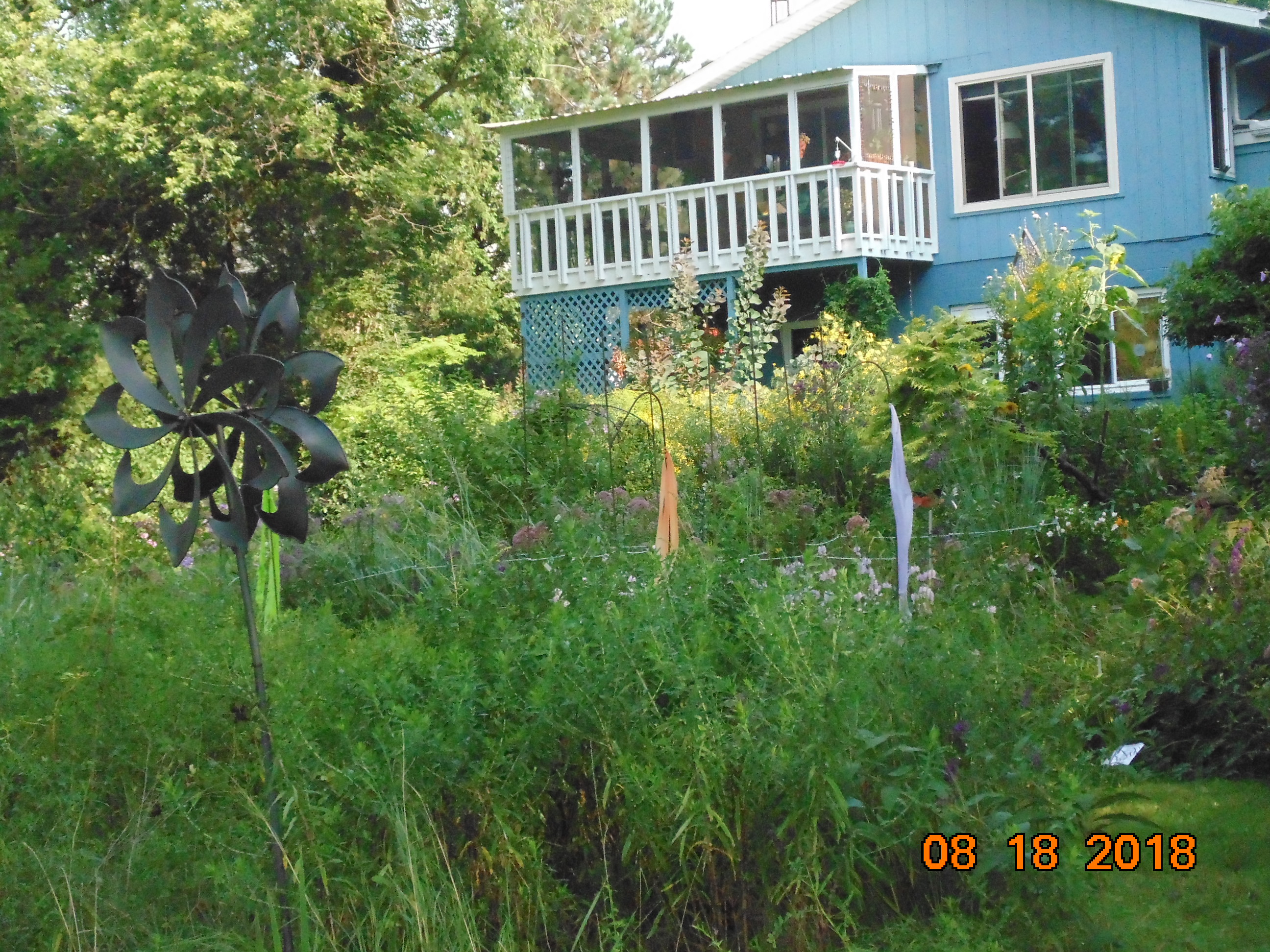
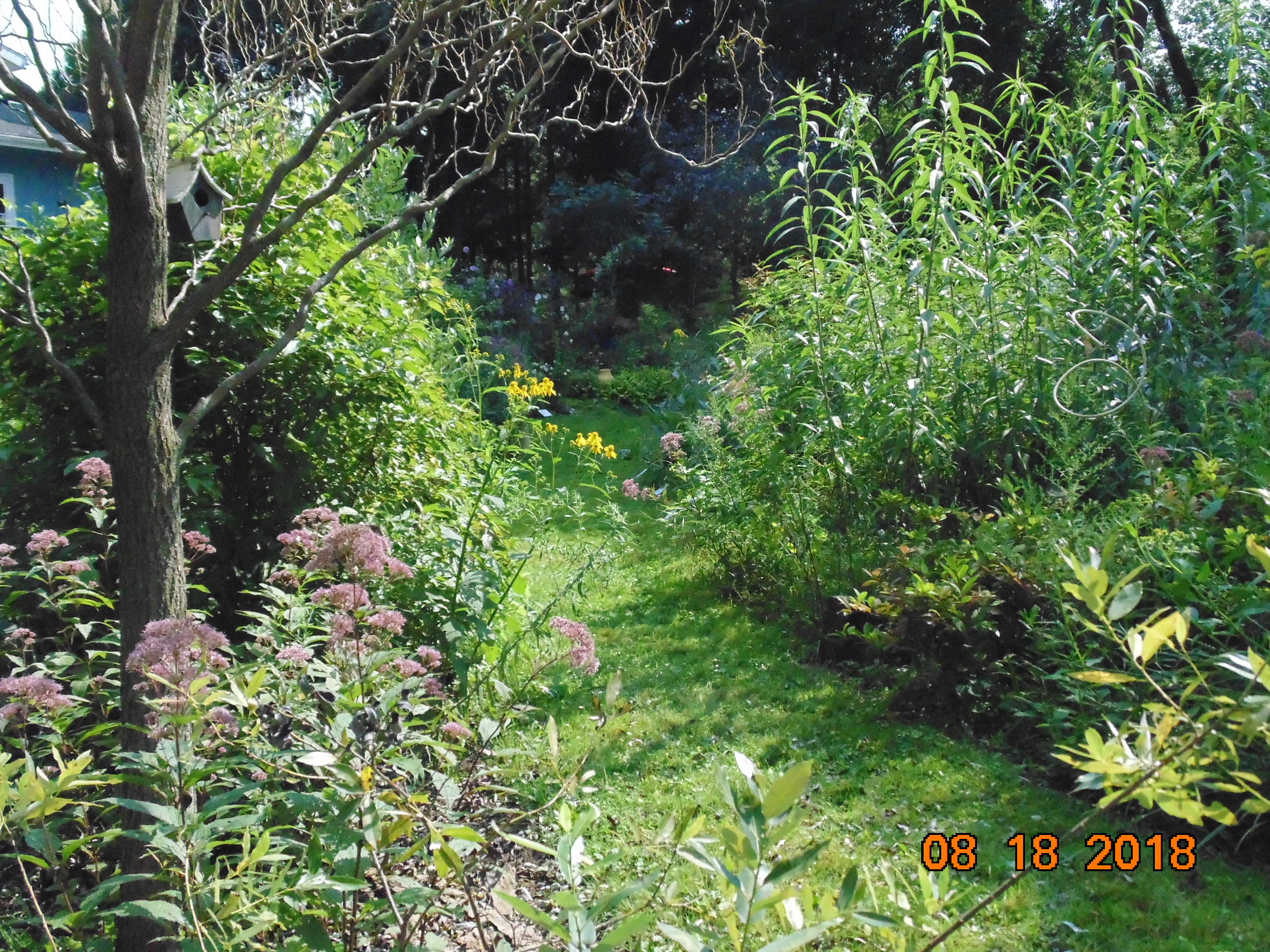
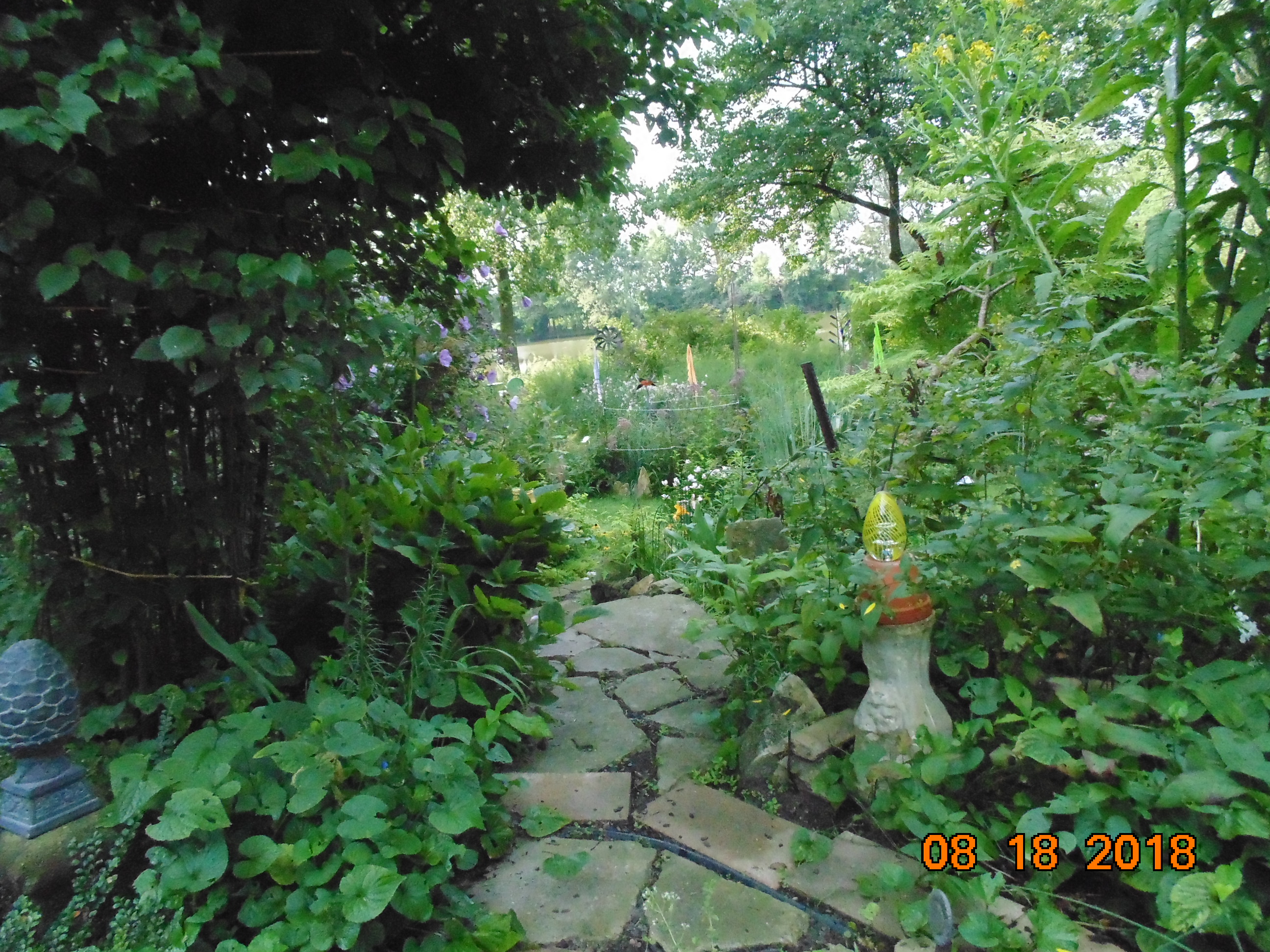
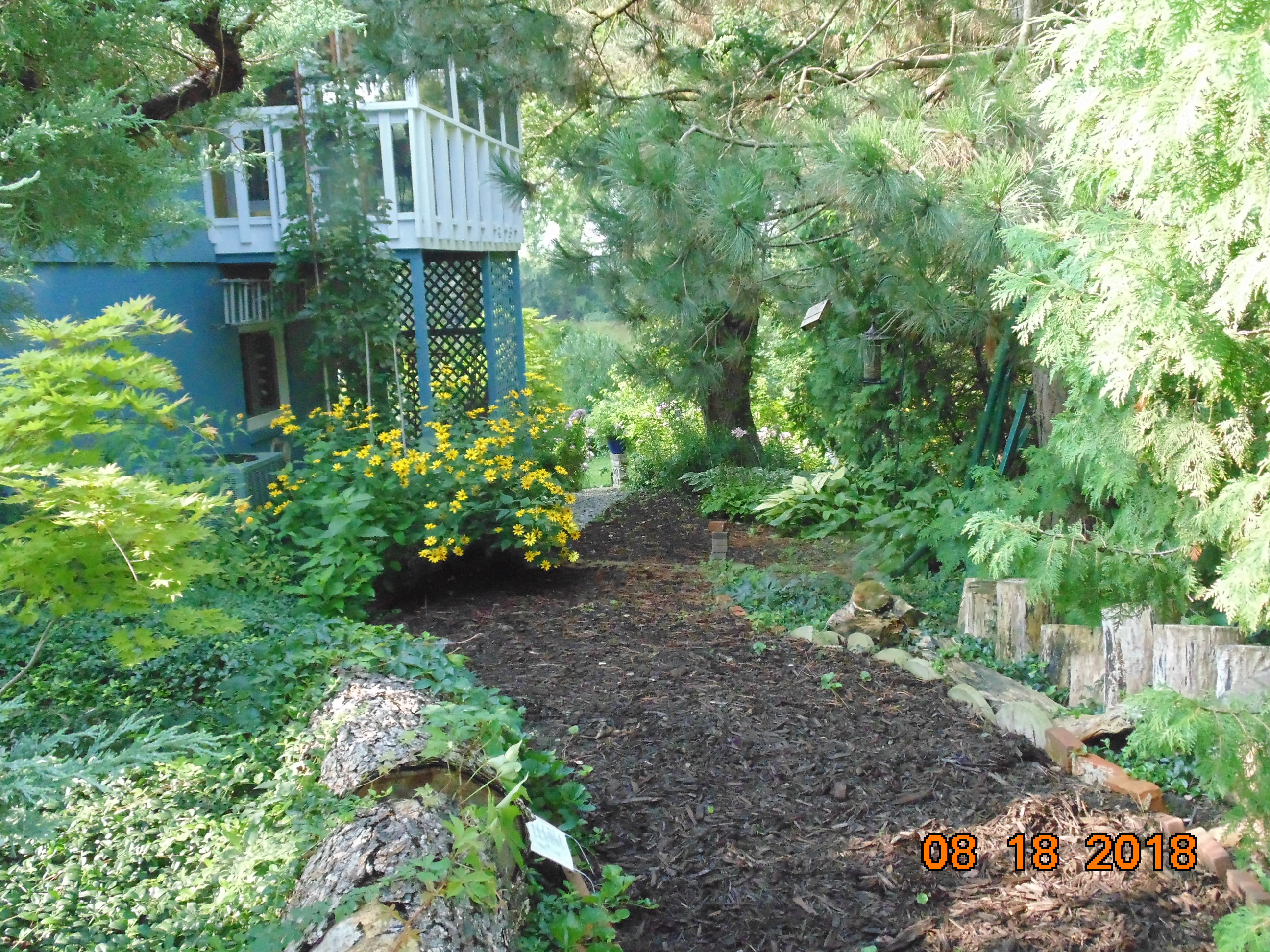
After the tour, we each went off to explore as we wished. Seemed that we all had areas we wanted to go back to.
here are some of my finds………..

Monarch egg
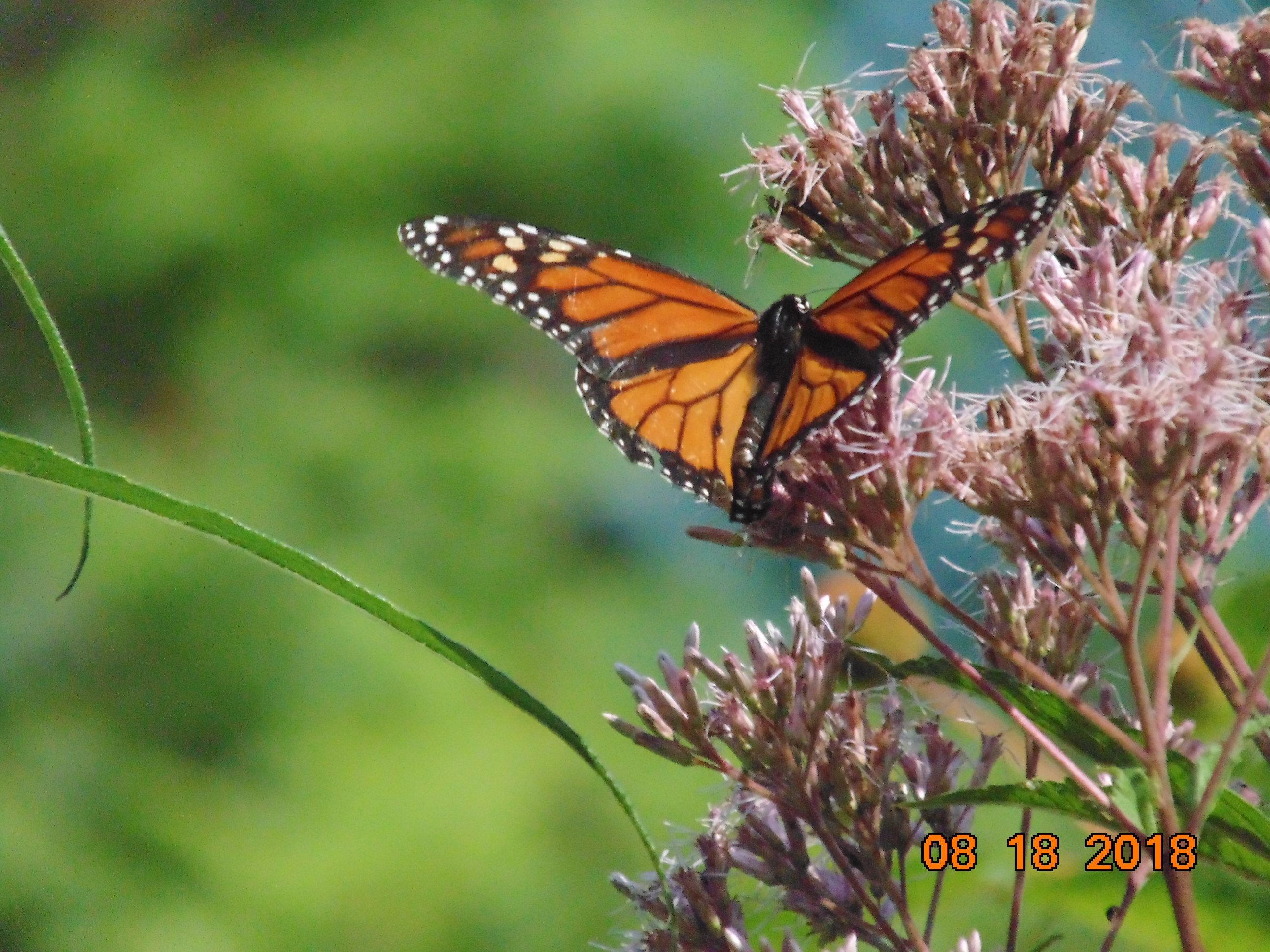
Monarch butterflies were flitting all over

One major spider………….with an impressive web to match.
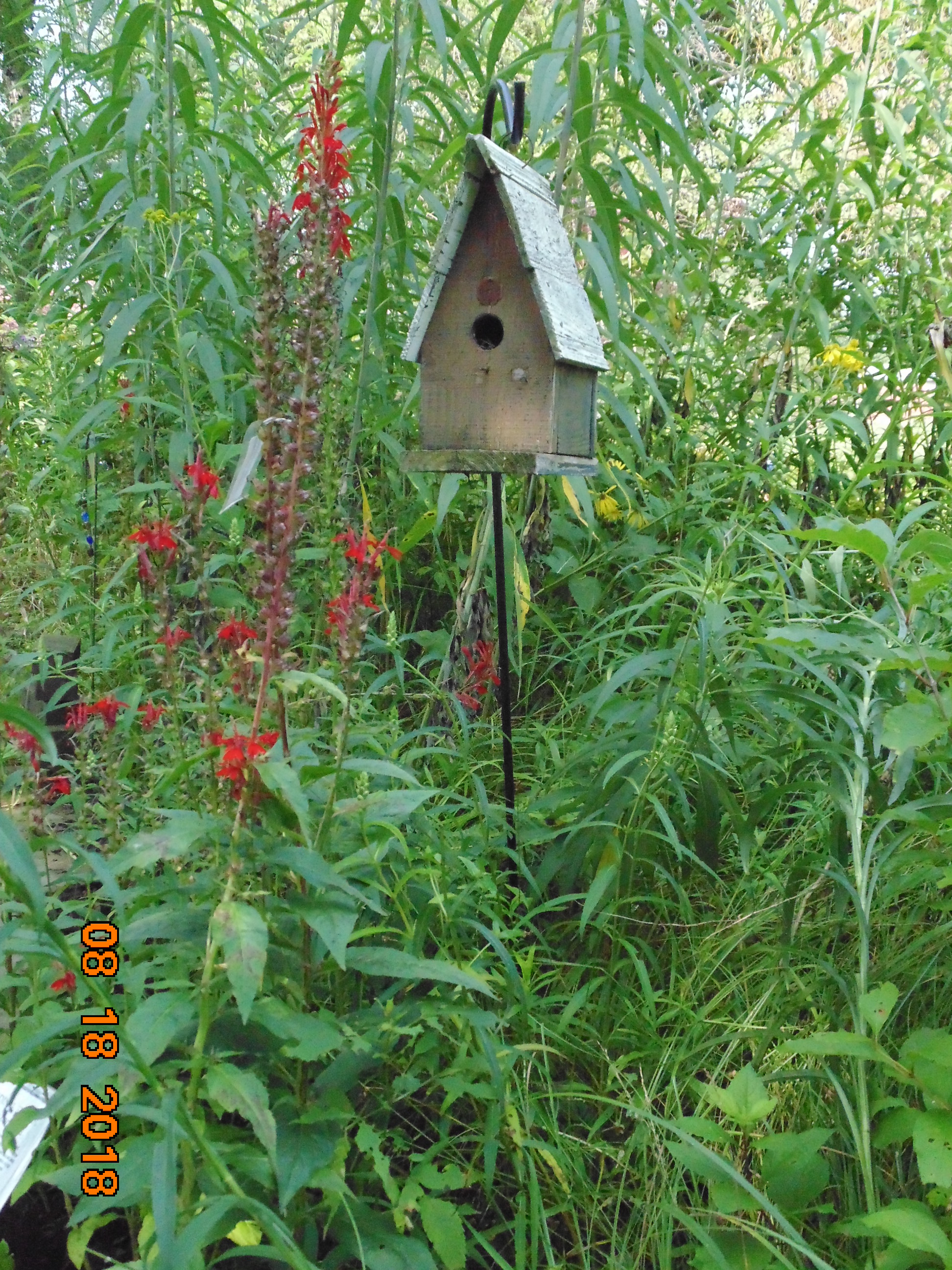
Birdhouse nestled among the plants
Thank you Paul, Gerard & Stanley for allowing us to spend time in your wonderful garden. Next week more photos from their garden; focusing more on specifics….in the mean time, garden on!!!!!
Posted in Uncategorized | 1 Comment »
Here are some photos from the tour at MCCC:
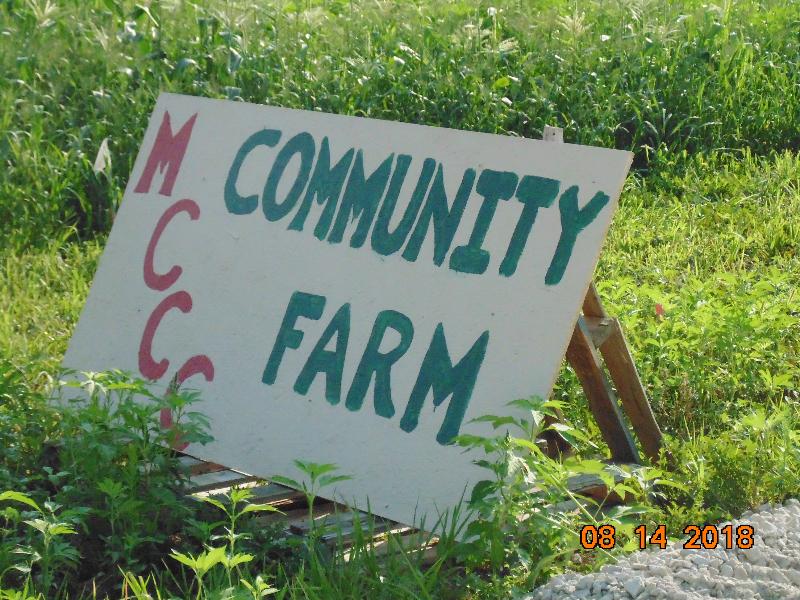
The sign directing onto the site from Raisinville Road
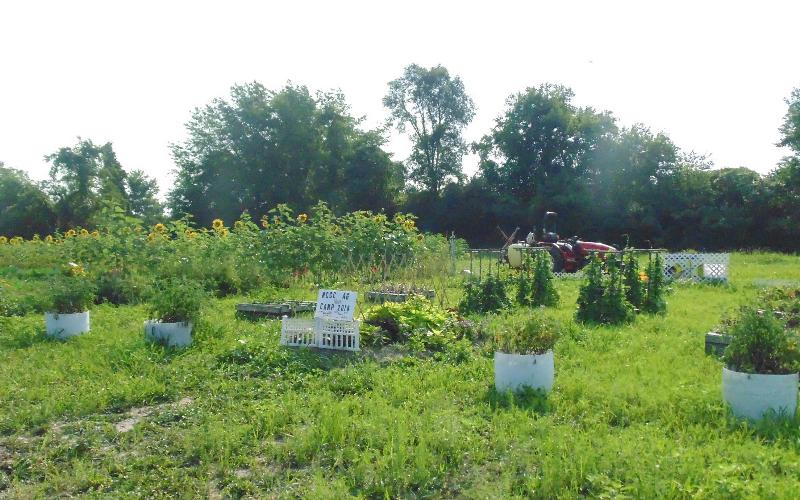
View of the plots being used by the students enrolled in the MCCC classes to teach urban farming.
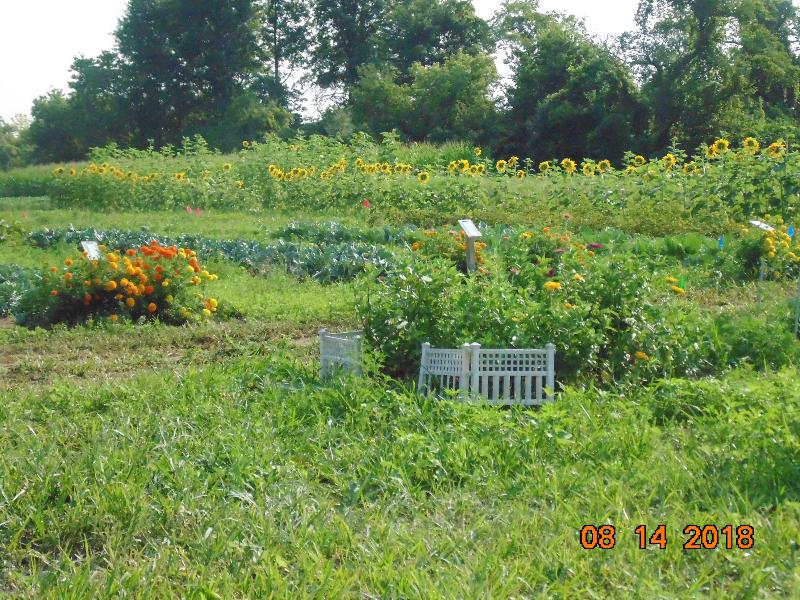
Plot…the project has been made available thru a two year MSU grant
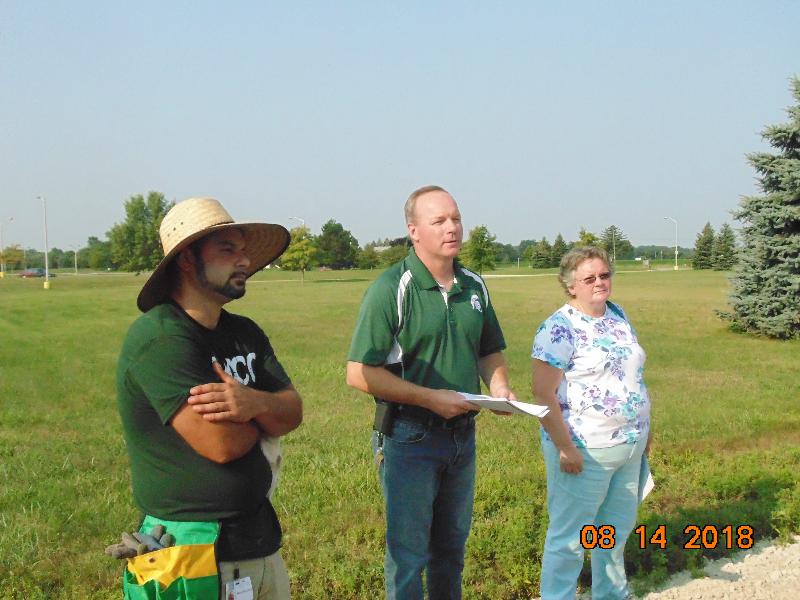
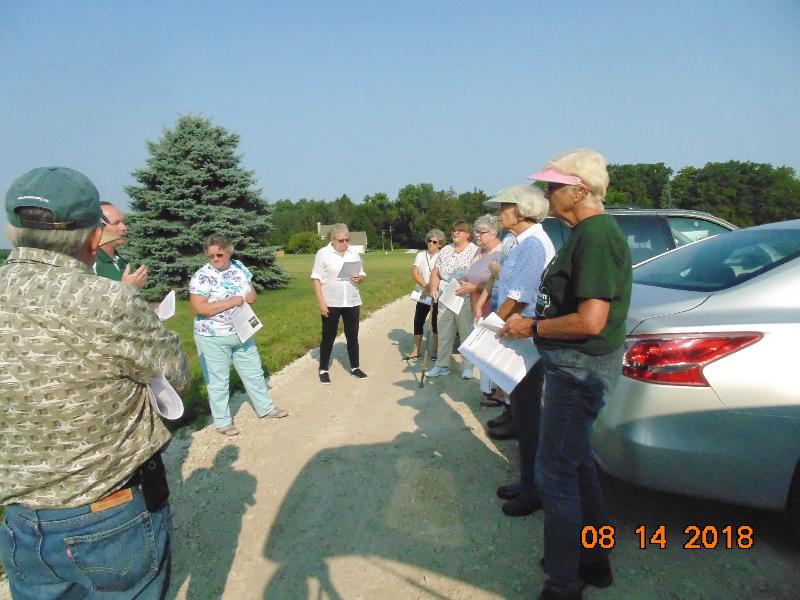
The group was met by Andy McCain MCCC program coordinator and Nick Beaudrie student intern.
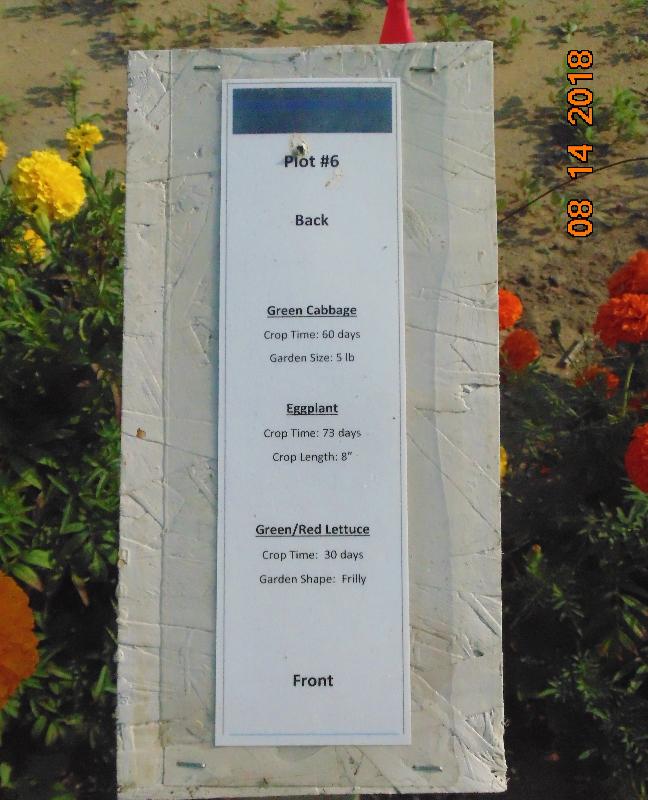
Nick described as he passed out detailed information-just what his job–a student intern involves. The two of them gave a very informative talk on the program as a whole. An example of the labels used for each crop–allowing collection of detailed data which is then analyzed and used later as reference.
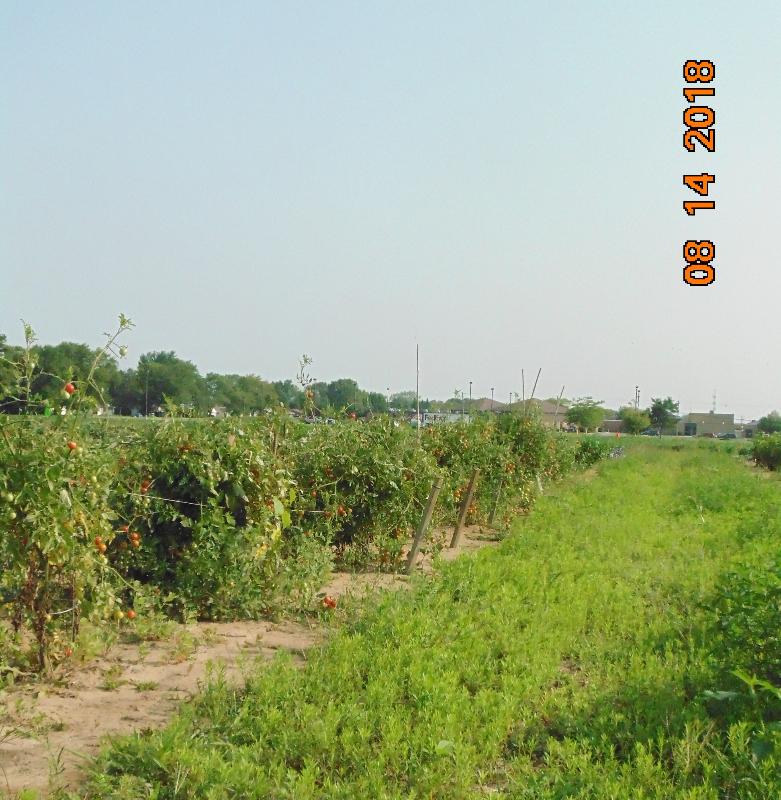
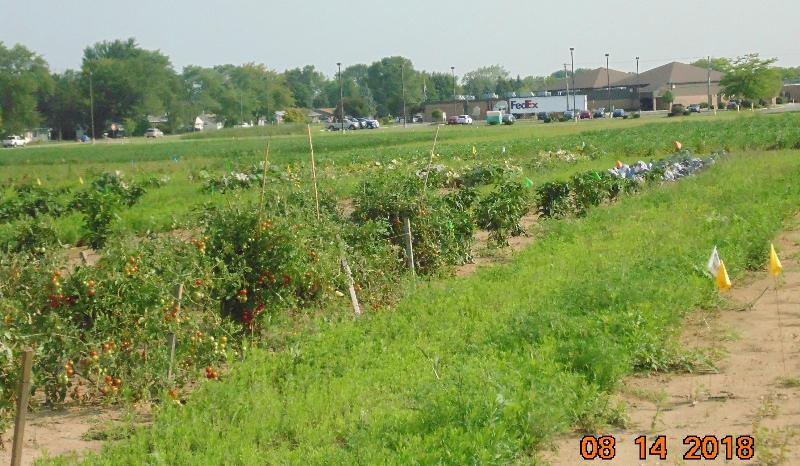
In this view, can you see the plots along the top edge?????……….the 12 acre college farm is also home to crop plots which are managed by the MSU Dept. of Entomology & 3 of its graduate students. They have planted corn and soybeans and do testing of various treatments used to control pests and insects in the soil–documenting the effects on each. These results can then be shared with farmers and those who develop products for use in farm fields.
In addition to the cherry tomatos, the group also planted Okra- Kale, variety of peppers, eggplant, cabbage, broccoli, greenbeans, lettuce, cucumbers and squash. All crops are donated to a variety
of charitable food banks. The group listened as Nick & Andy spoke of using ornamental kale
as a food source.
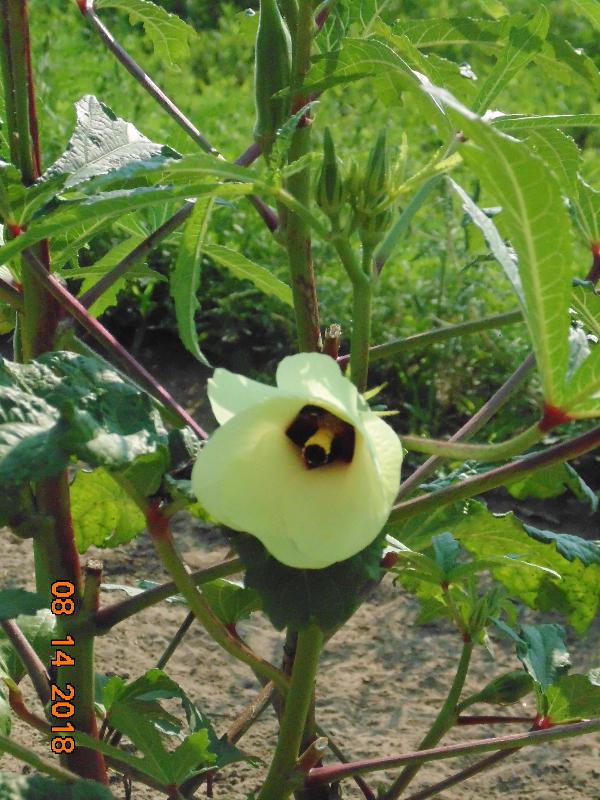
Okra Flower—

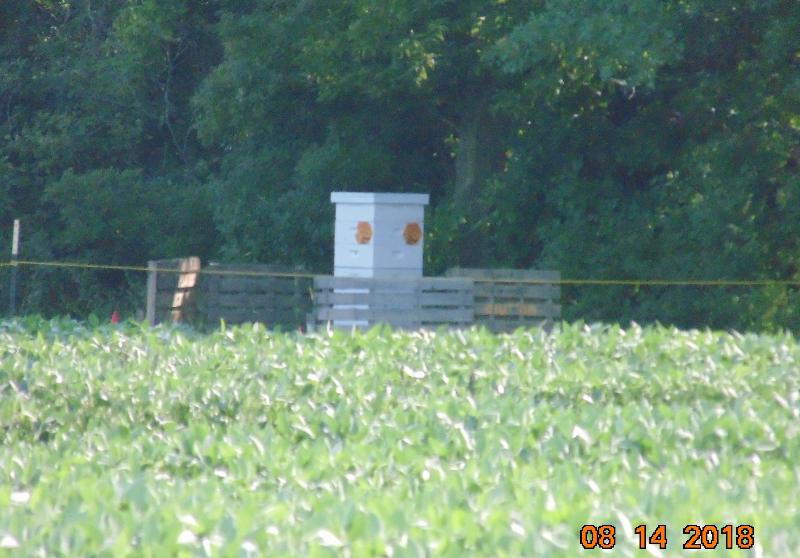
In addition to crops, they have planted flowers to entice the pollinators. This project created another collaborative-one with the Monroe Bee Keepers Club who after much controversy, erected this bee hive.
Some good honey coming soon–which can also be shared with the group.
This is a great project–long overdue for our farming community and I personally hope that the grant can be extended to continue this after the 2 yr. time frame. Connie and Gail are going to do some outreach and hopefully bring a like project to the south county area. Andy and Nick- Keep up the good work. Further reading on this venture can be found in the Monroe Evening News articles on June 9 & July 14, 2018.
Posted in Uncategorized | 1 Comment »
Naida sent this information to share:
Five Seasons:
The Gardens of Piet Oudolf
https://shoutout.wix.com/so/57MLOqKK0?cid=9abd027f-eb5e-4c20-9f39-c35465a85d23#/main
Posted in Uncategorized | 1 Comment »
 Monroe County Master Gardener Association