Stella sent us info:
| Bugs with Beth: Mining bee (genus Andrena)by Beth WeilerThis week’s featured bug is a Mining bee (genus Andrena)! These bees get their name from their nesting habit, which is to “mine” and create their nests in bare ground. All bees in this genus are solitary ground-nesters. Female Mining bees excavate a small burrow in the ground, then divide it into multiple cells; she will lay one egg in each cell. The female then collects pollen throughout the day and turns it into “bee bread”: firm, round little loaves of pollen, which she leaves in each cell for the developing baby bee to eat. Pictured is Andrena vicina, the Neighborly Mining bee. It is covered in the bright orange pollen of Prairie alumroot (Heuchera richardsonii), which is currently blooming in the prairie of the Great Lakes Garden at Matthaei. The bee bread that this individual is making for her offspring will probably be bright orange and quite delicious! |

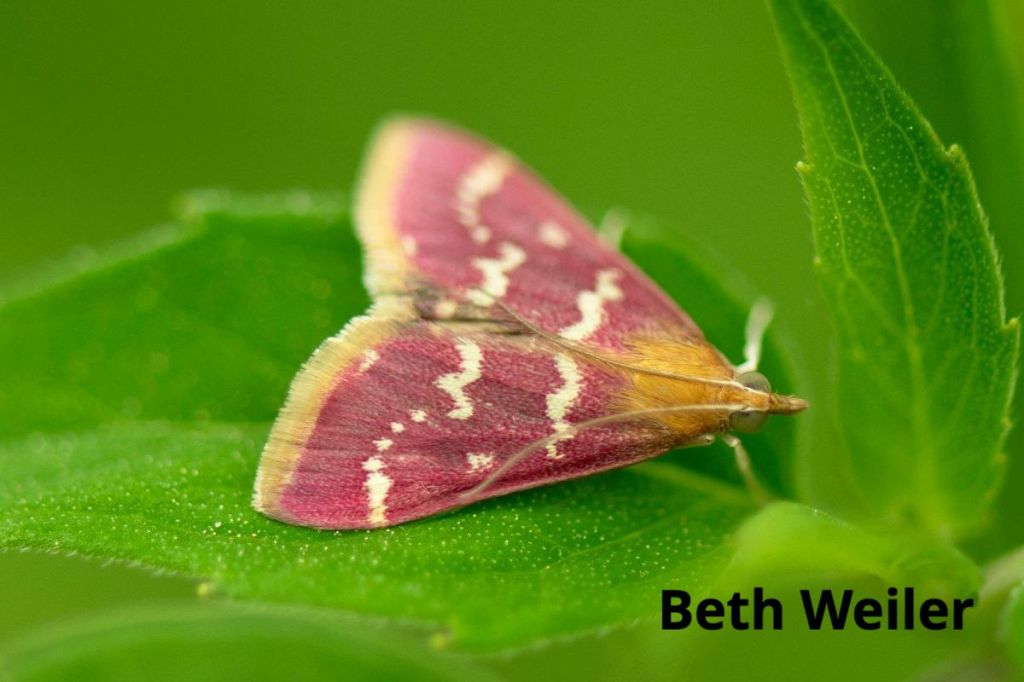
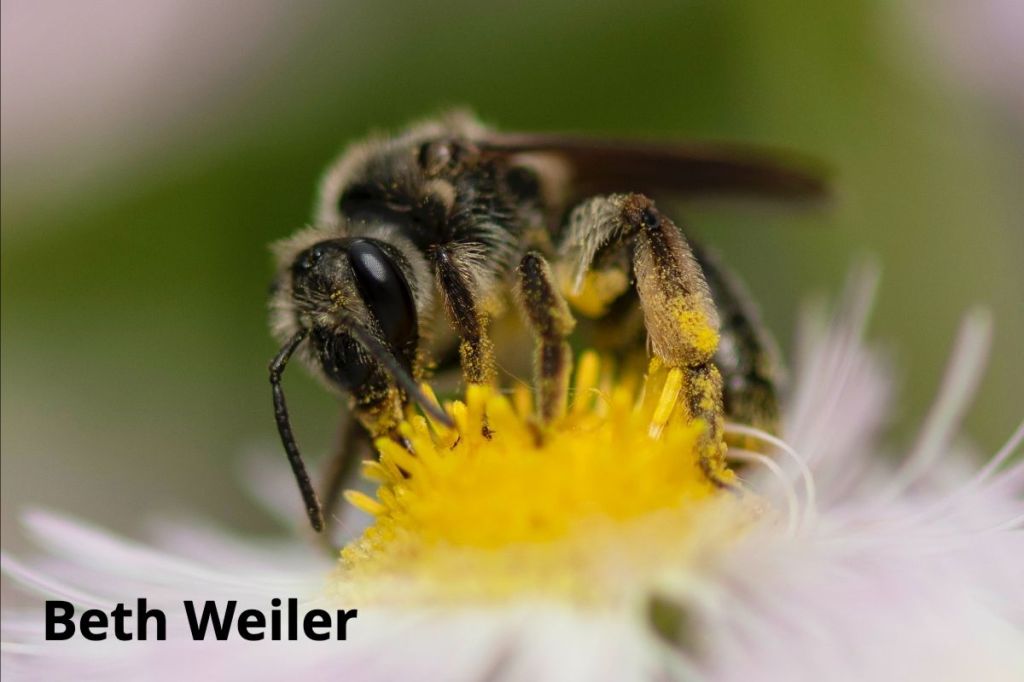
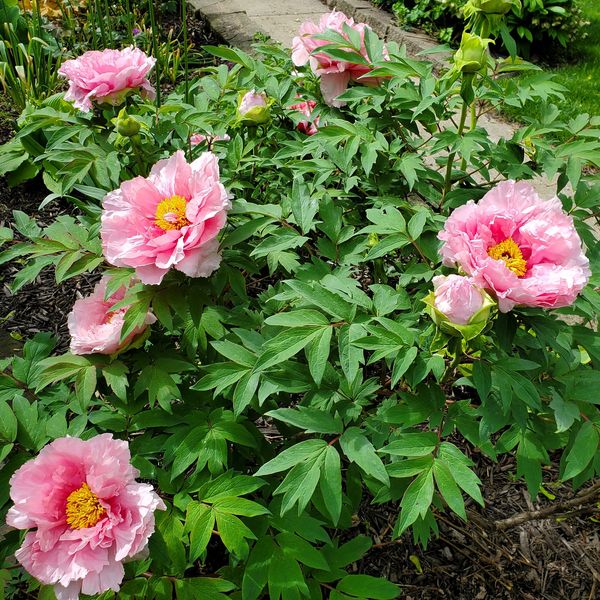
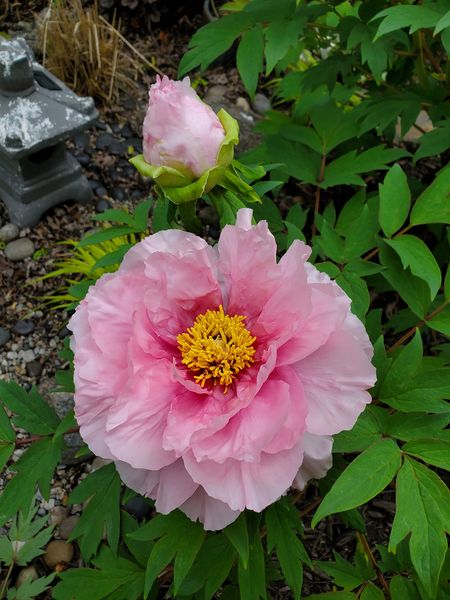
 The past few weeks have been a whirlwind of activity at MBGNA. We completed three successful plant sales, hosted a national cut flower show, welcomed the first outdoor wedding of the year, launched the 2022 Shakespeare in the Arb season, and celebrated the W.E. Upjohn Peony Garden’s 100th Anniversary! The past few weeks have been a whirlwind of activity at MBGNA. We completed three successful plant sales, hosted a national cut flower show, welcomed the first outdoor wedding of the year, launched the 2022 Shakespeare in the Arb season, and celebrated the W.E. Upjohn Peony Garden’s 100th Anniversary! We are so grateful to our amazing staff and volunteers for all of their hard hard work readying the gardens and supporting these events, and to our visitors who made it all worthwhile. We could not have done it without you!Bonsai in BloomOur Azalea Bonsai are currently blooming and they are exquisite! Their bloom is short-lived, so stop in to Matthaei Botanical Gardens this week if you want to see them in person. Interested in growing your own bonsai? We have a DIY guide on our website, check it out here.    Bugs with Beth: Mining bee (genus Andrena)by Beth WeilerThis week’s featured bug is a Mining bee (genus Andrena)! These bees get their name from their nesting habit, which is to “mine” and create their nests in bare ground. All bees in this genus are solitary ground-nesters. Female Mining bees excavate a small burrow in the ground, then divide it into multiple cells; she will lay one egg in each cell. The female then collects pollen throughout the day and turns it into “bee bread”: firm, round little loaves of pollen, which she leaves in each cell for the developing baby bee to eat. Pictured is Andrena vicina, the Neighborly Mining bee. It is covered in the bright orange pollen of Prairie alumroot (Heuchera richardsonii), which is currently blooming in the prairie of the Great Lakes Garden at Matthaei. The bee bread that this individual is making for her offspring will probably be bright orange and quite delicious! Bugs with Beth: Mining bee (genus Andrena)by Beth WeilerThis week’s featured bug is a Mining bee (genus Andrena)! These bees get their name from their nesting habit, which is to “mine” and create their nests in bare ground. All bees in this genus are solitary ground-nesters. Female Mining bees excavate a small burrow in the ground, then divide it into multiple cells; she will lay one egg in each cell. The female then collects pollen throughout the day and turns it into “bee bread”: firm, round little loaves of pollen, which she leaves in each cell for the developing baby bee to eat. Pictured is Andrena vicina, the Neighborly Mining bee. It is covered in the bright orange pollen of Prairie alumroot (Heuchera richardsonii), which is currently blooming in the prairie of the Great Lakes Garden at Matthaei. The bee bread that this individual is making for her offspring will probably be bright orange and quite delicious! 100 Years in Bloom: celebration highlightsAfter over a year of planning, the W.E. Upjohn Centennial Celebration took place on June 5, 2022. The weather was perfect and the peonies were ready to impress. 100 Years in Bloom: celebration highlightsAfter over a year of planning, the W.E. Upjohn Centennial Celebration took place on June 5, 2022. The weather was perfect and the peonies were ready to impress.Highlights of the event including photos are available at this link. Highlights from this year’s peony bloomThe W.E. Upjohn Peony Garden is more than a just a place – it is a meaningful backdrop for so many moments that is intricately woven into the tapestry of our community. This garden is your garden. We celebrate together. Enjoy video of the garden at the link below.  June is pride monthFlowers such as green carnations, violets, pansies, roses, and lavender have symbolized the LGBTQIA2s+ movement for centuries. Flowers were used as a form of coded language and to symbolize represent love, beauty, and loss. June is pride monthFlowers such as green carnations, violets, pansies, roses, and lavender have symbolized the LGBTQIA2s+ movement for centuries. Flowers were used as a form of coded language and to symbolize represent love, beauty, and loss.To our friends in the LGBTQIA2s+ community, we see you and support you. Native plants supporting pollinatorsHost plants are plants that provide food for butterfly or moth larvae. This beautiful Raspberry Pyrausta moth’s host plant is dotted mint (Monarda punctata). You can learn more about which moths and butterflies feed on which native plants at this Native Plant Finder. This friendly Mining bee (Andrena sp.) was found in our Great Lakes Garden is collecting pollen on a fleabane. Both daisy fleabanes (Erigeron annuus and Erigeron annuus) are native to Michigan. Native pollinators such as these are important to humans, not only for ecological balance, but in their role in our food production. By including native plants in our own yards and spaces we can support these important |
| Upcoming Events May 21 – June 26 Time in the Garden” Art Exhibit” Community Art Exhibit Matthaei Botanical Gardens, 1800 N. Dixboro Rd Ann Arbor, MI 48105 Artworks in a variety of media depicting the relationships between nature, time, and change. 30 artists from across the community. Free admission. Exhibit runs from Saturday May 21 to Sunday June 26 during visitor center hours at Matthaei Botanical Gardens. June 2 – June 26 (Thursdays – Sundays) 6:30 pm Shakespeare in the Arb: “A Midsummer Night’s Dream” Shakespeare in the Arb returns to Nichols Arboretum for its 20th season in 2022 with the production of “A Midsummer Night’s Dream”. Shakespeare in the Arb is a 2 hour outdoor, moving performance that takes place within Nichols Arboretum. Audience members should be prepared for light weather conditions, periods of sitting, standing and walking. Advance ticket sales only. June 26 2:00 pm – 4:00 pm “Time in the Garden” Art Exhibit Closing Reception Matthaei Botanical Gardens, 1800 N. Dixboro Rd Experience the relationships between nature, time, and change in a variety of medias, featuring pieces from 30 local artists. Join the artists on the final day of the exhibit for a casual meet and greet. Free admission. Sunday June 26, 2pm-4pm. |

 Join us to celebrate!
 Celebrating 100 Years of Bloom!June 4th from 1-3pm
 “The W.E. Upjohn Peony Garden celebrates its 100th anniversary in 2022 and with that comes a question that I am often asked: what do you do with a historic peony garden at a leading public research university? to be honest, it’s a question I truly love answering.” Read more from Director Anthony Kolenic in his post “
 now the University of Michigan Nichols Arboretum Peony Garden. Upjohn’s significant gift has come full circle, as his family has come together on the 100th anniversary of his gift with a donation of $2 million to name the gardens after its original donor. On May 19, the U-M Board of Regents approved naming the garden the W.E. Upjohn Peony Garden, in recognition of collective gifts from members of the Upjohn family. The full story is
  W.E. Upjohn Peony Garden. Date unknown- approximately 1930Learning About PeoniesCaring for Peonies
 Events
 The peony garden is a special place. We want to hear your stories.


 Copyright © 2022 Monroe Conservation District, All rights reserved.

