The Milan Garden Club would love to invite the Monroe Horticultural Club to our District 2A Fall Conference Meeting on Friday, September 27 at the Fr. Joe Family Center, 420 North Street, Milan, MI 48160 starting at 9:00 AM until 3:00 PM. We are planning a fun day with four speakers, silent basket raffle, vendors, special fall lunch and treats.
See attached for more information and registration. You can send your registration individually. It does not have to be in one check for a club. Open to Michigan Garden Clubs members, as well as MCMGA & Horticulture club.
The non-native Box Tree (Boxwood) Moth (BTM) (Cydalima perspectalis, family Crambidae) was confirmed in southwest Ohio last year. Maps of the BTM quarantine in Ohio as well as quarantined areas elsewhere in the U.S. can be viewed by clicking this hotlink:
It’s important to periodically inspect boxwoods for BTM feeding damage regardless of whether they are in quarantine. To aid in detecting BTM, please re-read the following BYGL Alert: “Box Tree Moth (BTM) Update #1,” posted on April 17, 2024. This Alert covers BTM biology and includes a pictorial guide on what to look for in detecting BTM:
Last season, BTM male moth traps revealed two general “hot spots.” One was in and around Loveland, an eastern suburb of Cincinnati, and the other was in and around Kettering, a southern suburb of Dayton. Subsequently, heavy caterpillar infestations have been discovered in and near these hot spots.
This season, we’ve observed some expansion of the BTM hot spots. Whether this is due to natural spread, or the discovery of undetected infestations is not known. However, owing to BTM’s multiple generations, damage is rapidly ramping up to produce some dramatic impacts and questions about BTM management.
BTM caterpillars feed exclusively on boxwoods. BTM can produce rapid defoliation and the rapacious caterpillars may feed on the bark of the twigs once all of the foliage is consumed. This reduces the capacity for the shrubs to sprout new growth and leaves from buds.
If the caterpillars exhaust their boxwood food supply in a landscape, they may be observed crawling on or dangling from other plants. The image below doesn’t show a magical levitating BTM caterpillar. The caterpillar was dangling from a silk thread attached to a magnolia. Of course, there was no evidence of feeding damage on the magnolia leaves.
BTM can kill boxwoods, but only if BTM remains undetected and action is not taken. This Alert focuses on BTM management. What should you do now if you live in or near a location with heavy caterpillar infestations?
BTM Suppression: Tips and Tools
Host plant resistance provides the best long-term management option for any significant insect plant pest. Although anecdotal, evidence that all boxwoods are not equal in the compound eyes of BTM continues to be observed in Ohio. The images below were taken in landscapes where other boxwoods were being heavily damaged by BTM.
Where boxwoods are under threat from BTM, there is a wide range of insecticides that have proven effective against caterpillars if used properly. Lists of insecticides are presented at the end of this Alert.
However, don’t make insecticide applications unless the boxwoods are infested with BTM caterpillars, or if BTM presents a clear and present danger because BTM caterpillars have been found in nearby landscapes. Preventative insecticide applications where BTM has not been found are not justified. Such applications waste money and present environmental risks including killing beneficial insects that can help to keep boxwood pests in check.
There are multiple examples of BTM being successfully suppressed in southwest Ohio and elsewhere using insecticides. However, there have also been examples of dramatic failures with using insecticides to protect and support boxwood health.
Insecticide Failures. Let Me Count the Ways
1. Failure to Detect. The goal behind making insecticide applications is to halt BTM caterpillar damage to promote boxwood recovery. It’s critical to apply insecticides early in a BTM infestation to reduce substantive damage such as bark stripping that can hinder recovery.
However, BTM caterpillars can be sneaky. Infestations commonly start with the caterpillars feeding deep within the canopy on older leaves. They gradually move upward on the stems to feed on newer leaves. This “inside–out” feeding pattern may allow BTM caterpillars to remain hidden until their damage becomes significant.
The images below illustrate the point. The first image shows boxwoods that appear healthy and free of BTM. However, parting the foliage revealed a sizable BTM caterpillar population.
BTM caterpillars can even crawl beneath our radar under high population conditions. The image below shows heavy BTM feeding damage on boxwoods that appeared green only a few weeks before I took these pictures on Monday in Kettering.
There was a high caterpillar population. However, the hungry horde remained cloistered within the lower foliage until the caterpillars burst forth to consume the newest foliage. This is illustrated in the images below. Note the “inside-out” feeding pattern. The boxwoods below will soon look like the boxwoods above unless the BTM caterpillars are suppressed by an insecticide application.
The take-home message is that boxwoods growing in a “hot spot” should be thoroughly inspected periodically to detect BTM. Parting the foliage may reveal a massive infestation lurking just below the surface.
2. Failure to Use the Proper Rate. Effective insecticides can be rendered ineffective if applied at the wrong rate. Insecticide labels provide clear instructions on mixing rates that will deliver an effective dosage of the product to achieve the desired results.
However, it’s easy to make an error in the calculations, particularly with “stepping down” the rate for low-volume applications. The application rate on the product label may be given as the amount of the product to be mixed in 100 gallons. Of course, if the application method is a 4-gallon backpack sprayer, applicators must do a little math to reduce the amount for the smaller spray volume.
Different parts of a boxwood planting may receive different application rates through skips and costly oversprays. It’s important to provide thorough, consistent coverage of the entire planting. An easy solution is to use a colored spray indicator that shows applicators where they have sprayed. Many spray indicators are designed to break down quickly so the colorant doesn’t linger after it has done its job.
3. Equipment Use Failures. Another common error is a failure to spray using sufficient pressure to penetrate to the target. For example, Btk is a “stomach poison” that must be consumed by the BTM caterpillars. Young BTM caterpillars commonly feed within small structures made from leaves and debris tied together with silk, so the application must be made at sprayer pressure that will penetrate such structures.
It’s helpful to make some test applications over a small area to assess spray penetration before making an area-wide application. A colored spray indicator can clearly show whether or not the pressure is sufficient to penetrate to all target areas.
Another equipment error is a failure to keep the spray mix agitated. Btk products again provide a good example. The spray mixture is a diluted suspension of the bacterium in water. The product may settle to the bottom of the sprayer if the spray mixture is not agitated periodically. The first half of the application delivers a higher rate of the product compared to the last half of the application. Some backpack sprayers have built-in agitators to mitigate the problem.
4. Failure to Re-Apply if Needed. Although the insecticides listed below have proven to be effective against caterpillars, providing season-long protection may require two or more applications. It’s rare for an insecticide application to provide 100% efficacy, so BTM survivors may rekindle an infestation after the insecticide residue has lost potency. Also, female moths may migrate into a landscape from a nearby infestation to lay eggs.
For example, the naturally occurring biological insecticide Bacillus thuringiensis var. kurstaki (Btk) (e.g., Dipel, Thuricide, etc.) is a biorational insecticide that’s highly effective against young caterpillars. If there’s a mix of instar stages, later instars may survive. Thus, it’s imperative to closely monitor infested boxwoods long after a Btk application to gauge whether a second, or even third, application is required to eliminate a BTM infestation. Of course, the same is true with any insecticide.
BTM Insecticides
Insecticides that have proven effective against caterpillars if used properly are listed in the following tables. The lists were drawn from a multi-state IR-4 project fact sheet (Frank et al. 2022) and from the N.Y. State Integrated Pest Management Program (Eshenaur and Leeser 2024).
The first set of tables are insecticides commonly available to home gardeners. The first table shows “biorational” insecticides with relatively low mammalian toxicity and few environmental side effects including reduced impacts on non-target arthropods. The second table shows “traditional” insecticides. The next two tables show biorational and traditional insecticides for horticulture professionals.
DISCLAIMER: The information provided in the tables above is presented with the understanding that no product discrimination is intended, and no endorsement of any product mentioned, or criticism of unnamed products is implied. Labeling, registrations, and uses can change. The label is the law: applicators are responsible for reading and following all label directions.
Washtenaw County Conservation District Hosts Fall Tree and Plant Sale
(News release from the Washtenaw County Conservation District)
While the early blooms of Spring remind us to plant in the cool moist soils, Fall is a great opportunity to grow your native plant project. The soil and temperatures of September and October provide conditions for better root establishment ahead of the springtime weeds. Get a jump on your spring gardens by planting this Fall!
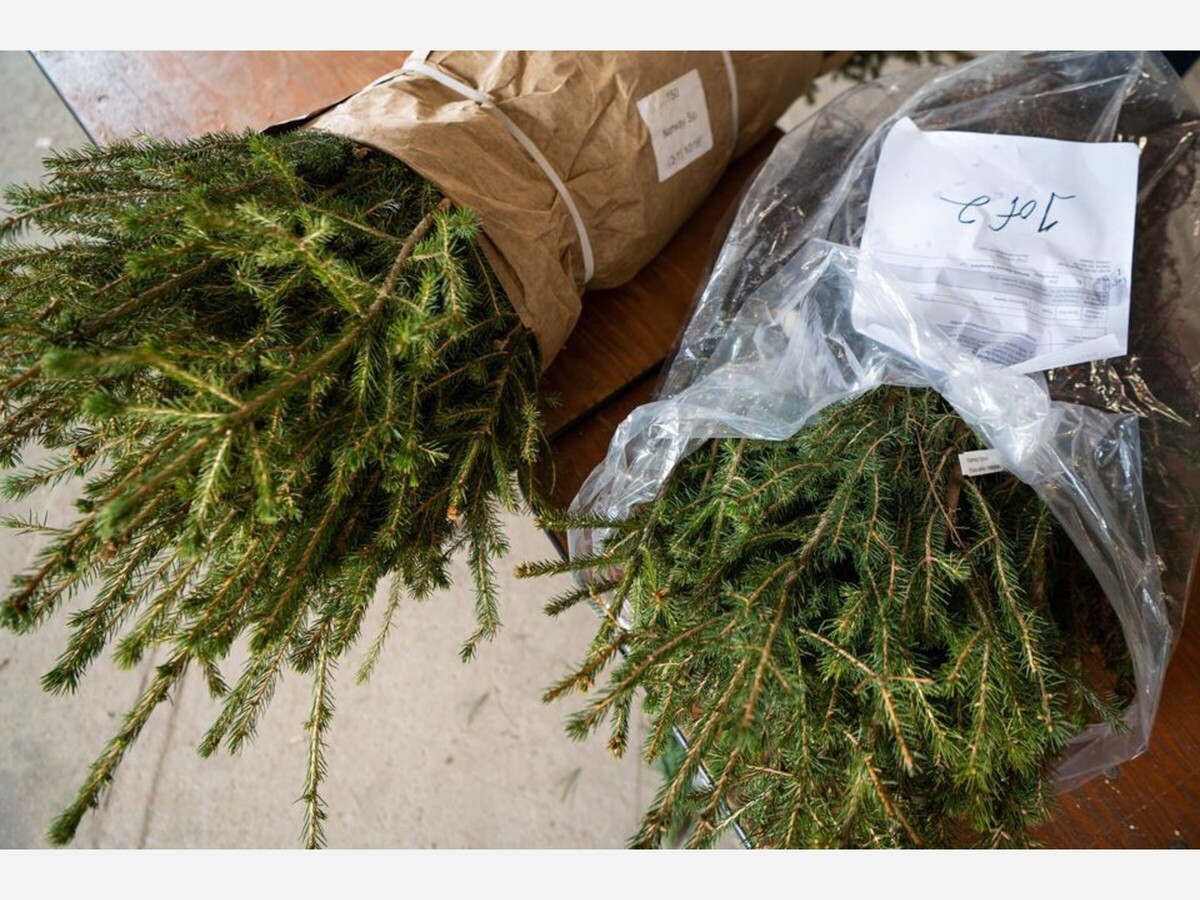
Sales will include a selection of 5 species of conifer trees including pines, spruces, and fir. Additionally, we offer 24 species of native wildflowers in quart pots, 10 species of shrubs and trees in gallon pots, and four native plant garden kits. Featured species new to this year’s sale include White Yarrow (Achillea millefolium), Huckleberry (Gaylussacia baccata), Alternate Leaf Dogwood (Cornus alternifolia), and more!
Preordering opened Aug. 5 via the online store: store.washtenawcd.org. Paper order forms are also available by request and at the WCCD office: 705 N. Zeeb Rd., #201, Ann Arbor, MI 48103. The deadline for the paper pre-order form is September 2, 2024, and the online store closes on Sunday, September 8, 2024.
The pre-order pick-up is on Friday, September 20th from 1-6 p.m. at the Washtenaw Farm Council Grounds: 5055 Ann Arbor-Saline Rd, Ann Arbor, MI, 48103. Limited extra plants will be available for sale between 5-6 pm, first-come first-serve.
To request a paper order form, sign up to volunteer, or find more information on the fall sale, visit www.washtenawcd.org/fallsale.
The WCCD has been distributing trees, plants & tools for conservation since the 1950’s. Over 7.1 million trees and shrubs have been planted due to the WCCD’s distributions, contributing to conservation practices such as reforestation, soil erosion reduction & water quality improvement, habitat restoration, and naturalization projects.
The mission of the WCCD is to assist residents with the conservation, management, and wise use of natural resources in Washtenaw County. The WCCD is a unit of local government, managed by an elected 5-member board of directors, and funded in part by Washtenaw County residents through a 2020-2026 conservation district millage.
To learn more about the Fall Tree & Native Plant Sale and other programs, please visit the WCCD website at www.washtenawcd.org.
For questions or more information, contact Doug Reith, Resource Specialist at doug@washtenawcd.org or by calling (734) 302-8713.
We’re here !!!Japanese Beetle (Popillia japonica) adults have emerged to reproduce and consume massive amounts of ornamental and food plant foliage in the process.While we do not have any 100% effective solutions, this post by Michigan State University Extension entomologists Rufus Isaacs and John Wise shares insights on various organic and conventional control and prevention options. Though written for fruit growers, the info is applicable to homeowners as well.What does Windy Rock Farm & Nursery use for Japanese Beetles? We’ve tried traps in the past, but as noted by Dr. Isaacs, beetle traps are largely ineffective at large-scale control and actually draw more beetles to your property. While no guarantee, this year we are trying Surround WP, an OMRI Certified, organic clay product recommended to us by a friend who used it on his USDA Certified Organic farm for years.Surround WP is a dry powder mixed with water and applied using a sprayer. After drying, a white clay residue remains on leaf and fruit surfaces making them less appealing to hungry insects. It is not permanent and must be periodically reapplied during target pest infestations. If desired, other control agents may be blended in as well.The largest drawback (to the best of my knowledge) is that Surround WP is only available in 25# bags. I recently treated our grapes, raspberries, roses, a cherry tree, a Basswood, and many of our nursery plants and only used 3 cups through a 2-gallon pump sprayer. It will keep indefinitely if kept dry, but you may want to get a few friends or neighbors to share a bag with you. Local to us, Chelsea Farmer’s Supply can order it in for just under $60/bag.I hope you found this Windy Rock Farm & Nursery News update informative. We still have plenty of potted Michigan native perennials, flowering shrubs, and trees available for use in your butterfly, bee, or hummingbird garden, rain garden, etc. – so come out and visit!
Gail sent over this for posting this article on Lantern Fly. the cemetery is in a heavy traffic area on Sterns Rd…..between US 23 and Monroe Rd, at corners on Bedford and Whiteford Twsp. The surrounding area does include the Wheeler Park which is infested with Trees of Heaven-talk of removal and I believe purposefully left at the request of MDARD/MSU as a monitoring tool…….(will confirm who requested trees be left)
Wednesday • June 26, 2024Click below to login and read today’s eNewspaper
Newsmemory.com is the service provider responsible for delivering your subscription to Monroe News.Need Help? Click here for Customer Service In this editionMedical practice expanding servicesMONROE – Growing up, Tedd R. ‘Teddy’ March knew he wanted to be a doctor. Next month, the 29-year-old will be working with his father, Tedd L. March, a primary care physician with more than 30 years’ experience and a practice at 2252 N. Monroe St. In 2019, Tedd L. opened his own internal medicine practice, March Medical Associates, with the intent of making it a family business. He and his wife Debra have three children – Rebecca, Tedd R. and Michael. After graduating from Monroe High…Spotted lanternfly found in Lambertville areaMONROE COUNTY – On Monday, the Michigan Department of Agriculture and Rural Development confirmed the detection of spotted lanternfly in Monroe County. Spotted lanternfly, or lycorma delicatula, is an invasive insect from Asia. The pest is harmless to people and most crops. People who see the insect are told by MDARD to “see it, squish it, report it.” “A small population of juvenile spotted lanternfly was recently detected in Lambertville, with the U.S. Department of Agriculture confirming…More than 30 vendors expected at Saturday’s Petersburg Farmers MarketSuzanne Nolan Wisler The Monroe News USA TODAY NETWORK PETERSBURG – A new Petersburg organization is bringing seasonal fun to town. The Petersburg Event Committee began in November. So far, it’s hosted Christmas activities and an Easter Bunny Breakfast. Now it’s offering what may be Petersburg’s first- ever farmers market. The market debuted in May. The second market will be offered from 9 a.m.-1 p.m. Saturday in the main parking lot on Center Street, between Saline and Wood streets. …
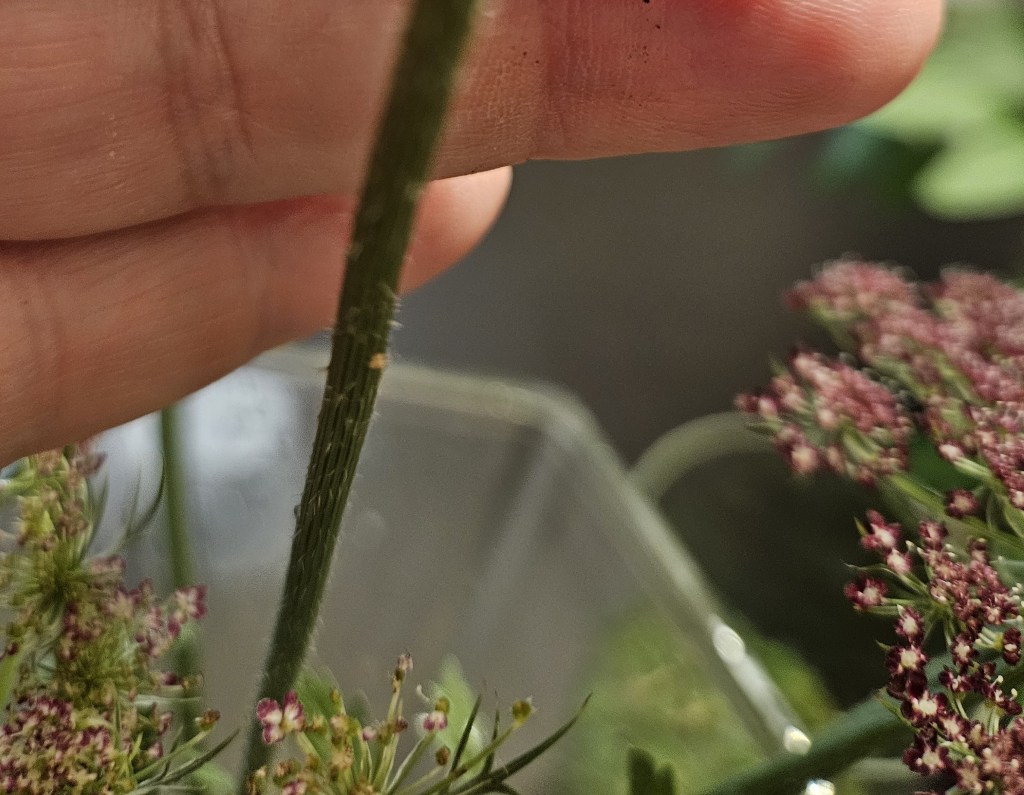
Just a quick note for those who are not aware of the variation that makes it easy to identify these two plants. Although wild carrot is a domesticated version, the quick way of identifying one from the other are the stems. Queen Ann’s lace has a fine hairy stem. Wild Carrot has a smooth stem.
Wild Carrot grows with a tap root, while Queen Ann’s Lace is typically grown from seed.
Both need watch or they can control your garden, but they are both beautiful and used often in wedding flowers. Queen Ann’s lace is growing this year in my garden. It was planted last year…I don’t recall seeing it last year. Well, it’s been a crazy year, maybe it was there…My garden has been neglected this spring and early summer due to a wedding, and so many graduations. But soon, I will be attending to those weeds that are coming up. Have a great 4th of July everyone…. it’ll be here before you know it.
Naida thought we should pass this on. She has attended in past and said that they have some very nice perennials:
Return of the annual Saline Stone & Thistle Garden Club Plant Sale! Saturday May 18 8am-11am. We will have many plants, but they sell out fast! – Prices are fantastic. We will have Master Gardeners on site to answer your questions.
Note: These plants are very nice (and from past experience) sell out fast so if interested you need to be there at 8am!
Saline District Library 555 N Maple Rd back parking lot Saline, MI 48176
News from the Garden The River Raisin Institute Organic Seedling Sale is Approaching! Our team has been hard at work growing, up-potting, and maintaining the seedlings. The sale will occur on Saturday, May 4th starting at 10 am. Please join us at the IHM Campus in Monroe (610 W Elm Ave.) to buy some seedlings, meet the staff and board members, and learn about the organization! There will be a variety of tomatoes and peppers, along with other kinds of vegetables. All the seedlings are USDA organic certified and use Dairy Doo’s 101 Seed Starter. We will be accepting a variety of payments too. We hope you can join us this upcoming Saturday to support the River Raisin Institute!Seedling Catalogue & Preorder FormEarth Day Expo 2024Thank you all for such a great turnout at the 2024 Earth Day Expo on April 27th! This event was a fun, family-friendly day for people of all ages. The River Raisin Institute had a table at the event, where folks were able to learn about our organization, buy some of our seedlings, and make wildflower seed balls! We also exhibited the bats created by local elementary schools for our Climate Literacy Program, with the theme being Bats: Heroes of the Night. A special shoutout to all our schools for their amazing work! Thank you to our fellow partners: The Monroe County Recycling and Green Community Program, Monroe County Library System, The Monroe Family YMCA, and the Sisters, Servants of the Immaculate Heart of Mary for coordinating this event. We thank our generous sponsors for their support: FEDCO, DTE, DTE Foundation, La-Z-Boy, and Monroe Community Credit Union. May is National Clean Air MonthIn the United States, National Clean Air Month is an annual observance that has been taking place in May since 1972. Originated by the American Lung Association, it is a week-long event to raise awareness about the importance of clean air for public health and our environment. Air Quality Awareness Week (AQAW) 2024 is May 6-10. The EPA, in partnership with National Aeronautics and Space Administration, Centers for Disease Control and Prevention, U.S. Forest Service, U.S. National Park Service, U.S. Department of Energy, and U.S. Fish and Wildlife Service, as well as state, local, and Tribal agencies will share information with the public about efforts to protect and improve air quality. 2024’s theme is “Knowing Your Air”. AQAW’s website has resources and information that increase awareness of air quality and push people to take action and consider the learned knowledge into their daily lives. It allows us to learn about what causes poor air quality and how we can prepare for and respond to future events that occur due to this issue. The daily topics of AQAW are as follows:Monday, May 6th – Wildland Fires and SmokeTuesday, May 7th – Asthma and Your HealthWednesday, May 8th – Air Quality and ClimateThursday, May 9th – Air Quality and Environmental JusticeFriday, May 10th – Air, Animals, and PlantsTo celebrate clean air means to understand the issues that arise and how we can all work together to create a cleaner, healthier environment for us and future generations.2024 AQAW ToolkitSources:https://www.epa.gov/air-quality/air-quality-awareness-week https://www.intellipure.com/national-clean-air-month/#:~:text=National%20Clean%20Air%20Month%20is,public%20health%20and%20our%20environment. Asian American, Native Hawaiian, and Pacific Islanders in Climate History With May being Asian American, Native Hawaiian, and Pacific Islander (AANHPI) Heritage Month, it is important to recognize some of the unspoken climate leaders who have continually fought for the Earth and nature. Larry Itliong, a Filipino-American labor activist, organized a strike of over 2,000 farmworkers in 1965 to stand for better wages and working conditions, including eliminating the use of harmful pesticides that hurt the workers’ health and the environment. After over five years of striking took place, they finally secured higher wages, benefits, and better regulations for pesticides. This environmental justice win remains an important contribution to Asian-American communities and the fight for workers’ rights. Published in 1987, “Toxic Wastes and Race in the United States” was an infamous report that used national data to demonstrate that race is the most predictive factor where toxic infrastructure is located. This was the first empirical study to uncover environmental racism at the national level. The primary author of this report was Charles Lee, a Chinese-American activist-scientist. Four years later, he led a convention in Washington D.C., where US leaders of color formally established the environmental justice movement. This groundbreaking report and movement has created a national awareness of environmental justice and led to Charles Lee’s position as a senior policy advisor for the EPA’s Office of Environmental Justice. Native Hawaiians have continuously shown their support for preserving nature. Their fight for a return to indigenous stewardship of the land and the fight for independence remains a strong effort. Recently, a group of native Hawaiians led a successful grassroots campaign that protected two of the world’s largest marine protected areas, the Northwestern Hawaiian Islands and Papahānaumokuākea. Organizations like the Chicago Asian Americans for Environmental Justice and Asian Pacific Environmental Network have been leading the way in environmental justice and climate legislation. The Asian Pacific Environmental Network (APEN) started in 1991 and by 1993, Laotian refugees had helped to establish the fight against Chevron’s refinery pollution in Richmond, California. In 2016, APEN was able to get the state to pass legislation to mitigate carbon pollution, in turn, making Chevron pay a $5 million settlement for one of their refinery fires. With so many people from AANHPI heritage around the world fighting for their rights and for the land, it’s important to recognize that many of these voices are not included in government and international climate decisions. Representation of all should be a forefront effort in the climate movement and will be the only way to address environmental justice issues. Sources: https://atmos.earth/asian-pacific-islanders-climate-activism/https://www.ncelenviro.org/articles/asian-american-pacific-islander-heritage-month/No Mow May ⇒ Mow Less May For many of those who want to participate in “No Mow May”, but can’t due to city ordinances, consider the freer alternative of “Mow Less May”. This approach to the initiative allows the continual mowing of lawns, but at less frequency. Due to climate change, Michigan grass is growing longer and quicker than what we are used to during this month. Also, allowing grass to grow to 12-18 inches can negatively impact your lawn’s health. If it is cut, it will make it harder for nature to break down the grass and convert it to nutrients for your lawn. By mowing less, you can still keep a healthy lawn, while preventing issues for the future. Source: Bees in the D Upcoming EventsThe River Raisin Institute Organic Seedling SalePlease join us at the IHM Campus to purchase seedlings. All seedlings are USDA organic certified and started in soil blocks using Dairy Doo’s 101 Seed Starter. The price is $5.50 per seedling. Cash or credit cards are acceptable. The sale will occur on Saturday, May 4 from 10 am to 7 pm.Preordered seedlings will be available for pick up on Friday, May 3rd from 5 pm to 8 pm on the IHM Campus. Preorder Seedlings & View the Seedling Catalogue Here:tinyurl.com/rrispringseedlingsale If you are unable to use the order form, please contact us at riverraisininstitute@gmail.com or (734) 240-9754. This event is free but please note – registration is required. Register Here Call to Volunteer2024 Lake Erie Water FestivalDate: May 14, 2024Time: 8:00 am – 2:00 pmLocation: IHM Campus, 610 W. Elm Ave, Monroe MIVolunteers needed on May 14th to complete tasks such as:Register attendeesHelp presenters hand out educational materialsand morePlease consider volunteering for this event by clicking the volunteer button to the right or to send an email to the RRI team. VolunteerAsk A Question 2024 Environmental Career DaysDate: May 29th – May 30th Time: 9:00 am – 2:30 pm Location: Monroe County Community College, 1555 S Raisinville Rd, Monroe, MI 48161Volunteers needed on May 29th & May 30th to complete tasks such as:Help presenters hand out educational materialsand morePlease consider volunteering for this event by clicking the volunteer button to the right or to send an email to the RRI team. VolunteerAsk A Question 2024 Budding NaturalistsDate: July 22th – July 25th Time: 8:00 – 12:30 pm Location: IHM Campus, 610 W. Elm Ave, Monroe MIVolunteers needed on these days to complete tasks such as:Present to the kidsAssist with educational activities and craftsand morePlease consider volunteering for this event by clicking the volunteer button to the right or to send an email to the RRI team. VolunteerAsk A Question Partners Supporting Critical Food NeedsDate: May – August by AppointmentTime: Typically 9:00 am – 1:00 pm, but other times can be arranged.Location: Monroe County Community College, 1555 S Raisinville Rd, Monroe, MI 48161Volunteers are needed throughout the spring, summer, and fall to complete tasks such as:Plant and transplant;Harvest produce and flowers;Remove weeds;Water the plants;Package produce;and morePlease consider volunteering for this event by clicking the volunteer button to the right or to send an email to the RRI team. VolunteerAsk A Question River Raisin Institute sponsors educational works with the goal to respect, nurture, and promote the well-being of all creations. We collaborate with others to promote transformational learning and a sustainable community for the 21st century and beyond. VolunteerAsk A QuestionDonate!Sign Up to Receive the Raisin’ Awareness Newsletter via EmailRiver Raisin Institutewww.rriearth.orgEmail not displaying correctly?View it in your browserUnsubscribe
Our Annual Spring Fruit Tree and Fruiting Shrub Salehas begun!Now through May 18th, while supplies last.
Our apple, pear, peach, and sweet cherry varieties have been carefully selected for their disease resistance and cold-tolerance qualities. All are approximately 4′ tall and are grafted on disease resistant/cold tolerant semi-dwarfing root stocks – $45/each.
Some potted, overwintered apple trees are still available at $60 each. Advantage? Bigger root mass and one year closer to fruiting!
Also available this year are Black Raspberry (Jewel, $10/ea) and Blueberry (Blueray, Duke, Elliott, Jersey, $25/ea) rooted cuttings in one-gallon pots. Quantities are limited.Click Here for Detailed Variety InformationWindy Rock Farm & Nursery is open Monday – Saturday, 9-6. Calling ahead [734.358.8260] is recommended to ensure we are not temporarily off-site.


 We’re here !!!
 Japanese Beetle (Popillia japonica) adults have emerged to reproduce and consume massive amounts of ornamental and food plant foliage in the process.While we do not have any 100% effective solutions,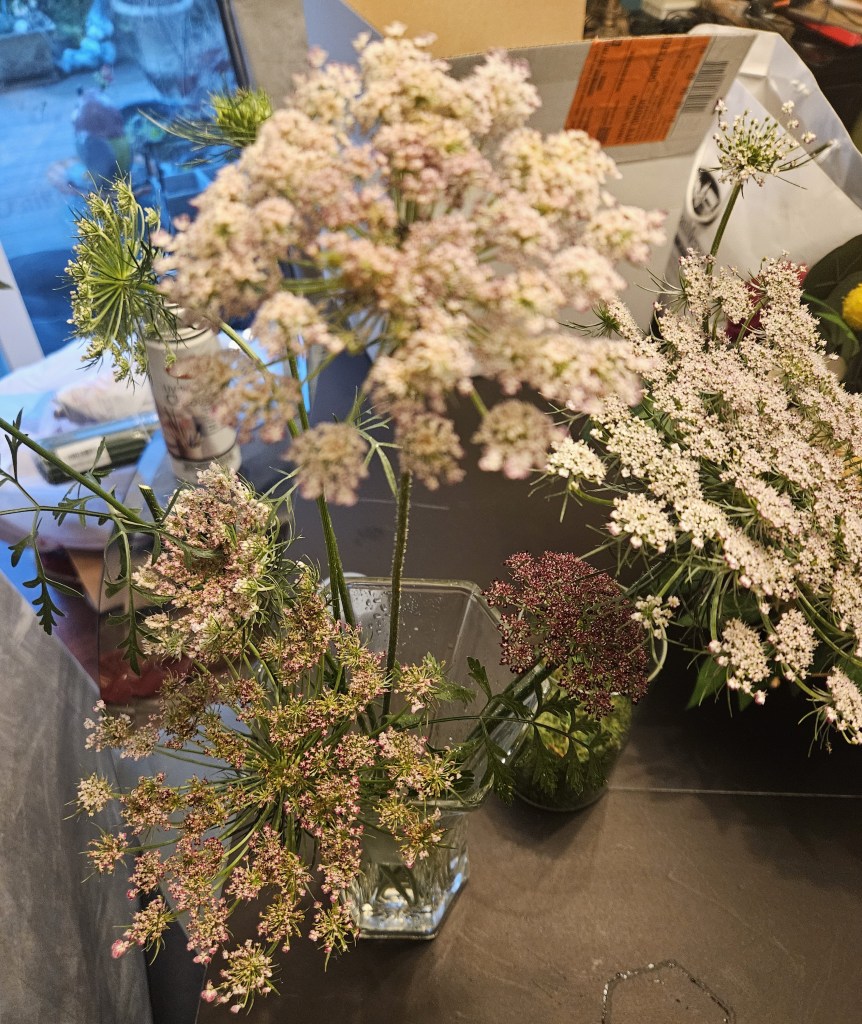


 News from the Garden
 The River Raisin Institute Organic Seedling Sale is Approaching! Our team has been hard at work growing, up-potting, and maintaining the seedlings. The sale will occur on Saturday, May 4th starting at 10 am. Please join us at the IHM Campus in Monroe (610 W Elm Ave.) to buy some seedlings, meet the staff and board members, and learn about the organization! There will be a variety of tomatoes and peppers, along with other kinds of vegetables. All the seedlings are USDA organic certified and use Dairy Doo’s 101 Seed Starter. We will be accepting a variety of payments too. We hope you can join us this upcoming Saturday to support the River Raisin Institute!
 Earth Day Expo 2024Thank you all for such a great turnout at the 2024 Earth Day Expo on April 27th! This event was a fun, family-friendly day for people of all ages. The River Raisin Institute had a table at the event, where folks were able to learn about our organization, buy some of our seedlings, and make wildflower seed balls! We also exhibited the bats created by local elementary schools for our Climate Literacy Program, with the theme being Bats: Heroes of the Night. A special shoutout to all our schools for their amazing work! Thank you to our fellow partners: The Monroe County Recycling and Green Community Program, Monroe County Library System, The Monroe Family YMCA, and the Sisters, Servants of the Immaculate Heart of Mary for coordinating this event. We thank our generous sponsors for their support: FEDCO, DTE, DTE Foundation, La-Z-Boy, and Monroe Community Credit Union. May is National Clean Air MonthIn the United States, National Clean Air Month is an annual observance that has been taking place in May since 1972. Originated by the American Lung Association, it is a week-long event to raise awareness about the importance of clean air for public health and our environment. Air Quality Awareness Week (AQAW) 2024 is May 6-10. The EPA, in partnership with National Aeronautics and Space Administration, Centers for Disease Control and Prevention, U.S. Forest Service, U.S. National Park Service, U.S. Department of Energy, and U.S. Fish and Wildlife Service, as well as state, local, and Tribal agencies will share information with the public about efforts to protect and improve air quality.
  2024’s theme is “Knowing Your Air”. AQAW’s website has resources and information that increase awareness of air quality and push people to take action and consider the learned knowledge into their daily lives. It allows us to learn about what causes poor air quality and how we can prepare for and respond to future events that occur due to this issue. The daily topics of AQAW are as follows:Monday, May 6th – Wildland Fires and SmokeTuesday, May 7th – Asthma and Your HealthWednesday, May 8th – Air Quality and ClimateThursday, May 9th – Air Quality and Environmental JusticeFriday, May 10th – Air, Animals, and PlantsTo celebrate clean air means to understand the issues that arise and how we can all work together to create a cleaner, healthier environment for us and future generations.
 Larry Itliong, a Filipino-American labor activist, organized a strike of over 2,000 farmworkers in 1965 to stand for better wages and working conditions, including eliminating the use of harmful pesticides that hurt the workers’ health and the environment. After over five years of striking took place, they finally secured higher wages, benefits, and better regulations for pesticides. This environmental justice win remains an important contribution to Asian-American communities and the fight for workers’ rights. Published in 1987, “Toxic Wastes and Race in the United States” was an infamous report that used national data to demonstrate that race is the most predictive factor where toxic infrastructure is located. This was the first empirical study to uncover environmental racism at the national level. The primary author of this report was Charles Lee, a Chinese-American activist-scientist. Four years later, he led a convention in Washington D.C., where US leaders of color formally established the environmental justice movement. This groundbreaking report and movement has created a national awareness of environmental justice and led to Charles Lee’s position as a senior policy advisor for the EPA’s Office of Environmental Justice. Native Hawaiians have continuously shown their support for preserving nature. Their fight for a return to indigenous stewardship of the land and the fight for independence remains a strong effort. Recently, a group of native Hawaiians led a successful grassroots campaign that protected two of the world’s largest marine protected areas, the Northwestern Hawaiian Islands and Papahānaumokuākea.
  Organizations like the Chicago Asian Americans for Environmental Justice and Asian Pacific Environmental Network have been leading the way in environmental justice and climate legislation. The Asian Pacific Environmental Network (APEN) started in 1991 and by 1993, Laotian refugees had helped to establish the fight against Chevron’s refinery pollution in Richmond, California. In 2016, APEN was able to get the state to pass legislation to mitigate carbon pollution, in turn, making Chevron pay a $5 million settlement for one of their refinery fires. With so many people from AANHPI heritage around the world fighting for their rights and for the land, it’s important to recognize that many of these voices are not included in government and international climate decisions. Representation of all should be a forefront effort in the climate movement and will be the only way to address environmental justice issues. Sources:
  No Mow May ⇒ Mow Less May For many of those who want to participate in “No Mow May”, but can’t due to city ordinances, consider the freer alternative of “Mow Less May”. This approach to the initiative allows the continual mowing of lawns, but at less frequency. Due to climate change, Michigan grass is growing longer and quicker than what we are used to during this month. Also, allowing grass to grow to 12-18 inches can negatively impact your lawn’s health. If it is cut, it will make it harder for nature to break down the grass and convert it to nutrients for your lawn. By mowing less, you can still keep a healthy lawn, while preventing issues for the future. Source:


 The River Raisin Institute Organic Seedling SalePlease join us at the IHM Campus to purchase seedlings. All seedlings are USDA organic certified and started in soil blocks using Dairy Doo’s 101 Seed Starter. The price is $5.50 per seedling. Cash or credit cards are acceptable. The sale will occur on Saturday, May 4 from 10 am to 7 pm.Preordered seedlings will be available for pick up on Friday, May 3rd from 5 pm to 8 pm on the IHM Campus. Preorder Seedlings & View the Seedling Catalogue Here:
 This event is free but please note – registration is required.
  Call to Volunteer2024 Lake Erie Water FestivalDate: May 14, 2024Time: 8:00 am – 2:00 pmLocation: IHM Campus, 610 W. Elm Ave, Monroe MIVolunteers needed on May 14th to complete tasks such as:Register attendeesHelp presenters hand out educational materialsand morePlease consider volunteering for this event by clicking the volunteer button to the right or to send an email to the RRI team.


 Now through May 18th, while supplies last.
 Monroe County Master Gardener Association