Feeds:
Posts
Comments

Archive for the ‘Uncategorized’ Category

Congratulations to Paul

Our own Paul Russeau, Monroe County Master Gardener, received an award for his native gardens. Here’s some background information and photos. This is a great honor…Congratulations Paul:

From the national Wild Ones website:
As the only national not-for-profit educational organization with a mission to promote environmentally sound landscaping practices to preserve biodiversity through the preservation, restoration and establishment of native plant communities, Wild Ones serves as a resource for private individuals, schools, commercial property owners, and community decision makers as they move toward ethical choices in land use and in the redefinition of current guidelines and ordinances affecting our landscape. Because we are a “plants-roots” organization, our organizational goals are accomplished through local chapters and their individual members.

Paul writes:
The award, was presented to me by the Wild Ones Oak Openings Region Chapter. One of the activities of the chapter is to present student, business, public agency, and residential landscape awards. The Oak Openings is a globally-threatened ecosystem of northwest Ohio and southeast Michigan.
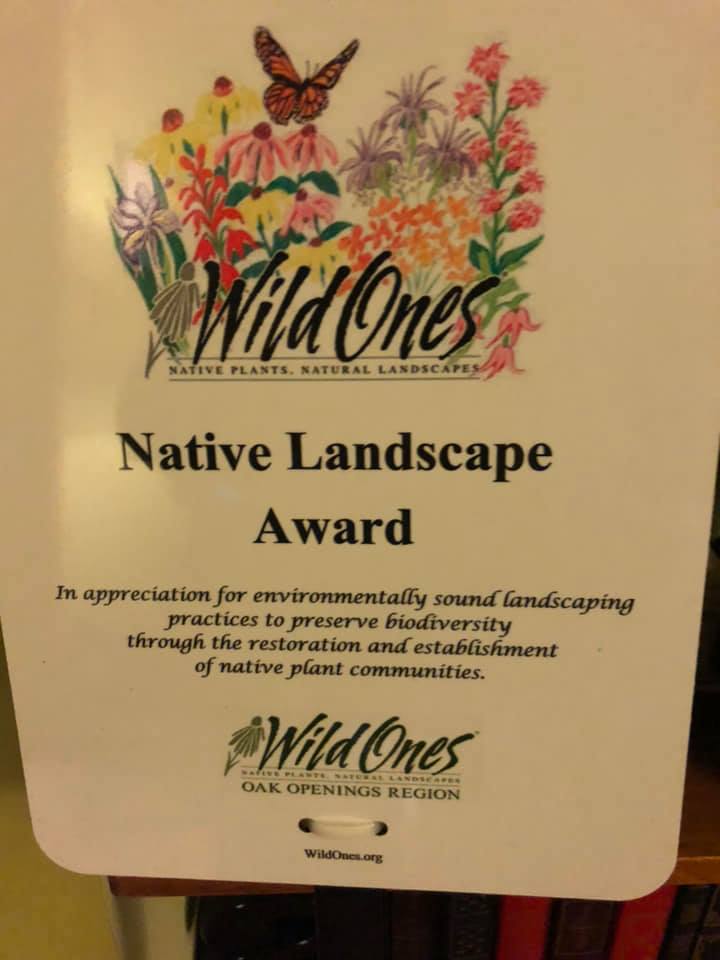
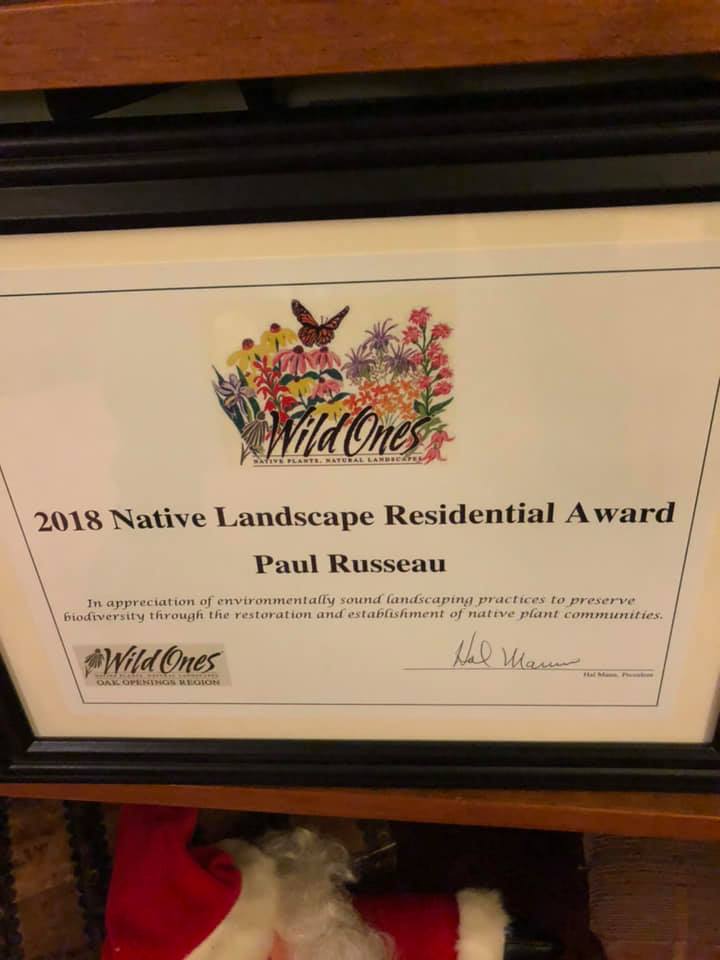
I am a member of he Oak Openings Region Chapter and applied ( you do not need to be a member to apply) for the 2018 Native Landscape Residential Award. The criteria for the award is have 50% or great native plants in your garden, the garden must be at least two years old, submit a list of the native plant species in your garden, and include the primary source of your native plants. I was selected as one of the gardens eligible and the Awards Committee visited/toured my garden. After the committee toured all garden that were selected, I was chosen the winner. It really was an honor to receive the award.

After I read Doug Tallamy’s book Bringing Nature Home, it was for me a “call to action”. I then knew when making landscape decisions I could have an impact on the survival of birds, insects, and other wildlife simply by selecting native plants. In addition , and as a result of my Master Gardener training, I needed to help educate my community on sustainable gardening, the benefit of native plants and their role in our ecosystem.

For more information on Wild Ones:

Link to Wild Ones Oak Openings Region Chapter

Upcoming Programs & Events

Link to the national Wild Ones website

Upcoming Programs & Events

Read Full Post »

Hosta College

Here’s an educational opportunity:

Here is a great event for all gardeners and it is not just about Hostas. They offer over 70 different classes on a variety of subjects. There will be vendors, an auction, a raffle, a prize giveaway and a banquet. I have been going for the last 7 years and can highly recommend it. Registration opens January 26 and classes fill up fast.
Click on PDF Below:

132962297

Read Full Post »

Attention Plant Enthusiasts: Attend the 2019 Plants of Distinction and Beat the Winter Doldrums!
Beat the winter doldrums and get energized for spring! Join nationally renowned horticulturists and fellow “plant geeks” for the daylong MSU Extension “Plants of Distinction” seminar in Novi on February 13th.

This year’s topics and speakers include:

The Layered Garden – David Culp, Horticulturist & Vice President, Sunny Border Nurseries, CT
At the Water’s Edge: Marginal Plants – Matthew Ross, Director of Continuing Education, Longwood Gardens, PA
The Hunt for New and Better Hydrangeas for Michigan Gardens – Tim Wood, Plant Hunter, Product Development and Marketing Manager, Spring Meadow Nursery, MI
50 Plants You Cannot Live Without – David Culp, Horticulturist & Vice President, Sunny Border Nurseries, CT
Plants that Ignite the Winter Landscape – Matthew Ross, Director, Continuing Education, Longwood Gardens, PA

Cost is $85.00, and includes a light breakfast, lunch, beverages and handouts.

Visit https://events.anr.msu.edu/POD2019/ for full details and registration.

Registration closes February 6th or until this popular event is filled. To avoid disappointment, register early. Regrettably, we are unable to accommodate walk-in registrations.

Read Full Post »

Oudolf Garden Detroit

Naida received a note from our Michigan Garden Clubs
President. She wanted to share this information so
sent this link:

_Home_

On this website you can click on the Newsletter Archives to read how the
idea started and the progress.

Read Full Post »

Books

I have a couple of secret Santa’s out there and I thought I would share.(Thank you Santa). I received two great books to share. The first is Garden Walks: Hand In Hand by Gary W. Burns. It’s filled with poetry inspired for the garden. It is divided in to sections that include: Colorful Blooms, This Back Yard Garden, Garden Paths, Seasons Cascading and Perennial Days. Each sections has several poems for reading. I’ve read a few that have brighten my day. But, I so want to read them on a sunny day in the garden.
This book is very inspirational and I recommend it.

As most of you know, during the cold winter months, I make paper flowers. This leads me to my second Secret Santa’s book…The Accidental Botanist: The structure of Plants Revealed. This is authored by Robbie Honey. It begins with an introduction to Robbie Honey. Seems we have some common interests: interior design and flowers. Santa knew me well. This book is filled with information of flower varieties along with a photo of the plant deconstructed. A jewel for a Master Gardener, especially if they happen to make paper flowers. The chapters are divided by flower color. I’ve already made a few. I totally recommend this book for those interested in the particular parts and how they appear of a plant and bloom. Along with the photos is a short story and information on the plant.

Santa sure was good to me.

Read Full Post »

As we plan out our new year activities; you may want to add a few of these destinations for a visit. Naida will be printing out some sites for our next meeting. But’ why not have a preview? These links will include additional links to areas that can be visited.

Public and Private Gardens:
http://www.michiganmastergardener.org/visit-public-and-private-gardens-in-michigan/

and

Michigan Nature Centers, Conservatories, Bogs, Prairies and Fens:
http://www.michiganmastergardener.org/michigan-nature-centers-conservatories-bogs-prairies-fens/

Read Full Post »

Horticulture Club Card

Read Full Post »

Happy New Year!!!!!!

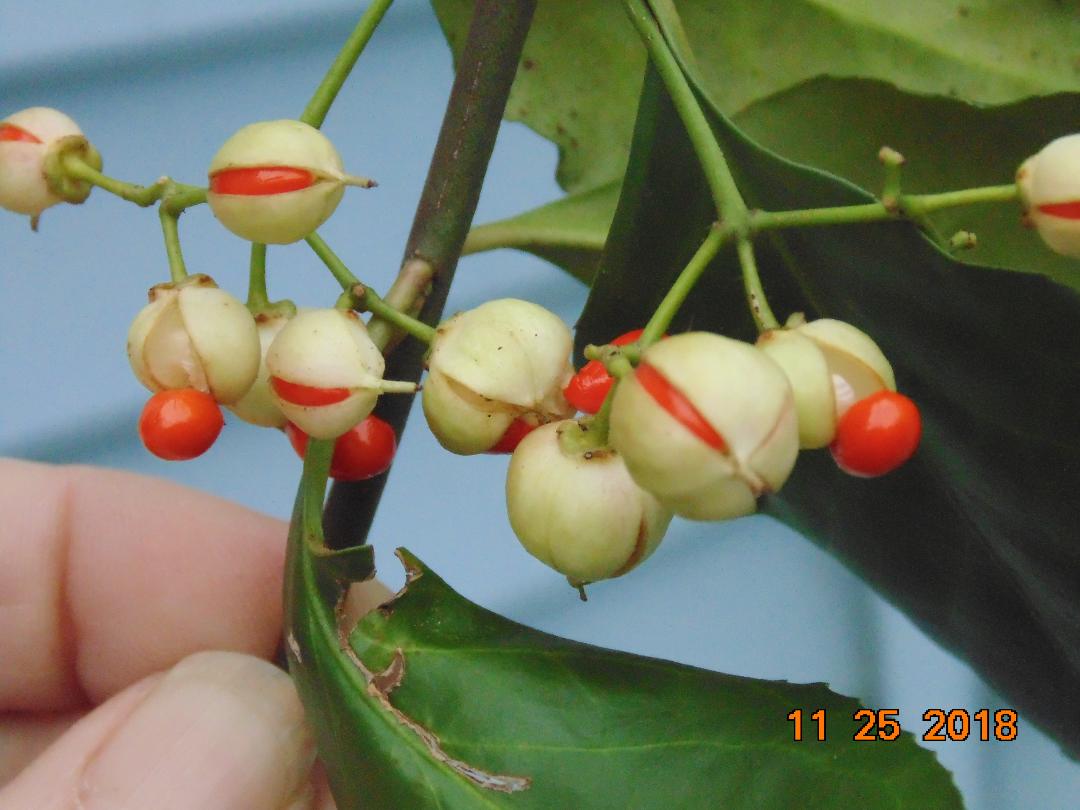
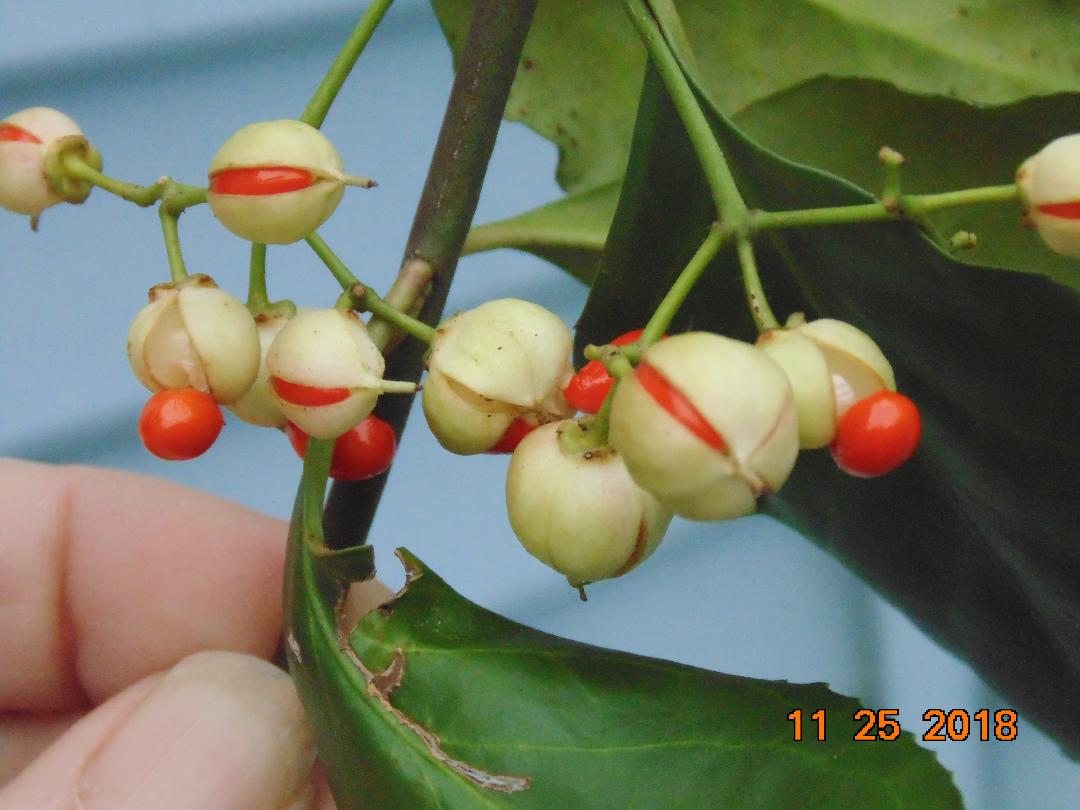
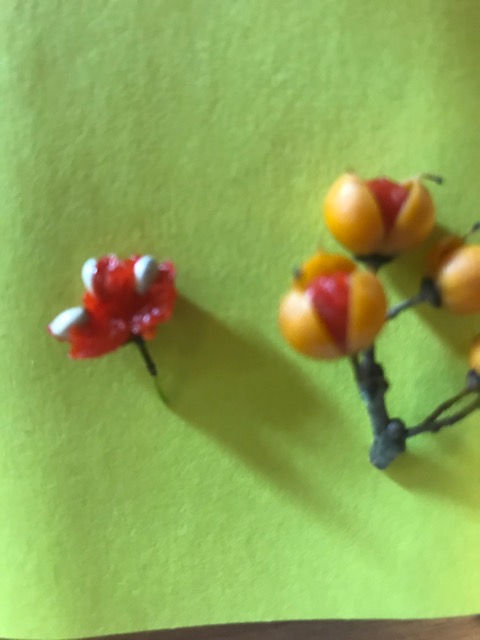
In celebration, I would like to finalize my quest to name that mystery plant by disclosing its name to you. Please go back into the blog to review photos and highlights-(Thank you Paul for your photos & PDFs on bittersweet.) In response to the initial question, Jenny (my secret accomplice) offered her expertise by sending me a hint for review. Sure enough–it would offer me some valuable resources to provide me with what we believe is the positive ID of this plant-BUT she did not want to give the answer at this point. Had I been approaching it all wrong–so even though we thought we had it named, why not take the opportunity to share the methods available to us, as gardeners, to ID a plant. It was fun to see who or what some of you would post. Following the last post–Naida, another accomplished master gardener offered her insight and again—gave a link to share-which she believed allowed her to narrow down the list of possibilities. Folks, let me tell you–there is just so much information out there.

Linda has included those link for all of us to have.
http://cuteurl.info/wweeinfo-euonymus-fortunei-fruit.html

And now–without further adieu-May I
present to you the name of the unknown plant:

SPREADING EUONYMUS KIAALLTSCHOVICUS

SPREADING EUONYMUS KIAALLTSCHOVICUS

In Jenny’s words—now wasn’t that fun????
I hope you all enjoyed this quest…………..I know I enjoyed sharing the experience with you
All the best to you for 2019……………. gail

Read Full Post »

Merry Christmas

All is Calm

All is Bright

GK

Read Full Post »

Continue the Quest

Photos and article by Gail K.

Sorry for the delay, but I felt given the time of year-many of you would probably not visit the blog. Besides, to continue this quest is a great way to start off the new year……. Before we start, take a moment to go back in the blog and reacquaint yourself with the subject matter—a quest to identify “the plant”. Moving on; it is apparent the unknown plant is not bittersweet, despite those berries. Since mentioning, I want to share some of the notable traits of NATIVE bittersweet. As habitats are lost– native plant species are being destroyed.
To that end- is a goal to teach gardeners how to once again incorporate native plants into their gardens. Not just flowering plants but those that provide food.

Paul, offered to help give some details on native bittersweet. Many of us heard Paul speak of this plant on the tour of his native garden. For you who did not get to attend here are some highlights. American Bittersweet-Celustus Scandens L.

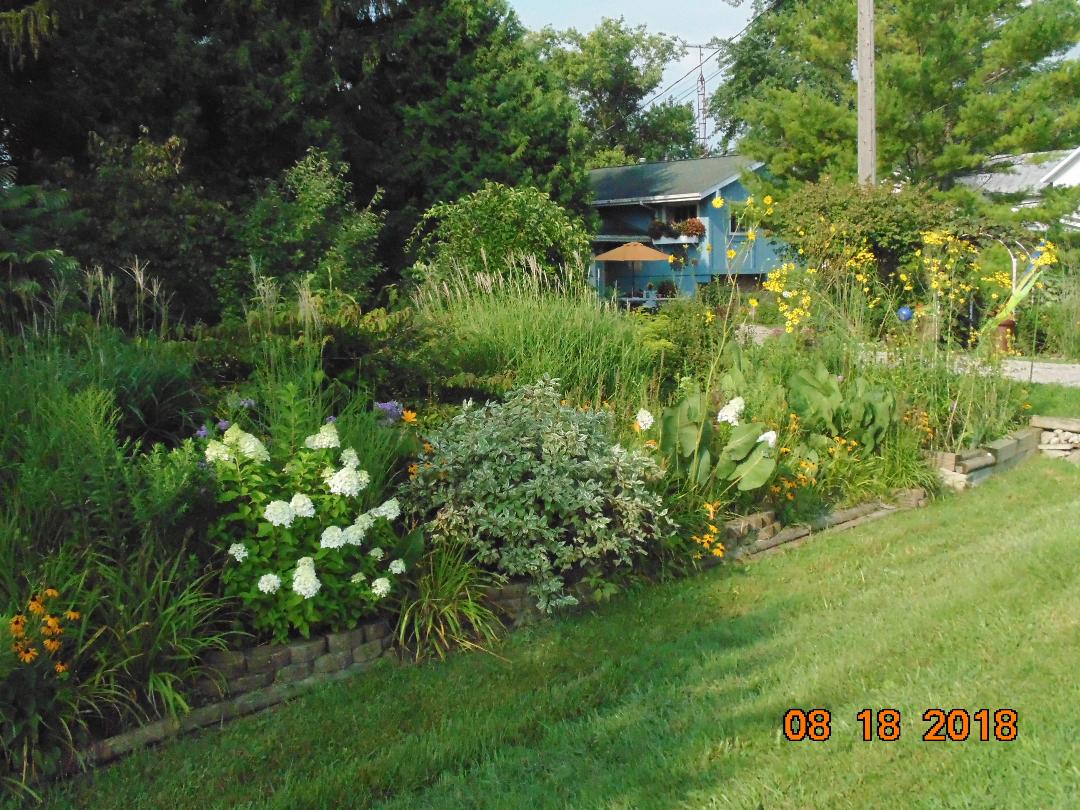
First notable:glossy green “summer” foliage. This plant looses it leaves (unlike the unknown) The bittersweet are the rounded bushes in the background/ on left side of photo.

another photo……….the bush directly behind Paul


Next notable: the fruit……….

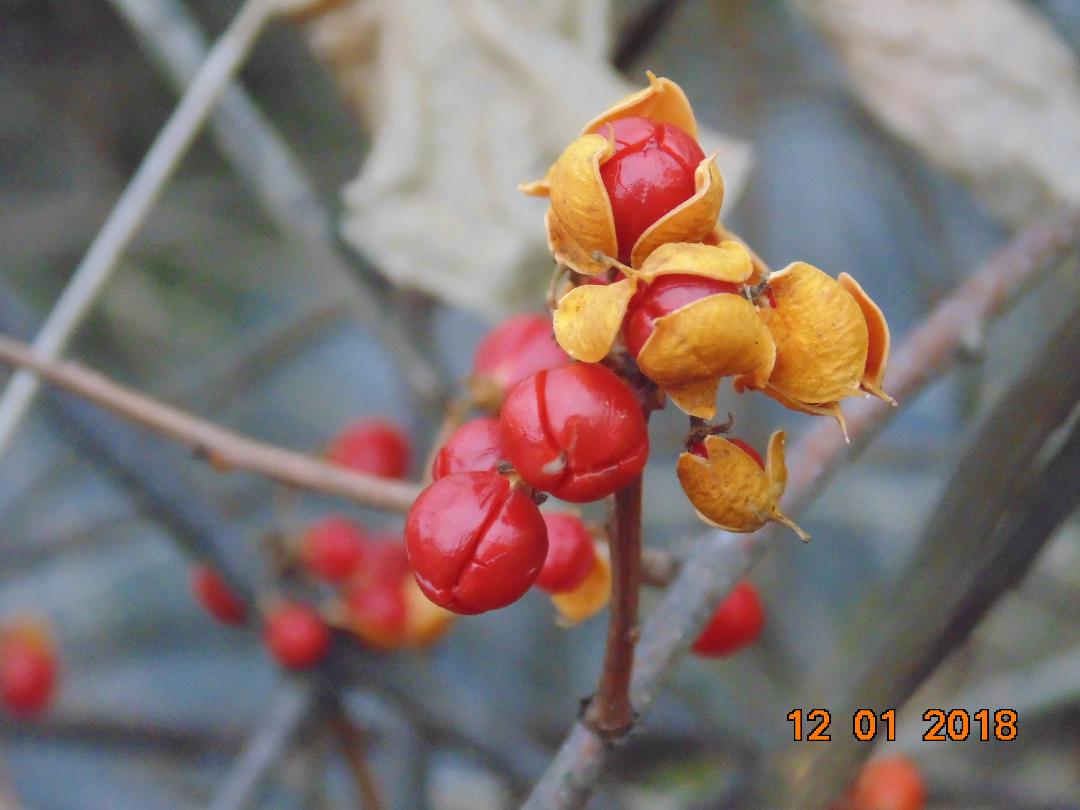
(see above) In the native, the ripe fruits are orange to yellow orange. there are 2-4 cells in each “berry” and 1-2 seeds in each cell.

Here is the fruit of the invasive bittersweet

Here is the fruit of the unknown plant.

In the native bittersweet-each seed is enclosed by a bright scarlet fleshy aril–not much different than the other two plant types.

The non native produces more seeds and birds prefer them over the native berries. Another notable is the flower-the native flowers are small & fragrant–greenish white or greenish yellow in color, growing in clusters at the branch tips. Not much different from the other two plants—but the non native has higher pollen viability and is more efficient in photosynthesis. Since I don’t know what the other plant is, I have nothing to compare on that. The American Bittersweet can girdle & kill live plants that it uses for support. just like the non-native but the growth habitat of the non native is to grow “over” preventing photosynthesis. Paul has sent us some PDF info on both of these plants and I would suggest reading over these to better inform yourself. (Click on PDF file to open)
Bittersweet-American and Oriental Identification USDA

Bittersweet-American and Oriental Identification

Since it seems that the oriental is displacing the native and in some instances, if the two species are found together–there is evidence of hybridizing–conservation groups are making efforts to get rid of the oriental version. Attached is another note: and a volunteer effort to learn and to help (these can be used for your 2019 MG re-certification credits).

Next week: The answer to the quest

Read Full Post »

« Newer Posts - Older Posts »