Jennie sent us a bit of humor:

Archive for the ‘Uncategorized’ Category
Friday Funny
Posted in Uncategorized on May 16, 2019| Leave a Comment »
COMING UP IN MAY AT KINGWOOD CENTER GARDENS
Posted in Uncategorized on May 8, 2019| Leave a Comment »
Gail has sent us this info from Kingwood :
Free Admission Days in May
Rich History Weekend
May 4th-May 5th
Free Admission for Rich History Passport Holders
National Public Gardens Day
May 10th
Free Admission for All!
Armed Forces Day
May 18th
Free Admission for Military Service Members
May Events
Spring Kick-Off Plant Sale
May 3rd-May 5th
Join us for the Kingwood Spring Kick-Off Plant Sale! The Garden Shop will be fully stocked with 200+ different herbs & vegetables, a large selection of perennials, annuals, trees, shrubs, houseplants, succulents and garden decor! A one-stop-shop to get your garden started.
Members, save 15% all weekend long! New Memberships will also be 15% off!
May Workshops
Insect Repellent Container Garden Workshop
May 5th from 5-6 PM
Non-Member: $35 / Members: $28
Ward off patio pests without harmful chemicals by using scented herbs! All participants will create a beautiful container to take home.
Intro To Meditation
Free With Admission
May 6th from 5:30-6:30 PM
Explore the practice of mindful meditation while enjoying the fresh air, sights, and sounds of Kingwood. Any experience level welcome.
Self-Care for the Gardener
May 9th from 5:00-6:30 PM
Non-Member: $25 / Members: $20
Do your hands need help after working in the garden? Sue Yarger from Sky Essentials will help you personalize hand lotion with essential oils. Create a second item to help relieve soreness from bending, lifting, and grasping. Materials provided.
Mindful Movement Yoga Series
Every Thursday, May 9th-May 30th from 5:30-6:30 PM
1 Session: Non-Member: $12 / Members: $10
Series: Non-Member $40 / Members: $35
Join us for a gentle, meditative yoga experience amid the beauty of Kingwood’s gardens. All levels welcome.
Invasive Plants Seminar
May 16th from 10:30 AM – 3:00 PM
Non-Members: $35 / Members: $28
Join the Ohio Invasive Plants Council in a day-long adventure of learning about Ohio’s invasive plants and how to deal with them. Breakfast and lunch provided as well as a tour of Kingwood’s gardens!
Spring Foraging
May 16th from 5-7 PM
Non-Member: $25 / Members: $20
Ever wondered what those “useless” weeds are in your garden or backyard? Many are beneficial, edible, and medicinal. Nicholas Copley of Lionheart Medicinal Gardens will lead you through Kingwood identifying and sharing on history, nutrition, and medicinal value of the plants found on this tour.
Blooming Peonies in Paper
May 19th from 5-7 PM
Non-Members: $50 / Members: $40
Recreate beautiful blooming peonies with exhibit artist Lea Gray! These amazing paper blooms are exquisite decorations you can add to your walls or vases that will wow your family and friends!
Paint and Plant with Willie
May 23rd from 5-6 PM
Non-Members: $10 / Members: $5
Bring your children to the gardens for a fun and exciting craft time with Kingwood Gardener, Willie. Kids and adults can enjoy growing flowers in a pot they paint themselves! Materials provided.
Astronomy Night Hike
May 24th from 9-10 PM
Adults: $5 / Children: $3
Experience Kingwood after hours to join astronomer Dave Duncan to view the stars! This workshop is fun and educational for both kids and adults.
Fountains and Statues
May 30th from 6-7 PM
Non-Members: $10 / Members: $5
Did you know there are several different historic statues and fountains throughout Kingwood Center Gardens? These historic features create our own unique art gallery inside our gardens! Find out the history of each feature on this guided tour.
Parking
Our Trimble Road lot is closed this season, but we have several other options for parking. Please enter through our Park Avenue West gate or the Linden Road entrance.
Cultivation Education
Every Tuesday starting May 28th from 10:30-11:30 AM
Cultivation Education beings May 28th! This educational series is for preschool aged children and their caregivers, and is free with admission. Join us every Tuesday from 10:30-11:30am in the Peacock Playhouse. There will be a different, nature-themed topic each week as well as a craft for children to create. This is a great way for your child to learn about nature!
Wine Walk
Tickets go on sale today!!
This year we are hosting our 3rd Annual Wine Walk and we’ve made some exciting changes you won’t want to miss! We are adding a beer tent, larger wine pours, and more drink tickets – all at a better price for you! In lieu of a chef’s tasting, we are partnering with food truck vendors to offer eclectic and quality dining options for purchase. Additionally, the event will grow to new areas of our grounds including the Greenhouse and Kingwood Hall and will feature intimate seating and live music surrounded by our unforgettable garden setting.
Our theme this year is Red Wine vs. White Wine. From Cabernet to Chardonnay, choose a side by dressing in red or white attire. The event features eight of Ohio’s premier winemakers serving up two ounce pours of reds, whites, and rosé. The evening will also include live music and entertainment.
Member Preview: Order your tickets now to enjoy a special preview hour just for Kingwood Members from 5-6pm!
For more information and ticket sales, visit http://kingwoodcenter.org/events/3rd-annual-wine-walk
10th Annual Kingwood 5K
Matthaei Garden Spring Sale
Posted in Uncategorized on May 8, 2019| Leave a Comment »
Naida has shared some info with us:
Lots of good info from Matthaei advising status of peony garden and spring sales for those interested. Thanks, Naida
Container Plantings, Herbs and Vegetables, Peonies, and Art
https://mbgna.umich.edu/spring-sales-at-matthaei-nichols-container-plantings-herbs-and-vegetables-peonies-and-art/
Educational Hours Needed?
Posted in Uncategorized on May 7, 2019| Leave a Comment »
Here are some opportunities for a few hours send by Gail K>
many of these things can be used for education……………
https://www.oakopenings.org/wp-content/uploads/2018/03/BLUE-WEEK-2018-Linked.pdf?utm_source=Oak+Openings+Newsletter&utm_campaign=7193abbc06-EMAIL_CAMPAIGN_2019_05_02_04_20&utm_medium=email&utm_term=0_80be2b9799-7193abbc06-45463155
Useful Hosta Information
Posted in Uncategorized on May 6, 2019| 1 Comment »
by Gail K.
To Share a newsworthy piece of information from a Hosta grower:
At the hosta college one speaker shared her secret for
deterring deer and rabbits from the yard or garden………….
she tried all the usual remedies such as hanging bags filled with human hair
or bars of Irish Spring Soap in trees and on bushes….even using coyote or other
predator urine(that is expensive)…………..
she has found that in early spring (deer cut their trails in early March)– free throwing Milorganite around the perimeter of
your yard, in the flower.gardens and repeating that in 3-4 weeks works the best.
she shared that a company in Milwaukee Wisc. came up with a purpose to recycle sewage-=-
this is sanitized sewage from Milwaukee Wisc.— and she says it works.
a deer can smell up to 1/4 miles away and she has seen deer in her neighborhood come out of
a yard near hers and clearly walk past hers……….she also advised, that you do not want to get on a wood
deck or on concrete. Because it is sewage she does not recommend putting into a veggie garden, even
if it is sanitized. But if you have a large yard you just put it around the perimeter to keep them from coming
into the yard at all…………..The best time to buy this is summer or late fall
gk
Hack House has Open House this weekend
Posted in Uncategorized on May 2, 2019| Leave a Comment »
Good morning Linda. Many of our master gardeners have been to Hack
House Museum in Milan (but it has been several years) so are familiar
with the grounds there and that Milan Garden Club maintains them. Some
have asked about touring the historic 1888 home. I’m hoping you will
post their Annual Open House notice which is this coming Saturday and
Sunday, May 4 and 5. Milan Garden Club will be selling perennials and
Milan Historical Society will be selling hanging baskets for Mother’s
Day. Visitors are welcome to tour both the grounds and inside of Hack
House. Unfortunately, with all this rain, our garden club has not been
able to get our garden areas “tour ready” but so many perennials (weeds
also) are loving this weather!
Hack House Annual Open House
Saturday, May 4 from 10am to 4pm
Sunday, May 5 from 1pm to 4pm
Thanks,
Naida
Azaleas and Rhododendrons
Posted in Uncategorized on April 24, 2019| 1 Comment »
It’s spring and soon the azaleas and rhododendrons will be blooming. I see azaleas referred to as rhododendrons and vice versa often. So I found a website that explains the similarities and differences. I have both deciduous and evergreen azaleas, but have been so unsuccessful with Rhododendrons. Both are beautiful. Check out this site for some information:
https://www.gardenia.net/guide/Azaleas-and-Rhododendrons-What-Difference
Milan Lavender Farm
Posted in Uncategorized on April 22, 2019| 1 Comment »
Naida writes:
I think many of our members do not know about Lavender Lane, a lavender
farm, located on Plank Road in Milan. They are having a Harvest
Festival Saturday, July 13. I will send their website for more
information. Milan Garden Club visited them last year, by special
invitation, and it is a very nice place. They also had a Harvest
Festival last year and I understand there was a real traffic jam by
their place with over 1,000 visitors so if anyone plans on going I would
get there early. Lots of good vendors. (I do not think they accept
visitors unless during the festival but folks could call and find out.)
BYGL Weekly News for April 15, 2019
Posted in Uncategorized on April 17, 2019| Leave a Comment »
Naida sent us in this information on OSU newsletter
The following articles were compiled during the last 7 days by members of the Extension, Nursery, Landscape, Turf (ENLT) team to benefit those who are managing a commercial nursery, garden center, or landscape business or someone who just wants to keep their yard looking good all summer. Access the BYGL website for additional information on other seasonal topics at: http://bygl.osu.edu
For more pictures and information, click on the article link below titles. To contact the authors, click on their names.
Be Alert for Boxwood Leafminer
https://bygl.osu.edu/node/1230
Authors Joe Boggs
Published on April 12, 2019
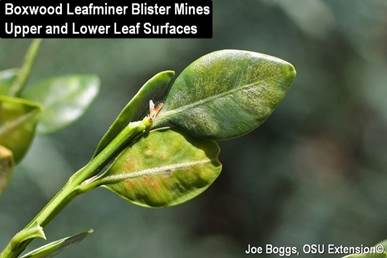
Boxwoods with yellow to brown leaves are common this spring throughout Ohio. Boxwoods with yellow to brown leaves are common this spring throughout Ohio. Some of the leaf discoloration is due to winter injury with foliage at the tips of branches or on the windward side of plants most heavily affected.
Some discoloration was caused by salt damage either directly with “ice melt” or rock salt inadvertently thrown onto foliage, or indirectly with “salt spray” carried onto foliage from nearby roadways. Salt damage is sometimes, but not always, concentrated on one side of the plant.
However, a close examination may also reveal the telltale blister-like leaf symptoms caused by the boxwood leafminer (Monarthropalpus flavus). Leafmines may be found throughout the plants although the highest concentration often occurs on foliage at branch tips.
Gently separating the upper and lower leaf surfaces (the leafminer had already done most of the work!) will reveal the bright yellow leafmining larvae (maggots) of this midge fly wiggling around in their blister mines. The larvae will complete their development in a few weeks and pupate. The pupae are also bright yellow at first, but turn orangish-yellow as this stage nears completion.
This non-native midge fly was accidentally introduced into North America from Europe in the early 1900s and is now common throughout Ohio. Adults emerge at around the same time red horsechestnuts (Aesculus × carnea) and doublefile viburnums (Viburnum plicatum) are in full bloom (440 GDD). Except for their bright orange abdomens, the adults superficially resemble miniature mosquitoes.
Females use their needle-like ovipositors to insert eggs between the upper and lower leaf surfaces of boxwood leaves. Each leaf may contain multiple oviposition sites with several eggs per site. These sites will become individual leafmines producing the blister-like leaf symptoms.
Eggs hatch in early-summer and the resulting larvae spend the remainder of the season consume interior leaf tissue as they develop through the 1st and 2nd instar stages. Winter is spent as 3rd instar larvae inside the leafmines. The larvae resume feeding in the spring and develop through a 4th instar stage.
Much of the leaf damage occurs in early spring with the ravenous larvae rapidly expanding their leafmines. Multiple leafmines in individual leaves may coalesce causing the upper and lower leaf surfaces to delaminate over the entire leaf. Individual mines may turn reddish-green at this time of the year with heavily mined leaves turning from yellow to orangish-brown causing the leafmining damage to be mistaken for winter injury.
A close examination of the leafmines at this time of the year may reveal small translucent “windowpanes” created by the larvae in the lower leaf surface. The pupae will wiggle through these weak points to ease the emergence of fragile adults.
This pupal activity is responsible for one of the most unusual features of this midge fly: reports of hissing, crackling, or rustling sounds coming from heavily infested boxwoods. I’ve reported on this strange phenomenon in past BYGLs. So, reports from gardeners or landscapers that they’ve heard boxwoods going snap, crackle, and pop should be taken seriously as the odd sounds are an indicator of a heavy boxwood leafminer infestation.
Damaging boxwood leafminer infestations can be suppressed through applications of neonicotinoids such as imidacloprid (e.g. Merit, Marathon, and generics) or dinotefuran (e.g. Safari or Zylam). However, applications should be delayed until AFTER boxwoods bloom to protect pollinators.
Boxwood blooms attract a wide range of pollinators; blooming plants can literally buzz with their activity. Delaying applications until blooms drop will result in some minor miner damage, particularly with the imidacloprid that is taken-up more slowly compared to dinotefuran. However, this is a small price to pay for protecting pollinators.
You may find recommendations for topical applications of pyrethroid insecticides such as bifenthrin (e.g. Talstar) to target adult leafminer females before they lay eggs. However, adults typically emerge in Greater Cincinnati while boxwoods are in full bloom, so I no longer recommend this application.
Plant selection provides a more long term solution to the depredations of boxwood leafminer by removing insecticides from the management equation. A helpful research-based listing of the relative susceptibility of boxwoods to the leafminer was published in 2014 by the American Boxwood Society in their “The Boxwood Bulletin” [see More Information below].
More Information
American Boxwood Society, Boxwood Leafminer Evaluation
http://www.boxwoodsociety.org/uploads/54_1_2014_Summer.pdf#page=9
How To Hire An Arborist
https://bygl.osu.edu/index.php/node/1229
Authors Amy Stone
Published on April 12, 2019
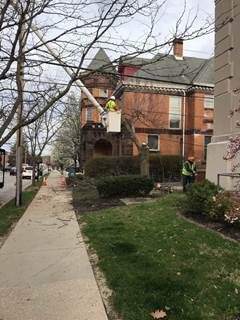
Ohio State University Extension’s Home Yard and Garden FactSheet HYG-1032 has been update and is available online. The OSU FactSheet includes tips for selecting an arborist and resources available to help find local arborists.
An arborist, by definition, is an individual trained in the art and science of planting, caring for, and maintaining individual trees. Arborists are knowledgeable about the needs of trees and are trained and equipped to provide proper tree care. Hiring an arborist is a decision that should not be taken lightly. Proper tree care is an investment that can lead to substantial returns. Well-cared-for trees are attractive and can add considerable value to your property. Poorly maintained trees can be a significant liability. Pruning or removing trees, especially large trees, can be dangerous work. Tree work should be done only by those trained and equipped to work safely in trees (ISA, 2018).
A huge thank you to Cindy Meyer with Warren County Soil and Water Conservation District for her work as a co-author and the photo used in this alert.
More Information
OSU Extension Home Yard and Garden 1032
https://ohioline.osu.edu/factsheet/hyg-1032
Green Tigers Prowling Forest Trails
https://bygl.osu.edu/index.php/node/1228
Authors Joe Boggs
Published on April 10, 2019
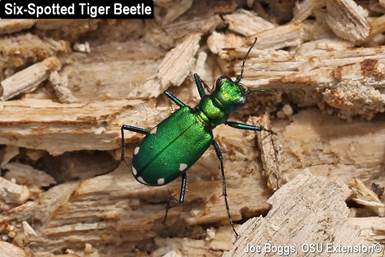
I spotted one of my favorite forest dwellers during a walk in the woods yesterday: six-spotted tiger beetles (Cicindela sexguttata). The beetles have a curious affinity for hanging out on woodland trails and they can certainly liven up a hike.
The beetles are well-named because these tiny “tigers” hunt, kill, and eat other insects. The overall color of these shiny beetles varies from deep emerald green to slightly bluish-green depending on the angle of the light. Six white spots are arranged along the trailing edge of the wing covers, three spots per side. The spots are small and sometimes obscured by light bouncing off their highly reflective shiny bodies.
The beetles have bulging black eyes (the better to see you with, my dear!) that makes them look like they’re wearing goggles. The beetles are agile flyers and their excellent eyesight coupled with long legs which gives them swift speed can make getting a close look difficult.
However, a close examination of this ferocious predator will reveal powerful sickle-shaped mandibles that are used to grab and dispatch luckless arthropod prey; a trait that is shared with other tiger beetles (family Carabidae (Ground Beetles); subfamily Cicindelinae (Tiger Beetles)). A word of caution: these carnivores can also use their impressive mandibles to deliver a painful bite to the hand of the overly curious.
Even the larvae of this tiny tiger are predators. However, instead of actively hunting their prey, they conceal themselves in vertical burrows in the soil to await hapless victims. When a meat item such as insects or spiders walks past, the tiger larva springs forth like a jack-in-the-box to grab dinner with their powerful mandibles.
The bottom line is that six-spotted tiger beetles are highly effective and important predators throughout their life cycle. So, keep your eyes peeled for and hands away from these tiny tigers prowling our woodland trails … and don’t kill them since they are good guys!
Magnificent Magnolias
https://bygl.osu.edu/node/1227
Authors Thomas deHaas
Published on April 9, 2019
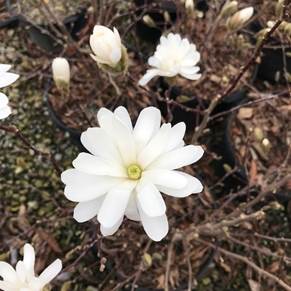
Magnolias come in a range of flower colors and sizes.
The two most common in the landscape are Star Magnolia Magnolia stellata, which has a white flower, and Saucer Magnolia Magnolia soulangiana, which has a pale purple flower.
Many more cultivated varieties exist which include a yellow, Butterflies Magnolia Magnolia x. ‘Butterflies”, Magnolia x. loebneri ‘Leonard Messel’,
Magnolias can grow as a single stem tree form, which can reach 30 feet, or a small specimen tree that can be kept at 10 feet through pruning. Magnolias also come in a multi-stemmed small tree or shrub form.
The magnolias as a group are free from cultural problems except for an occasional outbreak of magnolia scale.
The one drawback as a group is because they flower so early; they can occasionally be burned by a frost, which will damage the flowers. But the solution is look to the ‘girl’ hybrids which bloom later:
By using varieties that bloom later, they tend be less susceptible to frost damage.
Take a look……………Magnolias are ‘MAGNIFICENT’
OHIO STATE UNIVERSITY EXTENSION
http://extension.osu.edu/
Where trade names are used, no discrimination is intended and no endorsement by Ohio State University Extension is implied. Although every attempt is made to produce information that is complete, timely, and accurate, the pesticide user bears responsibility of consulting the pesticide label and adhering to those directions.
Ohio State University Extension embraces human diversity and is committed to ensuring that all research and related educational programs are available to clientele on a nondiscriminatory basis without regard to race, color, religion, sex, age, national origin, sexual orientation, gender identity or expression, disability, or veteran status. This statement is in accordance with United States Civil Rights Laws and the USDA.
CFAES provides research and related educational programs to clientele on a nondiscriminatory basis. For more information: [ http://go.osu.edu/cfaesdiversity ].
Any materials in this newsletter may be reproduced for educational purposes providing the source is credited.
HOSTA COLLEGE
Posted in Uncategorized on March 29, 2019| 4 Comments »
By Gail K.
As Master Gardeners-Advanced or Beginners: we are obligated to seek out educational
opportunities. This year, many of our membership attended the Growing Great Gardens
Seminar in Taylor, MI. Having attended this event (for the first time) last year; I opted to try
another seminar; just a 2 hr drive away-The Great Lakes Region-HOSTA COLLEGE in Piqua, Ohio.
From the onset, I noted some differences between the two.
Checking in at 7:30AM I could see a distinct difference in the age of the attendees. Many
appeared to be much more experienced in years than myself.

(registration, meet & greet and dining area)
Additionally, as I moved about the large meeting room which would serve as the dining area, I
could hear people calling out to each other as they renewed old relationships. Throughout the day
I would learn that attendees, vendors and speakers had come from Michigan, Ohio, Indiana, Kentucky
Pennsylvania and other states. A really wide variety of people & they all seemed to know each other.
A 2 day event-I only did the day with the classes.
Each class was an hour and I had 5 plus an hour of lunch. Felt
like I was right back in high school (ha ha) Although much of the focus was
on hostas-I had 64 topics I could choose from.
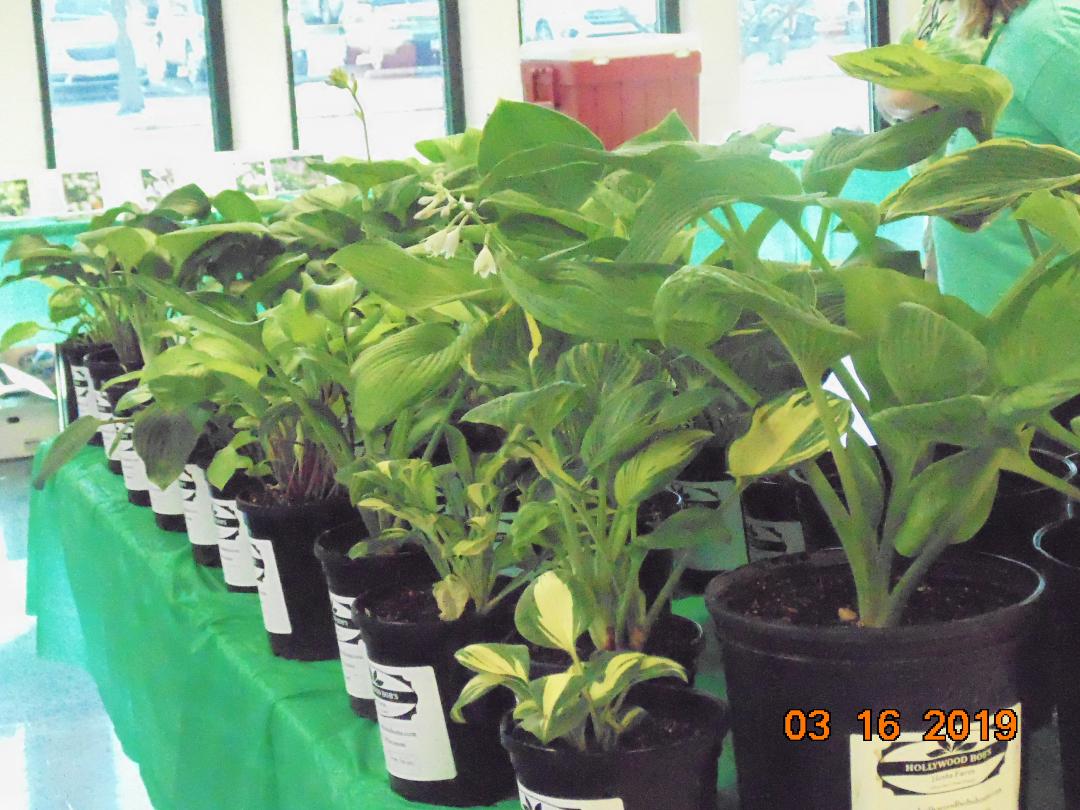
(just one table of hostas that were for sale in the vending area)
Many of the hosta classes filled quickly, as they allow membership to sign up first.
But despite having to wait to choose, I felt I had a wide array of topics to choose from.
I begin the day with a Hosta class, moved on to the Tall Bearded Iris, than I learned
to diversify my landscape (more so with trees & shrubs), then a lecture on
Trillium (this guy was from Michigan) and lastly 365 days of bloom-which had a focus
on Witch hazels. I loved the variety of classes and the #’s varied. Some classes were
full-30 people others only 10 or so. Made for very personal discussions.

Of course there were vendors– such as the one pictured above. Not as many, and not the variety
as the Growing Great Gardens. I did miss that aspect but I also spent less money on extras :).
There were booths from nurseries which brought along large stock plants such as trees and bushes.
DSC01212.JPG
Then there were the artsy ones—

There was a booth which had loads of books, another with
photos
There was the booth with papercrete products (had a class
on this)–much lighter weight than hypertuffa….

It lacked the group speaker programs but all in all, I felt it was a quality program. I will admit
I did miss seeing and mingling with fellow gardeners I know (love catching those Kodak moments)
and despite not winning one of the many door prizes they offered –

I did leave with my free hosta (Wiggles & Squiggles) and a wealth of knowledge on new topics. I am
happy with my decision to step out of my comfort zone and try something new. Now if only spring would get here!!!
GK
 Monroe County Master Gardener Association