Feeds:
Posts
Comments

Archive for the ‘Uncategorized’ Category

Gail has submitted photos and remarks:
June 15, 2019: Our first scheduled tour for the 2019 summer season. Overcast skies with a threat of more
rain–did not deter the group. Armed with umbrellas & raincoats the group of Master Gardeners and Hort. Club
members headed out to Midland’s Dow Gardens. The pictures that follow will cover the docent led Whiting Forest tour.
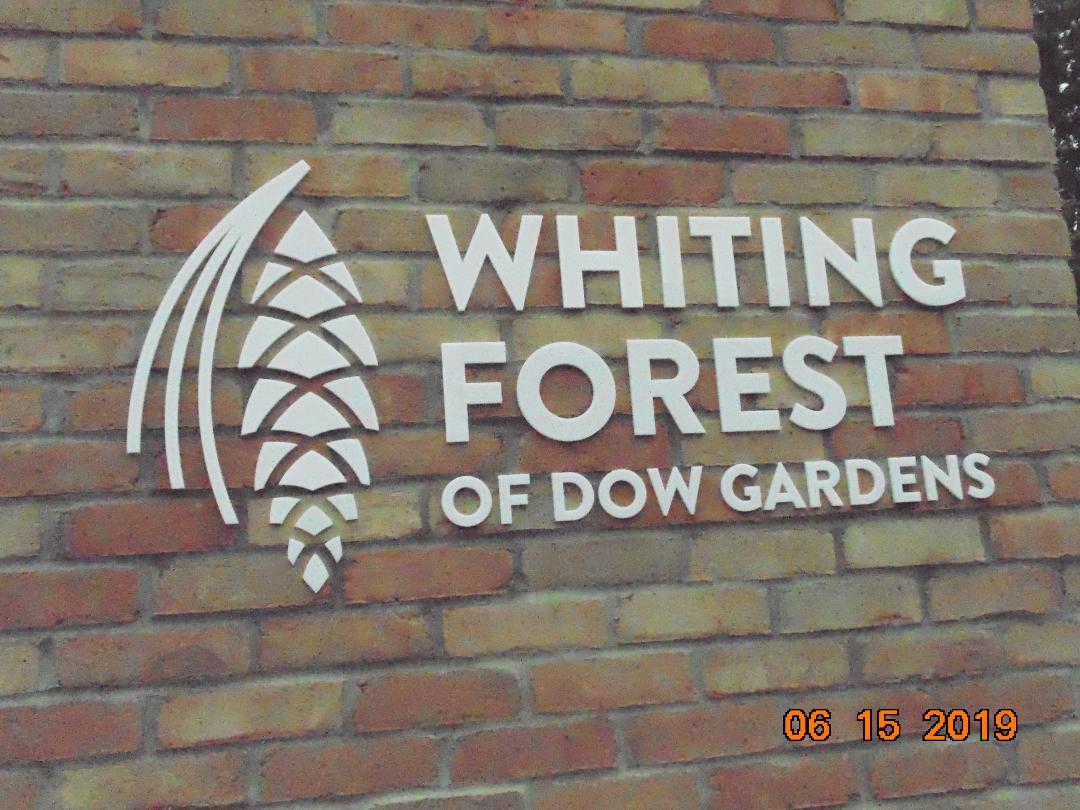
The docent was very knowledgeable of the gardens and was hands on (Head of his dept) in developing this area of the gardens.

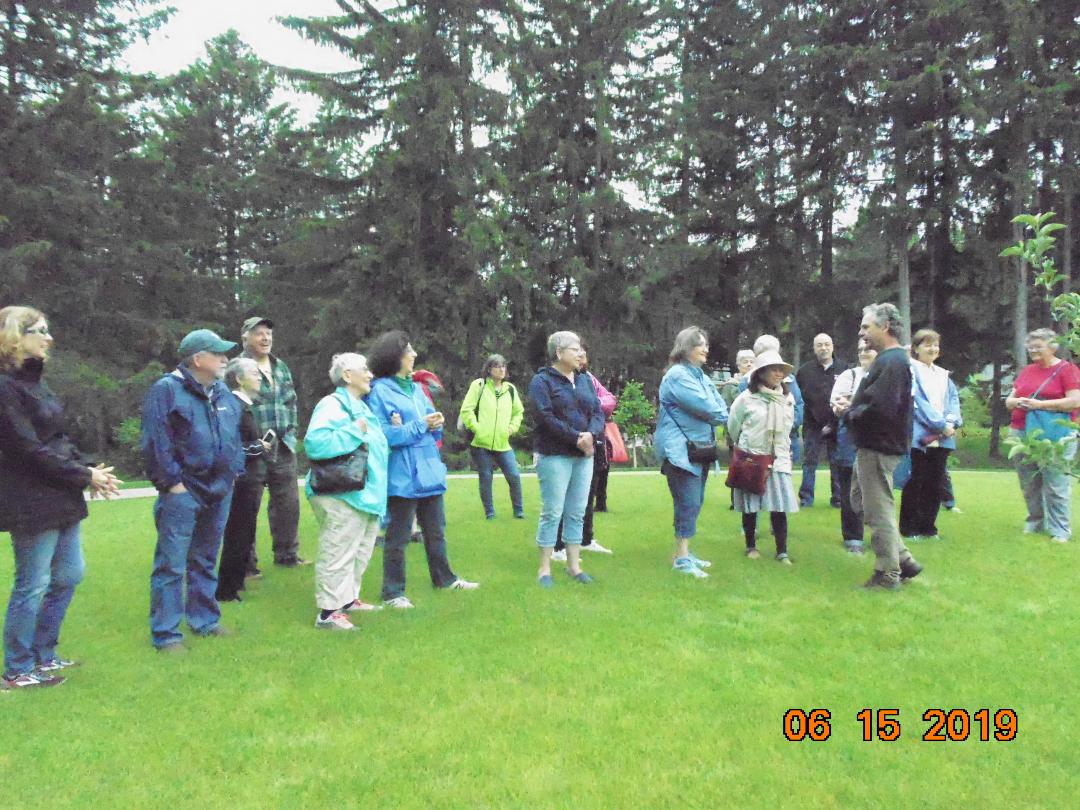
The group listened intently as the docent gave some history to the aspects of the newly planted apple orchard.
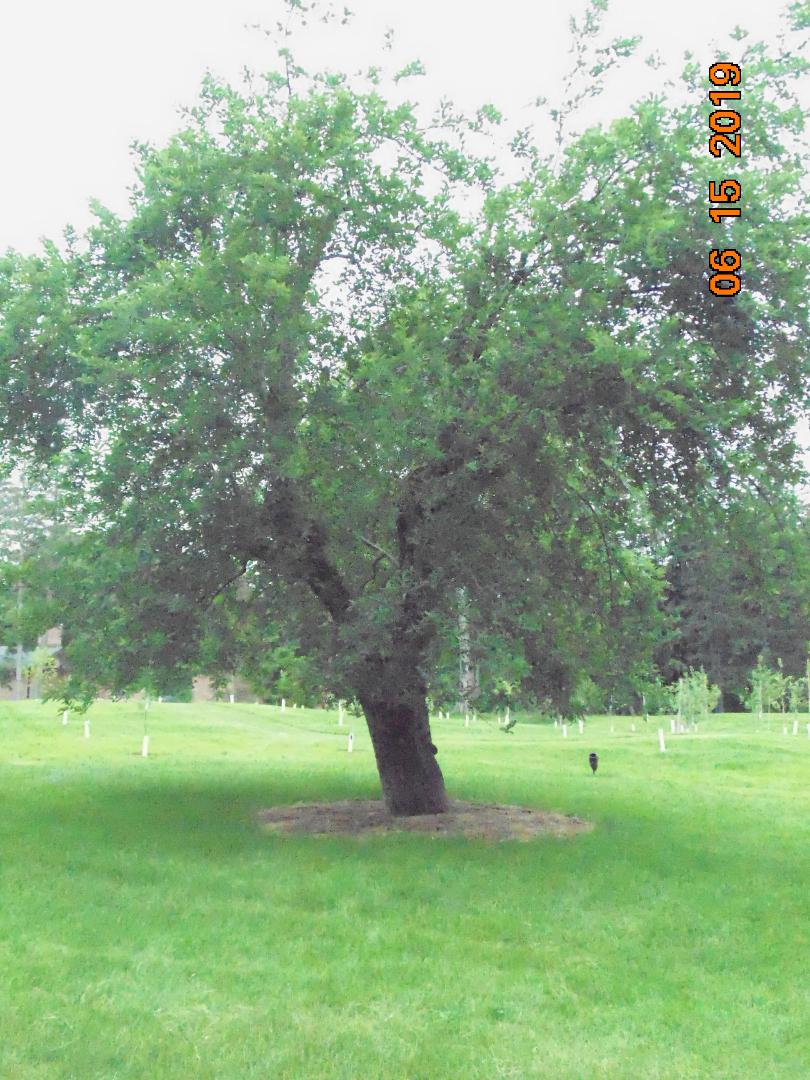
THE MOTHER APPLE TREE
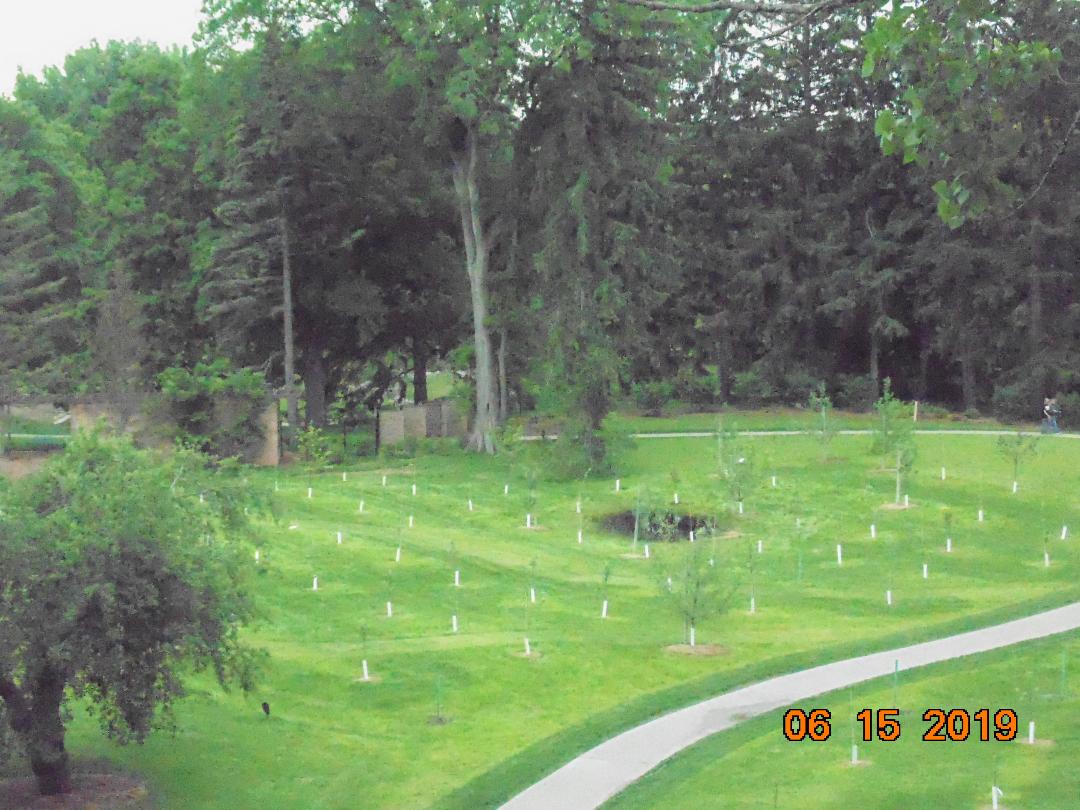

aerial view of newly planted apple trees
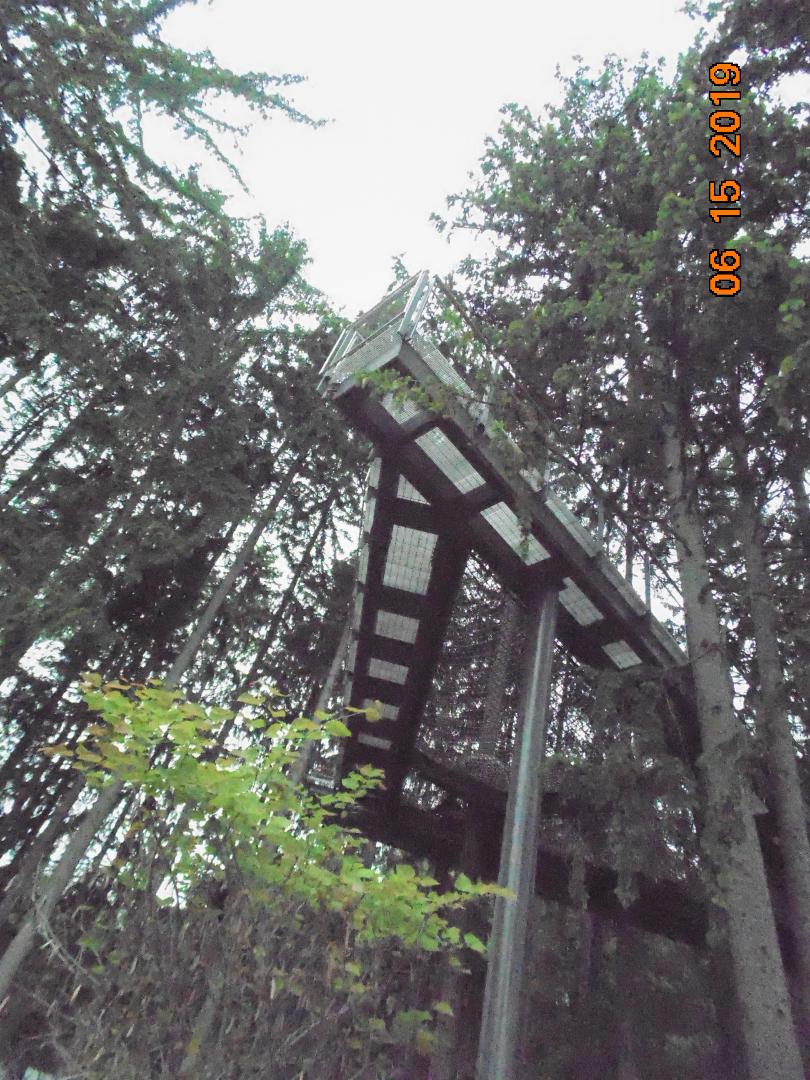

En route to–yes, we are going up there
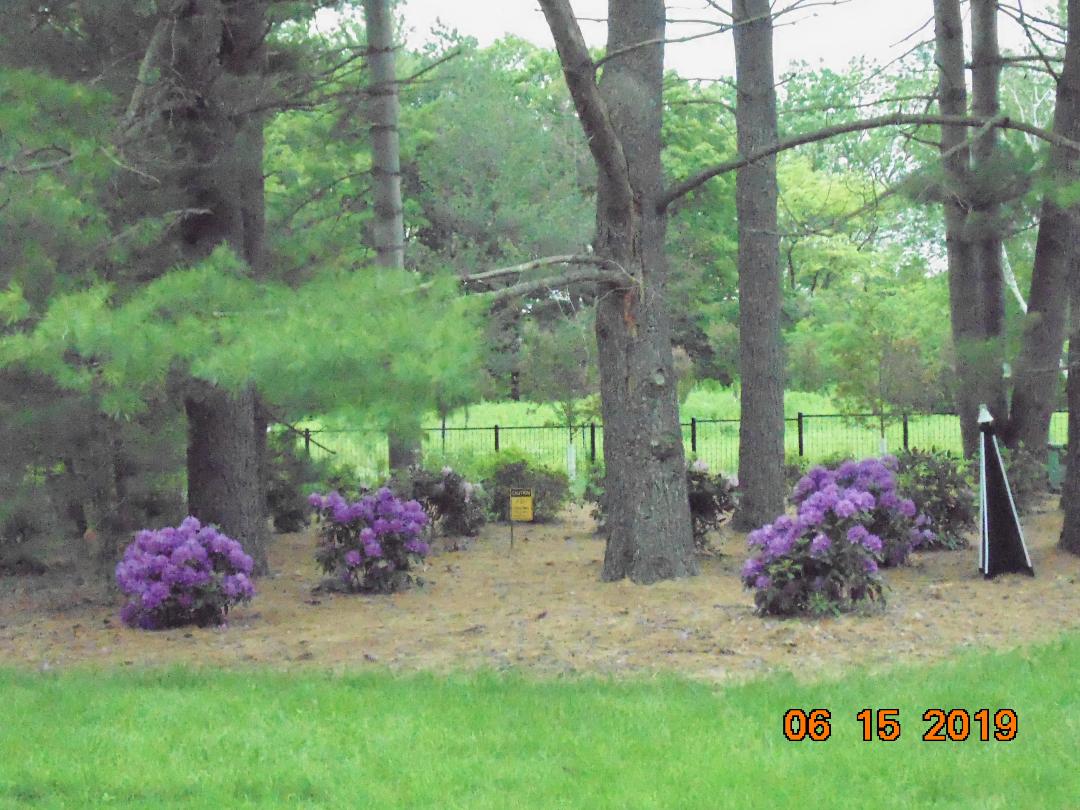
We walked along some grand vistas
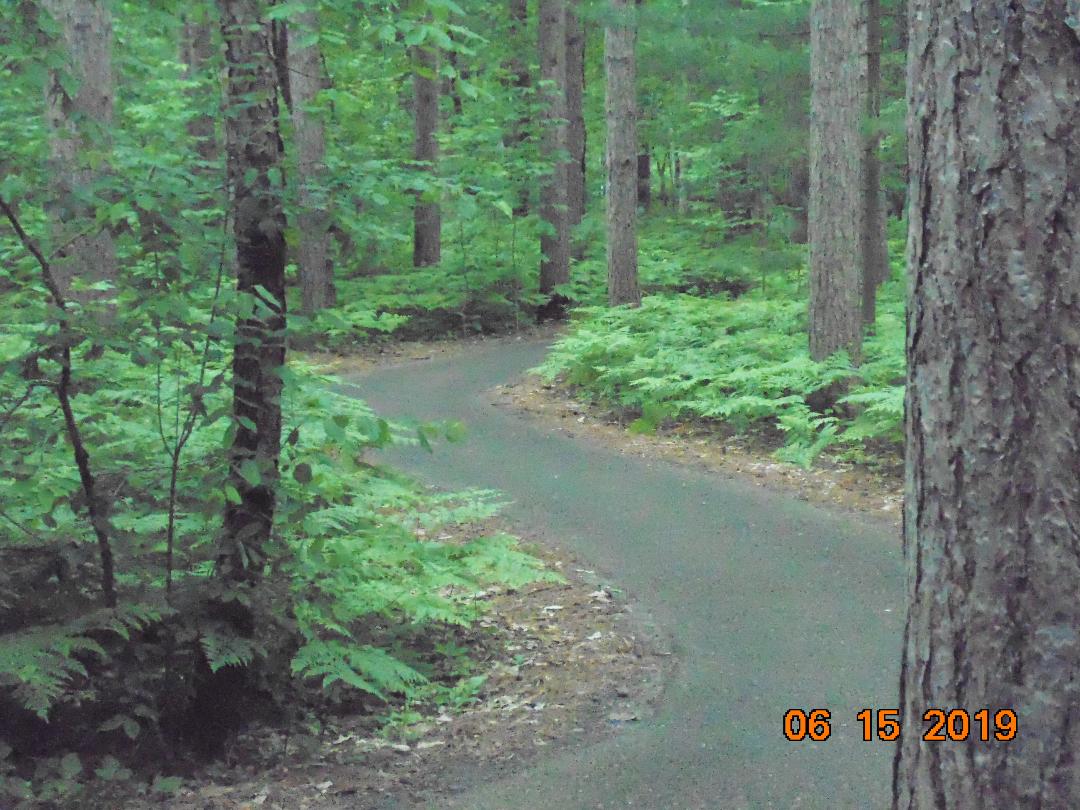
The wooded path took us to the starting point for our aerial canopy walk. The Whiting Forest is 54 acres, with a 13,600 sq. ft. playground, 4 zoned orchard, a cafe and the nation’s longest Canopy Walk-
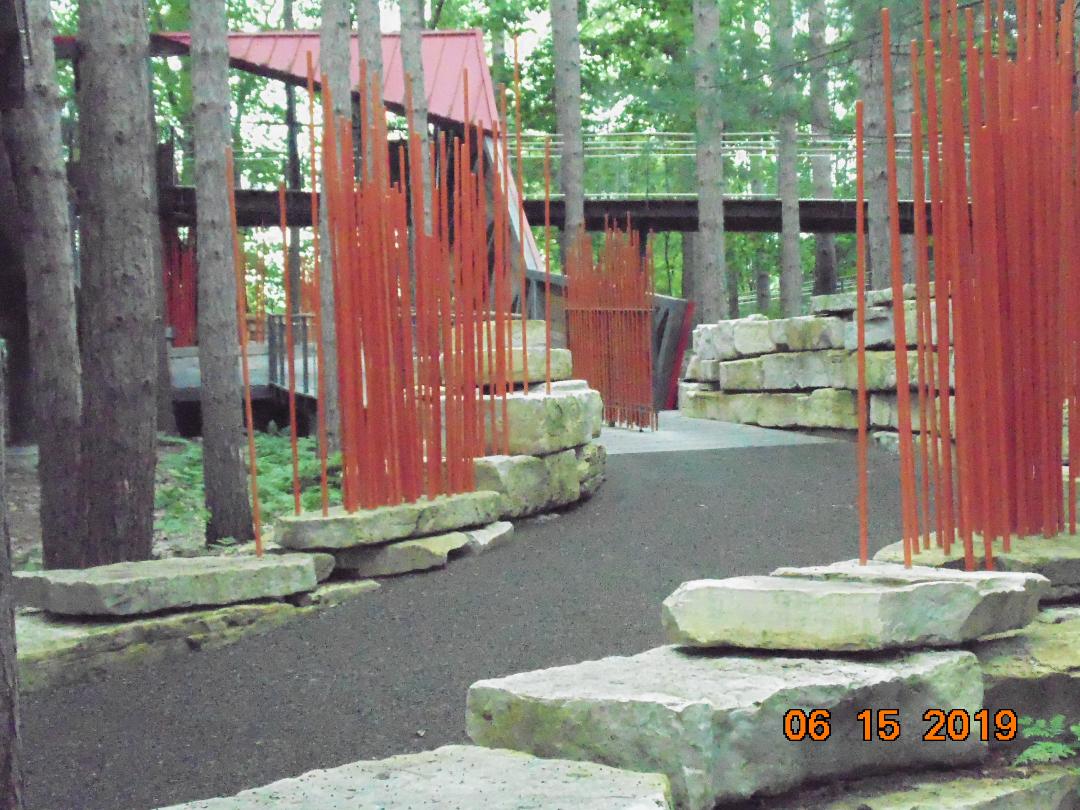
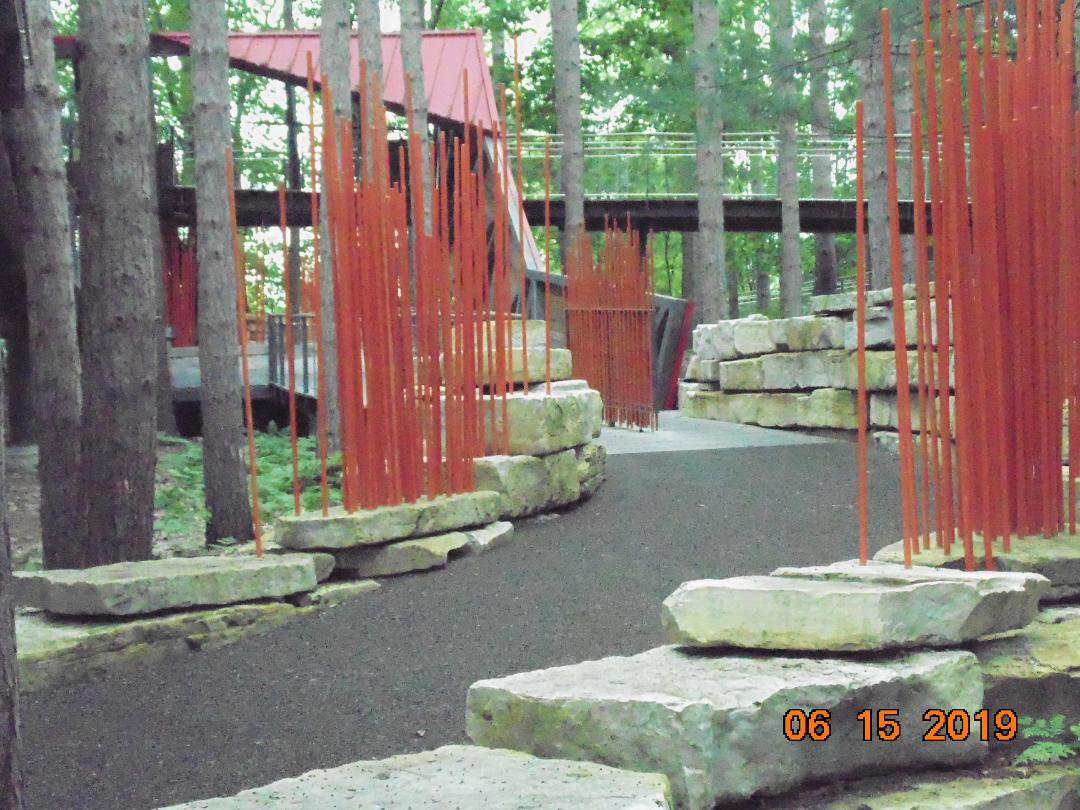
The entry area was marked with orange posts which represent “cattails” The docent detailed the major points of
interest as we walked along the 1/4 mile path.
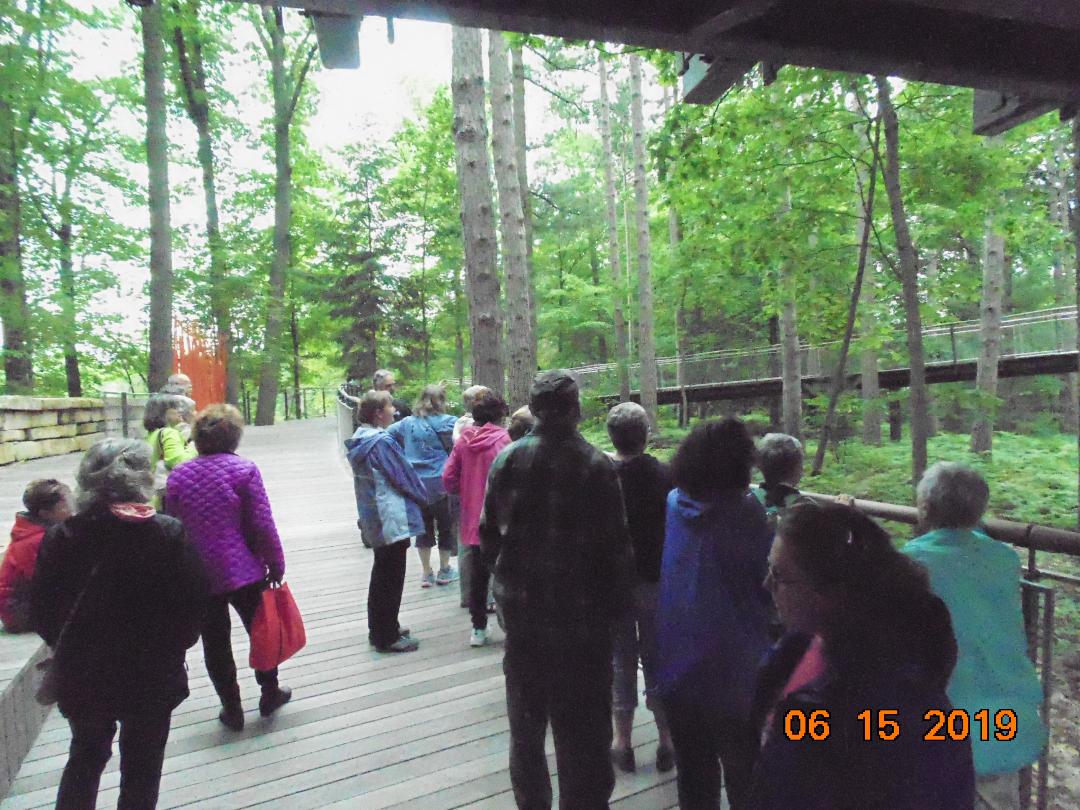
There was a major focus to NOT REMOVE A SINGLE TREE– only 5 trees were removed within the pathway.
This feature was created @ $18,000 to “save” this tree.

The pathway had directional arms that would take us to various features—in this portion, a huge network of nets was suspended around a grouping of trees— throwing all caution to the winds some, including me had to just
DO IT!!!
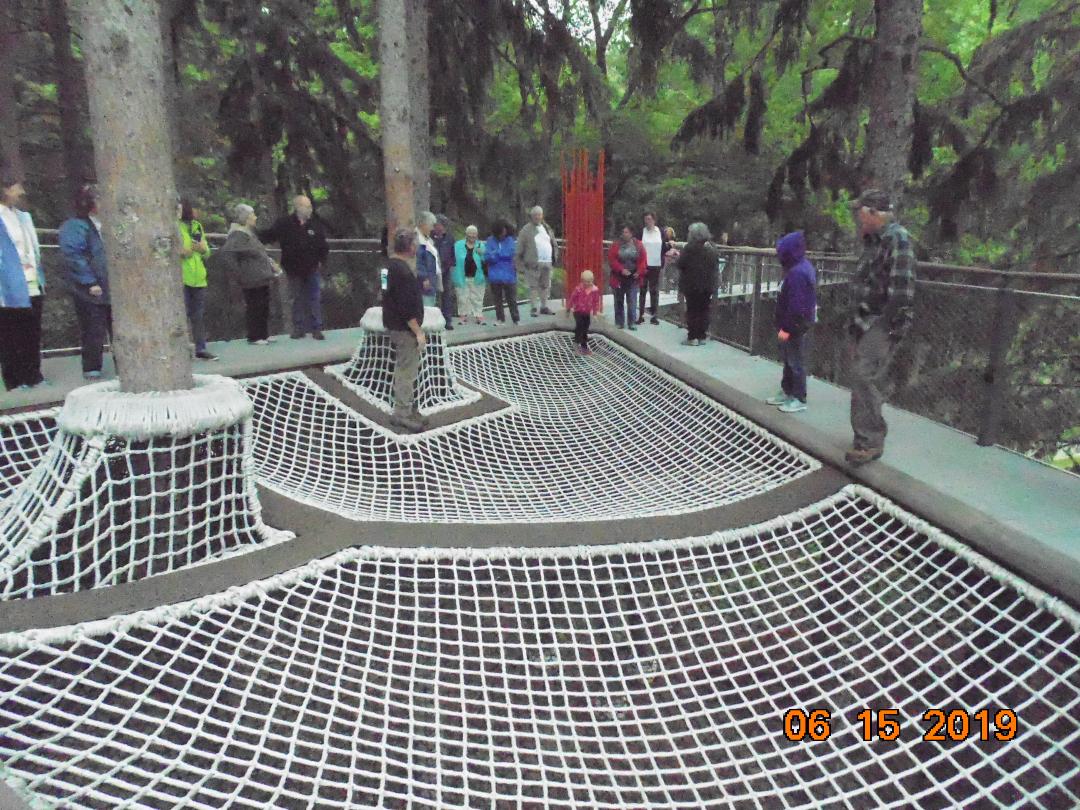
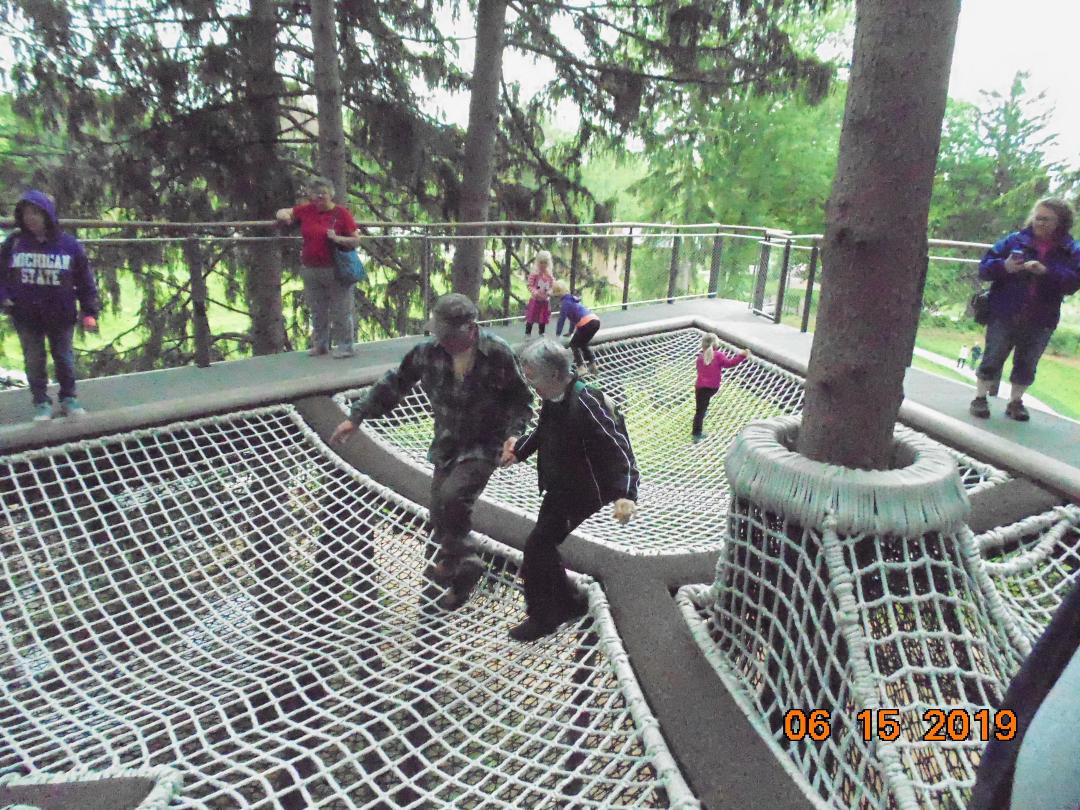
Below: The Massel’s take the walk
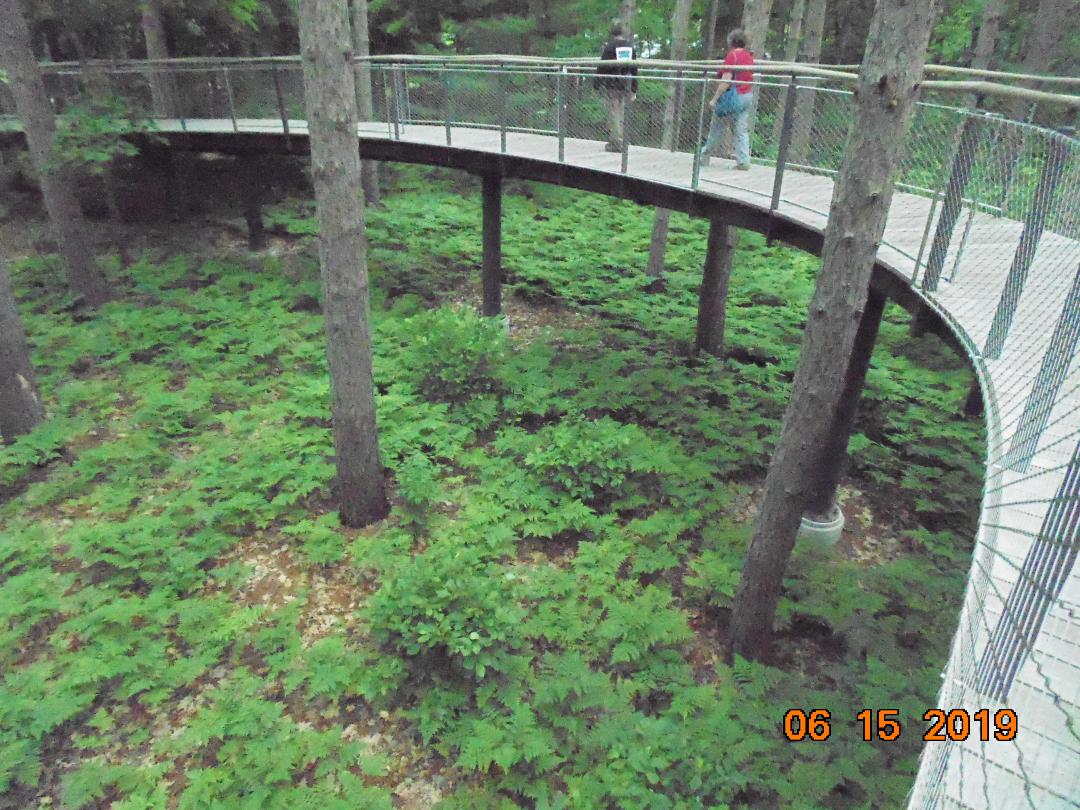

The woods is mainly comprised of spruce trees.
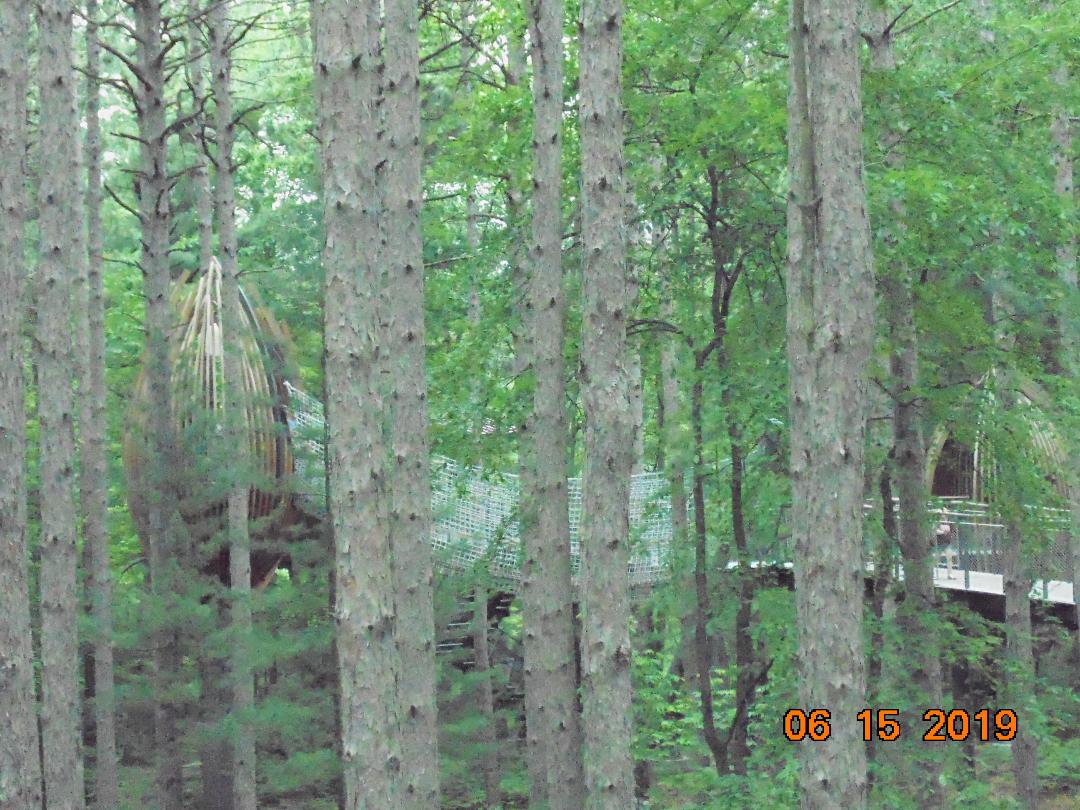

Look closely- see the structures??
It reminds me of the Ewok Village in Star War movies.
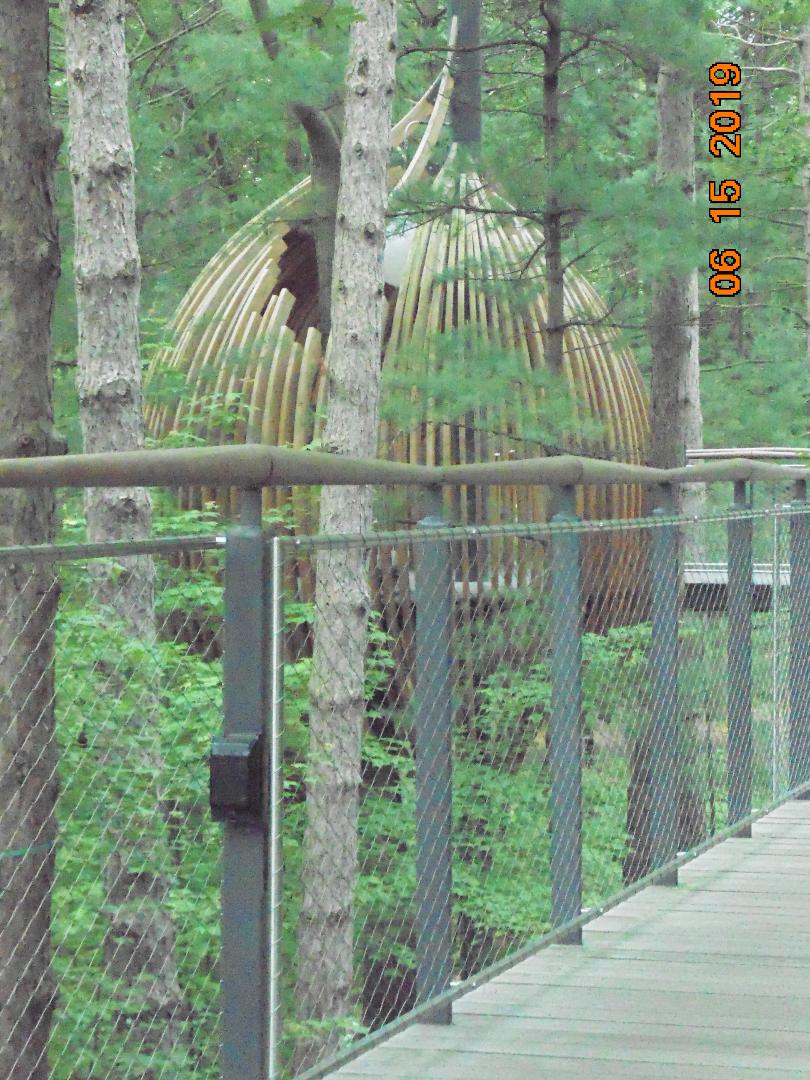

OK a closer look at the structures reveals an ONION????


With a flat path to a doorway for easy entry-the one across the way offers a much more challenging method to get
inside- despite that, a line forms for those “waiting” to get on the suspended road pathway.
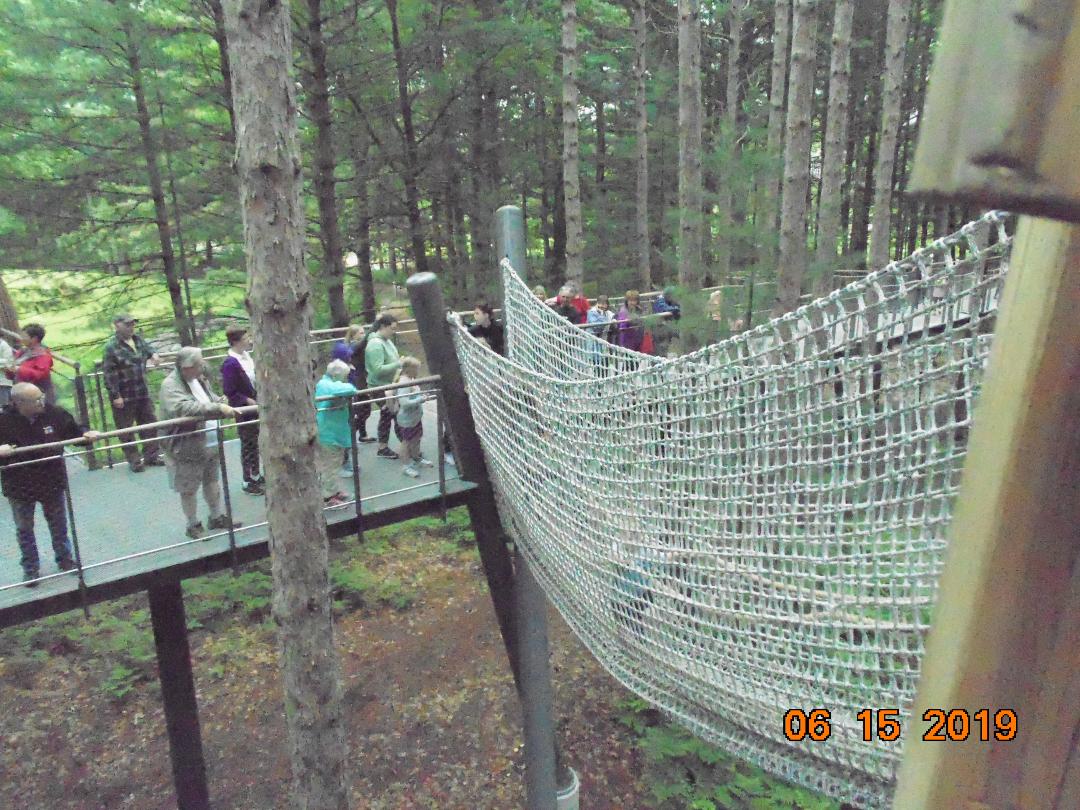
Once in the structure (you know I had to go up) you had a view into the canopy– and we discovered like an animal burrow there was another chamber in the bottom section, not apparent from the pathway view
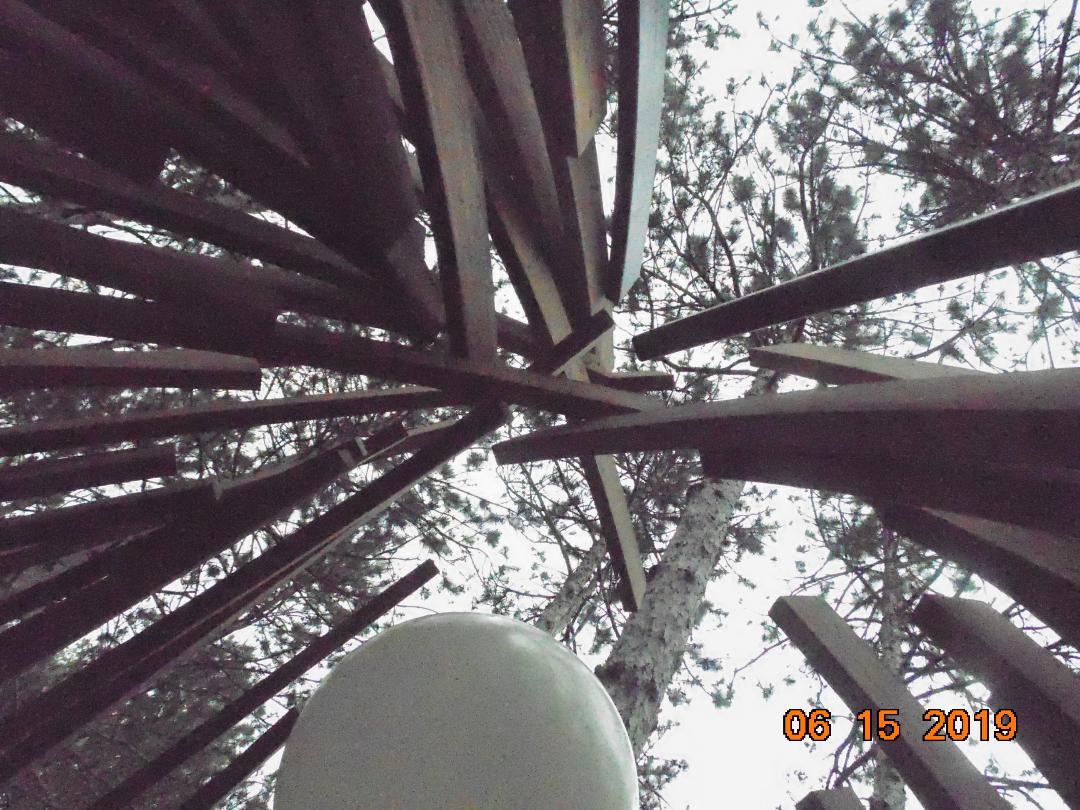
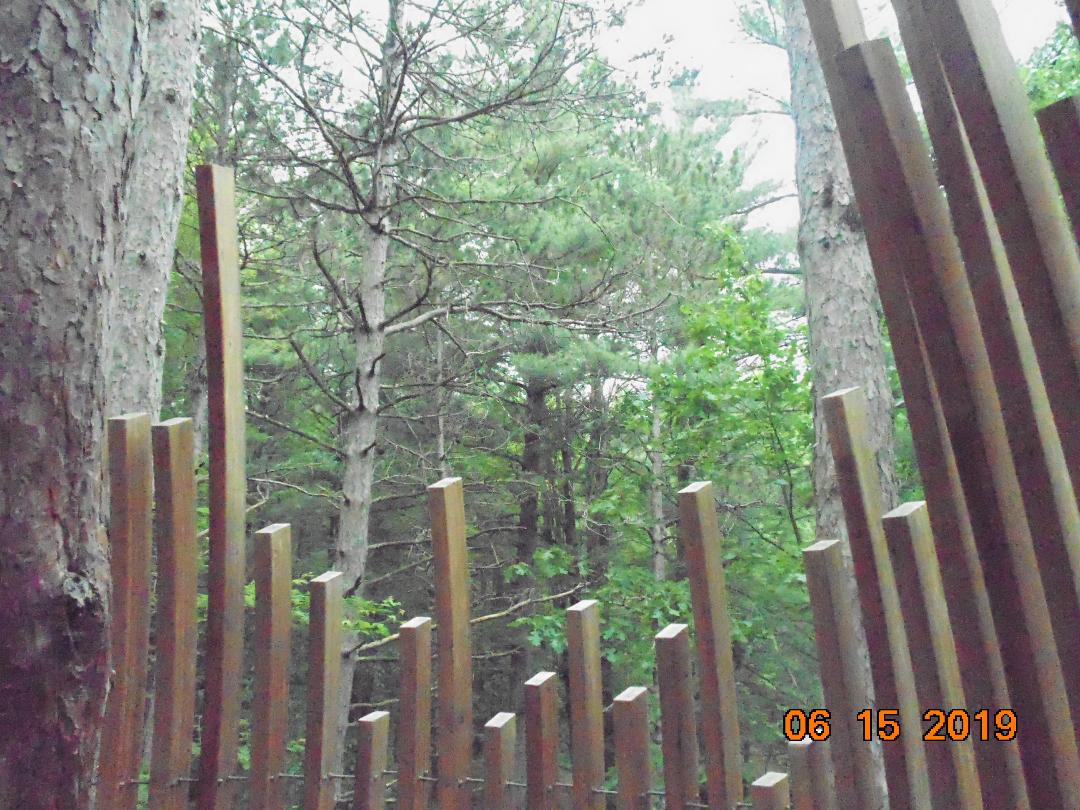
The group pauses in a clearing to check out the scenery below;
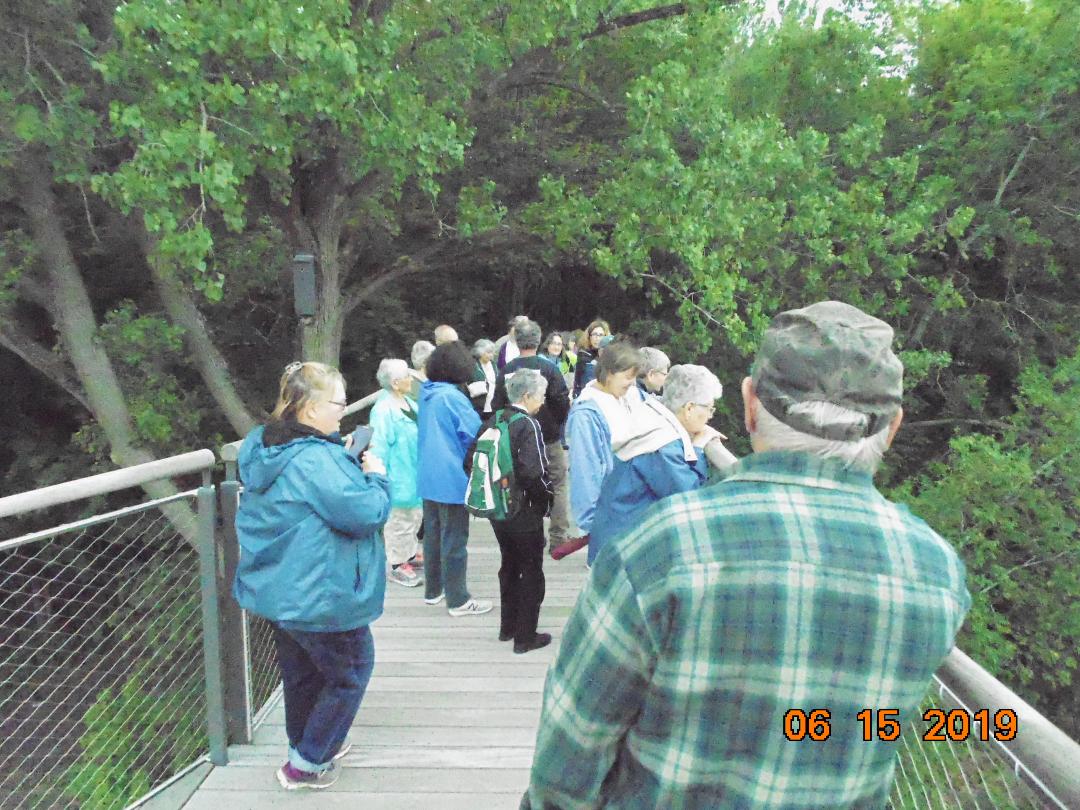
What did they see??
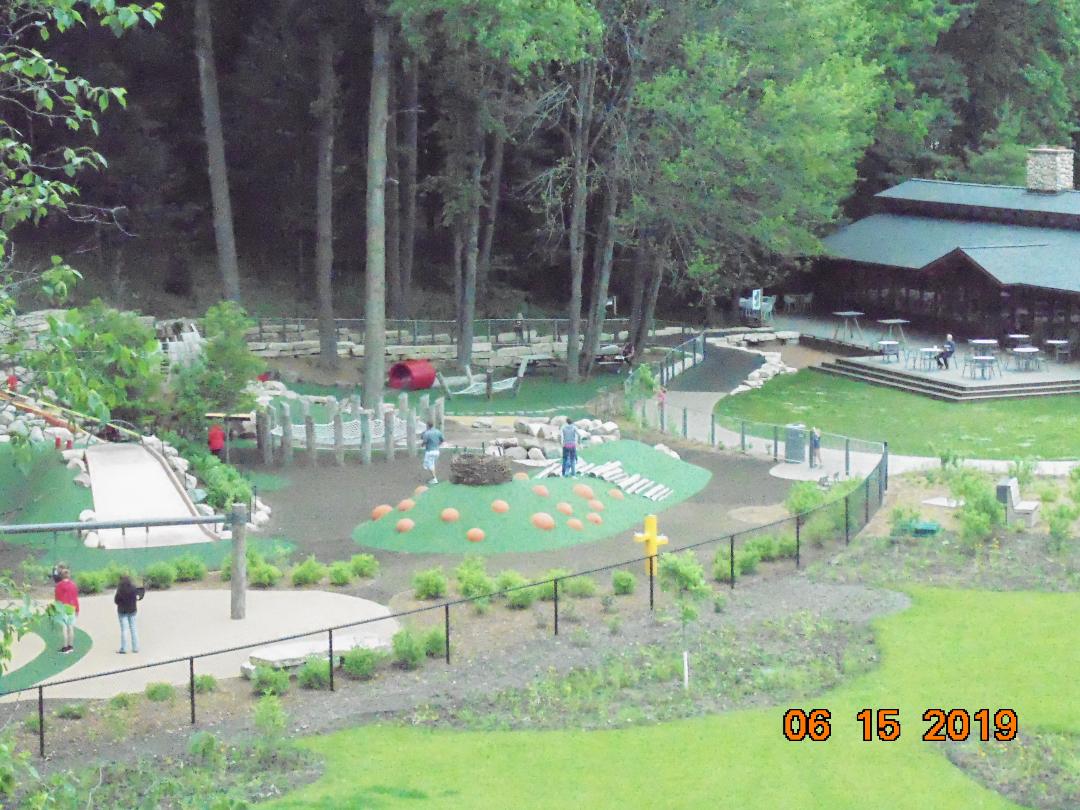

to play or a cool spot for lunch???? Wait we have more to
see……………


You couldn’t miss the large rocks integrated into the project; if I recall correctly, from Lake Superior.

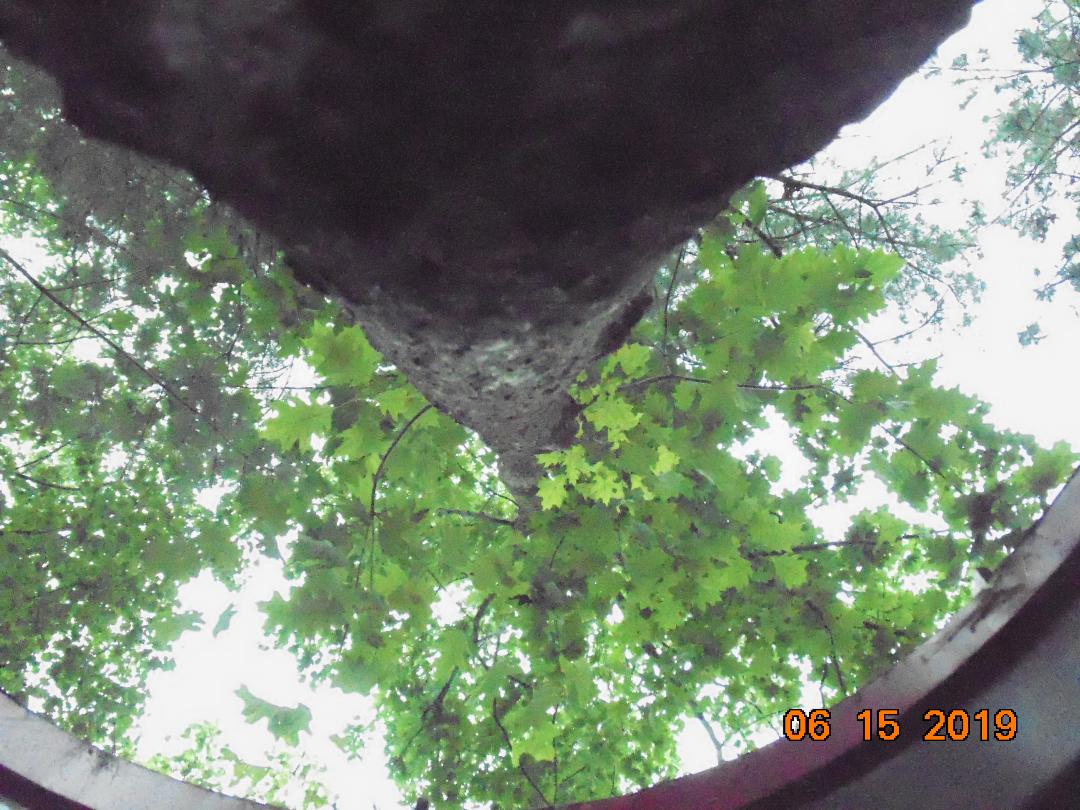
feature showing the preservation of a tree


Lake view
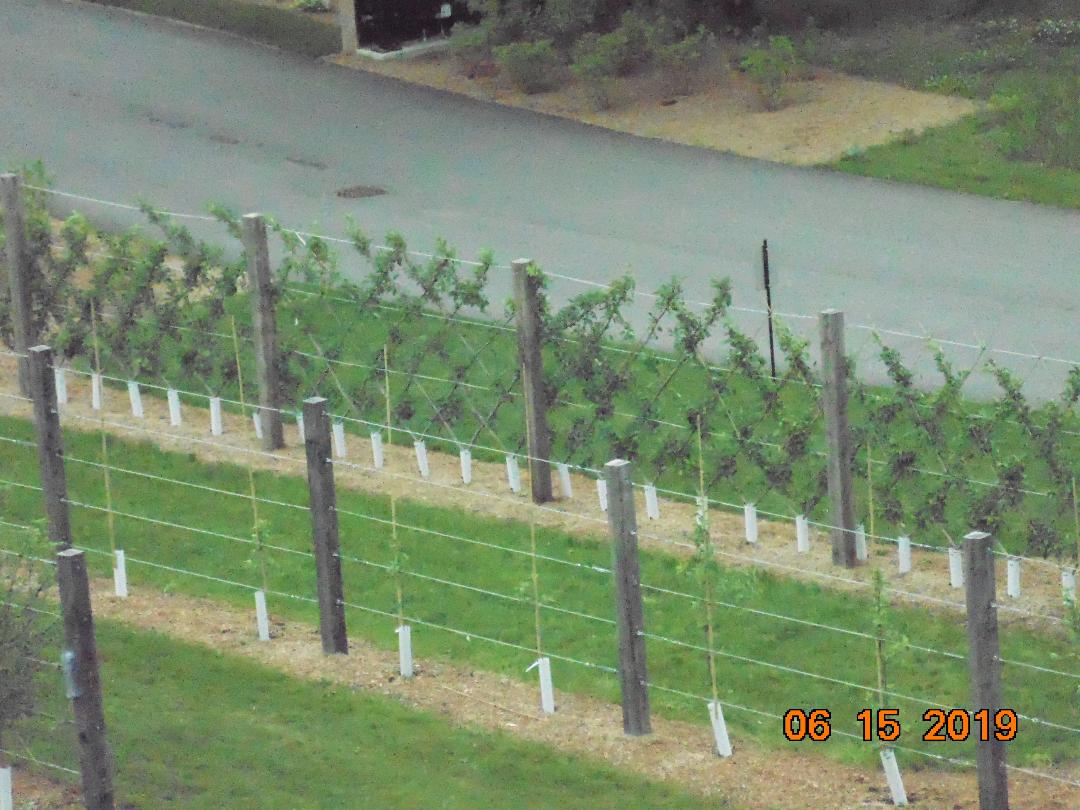

Aerial view- Belgian Wall of Espalier trees
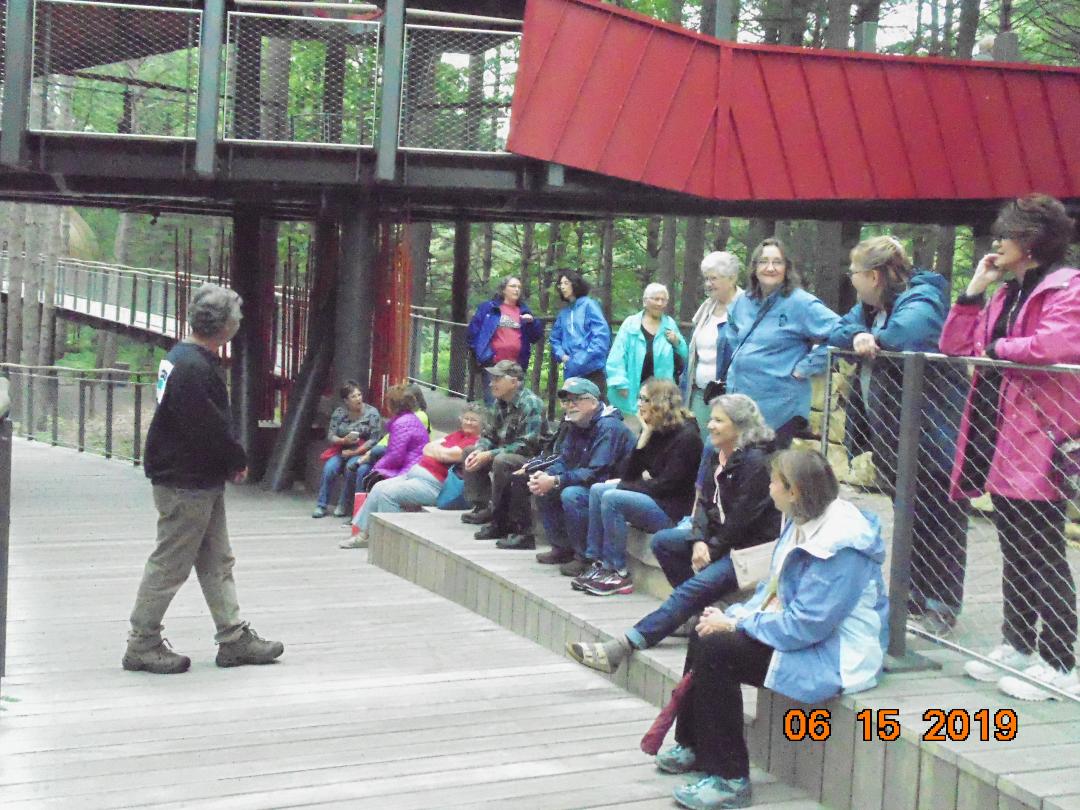

The group concludes their 1 hour “canopy” tour-


-well worth the 2 1/2 hr. drive- much more to be seen along the other pathways in the forest; refer to the map- the bright orange solid line the only portion we did–more time is needed; the majority feeling the need to replenish their energy.
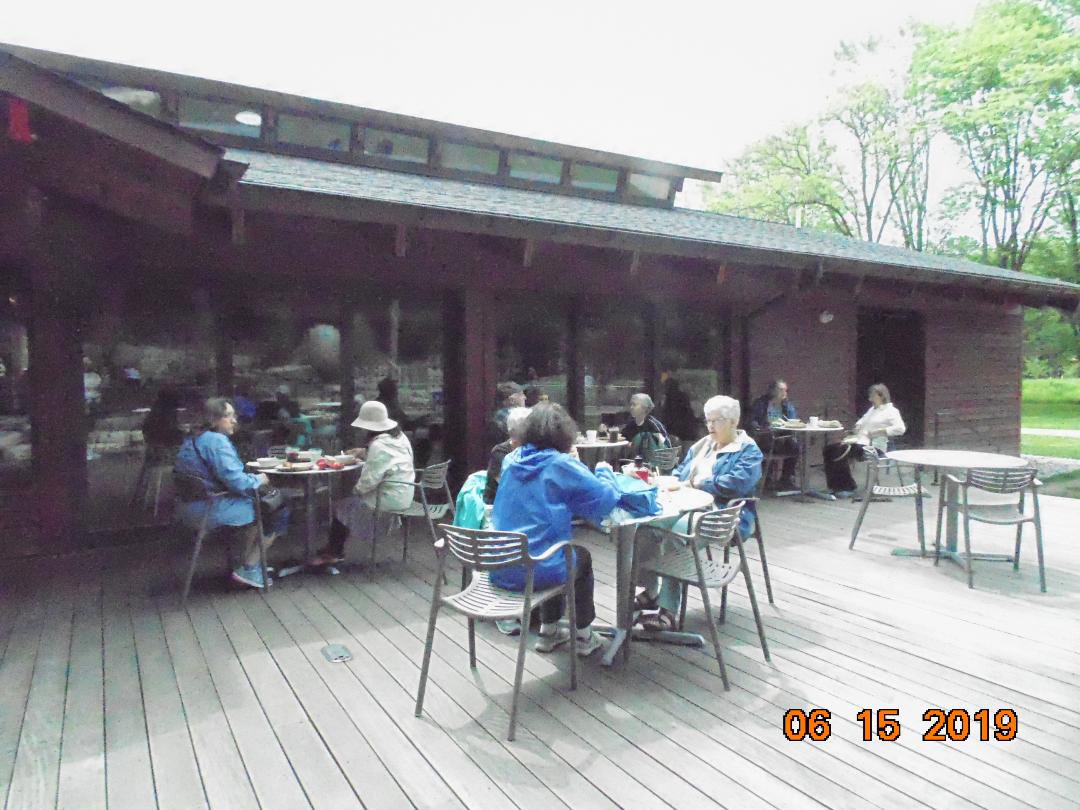
would seek out the cafe to enjoy soups, breads & desserts before
exploring further or heading home….It was a good time & not a drop of rain!!! gk
Read Full Post »

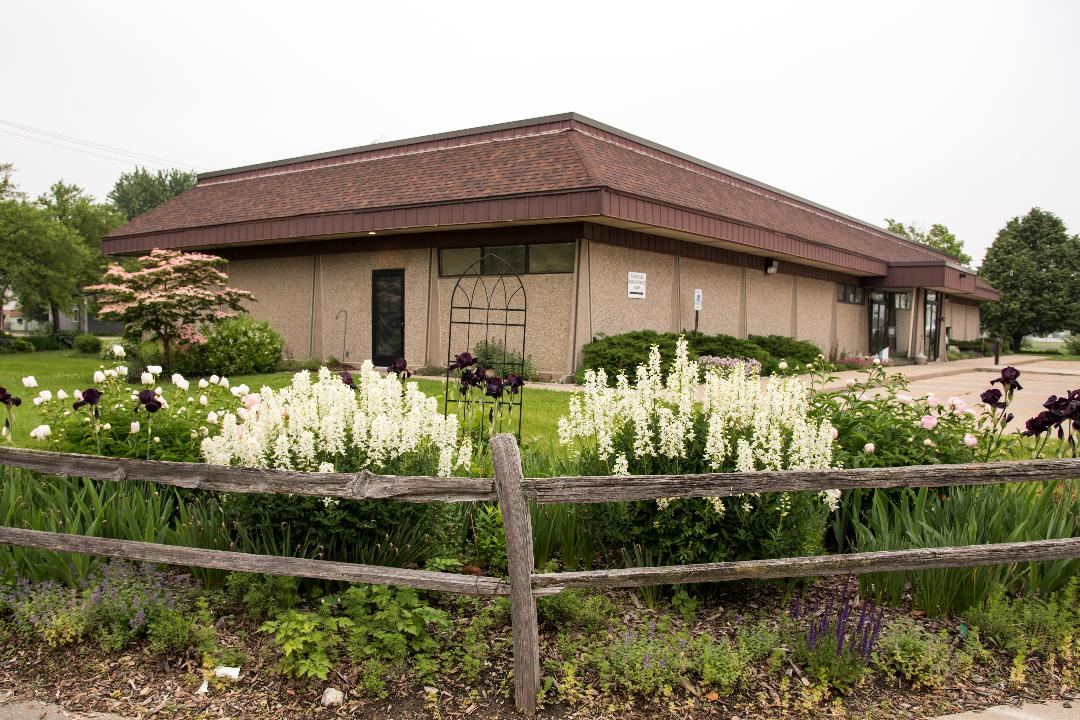
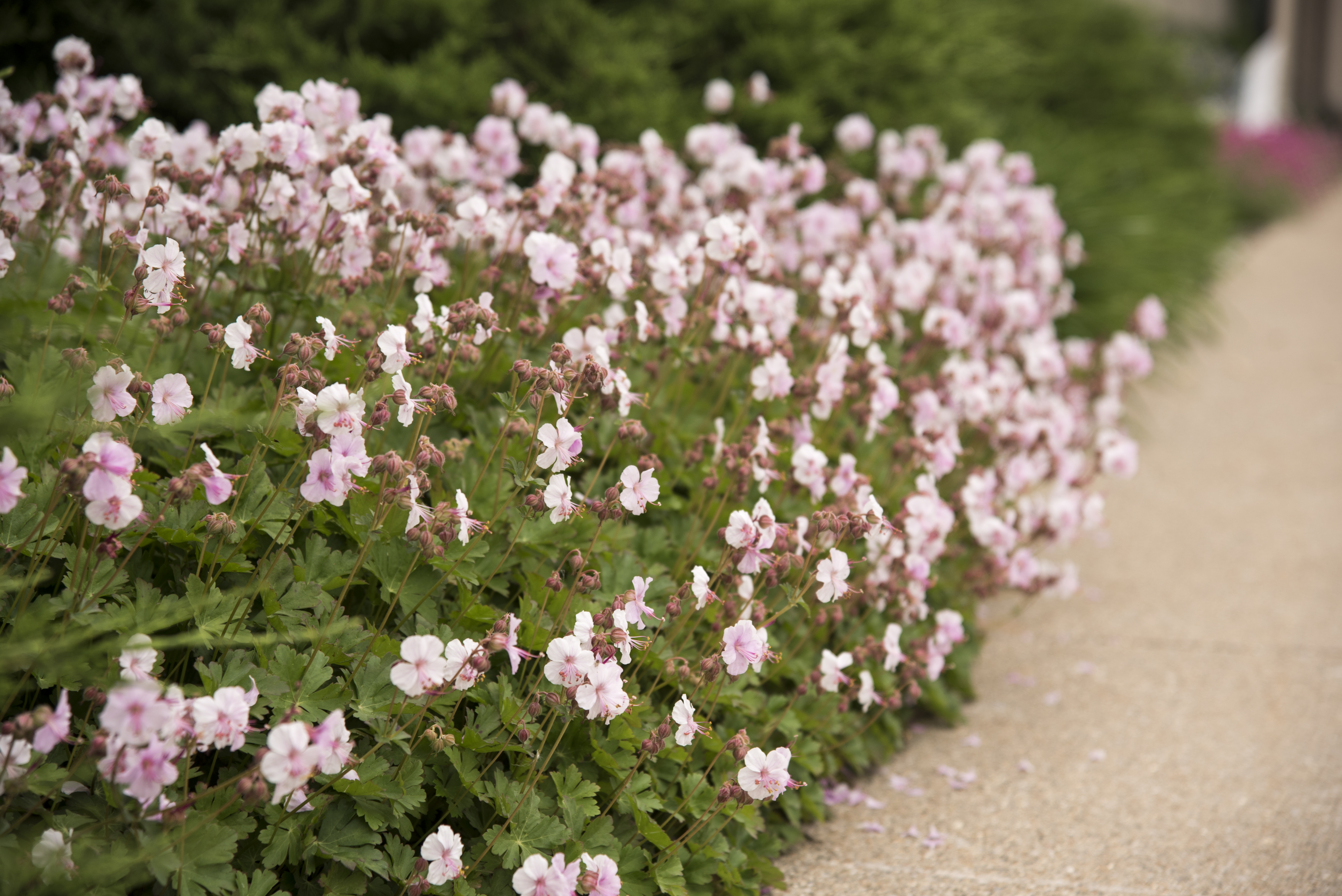
Jennie sent me some photos that, Bailey Biniecki, the new receptionist at the MSUE office has taken. She has been enjoying the plants. The first one is from the entrance to the parking lot and clearly frames the dogwood behind the gas plant, Dictamnus, in full Bloom. The rest? Well, can you guess and name the plant and/or where it grows? I will list them as ABC etc. Now for those of us that work the garden areas, hold off, let those less familiar guess first…

Dictamus, Gas Plant: At entry

Plant A

Plant B

Plant C

Plant D

Plant E

Plant F

Read Full Post »

Naida subscribes to a Newsletter “Gardening in Michigan – MSU Extension News” and thought others would enjoy receiving this. https://www.canr.msu.edu/home_gardening/tip_sheets/

Smart Gardening is MSU Extension’s campaign using earth-friendly messages to help gardeners make smart choices in their own backyards. The goal is to equip gardeners with a “tool kit” of research-based knowledge to use immediately at home. Whether choosing plants, using garden chemicals, fertilizer or applying water, gardeners need to understand the long-term impacts on their communities.

In this Newsletter are FEATURED EVENTS which are MSU Extension Classes throughout Michigan. Most often these classes are quite a distance from S.E. Michigan so not reasonable for me to consider. There is also a section CURRENT NEWS STORIES with some very good information and photos. I especially enjoyed this recent article on Pollination in Vegetable Gardens and Back Yard Fruit, very easy to understand:
https://www.canr.msu.edu/news/smart-gardening-pollination-in-vegetable-gardens-and-backyard-fruit

Another good article on Growing Lavender in Michigan:
https://www.canr.msu.edu/news/growing-lavender-in-michigan-advice-for-a-purple-garden

Read Full Post »

May Meeting Recap

by Gail K.
As is our usual–For our May meeting

DECISIONS DECISIONS DECSIONS
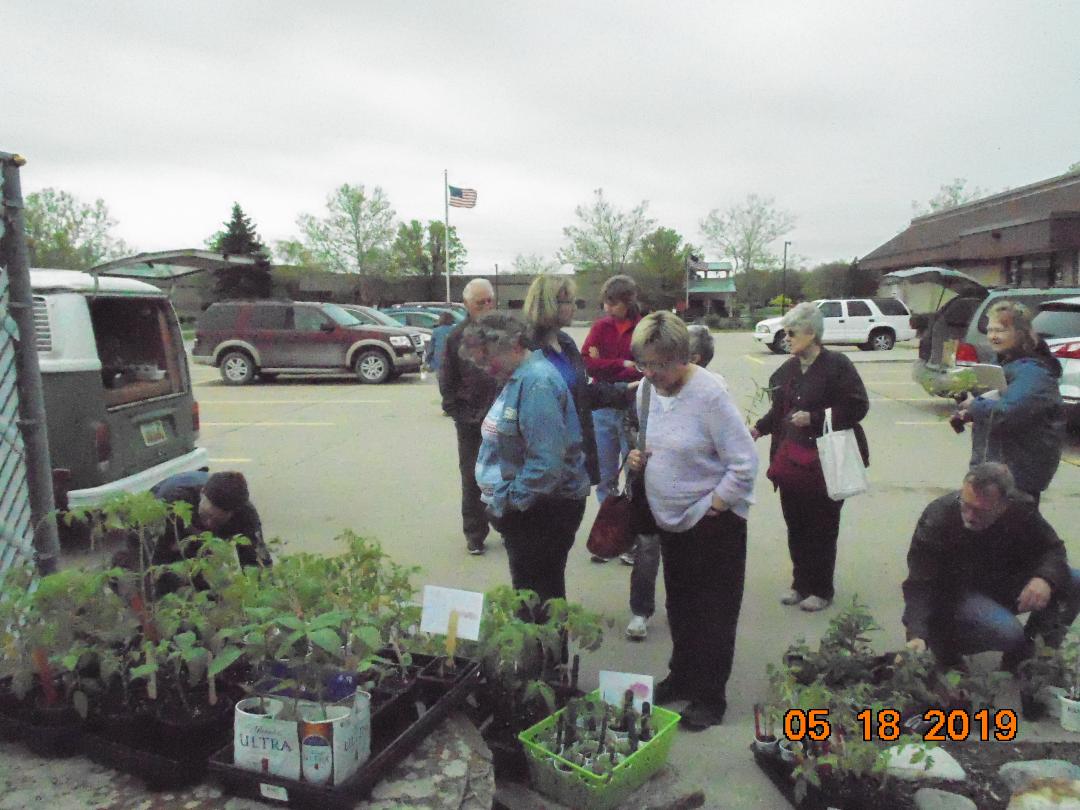
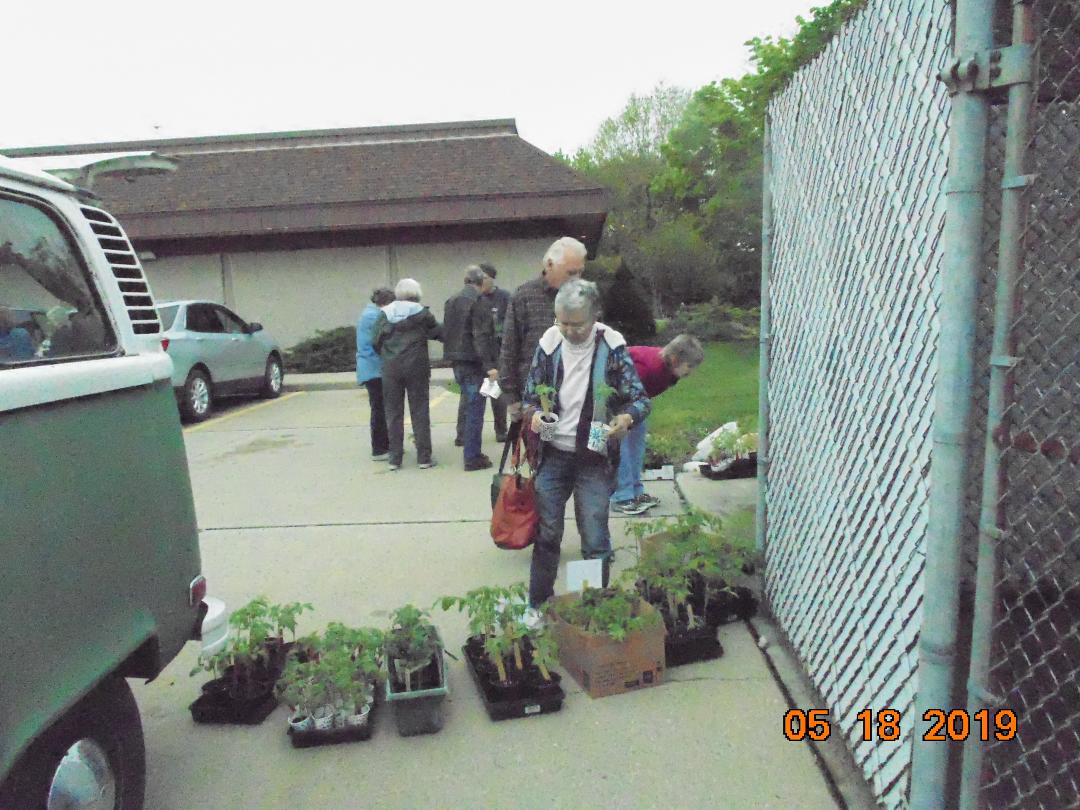
Bob Bransky a past member-who has been involved in a community garden project; arrives with his volkswagon loaded with a selection of vegetable and native plants. Some of his vegetables are heirloom tomato plants………….

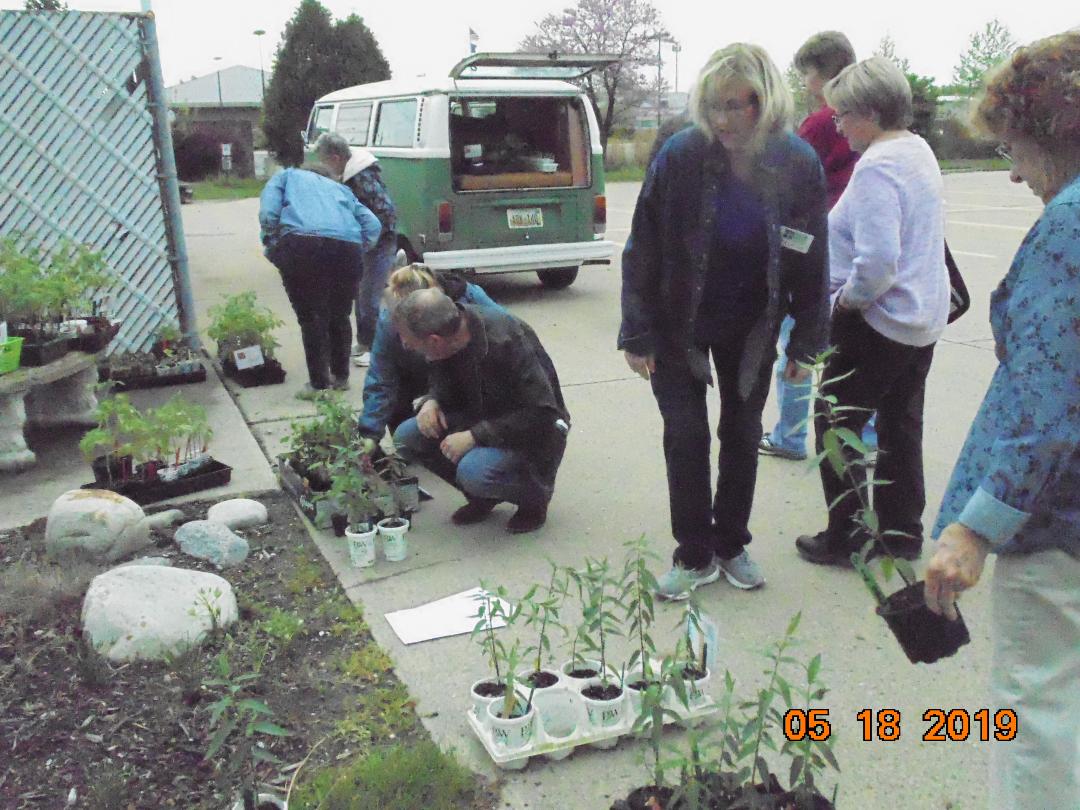
Emoke & Jenny discuss the various tomato plants while Paul
& Joan talk over the native plant selection.


Looks like Emoke has made her decision— Tom ?? BLTs for lunch


Looks like Joan has her hands full and isn’t quite done yet and Paul still
hasn’t made his choice.

Jenny discusses with Bob on her selection.


Thanks Bob—til next year…………….gk

By Gail K. & Jennie S.
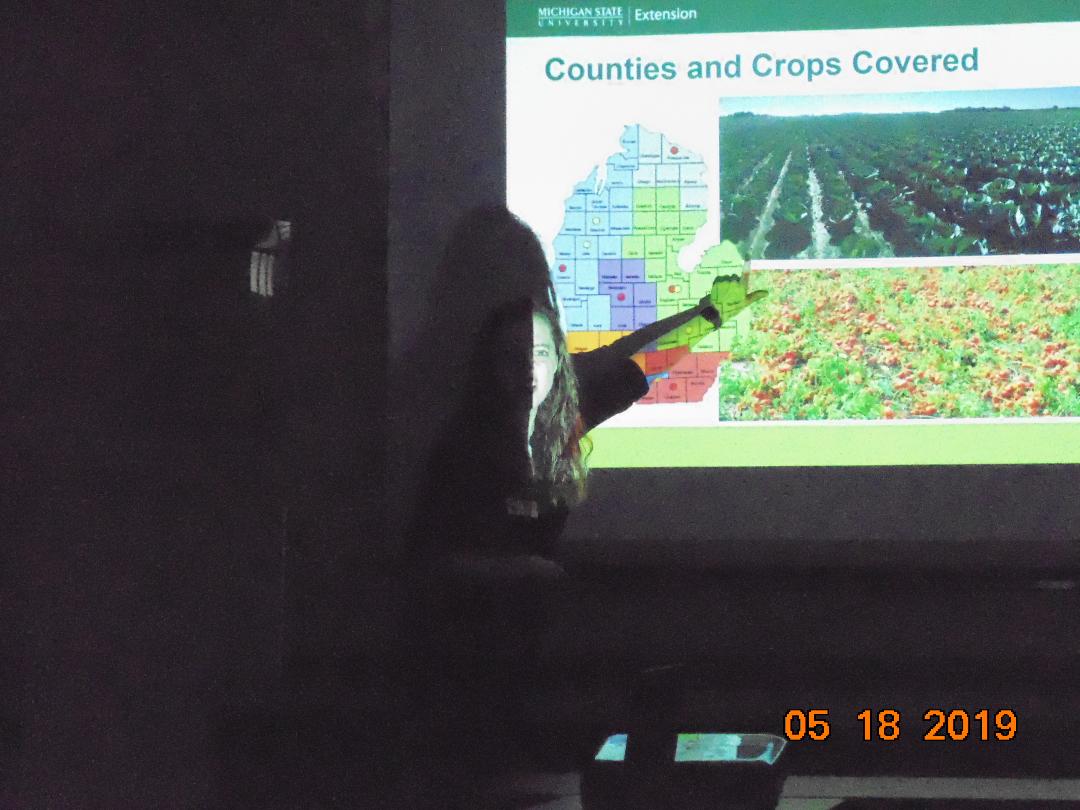
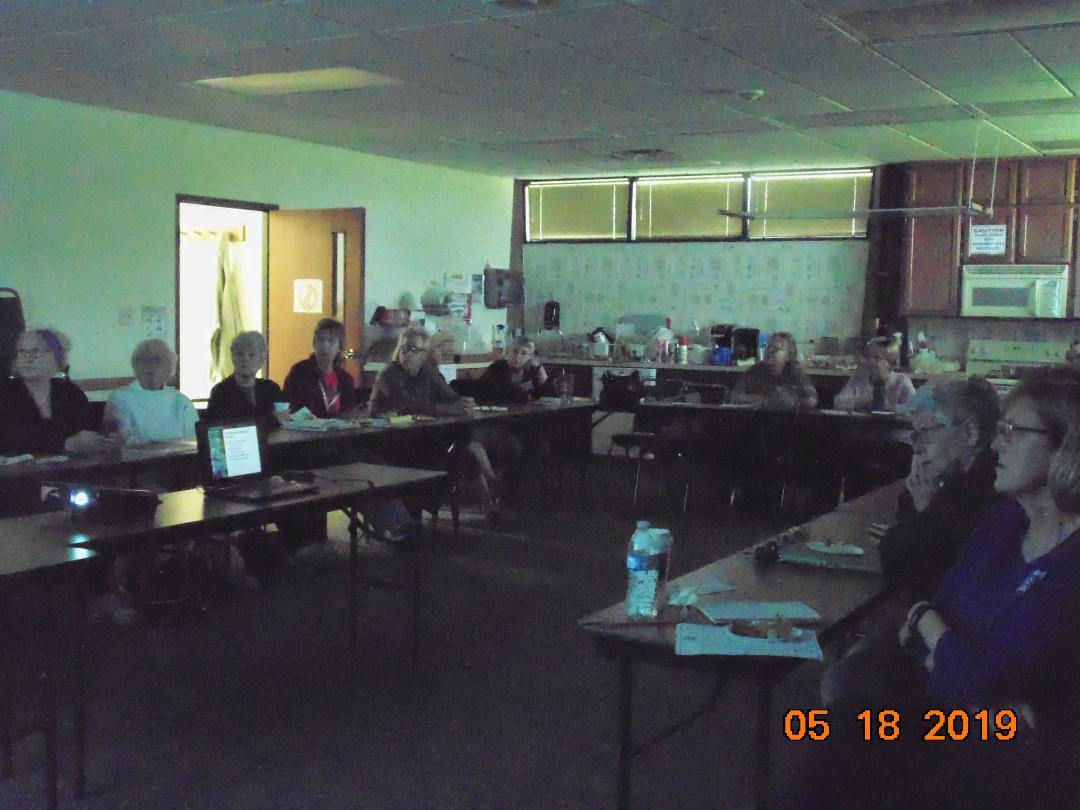
In May–Jennie invited Marissa Schuh, from MSU; An expert for the Commercial Vegetable Growers in southwest MIchigan.

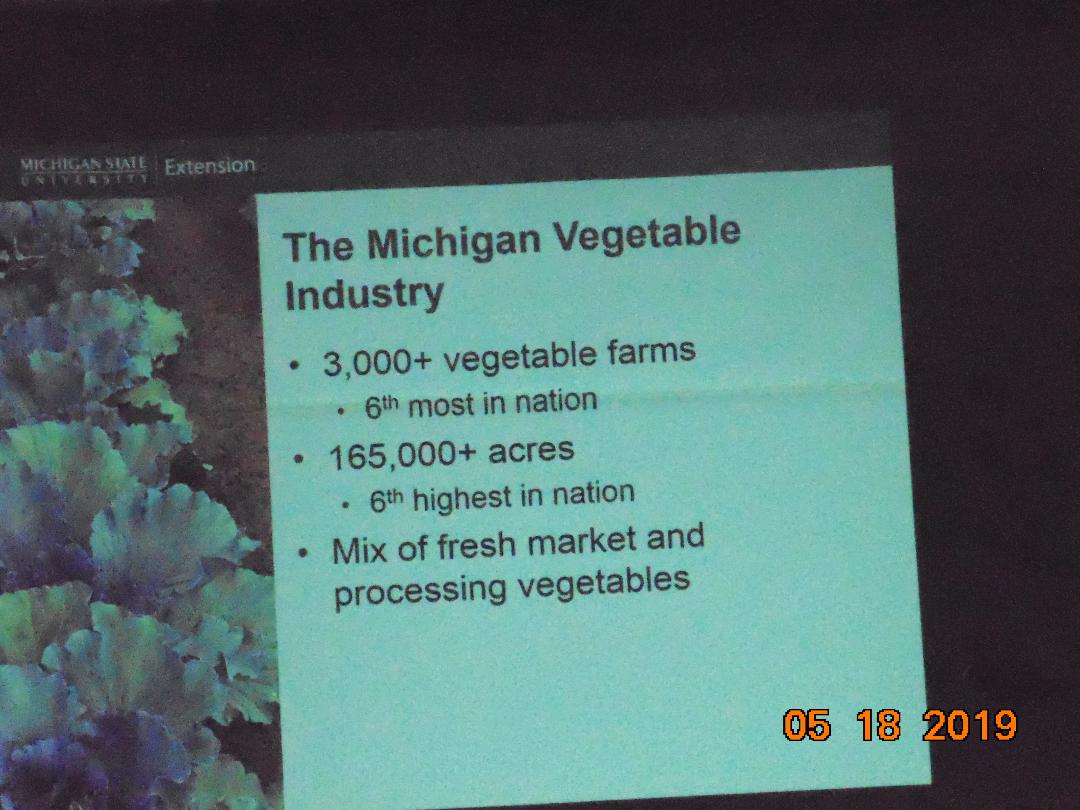
Her role is to educate small growers who produce for local fresh markets and large growers who supply large quantities of produce to major grocery chains (often through the Detroit Eastern Market,) and restaurants.

Our area is notable for growing large acreage of tomatoes for Red Gold, and large amounts of cabbage for fresh use and for processing into coleslaw and sauerkraut.

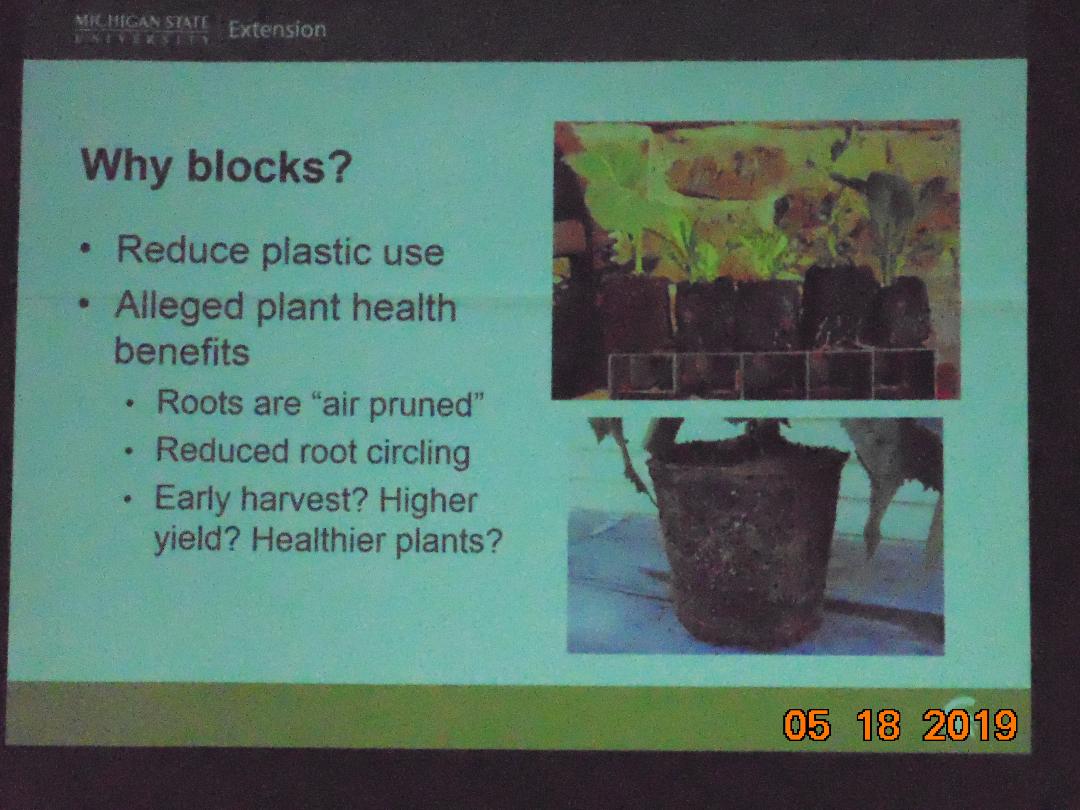
She helped conduct a research project at Tollgate on soil blocking vs plastic trays for starting tomatoes, she said the data did not support the idea that soil blocks produced higher yielding plants either in greenhouse “tunnels” or outdoors. Read more here: https://www.canr.msu.edu/news/impact-of-soil-blocks-on-yield-and-earliness-of-six-tomato-varieties

While it does reduce use of plastics, it requires more effort and management. A main point is the variety you choose will make more difference to the health and productivity of your tomato plants than any other factor. Heirloom varieties tend to be less predictable, and less disease resistant.
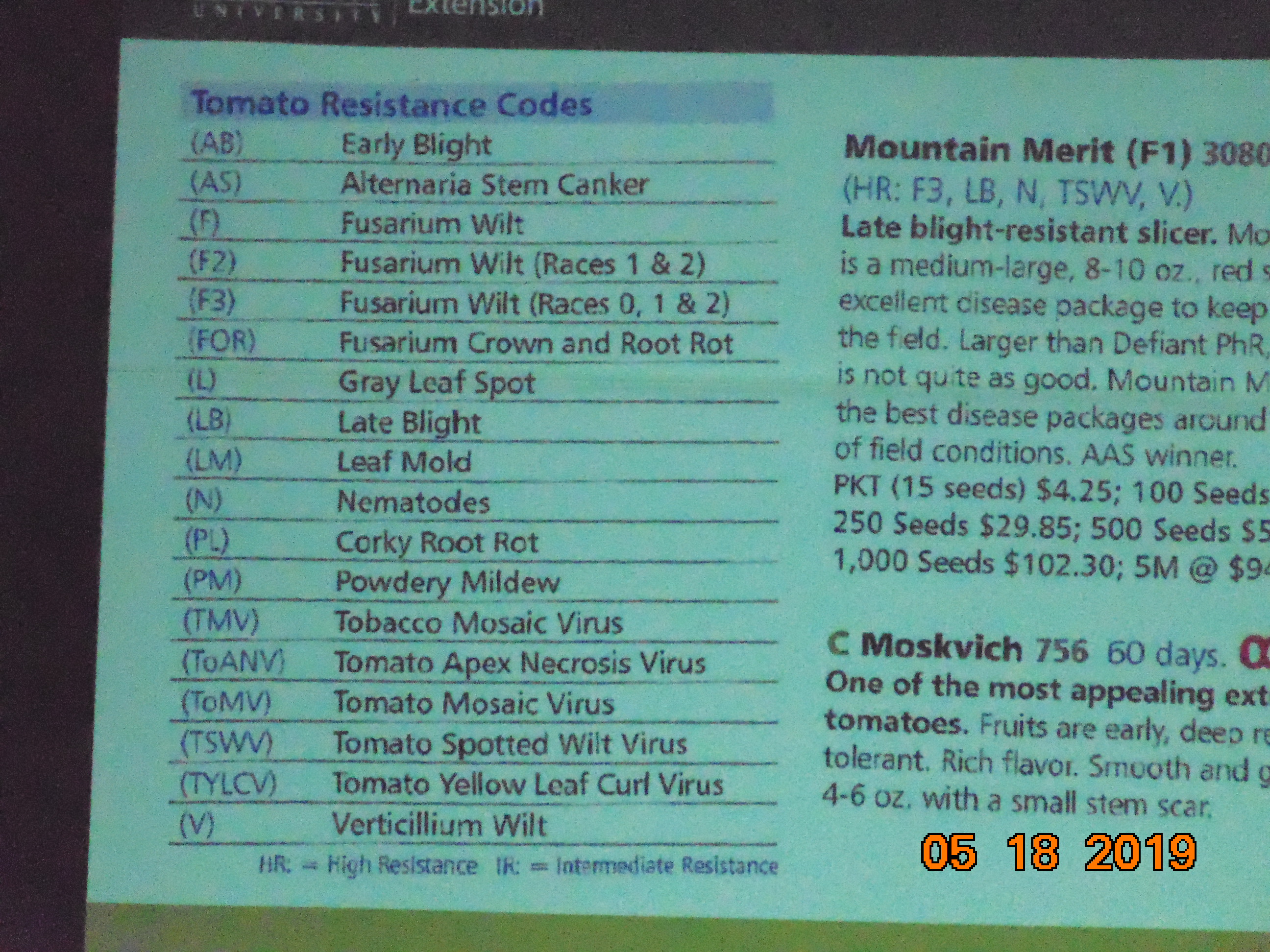
Her well-illustrated talk gave examples from Johnny’s catalog, which provides good information on disease resistance and other plant characteristics, recommending that gardeners learn which diseases are causing them problems and choose varieties with specific resistance to those.

She spoke on the Western Bean Cutworm, how it has moved into our area in very recent years and affects sweet corn. Most field corn is now produced from seed that has been genetically altered to produce the natural insecticide Bt, so there are far fewer corn borer and corn earworm moths than previously and growers of peppers and other vegetables can use less insecticide as a result of that. This newer worm is resistant to some “Bt” hybrids, thus able to multiply in field corn at present.
However, commercial sweet corn growers do not use genetically modified seed because the fresh market and major grocery chains will not accept it. They must continue to closely monitor insect development so they can spray at the right times to prevent egg-laying or to kill tiny emerging caterpillars before they burrow into the ears.

In closing, Marissa referenced a book and the MSU Enviroweather page for our area, where you can also monitor pest development, weather factors, etc. (Click on Vegetables, for example, in the bar at the top of the page.) https://enviroweather.msu.edu/weather.php?commodity=&stn=drf
JS & GK

Read Full Post »

April Meeting Recap

By Gail K.
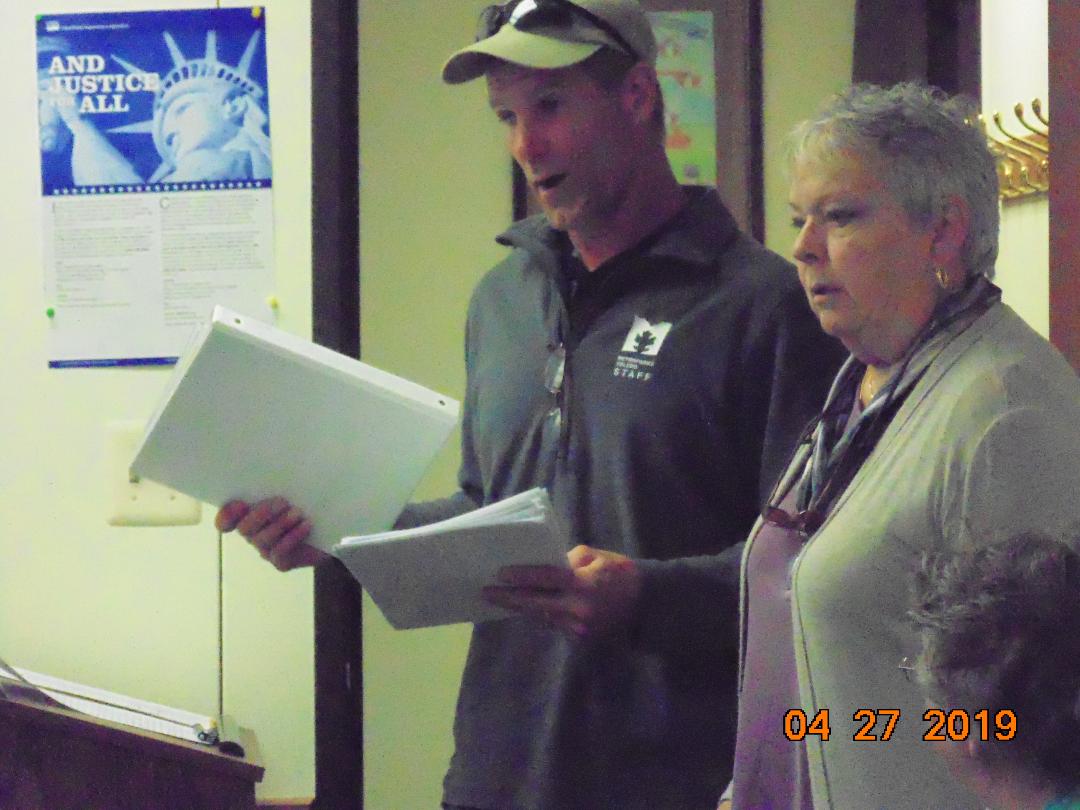
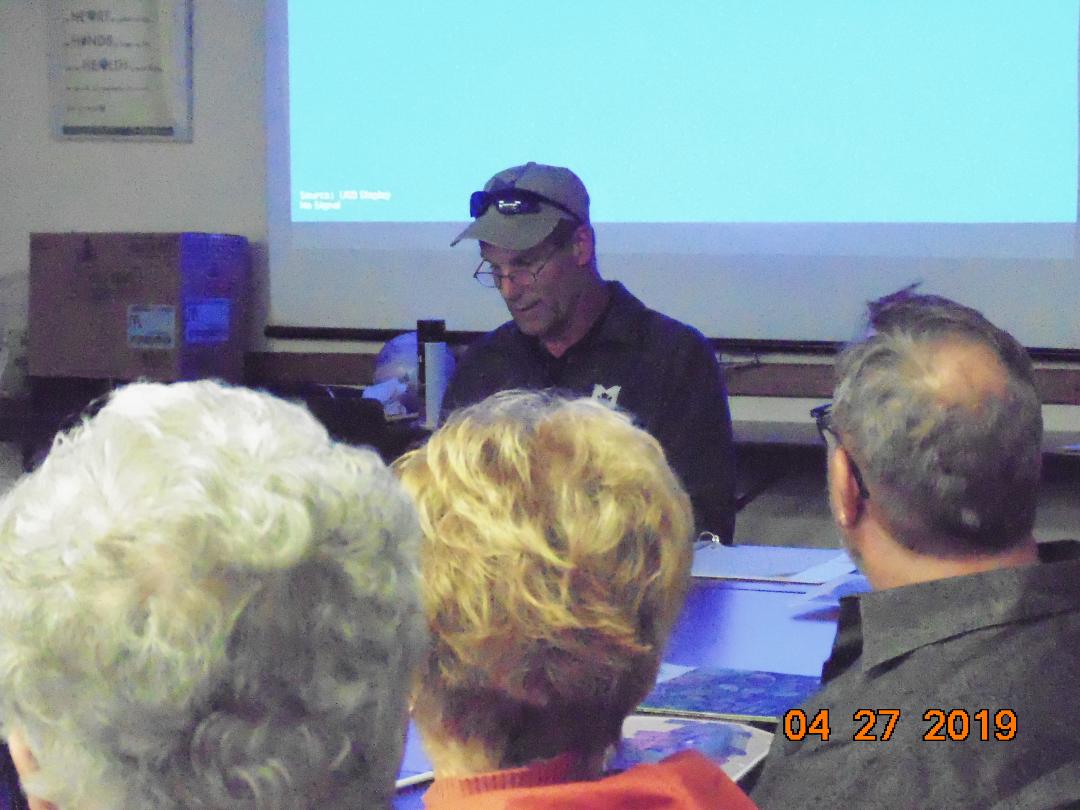
At our April 27th meeting, Stella had Steven Stockford from the Toledo Metropark system speak on the newest
project to be installed at the Toledo Botanical Gardens. The botanical gardens are seeing a revitalization since merging with the Toledo Metropark system.

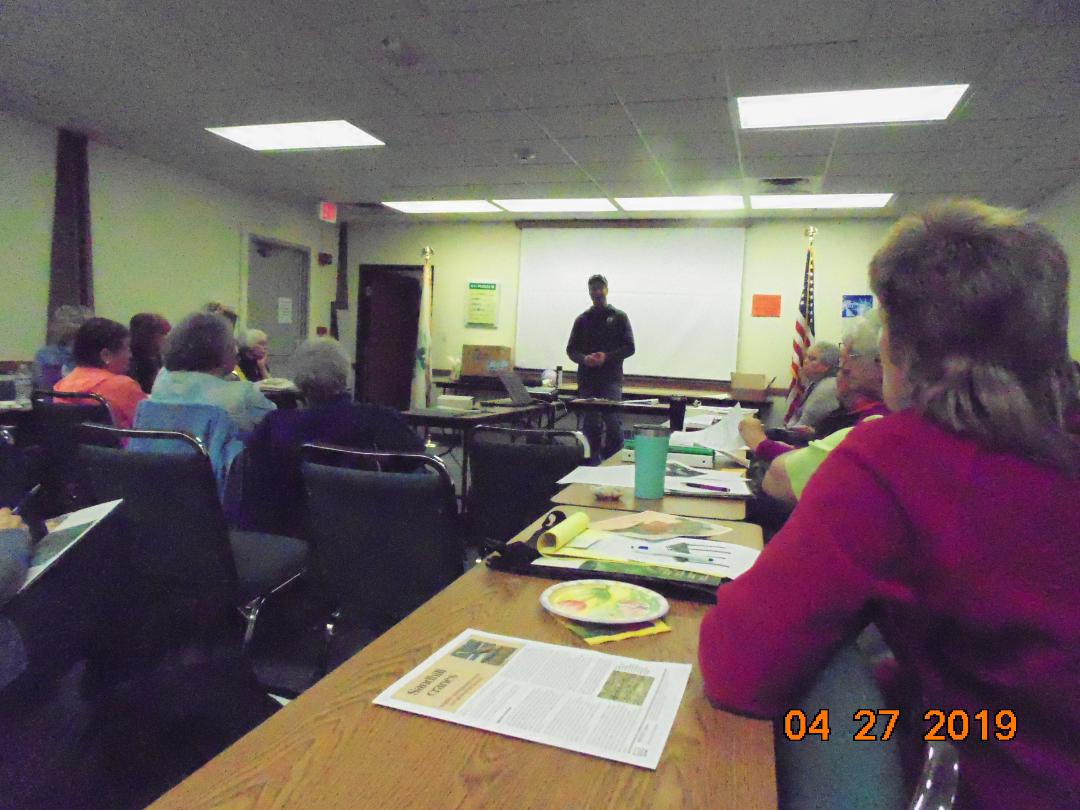
The parks deal with people from all aspects of life–young, old; along with those who are physically & mentally challenged. The project Steve is developing is an Accessible-Sensory Garden. Stella as a volunteer master gardener, has worked with Steve on other projects. They both felt our group would be able to offer some insight and ideas for the project. Below the group listens intently to Steven describe
the plans.

What is a sensory garden-it is a garden environment designed to stimulate the senses.
It involves using plants and materials that engage our senses of sight, smell, touch, taste and sound.
This type of garden can be beneficial for both adults and children with various disabilities.
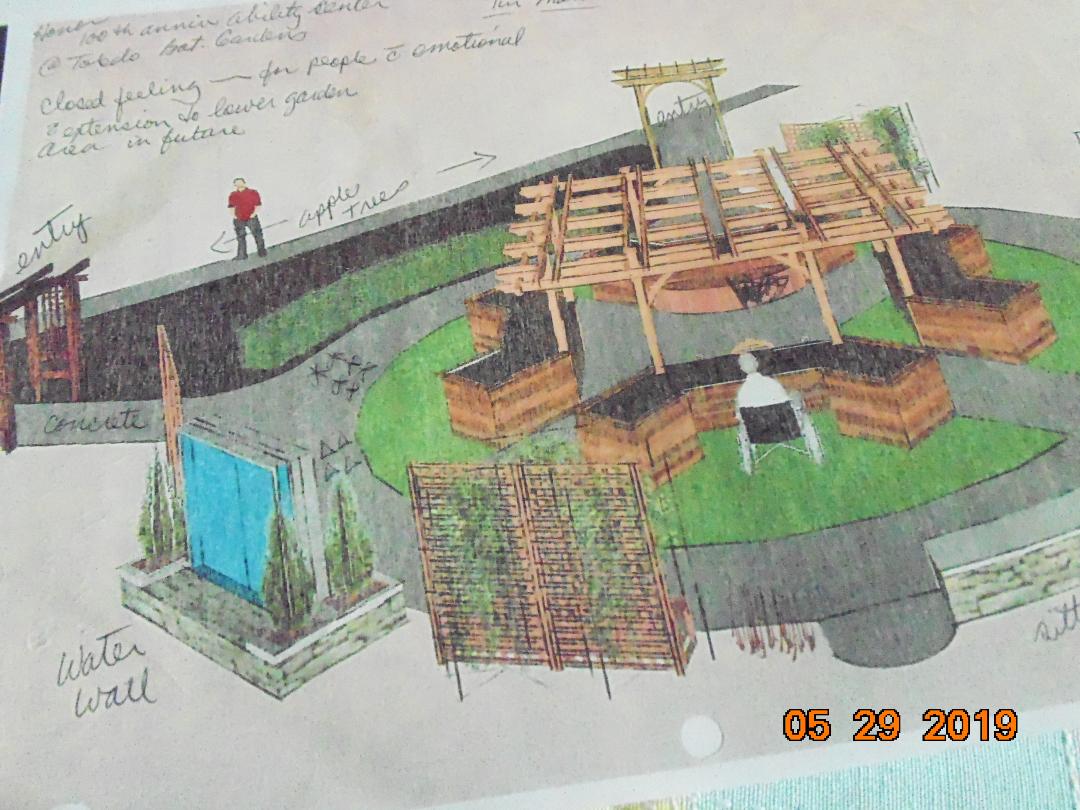
Below is the preliminary layout.

Steve spoke to the various plants that could be used for sight, touch, smell and
taste. He included the types of features used for the sense of sound–the use of grasses,
bamboo–chimes etc. This feature will also have to be designed with a focus on the structural components.
Not just for safety but to ensure that there is an inclusiveness for those who may
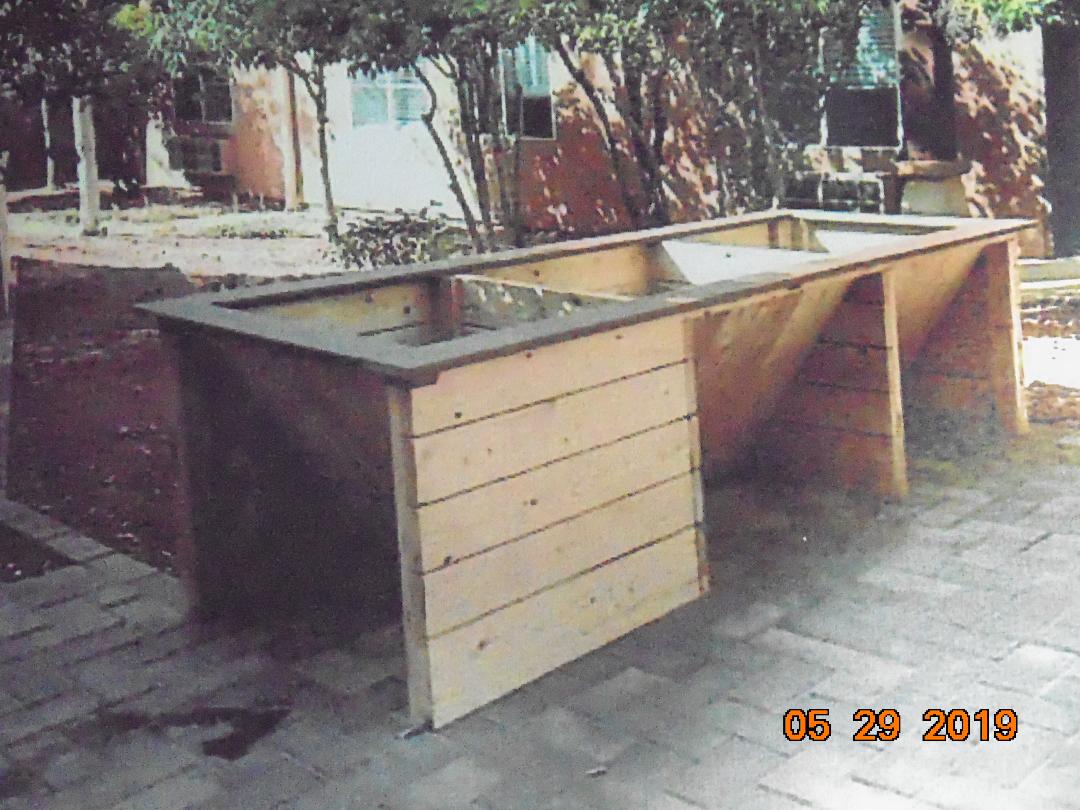
visit. Below is a vision of a raised planting bed

Some of the major aspects of the structural components are the surfaces, sitting wall with areas for wheelchairs to join in- trellis and water walls. All of these features will add a dimension to
the sensory aspect as well as provide the type of environment needed to include ALL. Below is an option that may be used to allow wheelchair bound people to be able to roll right up to an area to plant, weed and pick the product…………..

Lastly, Steve answered our questions & we all helped with offering ideas for the project.
It is the first of its kind for the metro parks –we’re excited to see this project come to fruition
and have offered a donation—Steve and Stella both asked for any of us who have the time to
sign up to volunteer at the parks……..contact information Steven.Stockford@metroparksToledo.com
Thank you Steve–

Read Full Post »

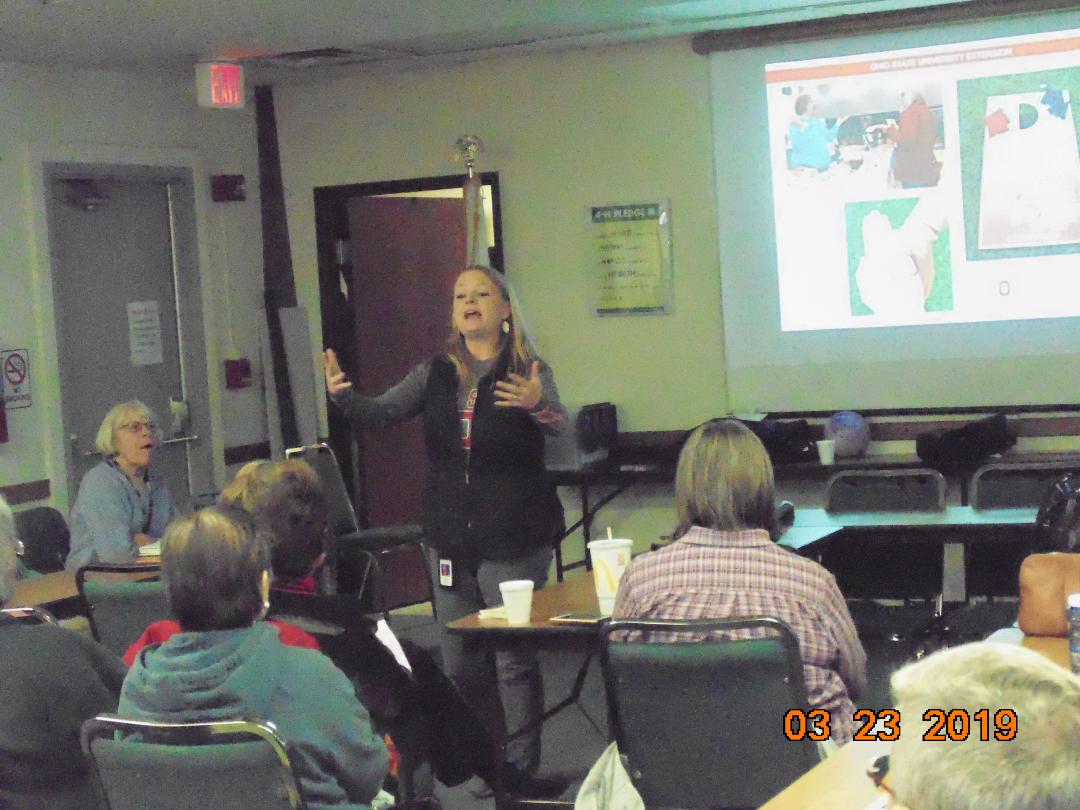
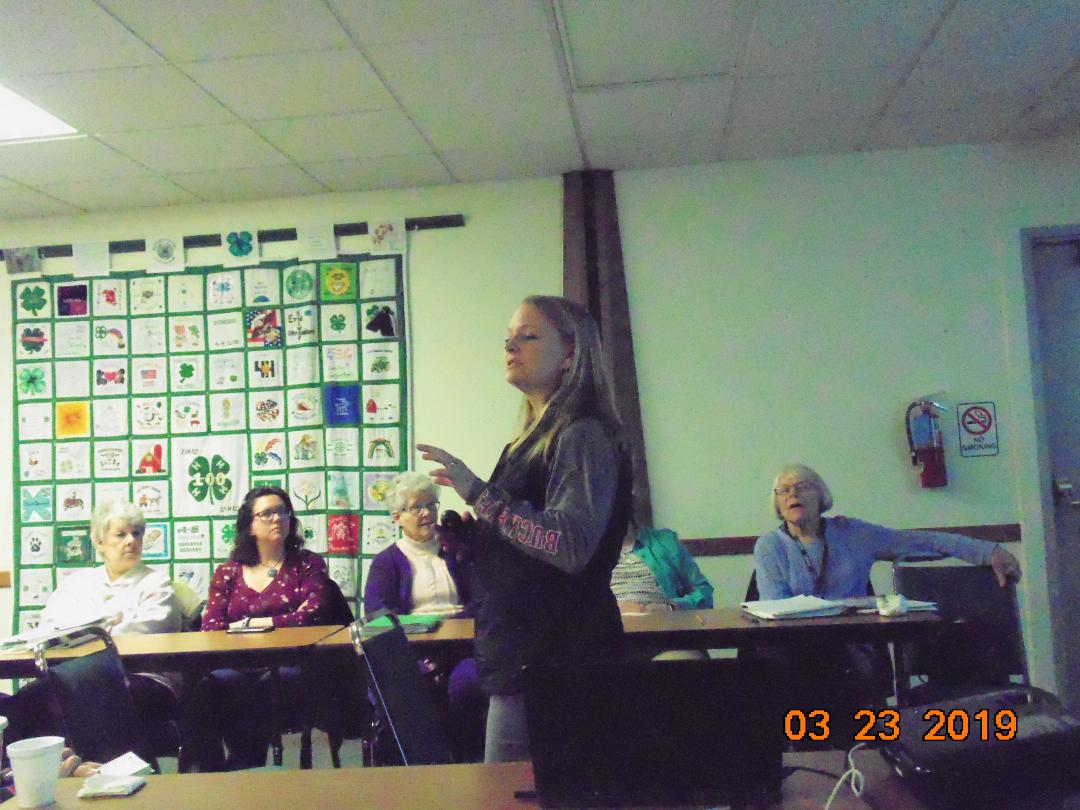
At our March 23rd mtg, Jenny introduced Amy Stone from OSU (go blue!!) who spoke
on Invasive Plants and Pests. Amy a youngster, compared to most of us–proved to be
an energetic interactive and engaging speaker. It was clear she is passionate on this
subject matter.

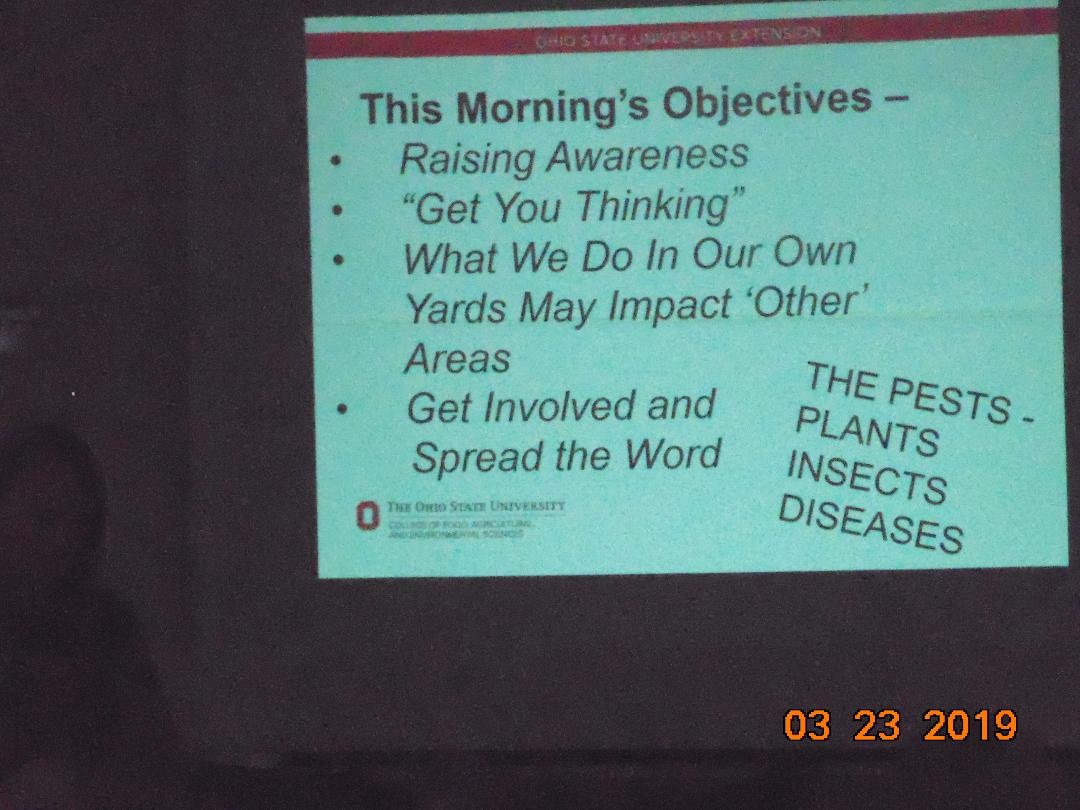
Amy enhanced her talk with a comprehensive power point presentation


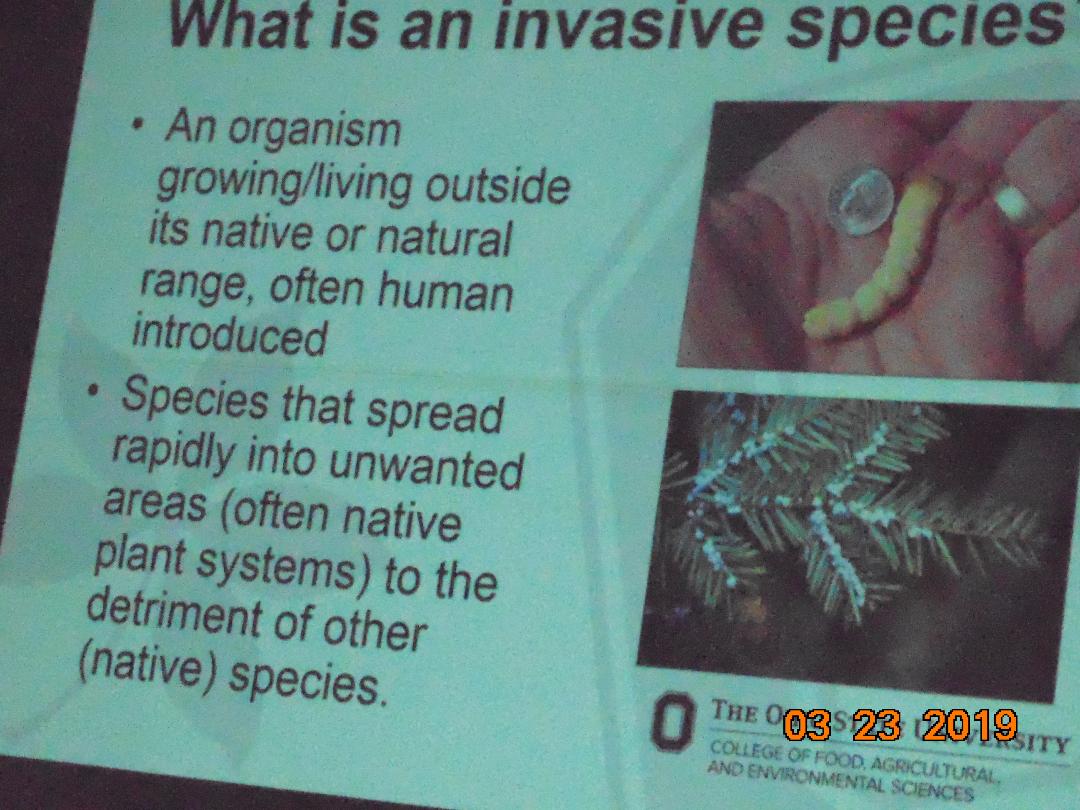
Amy spoke on our responsibility to NOT introduce invasive plants or insects
into our environments–that is best achieved by planting NATIVES. She explained
that an invasive is a NON-native and Native is a specific geno type.

She had a lot of information and the group listened intently as she spoke of not
only invasive plants but the major threat from invasive insects.

Amy covered a lot of information in her talk. A new word for me was
PHENOLOGY – insects & plants develop based on “weather” conditions.
There are direct correlations between when some plants bloom and when the
insects interact with that plant.
In closing, Amy gave references for us to use; noting she has her education & focus
in Ohio. While some info crosses the state boundaries; as Michiganders we
do have our own unique habitats-ultimately the more we all share the better
off our environments will be. web site reference INVASIVE.ORG
“Easier to eradicate when small & isolated”
Her favorite reference: Buckeye Yard & Garden—online //bygl.osu.edu
We have already had some of our members reference articles from this on
the blog……………check it out. gk
THANK YOU AMY!!!!!!!!!!!

Read Full Post »

Adopt a Garden

A list has been posted on the Member’s page that shows the current demo garden volunteers and gardens that could use a volunteer. Please take a few minutes to view it and decide if you would like to adopt-a-garden

Read Full Post »

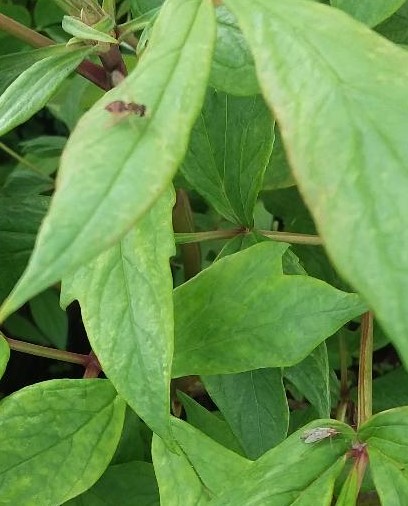
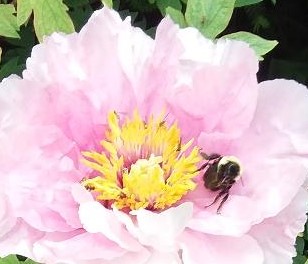
Last year, I made a post about my roses getting chewed up. I discovered saw flies and tried treating them organically by picking off the larvae and spraying off as well. Not sure if the weather has much to do with it…but the saw flies are at an epidemic level. Time for some first aid. Hoping for some predator wasps, along with some Neem Oil and Sevin. Ugg, hate using it…but can’t loose everything to them.

There seems to be two different species here

This was increased in size to see into the bud where the saw flies are getting their share of pollen.

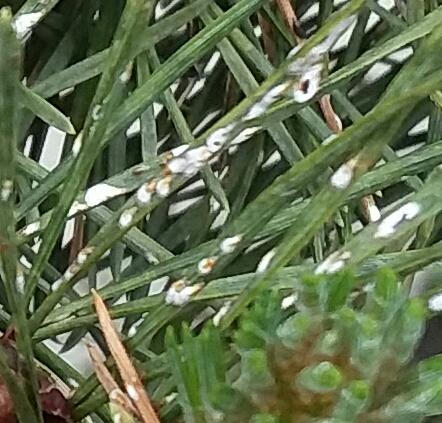
So yesterday was one of the first days I was able to get out into my garden to relax and/or plant. Rain, Rain, go away. Next to my chairs I have a pine…I noticed white spots on the needles. Hummm, What can that be…I hope it’s not scale. Sure enough Pine needle scale. I’m hoping I’ve caught it in it’s crawler stage. I sprayed it all over with Neem oil. It’s not on the new growth yet. I am hoping to saw it, but if not I just might have to burn it in my outdoor fireplace.

A close up show there are still some crawlers before developing the scales.

Well, we will see what happens. Hopefully, I can show you all healthy plants at our tour in August.

Read Full Post »

Good morning, Just noticed this article in The Saline Post about
a Native Plant Sale on June 1 that Blog readers may be interested in.

http://www.thesalinepost.com/community/conservation-district-hosts-plant-expo-and-marketplace-june-1-farm-council-grounds

Thanks,
Naida

Can you Relate?

Read Full Post »

Naida sent this link where there is a good article, from “Michigan State University Extension News Gardening in Michigan”, on the Monarch research:
https://www.canr.msu.edu/news/monarch-butterfly-research-update-may-2019

Read Full Post »

« Newer Posts - Older Posts »