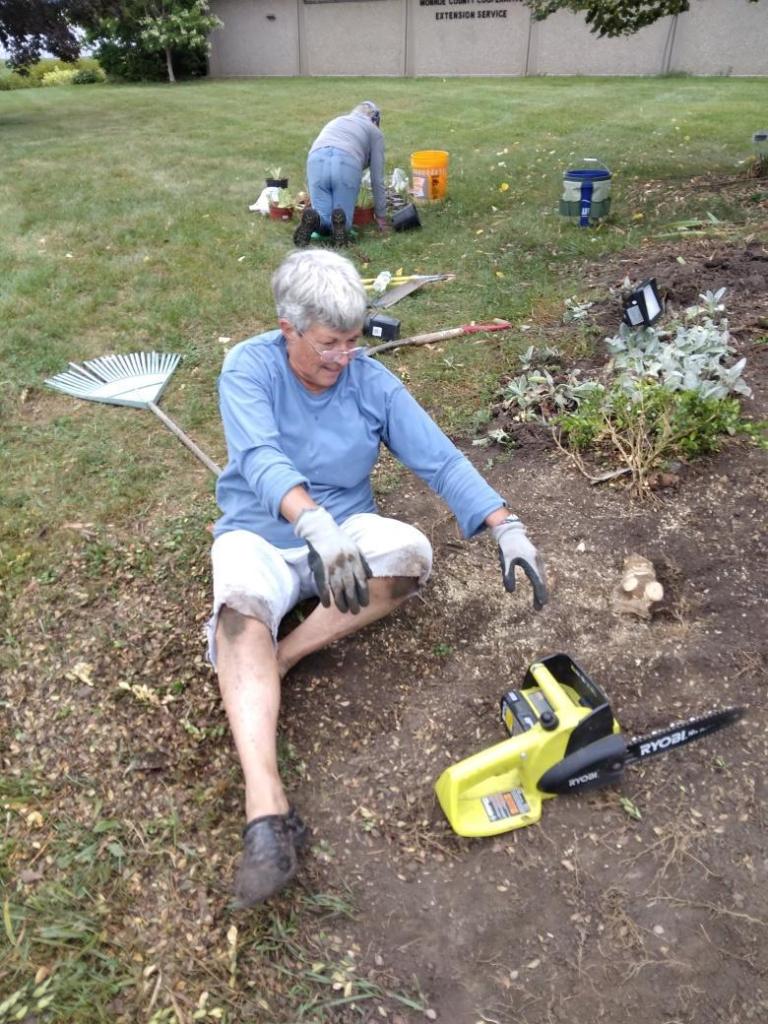
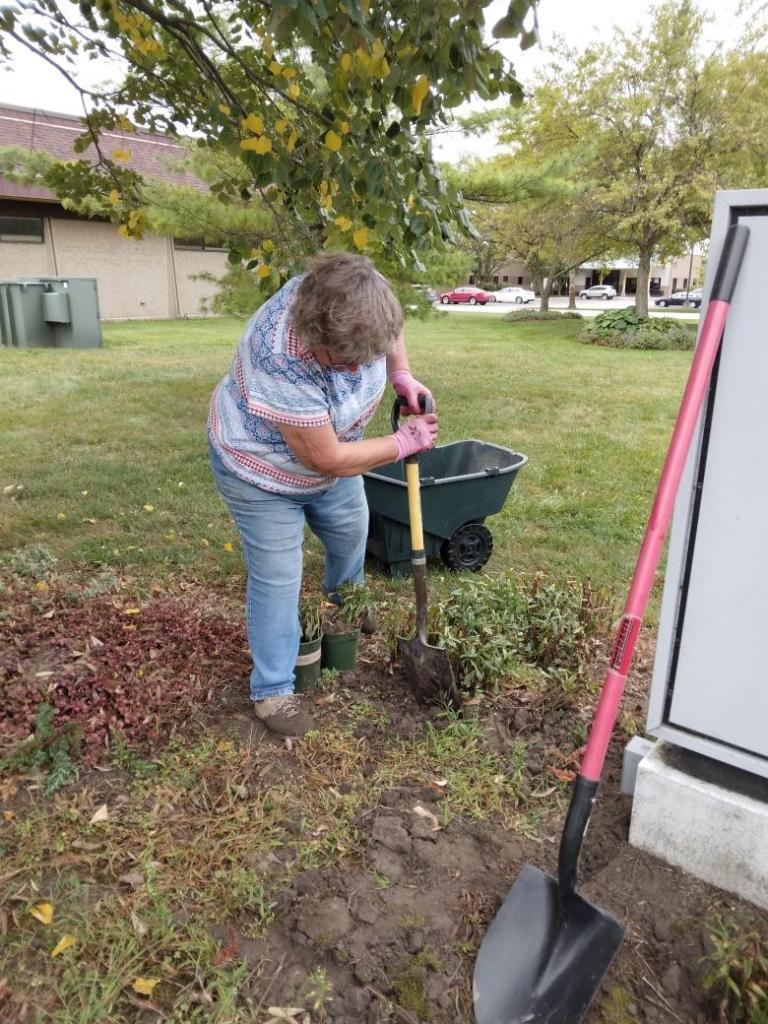
Pix from work and learn yesterday, when Gail tackled the shrub in front of the Extension building…. and won! Michele in the background, dividing dug up daisies and irises. Jennie putting much effort into removing those perennials. Naida was there, too, helping with everything. Kay showed up, too.
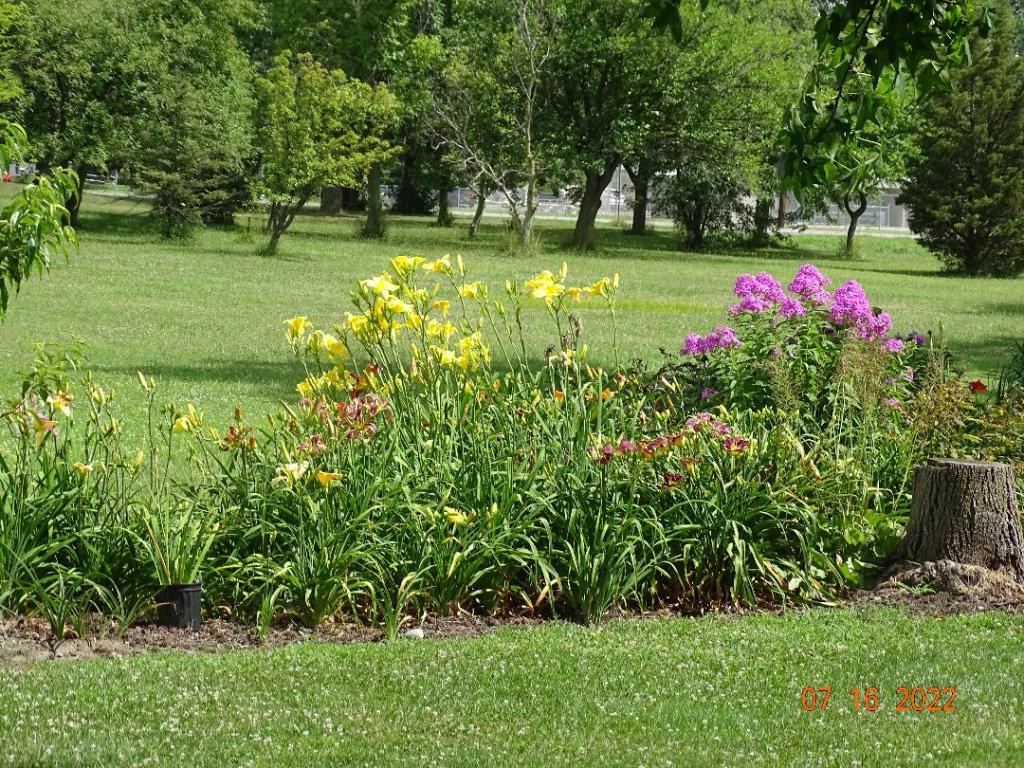
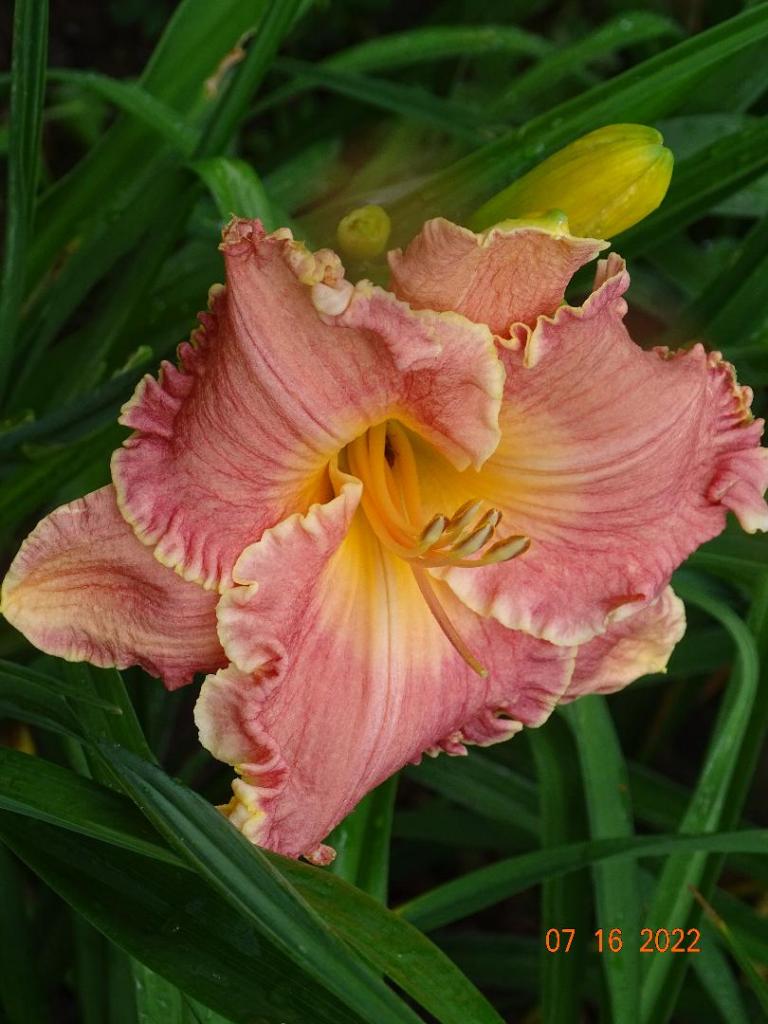
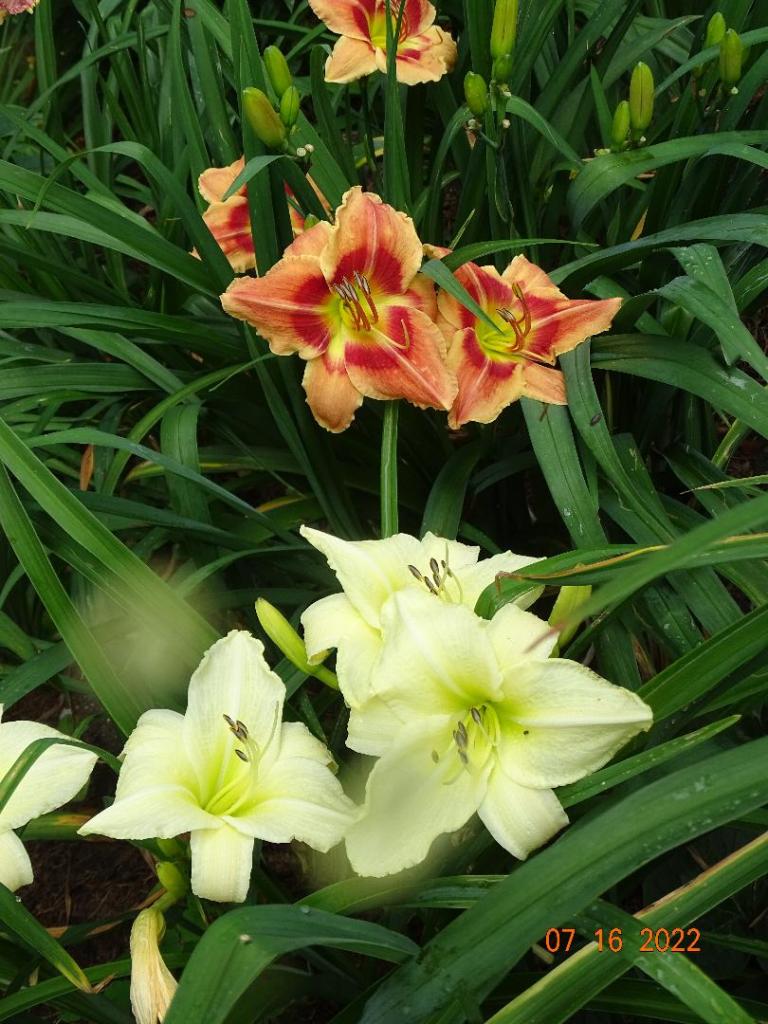
Awhile back our group, took a trip to see Deb’s Daylilies. My photo disc went funky and I was unable to post. It has sat on my “to do” list—until July 16, 2022.
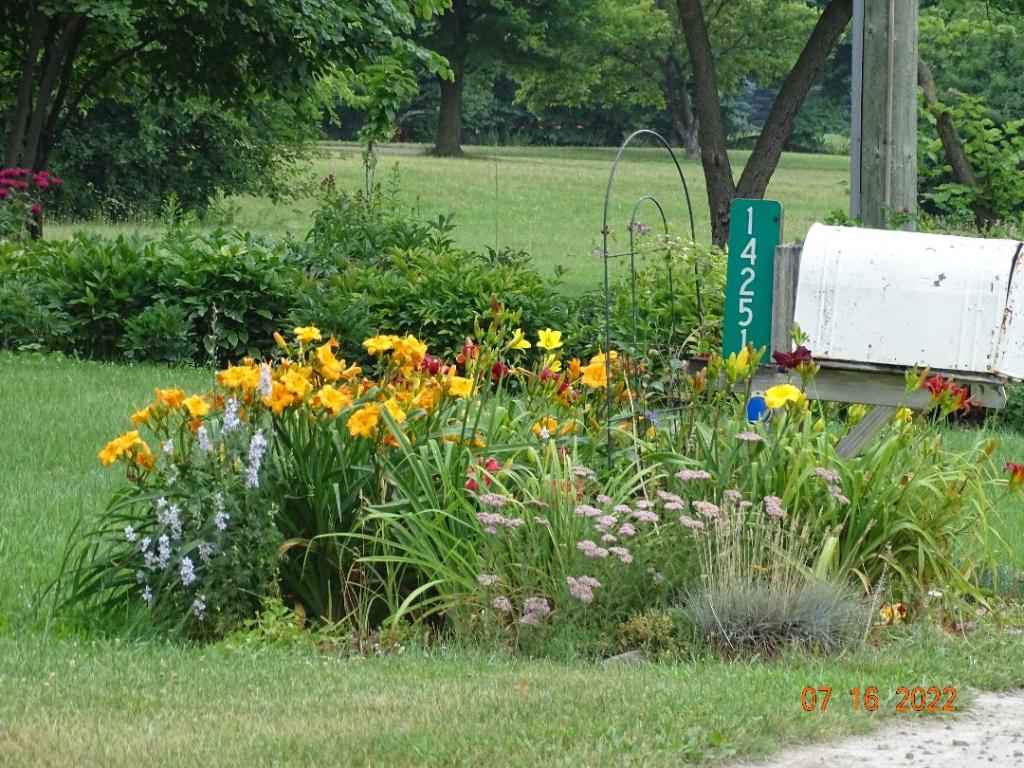
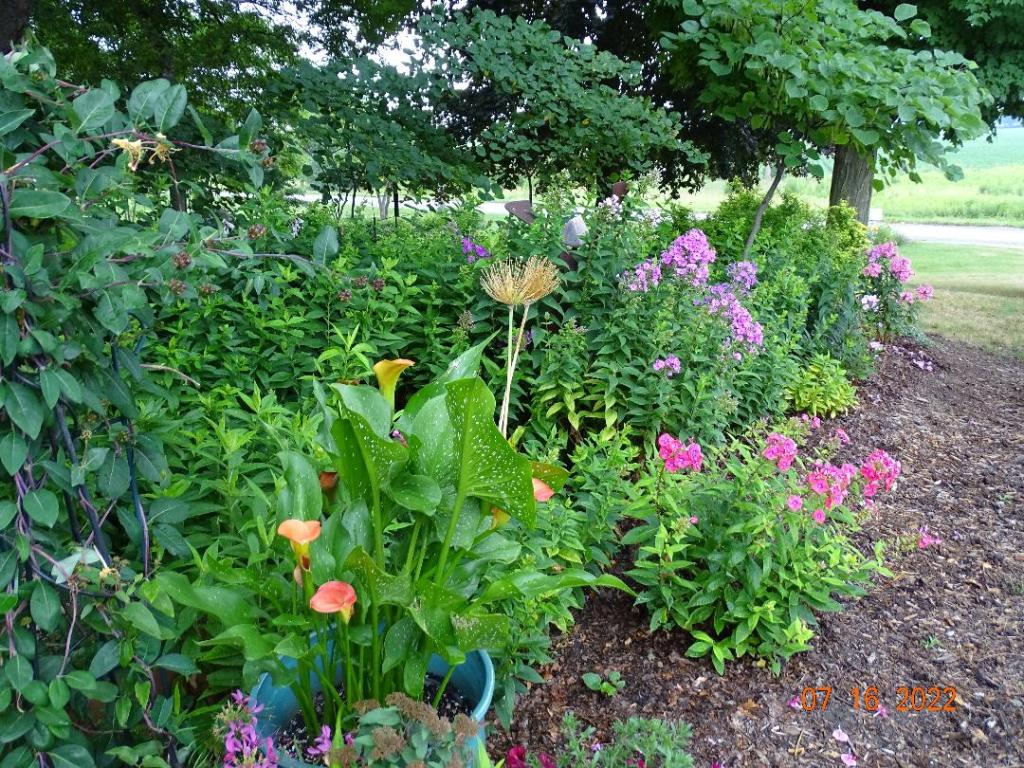
If I remember right, I need to watch for – flowers at the roadside mailbox—YUP- there they are.
What a welcome mat, wouldn’t you say???
Morning Deb!!!!
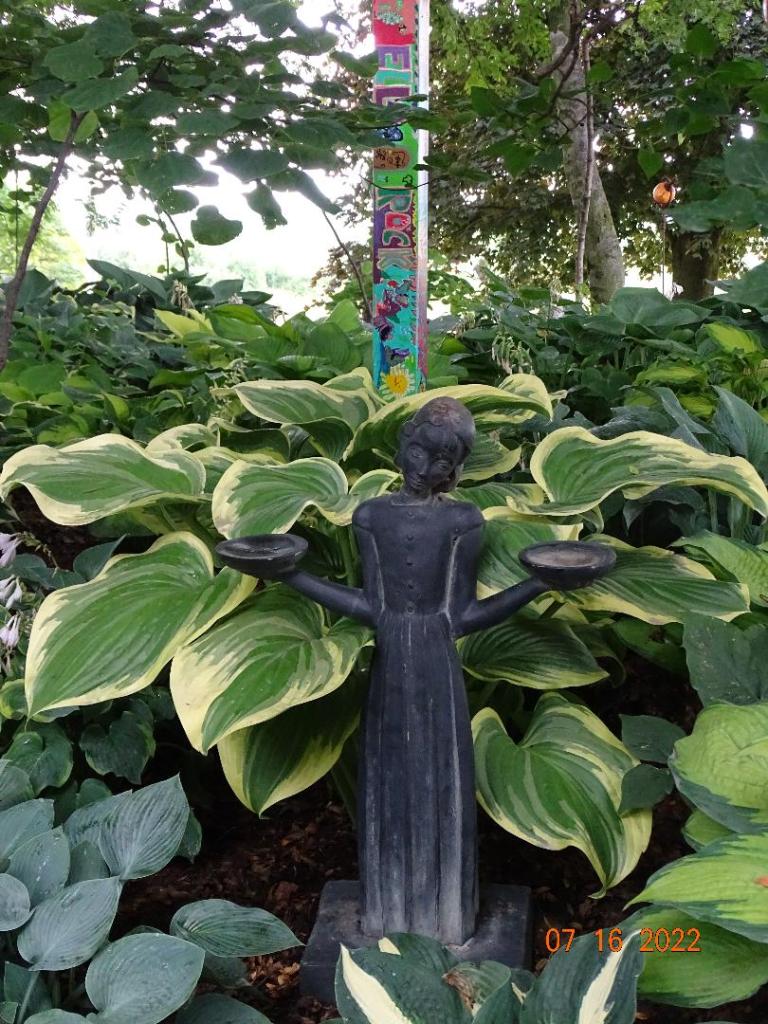
Above, the outer edge of her Hosta garden which sits adjacent to her driveway……….
Deb’s yard has far more than daylilies so we are going for the full tour……ready? I remember this from the last time- it was a fave then and now………
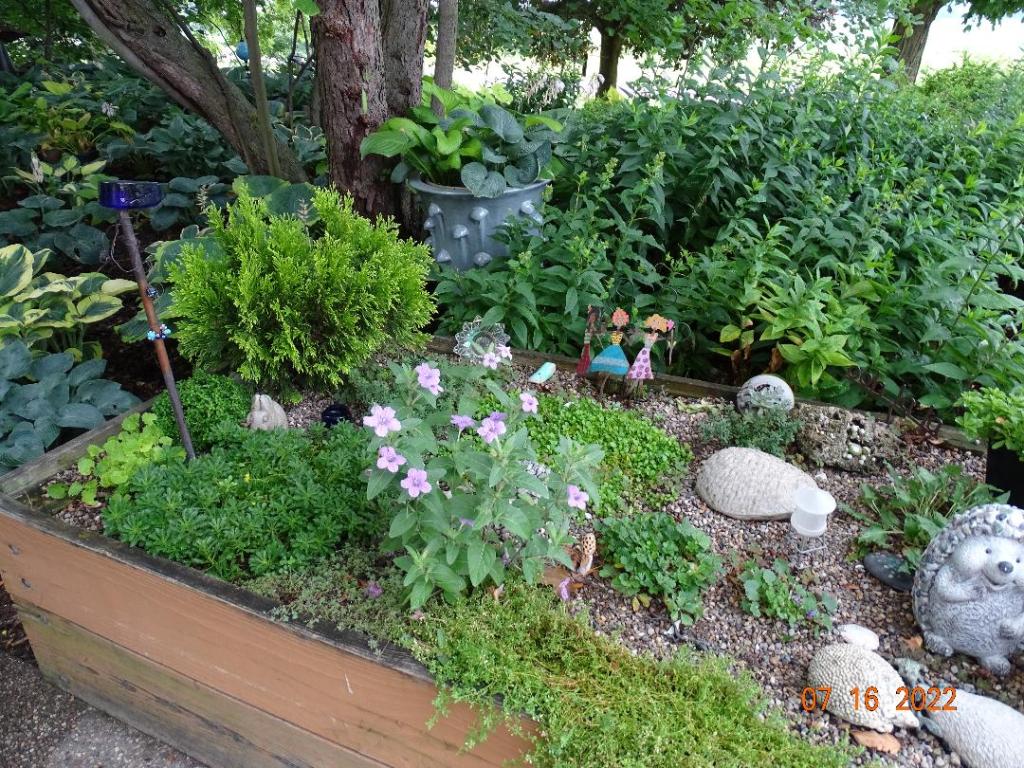
Fairy garden for the grandchildren.
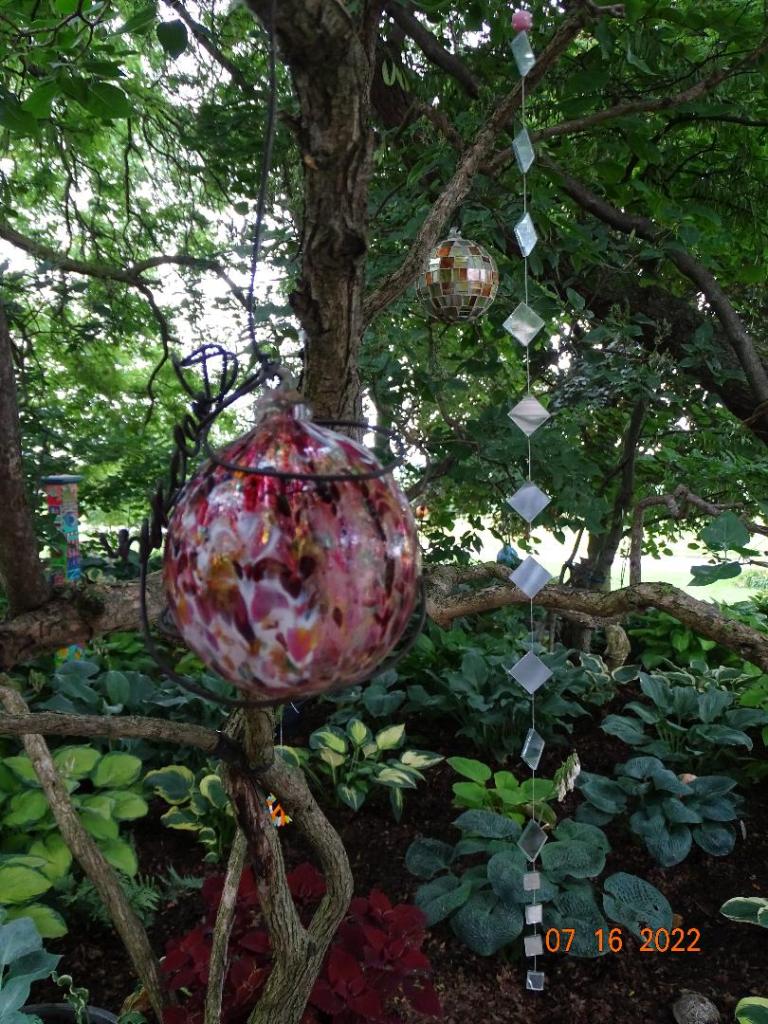
More than just “the plants”- Deb has integrated art of all types into her gardens.
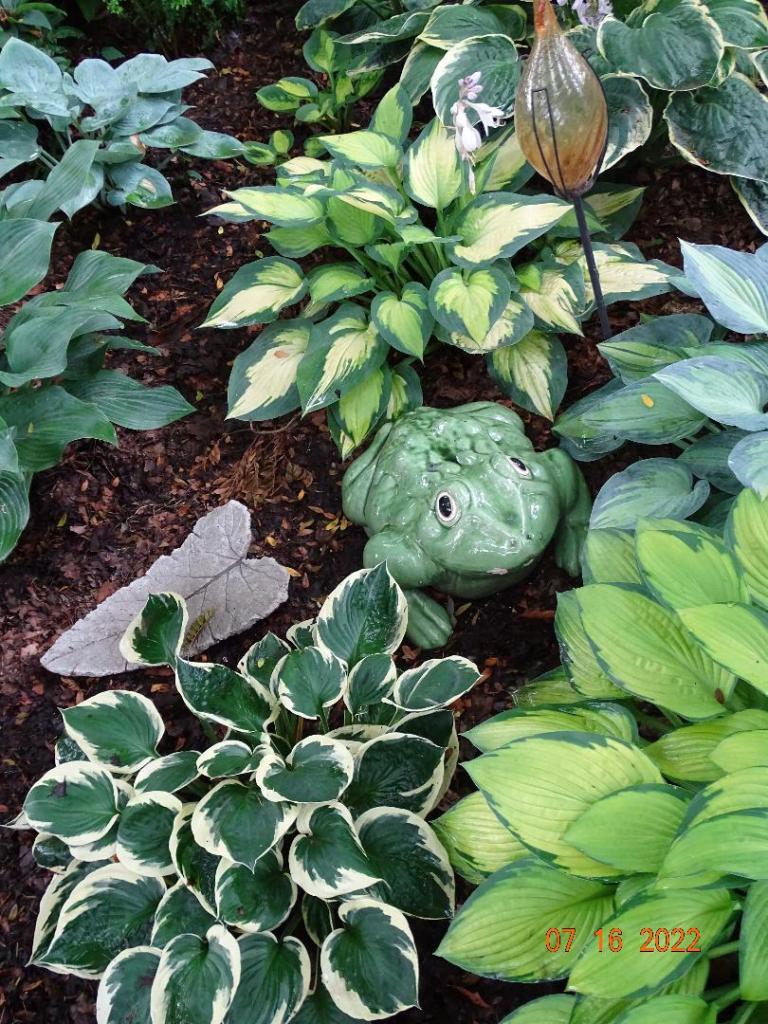
Do you see the frog?………Rib-bit!!
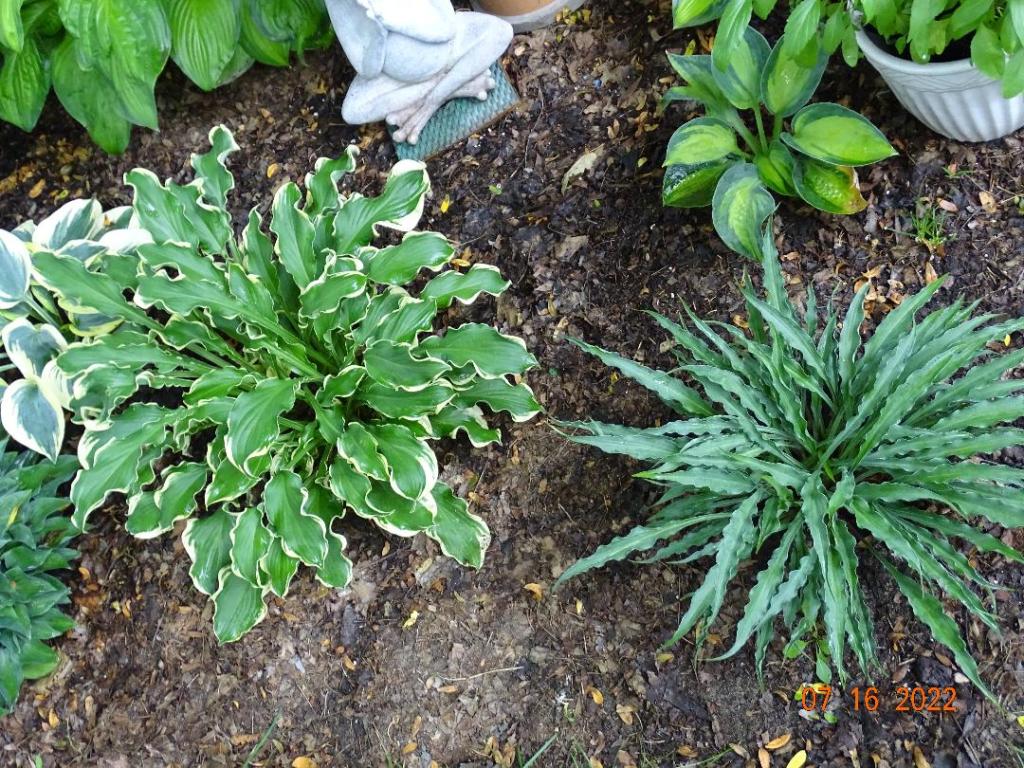
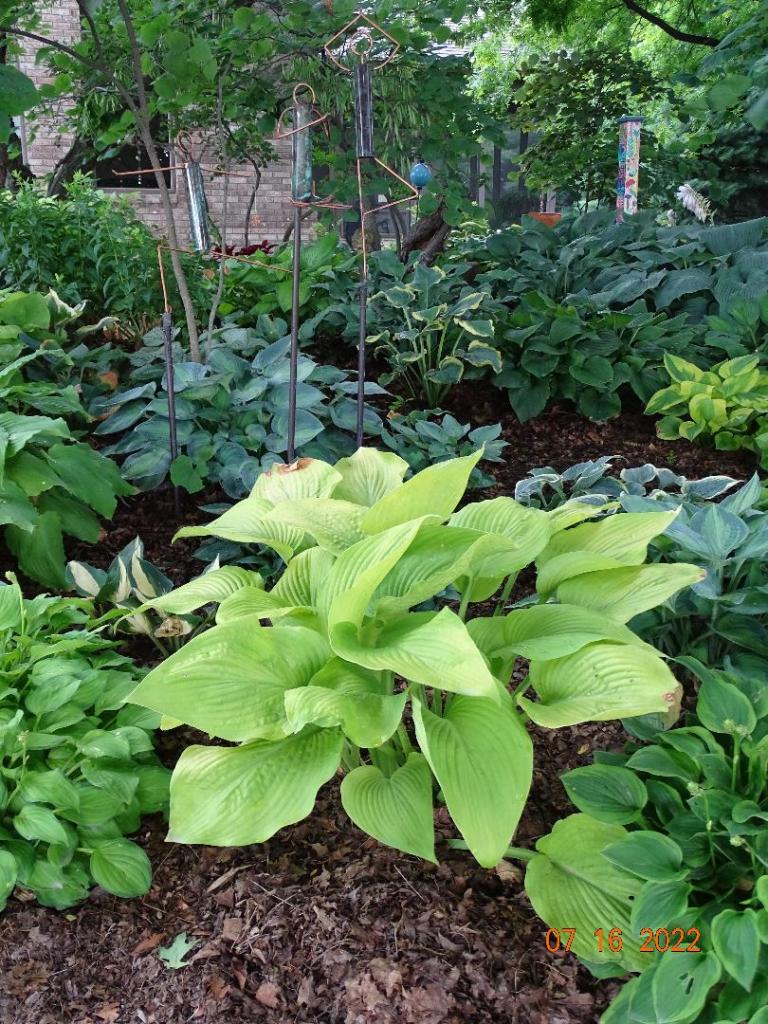
Overhead trees- provide the perfect shady spot for a large Hosta bed. The vast display offers a wide variety of size, shape & color hues; all beautifully blended into a sea of green.
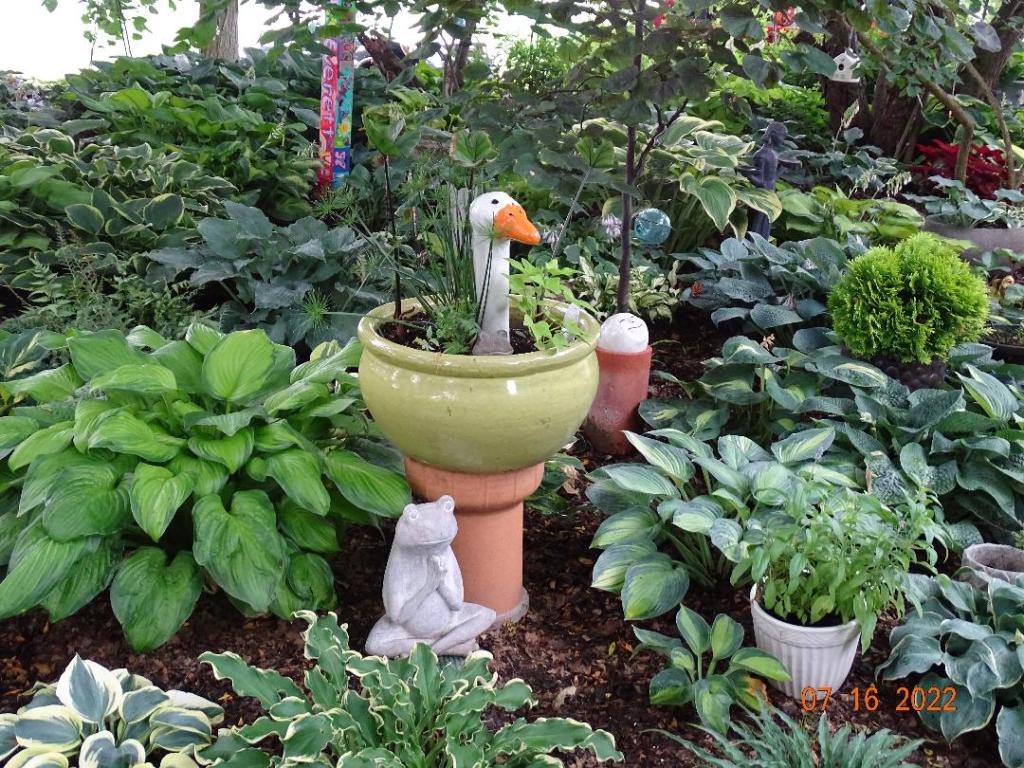
Duck Duck ?? GOOSE!!
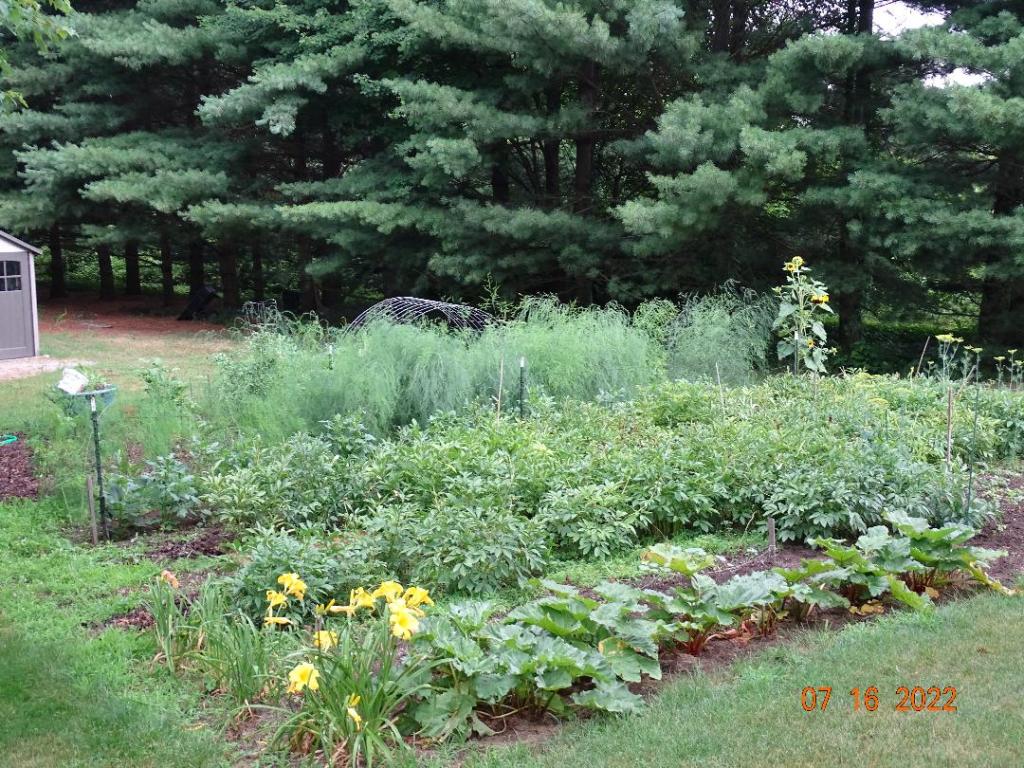
Leaving the Hostas, we pass the veggie garden on our way to the back yard & the daylily patch. Despite my impromptu visit– these gardens are in tip top shape….
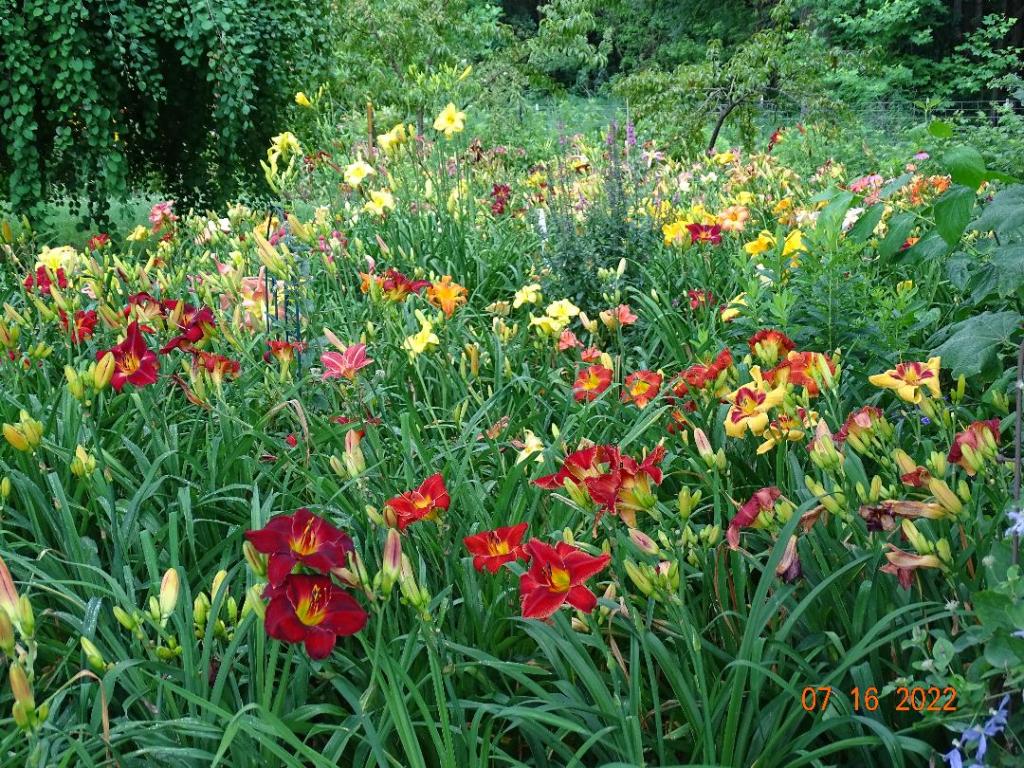
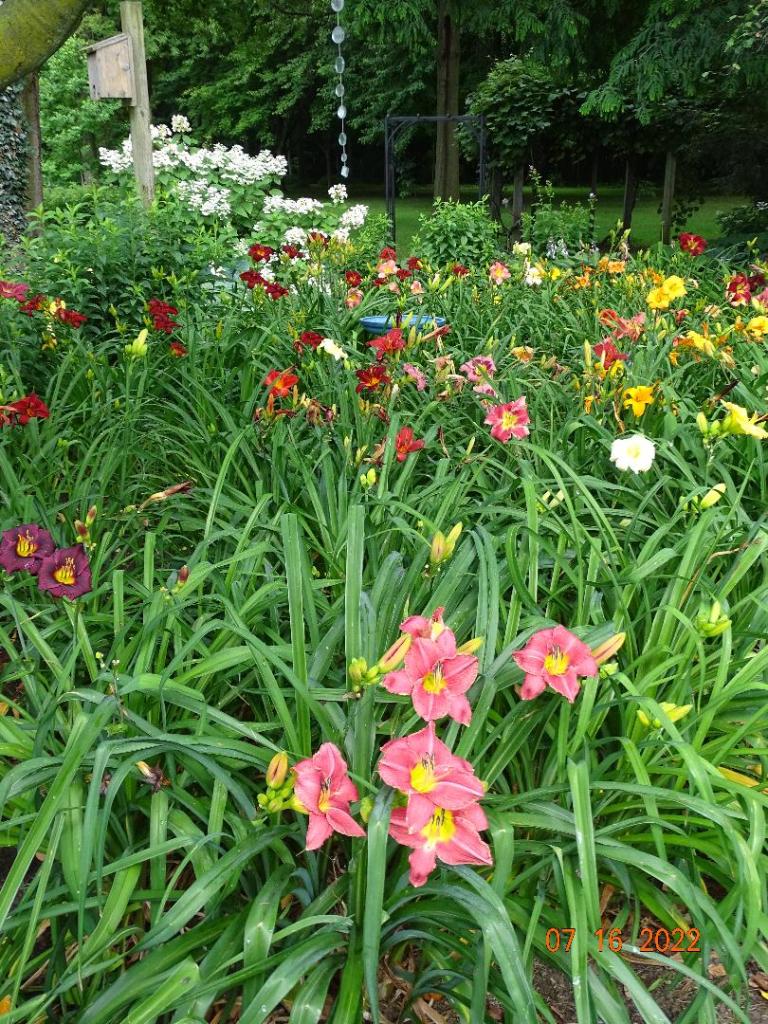
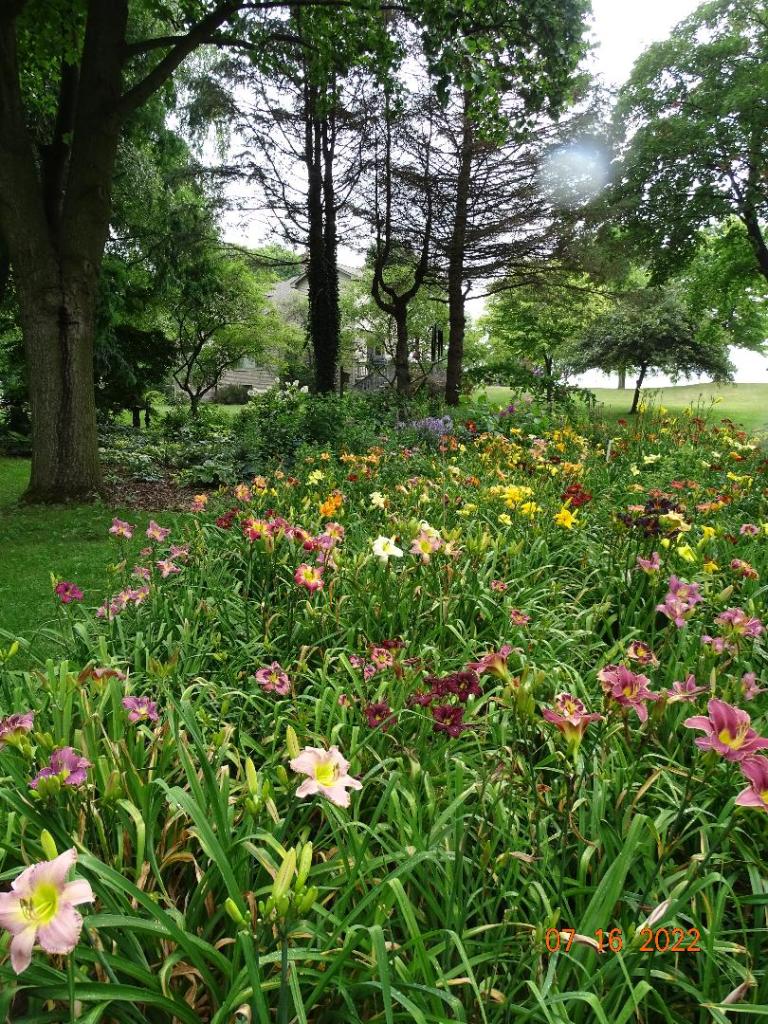
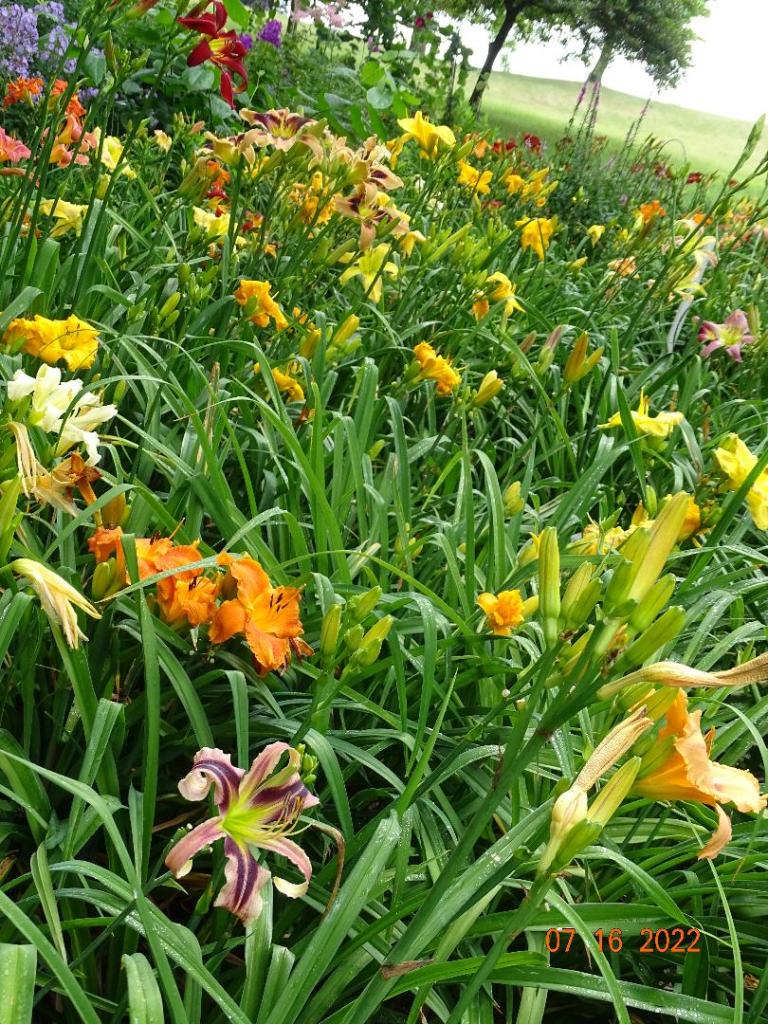
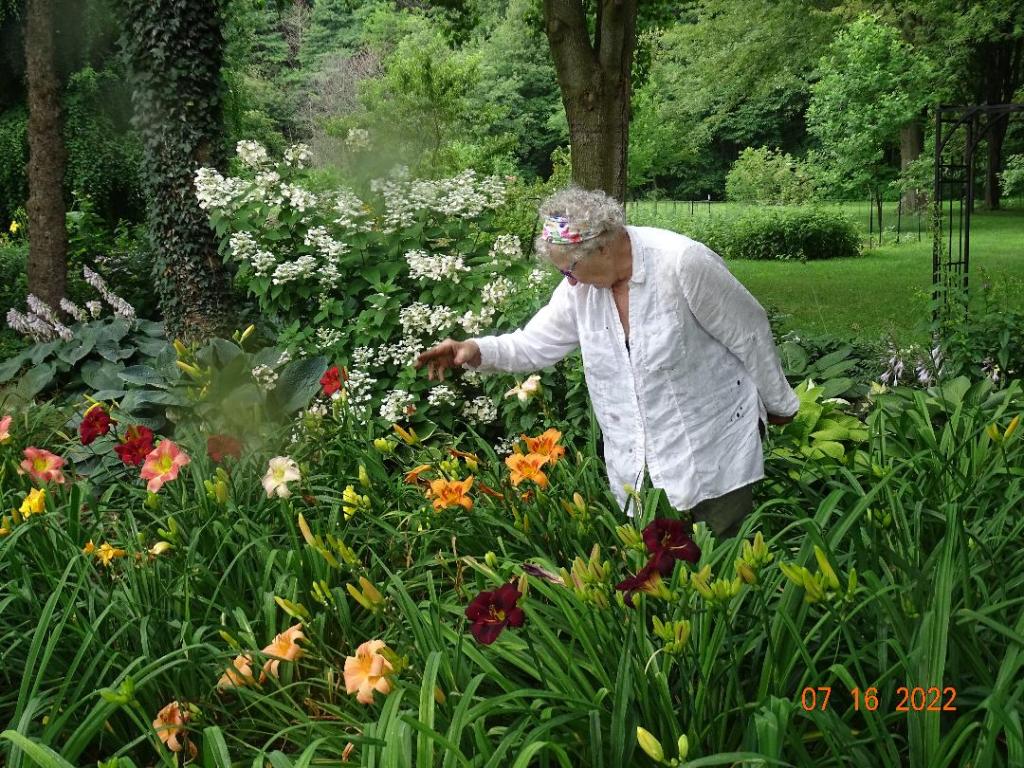
Rounding the back of the house-WOW! Holy color wheel!!!
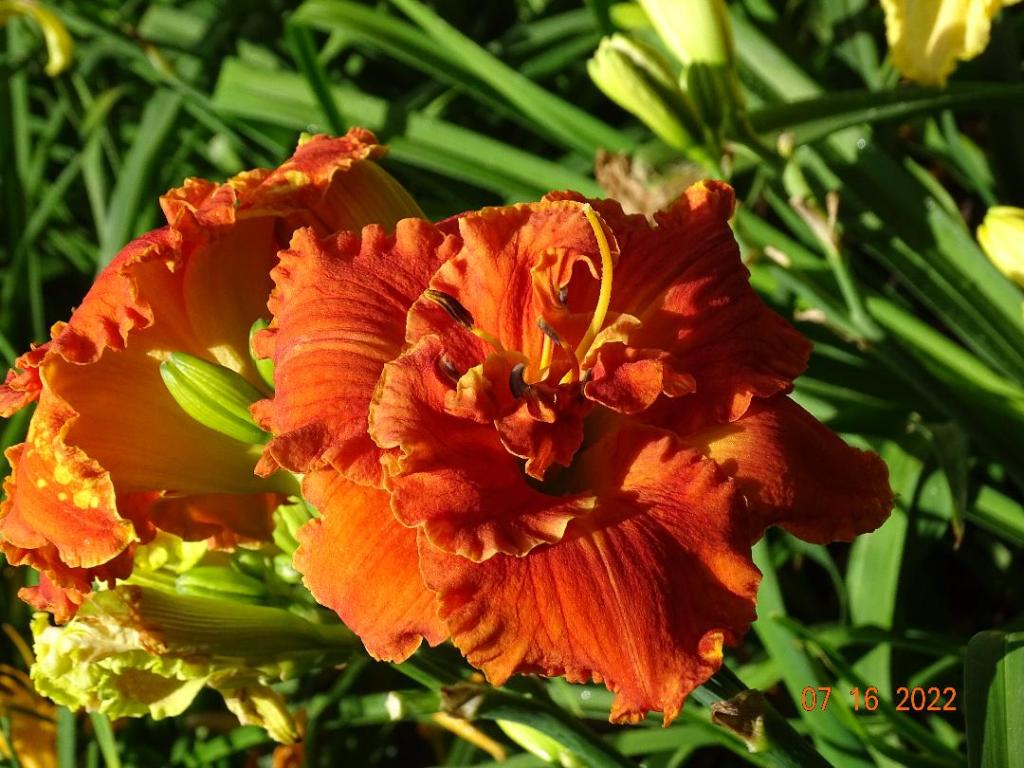
Here in the filtered shade of an early morning sun- Before my very eyes, Mother Nature had spilled a #120 count box of crayons—-what an array of colors!!!!
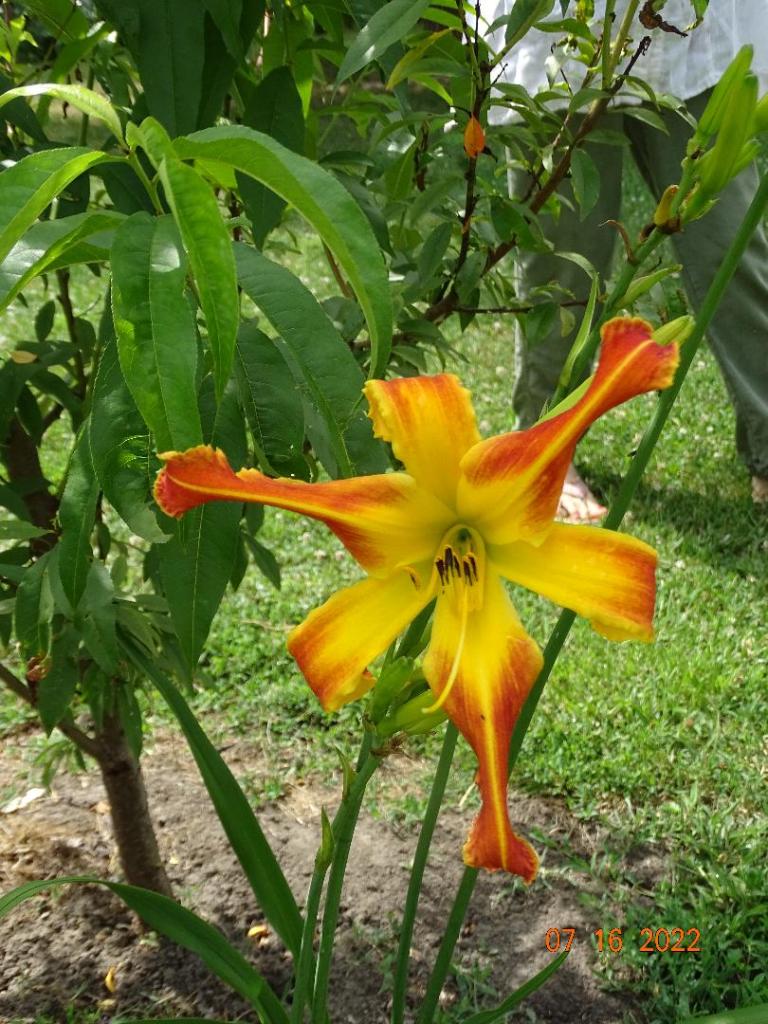
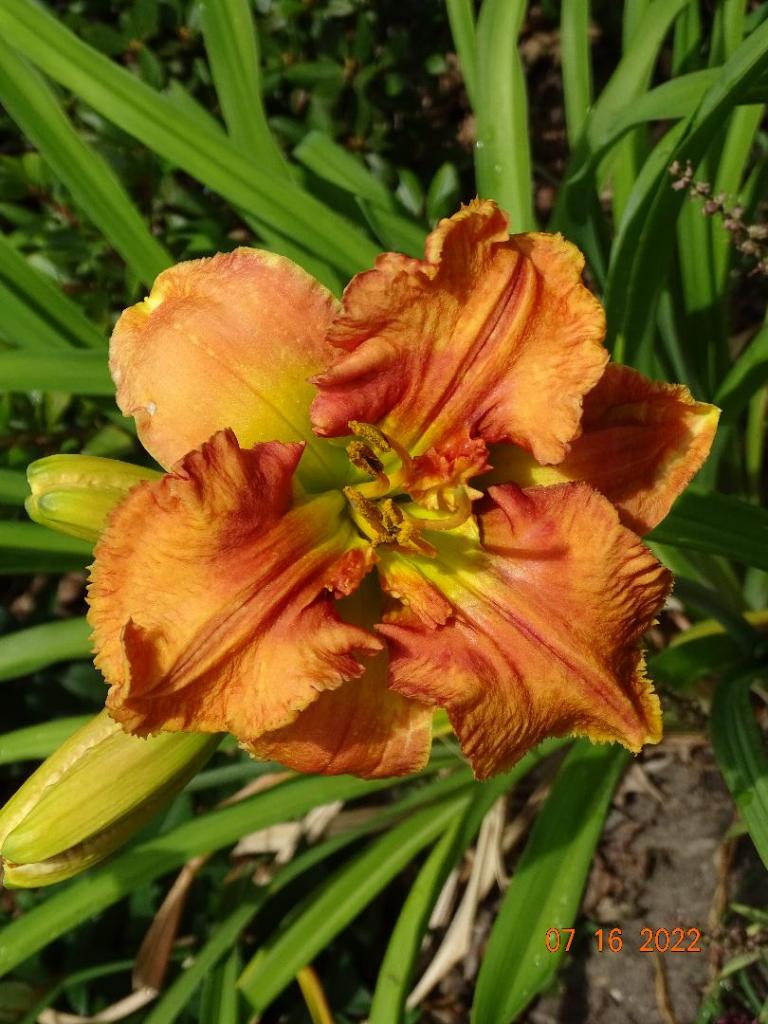
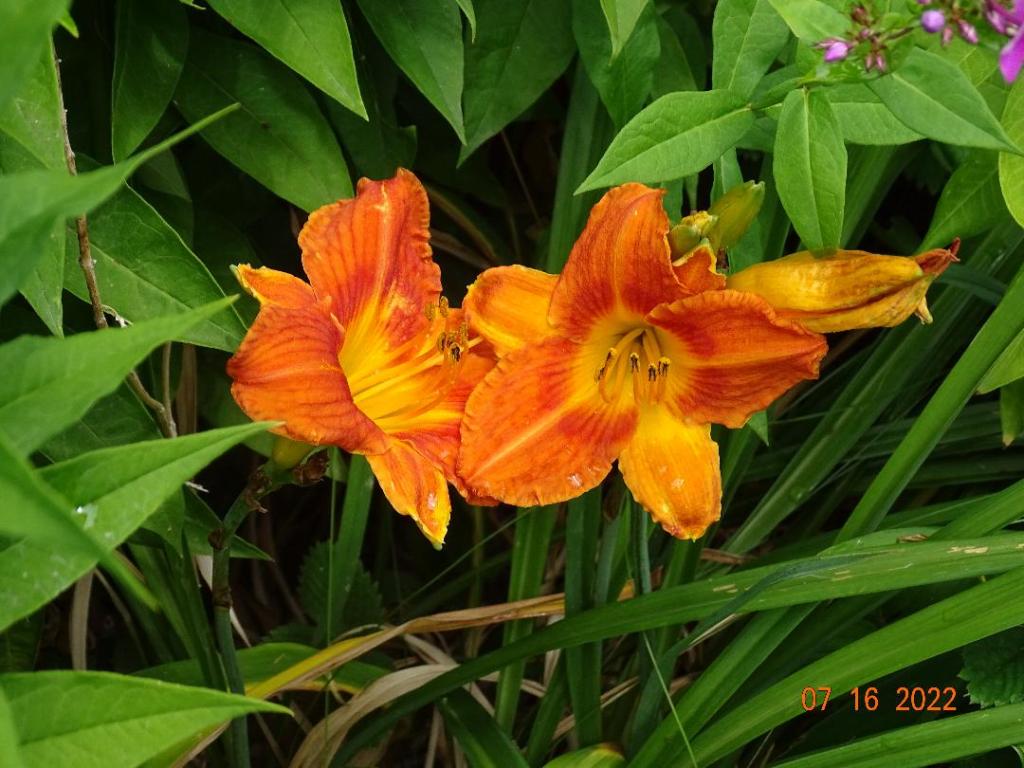
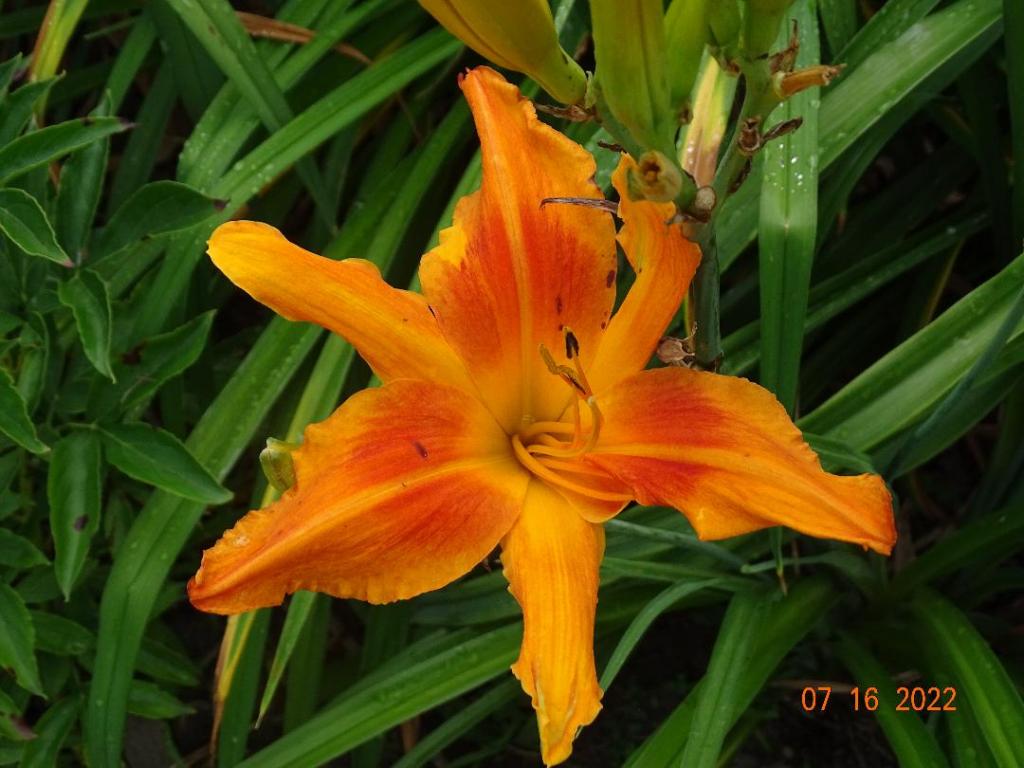
With Deb’s permission, I tip toe in & around the multitudes snapping photos- hoping to capture the more outstanding blooms- to share with YOU.
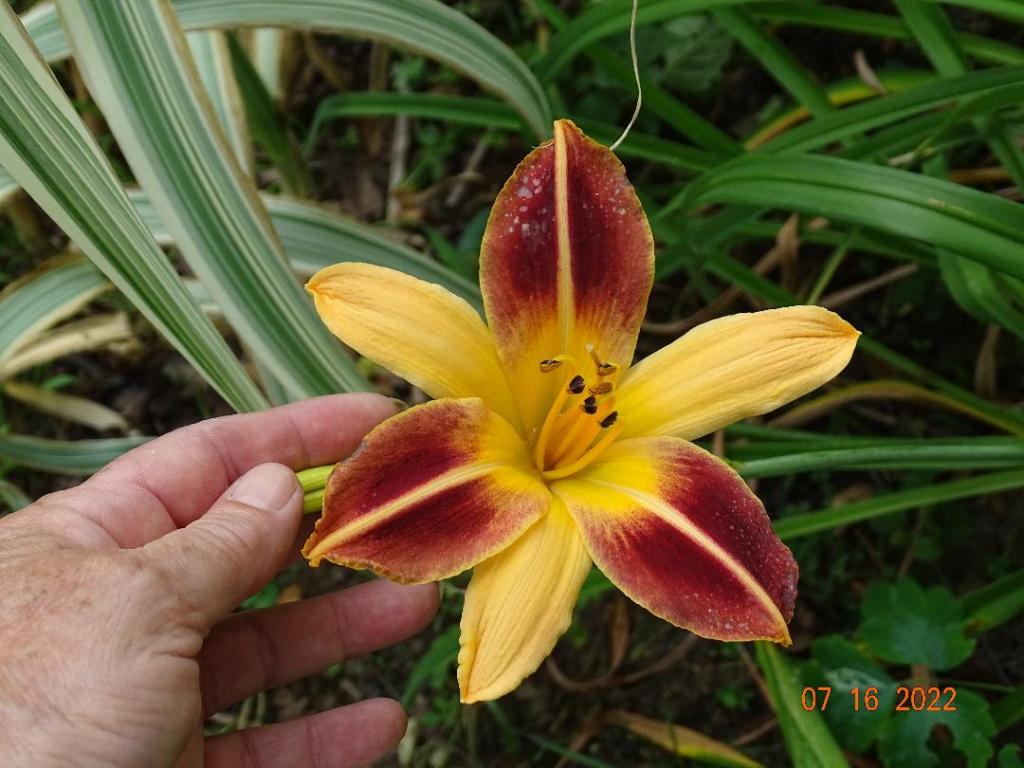
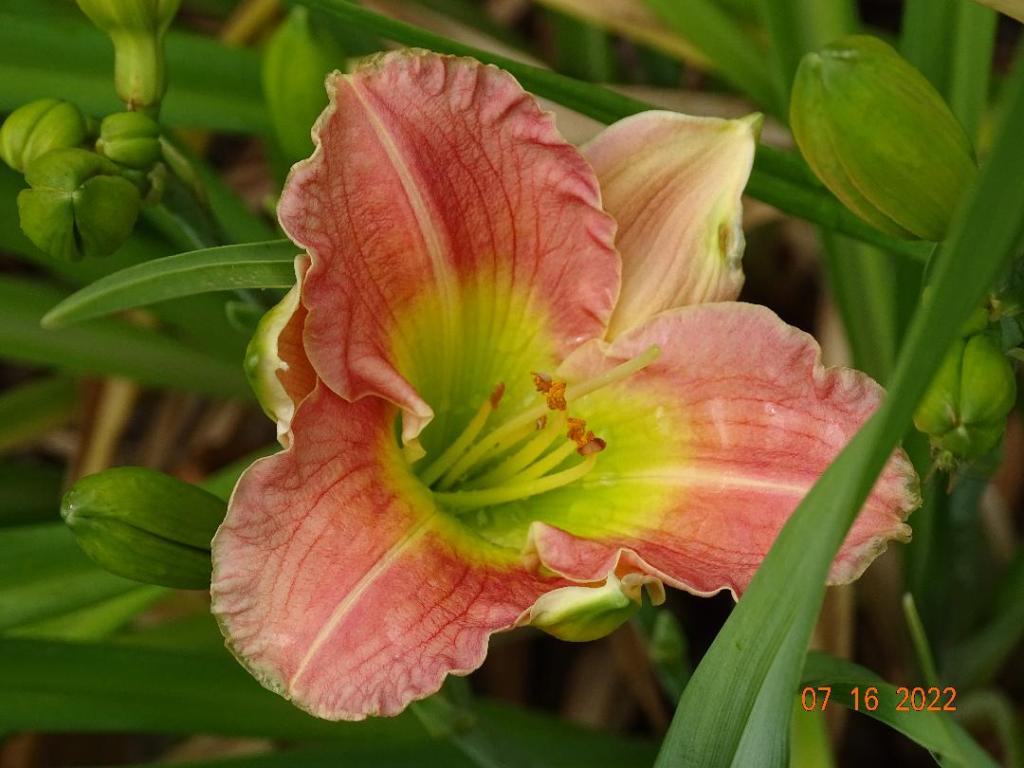
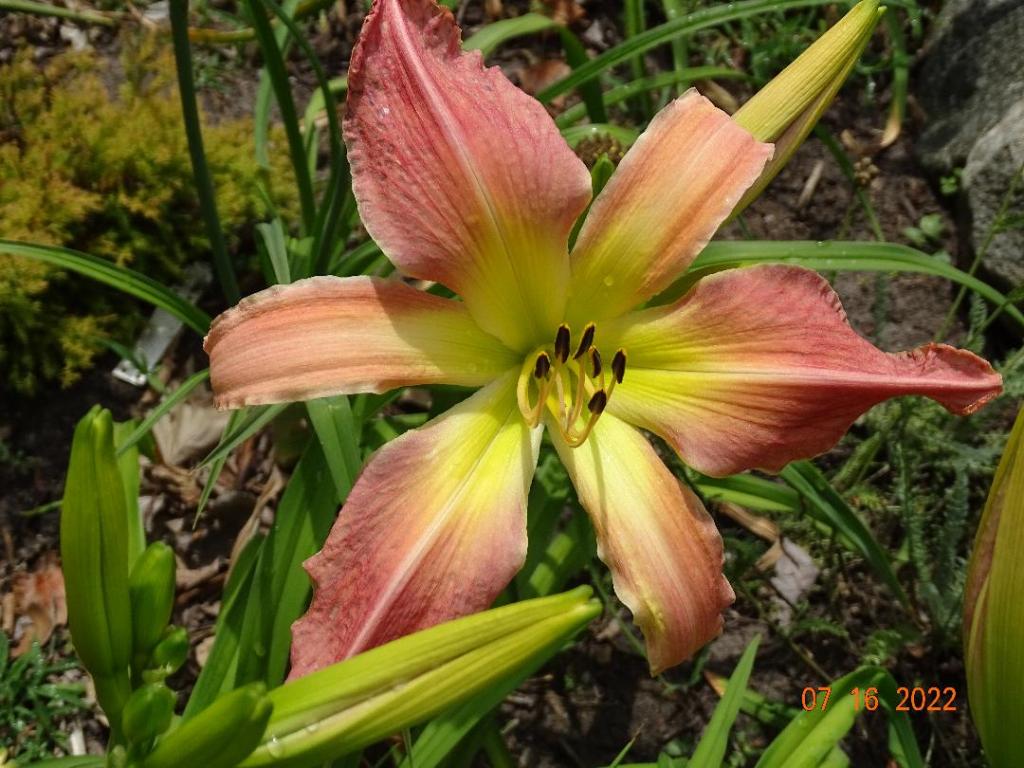
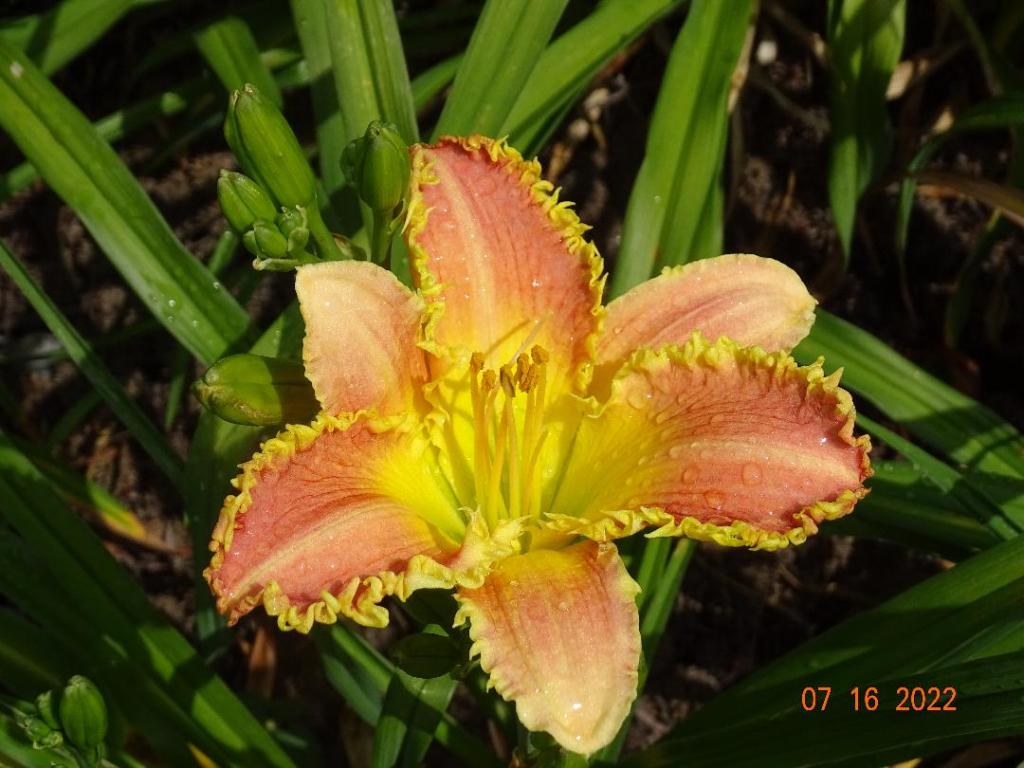
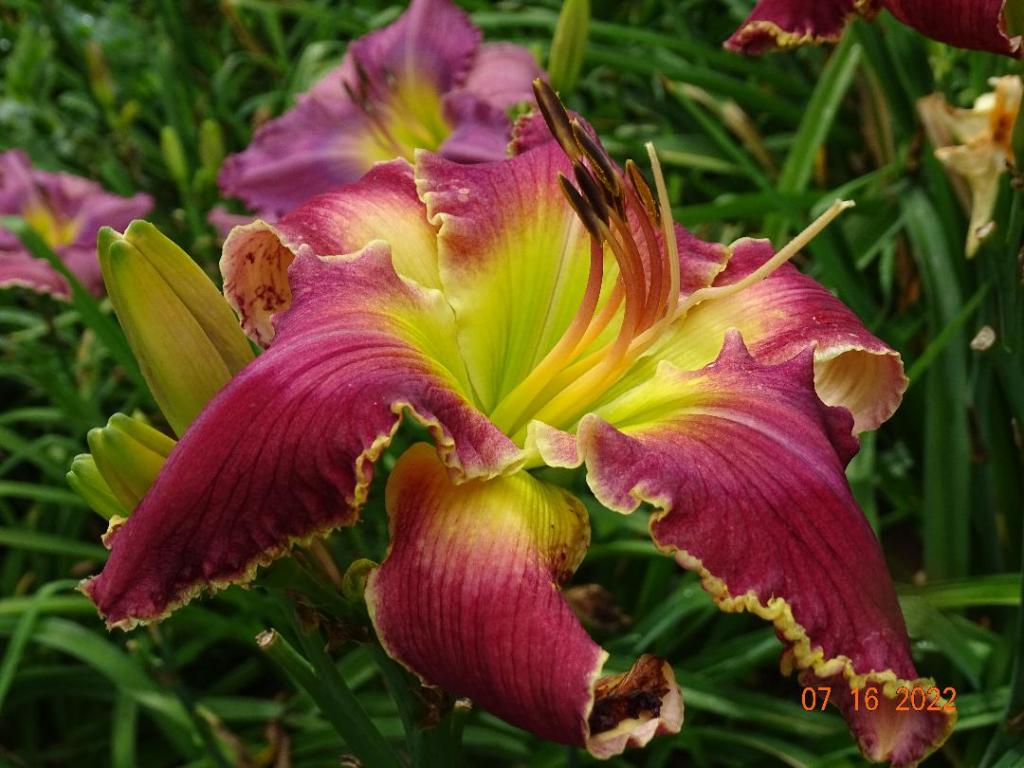
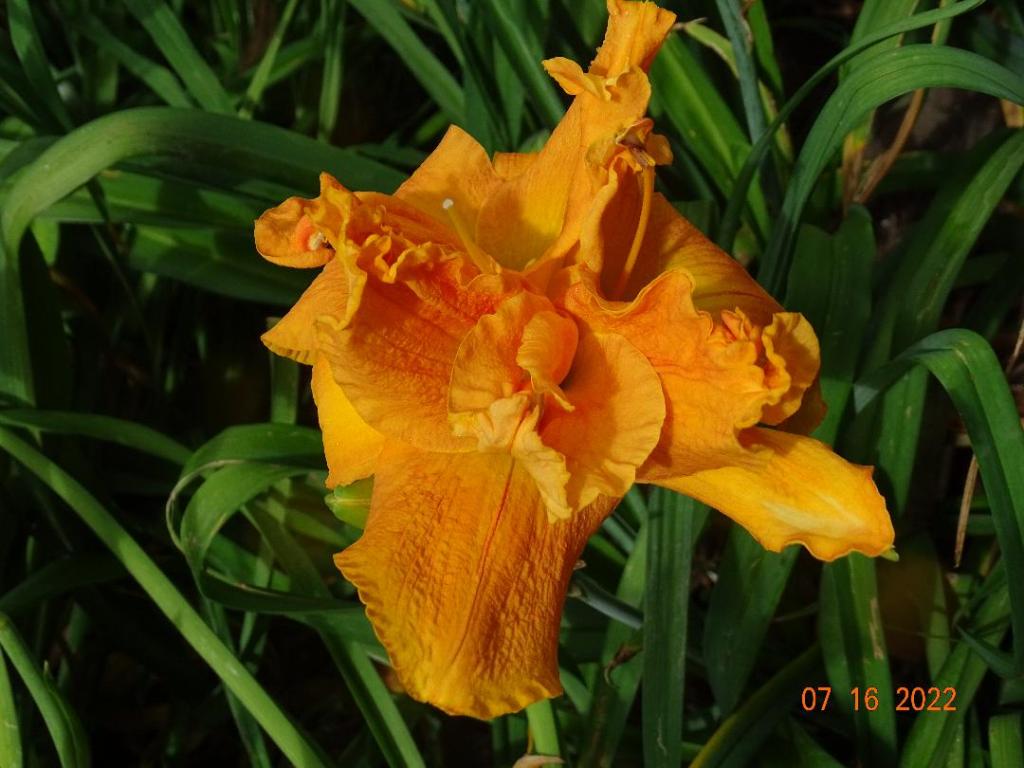
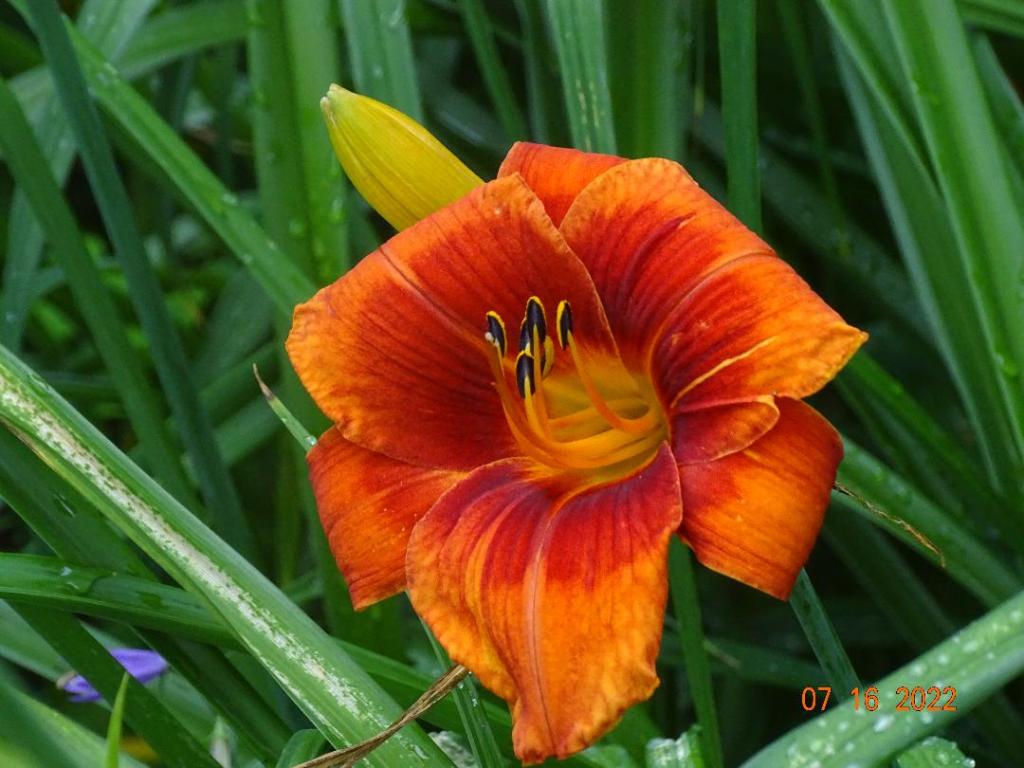
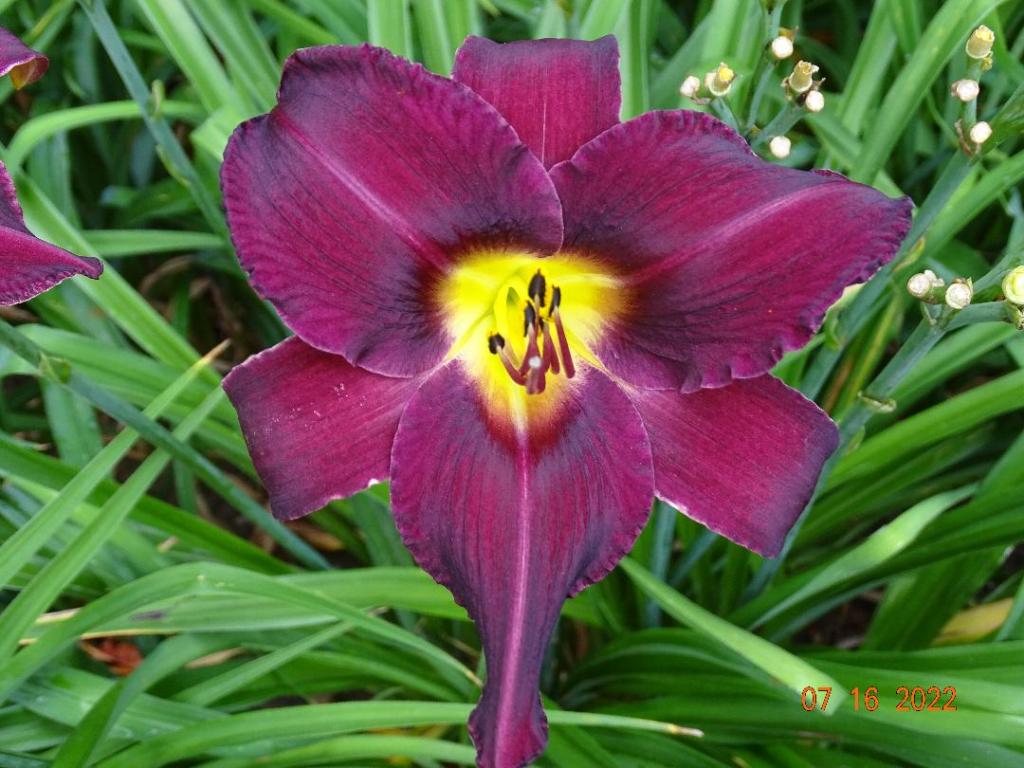
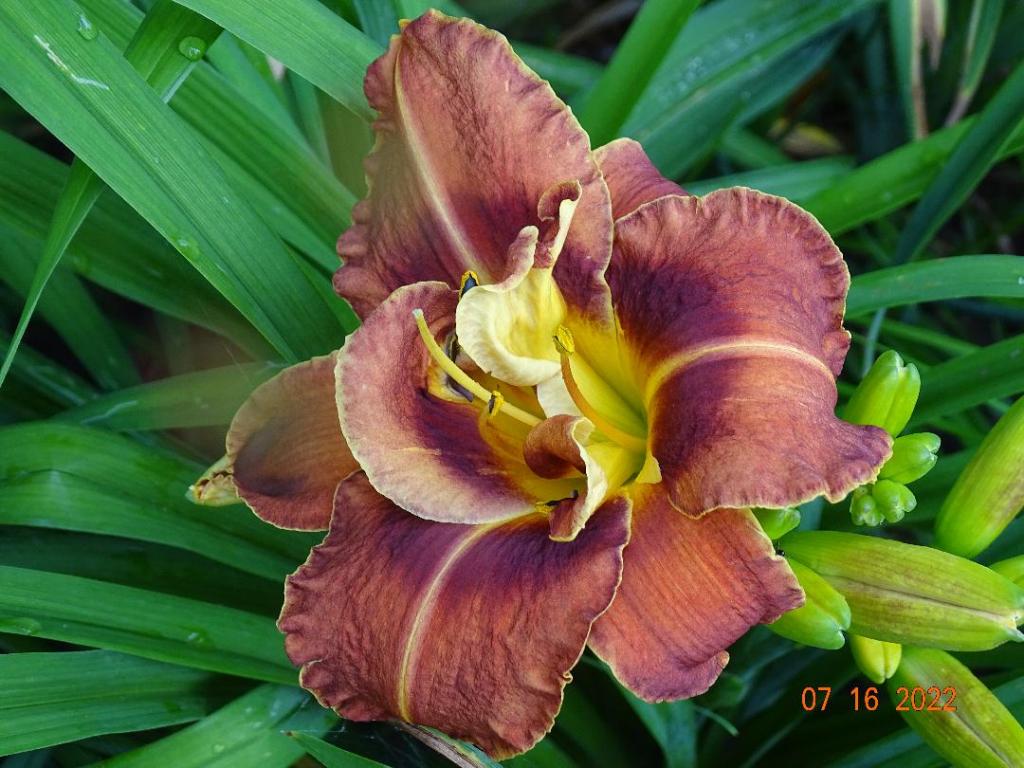
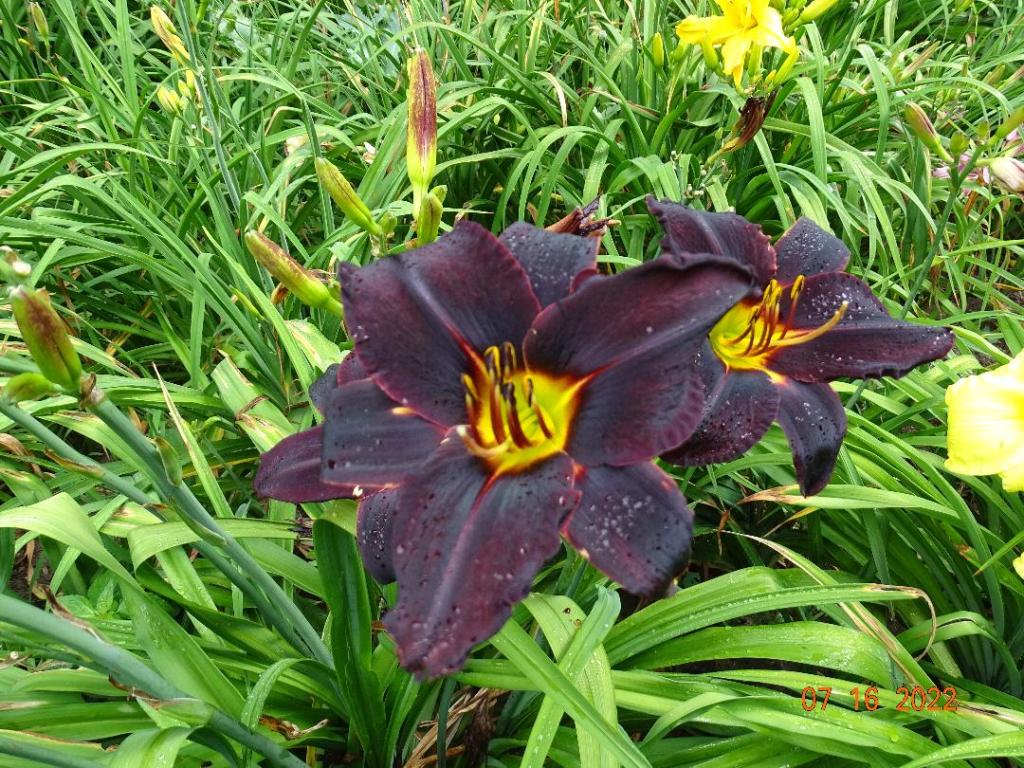
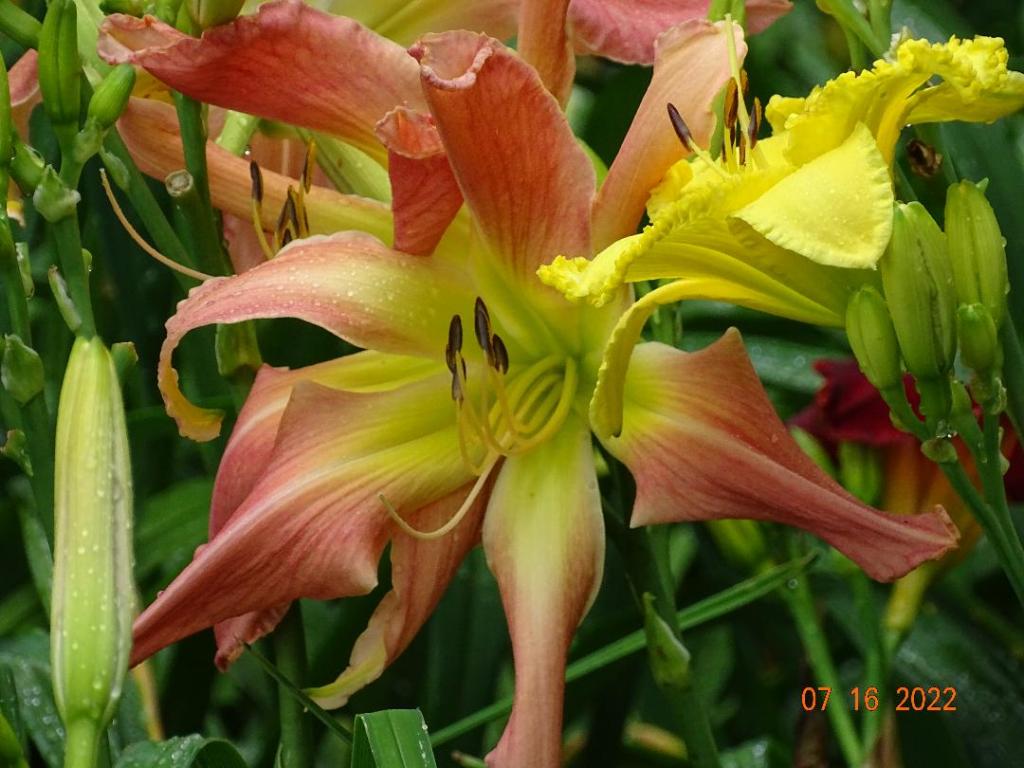
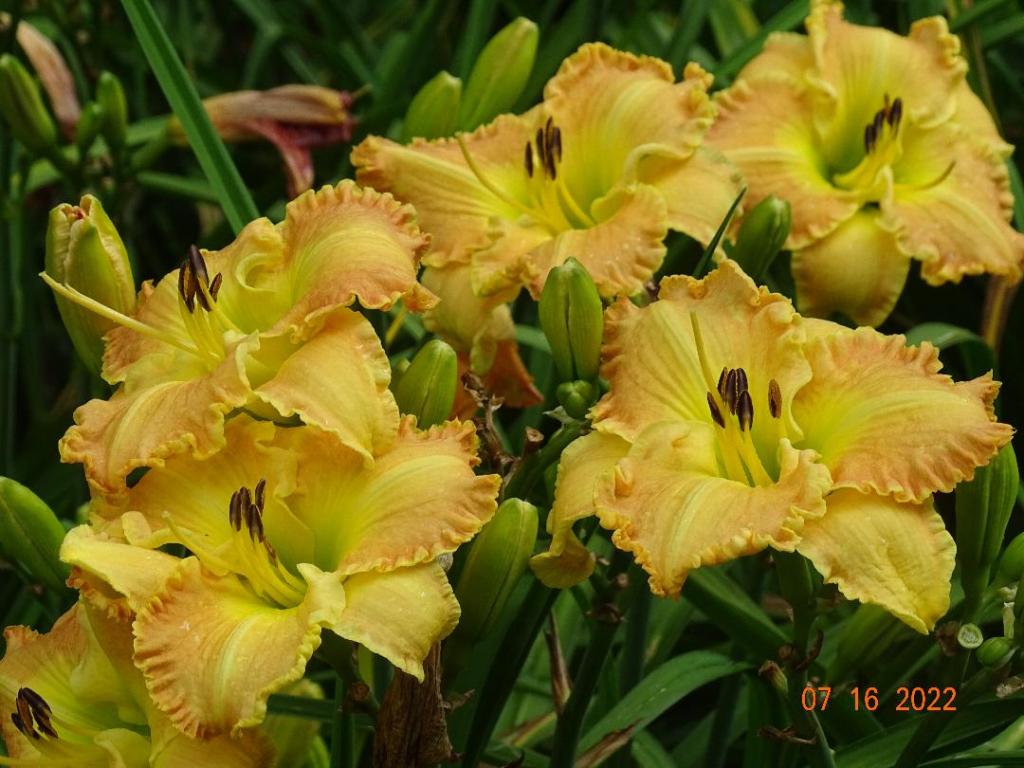
It doesn’t take long to see just how varied these flowers are….in color, shape & design!!!!
Debbie-naming each as if they were her children…..even who the grower was or where she bought it…
What?? Pick a favorite???? Really?
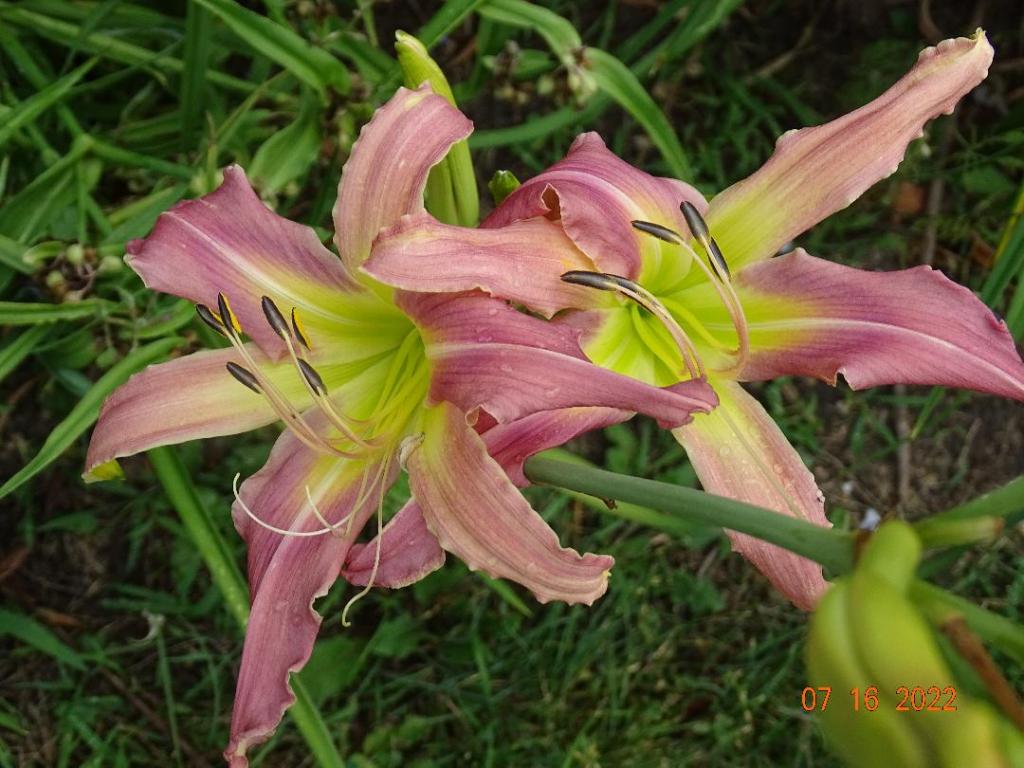
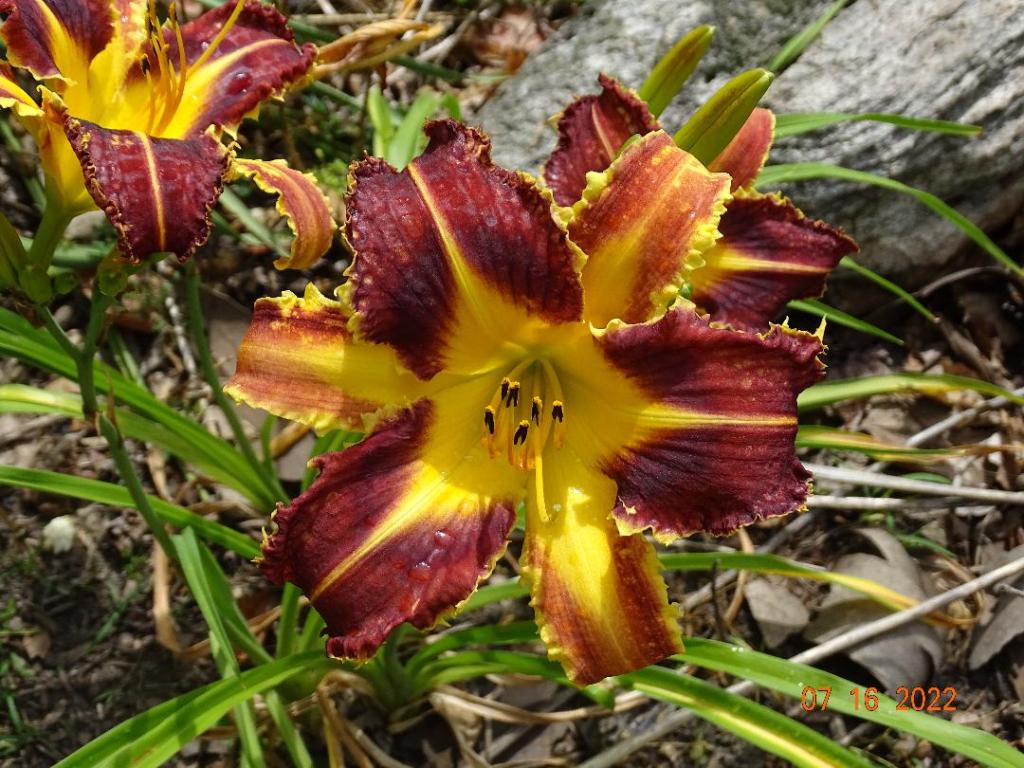
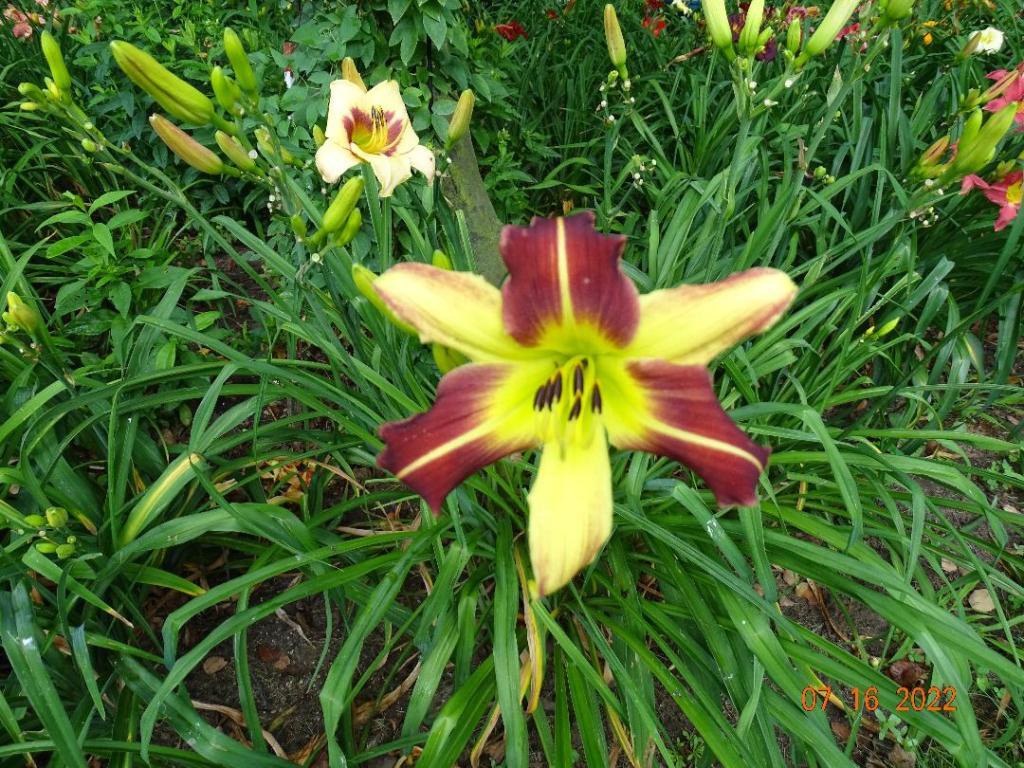
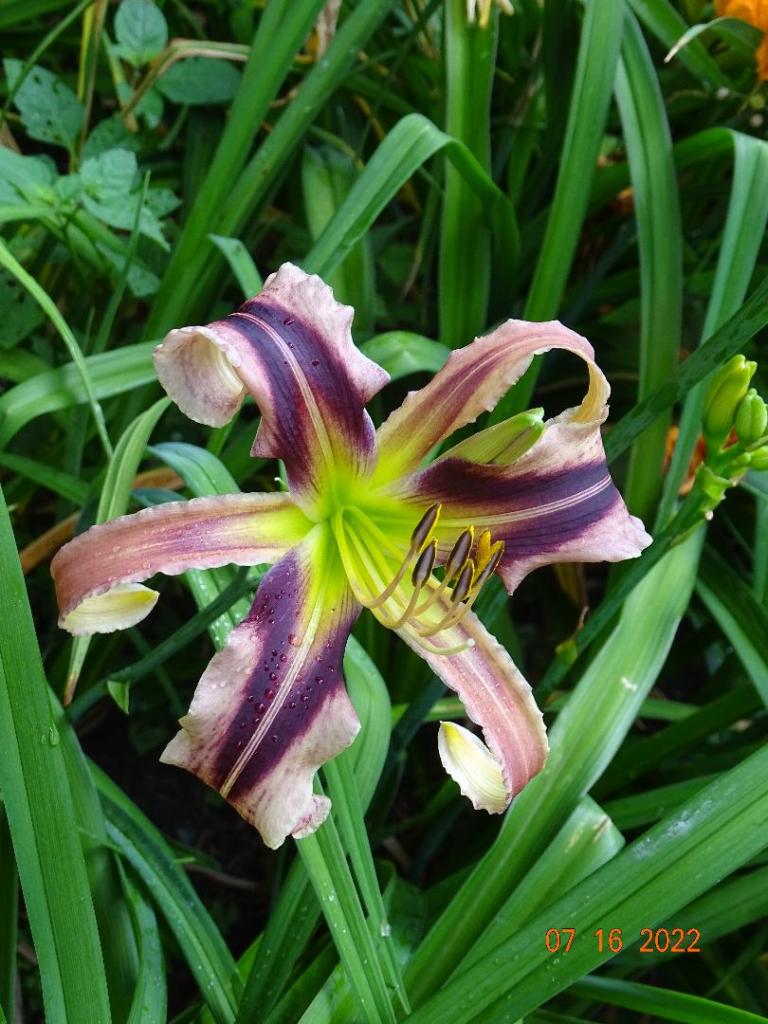
I will admit, I find myself attracted to the “spider” variety esp when it is showing off in my favorite color.
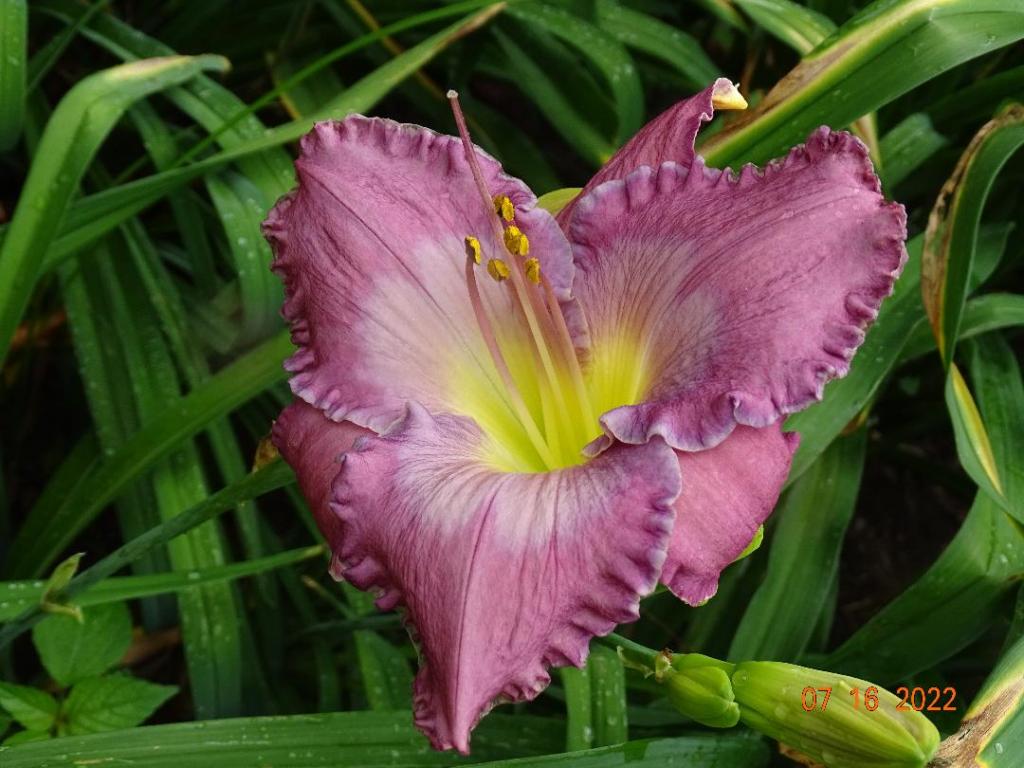
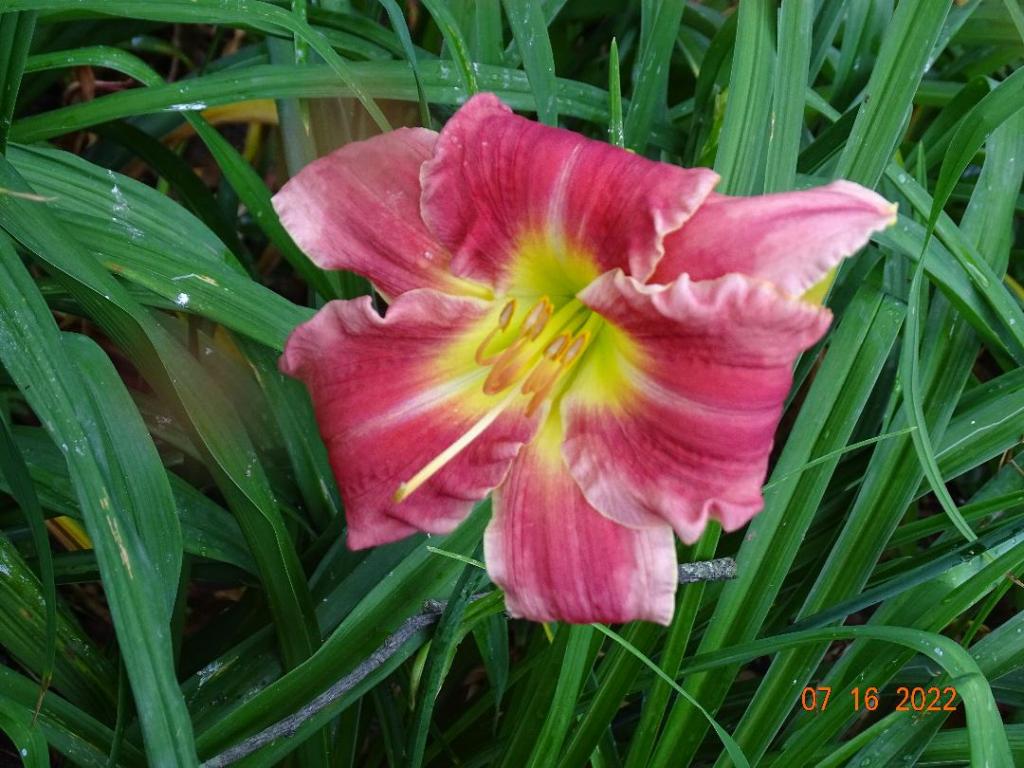
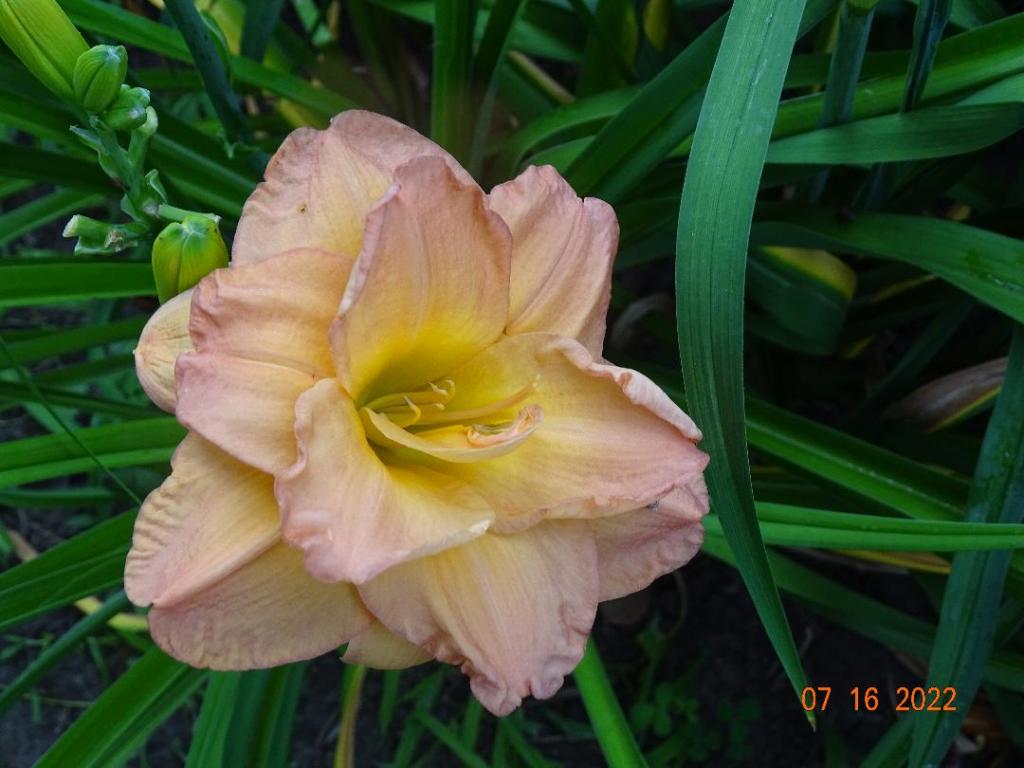
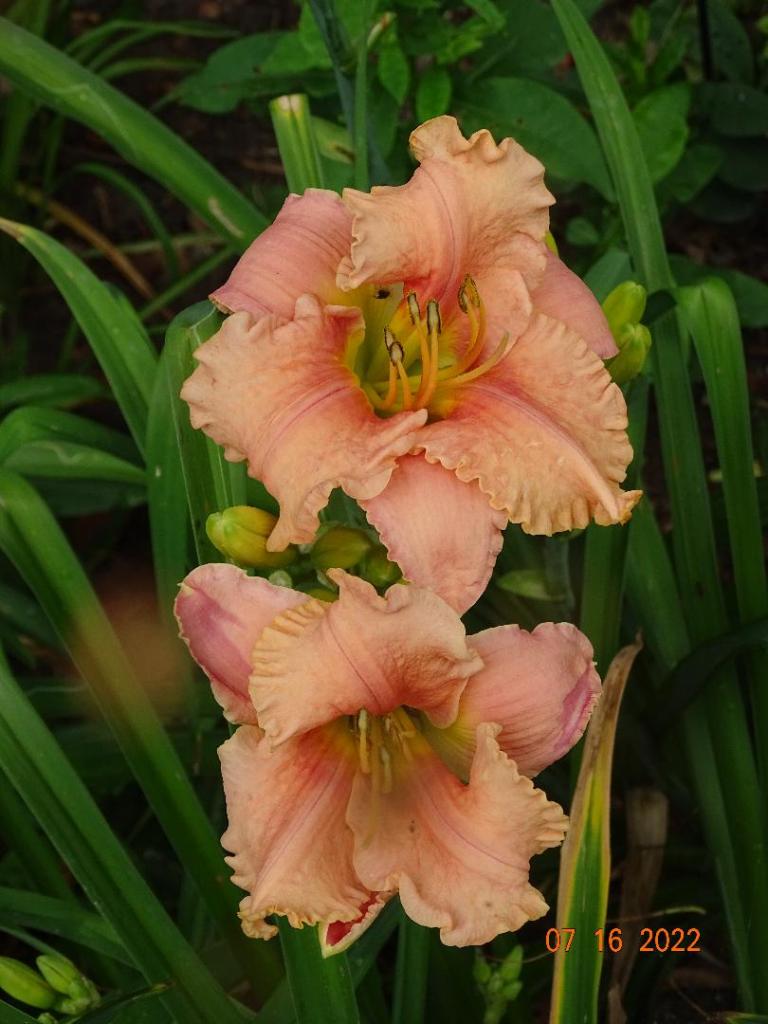
BUT OOH LA LA look at this one!!!
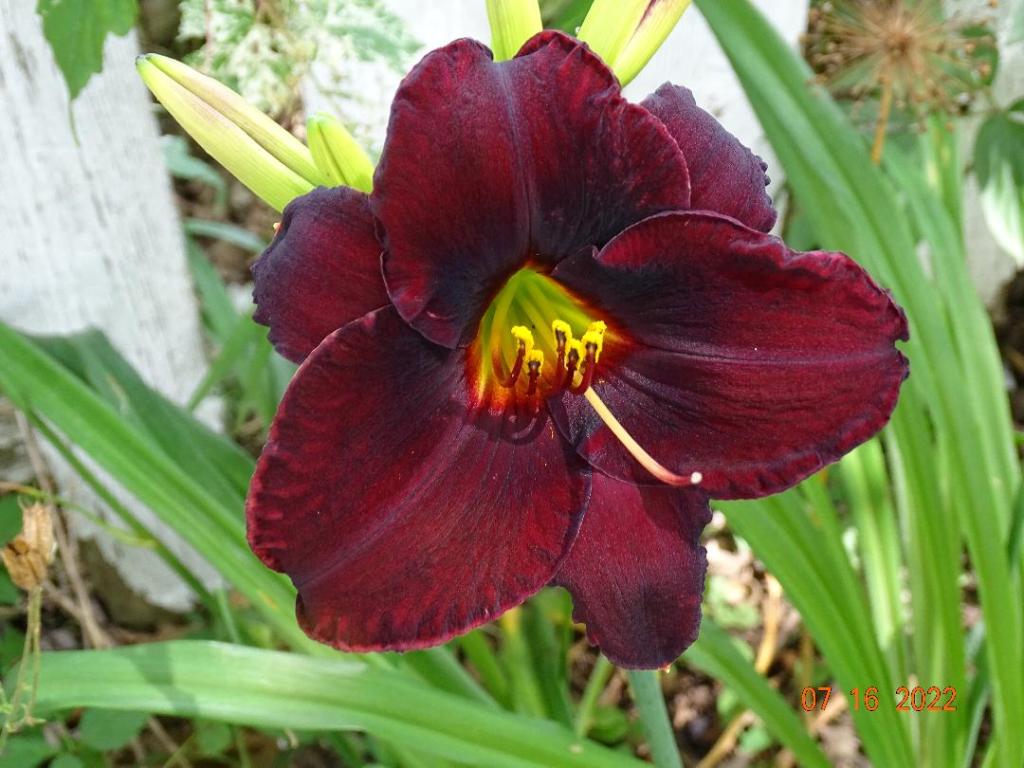
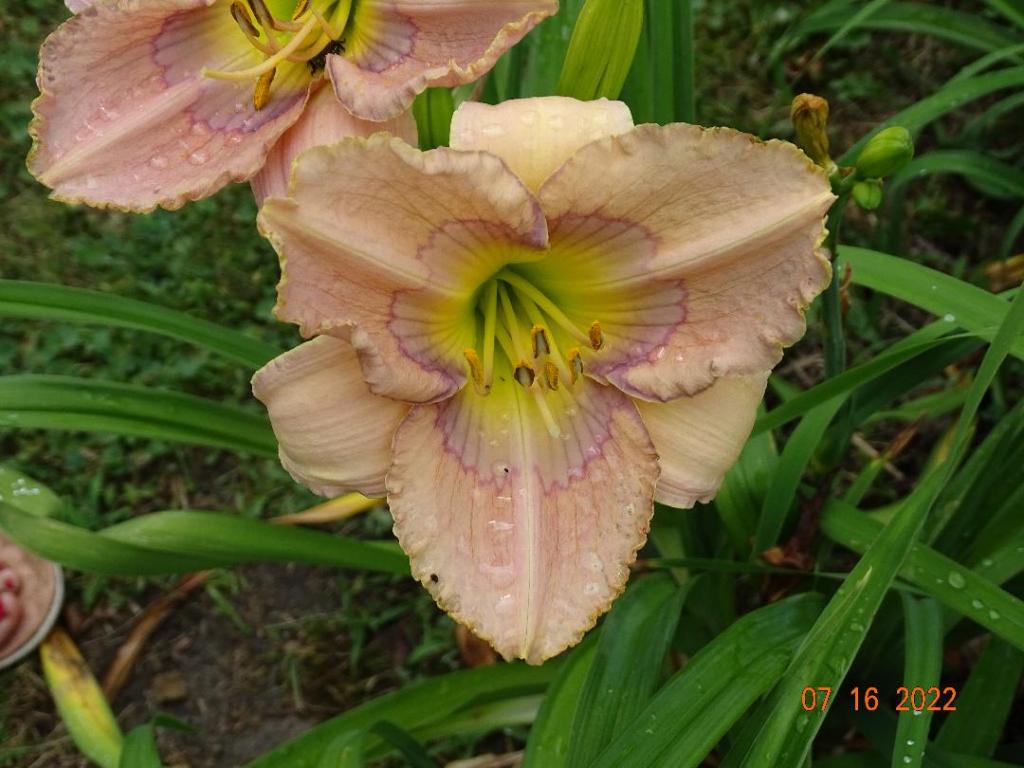
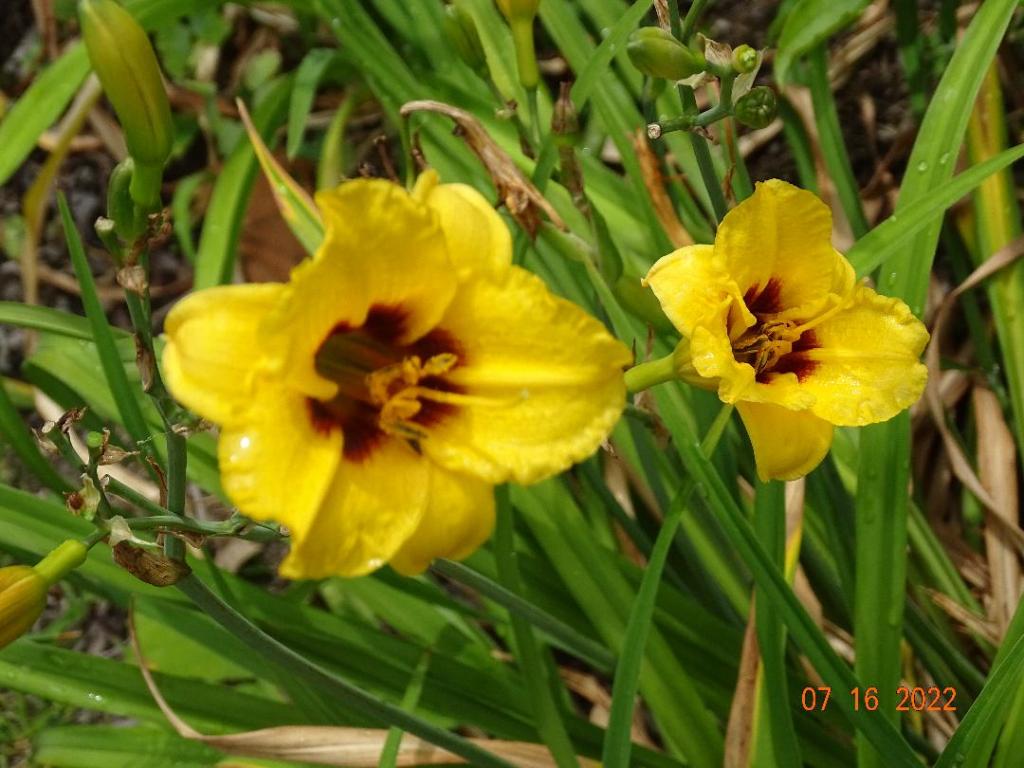
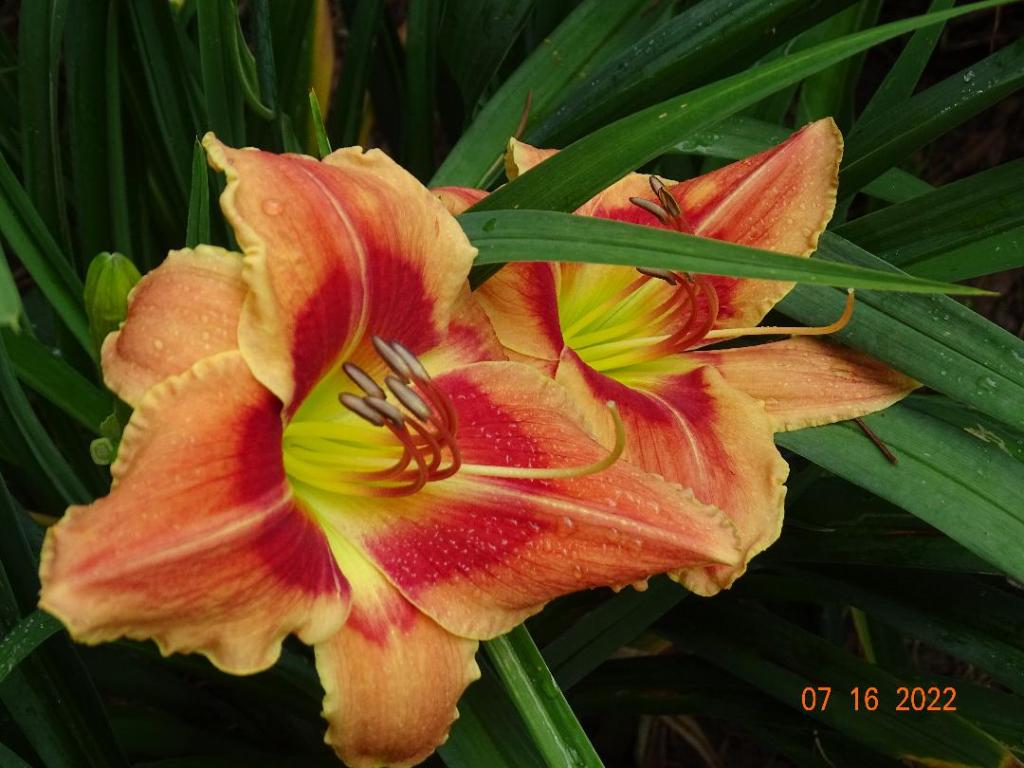
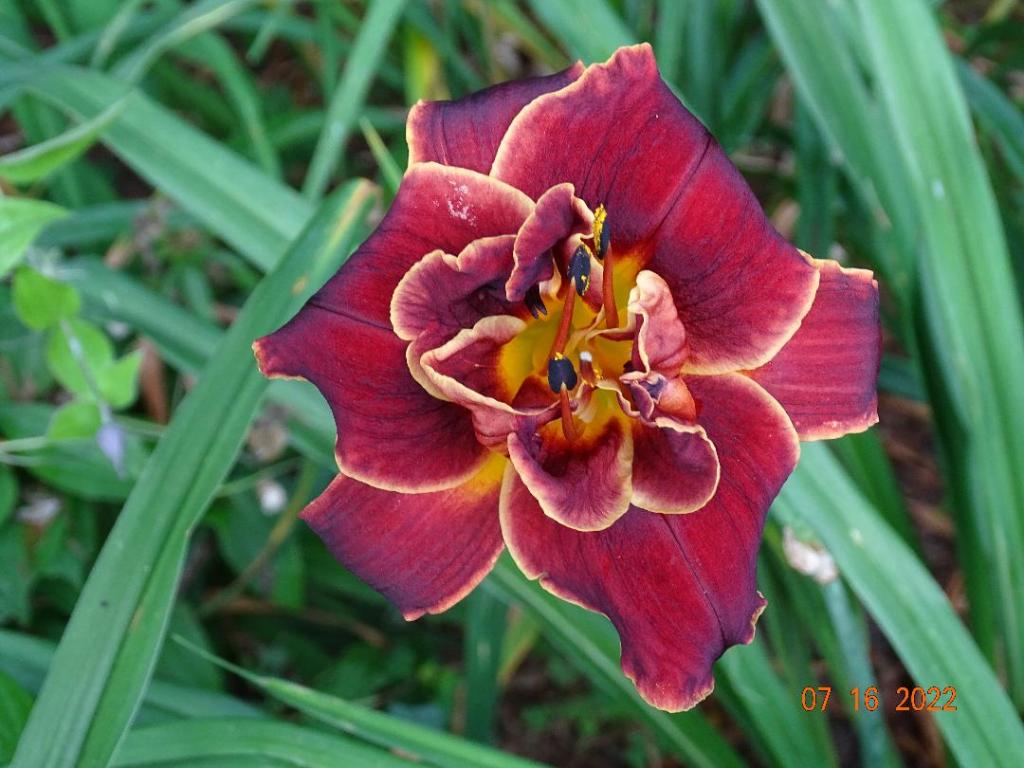
Enjoy some others I was drawn to– Bold & Sizzlin’ hot:
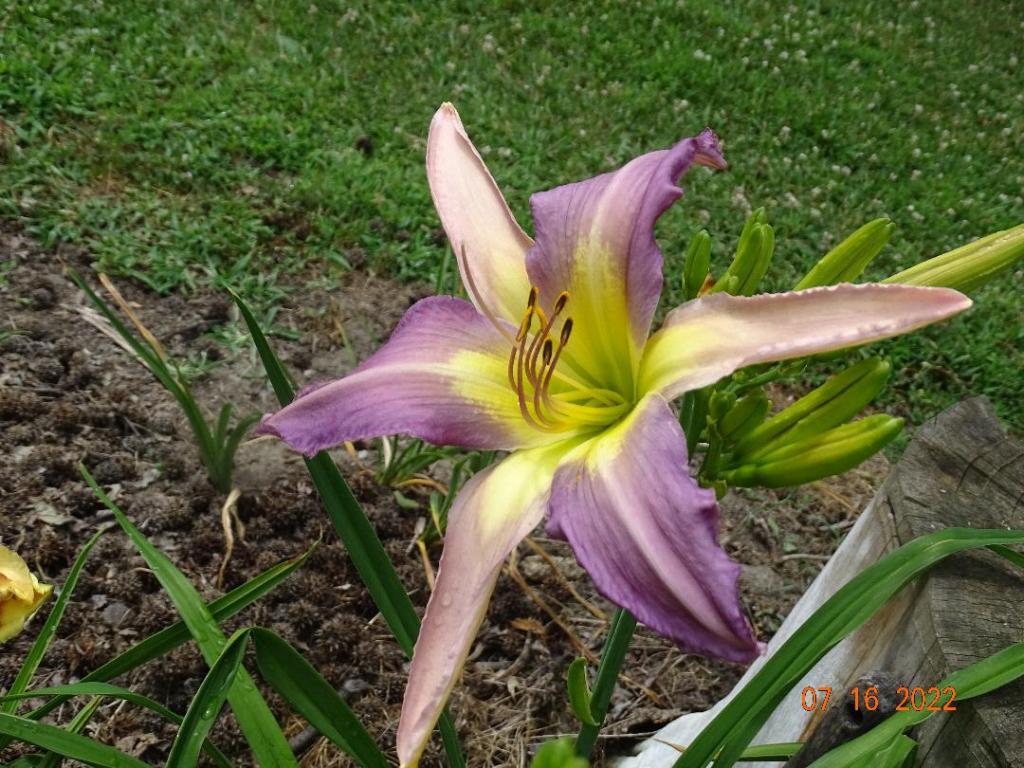
Cool & calm:
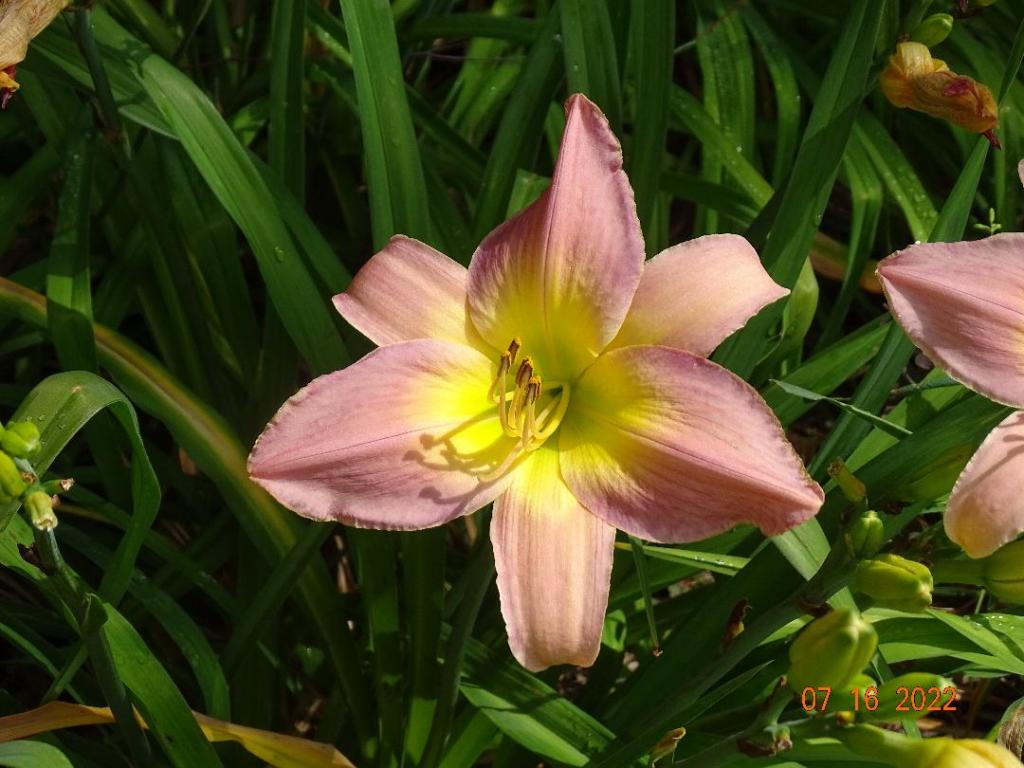
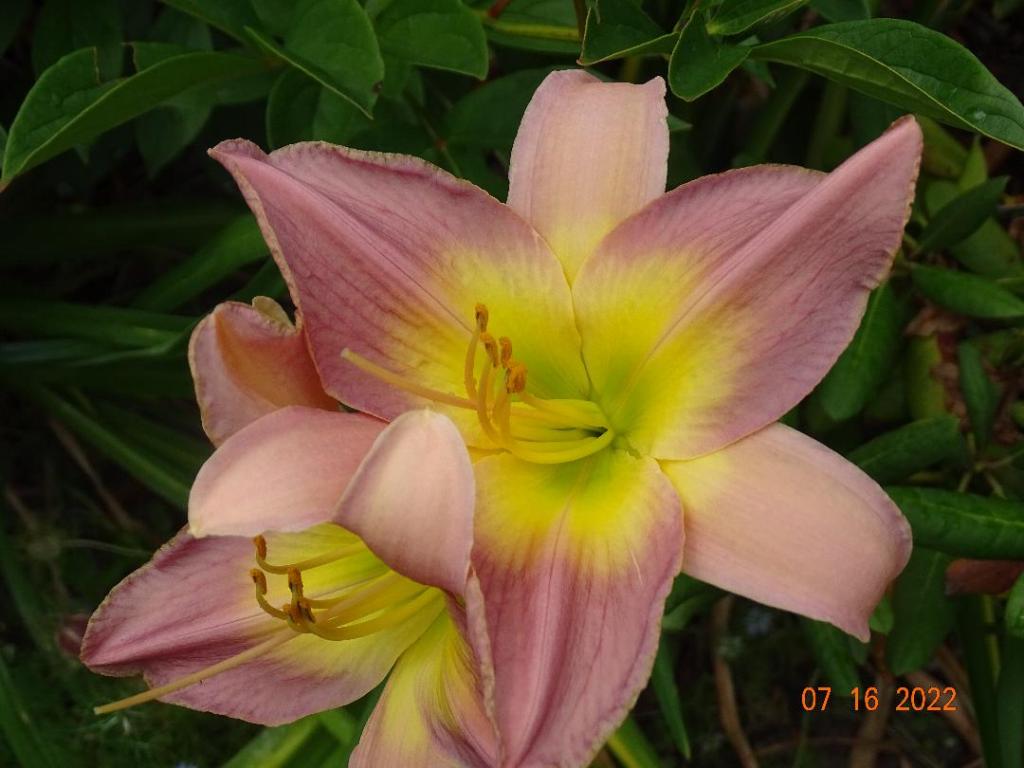
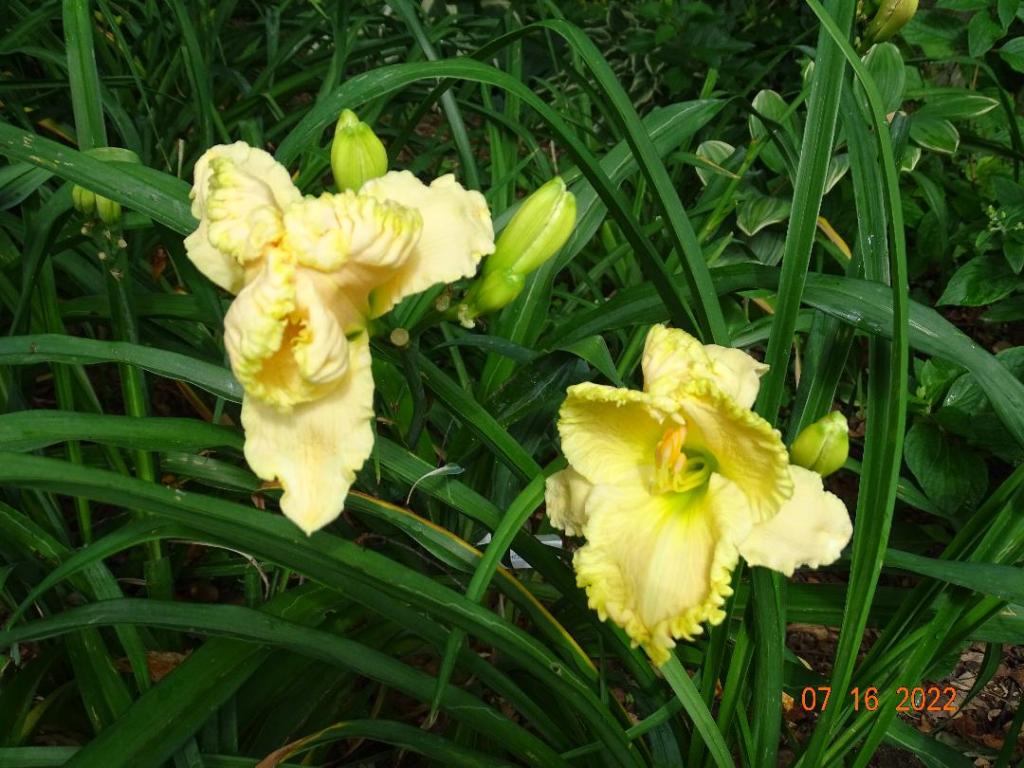
Pretty pastels:
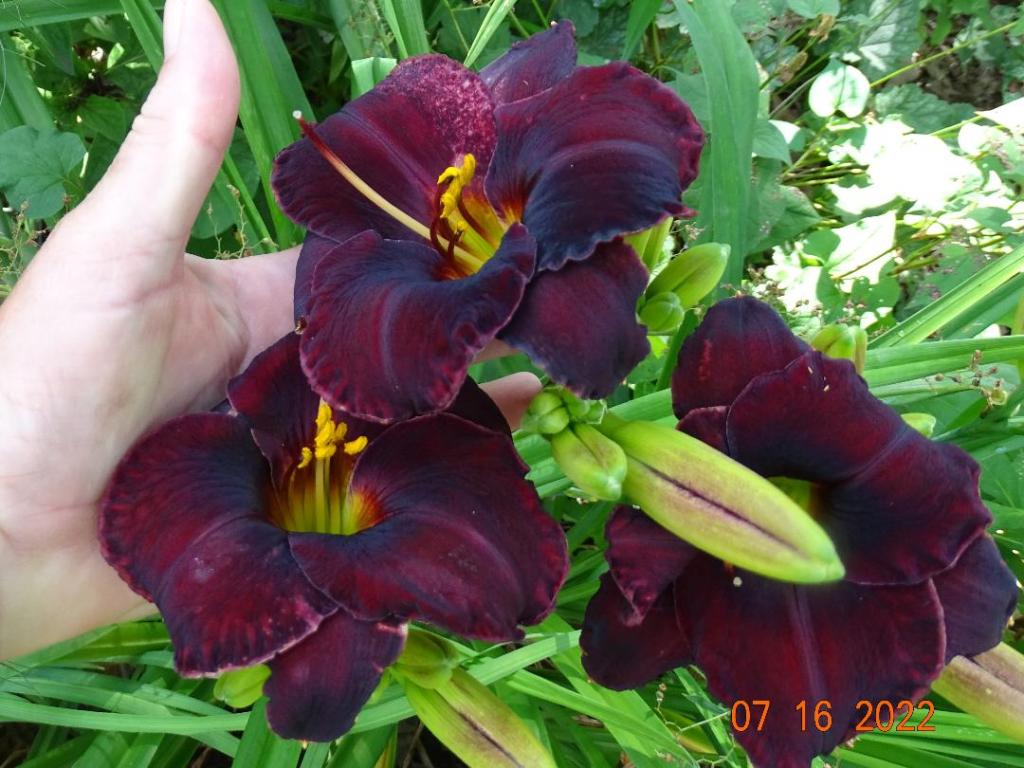
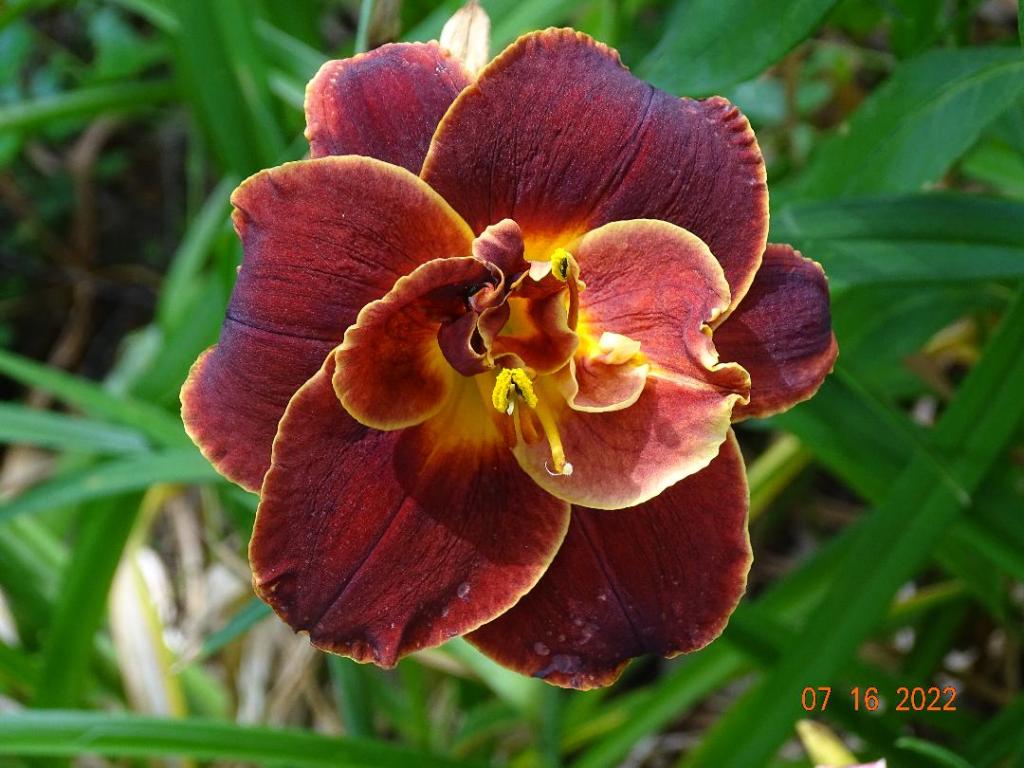
Moody & Dramatic:
Showy & Delicate:
Leaving Deb’s garden, we head to her sister’s house to see even more varieties; they will be featured in
I was at Mark Prielipp Greenhouse this am where I was able to buy a beautiful, full and very healthy PW Invincibelle Wee White hydrangea to replace one that died at the Veterans gardens in Milan. I had made several calls trying to find a replacement and most greenhouses did not have or I was advised they had been cut back several times and were looking kind of “crispy”. Then this morning Anna from Prielipps called me to let me know they had 3, in 3-gal pots, and looking very healthy. I picked up one immediately – they have two more of the same variety along with several other hydrangeas.
I was so impressed with how beautiful and healthy all their plants are still looking! Plus, they are having a great sale: All perennials (and they have many) are $9.99 each or 3 for $24.99. Trees and shrubs 50% off market price. Annual 4″ pots $1 each. Large, hardy mums $12 each (but you can buy those at the Milan Area Historical Society sale next Friday 9-9, Saturday 9-10 and Sunday 9-11 from 10am to 4pm Friday, and Saturday and Sunday from 1 to 4pm for $10 each). If you are looking for a particular plant or shrub give Anna a call at 517-451-0022.to see if they have it.
Anna asks me to pass along that they really need some seasonal, part-time help this fall so if you have any interest in working a few hours a week give her a call at 517-451-0022. Mark Prelipp Greenhouse is at 7722 Britton Hwy in Britton, MI.
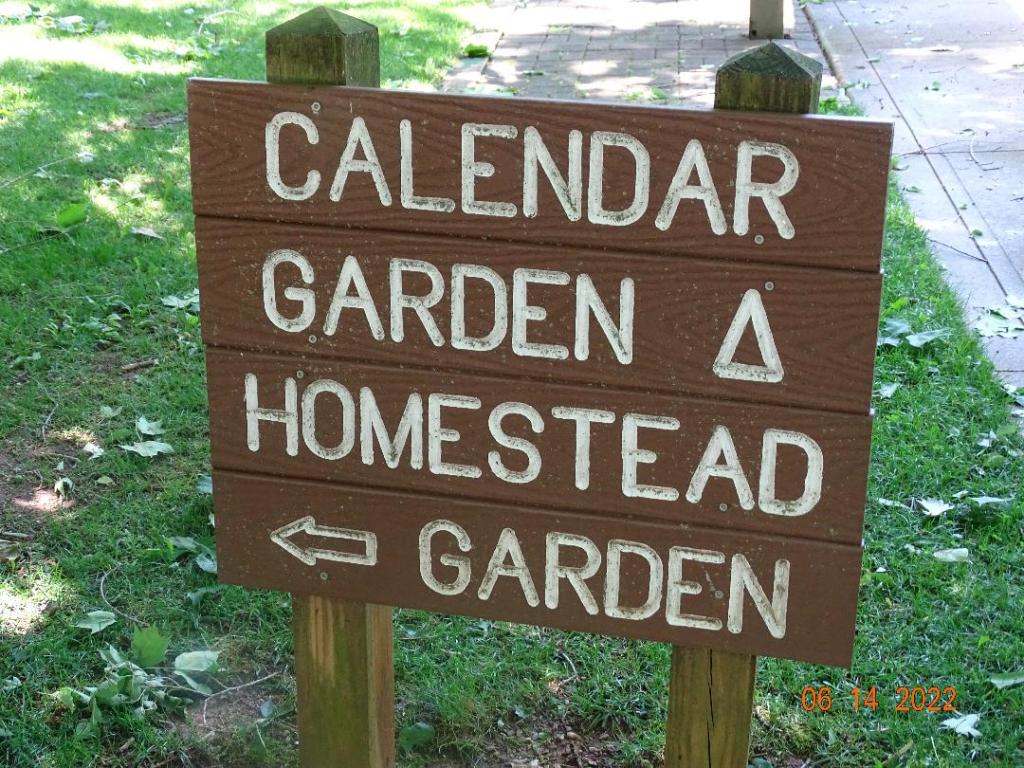
The second leg of our journey took us to the Defries Gardens in New Paris, IN. A bit of history-
Dr. DeFries & wife donated 13 acres & a farmhouse to the Elkhart County Parks. Their endowment supports the upkeep of two distinct gardens on this site.
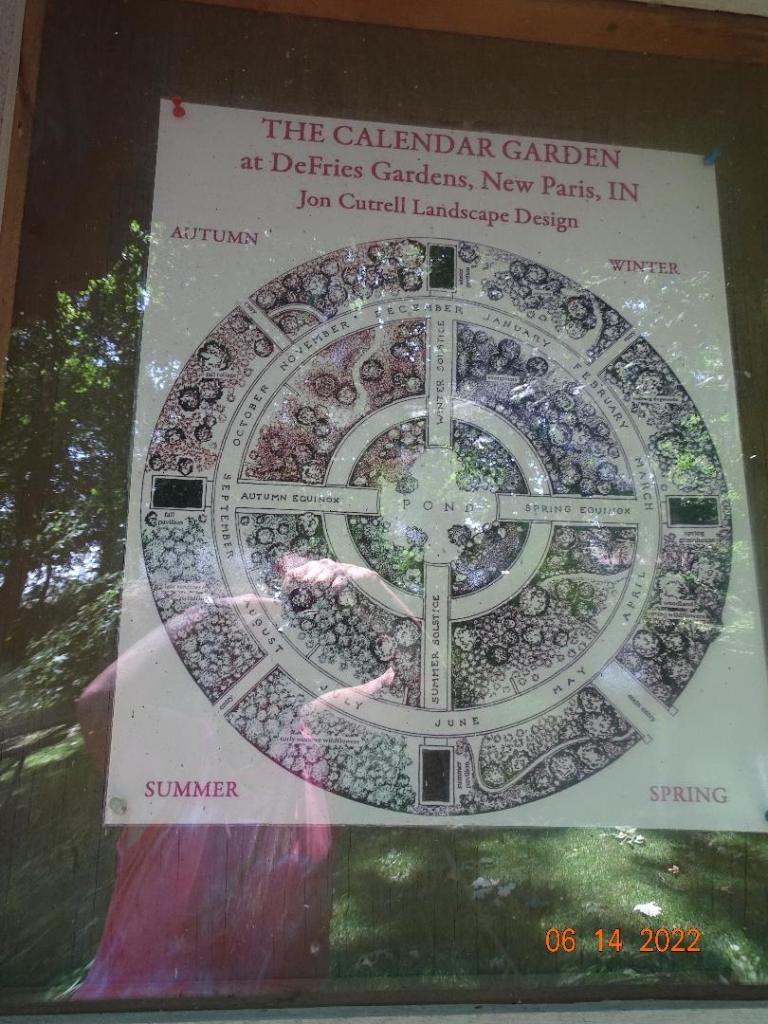
Let’s explore the “Calendar Garden” first. Most of us had some concept of a Bible Garden; not the case with a Calendar Garden.
Landscaper designer, Jon Cutrell is credited for creating this garden & to this day continues to oversee & care for the gardens. The main feature of a calendar garden is the design…..
“the circle”-365 feet, correlate with days in our year. Dates are marked on the bricks along with significant seasonal dates- note color of bricks—
Additionally; along the pathway are structures within the planted areas. These serve specific purposes.
Each month is marked by a “gateway “allowing visitors to view plants within a span of time; month to month.
Markers-like above, are “Lunar.” The orbs represent cycles of the moon and move within the
design based on the date when a “full” moon will occur. In the event of a blue moon-they use a blue orb.
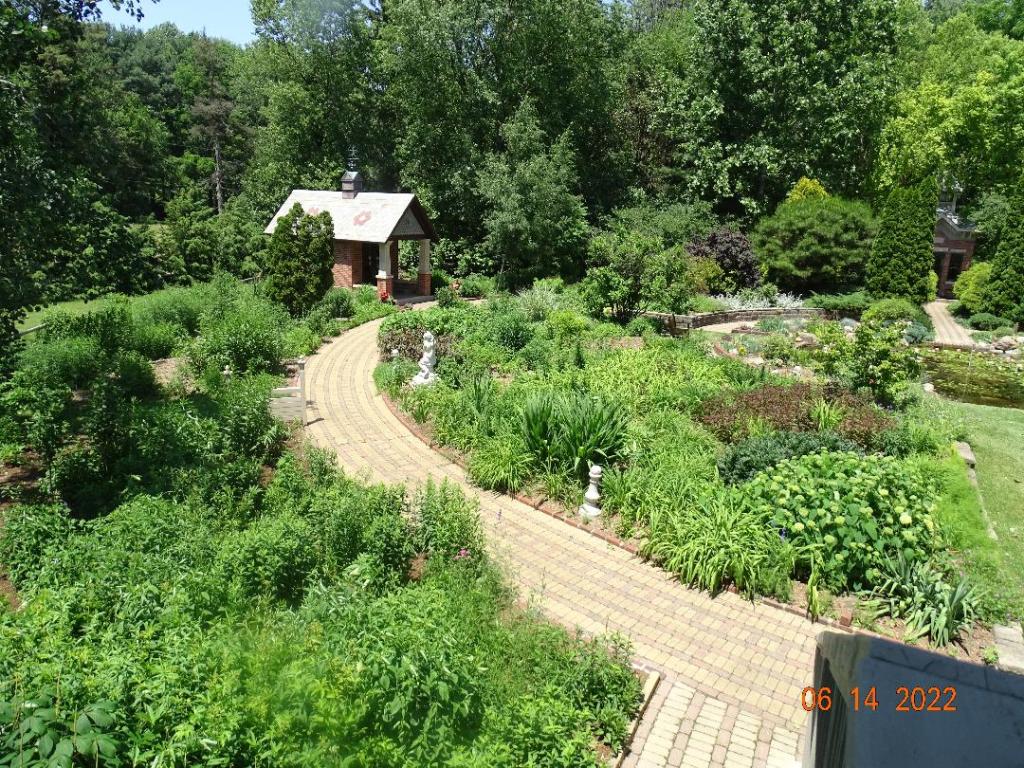
A platform gave opportunity to experience a full overall view of the garden…..Summer Solstice
JUST AWESOME!!!!
I hope to fully capture the uniqueness of this garden with my photos.
Below is a crosswalk-these areas mark an equinox or a solstice and align with the axis points of north, south, east & west. Very intriguing—-
At the end of each axis on the outside circle- sits a pavilion reflecting a specific “season”–
Below- Spring Equinox: represented by a functional greenhouse. see the lunar post??
Crazy how this is all set up-very complex to say the least.
Winter-Solstice
even the inside reflects the season of cold- quilts, fireplace
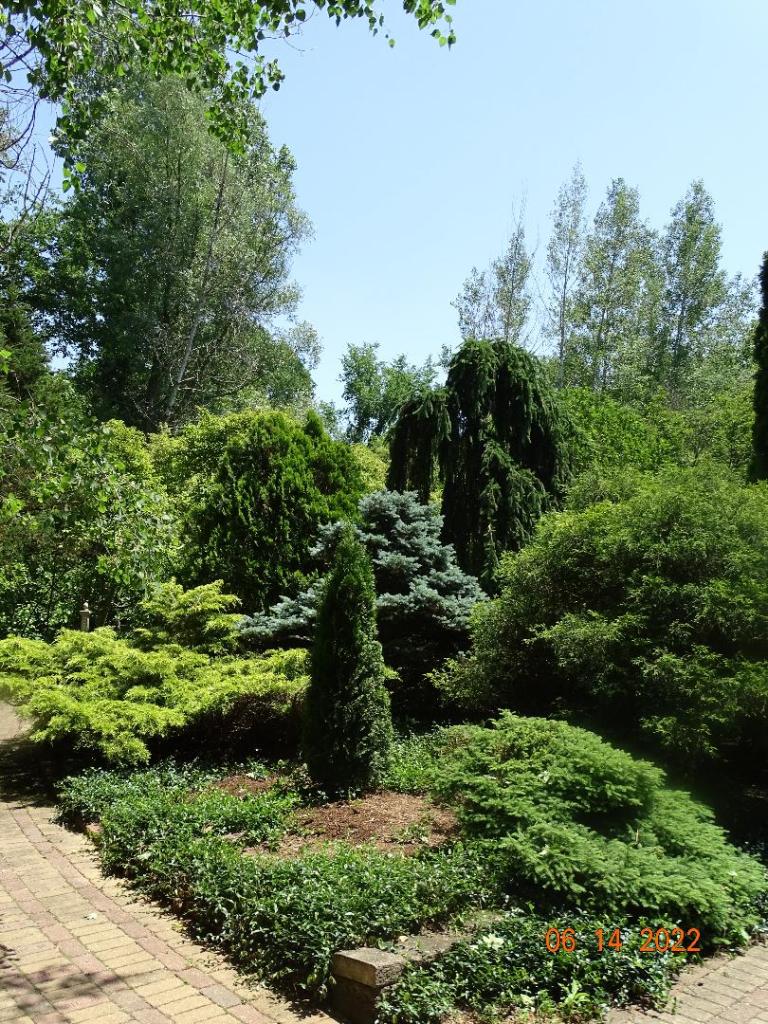
Along with days, months, seasons & moons. There is the major component of pairing plantings within each specific time-season ex: Winter view Evergreens, Conifers etc
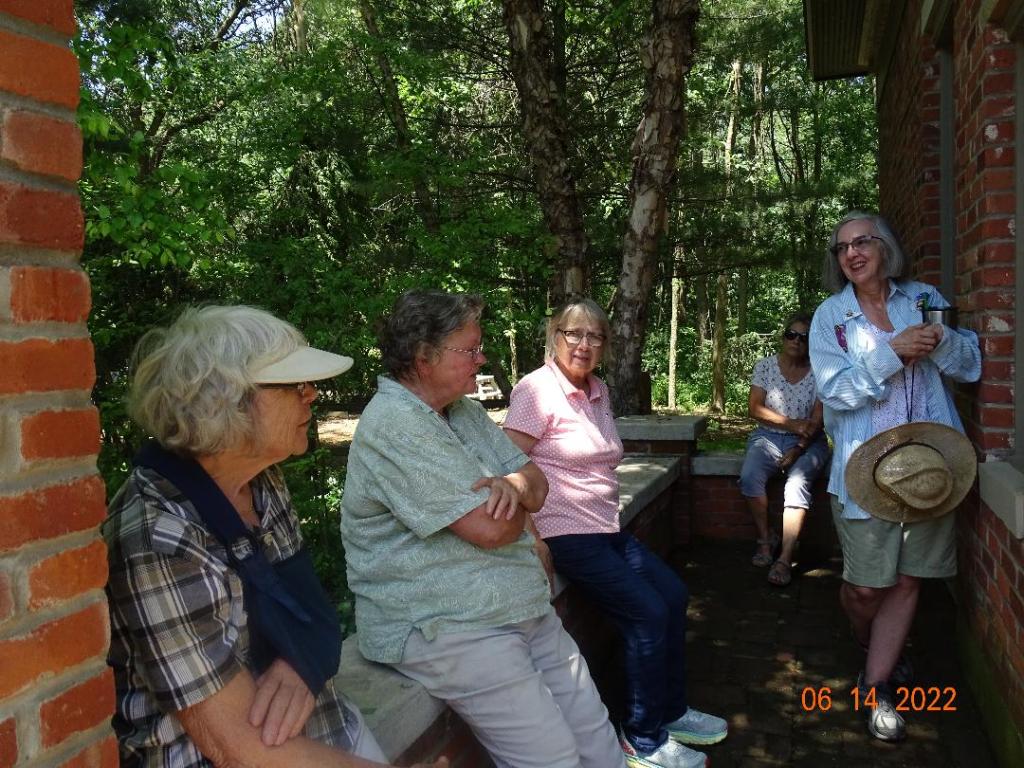
Below: the group takes respite in the shade of the winter pavilion to view & discuss the plantings. This is not an ordinary or simple garden!!! It’s like A PUZZLE.
FALL: as viewed from Spring..
Above-Outside view Below-Inside per brochure: represents being able to still enjoy outside but retreat inside if temps cool. Simple yet complex mental process-just like nature itself.
Selecting the plantings- should be hardy in this zone & if at all possible native to Indiana.
Then planted in the “time” span when it will be in bloom.
hard to “show it all”, some extras photo Opps to share the not so obvious diversity in this garden.
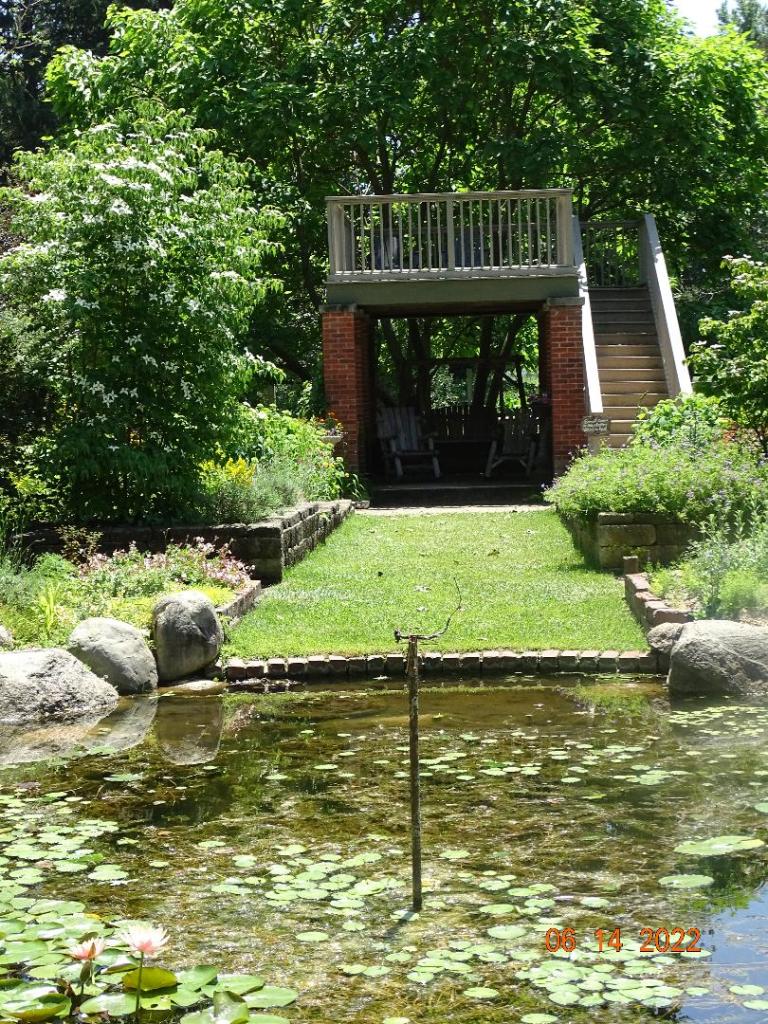
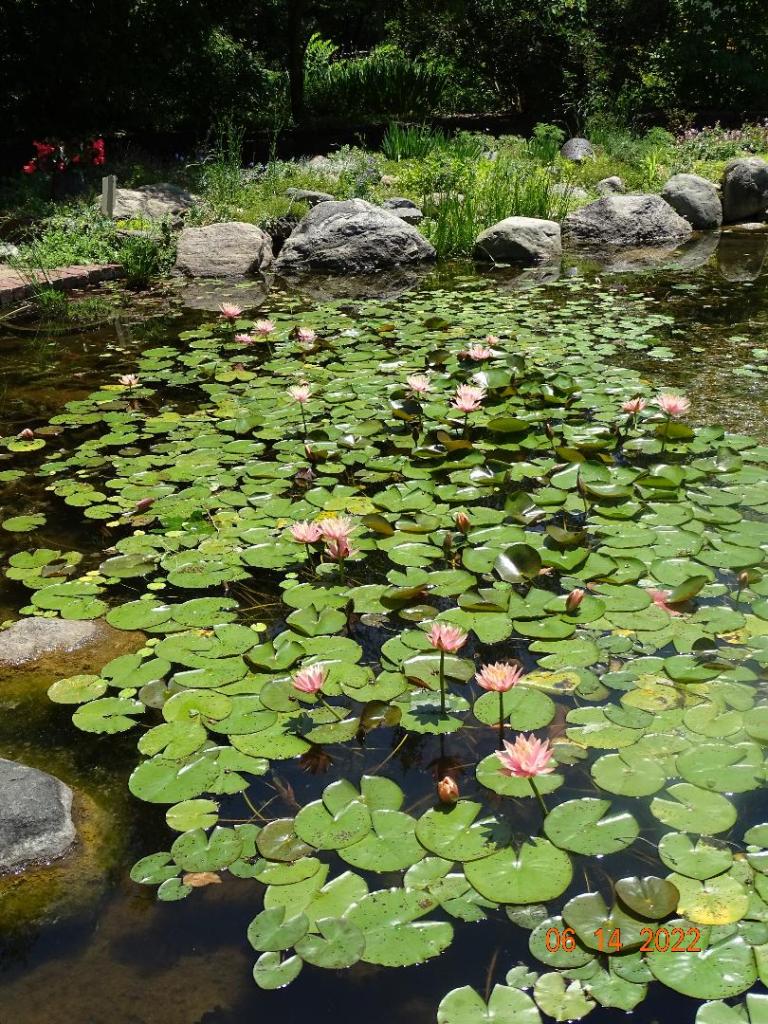
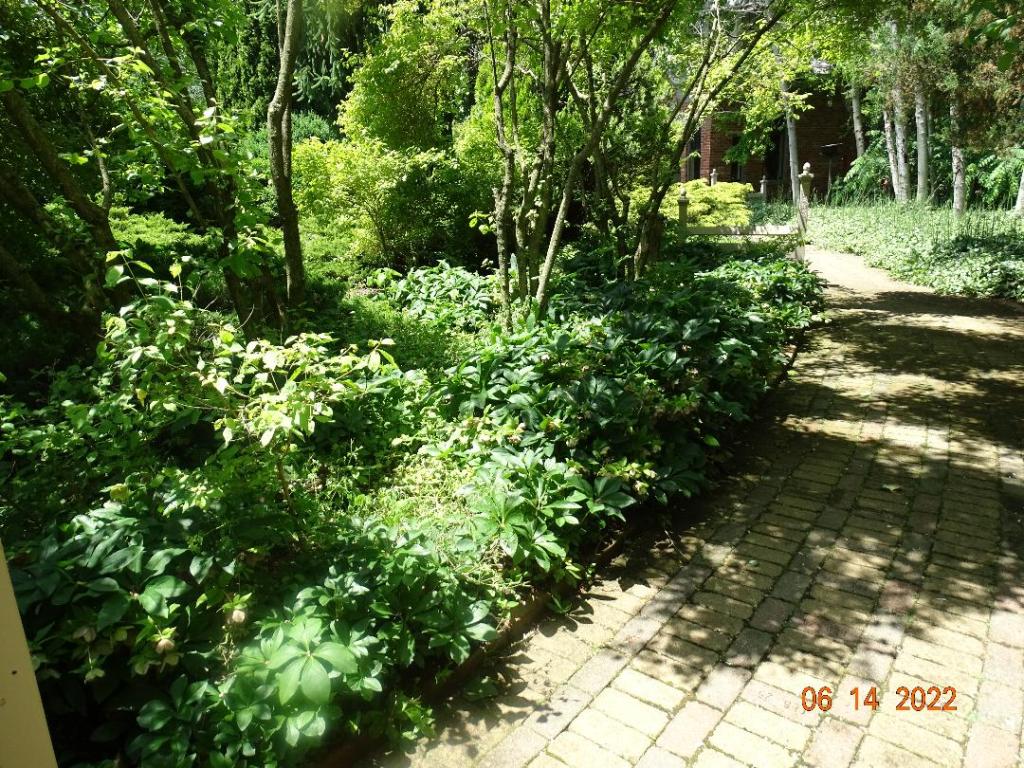
Lenten Rose above & water feature with lily pads in bloom: below
February-March area of the garden
Above: Can you tell what this area is???
Below: the roof top of Autumn Equinox
Looks like the girls are trying to find their way over to the homestead garden
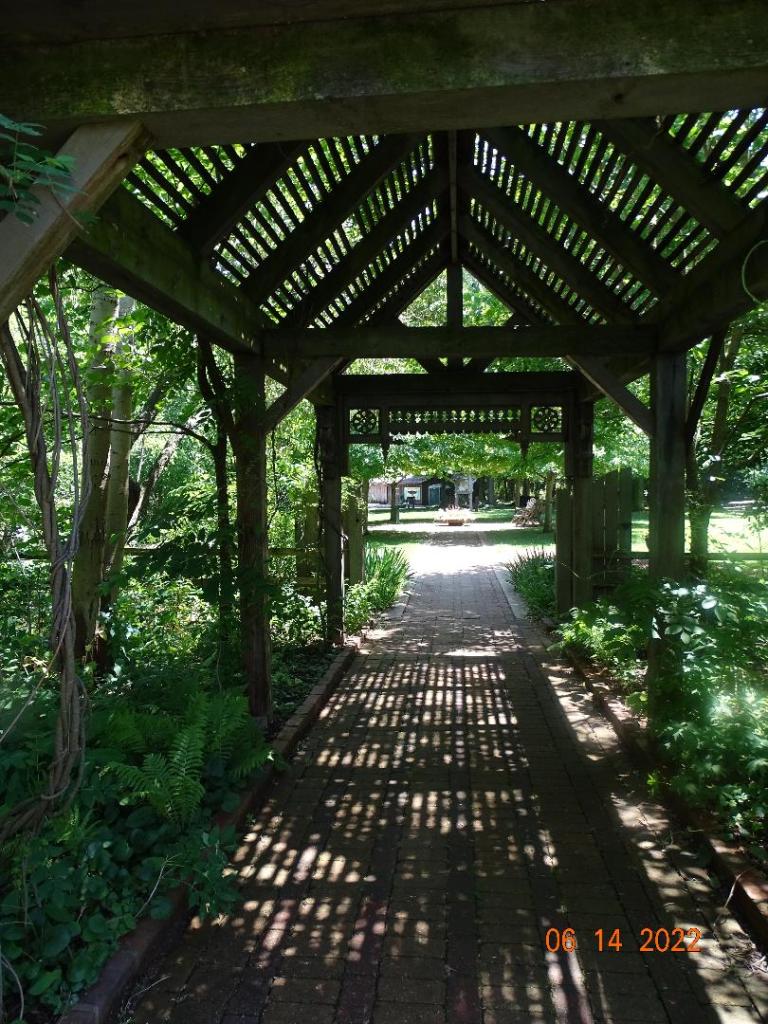
So let’s follow; it should be straight ahead thru this arbor.
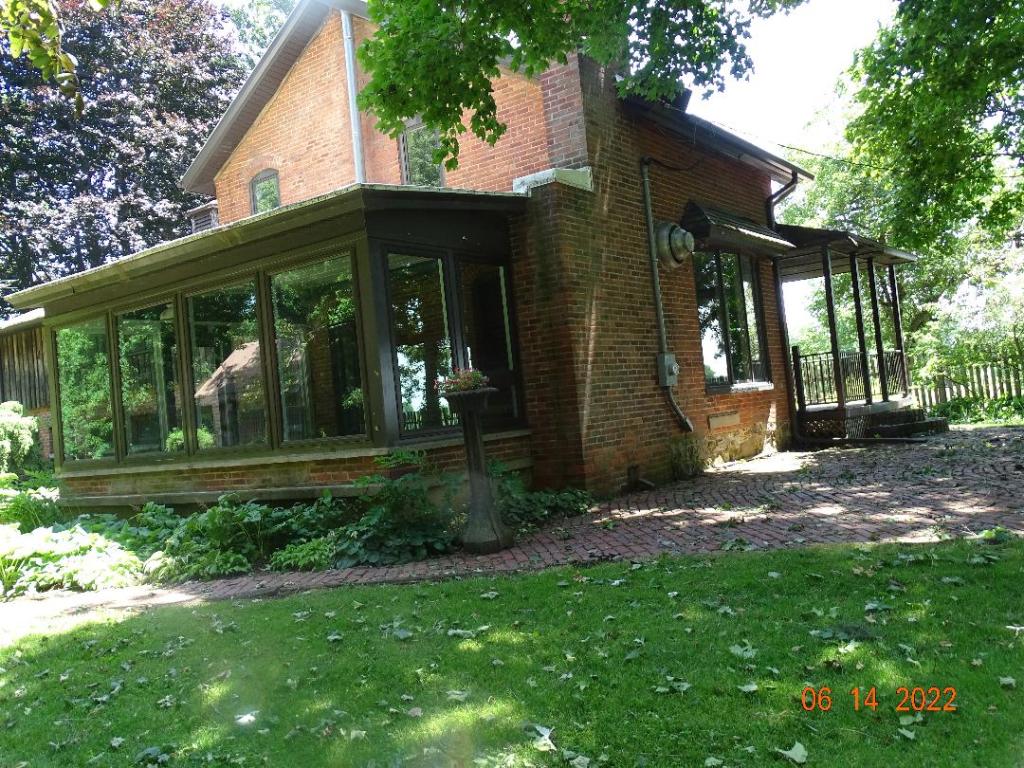
The Farmhouse and the veggie garden
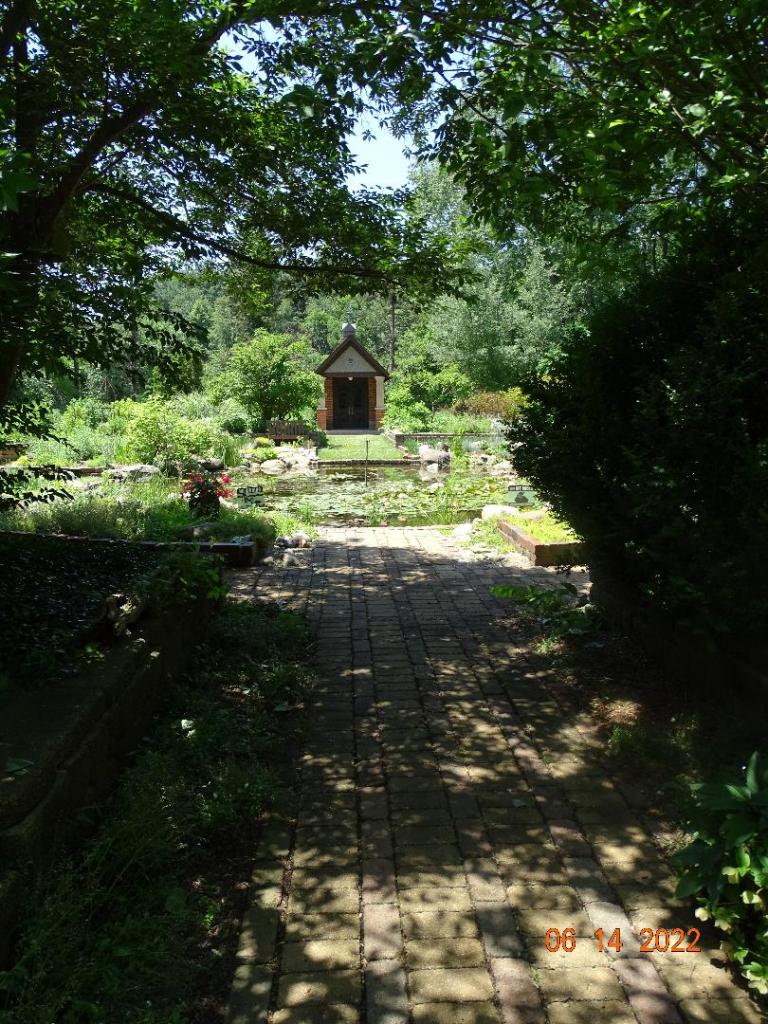
gardens surrounding the farmhouse- very clear that nature & plants were a major focus for the Defries. These gardens are a living tribute to that…
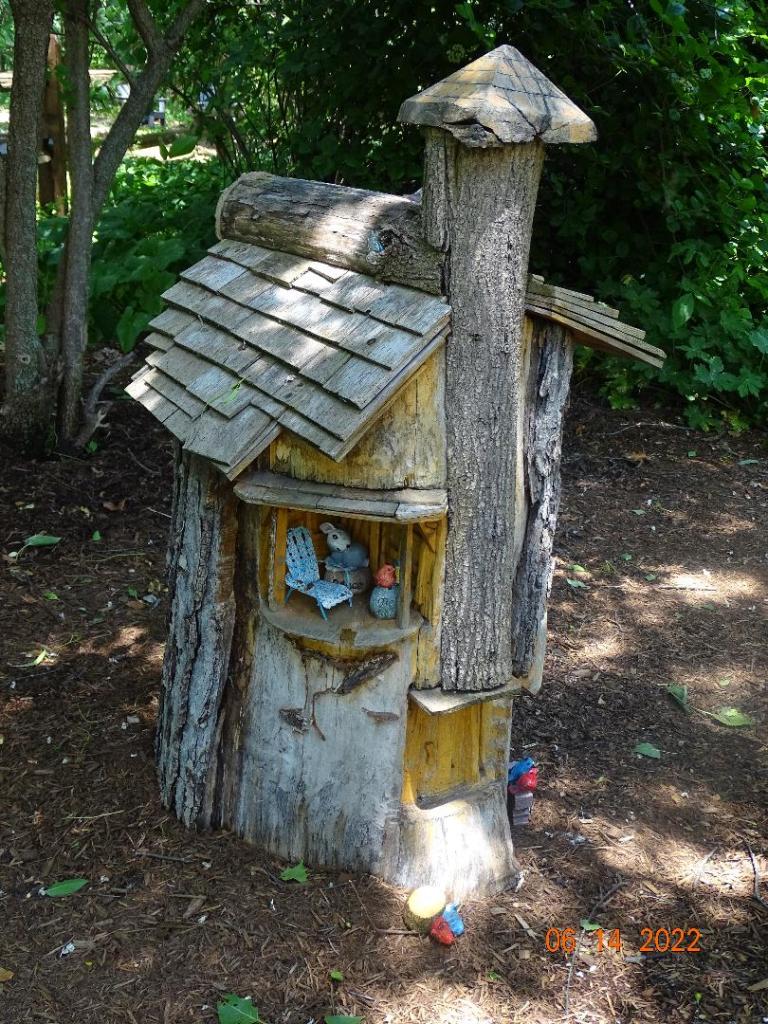
Look a little house…….with a mouse Speaking of home…..time to grab a late lunch and start the trek back to Michigan Thank you Marie for telling us about these gardens& thank you to the DeFries & Mr. Cutrell for publicly sharing. Love gardens?? We suggest a visit to these Indiana gardens.
Heading into town to grab lunch–it was very apparent we were in quilt country……..
quilts all around……….a separate visit needed to take them all in—-
Beauty all around-would recommend this trip to anyone.
Weary, hot & hungry—giving thanks for a beautiful day spent with friends in grand gardens. Now–did someone say Amish Home-cookin’………LET’S EAT!!!!
Yeah! The time has arrived for us to wander in search of interesting & intriguing gardens. First on the list- Jennie suggested we travel by car to Indiana & visit the
WARSAW BIBLE GARDENS.
It was a casual & enjoyable 2 1/2 hr. drive.
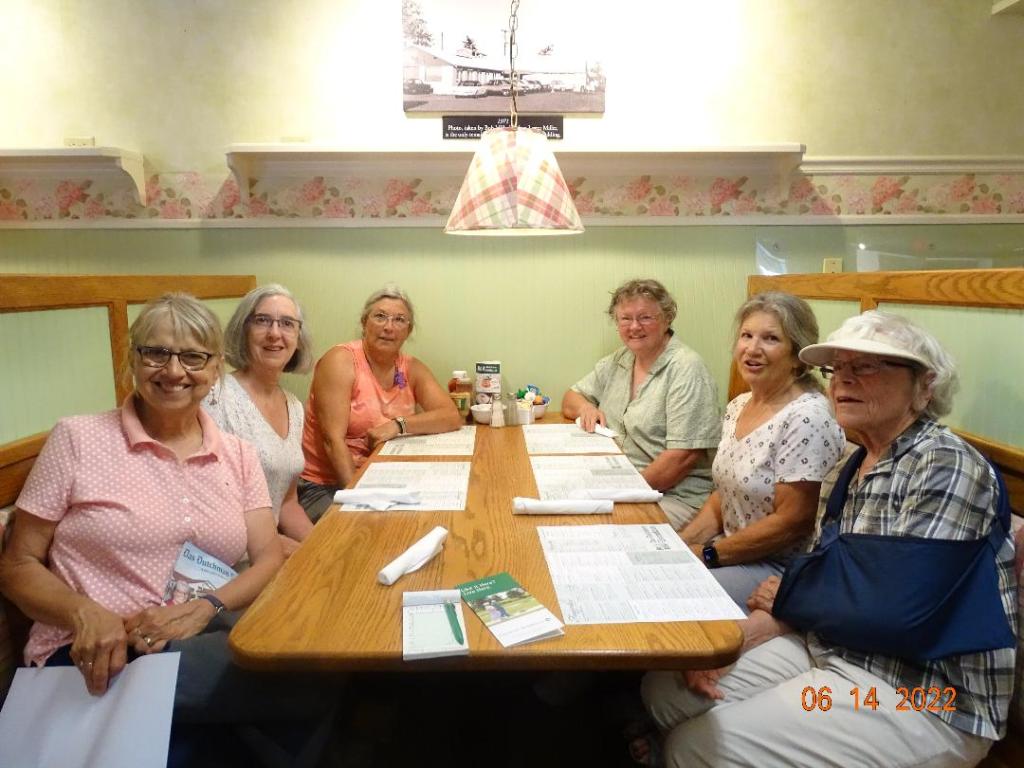
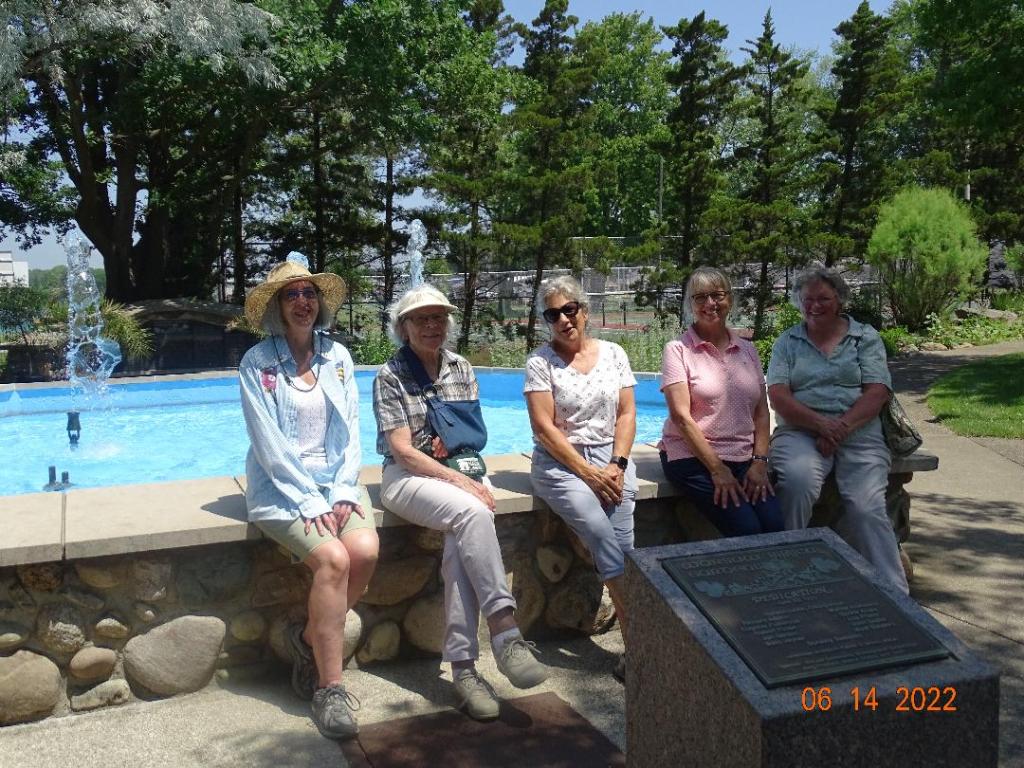
Chris & Michelle my car companions & trusty navigators!
When asked why this garden, Jennie replied:
“Olga Einfalt and I, along with my daughter, eachplanted bible gardens at our churches”
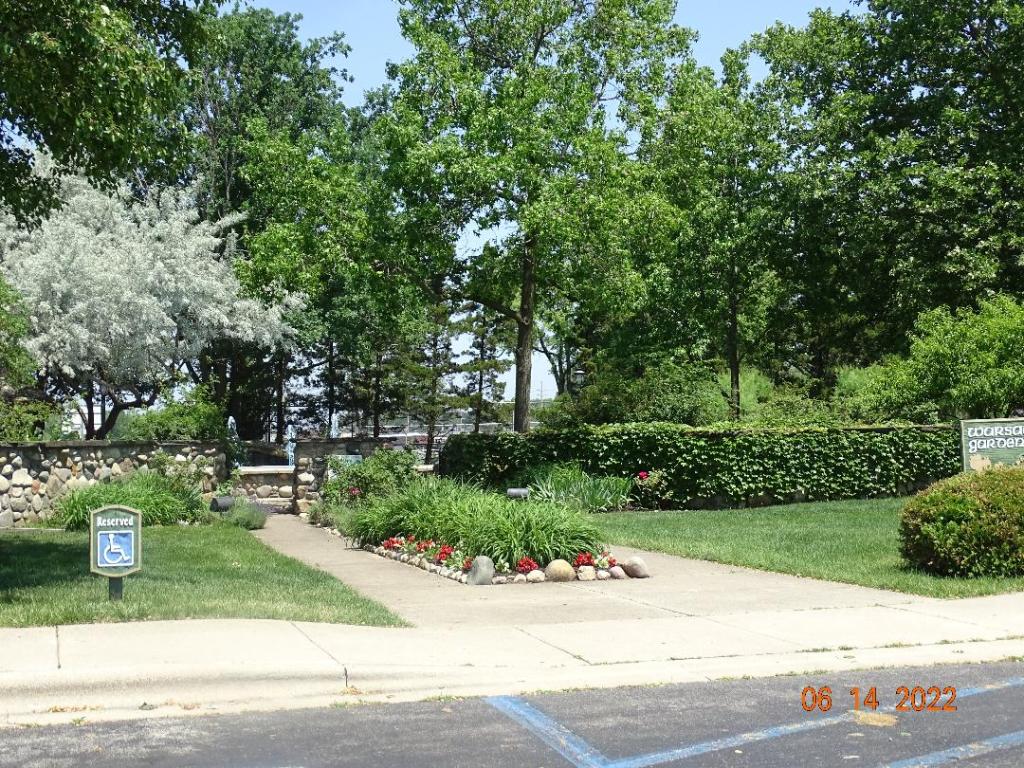
above: GARDEN ENTRY
unlike those, this public garden is well-funded and has a full-time horticulturist caretaker.
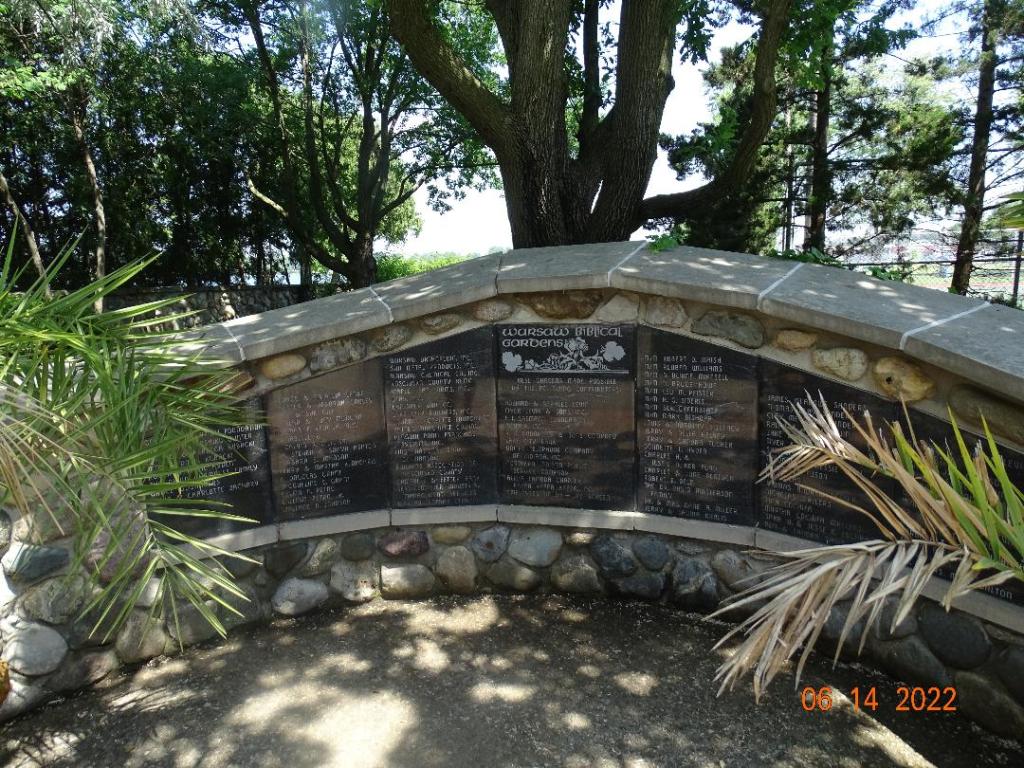
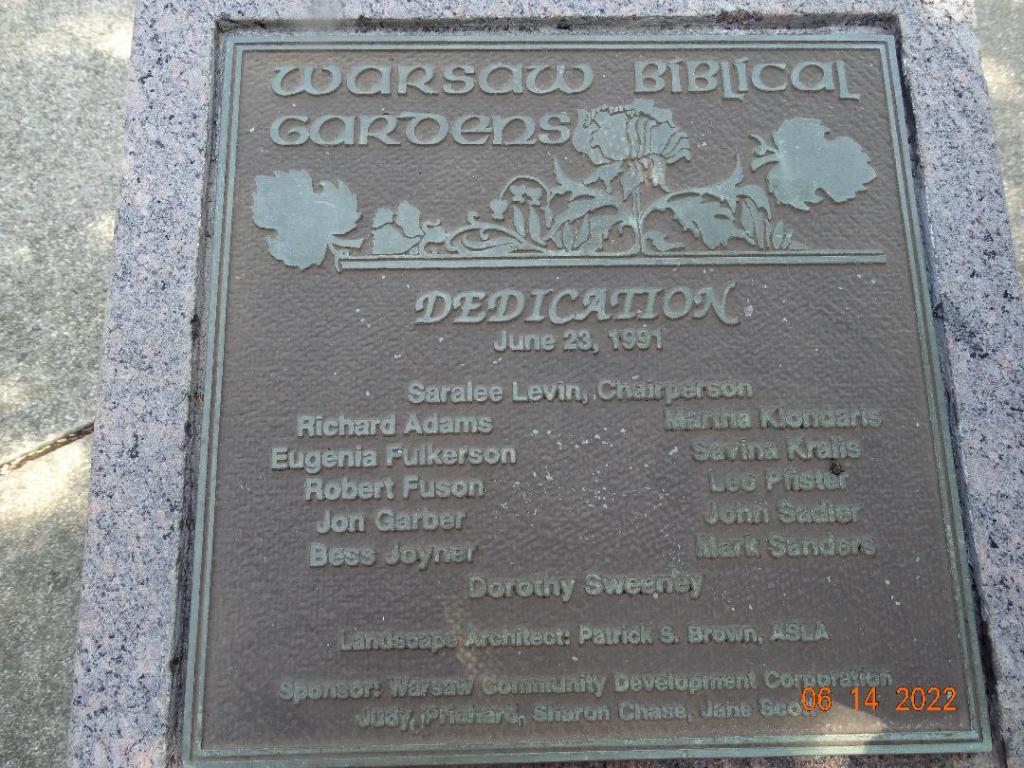
Dedication plaques
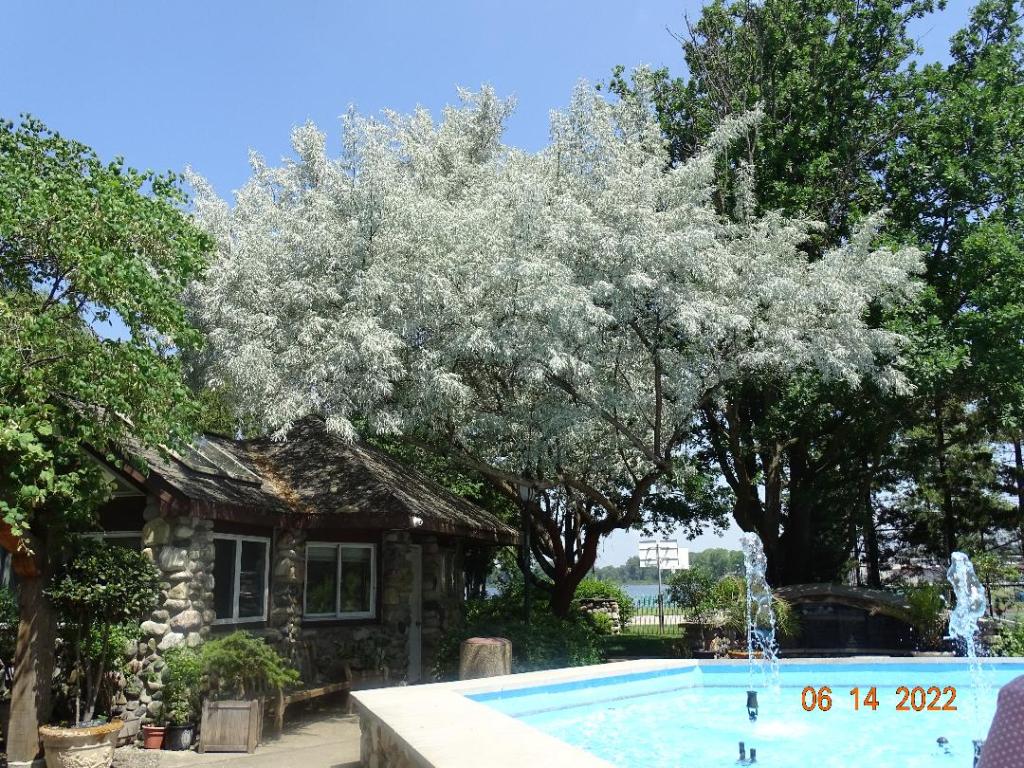
Immediately upon entering the garden proper -a very impressive tree!!! The information office nestled in its shade, barely noticeable. Luckily, we had Jennie to guide us; we opted to forego a docent & soon discovered no brochures available on site.
Jennie shared, the tree a Russian Olive; close cousin of Autumn Olive & a hardy substitute for zone 5.
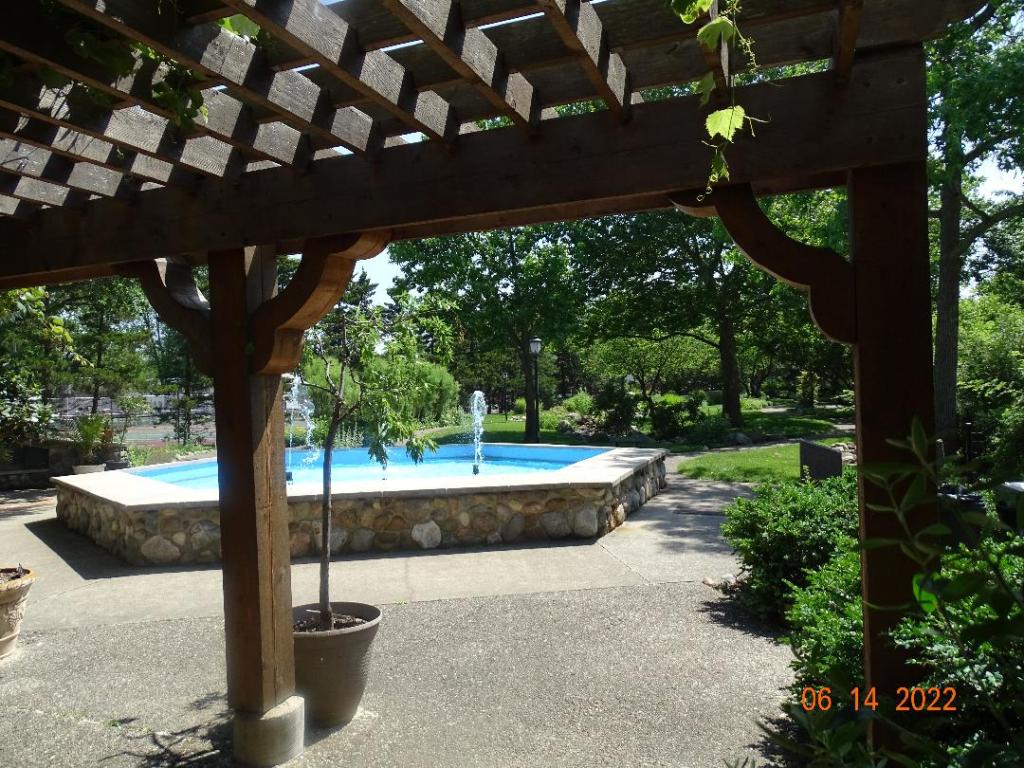
With early AM temps already hot an arbor, anchored in grapevines provided a cool respite & perfect vantage point to view the entire garden.
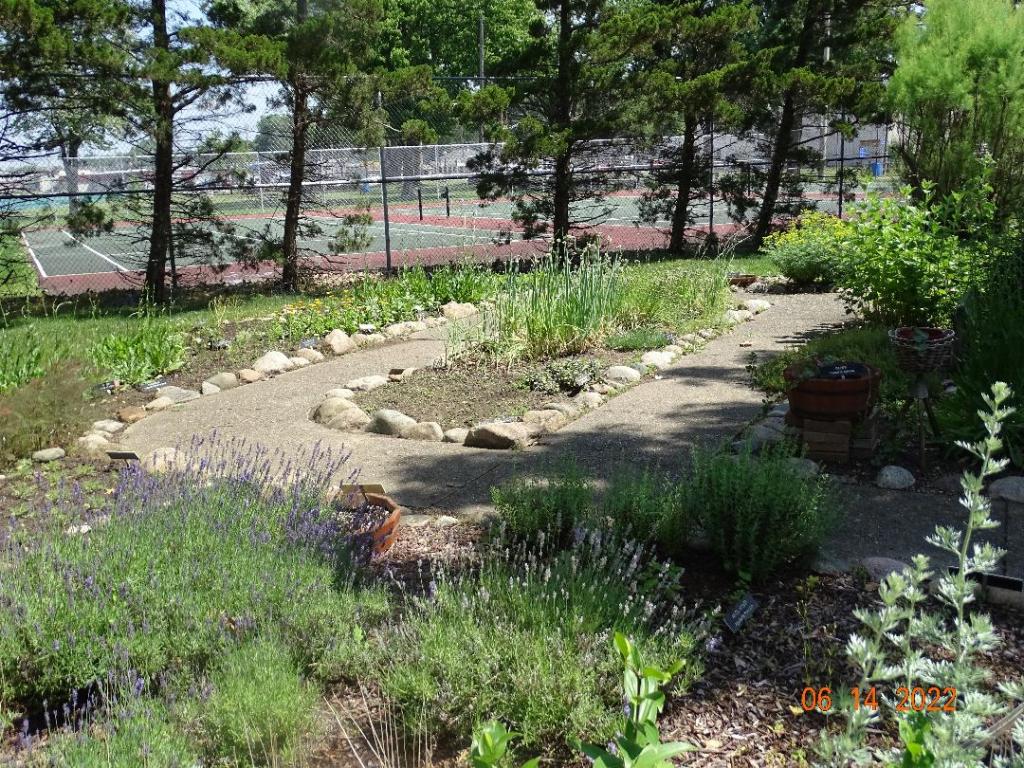
Located within a block in the downtown; the garden sits alongside a lake, a playground, tennis courts and other public use spaces. We soon learn, size isn’t always relevant. This garden’s focus is a myriad & variety of plants as depicted in the Bible.
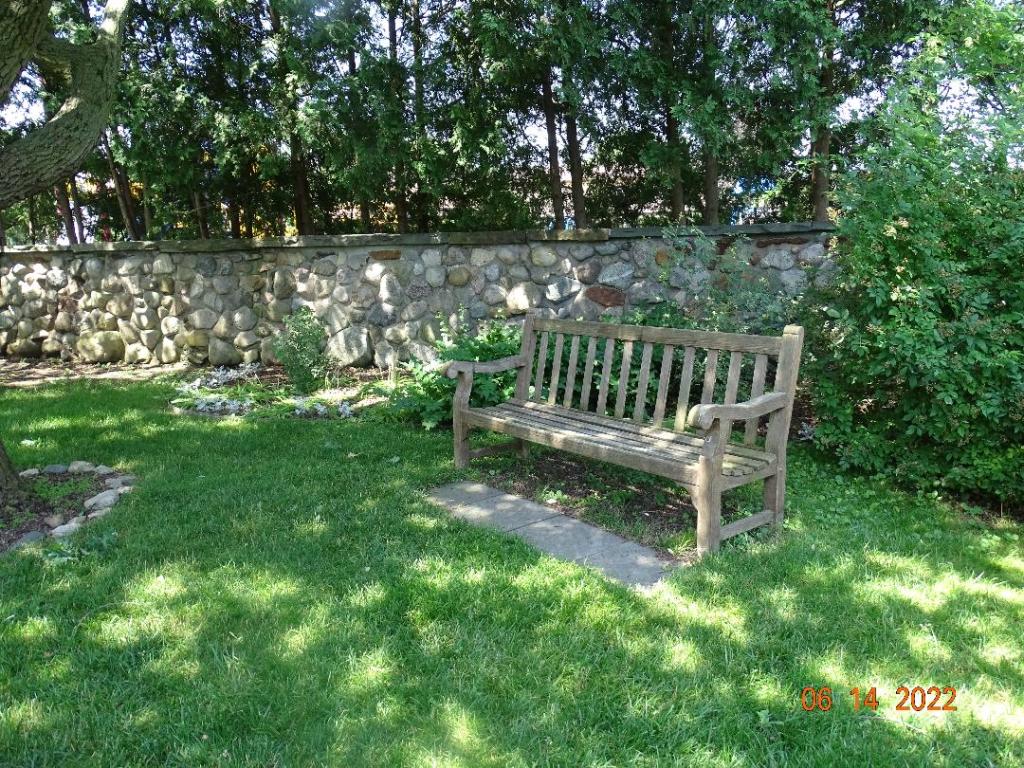
Left of the arbor, closest to the lake: an area enclosed by rock walls—from a bench, a view of the lake
& the sound of splashing water from the nearby fountain.
Providing a calm for this weary Pisces’ spirit-a meditative spot; perhaps for prayer- like the Garden of Gethsemane.
The garden supported by mature trees was divided into 7 well marked areas. We were thankful for the filtered shade.
Each area held plants, or a substitute as noted in Bible readings. Most but not all hardy to zone 5–
fragile ones in pots to allow them to be moved indoors… (Note the labels)
There were annuals, perennials, bulbs, shrubs and vines. Each having a purpose during biblical times and even now.
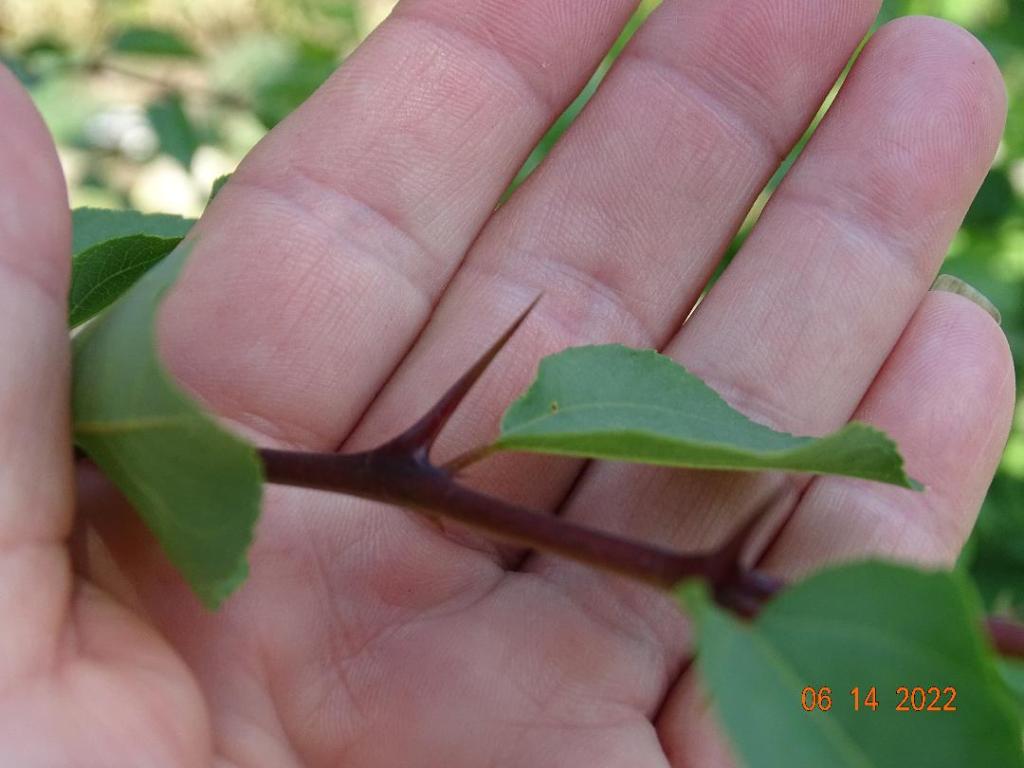
One of the very well noted plants mentioned in the Bible. The Jerusalem Thorn.
Hebrews 9:24; Matthew 27:29; Mark 15:17; John 19:2
Below: close up of Jerusalem Thorn. Imagine wearing on your head, a crown-made from this plant.
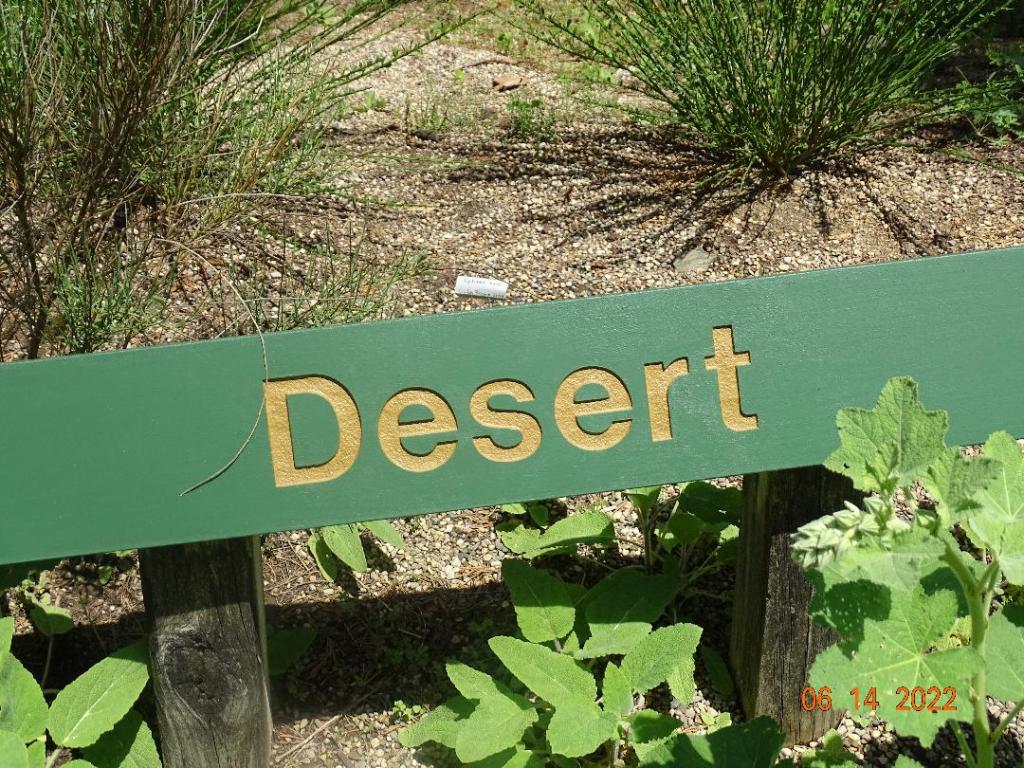
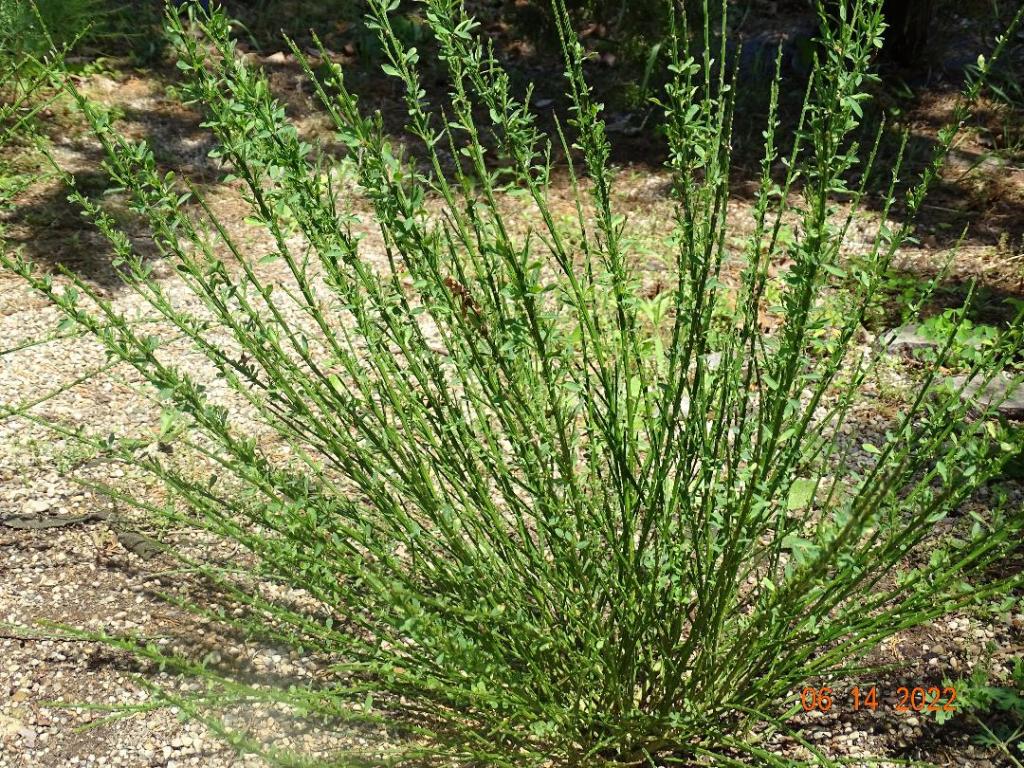
Named Bible lands included the desert area & it noted plants: Such as below the Cytisus Lena, “broom”
Below: the Tamarisk tree per Bible- Abraham planted such in Beersheba.
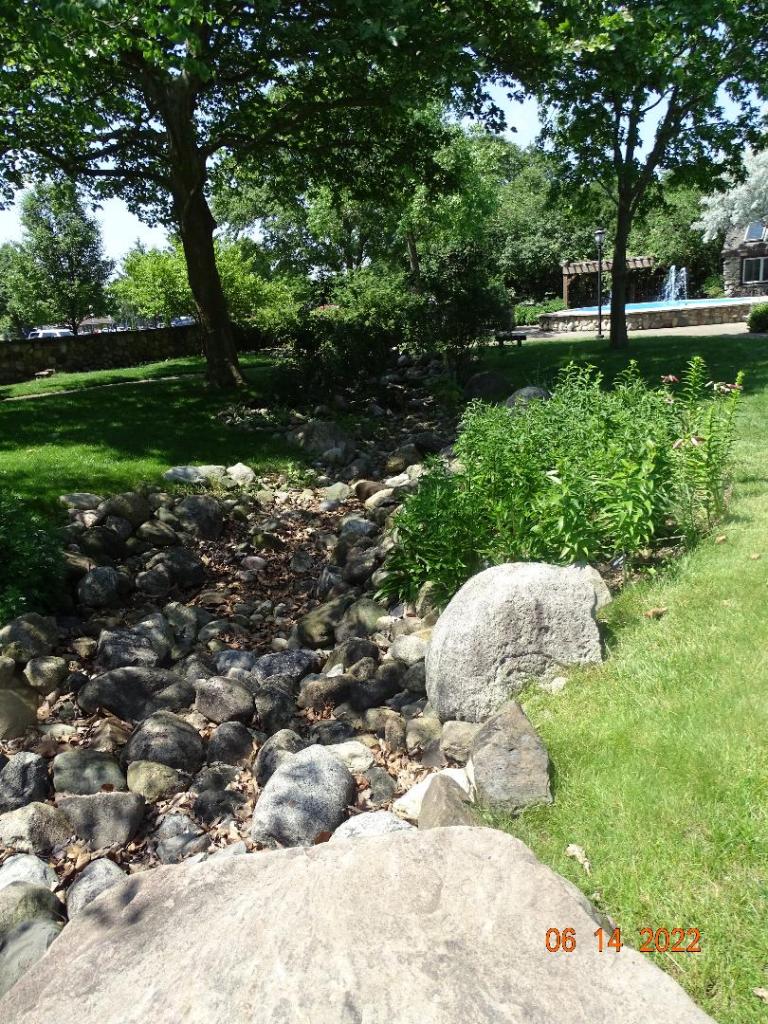
A dry stream bed– featured in the story of Elisha; 1 Kings 17.
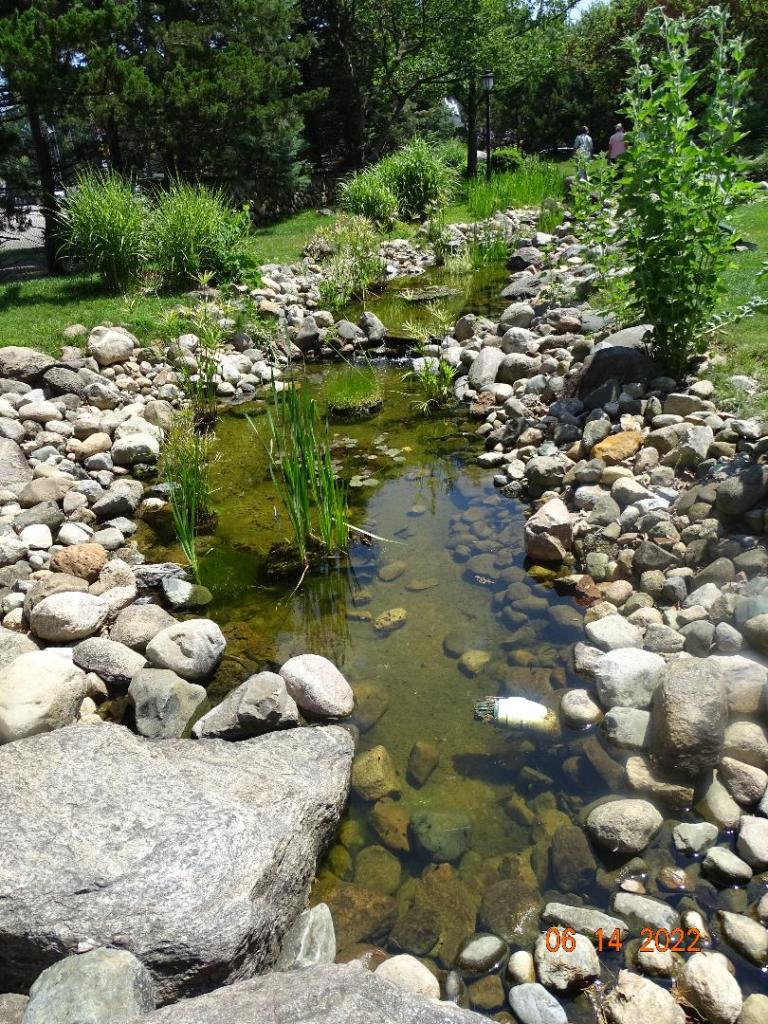
Brook: a water source; in scripture- drinking places. An Oasis where grasses & willows can be found, a
source of life in desert areas.
Water-an important Bible symbol. Referenced in countless scriptures.
Psalm 23:2, John 3:5, Revelation 22:1
Water:
a valuable asset no matter the place or era in time. From water flows new life, its very existence dependent upon it.
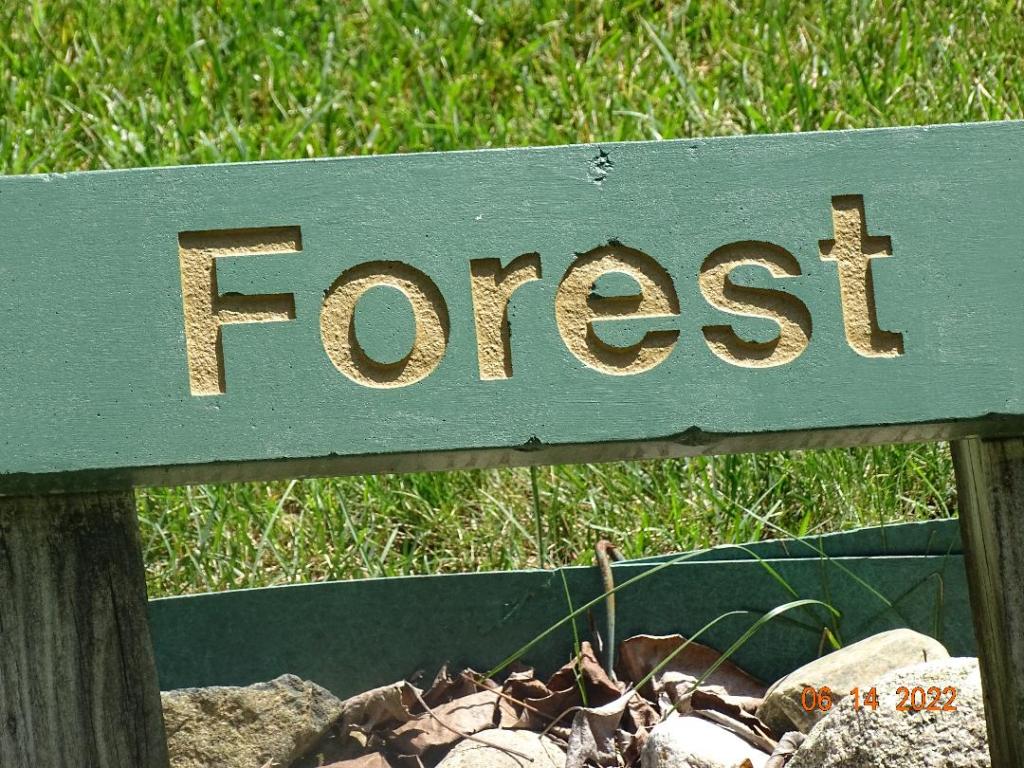
The brook, the meadow and the forest areas all blended together..Water the common bond- nurturing all life within. (Just for you Kay)
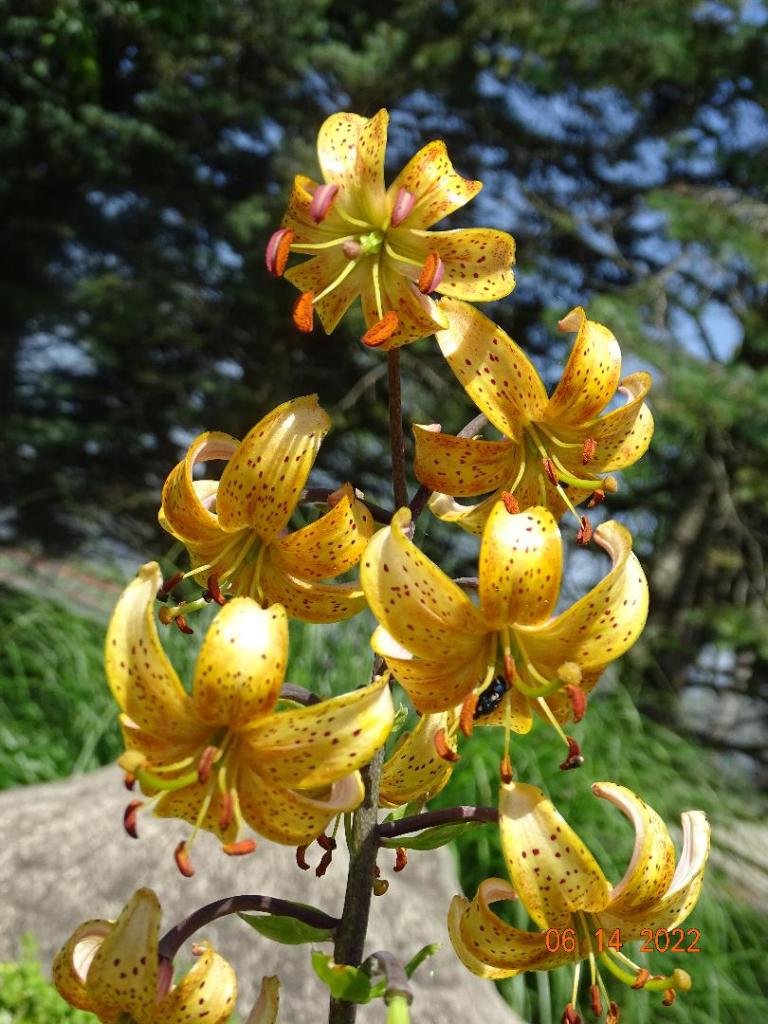
Below: Lilium Martagon Hybrid-Guinea Gold Christ said “Solomon in all his glory was not arrayed like one of these”
I found the interior branching of this very mature Scotch- aka Baltic Pine far more intriguing than its overall appearance.
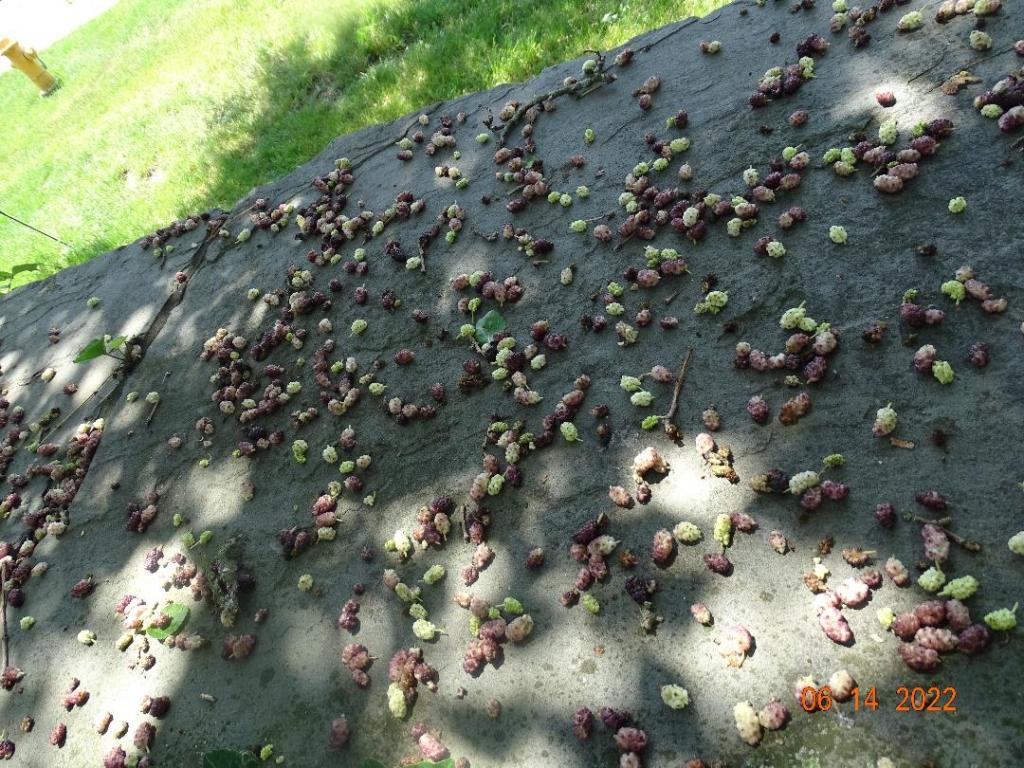
At the rear edge of the garden-we find a late morning snack-“white mulberries.” Disregarding the hesitancy of the others, I had to taste, finding them sweeter than the dark purple variety.
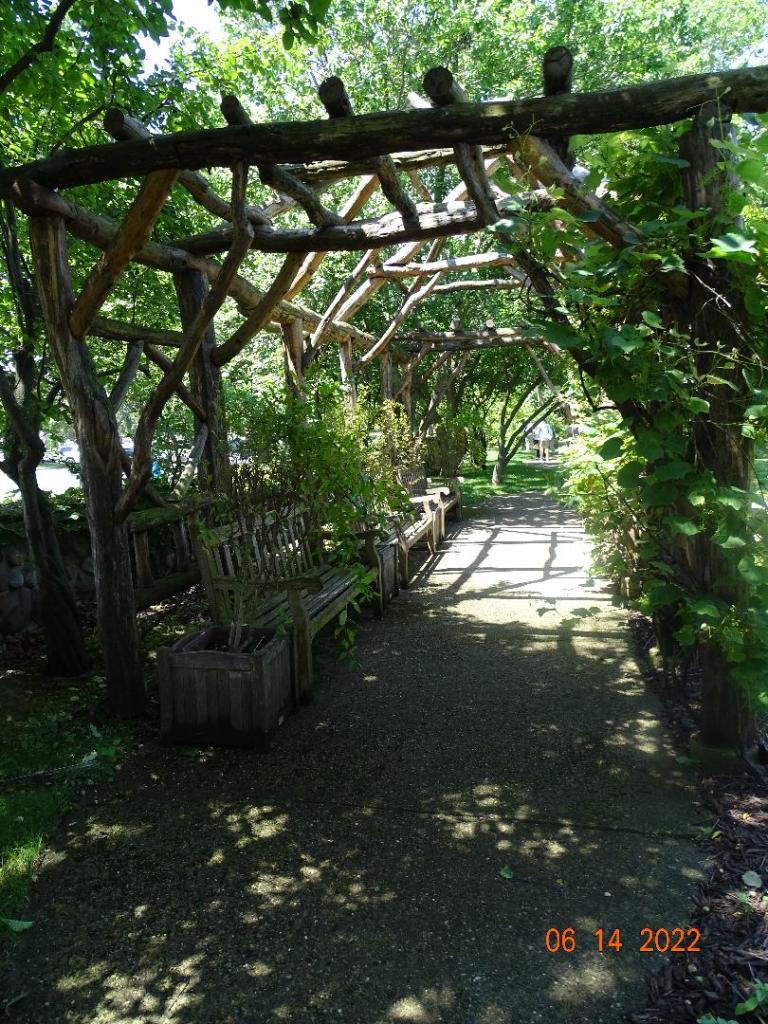
Rounding the pathway to exit–we enjoyed the canopy shade created by a unique structure—I suspect this was common in Biblical times.
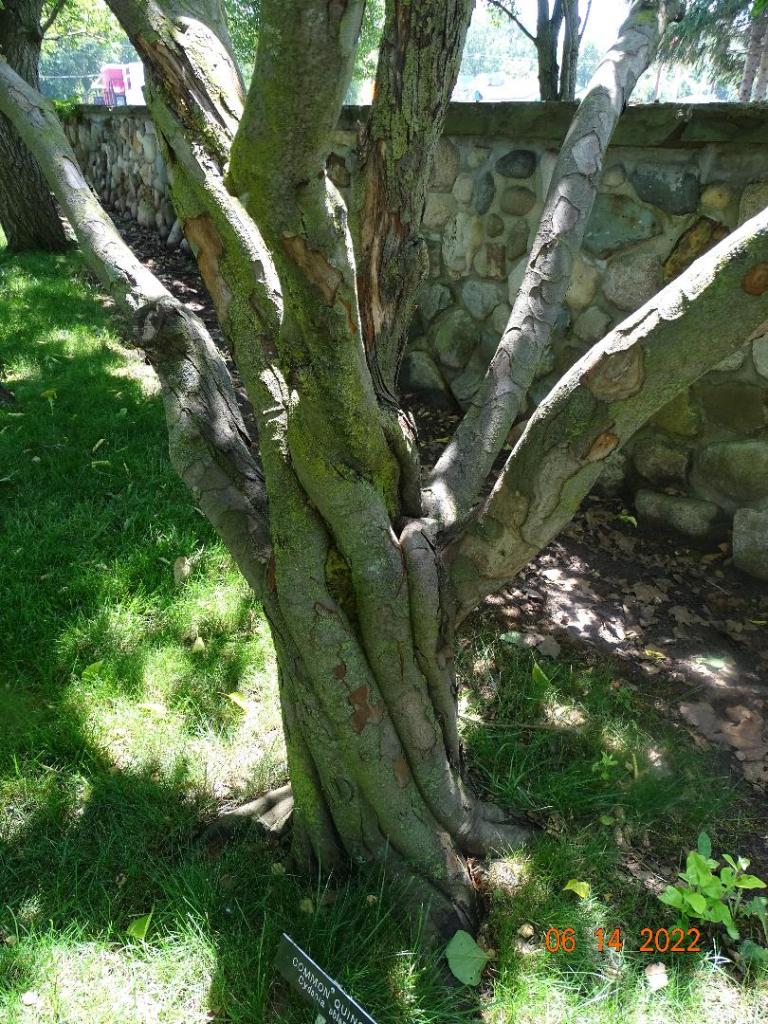
Reaching the end of the path-we stop & admire the unique characteristics of a common quince tree. I will add-
having visited Olga’s & Jennie’s church gardens; in my opinion because of differences & individuality: these gardens are equal in value & merit in the eyes of this gardener.
In closing: The night before our visit, Indiana was hit by devastating sheer winds. Driving to the gardens, we witnessed the level of destruction to the trees in the area. We were reminded to never underestimate the power of Mother Nature & that tomorrow is never promised.
We were thankful for no loss of life, for clear roadways, for no damage to the gardens & blessed for having Jennie who has the patience of Job; as she answered our countless questions & assisted me with this post. The second leg of our trip-the Defries Gardens-will be posted separately.
Jennie S. sent out this message. I felt it should be published on our Blog:
Dear friends, your Master Gardener training and our speakers, especially Amy Stone, have prepared you for this very invasive pest. Please review info about it and be especially alert to check “Tree of Heaven” and grapes in your neighborhood right now. It is possible that if we discover smallish infestations they can be treated and we can delay the damage.
Spotted Lanternfly Identified in Southeast Michigan
Suspected SLF can be reported to the MDARD via email at MDA-Info@Michigan.gov or by calling 800-292-3939.
Spotted Lanternfly Found in Oakland County
This is Michigan’s first detection of this invasive bug
LANSING, Mich. – Today, Michigan Department of Agriculture and Rural Development (MDARD) Director Gary McDowell confirmed the state’s first detection of spotted lanternfly (Lycorma delicatula) in Michigan. A small population of spotted lanternfly was detected in Pontiac in Oakland County last week with the United States Department of Agriculture (USDA) confirming the finding on August 10.
“Although not unexpected, this is certainly tough news to share due to its potential to for it to negatively impact Michigan’s grape industry,” said McDowell. “Spotted lanternfly has been moving closer to the state over the last few years. MDARD, along with our state, local and federal partners, has been working tirelessly to inform and educate growers and the public about this highly invasive insect.”
Spotted lanternfly is an invasive plant hopper native to eastern Asia. First found in the United States in 2014 in southeastern Pennsylvania, spotted lanternfly has spread rapidly through the eastern states. Confirmed observations of spotted lanternfly have since been recorded in Connecticut, Delaware, Indiana, Maryland, Massachusetts, New Jersey, New York, North Carolina, Ohio, Pennsylvania, Virginia, and West Virginia.
“MDARD and MDNR are working with the United States Department of Agriculture to define the extent of the infestation,” said Mike Philip, MDARD’s Pesticide and Plant Pest Management Division Director. “Although we can’t pinpoint exactly how it got here, it likely hitchhiked on nursery stock brought in from an infested state and has possibly been here for several months. We are in the assessment stage of response, but it is important to note that typical pest management techniques have not proven effective for eliminating the pest in other states.”
Spotted lanternfly moves easily on firewood, tires, campers, vehicles and more. Prevention and early detection are vital to limiting the spread of spotted lanternfly. If you find a spotted lanternfly egg mass, nymph or adult, take one or more photos, make note of the date, time and location of the sighting, and report it online to Eyes in the Field. Photos are necessary to verify a report and to aid in identification.
Spotted lanternfly prefers to feed on the invasive tree-of-heaven (Ailanthus altissima), but also feeds on a wide range of plants including grapes, and trees such as black walnut, river birch, willow, sumac, and red maple. When feeding, spotted lanternfly produces a sticky liquid, honeydew, that can collect on the ground or surrounding vegetation. This results in the growth of sooty mold, which can discolor and kill plants.
“The research community is still learning about the spotted lanternfly and its potential for impacting our natural resources as well as treatments to eliminate this pest,” said Joanne Foreman, invasive species communications coordinator for the Michigan Department of Natural Resources. “It also could have an effect on important timber species statewide. What the long-term impact might be is unknown.”
What can you do?
• Check Your Vehicle: Before leaving a parking lot or work site, inspect vehicles for spotted lanternfly egg or insects. Check doors, sides, bumpers, wheel wells, grills, and roofs. If found, destroy any eggs or insects you find.
• Park with Windows Closed: The spotted lanternfly and its nymphs can enter vehicles unsuspectedly. When parked, make sure to keep windows closed.
• Remove and Destroy Pests: Crush nymphs and adult insects. Scrape egg masses into a plastic bag containing hand sanitizer or rubbing alcohol to kill them.
• Remove Host Trees: Spotted lanternflies prefer the ailanthus tree, also known as “tree of heaven.” Try to remove trees from properties to avoid attracting spotted lanternfly.
• Report Sightings: Send in required photos to Eyes in the Field. Photos are necessary to verify a report and to aid in identification.
For additional information on identifying or reporting spotted lanternfly, visit Michigan.gov/SpottedLanternfly. You can also learn more at USDA’s Spotted Lanternfly website found at USDA APHIS | Spotted Lanternfly
Key stats:
1. According to the 2020 USDA-NASS Grape Survey: Michigan is home to 10,900 acres of juice grapes and 3,375 acres of wine grapes.
2. Spotted lanternfly has been identified in 11 states since arriving in the U.S. in 2014.
3. Likes to primarily feed on the non-native tree of heaven.
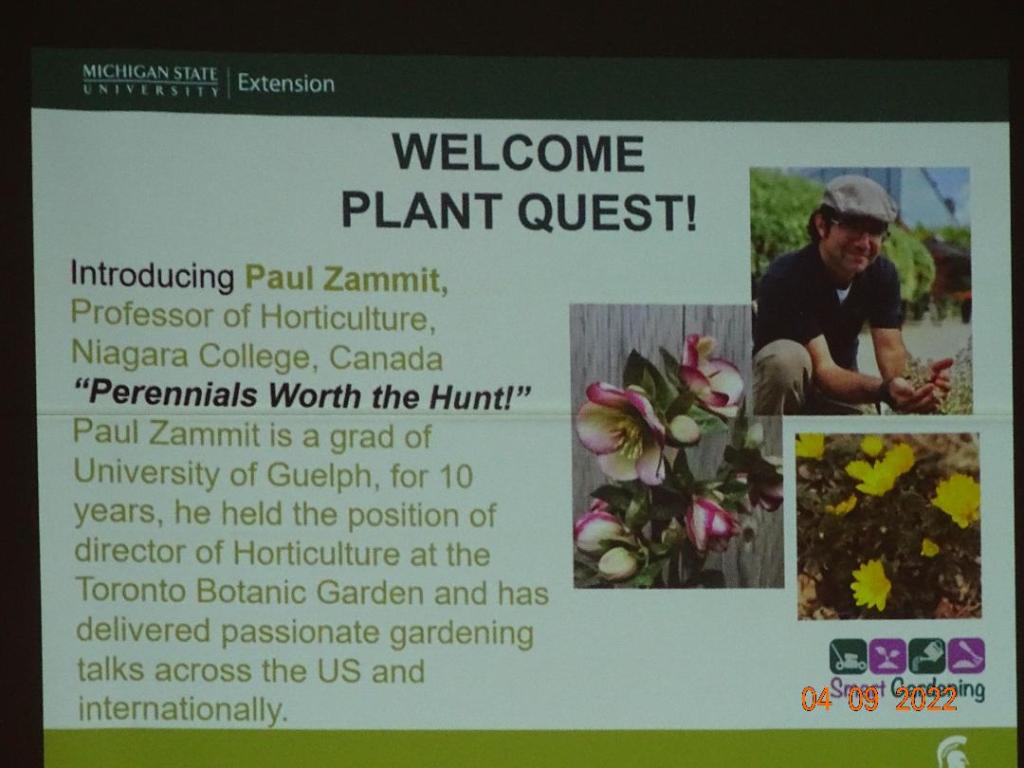
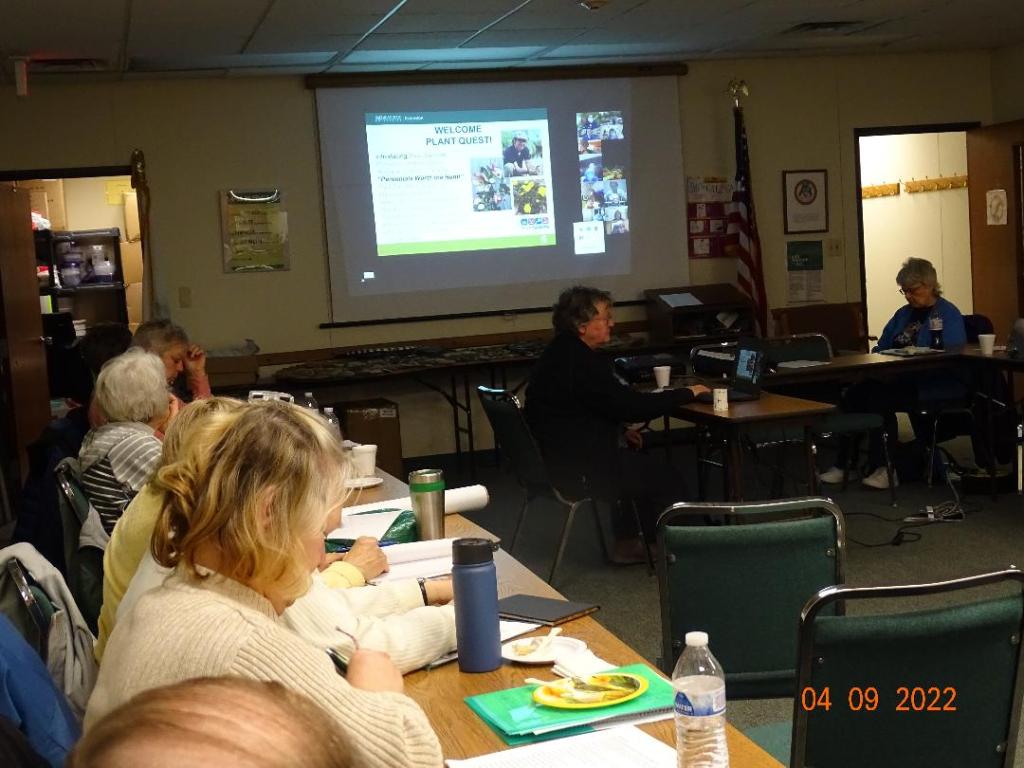
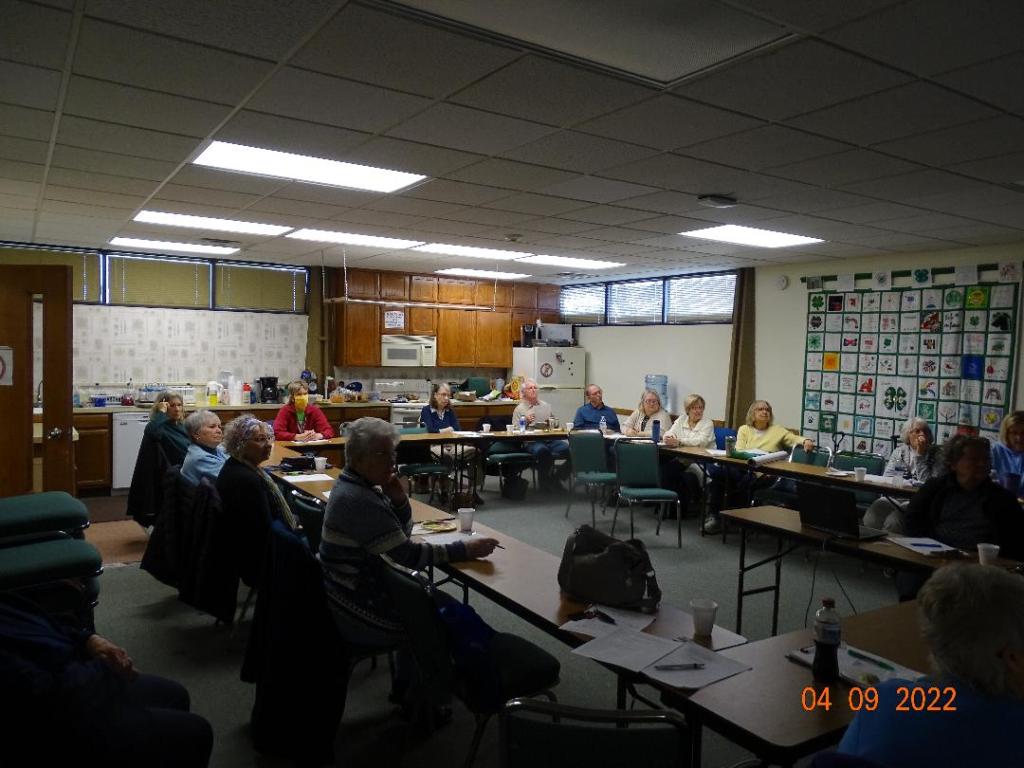
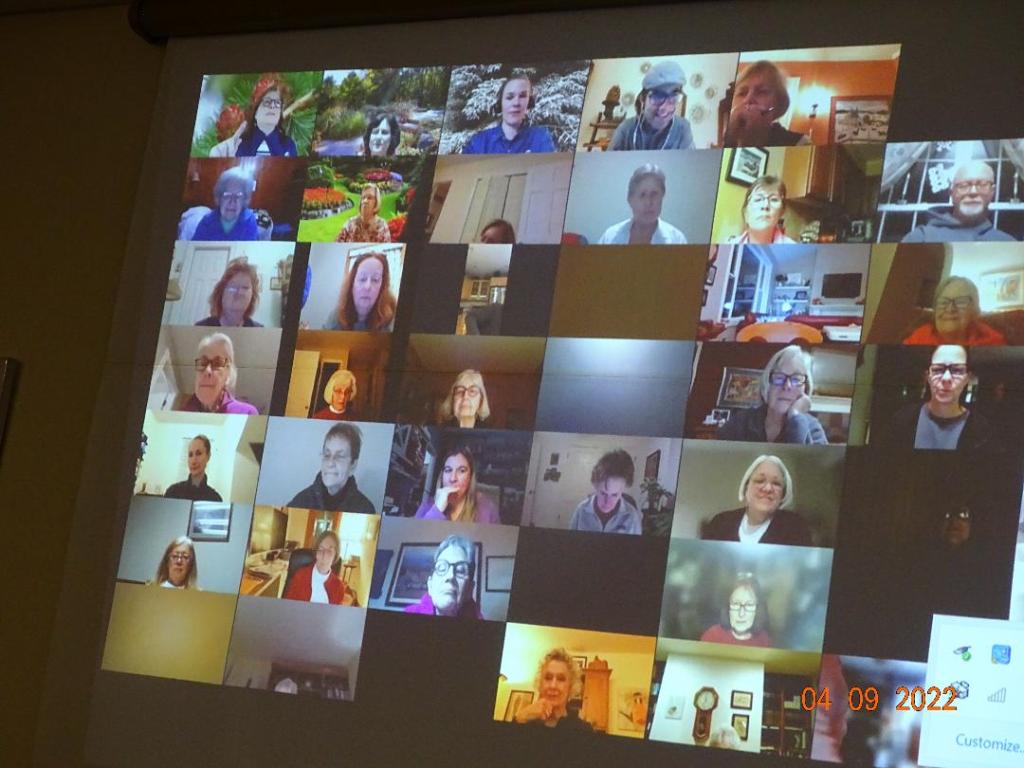
Jennie suggested with no speaker scheduled; we take advantage of watching a previous zoom meeting hosted by MSU extension. (note location of speaker)
One major aspect of being a Master Gardener at any level is the quest to learn & share. Covid forced us to change in order to achieve and maintain……
Zoom meetings allowed us to broaden the scope of who & where we garnered our gardening info.
Look at the number of people who were involved in the original mtg.
If you look closely-one of our own members was a participant-
do you see her??? Hello-Deb!
She is proficient & knowledgeable in growing daylilies–
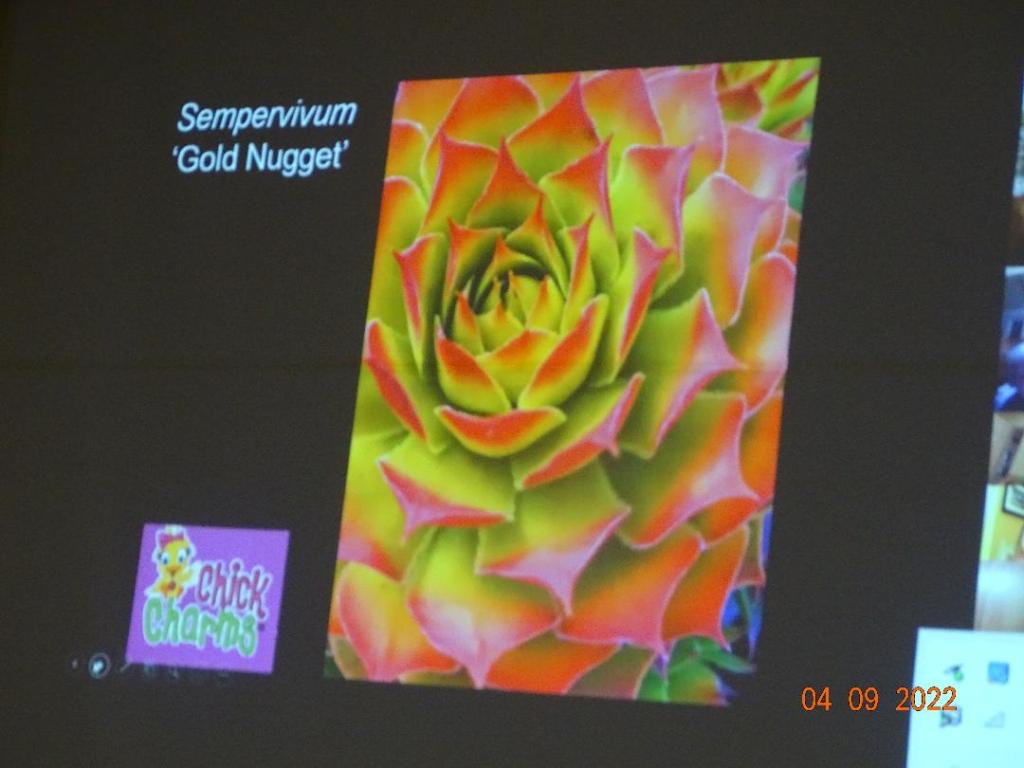
Here are the pictures of two plant types he spoke of Lenten Roses & Succulents. So very striking—-in color and contrast.
This lecture was informative & well worth the time. Thanks Jennie for sharing: because no matter where we are, or what we grow; as gardeners we face the same concerns. We love Mother Earth & know we must strive to seek a balance in our care of her and our quests to find that perfect plant./g




































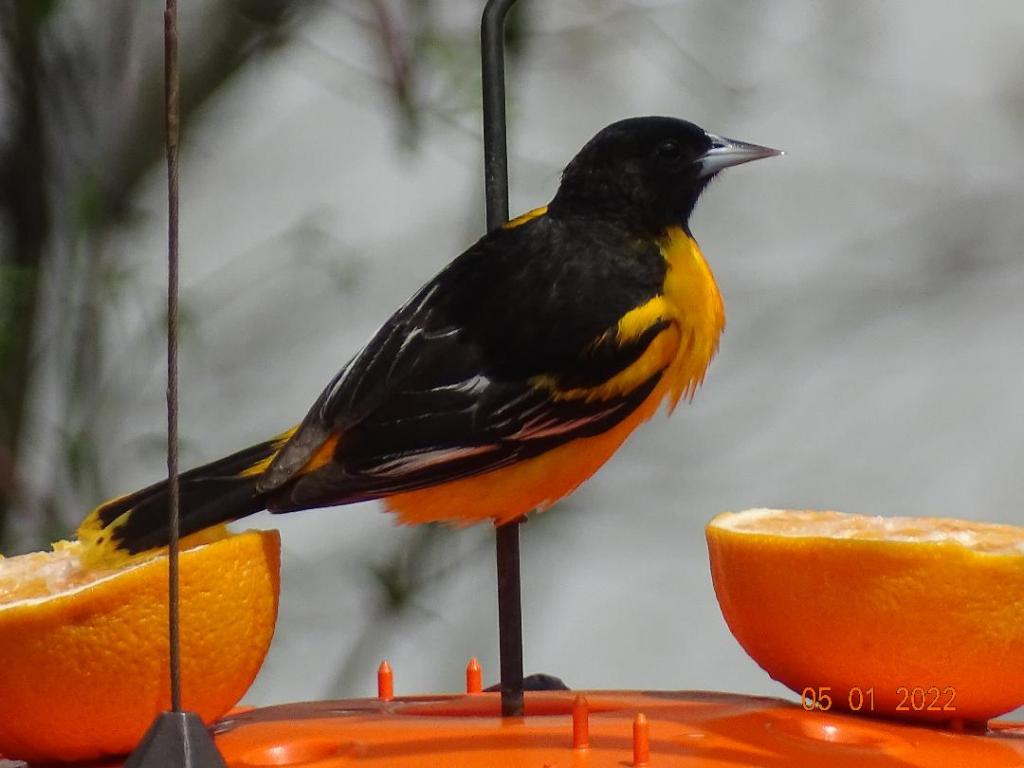
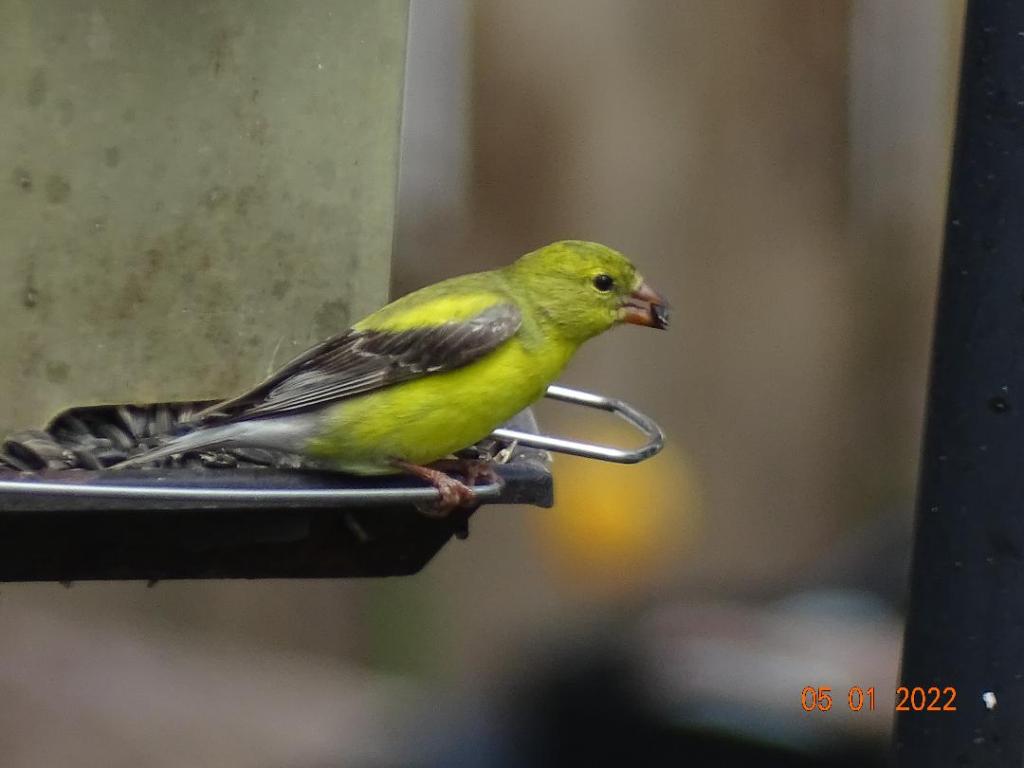


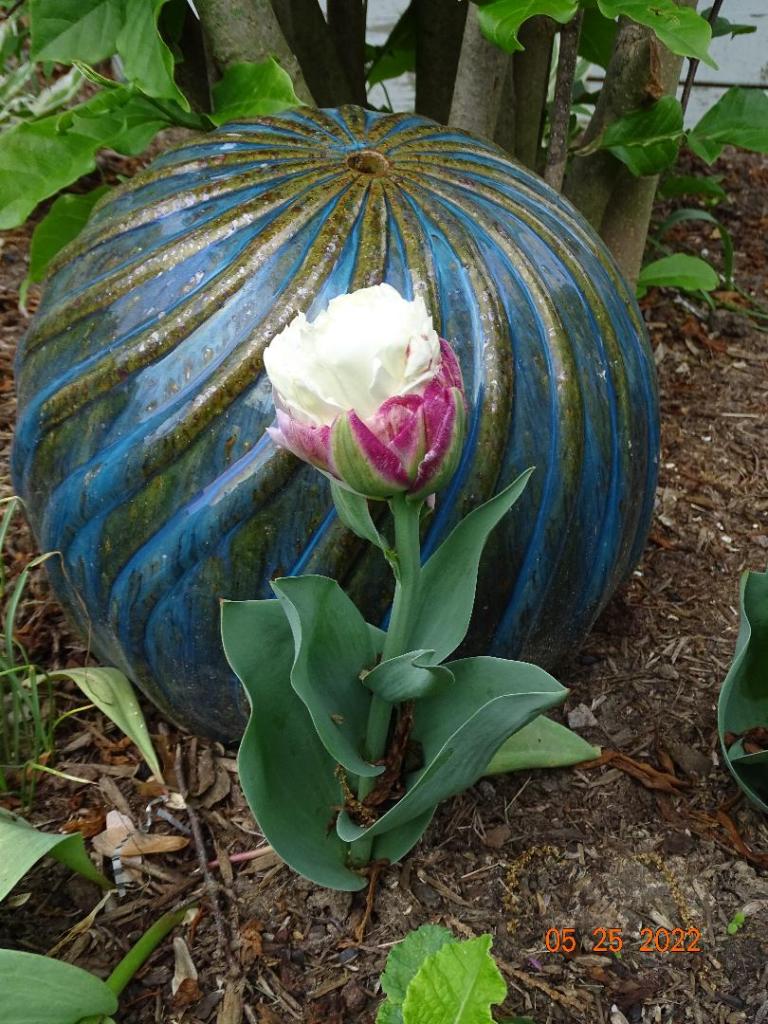
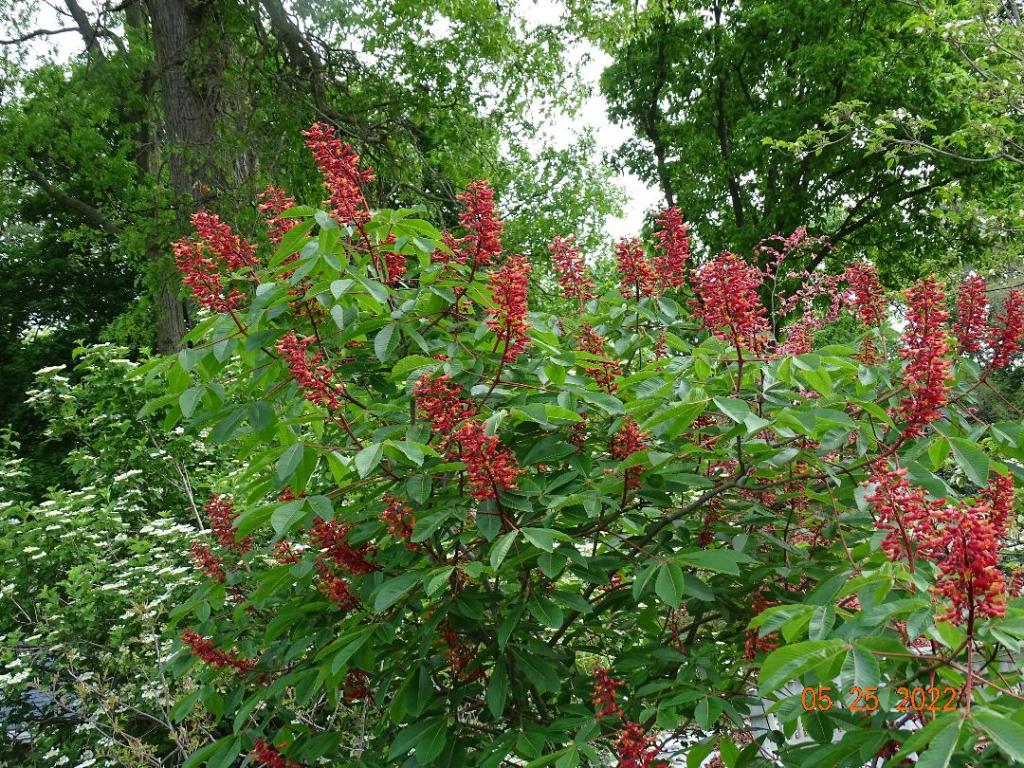
 Welcome Spring!!!!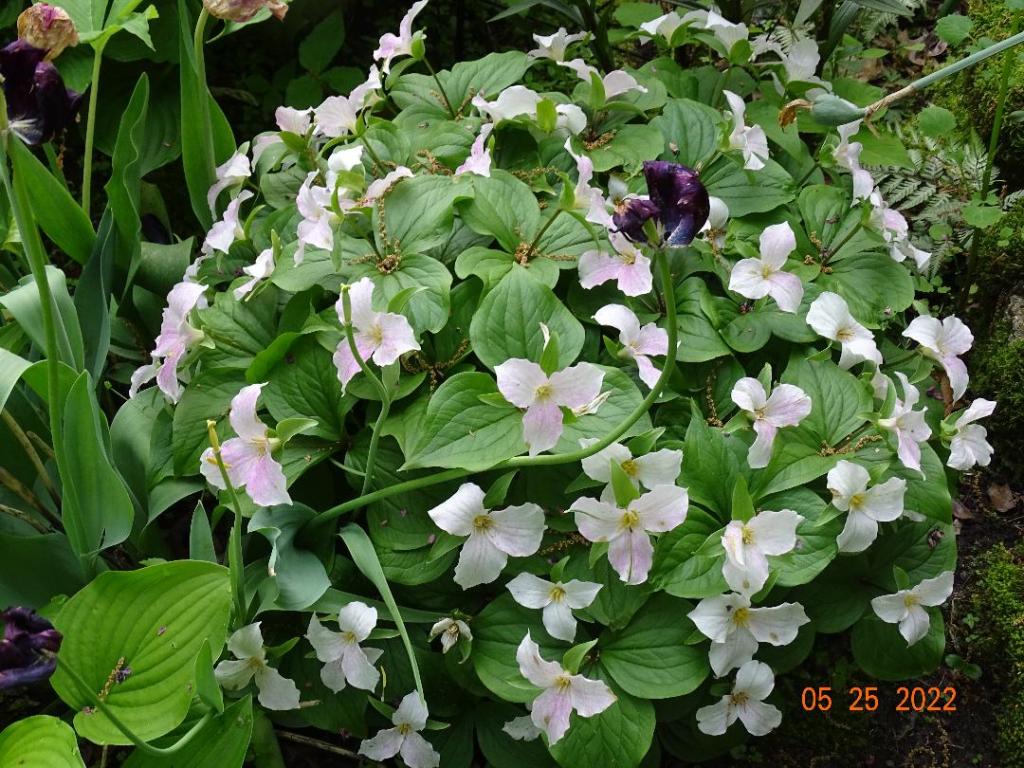





 Monroe County Master Gardener Association